How to Think Like Jack Ma and Succeed in 30 Days EASY
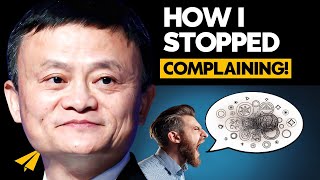
Evan Carmichael breaks down Jack Ma's ten success rules using Ma's own words and stories from his rise in Hangzhou to founding Alibaba. Learn why Ma prioritizes being first over best, plans ten years ahead, and views challenges as opportunities.
Chapters
If you want to be successful, learn from the other people's mistakes. Don't learn from the successful stories. Don't hate your competitors. Respect your competitors. Learn from him. I complain a lot when I was young because I think Bill Gates took all the opportunities for the Microsoft, Steve Jobs, all these guys. There's no job, there's no great big stuff left for us.
Need motivation? Watch a top 10 with Believe Nation! What's up, it's Evan. My one word is believe, and I believe in you. I believe you have an amazing gift inside you that I want to see explode out onto the world. So let's get your motivation to a 10 and get you believing in you. Grab a snack and chew on today's lessons from a man who went from growing up in China and giving tours to tourists for free for 9 years just to learn English to to becoming one of the wealthiest people in the world with a net worth of over $50 billion. He's Jack Ma, and here's my take on his top 10 rules of success, volume 3. Enjoy. [FOREIGN] All right, let's kick things off with rule number 1: learn from the mistakes of others.
My thinking is that you guys remember, if you want to be successful, learn from the other people's mistakes. Don't learn from the successful stories. Successful stories, they make— pfft. Don't listen to that. There are a lot of reasons behind it. Just like, um, I remember the first time Harvard Business School came to us, say, Jack, we want to write a case study for you. That's year 2001, or 2000. They came, they spent one week, and they write a report. And I read, no, no, I said, this is not me. And they said, this is you. I said, no, this is not us. He said, this is you. So they make up his sign. And the case study go up, and they start to teach in a lot of universities. The next 5 years they invited me to go to the case study and they always find a competitor of my company. And after every case study, Alibaba will die, that company will succeed. All the students agree. And actually every 5 years all the competitors die, we still survive. So how can you study this kind of a successful story? Learn from the mistakes. You will see other people, no matter how smart you are, you will encounter these mistakes. You learn from mistakes not because you will be able to avoid mistakes. You were able to— when these mistakes come, this suffer comes, you know how to deal with it. How to face it. I— the book I want to write, if I want, if I can, It's Alibaba 1001 mistakes. This is the most treasurable things that in my life. In my life, it's not how much we achieved, it's how much we go through the tough days and mistakes. And this is what you— if you start to think now, it'll be good.
Rule number 2: focus on quality, not size.
Last century, the bigger the better. This century, the good, the better. Do the business not because the size— it's not necessary. The big size you are, the more profitable you are. You really believe that? I believe that. There's a different aspect to business. We got so many Fortune 500 companies you judge because of the size. How many of them are really happy? How many of them have profit?
No.
Small companies, they are very profitable. They are very happy. They can spend time with the wife and the husband and kids traveling around and That's life.
Rule number 3: Be the first.
Don't try to be the best. Be the first. Be the first to change. Be the first to take the challenge. Be the first one to overcome the difficulties. Because the best person— there's only one Olympic champion. I don't think I'm lucky enough to be that, but I can always try the new things and don't give I believe it because you, you are so unique. Everybody is unique. Be yourself is always the key.
Rule number 4: Prepare for the future.
People like me, I was born in a very poor family. I never got a great education. I failed all the examinations. For what reason, I don't know. But later I realized I don't have money, I don't have technology, I don't have a lot of good backgrounds where I have a rich uncle or something. No. The only thing I compete with my people, the young people, is let's compete for 10 years later. This is what I believe 10 years later will be happening. So everything I do for that goal, I know 10 years later this thing is going to happen. So prepare for that. Because I know if I compete with him for next month, no chance. So this is how my message is up. It's a challenge. But it's opportunity. And it's opportunity for people like us. This world, the most difficult thing is to convincing successful people. Ah, when you tell him this is a great opportunity, he say, "No, no, no, no, no, no, forget it." Right? I've been doing this for 30 years. But for people like us, we're looking for opportunities in order to survive. So we will do anything to be creative. So this is the message. 30 years, it's opportunity for us. It's a challenge for those people who are 60 years old. If they're 60 years old— not discrimination, but it is tough for them.
Rule number 5: Respect your competitors.
Who's your most dangerous competitor? Is it Amazon or is it Tencent? Well, people always think, compare us with Amazon. Amazon is a great company. I respect— I've been seeing them from tiny to that big, and I think they will continue to grow. But we are different. We— Amazon is an e-commerce company. We are not e-commerce company. We enable other people to do e-commerce. We want to make sure everybody can be Amazon. So are you saying Tencent is the greater— Oh, Tencent is— of course they are great company. And you know, it's, it's not easy to be that size within only such less than 20 years. So innovative and so creative and so different on social technology. And they are based in Shenzhen and they're almost everywhere in China. But respect, of course we compete, but compete does not mean I have to hate them. Don't hate your competitors. Respect your competitors. Learn from him. But, you know, Pony and I, we've been doing the charity together, the Nature Conservancy and protect the— but we compete each other. But when we compete each other, we should respect each other. I respect him. I respect Tencent.
Rule number 6: See challenges as opportunities.
This world today is full of challenges and opportunities. 2,000 years ago, full of challenges and opportunities. And I'm sure 2,000 years later, full of challenges and opportunities. There is always— it depends on how you look at. Somebody look at this challenge as opportunity. Young people always say there's no opportunity. I complain a lot when I was young because I think Bill Gates took all the opportunities for the Microsoft, the Steve Jobs, all these guys. There's no job up, there's no great big stuff left for us. But I think opportunity always lies in the challenges, always lies in the complaints. If you can solve the challenge, you have the— you will be successful. The big challenge you solve, the big problem of the, the big opportunity you have.
Rule number 7, my personal favorite: believe.
In the past 18 years when I do internet in China, we got criticism every day. You know, something where you believe it, a lot of people criticize it, but if you really believe, continue to do it, improve it. We were rejected by more than 30 venture capitalists, but we are very optimistic. We believe in the future, we believe in internet, and we believe that if we do not succeed, somebody will.
Rule number 8: Surround yourself with greatness.
How do I motivate, uh, incentive or motivate my colleagues? You have to find the people that can mobilize themselves. It's impossible to find, to encourage a negative person. So the people you hire, the people work together, They have to be, or you cannot— we have 65,000 employees now. You cannot hire all of them that positive, but at least the people work with me, my management leadership, several areas, they have to be positive. They have to know to incentive the others because I cannot incentive everybody. And making sure the culture. So I think it would be very painful for me to talk to my vice president and he need to be incentivized and mobilized every time, right? This won't work if he's not— if he does not know how to incentivize or mobilize his people, it's better— I don't think he will be the vice president. He should be a good engineer, good designer, but not good leader. A good leader should know how, but not by only money. Most of people incentivized or motivated not because you give them a lot of money. You give them respect, trust, appreciation. Correct, heartful advice. When you come to my meetings, internal meetings, you will be shocked because we are not like a lot of the other Chinese companies. The boss say, everybody listen, take notes, and go down. We are like a war room. We make decision based on whose voice is louder. Right? Early days, you know, we fight and talk and then Making sure everybody speak up, right? So this is also a way of mobilizing incentive. There are a lot of ways, and different people have a different way to send incentive.
Rule number 9: live healthy.
I think life is a journey. You come to this world is to enjoy the life, to be happy and healthy. So the day when you leave the world, you say, I'm happy in my life, I'm healthy in this life, because if you're not healthy, you will never be happy. So I believe happy and healthy are the things that human beings always looking for. And I think next 30 years, because of the technology, uh, people— the life science is going to change a lot, and people is going to live longer. And but it can live longer, does not necessarily live healthier. So if you're not healthy, how can you be happy? If you live longer, if you're not happy, why you live there?
And rule number 10, the last one before the bonus clips: have fun. Now I've got some special Jack Ma bonus clips for you, but before that, the question of the day is: do you have enough fun in your business? Should entrepreneurs have fun in their business? Business? Yes or no and why? I'd love to hear from you. Leave it down in the comments below. Thank you guys so much for watching. I believe in you. I hope you continue to believe in yourself and whatever your one word is. Much love. I'll see you soon and enjoy the bonus clips.
I found out some great leaders in the world, they are always positive. They never complain others and never complain. And they look at the things in a different view, like normal people. So I think people in my company, they at the beginning they don't like me because I always think about 10 years, 5 years. And then after we working together for 3 or 5 years, they find, hmm, you are right. Then we got the credit rating. And as a CEO, one of the jobs where everybody's happy, you have to see the unhappy things. When everybody's unhappy, you have to see the happy things. So leadership is nature, but you have to have trained and learned. And I got my leadership upgraded in Davos. I see so many. You know, Ali entered financing. How many people here know about Alipay? Thank you. Alipay's decision was made here. I was thinking about Alipay, you know, but I was not able to launch Alipay because in China, if you do financing without license, you will be in jail at that time. So I said, I went to the banks, can you help us do the e-commerce transaction? No, no, no, no, no, no. No banks would accept it. So if there will be no Alipay, no financing, the e-commerce will go nowhere. So I was, year 2004, I was here. Listen to a speech by two state leaders about leadership. And this guy said, leadership is about responsibility. You believe it, but don't, the people don't believe it. But if you think it's so critical, You should pay any price to do it. So that day changed my mind and I call back to my team and say, "Let's launch it within one month. If somebody has to go to the jail, I go to the jail. Who will be the second one follow me? If I go, you continue. If you go to the jail, you go continue." That was what they call the leadership determination. Year 2004, I made decision here, I called back. And now today, the Alipay launched, and it's so big, over 800 million people today using Alipay globally. This is called— I was born in a very normal family and poor family. 6 people share $7 a month. We can only eat 1 chicken a year. It was terrible. Nixon visited my city, 1972. China, USA signed— Mao Zedong, Nixon signed the agreement. So China become open door. My city, Hangzhou, was one of the first cities that opened to the West. We got a lot of American tourists to visit my city.
What he would do is he would befriend foreign visitors who came to Hangzhou to walk around the West Lake there.
And I learned English by being a free guide, tour guide.
You know, more than the language, Jack was learning about the culture.
The things I learned from books from China are so different from the things I learned from the American visitors. So I start to think differently. Raise your standard. Apple, at the core, its core value is that we believe that people People with passion can change the world for the better. Not one drop of my self-worth depends on your acceptance of me. I don't ever give up. I'd have to be dead or completely incapacitated. Hey, Believe Nation!
If you want to see my all-time favorite top 10 rules of success, I have a very special secret video for you. These are the individual clips that I have personally learned the most from and applied to my life and my business. Check the link in the description for details.
¡Muchas gracias!
More from Evan


How the Biggest Mistake in History Created A Trillion-Dollar Empire | Sergey Brin



9 Machiavelli Principles That Force People To Respect You | Machiavellian Philosophy



The First 10 Words That Instantly Ruin A Sales Conversation | Vanessa Van Edwards

The Top 1% Mindset Behind The First $5 Trillion Company | Jensen Huang (Nvidia)

