How to Thrive When Life Doesn’t Go as Planned | Lloyd Blankfein's Advice in 13 Minutes
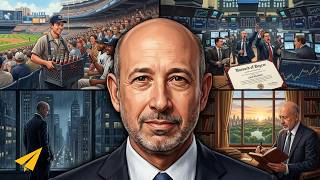
Lloyd Blankfein, former Goldman Sachs CEO, argues that flexibility and thick skin matter more than a plan. He switched from law to finance by following interest, not security, and says the best professionals read widely across history and literature. Goldman Sachs outperforms rivals because it hires people driven by impact and growth, not just money.
Chapters
Life is quirky. I'm sure all of you have your lives planned out, and the one thing I can absolutely guarantee is it won't work out that way. I accept the world as it is, and I go forward. If you don't have passion for your work or the drive to make a better life for your kids than your own, then you won't have what it takes to keep you going. You're gonna have to be, you know, flexible and nimble in your life. You don't buy a thick skin, and you don't even know you have it until somebody starts to try to puncture it. Most of the books I've read didn't apply directly to my job or industry, but I've applied their lessons in unexpected ways. You also have to peak at the time it's an Olympic year. You know, you could be the fastest runner in the world and it's an off year. Being successful in business means part of it is trying to guess what's going to happen. Part of it is trying to guess the future. I came home and told my wife I was quitting and she cried. The people— we get a kind of person at Goldman Sachs who really wants to be an influential person.
He's an American business executive. He's the CEO and chairman of Goldman Sachs. He's one of the highest-paid executives on Wall Street. He's Lloyd Blankfein, and here are his top 10 rules for success.
Life is quirky. I'm sure all of you have your lives planned out, and the one thing I can absolutely guarantee is it won't work out that way. Um, because it's just— things happen. First of all, the world changes and the world evolves, so whatever plans you're making, it's based on a static world that won't be there because things will happen and you'll change, or maybe you won't even change, maybe you're just misidentifying yourself now and you don't know, which is a perfectly appropriate way to be when you're young or my age, 'cause who knows. What would you change about the way that you ended up as the CEO of Goldman Sachs? You know, I don't have that, you know how the mayor just said he looks forward and the next day is gonna be better, and I think a corollary of that is I don't really second— I don't look— I accept the world as it is and I go forward. I mean, I could do an archaeological dig, but I can't go back and change it, so I don't spend a lot of time fussing about it. I want to learn from it, but I don't want to wring my hands and recriminate. So it's never, you know, "I wish I were taller. I wish I could run faster." "I wish you had a lower handicap." Wish I had a lower handicap. I have plenty of handicap, but not the low one in golf that I want. But I don't spend a lot of time thinking about that. But if you put me to it, I would tell you another thing, that anybody who had a chance to revisit the past with what he knows now would be crazy not to do it. But it's just not available, so how much time are you gonna spend on it? In my career, I've been fortunate to know and work with many of this country's top CEOs and business leaders. I'm always struck by a certain passion that defines them. While they may be wealthy and powerful, their passion goes beyond money and power. I won't stand here and tell you that those are bad things. They're pretty good, but only if you have a larger purpose in mind. If you don't have passion for your work or the drive to make a better life for your kids than your own, then you won't have what it takes to keep you going. You're gonna have to be, you know, flexible and nimble in your life. That's the, that's the characteristic you want to get. You don't It's not important whether you know what the product is of the jour or what's hot and what's not or how to execute this particular thing. You need to learn business and you need to learn how to question and have an open mind. You need to know the process of thinking about things. You notice how people can go around and be an investor in this industry, turn around without doing anything, be a great investor in another industry? Or some CEO who one day is running Ford Motor Company, then can run Boeing or different industries. Because it's not, the most important thing is not the particular characteristics of the particular industry or thing, it's how to be a good CEO, just like it's how to have presentation skills, how to be a good manager, how to be a good subordinate, how to be a good partner, how to use people, how to be usable. By people. And those are the things that you have to learn. Now you can only learn it, you can't learn it abstractly and you can't really learn it in school. You have to learn it by doing, but you have to take those lessons and extrapolate it. So the things that I did in the markets, the markets that, and the context of even in investment banking and advisory, those are entirely different things. 30 years ago than they are today. They're different 5 years ago than they are today. So everything is, we talk about time of great change. Yeah, okay, every time is a time of great change. And I will tell you, and the technology is driving it, and you don't know, everybody always remembers getting it right when they thought forward because you always acquire, after acquired information always affects your views. You don't remember what you used to think. And so that's just the nature of things. And the people who'll be successful in their lives are the people who are the most flexible, who can absorb the most, who are open to learn, who are coachable, who are not too proud to, you know, dig into new things. Who is an entrepreneur where everything is a smooth ride? And you go through these things, and I'll tell you, and you get criticized and you have to have a thick skin. Yeah. Yeah. You've been there. I've been there. And by the way, you don't buy a thick skin and you don't even know you have it until somebody starts to try to puncture it. And then you discover what you're made of. Be a well-rounded, complete person. Many of you will go for further education or career training. Of course, it's important to learn the things that you need to make a living. But don't forget to read and to learn history, literature, and about current events. You'll be more interesting to others, more interesting to yourself, and you'll be more successful in your job. Most of the books I've read didn't apply directly to my job or industry, but I've applied their lessons in unexpected ways. If you're an Olympic athlete or something like that, you get to the high— you also have to peak at the time it's an Olympic year. You know, you could be the fastest runner in the world and it's an off year. And so, you know, by the time you get to the Olympics 3 years later, you know, you aren't anymore. So there's a lot of luck involved in things in the world. I never lived my life thinking about my next job because I was always in the last job I could have, as far as I could tell. And I think it's a huge advantage for you to live in the moment and not to be seething too much. I mean, obviously you plan, even though your plans never work out. But to, if you want, you know, the secret is to do a great job with what you're doing. And what you should do is you should perform as if you were in your next job, but not seethe with the ambition to get there and project that. You'll make people nervous as hell and you'll kill yourself. I'll give you an example. When I was in high school, I went to, because you heard all those advisory boards, I went to Harvard College and Harvard Law School. Now when I went to, the college from the high school I came from, it never dawned on me that I'd get into that kind of an Ivy League. It just wasn't, it just didn't happen. But I applied. And I never thought about it after really I applied, 'cause it just wasn't like, it wasn't on my scope. And so when I got a letter that I got, I didn't have any anxiety to it. And when I got that letter, I just was like ecstatic and like this, and then my mind opened up. But it was just like a great experience. Even the process of that was great. When I was in college and I applied to law school, I went down to the mailbox every day. I knew the consequences of it. I was with a bunch of people who also wanted it and were vying for it, and I was like torturing myself over it. I was imagining, what if I do get it? What if I don't get it? What are the consequences of getting it or not? And I tell you, it affected my life and affected the functionality. That's a difference. I tell you, if you could approach every opportunity like I did the college one, you'll be better and you'll be happier. And if you live the life tormented about what are my prospects for the next one, when life is random and you have to be, you know, and there's some chance involved in things, you're going to be tortured. Being successful in business means part of it is trying to guess what's going to happen. Part of it is trying to guess the future. History is as important as economics. Okay. Right? In other words, being able to see, gee, this period of time, it's not the same as the 1980s, but it's like it. I remember another time when politics were poisoned or this or that, or this situation in the world today, or the conflict we're seeing in the Middle East. How was that in the temperament of the times and in the reaction it produces compared to the period of time when everybody was worried about the rise of Russia or the rise of— what's that like? In other words, nothing is new. You know, everything, of course, is different, but the cycles repeat. And I think the study of history gives you a feeling, knowing that nothing stays the same and everything has evolved, nothing is static. That's an important lesson to learn. If I wanted to be good in economics, I'd want to know economic history. If I want to be a good scientist, I'd want to know the history of science, and that would maybe help me understand the receptivity of the world to advances today and why some things get accepted and why some things don't. And yeah, I thought so. And so that's, uh, you know, anyway, that's just my prejudice, and my background has made me appreciate knowing the history of things and not just the science of things. After college, I went to law school for 3 years and then into my dream job at a big New York law firm. But even though it had been my dream, I didn't like it once I got there. For the first time, I was feeling financially secure, but I knew I wasn't passionate enough about what I was doing. And because I didn't love it, I would never be fulfilled from it. Or be really good at it. Someone who loved it more would have greater enthusiasm and focus. For some it was fun. For me it was always going to be a horrible chore. After 5 years at a law firm, I decided I wanted to try something different. I came home and told my wife I was quitting and she cried. And not out of happiness. Anyway, it worked out. I got a new job at a small Wall Street firm, having been rejected at every other one. We got bought out by a larger firm, and I ended up remaining at that large firm, Goldman Sachs. Here's the question: why do you think Goldman Sachs does better than everybody else? I'll tell you what I assume. Yeah. I assume you hire the best people. Because we recruit and hire the best people, and more importantly, because we retain them, and the reason why we retain them, and the reason why we get the best people is, and I believe this, so you gotta let me say this. You gotta let me say this. Because we get people who are really interested in doing something that they think is good for the public, for the world they're in. If you look at, you mentioned earlier my predecessors, who became Secretaries of Treasury. I could take you back and give you 100 names. The people, we get a kind of person at Goldman Sachs who really wants to be an influential person, who wants to do something that's important, who feels that the job— Who wants to make a lot of money and then go out and do good. You know something, the people that we have don't, would like to do well for themselves also. But most of them, at the height of their careers, go into public service. I mean, the record is— the record is not just in the U.S., but all around the world. Not just at the top of the firm, but in the middle of the firm. So you're saying the secret of Goldman Sachs is that they hire the right people? And we hire— right, we hire the right people. Okay. And retain the right people, and at certain times lose the right people and make room for other right people to come in.
Thank you so much for watching. I made this video because Martell Thomas asked me to. So if there's a famous entrepreneur that you want me to profile next, Leave it in the comments below and I'll see what I can do. I'd also love to know which of the top 10 rules today hit you the hardest, meant the most to you. Leave it in the comments and I'll join the discussion. And my personal goal on this channel is to hit 1 million subscribers, so anything you can think of to help share the video, spread the message, tweet it, add the playlist, I'd really, really appreciate it. Thank you guys so much for watching. Continue to believe, and I'll see you soon.
More from Evan


How the Biggest Mistake in History Created A Trillion-Dollar Empire | Sergey Brin



9 Machiavelli Principles That Force People To Respect You | Machiavellian Philosophy



The First 10 Words That Instantly Ruin A Sales Conversation | Vanessa Van Edwards

The Top 1% Mindset Behind The First $5 Trillion Company | Jensen Huang (Nvidia)

