How to Transform Adversity into POWER | Ryan Holiday’s Stoic Method
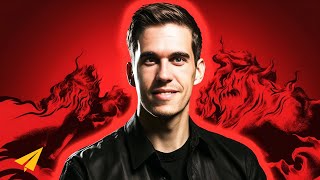
Ryan Holiday explains how Stoic philosophy turns obstacles into advantages. He competes with himself rather than others, runs daily regardless of weather, and delegates tasks outside his strengths. The only thing you control is your attitude: reframe failures as learning and hardship as resilience-building.
Chapters
I'm competing with my job.
Often on the other side of what you're afraid of that you experience really great things.
It's so hard to, to say no to stuff.
I think you always want to be challenging yourself and pushing yourself in the work that you do because that's how you experience those situations.
What's the impediment to action advances action. What stands in the way becomes the way. I try to think about this in my own life.
Hello, Believe Nation, it's Evan. My one word is believe, and I believe in people more than they believe in themselves, and my sincere hope My hope is that if you see in yourself what I see in you, you'll be able to change the planet. So to help you on your journey today, we're gonna learn from author, marketer, and entrepreneur Ryan Holiday, and my take on his Top 10 Rules for Success Volume 2. Rule number 8 is my personal favorite, and I'd love to know which one you guys like the best. Also, as you're watching, if you hear something that really resonates with you, please leave it down in the comments below and put quotes around it so other people can be inspired by it as well. And if you leave it within the first couple hours of this video going live, you have a chance to win one of two daily prizes.
I would rather challenge myself in my career than, uh, challenge myself on a roller coaster, which is totally pointless. And I would rather Like, for instance, I love running. I run almost every single day, but I don't do any races. I don't feel the need to have artificial competition in my life. Like, I'm competing with my job. Do you know what I'm saying?
I'm trying to write the best.
I'm trying to challenge myself with my writing. Running for me is something that I enjoy, and to me the challenge is like, can I do it every day? Not like, Did I beat 200 other people who I don't care about?
Well, I think the point for the one thing that you've added is like, I think sometimes we have like these artificial expectations that are unnecessary.
Yes.
Right? You're like, hey, I run because I enjoy running. Yeah.
I'm not trying to be competitive.
And for your writing, like you are competitive, but with yourself. I think being present and enjoying what happened is important. I guess what I'm saying is like yesterday I ran, I did an hour, and it was, you know, 92 or 93 degrees outside. Hot, right? Like, um, and, and, but I didn't say like, hey, do I— is this going to be enjoyable or not? I said, look, I— this is what I do, and come hell or high water, I'm gonna do it, you know? And, and, and, and it was enjoyable. I got— it wasn't enjoyable at first, but I, but I pushed through that. It's like on the other side of that resistance is often that thing. And so I think that's the problem with people who are like I'll just sort of go with the flow, I'll take it as it happens. That can work, but it's often on the other side of what you're afraid of that you experience really great things, and you have to have the power to push through that. What do you feel the most satisfied doing? And what do you feel the most sort of fulfilled or creative doing? And then that's gotta be the sort of gift that you protect at all times. And then you've gotta find the other things that you're either good at but you don't want to be doing, or you're really bad at that take a lot of your time, and you've got to be able to delegate and find services or companies or other people that you can hire to help you with those things. And like, that, that's really— that's always been something I've struggled with, and I think is a sort of perennial struggle of any kind of leadership or entrepreneurship. How do you How do you build the organization or the structure that you need so you can continue to do what you need to do as the boss or as the main creative force? And you've gotta be able to continually evaluate your own performance in that sense and say like, look, you know, this is what I'm really good at, this is what I'm not good at, here's someone who's better at it than me, I'm considering it an investment to hire that person or to bring on that service provider. And I'm doing it so I can continue to be as good as I need to be at my sort of core thing.
It's 8 AM, like I gotta get to the office. And I was like, why? Like why do I have to get, like I always wanted to be a writer, I accomplished this thing, I can make a living being a writer, I have a home, like, I haven't been there in weeks, like why am I here? And I was like, I was here because like I just said yes and I didn't think about like, I didn't actually weigh like the pros and cons of the scenario. And again, it's like sometimes you gotta do what you don't wanna do to figure out what you wanna do, but it was like I'd sort of distanced myself from a lot of things and I'd gotten my life in a good place and then someone called me and offered me money on the phone and I said yes. Because it's so hard to say, like, it's so hard to say no to stuff. Like, especially if you're like a doer, it's so hard to say like, I wanna do this, but I also wanna do that.
I have to choose.
It's easy to say like, I'm gonna try to do both at the same time. And I said yes to both, like, I don't think I've ever like quit anything. Like I've just added new stuff. And so for me, that certainly has added up over time to an unsustainable load.
We all wake up the same every day. We both wake up and things don't go the way we're like, there's not just the adversity when you're younger, but there's also the day-to-day realities. Like you run a business and I run a business. And you know, this, this, you have a problem with your accounting software and then you were having problems with Skype this morning. Right? Like there's also those minor situations and how you choose to deal with them determines whether you're going to have a good day or a bad day. Just in the same way that other situations determine whether you're going to have a good life or a bad life and how you choose to respond. Like if you, if you know, Skype wasn't working and if you said like, if you got mad, you know, if you decided that this was horrible, if you got really frustrated, it might, not only would that mess with your attitude, but then it doesn't help you with the situation that you then have to deal with, which is, okay, how am I going to find a solution and how am I going to do this interview and how am I going to get the best out of it? Like I'm giving a talk, right? Like let's say I'm giving a talk in front of an audience. I don't control the audience. I don't control, you know, the weather. I don't control any of these things, but I do control what I bring to that situation. So I want to focus the entirety of my energy on doing the best possible job and salvaging the most out of it. Yeah. I think the big problem that many people have is they don't know what's important to them.
Yep.
And so they end up getting distracted by things that other people are doing or things that other people are trying to do to them, right? And so, like we were talking about with my business, early on, I'm thinking, okay, this is the way that you're supposed to do things 'cause this is how everyone else runs their business. What I didn't stop to do is think, What kind of business do I want and what kind of life am I trying to have? And when I was actually able to have that conversation, I was able to cut out a bunch of extraneous things.
It makes the most sense for my personal happiness and my personal success to try to make as much money as possible for as least amount of time commitment as possible so I can write as much as possible versus trying to to make as much money as possible however possible, right? Right. And so sometimes you gotta do the wrong thing to, like you gotta touch the stove and go like, this is really hot, I don't wanna do this ever again. Right. And so I sort of pivoted my business and they say it's not a principle till it costs you money. One of the other partners went off, started a different company and has done very well for himself. And you know, we've, we've passed on a lot of projects that went on to do like pretty well. And so like you, you see like there's a cost to like having the life you want. There's a cost, right? And you gotta be ready to pay that cost. And the worst thing you can do is try to have like, try to have your cake and eat it too, right? To try to have the life you want while doing the things you don't, it just doesn't work.
I think you always wanna be challenging yourself and pushing yourself in the work that you do. Because that's how you experience those situations. You know, it's very easy once you get to a certain point to be— to sort of find your comfort zone and stay in it and not be challenged. That's not to say that life won't visit challenges upon you, but you're going to experience less, right? Um, but I think exercise and working out is a great metaphor for this. Like, I, I try to run every single day, and I, like, I don't care what the weather is, I don't control— I don't care how I'm feeling. It's something I'm gonna subject myself to and force myself to. And, you know, often I'll find like, I run in the afternoons, for instance, and I'll find that I'll be tired, that the day won't have gone very well, you know, that maybe I wasn't feeling great, but that hour that I'm out there sweating, when I come back, I'm ready to go again. I've been recharged. And I think being able to find that, hey, I do better when I'm challenged is a great thing to teach yourself. And, and, and the other thing, Tim Ferriss told me this, he was saying, you know, if you work out every single day, you have a guaranteed win every single day. So your company might be declaring bankruptcy, but you, you set a new PR, or, you know, you had a, you, you know, you got a great rush of endorphins, you'll at least be able to tell yourself like, hey, that went well. And that's something that— the reason I seek out that hardship every day is that it's a hardship that I'm sort of guaranteed to overcome. As a creative, what the critics think of your work, what the audience thinks of your work, what gatekeepers or lists or, you know, curators think of your work, these are the things that are outside of your control, and you have to remind yourself of that. And as a creative, if you go into what you're doing and you say, "I'm only gonna be happy if this external thing happens," right? "I'm only gonna be happy if it's published by this publisher." "I'm only gonna be happy if it wins this award." "I'm only gonna be happy if I make this amount of money." These are recipes for misery because you've now put your happiness in the hands of someone else, someone who is indifferent to you, someone you don't control.
You make a business decision— I've done these myself. You make a business decision or a choice, and it turns out to be a mistake. You were totally wrong. You can see that as a mistake, you can get down on yourself, or you can see it as a chance to get comfortable with failure, because failure is a part of life. A scientist doesn't get upset when a hypothesis that they had turns out to be wrong, because that's what they do, that's the whole point. They're learning each time they do something wrong. Or a computer, I'm sure as college students a lot of you get this as well, you spend weeks and weeks working on a paper, and the computer deletes it, right? A glitch erases the work that you've had. You can get upset. You can do what I did the last time this happened to me, was you get so upset that you kick a trash can across the room and it makes a huge dent in the wall. Or you can see this as a chance to start over. You can see it as a chance to, now that you've been through it once, to do it again and ultimately produce a piece of work that's of higher quality than maybe you originally intended to turn in. You can You can use it as a chance to actually raise your standard rather than simply muddle through. What's the impediment to action advances action. What stands in the way becomes the way. I try to think about this in my own life whenever I'm facing any kind of situation. And I've yet to find one that isn't made better from this attitude, that isn't made better by seeing each and every obstacle as a chance to practice excellence in a new form. And I think today we all face our own problems. There's tough economic times. Political situation that's, eh. You know, we all face individual obstacles on a daily basis, and we culturally face obstacles. But we have a chance to see those things like they saw them, which is to not only not see them as bad, but to see them as opportunities, as chances to improve or to practice something that perhaps we otherwise wouldn't have practiced.
Thank you guys so much for watching. I made this video because Garrett D asked me to. If there's someone you'd like me to profile in a future top 10, please check out the link down in the description below and you can cast your vote on who we should do next. I also want to give a quick shout out to Dave Lucas from The Misfit Entrepreneur. Dave, thank you so much for picking up a copy of my book, Your One Word, and taking that awesome picture of you with the book at the beach. Makes me jealous. Kind of want to be there. It makes a really good beach reading. So thank you so much for the support and posting it, and I'm so glad that you enjoyed the book. Thank you guys again for watching. I believe in you. I hope you continue to believe in yourself and whatever your one word is. Much love. I'll see you soon.
Let's focus on what benefits are inherent in any situation, and let's not focus on what we've been deprived on, because we can't— we control only that attitude, right? And so we might as well give ourselves the attitude that pushes us forward, that makes us feel— that, that seizes on what we are empowered to do and not dwell on what we've been deprived of or, or what is holding us back. I do think it's interesting how we sort of expect— like, my— a few months ago I got injured and I couldn't work out for like about a week or so, and It was like, why did I think that I could go my whole life without being— like, why did I think that I would never be injured, right? Why did I think it would— I would—
oh, it would—
every time I roll my ankle, it would turn out to be nothing. Do you know what I mean? Sometimes it turns out to be something. And the more we can— the more we can tell ourselves that these are realities of life, the less devastated we'll be when they happen and the more quickly we can bounce back from them. Do you know what I mean? Like if someone does something rude or, you know, screwed up to you and you're, why did this happen? This is so unfair. How could they do this to me? And all you're doing is wallowing in self-pity. You know, that's precious energy that you're not spending towards your, you know, your reply towards your response or what you're going to do instead.
More from Evan


How the Biggest Mistake in History Created A Trillion-Dollar Empire | Sergey Brin



9 Machiavelli Principles That Force People To Respect You | Machiavellian Philosophy



The First 10 Words That Instantly Ruin A Sales Conversation | Vanessa Van Edwards

The Top 1% Mindset Behind The First $5 Trillion Company | Jensen Huang (Nvidia)

