How to Transform Your Mind | Morgan Freeman's Advice in 15 Minutes
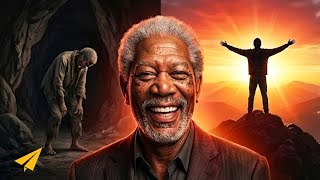
Morgan Freeman shares lessons from his rise from unemployment clerk to acclaimed actor, drawn from a 1990s Charlie Rose interview. He debunks the bootstrap myth, credits word-of-mouth for Shawshank Redemption's success, and emphasizes that courage and imagination matter more than circumstance.
Chapters
Got on the elevator in LA one day and the lady said, "Oh, I just saw you in The Hudsucker Reduction." I had a long haul from where I came from to here, but here we are. Your job as an actor is to give it your best shot each and every time. So there was a period there in the early '80s when I didn't get any work because I would ask these Questions?
He's an American actor, producer, and narrator. He's known for his distinctively smooth and deep voice. He's ranked as the third highest box office star with over $4.3 billion in box office gross. He's Morgan Freeman, and here's my take on his top 10 rules for success.
To collect unemployment, you have to go out and hunt for employment. And they give you— you have a code. And mine was as a clerk typist, so you You go out and you look for work as a clerk typist. And one day, I just, I can't keep being forced to be a clerk typist. So I went to the employment office and I asked to see the supervisor. And I was led into this office and this pretty little lady, redhead, whose name was Mrs. Lipton. "Wha' can I do for you?" And I said, "You're forcing me to be something I'm not. I have to go out and look for work as a clerk typist. I'm not a clerk typist. I'm an actor. So I just can't keep doing it this way." She took this thing and stamped my employment book. Said, "You got 6 months. Go be an actor." So if Mrs. Lipton is alive today, Mrs. Lipton, I'm an actor. The box office success when The Shawshank Redemption came out was Dumb and Dumber. I'm just not gonna laugh. Well, no, but that's, you know, just the juxtaposition of box office and, and What's that other term? Critical. Shawshank got really good reviews. But because nobody could say Shawshank Redemption, it didn't get word of mouth. And I don't care how much you promote a film, if you don't have word of mouth, you ain't promoting it. People have to be able to go and say, listen, I saw this really terrific film. It was called Shanksham? Shimshonk? Got on the elevator in LA one day and the lady said, "Oh, I just saw you in The Hudsucker Reduction." So that was the reason it was not a box office success. No word of mouth at all. Here's a stat from, uh, from your show, and it says the richest 85 people on this planet have as much money as the poorest 3.5 billion. Yeah, right. That's on the planet, however. You know, that's— it's not far off in America. No, it isn't far off in America, but we still— and we still here don't abandon the idea that it isn't finite. Yeah, it isn't finite. If you were born— where were you born? Me?
Yeah.
Baton Rouge, Louisiana. Baton Rouge General Hospital. Baton Rouge, Louisiana. I was born in Memphis, Tennessee. Um, I had a long haul, uh, from where I came from to here, but here we are. Right. So proof is in— the proof of the pudding is in the eating, and here we sit at the dining table. But it's hard to— when you say that to some people, because they say, "Oh, there you go with the pull-yourself-up-by-the-bootstraps thing, and, you know, you're just being respectable. Not everybody can do that." Bullshit. Everybody can. Everybody doesn't— courage. Courage is the key to life itself. There are a lot of people who are born in situations where they say, "Well, I'll never get out of this." So they won't. I say to people who say, "Well, I would like to have done so-and-so-and-so." I say, "Well, you could have done it." They say, "Well, I couldn't get out of here." Man, the bus runs every day. You're exactly right. Yeah, you're excited. If there— if there— if you can conceive it in your mind, if you can think of it, you can do it. That's the human condition. If we can imagine it, we can do it, right? And I think that the, the condition of each individual human— your job as an actor is to give it your best shot each, every time. So yes, I'm going into it with the idea that I'll play it to the best of my ability, and they wouldn't give it to me, the role, if they didn't think I was capable of pulling it off. Or I wouldn't take it if I didn't think I was capable of pulling it off. So what advice would you give, purely in an acting sense, to yourself 30, 40 years ago? Same advice I gave myself 30, 40 years ago. [Speaker:ALFRED BROWN JR.] Get a job. Act. There are, unfortunately, those of us who say, "Well, I want to be a star." That's way out there in the ether somewhere. I want to be a working actor? You can pull that off. So act. Work. Work. Someone asked me once, and you're about to do it, what would you do if you weren't an actor? If you didn't make it as an actor, what would you do? I have no idea. I would act somewhere. Maybe I'll be driving a cab, maybe I'm working somebody's yard. Whatever I'm doing, I'm going to belong to somebody's little theater group. I will act, 'cause I'll die if I don't. I got into the Air Force because I was, as it turns out, I was romanticizing that whole idea. You know, we were refighting World War II. Too, as I was growing up. So we had all these heroic movies, and I fell in love with the idea of flying. And then when I got into the Air Force, I had this big eye-opener that racism was rampant there also, and that I didn't— I had not quite qualified, or suited is a better word, for military life. That kind of unquestioning obedience to a lot of things that I think are stupid didn't quite go over well. Yeah. So when I got out, I was an early discharge. It was almost dishonorable, you know, because I just really didn't fit. But the catalyst actually was I did get to sit in a jet trainer because I had a lot of people behind me to get me into flight school and stuff. But sitting there, it occurred to me that this is absolutely not what I want. It isn't movies. It's for real. These, you know, this little red button on the joystick controls guns with real bullets. And I sat there for quite a while and knew that if I made a strafing run, I needed a camera here, and I needed the people to be able to get up and go back to number 1. So, I got out of I left that plane on the runway at North Island Air Station, a naval air station, and I walked away from that and towards acting. I knew that it was all about the movies. It was all about the movies. I got on stage the very first time when I was 8 years old. I was brilliant. Then I got on stage again 4 years later when I was 12, brilliant again. So by the time I was 13, it was pretty much a foregone conclusion in everybody else's mind— teachers, parents— that acting was gonna be my thing. Um, I hadn't, like, made a conscious decision, "I'm going to be an actor." I don't think you do. I think you just— that's what you do. The first stage play I did in New York, I was working with Stacy Keach and Vivica Lindos. That was a great experience for me. You talk about a master class, you have it there. Okay, Stacy had come out of Yale University, I think, and was much more advanced as a stage actor than I was, but wow, did I have big ears and was I ready to learn. So you just sit and watch. It's always a learning experience. The big thing I learned I learned from working with Pearl Bailey was professionalism. She was total professional, total, total, total professional. She always gave 100%, 110% in performance, and I watched her very carefully. She was one of those performers that you say, this is the way to go. This is the way to be in this business. Be on time, know what you're doing, do it full out, give all you can. That's a lesson. You know, as I said, I went to the movies all the time. I've seen the movies. And at some point it struck me rather dramatically how much I wasn't in the movies, not the way I needed to be in the movies. And if you look at a lot of the disaster movies in that period, the only people left on the planet were white. So now, My thing is, if I get in the movies, I want to make sure that I speak about that. That if I'm able to do it, I want to talk about it. So there was a period there in the early '80s when I didn't get any work because I would ask these questions. I auditioned for Oh, I don't think I even got to audition. I interviewed for the movie The Thing, the remake. So I read the script and I go back for the audition and the producer or the director, one of those, said, "Did you read the script?" I said, "Yes." "What'd you think?" I said, "Well, you've got 11 people at the South Pole. 8 of them are scientists. And then you have a cook, a mechanic, and something else. They're all Black. None of the scientists are. What do you think I think?" Needless to say, I didn't get that job. Again, though, you know, providence rears her beautiful head. When Glory came about, I was just floored because I knew about the 54th Massachusetts Regiment from a one-page thing on this day in history in Jet magazine. It talked about this sergeant who was awarded a Medal of Honor for his activities at this charge with this outfit. So the history is there. It's there to draw upon. But we gotta ask ourselves— we, me, Black people— why aren't we— why don't we figure more in it? I need something that's going to engage me. That makes me sit up and think. I refuse to take part in anything that is going to denigrate a people, especially me. All right, here we go, right?
Do you ever want to go to space? I really shouldn't be doing this.
It's helium.
It's helium, Morgan. It is helium. It's very undignified.
No, no.
Oh my gosh. I think your voice sounds great. It's not undignified.
Some people just have voices like this, so you're actually making fun of those people.
See? I told you.
I want to thank you so much for being on the show, and please, would you ever like to come back?
I'm never coming back.
Thank you guys so much for watching. I made this video because JP Annette asked me to. So if there's a famous entrepreneur that you want me to profile next, leave in the comments below and I'll see what I can do. I also love to know what you learned most from Morgan Freeman, which of the 10 clips had the biggest impact to you and why, what change you're going to make in your business or life as a result of of watching this video? What's the impact? Leave it in the comments below and I will join in the discussion. Finally, I want to give a quick shout out to Chris Shantz from happyworker.com. Chris, thank you so much for picking up my book. It really means a lot to me. For those of you watching, if you want a chance at a shout out in a future video, make sure to grab the book and also email in your receipt so we can keep track. Thank you guys so much for watching. Continue to believe, or whatever your one word is, and I'll see you soon.
More from Evan


How the Biggest Mistake in History Created A Trillion-Dollar Empire | Sergey Brin



9 Machiavelli Principles That Force People To Respect You | Machiavellian Philosophy



The First 10 Words That Instantly Ruin A Sales Conversation | Vanessa Van Edwards

The Top 1% Mindset Behind The First $5 Trillion Company | Jensen Huang (Nvidia)

