How to Transform Your Mindset | 25 Minutes of Barack Obama’s Wisdom
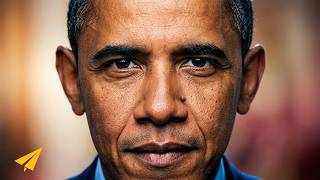
Barack Obama shares his top 10 rules of success, emphasizing that failure is essential for growth. He recounts stories from his college years and community organizing work to show how ordinary people achieve impact through responsibility and persistence. Real examples like Jasmine Perez and Andoni Schultz illustrate how hard work and resilience overcome adversity.
Chapters
I have every confidence, Ayanna, that you're going to succeed at some point, but you'll go through some failures. There is no excuse for not trying. Worry less about what you want to be and worry more about what you want to do. They chose to take responsibility for their lives, for their education, and set goals for themselves. The idea that if you're willing to work hard, it doesn't matter who you are or where you come from. Michelle Lavon Robinson, girl of the South Side.
What's up, Believe Nation? It's Evan. My one word is believe, and I believe that you have the ability to do something special that can change the planet. So to help you on your journey, today we're going to learn from the 44th President of the United States, Barack Obama, and my take on his top 10 rules of success, volume 2. Rule number 2 is my personal favorite, and I'd love to know which one you guys like the best.
With respect to failure, it's terrible, but, but, but necessary. If you, if you are going to try something hard, if you're putting yourself out there in some way, there are going to be times where you screw up or you don't succeed. Or there are times where you do everything right and you still don't succeed. But that's not just true of politics or running a non-for-profit, that's true, some of you talked about being entrepreneurial, if you're starting a clothing line, that's a cutthroat business. I'm sure you, I have every confidence, Ayanna, that you're gonna succeed at some point, but you'll go through some failures. And I think that the most important thing, and this is a little bit of a cliché, but sometimes clichés are true, is to learn from those failures and to have a sense of resilience and be able to examine what is it that I did not succeed at, why didn't I succeed, and what do I need to do better. If you're focused on giving of yourself to accomplish something, then even when you fail at a particular objective, you're still succeeding in learning about how you can accomplish those goals. Maybe someone in your family has lost their job and there's not enough money to go around. Maybe you live in a neighborhood where you don't feel safe or have friends who are pressuring you to do things you know aren't right. There is no excuse for not trying. Where you are right now doesn't have to determine where you'll end up. No one's written your destiny for you, because here in America, you write your own destiny. You make your own future. Dr. King once said, "Before we reach the majestic shores of the Promised Land, there is a frustrating and bewildering wilderness ahead." We must still face prodigious hilltops of opposition and gigantic mountains of resistance. But with patient and firm determination, we will press on. So I don't know about you, CBC, but the future rewards those who press on. With patient and firm determination, I'm going to press on for jobs. I'm going to press on for equality. I'm going to press on for the sake of our children. I'm going to press on for the sake of all those families who are struggling right now. I don't have time to feel sorry for myself. I don't have time to complain. I'm going to press on. I expect all of you to march with me and press on. Take off your bedroom slippers. Put on your marching shoes. Shake it off! Stop complaining, stop grumbling, stop crying. We are going to press on. We've got work to do. Whether we have seen eye to eye or rarely agreed at all, my conversations with you, the American people, in living rooms and in schools, at farms, on factory floors, at diners, and on distant military in the country's military outposts. Those conversations are what have kept me honest and kept me inspired and kept me going. And every day I have learned from you. You made me a better president, and you made me a better man. The sole time in my political career where I think I ran more just because it was the next thing rather than running because I had a good theory of what it is that I wanted to do. And this is a mistake I think a lot of folks who get into politics make, and so when I see White House interns or I talk to young people, I always tell them, worry less about what you wanna be and worry more about what you wanna do. Because when you, when you, When you're more concerned with, I want to be a congressman, or I want to be a senator, or I want to be rich, then some people may succeed in chasing that goal, but when they get there, they don't know what to do with it. And if they don't get there, they don't have anything to show for it. But if you're worrying about, I want to improve education in low-income neighborhoods, or I want to deal with climate change and help save the planet, or I— then whatever you're doing in pursuit of that goal in and of itself is gonna be worthwhile, and it's gonna teach you things, and it's gonna— to put you in a position to have an impact, and then if it turns out as a result that you also end up being successful in politics or whatever thing you're pursuing, then so much the better. The most successful business people that I know, Bill Gates didn't start off saying, I wanna be the richest man in the world. He started off saying to himself, I really think these computers are cool and I wanna write cool software. That's what he wanted to do. Worked out well for him. Young people like Jasmine Perez from Roma, Texas. Jasmine didn't speak English when she first started school. Neither of her parents had gone to college, but she worked hard, earned good grades, and got a scholarship to Brown University as an now in graduate school studying public health, on her way to becoming Dr. Jasmine Perez. I'm thinking about Andoni Schultz from Los Altos, California, who's fought brain cancer since he was 3. He's had to endure all sorts of treatments and surgeries, one of which affected his memory, so it took him much longer—hundreds of extra hours—to do his schoolwork. But he never fell behind. He's headed to college this fall. And then there's Chantel Steve from my hometown of Chicago, Illinois. Even when bouncing from foster home to foster home in the toughest neighborhoods in the city, she managed to get a job at a local health care center, start a program to keep young people out of gangs, and she's on track to graduate high school with honors and go on to college. And Jasmine and Donnie and Chantel aren't any different from any of you. They face challenges in their lives just like you do. In some cases, they've got it a lot worse off than many of you. But they refused to give up. They chose to take responsibility for their lives, for their education, and set goals for themselves. And even when you're struggling, even when you're discouraged, and you feel like other people have given up on you, don't ever give up on yourself. And I remember in 1979 arriving as a freshman and doing what freshmen do, uh, you know, trying to figure out what courses are and trying to change your study habits and trying to identify that food in the cafeteria, what it is, and, uh, and And we were visited on campus by a couple of gentlemen from South Africa who were representatives of the ANC in 1979, 1980. And they spoke about their efforts to overcome apartheid. And for about an hour, myself and a group of students listened to these young men who were not much older than we were described the extraordinary struggles they were going through, the sacrifices that were being made— people who were enduring jail and torture and beatings because they had a sense that somehow, some way, justice would prevail. And that brief meeting I think in some ways changed my life. Because what it told me, first of all, was that ordinary people can do extraordinary things when they're given an opportunity. We sometimes think that our leaders have to be— have fancy degrees, or well-educated, or some public office somewhere. These young men had none of those things. But what they possessed was an anger over injustice that they were able to channel in a constructive, positive way. And I thought to myself that they gave me some sense of the direction that my life might go. And so I became active in the anti-apartheid movement on campuses. And I'm not sure we were particularly effective. As I recall, Occidental College continued to refuse to divest despite the various protests that we organized as students. I transferred to Columbia, and there was similar resistance on Columbia's campus. But over time, I like to think that I was part of that mosaic that applied pressure and ultimately helped those in South Africa achieve the extraordinary liberation that I would witness almost 10 years later as a law student. And I remember the image of Nelson Mandela walking out of prison and understanding that a seminal moment in history had occurred. And that Mandela's long march towards freedom was not his alone, but was part of thousands of footsteps— of millions of footsteps of people all around the world. And I trace back me getting involved in politics to that moment, because I— as a consequence of that organizing on a college campus, I became a community organizer. As a consequence of a community organizer, I— After going back to law school, became a civil rights attorney. As a consequence of being a civil rights attorney, I entered the state legislature, and I now stand before you as a United States senator and as a candidate for President. And so the primary message I guess I have in receiving this award is that all of you represent— enormous potential and enormous possibility for change, because we all know that injustice still exists. It exists here in the United States. In every poor neighborhood and every inner city and every rural community all across the country, there is quiet desperation. Young people's lives are filled with sadness and desperation and anarchy and chaos. And obviously, all around the world, we see those same symptoms of hopelessness made manifest in places like Darfur, in places like the Middle East, in places that too often are forgotten about and not written about until they flare up in tragedy. So I hope that all of you— who are on the brink of doing extraordinary things decide to channel that talent and that energy and that imagination to figuring out how do you move the process along for a better history. How do you put your shoulder against the wheel and move that boulder up the hill? And I'm absolutely confident that If all of you take up that challenge, the world is waiting for you, ready to be changed. Because I think we live in this moment in history right now where the hunger for change, the hunger for something new, the desire to break out of the ordinary, the self-interested, the petty, the trivial, is everywhere. I believe we can keep the promise of our founding. The idea that if you're willing to work hard, it doesn't matter who you are or where you come from or what you look like or where you love. It doesn't matter whether you're Black or white or Hispanic or Asian or Native American or young or old or rich or poor, able, disabled, gay or straight. You can make it here in America if you're willing to try. Don't be afraid to ask questions. Don't be afraid to ask for help when you need it. I do that every day. Asking for help isn't a sign of weakness, it's a sign of strength. Because it shows you have the courage to admit when you don't know something, and that then allows you to learn something new. Michelle? Michelle Lavon Robinson, girl of the South Side. For the best— For the past 25 years, you have not only been my wife and mother of my children, you have been my best friend. You took on a role you didn't ask for, and you made it your own—with grace, and with grit, and with style, and good humor. ¡Gracias, gracias! You made the White House a place that belongs to everybody. And a new generation sets its sights higher because it has you as a role model. So you have made me proud, and you have made the country proud. Malia and Sasha, under the strangest of circumstances, you have become two amazing young women. You are smart and you are beautiful, but more importantly, you are kind and you are thoughtful and you are full of passion. And— you wore the burden of years in the spotlight spotlight so easily. Of all that I have done in my life, I am most proud to be your dad. To Joe Biden— The scrappy kid from Scranton who became Delaware's favorite son. You were the first decision I made as a nominee, and it was the best. Not just because you have been a great Vice President, but because in the bargain I gained a brother. And we love you and Jill like family, and your friendship has been one of the great joys of our lives.
Thank you guys so much for watching. I made this video because Jerome A asked me to. If there's someone you'd like to vote on for the next top 10, check out the link in the description and go and have your or say. Finally, I want to give a quick shout out to John D. Webster. John, thank you so much for picking up a copy of my book, Your One Word, taking that great picture outside the store, doing the interview on your channel. I really appreciate all the support, and I'm so glad that you enjoyed the book. So thank you guys again for watching. I believe in you. I hope you continue to believe in yourself and whatever your one word is. Much love. I'll see you soon.
I will tell you this: everything else is unfulfilled if we fail at family, if we fail at that responsibility. I know that when I am on my deathbed someday, I will not be thinking about any particular legislation I passed. I will not be thinking about a policy I promoted. I will not be thinking about the about a speech I gave. I will not be thinking about the Nobel Prize I received. I will be thinking about that walk I took with my daughters. I'll be thinking about a lazy afternoon with my wife. I'll be thinking about sitting around the dinner table and seeing them happy and healthy and knowing that they were loved. And I'll be thinking about whether I did right by all of them. So be a good role model. Set a good example for that you got a young brother coming up. If you know somebody who's not on point, go back and bring that brother along. Those who have been left behind, who haven't had the same opportunities as we have, they need to hear from you. You've got to be engaged—on the barbershop, on the basketball court, at church. Spend time and energy and presence to give people opportunities and a chance, pull them up, Expose them. Support their dreams. Don't put them down. We've got to teach them just like what we have to learn—what it means to be a man. To serve your city like Maynard Jackson. To shape the culture like Spike Lee. To be like Chester Davenport, one of the first people to integrate the University of Georgia Law School. When he got there, nobody would sit next to him in class. But Chester didn't mind. Later on, he said, "It was the right thing for me to do. Someone needed to be the first." And today, Chester is here celebrating his 50th reunion. Where is Chester Davenport? He's here. So if you've had role models—fathers, brothers—like that, thank them today. And if you haven't, commit yourself to being that man for somebody else. Persevere. Nothing worthwhile is easy. No one of achievement has avoided failure—sometimes catastrophic failures. But they keep at it. They learn from mistakes. They don't quit. You know, when I first arrived on this campus, it was— we had little money, fewer options. But it was here that I tried to find my place in this world. I knew I wanted to make a difference, but it was vague how, in fact, I'd go about it. I— but I wanted to do my part to shape a better world. So even as I worked after graduation in a few unfulfilling jobs here in New York—I will not list them all—even as I went from motley apartment to motley apartment, I reached out and I started to write letters to community organizations all across the country. And one day, a small group of churches on the South Side of Chicago answered, offering me work with people in neighborhoods hit hard by steel mills that were shutting down, and communities where jobs were dying away. The community had been plagued by gang violence, so once I arrived, one of the first things we tried to do was to mobilize a meeting with community leaders to deal with gangs. And I'd worked for weeks on this project. We invited the police. We made phone calls. We went to churches. We passed out flyers. The night of the meeting, we arranged rows and rows of chairs in anticipation of this crowd. And we waited, and we waited. And finally, a group of older folks walked into the hall and they sat down. And this little old lady raised her hand and asked, "Is this where the bingo game is?" It was a disaster. Nobody showed up. My first big community meeting—nobody showed up. And later, the volunteers I worked with told me, "That's it, we're quitting." They had been doing this for 2 years, even before I had arrived. They had nothing to show for it. And I'll be honest, I felt pretty discouraged as well. I didn't know what I was doing. I thought about quitting. And as we were talking, I looked outside and I saw some young I saw 2 young boys playing in a vacant lot across the street, and they were just throwing rocks up at a boarded building. They had nothing better to do—late at night, just throwing rocks. And I said to the volunteers, before you quit, answer one question: What will happen to those boys if you quit? Who will fight for them if we don't? Who will give them a fair shot? What happens to that if we leave. And one by one, the volunteers decided not to quit. We went back to those neighborhoods and we kept at it. We registered new voters and we set up after-school programs, and we fought for new jobs, and helped people live lives with some measure of dignity. And we sustained ourselves with those small victories. We didn't set the world on fire. Some of those communities are still very poor. There's still a lot of gangs out there. But I believe that it was those small victories that helped me win the bigger victories of my last 3.5 years as President. We should feel good about the progress we've made, understanding that we've still got more work to do. It's sort of like, you know, I'm 54 now, so I got to work out harder to stay in shape. And if I'm feeling good in the gym, I want to acknowledge that what I'm doing is working. Otherwise, I'll just go off and have a big double bacon cheeseburger or something because I'll think, well, this isn't working. No, if it's working, then we should be staying on that same path. That doesn't mean that I'm where I necessarily want to be. It doesn't mean that I stop doing some hard work to get where we need to go.
More from Evan


How the Biggest Mistake in History Created A Trillion-Dollar Empire | Sergey Brin



9 Machiavelli Principles That Force People To Respect You | Machiavellian Philosophy



The First 10 Words That Instantly Ruin A Sales Conversation | Vanessa Van Edwards

The Top 1% Mindset Behind The First $5 Trillion Company | Jensen Huang (Nvidia)

