How to Turn Overwhelm Into Momentum | Mel Gibson's Advice in 16 Minutes
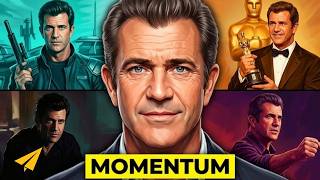
Mel Gibson shares ten rules for success, from absorbing everything on set to making things happen on a budget. When overwhelmed, he says keep moving forward one stroke at a time. He stresses resilience, feedback from people like studio head Sherry Lansing, and creating a fun working environment where talent can thrive.
Chapters
We can all get into sort of feeling, you know, sorry for ourselves or having a pity party about the past or what's happened. It's just not worth it because it affects the present and affects the future. You're supposed to do that. You're supposed to shove the boundaries, and you're supposed to do stuff that's out there, and you're supposed to do stuff that makes people uncomfortable, maybe. I remember before they had all these monitors so you could look at all the different cameras, I was on a four-wheeler in a kilt with long hair, just like, "Wing-ahh!" going around and looking at all the cameras and saying, "That's a good shot." Need motivation?
Watch a top 10 with Believe Nation. What's up, it's Evan. My one word is believe, and I believe in you. I believe you have an amazing gift inside you that I want to see explode out into the world. So let's get your motivation to a 10 and get you believing in you. Grab a snack and chew on today's lessons from a man who went from being the 6th of 11 children, growing up in Australia, and sharing a $30 per week apartment to becoming an award-winning actor and being worth almost half a billion dollars. He's Mel Gibson, and here's my take on his top 10 rules of success. Enjoy! All right, let's kick things off with rule number 1: be a sponge.
I soaked everything up like a sponge. Are you kidding? With he and Peter Weir and, and other directors that I work with, I just, I was just drinking it up because I found it extremely interesting. So I was, I I didn't go to my trailer. I would hang out on the set and ask people questions. I would talk to the camera guys, the lighting guys, the sound guys. I was talking to the director. I would say, "Why are you doing that? What's the significance of that lens? What's it doing?" You know, and it was— and I was just— and they were very generous. This was my school. And I was right at the hub of it, you know? And I could jump in front of the camera and then go back behind and look at it again. So it was a heck of an education. And I wasn't— I was— on the set, you know, not in a trailer someplace.
Rule number 2 is just start swimming.
There's like 3,000 people on the set. You got 9 cameras. There's a lot to do. There's a lot of people to feed. There's people complaining. Everybody has to be in the right place at the right time to get the shot. I mean, logistically speaking, you need a pretty good team of people around you to deal with that stuff, and you need a lot of energy. I remember before they had all these monitors so you could look at all the different cameras, I was on a four-wheeler in a kilt with long hair, just like, wing-argh, going around and looking at all the cameras and saying, "That's a good shot. Can you do this with the frame or put another lens on?" or whatever it happened to be. And you just, look, I find it's so overwhelming sometimes. If you think about the big picture, you'd crawl back into a hole and die. So what you have to do when you're dropped in the middle of the ocean, an ocean of a sea of troubles and people and logistical problems and cameras and infighting and the producers, you know, there's so much stuff going on behind the scenes, you have to ignore it Say you're in the middle of the ocean and just start swimming that way. Stroke at a time, you'll hit land eventually. So that's all there is to it. You haven't really got time once you're amongst it to actually be fearful or too worried because you're just too damn busy. How many decisions do you get asked in an hour, right? When you're in the chair, how many questions, how many decisions do you have to make? And I mean like that. And you gotta do it fast.
Rule number 3, don't get stuck.
It is disheartening when you've been like, 10 years dry, like on the wagon, sober. And you have to read every year or so that you're loaded. So that's disappointing because it's like a public notice that you're loaded, but you're not. So it's an obvious, you know, it's disingenuous reportage, you know. The important thing is you've come out of it. Yeah, I'm still alive, I'm still breathing. I mean, look, we can all get into sort of feeling, you know, sorry for ourselves or having a pity party about the past or what's happened. It's just not worth it because it affects the present and it affects the future. You can't sort of play into that sort of stuff. And there's nothing that can put you into the proper perspective. I mean, you can either be, you know, a bug living in the pile of elephant dung on the floor, or you can get up way high on the big top and look at the whole circus. And looking at the whole circus, looking at things in perspective, is a much better idea.
Rule number 4, my personal favorite: push the boundaries.
As an artist, you're supposed to do that. You're supposed to shove the boundaries, and you're supposed to do stuff that's out there, and you're supposed to do stuff that makes people uncomfortable, maybe. I mean, that's your job. There's the 3 E's. I forgot who said it first. Maybe I said it. I can't even remember anymore, but it's you gotta entertain. That's the first thing you gotta do. And if you only do that, That's perfectly valid if it's just for entertainment. If you can entertain and educate, that's better. And if you can entertain, educate, and elevate, that's even better. I mean, if you could sort of raise people up in some kind of other way, a spiritual way maybe, you know, it's good.
Rule number 5: Get feedback.
I remember it was 3 hours and 15 minutes at one stage, and I had this great editor who I worked with again called Steve Rosenblum, and, uh, Rosenblum and I were sitting there scratching our heads figuring, how do we get a half hour out of this? And we couldn't figure it out because we were so close to it. And it took a studio head to come in and give us a general note. That was Sherry Lansing. She gives us this general note, and we're like, we look at her and we look at each other and said, what would she know? How did she get this job? You know? And 24 hours later, we're going, she's right. She's right. First studio head.
Yeah.
Yeah. But, but you know what? That simple note that she gave us enabled us to go from 3 hours 15 to 2 hours 48. And it just made the thing snap along. It's a world of difference. Yeah, oh yeah, big deal.
Rule number 6 is be a survivor.
I think I always use the same word. I mean, they said, "If you could sum up Hollywood in one word, what would it be?" And it's like, I think I said survival. But if you could, you know, survivor, hey, I'm still breathing.
Rule number 7, make it happen.
"Axl Ridge," that's an independent film. We didn't have scads of money. I mean, there's a lot of bang for your buck there. I think so that, like, long rehearsals and, you know, these are luxuries and they cost. So, you know, I think we went in with a budget of $27 million US on that, which is hefty, but—
On Hacksaw.
Yeah, but for what you get, you know, once you take it to Australia and you get, you know, the government helps you with a rebate, and then, you know, dollar exchange and all that kind of stuff, it beefs it up a little more. You end up with more bang for your buck, maybe $40 million.
Was it looser or tighter on Braveheart?
It was, it was, uh, we had more time and more money on that. And that was 20 years before. I think the budget on Braveheart, like 22 years ago, was more than the budget on Hacksaw Ridge. It was almost twice as much. And we had 105 shooting days on Braveheart, but on this we had 59 shooting days. So you know, you gotta cut the cloth. You know, you gotta make the suit to fit the The cadaver. You have to make things work, and it really puts you on your mettle to sort of like, okay, I need to get the best bang for my buck here. How do I do it? Even to the point where I went and bought two cameras myself, like little $1,500 Blackmagic digital cameras, and we were shoving them under rocks and up people's shirts and, you know, everything.
Rule number 8: Be a good storyteller.
Any experience you have in life enriches your work somehow, good or bad, I think. So, you know, I developed a lot of things while I had some time off. It was the off-season, you might say. And it was— I did a lot of stuff. And it's just, you know, so good to be able to sort of come back and do what I love doing, just tell stories. That's all we are. We're all just storytellers, right? Mm-hmm. I mean, I've told stories to children. I ate stories. We need stories because when we're kicked into this planet, we're like this little stranger on the Earth, and we need to hear these things to reaffirm who we are in relation in relation to our planet, our environs, and everyone else. I thought it was so inspiring. I've never actually heard of anyone who was quite this. It was the pinnacle of heroism. I mean, it was like, wow. And he inspired me. And I couldn't be like that, I don't think, not in a million years. But it gives us all hope, I think, that if we can see someone who behaves like an ordinary man in hideous circumstances doing extraordinary things, I think it— It speaks to me, speaks to my soul, and hopefully to others, you know. So I think it's a story worth telling. If you're gonna spend 18 months on something, it better be worthwhile.
Rule number 9: Create a great working environment.
You know, I say stuff to the actors like Garfield or Sam Worthington or Vince Vaughn, and I think, "Why, maybe I shouldn't have said that," because it, you know, you got to be careful. Mostly I think a good director is the guy, if he has good people, he kind of leaves them alone, and if it's not broken, don't fix it. To fix it. And it's mostly stuff like, yeah, do it a little faster, will you? Or, you know, maybe some other stuff. What is Mel Gibson like as a director?
Oh yeah, just so passionate and loving and nurturing. And almost like, like, you know, a good director is like a good mother, and he's a very good mother, you know. Just a very, like, gentle, compassionate passion. He's in the scene with you, really. He's there with you every moment and really trusts his actors, really trusts that you know where to go and how to get there.
I've read he makes jokes on set. Oh, yeah.
No, he keeps it light when it needs to be. Yeah, he really does. Yeah. I think it's more for him than it is for anybody else. He has a kind of nervous tick. When things get too serious, he'll just kind of do some gallows humor.
And rule number 10, the last one before 3 very special bonus clips, is have fun.
When Halloween came around, we thought, well, let's go out for Halloween. So I bought some kind of goofy costume. Goofy masks and some gold chains. There was no cohesiveness with the stuff that we were wearing. But Mel had this exceptional mask that was done by a professional. It looked like a real person, maybe Nick Nolte, but it looked like a real person.
This close, you can't tell. This close, you can't tell.
You can't tell. I mean, it looks like a— it doesn't look like a mask. It looks like Nick Nolte is in the room with you.
It looks like a pissant hologram.
Wait, wait, wait, did the paparazzi pick up on this?
Well, no, I think that's what he would do. He could wear that and they would know where he was. I said, "I think that's what you could do. You could walk out of a hotel and people would say maybe Nick Nolte's walking out of a hotel, but they wouldn't know it was you." But we went out on Halloween and so we went out to like restaurants and stuff and Mel was there with this mask that looks like a real human being, right? And we're kind of in these ghoul masks, whatever, but he has this on and he'd be talking to somebody, they'd be having a conversation and all of a sudden, but it didn't look like he had a mask on, it just looked like this was a real person. So then he would grab at his neck and he would rip his face off as far as their perspective was. And you would see them go, "Oh my gosh, this isn't who I think I'm looking at." And then, "Oh my goodness, it's Mel Gibson underneath this." And that would get, uh, Alyssa quite a big response. And, uh, that did not get old. We enjoyed that. That was a fun Halloween.
This just kept going.
A few times, not too much, but a couple of times.
You're a bunch. I'd like to see people's minds walk away. It's like, "Bleh!" Funny.
Mel, that's amazing. I wish we could, like, reenact it right now.
You had a funny story, Mel, where you did it to a friend of yours. Who was like a stunt guy or something?
Oh yeah, no, he was a friend of mine. He was a 3rd dan black belt. I was talking to him one minute, he turned away, I put it on, 2 seconds later he turned back, he looked at me and he just went, "Gah!" And he punched me in the face. Like really, he did, really hard too. I hit the deck, but I was laughing so hard it was worth the hit. It was just like, it was the best reaction I've ever seen.
Now I've got 3 very special Mel Gibson bonus clips on finding your gift, standing strong, and doing what fulfills you. That, my question of the day is, I want to know, what was your favorite Mel Gibson movie of all time? Leave it down in the comments below. I'm really curious to find out. Thank you guys so much for watching. I believe in you. I hope you continue to believe in yourself and whatever your one word is. Much love. I'll see you soon, and enjoy the bonus clips.
Just one chance to come back here and tell our enemies that they may take our lives, but they'll never take Throughout his career, Mel's movie choices have been courageous. In 1995, he starred in the blockbuster Braveheart about Scottish national hero Sir William Wallace. He also directed the epic. It's a big jump to being a director because I had this yearning to do it. Ow! I enjoyed it immensely. I get a kick out of orchestrating the big stuff and having stuff play out or roll out the way I kind of visualize it. And I think I just, I have a gift for the visual. I look at a character like Desmond and it inspires the heck out of me because it's, it, He had a faith that I don't think I have. You know, so when you see somebody else who's able to really put their money where their mouth is, if you like, about what faith is to them, and to really kind of crawl into the mouth of hell. Yeah. I don't believe that I could do that. But I certainly admire someone who can. And that's why that story I find so fascinating. And it's— But isn't it striving? Isn't it the striving to do it, not being perfect. Well, yeah, basically saying, well, yeah, I'm gonna try to get through this when everybody tells me I shouldn't. Well, that's true. Yeah, yeah, of course. And you know, we're all going to have those moments, and it's being able to stand strong in that wind, you know. Well, you had that moment. You had that 10 years ago. Oh yeah, sure.
This is a—
this was a big deal where after Apocalypto comes out, you get the DUI. Oh yeah, all that stuff. Yeah, but what— how do you rise above it as you have? Well, you have to because it's like a tsunami of crap that hits you all of a sudden. And you know, okay, I'm on 8 double tequilas in the back of a cop car having a nervous breakdown. I said some stupid shit. And it's like, you wake up the next day and like, ugh. And it's like, you know, I made all the necessary mea culpas and all that sort of stuff, but 10 years is a long time think about that. So you can't dwell on it. You got to just move ahead, do the work, and get better. Was there a moment that it changed for you, acting? Yeah, I think it was. I think when I started directing, I sort of found this whole other world that was more fulfilling, and, um, I ceased to be, um, a mere component And, um, I felt like I was kind of like— maybe it's some kind of megalomaniac tendency of me, I don't know. But I just like the whole— I like being able to sort of be the, you know, the main storyteller. Raise your standard. Apple, at the core, its core value is that we believe that people with passion can change change the world for the better. Not one drop of my self-worth depends on your acceptance of me. I don't ever give up. I'd have to be dead or completely incapacitated.
Hey, Believe Nation! If you want to see my all-time favorite top 10 rules of success, I have a very special secret video for you. These are the individual clips that I have personally learned the most from and applied to my life and my business. Check the link in the description for details.
More from Evan


How the Biggest Mistake in History Created A Trillion-Dollar Empire | Sergey Brin



9 Machiavelli Principles That Force People To Respect You | Machiavellian Philosophy



The First 10 Words That Instantly Ruin A Sales Conversation | Vanessa Van Edwards

The Top 1% Mindset Behind The First $5 Trillion Company | Jensen Huang (Nvidia)

