How To Turn Your YouTube Channel Into A Sales Machine
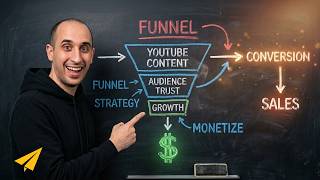
Evan Carmichael coaches Drew Baird, CEO of Moon Audio, on monetizing the company's YouTube channel. They discuss linking Shopify to YouTube's merch shelf for direct sales, building content around product reviews and home-studio tutorials, and using limited-edition items and customer stories to drive repeat purchases from audiophile collectors.
Chapters
You need to hear this coaching session with Drew if you want to turn your YouTube channel into a sales machine. Drew runs Moon Audio and sells incredible stereo gear to serious music lovers all over the world. He already has a 50% return customer rate, but he wants to reach even more people and tell better stories. I show him exactly how to link his Shopify store right to his videos for instant sales. We also talk about a new video series that will get his fans super excited to buy and connect. Enjoy.
So we created the company called Moon Audio. Nicole calls me an audio psychologist. When a customer calls me up, you know, it's sort of like, tell me about your audio woes. Like, we don't talk about money when they call up. I talk about what kind of music they listen to, where they're going to use the music, how are they going to listen to, you know, there's like 100 questions I want to ask for 2 reasons. One, I want to build a relationship with this person, right? Because at the end of the day, I want these people to come back and feel like this is sort of home, if you will, in a way, in where they're shopping from, right? I always want to focus on quality, and that's something that large companies have a tough time dealing with is when you explode, you know, okay, we want to conquer the world. Well, I'm not about conquering the world. I'm about doing something once and doing it right. You know, everything that we sell and build and whatnot, I take home and I play with, and if I don't like it, I'm not going to sell it. And that's been our mantra going forward. Quality over everything else.
All right. We got Drew here from out of town. Awesome. Welcome aboard. Part of our mastermind group here. We're going to spend the next couple of days talking YouTube and thought leadership. But before diving into how it can help, why don't you give a quick overview about the business for people to learn about you?
So I'm Drew Baird, CEO and founder of Moon Audio. We started around 2001. It started out as sort of a hobby income. I was an engineer by day, and what happened was we got married, we were having our first child, and I'd always been really heavily into audio equipment. I DJ'd in the '80s and '90s in high school and college, and I went to Penn State to become an acoustical engineer. I wanted to actually start a speaker manufacturing company, but, you know, this is way before the marketing that you can do now on the web. Very complicated back then. If you didn't know somebody or get into something, with somebody, you'd end up with a lot of firewood on your hands, because you had to build a lot of cabinets. And if you didn't take off, you were done. So I sort of chickened out, went into structural engineering instead, and then always dabbling with audio. And so when we bought our first house, and we were having our child, we didn't have a whole lot of money. And I was building a home theater. And this is at the beginning of the home theater revolution, if you will. And I didn't have all the long cable runs. And so I knew I could build the cables myself, because I already built the speakers, and I was modifying equipment and whatnot. So I bought the connectors and wire of really one of the good name brand cabling companies back then, built these cables. This is right around the time that eBay started. I had some leftovers, so I threw them on eBay to get some of my money back. They sold in a day. And so I was like, oh, here's a great way to make some hobby income to buy more toys, more audio gear, because I was really into audio, right? And it just took off like wildfire. I started doing all kinds of custom connections and terminations. The iPod comes out. You can't run down to Best Buy and buy any kind of cables to connect an iPod to your stereo. Nobody was making a 30-pin dock to an RCA. Or mini cable. So I started sourcing those connectors, and that helped me revolutionize sort of that part of the market for us. And then headphones got crazy. You know, portable listening took off in 2008 when the real estate market crashed and everybody was traveling more. They were downsizing. They couldn't have their big home theaters and their 2-channel stereos. So they were doing portable headphone setups. A guy by the name of Jude Mancilla started the world's largest audio forum for portable audio called Head-Fi. And he called me up, and he said, hey, can you make me a headphone cable? 'cause he had a pair of Sennheiser HD 580s that had detachable cables, and most headphones didn't have detachable cables back then. I found the plastic injection molding company that did the connector on there. It was actually a medical-grade connector. And voilà, I made my first headphone, headphone cable. And then Beats comes to market, and that sort of revolutionized headphones in a totally different way, because they were using it as basically jewelry for men, in a way, right? It was more about the way it looked. Everybody was wearing it as an accessory. But that helped sort of take the headphone market to the next level. With Apple, with Beats, with Jude calling me up about the headphone cable, you know, we've along the way had just had these perfect storms, if you will, to bring new avenues of building custom high-end audio cables for markets that really didn't exist in the cable market. And essentially, we call our cables jewelry for men. I mean, they can't just sound good, they also have to look really good. I mean, all of the toys that we sell, and we don't just manufacture cables, but we also sell high-end audio gear, It's like any other hobby of car collecting, sneaker collecting, watch collecting. It's not just about what the device does, because I mean, you can buy a watch at Walmart for $5, or you can buy a Rolex for $20K. They both tell time, but one does it a whole lot sexier. And so that's sort of the stuff that we sell, are the sexier, high-end toys for big boys stereo systems, if you will. And our cables are essentially the carrot for the gear. And the gear is the carrot for our cable. So we offer a one-stop shop where we do total customization. Everything is built on the fly. Most cable companies build and manufacture all their stuff overseas in Asia in standard links, standard configurations, whereas in Cary, North Carolina, we build everything on the fly, can deliver it to a person in 2 to 3 days, any kind of customization. Our rule of thumb is if it can be built, we will build it. And there is no standardization in high-end audio. And like your camera gear here and video gear, there's all kinds of different connectors And if you want to connect different brands together that don't have the same connectors, we sort of found a little bit of a niche in the marketplace.
Very cool. I love the history lesson. That's awesome.
Yeah, that's about as quick as I can tell. That was great. That was 25 years in like 30 seconds.
I mean, you know, I love it, Drew. Anyway, so then now getting to YouTube and being here, how can I support? What's on your mind?
Well, I mean, we learned real early on that we never had a brick-and-store business at the beginning. We started 100% online, and eBay sort of fueled that, right? That was the new revolution of online selling, right? And so then the next thing that we learned, you know, I don't know, we'll just say 10 years ago, I can't remember the timeline at this point, is that you can't just be a retail business on the internet anymore. You have to be 50% a media company. I mean, we do writing in-house, video directing in-house, all our photography in-house. So we don't just manufacture cables and sell audio equipment. We have to be a full-blown media company to compete. You can go to any website and everybody is maybe selling the same device. How do you stand out, right? So you have to try and be the technical expert. You have to give lots of advice. You have to give authority. And so we learned that, you know, now YouTube is sort of the next way for— everybody is on their phones, you know, for good or bad reasons, right? I mean, it's, you know, the device is a blessing and a curse at the same time. But everybody is sitting there scrolling constantly, watching podcasts, watching videos, doing everything on their phone. So YouTube is the next evolution revolutionary step for all of the retail businesses to get their name out there for branding, to show what they do, to show their expertise. And so that's why we're doing YouTube videos. And we're also explaining not just, you know, it's not just about buy, buy, buy, sell, sell, sell. It's about the passion. I mean, I quit my engineering job in 2010 and went to do this full-time because I absolutely geek out on all this equipment. I absolutely love music because, I mean, I was born and raised in New York, and in an incredible time when hip-hop started, and house music, and electronica. I was a club kid. I mean, music is my passion. So to be able to do something that's your passion, and then express that in a video to try and get other people and more community— it's about community at the end of the day, right? I go to all these audio shows, and it's not so much about going to the audio shows just to show what we're selling and showcasing. I love meeting the customers. I love hearing the stories. I love sharing stories about the music. I mean, Music is infectious. It's almost like a drug for me. I mean, you think about a song that brings back some sort of memory of, you know, you're in a car on the way to the beach with your buddies in college and this cool song comes on and you're just pumped to get to the beach, right? You know, it brings back memories and nostalgia from the past. Music can get the hairs on my arms standing up because I get excited about it. It just brings back memories. It's good for the soul, right? We've had some really cool customers. We have one customer that is an anesthetist for open heart surgeries, and they play music in the operating room. They ask the person that's going under first what's their favorite type of music, and they will play music during the operation. And they say that 9 times out of 10, the patient will come out of the anesthesia and will heal much better because something about the music being played while they're having this very invasive surgery has helped them mentally. Your brain's always on even when you're knocked out, right? And so that's the sort of storytelling that I love that customers come and tell us. Like during COVID we had so many people in New York City that they called us up and they say, I need this portable headphone system, a nice digital audio player, a nice pair of headphones, because I'm working 24-hour shift in the hospital trying to keep people alive in New York during COVID And I'm going to maybe get 2 hours off in the middle of the night where I need to unwind because they're seeing misery. And they're stressed out and tired, and so they'll put on their favorite jazz music and get back to relaxing again so that they can go out and save lives. So there's so many cool stories. It's not just about the toys, but it's about the music and the community that I love so much about this business that we're in.
Do people buy bulk at all, or it's a lot of one-off sales?
Well, we've been very lucky that we've got about a 50% return customer rate, which is huge for a retail store. And the bottom line is, like I said, I said earlier about, you know, hobbies, you know, collect— these people are collectors. They're called audiophiles. They're really into the equipment. There's always a new toy. There's always going to be something down the line. And so people are constantly selling off their equipment, buying new equipment, or some of them are just— I've got some customers that we've recabled like 30 headphones for them, and they've got a different headphone based on— because they all have a different sound signature, a different coloration, and each one of them for the mood that they're in or the music they want to listen to, they'll use a different pair. So they're collectors, they're hobbyists, they're like any other collector.
So, but it's one person buying multiple things over many years.
Yeah.
Not a lot of bulk sales of somebody who'd be like, I want 1,000 cables.
No, I mean, well, we might outfit like an entire home theater. I mean, you're going to need a lot of cables. We only sell direct. We don't resell for the simple reason is that that, you know, we want to keep our, uh, our prices fair for an incredible end product, right? You know, if you get into reselling, not direct, you've got to have a 3-tier markup, right? Because you got to deal with distributors, retailers.
Yeah.
Then you go from having a $200 cable to now costing $1,000, right? So by selling direct to the consumer, we're able to provide them with an incredible value for performance that's going to compete with the big boys out there, right?
But the highest end is going to be like high-end homes. We're not doing hotels, convention centers.
Yeah, we don't do— we're not in the commercial. This is really 2-channel audio. These are the people that are really nuts about, you know, music. Yeah, you know, not background music. They're going to sit down, they're going to break out a cigar, a glass of wine, or a brandy or something like that. You know, they're, they're the serious listeners. And that doesn't mean that we don't deal with what we call newbies, because it all has to start somewhere. We've got plenty of young people that start out with And there's nothing wrong with a $100 pair of headphones, and there's nothing wrong with not buying a headphone cable, and, you know, and getting into it, because at some point they're gonna get a better job, and they're gonna upgrade, and they're gonna upgrade, and upgrade, just like anything else in this world. Cars, you know, we start with a junker in college, and then at some point, hopefully, we're gonna have a Mercedes, or a BMW, or an Audi, or whatever, you know.
Are you guys using the merch shelf on YouTube? Mm-mm. No? Okay, so this is actually huge for you. Can you integrate with Shopify? Yeah, perfect. Yeah, so YouTube, underneath videos, yeah, they have a merch shelf.
I've started to see that on a few videos I've watched.
So you can— they can one-click then buy. If you have an integration with Shopify, they can just buy your whatever products you're talking about in the video, on that video. And you can either do it, uh, you can have some products that can be across every video I don't know if there's a certain cable that's your best seller or whatever that you can say, hey, every video on the channel show this, or you can customize it that when we're doing a review of this, then right underneath the video before the comments, I don't know if you like, there's description, there's comments, but above that is the merch shelf. Most people use it, uh, for t-shirts and hoodies, and that's how it started. It was just the first integration with a company called Teespring. Yeah, so you can just sell your merch. But when they integrated Shopify, anybody who has a Shopify integration can sell their own stuff through the— to that shelf.
Gotcha.
Uh, so if you've already done the Shopify integration, then under each video— how many videos on the channel? You've done a lot of work.
I don't even know. There's a bunch. There's a lot.
Yeah, so it's like the merch shelf will show a picture of the thing.
I know exactly what you're talking about. I've seen it.
Pricing, quick—
I just saw it last week.
Yeah, first time for your industry.
Yeah, for our industry.
Yeah. Great. So that you guys should set up— well, like, should— like, that's an easy revenue unlock for sure for you guys. And if you have 500 videos, I would probably just start with a— for the whole channel, pick your best sellers, and then whatever your top videos are, go in order of most popular that's still getting views, and then customize whatever's on that page. Because to do 500 merch shelves customized is going to take time for someone to do that, right? But over time you work your way through. Every new video launch has a customized merch shelf, and then work your way through the catalog. But overnight, just set it up, apply to all 500, and you'll start making more sales of your best products.
Without a doubt.
That's an easy integration. It's great for e-com, right? A lot of people, if you're selling insurance or something, like it's not gonna—
Right.
It's not gonna work. But for you guys, you're already doing the work of taking product photography and doing descriptions and landing pages and all that stuff, so. That's an easy integration. Okay, cool. Well, that's already a huge win because you can apply that to all your videos on your channel as soon as you get approved and it's like an overnight thing. That's great. What's the content cadence now? So you're doing, you're doing the reviews, you're doing some of the biz dev interview shows.
So we do top of funnel, bottom of funnel, in between, like, you know, I mean, I've really enjoyed what we started doing because of the fidelity exchanges, the podcast with other people that are in sort of somewhat related businesses. It's, you know, it's about collaboration. It's trying to find new avenues and new directions of other people that we can support and they can help support us. That's been fun. We haven't done that until recently. We actually started 6 months earlier to start doing podcasts more with manufacturers, but now with doing some of these collabs and trying to figure out who are the right people and the right sort of markets to figure out some kind of collaboration process. That way, they build off of us and we build off of them. And that's been fun. And this gets back to the storytelling. I love the storytelling, and it's not so much about in these videos sell, sell, buy, buy, you know, it's more about talking about the journey of where we've— why we're in this, why we're doing it, the passion, all that stuff. So it's fun.
I mean, Nicole and I were looking at one of your videos that you did where you had the founder and, and somebody else on with him.
Yeah.
Um, and it's great because those guys have probably never done an interview before, and once it's up, even to ask, hey, like, maybe that should go on your website, or maybe that should go to your email list. Yeah, as well, right? So it's a, it's a win for them, but now you get access to their our entire email list, correct, as well of clients. And it's probably the best marketing they've ever done. They probably never told their story because manufacturers aren't great at that. They suck. They're terrible. They cannot storytell.
No.
And if you're getting their story out in a great way, it's like, who is this Drew guy? What's Moon, right? Yeah. But then they, they, their own marketing to their client lists suck. Yeah. And so now if they can send the video of them looking good, that happens to feature you. Hey, we got interviewed with Drew from Moon Audio. That's worth at least an ask to say, one, do you think it fits to put it on your website, on your About Us page to show you guys? Plus put as an email to your email list of clients because it's probably the best story they've ever told in their entire— they might have been around for 50 years and they've never told the story as good as you pulling it out of them. Exactly. Which then like, who's Moon Audio? Who's this Drew guy? Right. Which then generates interest and attention. So that's a great That's a great series to continue doing. What's the Honus Wagner— it's the most expensive baseball card. Like, what's a Honus Wagner in your world for the collectors?
Well, I mean, we sell a brand called DCS out of the UK, and they've actually got a digital-to-analog, uh, setup that's about 6 boxes now, and it's a quarter of a million dollars.
Okay.
And this is just a digital-to-analog converter, so it's not the amplifier, it's not the speakers, it's not none of the cabling or anything like that. So just this one piece that's converting a digital signal either from a CD or from streaming service or whatnot to analog, so the rest of your equipment understands what to do with that signal, right? Because you have to convert it to analog for a preamp and a speaker to then pass it on.
Do you sell that?
We're in Raleigh, North Carolina. There's, you know, if I were in Dubai, yeah, I'd have no problem selling that, right? To take on the overhead of a quarter of a million dollar piece of equipment that probably nobody in Cary, North Carolina is going to buy. And that sort of piece is a little bit different, you know, that's a luxury piece, right? You've got to go to the home, you've got to set it up.
100%. Could you sell it as a distributor?
Well, you have to have a buy-in for this, so I've got to have one in my showroom. So for a quarter million dollars, do you know how much demo gear I can buy for that showroom? It doesn't make sense.
No, no, no. What I'm wondering is if there— or is there anything even above that? Or is there like, uh, if you're going collectible, collectible, then it could also be less about the, the, um— so quality of the gear is one thing, and how nice it looks and the performance, but also like this is the thing that Michael Jackson used or something, right? Like, this is the cable that whoever used. Is there a market for that? Is that a thing?
So, you know, we're one of the largest US IEM cable manufacturers in the US, and this is for in-ear monitors. And we've sold tons of cables to, you know, I'm not gonna mention a whole lot of names, artists, right?
Yeah.
The bottom line is that doesn't really get you sales. You know, I can say, okay, Elvis Presley had our cable, but that's not gonna get you sales to be— unless he's gonna go on go online and say, hey, go buy Moon Audio's cables. And I don't have that sort of— I don't have the juice to get him and his lawyers to agree to that.
For 1,000%, if there's some— whether artists that you might have a relationship with— uh, we did a promotion with a launch of, uh, trading cards for entrepreneurs. We raised 6 figures for a charity, and one of the prizes we had was a Steve Wozniak signed baseball. Yeah, right. And so like, we use that as a— now Steve Wozniak doesn't do baseball, but that's right, but —what, a Steve Wozniak? And in the entrepreneur community, to have like a Woz sign anything is kind of cool, right? So it's less about— I don't even know what kind of baseball it is. It doesn't matter, right? Like, the quality of the cable may not matter. It might be a 5-year-old cable that they're not using anymore. But the fact that it came from whoever's house is— I'm just trying to lean in. Like, there's a whole— so the product reviews is awesome, and the like trends, and the tips, and as well as like be more thought leadership videos of like, how do you set up a home studio? What are the basics you need to know? And how do you go from what's the $5,000 to the $25,000 to the $100,000 package and like everywhere in between? Or the starter headphone or cable to $100 up to what, what's my journey as a buyer, right? Those are all cool videos that you make about leadership. I'm just leaning on the collector side because you said collectors. Yeah, like that's a cool potential show that you could also then hopefully it's fun to make, but also valuable for your audience because it builds community around like the crazy set, either the crazy setups people are doing, what's the most expensive setup that somebody has and like filming with them to show their crazy setup that they've done, or something collectible that doesn't have a high quality, but because it came from somebody that then you can, you don't need Elvis, I mean, it'd be great, Elvis isn't dead, he's going to come back and he's going to say, "You've got the best cables." "You and Nicole got the best cables." You know, that's, I guess, the endorsement. But even just the fact that this came from Michael Jackson's estate or whatever, and then you raffle it, you give it away. Like, it's just community building that whoever, anybody who buys this month also gets a chance to win the Michael Jackson cable. And you frame it and you make it look— and it might be a piece of crap cable now, right? A decade later, it's terrible. But it's a collectible. And you treat it like a collectible. And like, whoever owns that is going to talk about it forever. And then you can even interview them, have them as a guest on the show. Talk about them winning the thing, tell their story. It's story, like, why do they care so much? How did they get into the collecting in the first place, right? And you just follow your curiosity to pull out their story and like why they care about music so much. So hopefully it's like, it's a fun show to make. Yeah, also builds community but also generates sales in that every month there's a new collectible item or quarter, or I don't know how hard it is to secure these things. I'm sure there's like if you research estate sales or even eBay, or maybe even grab some old gear from some of the artists that you've, you know, like, they may not endorse it, but can they give you a cable and like have a signed card, you know, and can you sell that or give it away? It's like it's a giveaway, or we've raised money for charity. Like, it doesn't even matter. Just, it's a fun thing for your community that every sale in December over $200 enters you one contest to win this Michael Jackson cable or whoever, right? It generates sales for you. It might increase the upgrade cycle because I was thinking about that. I was going to wait till the next one, but oh, I might get the Michael Jackson cable. And it's fun community storytelling, right? You can even say this isn't the greatest cable. Like, I would have upgraded to this, but like at the time, I don't know how much you know about the history. Like, if you can look at that Michael Jackson cable, like at the time in the 1990s, that was actually like a really killer cable, and here's why, and whatever stories you have. And then the winner, whoever wins the contest, comes on the show. You mail it to them. They show it up. You tell their story, what got you in that. You're connecting with customers like you're already doing in person, but now on the show. It won't be the most viewed video on the channel compared to the thought leadership ones. It's fun. But fun and sales. Like, let's get these collectibles. To drive a monthly challenge with a different cable that then you— the framing isn't expensive, the mailing out to them is not that expensive, and it can drive a lot of sales and hopefully fun, maybe even fun for you of like, who are the artists that you like, hey, I'm touching a cable from John Lennon or whatever.
We've got a good relationship with a guy that does remastering of old analog tapes to digital, converting it to digital for the future. Yeah. And I won't mention the artist's name, but there might be something there that we might be able to—
Everybody cares about the guitars, right? Who cares about the cables?
Stevie Wonder.
So anyway, well, but like a Stevie Wonder cable, chances are most of these guys are just throwing it away. They're saving the guitars and the pianos and the drum kits and all that. But I mean, I mean, your cable, like Stevie Wonder, just something he has from his journey. Right, right, right. But like, people don't respect the cables. Right, or the headphones as much, right? So if you can get them, even if it wasn't yours, but here's this— the journey— 1990s Stevie Wonder, Michael Jackson, whoever, right? Sure. Pick the guys that you like. Uh, it shouldn't be that expensive to acquire them versus a guitar, without a doubt, right? Yeah. And you can prove some authenticity and have a super fun competition that raises sales, right? If you have your email list. It's only because you said community, I can tell how much you actually deeply care about community and storytelling. And so it leverages both of those to have some fun content, but also get more sales. Yeah. If every month there was a new challenge, it's not just, here's why you should upgrade to the latest cable, but spend $200, you get a ticket, you might get to see you on their cable. Like, then how cool is that to have the winner come on and like freak out that they won? That's right. And then you spend half an hour talking about why they care so much about music and get their story, right? Exactly. I'm excited. I might, I might enter that. This competition. Now I got— I got to buy my guy Justin some gear. These guys need to—
new headphones, man. They're terrible.
Okay, people want to learn more about you, where are they going?
Um, moon-audio.com. I love it. Yeah, very simple.
To watch me coach another amazing entrepreneur, check the video right there next to me. I think you'll love it. Continue to believe. I'll see you there. I'm sitting down with Jen and Matt today for a powerful coaching session. These are amazing people who help working parents break free from feeling trapped in their own lives, but right now they are stuck overthinking their YouTube channel.
More from Evan


How the Biggest Mistake in History Created A Trillion-Dollar Empire | Sergey Brin



9 Machiavelli Principles That Force People To Respect You | Machiavellian Philosophy



The First 10 Words That Instantly Ruin A Sales Conversation | Vanessa Van Edwards

The Top 1% Mindset Behind The First $5 Trillion Company | Jensen Huang (Nvidia)

