How to Win BIG: Trump's Top 10 Rules
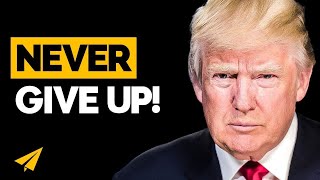
Donald Trump shares his top rules for success: never quit, work hard, love what you do, handle pressure, go against the tide when confident, seek mentorship, maintain discipline, and focus on branding and quality. He draws on personal stories from the 1990s debt crisis and his upbringing to illustrate his entrepreneurial philosophy.
Chapters
Whether it's Microsoft or Google, I mean, so many people that have really hit big have gone against the tide.
It may seem like you have no chance. It may seem like it's over. Never, ever quit. If you're a quitter, I hope you quit right now and stop watching immediately.
And people that can handle pressure can be entrepreneurs, can be successful.
He's an American businessman, politician, and 45th president of the United States of America. As of 2017, Forbes listed him as the 544th 4th wealthiest person in the world with a net worth of $3.5 billion. His presidential campaign received unprecedented media coverage and international attention. He's Donald Trump, and here's my take on his top 10 rules for success, volume 2. Rule number 2 is my personal favorite, and I'm curious to figure out which one you guys like the best. Also, guys, as you're watching, if you hear something that really resonates with you, please leave it down in the comments below. Put quotes around it so other people can be inspired by your sharing. And also, when you write it down, you're much more likely to lock it in for yourself too.
Enjoy. What would be one word of advice you would have for an upcoming businessman, for a future businessman?
Um, knowledge.
Knowledge. But if it's one word, one word's very hard for that, but the word is knowledge. But you get knowledge through experience. One of the things people talk about is luck, and I do believe that people are lucky, and some people are luckier than others, I do believe that. But there's also an expression, the harder you work, the luckier you get. And I can tell you 10 instances where I didn't quit. It was 1990, the world was coming down, the debt markets were, everybody, All of my friends and enemies were going bankrupt. I never did.
And the— but try—
I mean, the times were actually just terrible. And even today you look at times and you see what happens and you have to learn. But the word luck is very interesting. But if I didn't work really hard, I probably would not— almost definitely would not be here today. And unless you had me up as a man who at one point was successful But let's see what a loser looks like. So you have to work hard because it is true, you can develop luck through hard work.
Your first book, The Art of the Deal, begins with a simple sentence that many people might find hard to understand. You say, I don't do it for the money. Can you explain that?
Well, I do it because I love it. If I didn't love it, I wouldn't do it. I have bad days, I have good days, I have days somewhere in the middle, but the end result is I love what I'm doing and I don't do it for I'm not doing it for the money. I do it and I do it well. I'm the biggest developer in New York. I love building buildings. I have a lot of fun building buildings. The fact is I do it for fun. I do it for game. I do it for sport. I happen to make a lot of money doing it. If I didn't enjoy it, if I didn't really love what I'm doing, I wouldn't be successful.
I wouldn't be sitting with you today.
What's the implication of that for someone watching this who wants to create greater wealth? What's the message in that, do you think?
Well, the message is you have to love what you do.
If you do it for the money alone, it's probably not going to work. I have friends where I tell them, get out of this business, which is a good business, and go into another business, which isn't as good a business, because they like the other business better. They'll do better in a less good business, so to speak, than they will in the better business because they like it.
Going against the tide is great if it works. Now, it doesn't always work, and you really have to be smart to go against the tide because you're going against a lot of smart people. But when you get it right, you'll end up better. Whether it's Microsoft or Google, I mean, so many people that have really hit big have gone against the tide. But you have to have great confidence in yourself. You have to be the right person. There are very few people that can pull it off, but when you pull it off, it's great. Same thing in real estate. You go against the tide. People are selling, you're buying, the tide changes.
Never ever give up. Just keep going forward. Never stop. It may seem like you have no chance. It may seem like it's over. Never, ever quit. If you're a quitter, I hope you quit right now and stop watching immediately, because you'll never make it.
Now, you own these incredible casinos and hotels, uh, and the towers in New York City. You're gonna build this, uh, world's tallest building now in Television City. When is enough enough, or, or will Donald Trump never be satisfied with the, the deal-making and the acquisitions?
Well, I'm like a lot of my friends from Houston. I just keep chugging. I mean, all you can do is just keep going. Life is sort of a pretty short experience, and you have to maintain some kind of an equilibrium. And the way I maintain that is to work. And I enjoy what I do. I love what I do, and I hope I do it well. And so I just keep going forward, Dan, and so far it's paid off.
Are you smarter than most people who would call themselves entrepreneurs? Do you work harder? So what is the deal with you anyway?
Well, that's an interesting question. I don't know if anyone's ever asked me the question, am I smarter than other people? I think that without a certain innate intelligence and without a certain drive, you're not gonna be successful.
I have a friend who was not successful at all, but was really up and coming, and he had a thing. He would only fly first class. I'm not saying do this, because for somebody it won't work, but he needed that mentally. Right. He wanted to fly first class because mentally he wanted to think he was the best and that's it. And even though he didn't have much money at the time, this is years ago, he would always fly. I used to criticize him, but it put him in a good state of mind and he became a very, very successful guy. Very, very successful. And I've always remembered that he would never fly coach. He would always fly first class even though he didn't have the means to fly. So look, it's complicated. But whatever it takes to train that.
I've always believed in positive thinking. At the same time, I don't want to mislead. I also believe in aspiring in terms of what you're doing, aspiring to protect against the downside. You can't just be this wonderful guy walking around, everything's positive, because unfortunately that's not the way the world is. I love to tell people to think about the challenges so that when they do come along, you're ready.
Let's suppose that I have a job, but I have the feeling that I want to start my own business. How would I know that I'm the right kind of person for the entrepreneurial life?
To me, that's the best question you've asked, and it's also the toughest. Somebody has a family, has a job, they have a nice job, they get X dollars a week, they don't have to worry about very much. It's not going to be great, they're not going to live in Palm Beach, but you know what? They have a job and it's income coming in. The hardest thing to do, in my opinion, in business is to leave that job and become an entrepreneur because you're risking your wealth, you're risking your family, your health, your family's health. You're really risking a lot. You have to know in your gut whether or not you have it to be an entrepreneur. Can you handle pressure? Can you handle all of the problems that you're going to be confronted with? And there'll be many, many problems. But the toughest job that somebody has, in my opinion, in business, is to know when to get out of something and when to go in something, because that's a very, very risky proposition.
You know, when people ask me about success, I've just started thinking about it over the last couple years because I've seen a lot of it. You have to have an ability to handle pressure, because you— no matter how successful you are, I have many, many friends and enemies, a lot of enemies too, I don't care, but they're smart. I have a lot of enemies, and I've watched people and I've seen it. And people that can handle pressure can be entrepreneurs, can be successful. Now I have some friends that are really, really smart, but they can't handle pressure. In which case they should work for somebody, do great, and have a good life. There's nothing wrong with it. 'Cause I almost think that's an instinctive thing, the ability to handle pressure. Now one of the things I tell people about pressure is, you know what, they said, how do you handle pressure? Who's had more pressure than me?
Ay, ay, ay.
Have I had pressure over the years? And you know, I mean, I get criticized on my hair, but it's not so bad, and it's real, it's mine. You know it is my real hair. I mean, I get killed. I had an article recently that was so good, It was such a great article. And then they had one line, but he wears the worst hairpiece I've ever seen. I couldn't show the article to anybody, and it's not even true. But you have to have the ability to handle pressure. And if you can't handle pressure, you have to know that about yourself. You have to know that about yourself. So, handle pressure.
If you can't, that's okay.
But one of the things I tell people about handling pressure is, remember, because they ask me the question, how do you handle the stress? And you know, somebody actually said, Donald, you're so handsome. Do you believe this? I love this person. You're so handsome. How have you stayed so handsome under all this pressure? And I actually thought of it to myself. But you have to remember, it doesn't matter. God matters. Your family matters. It doesn't matter. And if you say it does— I have some people, they say, I've got to be successful. I've got to be. They'll never be successful. It's too crazy. They can't think straight. Does that make sense? Does that make sense to you that was going crazy standing up about your success, right? So you've got to handle that. Now he's a little bit more low-key.
That's very good. I like that.
We've calmed him down. So you've got to be able— you've got to be able to sort of say to yourself, nothing matters that much other than the real big deals with family, with your faith, etc. People settle for mediocrity for one reason: they're lazy. I've seen it so often. People go into something They don't want to go that extra step. They know it's not going to be great. It might be good. It might be okay. It's not going to be great. They settle for mediocrity. They're lazy.
I have 5 children, but the 3 that are in business, and a lot of it's because of the success of The Apprentice, where they go on and people get to know Ivanka and Don and Eric. But a lot of that was early upbringing. I'd always say to them, no drugs, no alcohol, no cigarettes. And now I add for Barron, and I drive them crazy. I'd say every time they'd leave, no No drugs, no alcohol, no cigarettes. Repeat after me. And I'd have to repeat. They go— Ivanka would go, Dad, will you leave me alone? But I drum it into their heads. And, you know, you have to get back. You have to get through those artificial barriers. I call them artificial barriers because you can do something about it until it's too late. Once it's in your system, it's very hard to stop. Like, I don't drink and it's very easy for me not to drink. I tell people, what are you drinking for? What are you drinking for? And they don't even understand what I'm saying. How did you— it's amazing when people see you, they can't imagine. No, no, no alcohol. Oh, would I be in trouble if I was a drinker with my life. No, no, no, no smoking. Yeah, no smoking. Well, I had a brother. And no drugs. I had a brother, Fred, who was sadly an alcoholic, a serious alcoholic. And he was the best looking guy you've ever seen. He was much older.
Older than you?
He was much older. He was 10 years older than me, 11 years older than me. And he was as good-looking a guy as you've ever seen. He had everything going. The best personality. I have like a bad personality compared to Fred. But he started drinking and he also smoked a lot.
And—
but he started drinking and I think it started in college, frankly, but it got progressively worse. And he was really unable to stop. And he'd always tell me, "Don't you ever drink." So he was much older than me, and it really has an impact, you know, when you have that kind of an age difference. But he'd point, "Don't you ever drink and don't you ever smoke." He'd add the smoking in because he smoked and he drank. And it hugely affected his health and hugely affected even his look and his, you know, the whole bearing. And every time he'd see me, he'd say, "Don't you ever drink and don't you So I never drank. I mean, I really— when you talk about my father, I learned a lot from my father, but I learned a lot from my brother Fred. And he set an example. It wasn't maybe the example that people would think, but it really was in its own way an example.
We met an adorable 10-year-old girl named Megan. Now Megan was born with brittle bone disease.
Hi Megan, my name is Donald, and you probably don't know me, but I was watching Maury's show the the other day, and I must tell you, you really hit me right here. I think you are so beautiful, and both inside and out. I had a little something, a little gift that I gave to Maury, who's a friend of mine and a very good golfer. Don't ever play him in golf, he's very, very good, believe me. And I gave him a little gift for you, and I hope you and your mother have a good time with it. And you're very special, and you just keep it up and keep up that attitude.
So good luck.
And you stay in touch. [SPANISH] [GERMAN] [SPANISH] [GERMAN] [APPLAUSE] Donald Trump—
Donald Trump, he has his name on more buildings in New York City than any other person. And besides that, he is one of the most generous people I know. And he wants you and your mom to have a very special check. [APPLAUSE] And when we talk about Donald Trump, When he gives out checks, we're not talking chump change here.
This is big-time money.
So look at that. Do you know how much that's for? Did you get all those zeros right?
Huh?
Unbelievable.
Hi, Donald. Good. I really wanted to say thank you, thank you very much. Bye! I told him that I thanked him, and he said, "Well, you're very welcome," and he told me to keep up the good work.
Thank you guys so much for watching. I'd love to know what did you think of this video, and in general, what do you think of the Volume 2 series? Leave it down in the comments below. Also, I'd love to know what did you learn from this video that had the biggest impact on you? What did he say that resonated with you the most that you're going to immediately apply somehow to your life or to your business, leave it down in the comments below. I'm super curious to find out. Finally, I want to give a quick shout out to Kelly Quinton. Kelly, thank you so much for picking up 10 copies of my book and sharing it with your friends. I really, really, really appreciate the support and I hope you all enjoy the read. So thank you guys again for watching.
I believe in you.
I hope you continue to believe in yourself and whatever your one word is.
Much love.
I'll see you soon.
You have an enormous skill with branding and marketing and rebranding. What would you give as advice to small and medium-sized business owners for branding and marketing?
Well, the first thing is you have to have a good product. If you don't have the product, forget it. But assuming they have a really good product, you have to get the word out. You know, I know people that are better singers, more talented than than Frank Sinatra. You'll never hear about them. I know one in particular, a person who really is talented, always practicing, always rehearsing. And yet if the New York Times calls for an interview, no, no, no, I'm not ready yet. I'm not ready yet. They're never ready. You got to get out and do it. Also, you have to sort of let the press know that you exist. Getting good ratings on things like I have golf courses that have high ratings. And then once you get the ratings, you got to let people know you have the ratings. It's a long process and it takes a long time.
It's really just a wonderful thing if you can have a mentor. Having a mentor makes a big difference in life. Now, you have to look around. Who's somebody that you aspire to be or to be like? But having a mentor is a wonderful thing.
Something I do have to ask you is, what's it like to wake up and be Donald Trump? When you're shaving in the mirror and you're looking at yourself, you're an icon. What is that like?
Well, I'm honored by your question, but I don't really think about it that way. I mean, I wake up and I do shave and I do use a mirror and all of that stuff. But, you know, I go to work. I'm in my office early. I leave late. I work hard. I employ a lot of people, lots of education, lots of everything. I supply for people by giving them a check every week, lots of health care, frankly. And it makes me feel good. I know a lot of people where A couple of my employees, their wives have cancer and they're being well taken care of because they have a good program under the Trump Organization. And I'm happy about that. So I just feel I've done a really good job. I've created a lot of quality and I've given a lot of people jobs.
More from Evan


How the Biggest Mistake in History Created A Trillion-Dollar Empire | Sergey Brin



9 Machiavelli Principles That Force People To Respect You | Machiavellian Philosophy



The First 10 Words That Instantly Ruin A Sales Conversation | Vanessa Van Edwards

The Top 1% Mindset Behind The First $5 Trillion Company | Jensen Huang (Nvidia)

