How to Write a Book Before 30 | Overcome Writer’s Block and Build Momentum
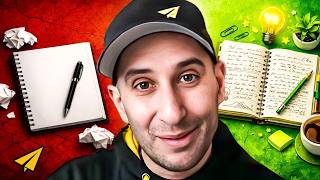
Comedian John D. Webster published five books before 30. He shares ten practical writing tips including the "plant the seed, water it later" method for beating writer's block, structuring short chapters, and marketing strategies like leveraging Amazon keywords and targeting niche Facebook groups.
Chapters
Hello everyone, welcome to another YouTube Hangout. Super excited to be here. I am joined by John D. Webster, and he is a comedian and author of 5 books. And today we're going to talk about how he's written 5 books before the age of 30, how you can do it too, and offer his 10 tips, 10 ways on how to write an exceptional book. John, welcome aboard.
Glad to be here.
So for my audience who may not be familiar with you, can you give a little context, a little bit of background, and then let's hear some tips?
Sounds good, sounds good. The genres that I've written in are polemics, poetry, satire, and comedy. And I've recently been working on a self-help book that I'm getting ready to finish up. And actually, I actually mentioned you in the self-help book. One of the chapters is the top 10 personal development channels on YouTube with the most substance. And I've gone over the YouTube channels and I've actually named your channel as the number one channel with the most substance on YouTube.
I appreciate that. And now you're adding more substance to it too. Here we are.
Yeah, there you go.
Cool. So for someone who wants to write a book, let's get into some of the tips. What do you recommend for someone who's— I mean, I've been documenting my process, so I'm writing my first book. It's just finished. It's in pre-order right now with Penguin Random House. What are some of the ways that people need to know? Maybe I should have listened to this before I wrote my book, but here we go. Let's hear some tips.
I'll be going over 10 different tips. They are: how to ensure quality writing, how to make everything you write seem more intelligently written, how to never waste a good idea, how to develop a habit to write, how to be at your best when you write, the 6 key parts to selling your book, how to get your book noticed when people search on Amazon, how to market your book, how to get good reviews, and most importantly, how to get it done.
That's a lot of stuff. So I know we don't have an insane amount of time. We've got just over half an hour, and we also got some reader questions coming in, or viewer questions. Which one do you feel like— let's start from the most important. What's the most important, most valuable one? Most maybe controversial or most looked-over one that people really need to know that will help them write their book?
Okay, the one that has helped me the most— my first book was a book of quotes in a genre that I wanted to write in, and I basically researched a lot of books that are the subject that I wanted to write about, and I selected the best ones And one of the best practices you can do before writing a book is to do research and find some of the best quotes and passages that you think appeal to you the most and figure out why you like them, and then take those lessons and apply that to your writing.
I love it. So Zeno is writing in, he's right, he's asking, was it a goal for you to write 5 books before you were 30? Not even looking for that?
It just happened? Yeah, it just kind of crept up on me. The way it happened was, after I graduated college, my stepdad wrote a book, and then my mom wrote a book, and I kind of saw that it could be done. You know, when— it's kind of like that guy breaking the— 4-minute mile, I think. You know, once somebody else does it, you realize that, you know, it's possible. So I had two people very close to me write a book, and I was like, well, they can do this. This is something I've always wanted to do, then I can do it. And my first book took me 3 years to write. And as they always say with everything, the first time you do something, it's the hardest. And after that, I pretty much cranked out a book a year. and that seems to be the rate that I go with my process.
Awesome. Cape of Good Hope is asking, what makes a good motivational story?
A compelling backstory is important. People tend to identify with struggles. Anthony Robbins was a janitor. Brian Tracy, I think, lived on assistance for a while. And if somebody knows that you came from the bottom to the top, they're more likely to respect you and realize that, you know, you're a lot like them. And I think people have a lot more— people tend to identify with you more if they know that you've struggled and have gone through hard times. But it's also important to include accomplishments in your story. With my self-help book, I have each section divided into who, what, and how for each item. And with the who, I wrote about successful people such as Steve Jobs, Bill Gates, and so forth. Like I say, I was sure to include their biggest struggles as well as their biggest triumphs in that. A compelling backstory is very important to a story.
I think too, at least in my case, I'm obviously a writer now, but most of my content creation comes from the videos. You want to create something that motivates you. If you want to If you're asking how to create a motivational story, it should be something that when you read it over, you get motivated by, or when you watch that video, you get motivated by. The first motivational kind of video that I did was— it actually shared the story of the 4-minute mile. It was called "Believe." It has over a million views now. And someone close to me who was in the video business hated that video and said, "No YouTube video should be longer than 6 minutes," and this is just way too long, it'll never do well. And I just— I started doubting a little bit, like, hey, this is a guy who knows what he's talking about. But at the end of the day, I loved it so much and motivated me every time I watched it that somebody else must be motivated by this too. And so I put it out and share it. And so I think it's important for you to be the barometer as well. So it has to pass your acid test. You have to be inspired by it if you're writing If you're writing a self-help book, you must— like, it should be something that also inspires you or have inspired you, and you've gone through that process to become better yourself. And so even videos now, we do 3 to 4 videos a day on the channel. I see all of them before they go up, and I have to like them or they don't go up. And so I'm grateful that everybody kind of enjoys them and finds value in them. But I think if you're creating any kind of motivational story, it should first motivate you. And if it does, then there's a good chance it's going to motivate motivate others as well.
You have to be satisfied with what you put out there. You have to be proud of it. And one of the most important people to like what you do is yourself. I actually— I'm writing my self-help book primarily for myself. I was wanting to learn the success principles and learn how I can apply them to my life. And in doing my research, I thought that I would put it out there to the public and give them the information that I've done in my own research and observation.
I love it. So Elizabeth is writing in, "I have a story to write, but I have writer's block every time I try to start. I've never written any book." What advice— a guy who's written 5 books, what advice do you have for someone who's facing writer's block and doesn't know where to start?
My best advice for writer's block that I have, a technique that I have coined, plant the seed, water it later. And most people who tell you how to deal with writer's block tell you to sit in front of a screen and just— if it's not good, it's not good. Keep at it. The technique that I do is if I have writer's block, I try to keep in my mind what it is I want to accomplish, what it is I want to write about, and then I do activities to become inspired and help me to get ideas. Most people's best ideas come to them in the shower, when they're exercising. Some people's best ideas come to them in bed, right when they go to bed at night. It's always important to keep a journal or a notebook by your bed. Creativity tends to come when everything around us is quieted. That seems to be a time when we're most creative. Most of my ideas come to me when I drive. So if I ever have writer's block, I'll just go on a long drive, and some of my best ideas come to me during that time.
Interesting. You got to go for long drives. It works.
It works.
Yeah, it's good you found your process. I think for me, and this may be different from a nonfiction versus fiction, I only have written a nonfiction book, I found what really helped was having a structure. For how I was going to break down the whole book. So, you know, there's 3 main sections to the book, and then I would list out, okay, what are the main chapters that have to go into each section, and then what are the key concepts of each chapter. And being able to break that down on the page-by-page basis, then I could sit down and say, okay, I just need to write this page. I found that super helpful. I don't know that it applies as much to fiction. I don't know if if you already know what you're going to write, like you have the whole story kind of planned out, or part of writing is also the journey of figuring out what you're going to write. But at least for me, that really helped. So I'm not just— for me, I think it's also just feeling overwhelmed that, man, there's so much that has to go into this. When I think about all the pages and all the concepts that are in my book, just, it's a lot of writing. Like, you can't just bang it out in a week. It's, at least for my thing, was it— a ton of writing, and being able to know, like, okay, I just need to write those 5 pages because it fits into that chapter, it fits into that section, it fits into that book, made it a lot easier for me to sit down and do the work. Are all— are your books nonfiction or fiction, John?
3 of them are polemic critiques, one is a book of satire, and one is a book of comedy. I have found that I'm thoroughly enjoying the process of writing my self-help book because I can actually sit down and not really have to wait to be inspired to write. I can do research and create content and actually sit down and brainstorm ideas based on my own observations as far as what has worked for me and what has not worked for me. Most of my books are extremely creative and funny. So most of the time I had to wait to be inspired to start a chapter or a story.
Cool. Next up is Kitsune, who's writing, my problem is I start writing the story, then I get an idea for another story, and I start working on that one. And this keeps repeating. I guess you can say I can't commit to one story. So what should she do?
Use that to your advantage. That is exactly the way I write. Currently I have ideas for 10 books that I'm working on. The way that works is keep those 10 ideas going, and whichever one gets done first gets done first. Get a lot of content for one, try to focus on getting that one done before you move on to the others. But if you ever get ideas for any of the books you're working on, be sure to add that to the content and you'll gradually build up over time. Whichever one gets done first gets done first. That is how my mind works. And that is the process that I've used and I've been successful at it.
There too, if you might be able to, if you know you work best in these short stints and you know it's going to kind of come to a close soon, if you could try to write the whole story, like make it super short, make it a 3-page story or 5-page story, just try to get the whole thing out on paper. And if that's all it is, then you just Release that, a 5-page short story. And if you come back to it in a week and you're like, ah, that story, I feel like there's more to it, then you can evolve it to be something bigger. But otherwise, instead of just having a start of something that— I guess if you are coming back to it, then maybe. But I'd love to see you get something out. I'd love to see you get some momentum to be able to have something that people can read and start building up an audience. And honing your craft better. So as an experiment, I'd love to see you try to, in that short stint, finish a story. And then if it still kind of haunts you a week or a month or a year later, you can always come back to it and turn it into something much bigger.
Yeah, and most of the chapters in my book are short. And I think you said the chapters in your book, your book, uh, your one word or very short. Is that correct?
Yeah, the idea was I hate reading books where then I, I flipped like, oh, it's still another 20 pages until the end of this chapter, and then I start to zone out. And I hate starting like a comeback in the middle of a chapter, so I designed it on purpose so it's basically a page, um, per heading in the book, and then you can easily stop and start wherever you want.
I have found that is an extremely effective way to write a book because people tend to feel a sense of accomplishment each time they finish a chapter. And that is one of the reasons that I write short chapters is a reader can mark their place without having to use a bookmark. And, you know, it's not so tedious as in like if it's a 30-page chapter or more, you know, they kind of have to slug through it. And wonder when it's going to end, even if it's interesting.
So we've talked a lot about the kind of creation side of the story and the book. For the people who have it or who are about to finish it, and now they want to move to the marketing side, what advice do you have to help get that book out there?
I have discovered that one of the most effective techniques to sell a book is to, whenever someone buys a book, ask them to send you a picture of themselves holding the book. And that tends to create a general perception that people own the book, people want the book, and you can get them to smile while holding the book, you know, because it associates positive feelings with that. David G. McAfee does this technique very effectively. Uses that technique to promote his books, and he's doing very well for himself.
So are you asking people then to get their email address, or how are you— how do you get the message? Like, if somebody goes to Amazon and just picks up the book, how do they know to write in and send the picture to you?
Actually, I'm mostly talking about the people on Facebook and in my own personal life. Who have bought the books. Each time somebody buys a book from me, I always ask if I can get a picture of them with the book, and I'll post that to Facebook. And one time there was a guy who wanted to buy my complete body of work based on just seeing one photo of somebody with their book.
So my book is in pre-order right now, so I can't actually get the pictures yet, but somebody wrote in the chat, Zeno, I'll be sure to send you a picture of me holding your book while smiling, Evan, when it comes out. So you're already giving me some tips to use once the book comes out. You mentioned in one of your 10 rules Amazon tricks, tips, suggestions on how to get your book ranked and get orders from there. What do you have to share for would-be authors or existing authors about Amazon?
One of the best techniques to make sure people can find your book on Amazon is to use buzzwords in your genre. For self-help, some of the most popular buzzwords are law of attraction, rich, wealth. Millionaire is a very good term to use. Pretty much any self-help book that has the word millionaire in it does very well. Rules, blueprint, success, principles. Grow, think. Those are some of the buzzwords that are often used in self-help books that people search for. And if you have those words in your title, then when they're trying to look up those topics, your book will come up first and they'll be more likely to buy your book.
Do you think everybody has a book in them? Do you think this is something that everybody should be doing? Everybody should write a book or Or not. I mean, there's that expression, "Everybody has a book in them." What do you think about that?
Christopher Hitchens had something to say about that. He said everybody might have a book in them, but in most cases that is where it should stay. However, I am much more optimistic about that. I think that everybody should write a book. It's one of the most fulfilling things you can experience, seeing your name in print, knowing that you have a collection of your ideas that you have researched and is something you can be proud of. And if you're wanting an ego boost, people tend to think more highly of you if they if they know you're an author.
So Teach13 is writing in, what are your favorite books?
As far as self-help goes, I've actually written down 10. See if I can remember them right now. My most favorite book is Think and Grow Rich. Another book is The Millionaire Messenger. Which basically teaches you to sell your ideas, sell your knowledge. And that's something that I've been working on as a— being a life coach, basically research on self-improvement. I've done some life coaching and that has worked out. Awaken the Giant Within by Anthony Robbins is very good. Some lesser-known books are The Portable Pep Talk, and those are probably about 5 of my— wait, I forgot— Life's Little Instruction Book. That is a collection of just pithy advice. Most of the advice is very good. Some of the advice in the book is kind of personal. Kind of, you know, tailored to his own preferences. But most of the advice in that book is very good. Those are 5 or 6 of some of the self-help books out there that have helped me the most.
I made a video about my favorite books for entrepreneurs, and the number 1 for me is a book called Radicals and Visionaries, which is out of print. But you might be able to pick up a copy on eBay or something. Basically what it was was stories of famous entrepreneurs in 3 to 4 pages. So who they were, what they did, and what they had to overcome. And I found that for me as a— especially when I first bought it as an up-and-coming entrepreneur, a struggling entrepreneur, I found that really one, motivational to realize that, oh, you know, Oprah had a hard time when she was getting started. And two, the specific things that they did to become successful I found interesting to me, but also in like 3 to 4 pages, so super easy to digest. At that time, you know, YouTube wasn't really a thing, and I think my channel has kind of become that now, I think, of sharing the lessons of famous entrepreneurs and being able to learn from them. But I would basically read one entrepreneur every day in the morning just to get some motivation and excitement because I didn't have entrepreneurs in my family, and so I found that super helpful. But I don't know how relevant it is to today's generation with all the amounts of books out there and YouTube videos and other ways to get that inspiration, but it really helped me. The 4-Hour Workweek also really helped me in my kind of planning and time management. I used to pride myself as being the guy who would answer email immediately, and I got a whole bunch of little stuff done but didn't get any of the big things done. And so that just kind of opened up my eyes in terms of time management and how to plan my day, and that had a lot of big impact across my business and my life. So that one's easy to pick up. You can go to any store, you can find The 4-Hour Workweek. Do you have a favorite Fiction book?
Favorite fiction book? Probably 1984. That was a book I read in high school and just kind of, you know, gives you an idea of what this world can become if we, you know, don't— if we're not careful what this world can become. And more or less, our society has become more like 1984 than our world was when it was written. So it's kind of an ominous warning about the way things can become if we allow them to do that.
George Orwell. My favorite is probably Three Kingdoms. It's about the fall of the Han Dynasty in China. One of the most popular books in Chinese history that then has been translated to all sorts of different languages. So yeah, a lot of lessons in there that I'm a fan of. Cool, so another question I get asked a lot is about publisher versus self-publishing. What's the best way to get out there? I've shared my advice, but what do you think on that topic? What have you done with your books? Have you self-published them or you gone with a publisher?
[Speaker:EVAN_CARMICHAEL] There are advantages and disadvantages to each. If you self-publish, you can have complete control over your book and do exactly what it is you want to do and do zero amount of what you don't want to do. If you go through a publisher, sometimes they try to encourage you to write about things you may not want to put in your book. I have self-published because I enjoy having more control over what I say. You get more money per book. But the downside to self-publishing is you have to do all the marketing yourself. I'm actually in the process of trying to find a publishing house for my self-help book because I'm wanting to get it out there and get it in as many hands as possible.
That process of being a self-published author and the marketing side of how you're getting the word out about your books?
Um, like I said before, the picture thing, just word of mouth, friends, family, posting about it on Facebook. One of the ways that I found to market your book is to create memes of quotes of your book and a link to buy. And to target Facebook groups that are on the subject of the material of your book. So if you can find like a niche market that is a Facebook group, pretty much everybody in there, you know, is going to respond favorably to it because they have the same mindset. Target your own, you know, find your target audience for your book, and you can generate a lot of sales that way.
What has really helped me is making sure that I have consistent content and finding a way to incorporate the book into it. So before starting the book, it took over a year to write the book, and I documented that journey as part of a YouTube series. It's called Evan's Book, and every week I had a new video talking about the ups and downs and, you know, highs and lows of writing the book and what I'm going through and how to work with a major publisher and what they expect, and, you know, from the point of view of an author, because I hadn't seen anybody kind of document that process. So one, it was educational for the audience, but two, it also allows me to keep building momentum for the book. And so if you're planning on writing something, you could start now and creating content around the process so people start following along, and then when the book is out, people will want to buy it. The other thing I've been doing— oh yeah, go ahead.
Let me ask you this. I've noticed that you didn't reveal the title of your book until it was finished. Is that something that you recommend most authors is to not put the title of your book out there until it's finished?
I think it depends. I don't know that there's one— I mean, we'll see. We'll see how the results play out. Curiosity is part of my brand. I like surprising my audience with different things. I like dropping a new video series and not telling them about it. I like doing interviews with high-profile people and not putting the word out about it. I like having a bit of curiosity as a part of what I'm doing, and so it's part of who I am and part of my brand. It doesn't necessarily work for everybody. I think if you have no element of surprise in general and this is the only thing that you do, it may not play well. So yeah, I don't know. I just wanted to— I didn't even talk about the— not just the title, the content. I didn't talk about the content of the book either, like what it's about. And I went 60 weeks of videos, over a year of videos every week where I didn't talk about what the book was about. And I still managed to make it work. I didn't run out of content. There was always something, something from the publisher, something I was doing. The whole series itself was an experiment. I didn't know if it would last a month or if I would give up on it if people weren't interested in following along with it. And then now I thought, okay, well, now that it's out, do people still want me to do it? Like, do you want me to convert now to start talking about the marketing side instead of just production? And everybody wants to learn about the marketing side, and they want me to bring on my agent and bring on my publisher and ask them questions too. So it's been great to carry my audience along with me, and I think if people are starting to write a book, the marketing For a lot of people who are doing the self-published route, at least what I've heard is they think the book is insanely hard to write, and then they get to the marketing and it's even harder. Because if you're a writer, at least you have the skills to write and you can control that. You wake up every day and you have your schedule and you're in control. It may be— it still may be hard in that you've got writer's block and all these issues that come up, but when you're marketing, it's all on you. and you may not have a marketing background, and you may have zero interest in marketing. You just want to go off and start now making the next book. So starting the process, it's not even— it is marketing, but it's not really selling. You're just giving people a sneak peek behind the scenes of how you do it, what you're talking about, your process, answering questions, and then you're building up some interest in the book. It allows you to talk about the book every week without it feeling like it's a sales message every time. So I found that to be helpful. A lot of people who've been watching the series have found it interesting for them who, you know, they're considering about going through. Some people follow it just because they like me and they want to see what I'm up to and the process and the journey, maybe my frustrations or whatever. It's a little more real than, you know, like behind-the-scenes stuff than the other stuff that I put out. And some of them follow along because they generally want to write a book and want to deal with a publisher, and they're curious about the process and what people have to go through and things that most authors don't typically share when they're going through. Like, my publisher is not happy with a lot of the content that I talk about, but I'm going to talk about it. That's what I do on my audience, right? It's real truth about what I'm going through. And I said, that's part of the deal. Like, if you want me to be out there pitching the book and selling it than I have to talk about what I'm going through behind the scenes. So I think it works really well for me, and I think it could work well for a lot of people. Whether you mention the name or the content or not, at least having some kind of ongoing series so you're starting the marketing before you even get the book out, I found that super helpful. Have you done any of that kind of stuff, John, for your books?
For the most part. For some of my books, I have included the— some of the chapters originally started as articles. How well the articles did, I decided to arrange them in order of some of the best performing articles in the very front of the book. Some of the articles that still did well but didn't do as well as some of the others toward the end. The very first chapter in one of my books is by far the best, and that's like I had said in the 6 Key Parts to Selling Your Book, the first few pages need to hook the reader and get them to buy. Your first few pages just need to be outstanding, some of your best work to get them interested in the book.
I think too, making sure that it's a book that you really feel passionate about. When I first started the book process, my agent introduced me to a literary agent, and my agent was convinced I needed a book. Evan, you need a book. It's going to open up doors for you. It will get you speaking gigs. People will take you more seriously. I honestly felt like I don't need a book. I've got a popular YouTube channel. I can open up doors by myself right now. Like, the importance I feel of having a book declined compared to where it may have been 10, 15, 20, 30 years ago. And I didn't have a topic that I was like, I had a burning passion to write about. But he wanted me to go through the process. So the first version of the book was going to be around Modern Success, like my YouTube channel, sharing the lessons, the top 10 rules or whatever. And at the time, I didn't feel I wasn't inclined to really write a book about that, and so I was like really slowly going through the process. And at the time I was discovering my one word and using that, and I was super interested in how I could apply believe to the rest of my company and build a movement around it. And that's when I switched and said, guys, here's the book I want to write. This is what I want to write. This is it. I'm so excited. And they didn't think it was a book. They thought, "Ah, that's like a worksheet. That's not a book." I said, "If I'm writing a book, it's going to be on this, so you decide what you want to do." And so they came on board, and that became the book that then I spent a year plus writing. And so I think it's important to match those things of the— what's doing well and what the market wants with something that you are super passionate about and you want to write. A lot of people just chase— like if all you did was take— if you took John's advice earlier and create your own book about, you know, use all the buzzwords he suggested, you know, the millionaire— I forget all the other buzzwords that he used. Millionaire stood out, so that's important. If all you did was write based on buzzwords, then you're going to fail because you don't have an expert opinion on it and you can't contribute value to it. Those are tweaks. Those are like extra things that you can add on. To make it more appealing afterwards. So it's making sure that you, you are passionate about the subject that you're writing about, not just because it's trending right now. And I think that was an important lesson for me in writing my book, that I didn't do the easy one, I did the harder one that I've talked about before. I've talked about believe and my one word on my channel, but if you look at my channel as an outsider, you'd think it's much more just about the Top 10 rules. Yep. I love it. Well, it's crazy how quickly half an hour comes up on us, John. For people who want to learn more about you, check out your books, follow you, see what the latest thing is you got going on, what's the best way to reach out?
Uh, the book of mine that is selling the best is the audiobook version of my comedy book, which is One Big Joke and 300 Shorter Ones, on Audible. That has by far been the best seller. So far it has an all 5-star rating. Congratulations. Thank you, I appreciate that. I think that with each book I've gotten better and learned what has worked and what, you know, learned what not to do. But yeah, Evan, thanks for having me on your show. On your podcast, on your channel, and I will be sure to send you a free signed copy of my self-help book when it comes out.
All right, looking forward to it. Thanks, John, for the advice. Thank you guys for watching. Continue to believe, and we'll see you soon.
Thanks.
More from Evan


How the Biggest Mistake in History Created A Trillion-Dollar Empire | Sergey Brin



9 Machiavelli Principles That Force People To Respect You | Machiavellian Philosophy



The First 10 Words That Instantly Ruin A Sales Conversation | Vanessa Van Edwards

The Top 1% Mindset Behind The First $5 Trillion Company | Jensen Huang (Nvidia)

