I Analyzed 50 Channels that Hit 1M Subs Here’s What They Have in Common
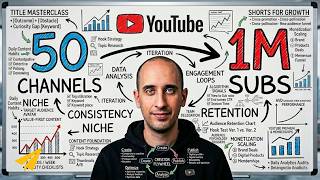
Evan Carmichael analyzed 50 channels that hit 1 million subscribers and found they share one thing: consistency. The fastest growers post regularly and improve 1% per video. On average, it takes 1,171 videos to reach 1M subs.
Chapters
You think spending weeks making every video perfect is what you're supposed to do, right? You need quality content. But if you're watching this right now and you haven't yet started a YouTube channel, I suspect the thing that's holding you back is probably overthinking. And I would, I would be blown away if that me could see me today doing this interview. I'd be like, you're crazy. There's literally no such thing as a perfect video. But the average channel with 1 million subscribers has already posted 1,171 videos to reach that level of success. The thing that every single successful YouTuber has in common is that they have been consistent in some ways, sometimes on and off, but generally consistent with their channels. It wasn't like it was work for me grinding YouTube for those 10 years or whatever where no one was really watching it. It's just like kind of who I am. If you don't learn how to embrace the mess and just keep moving, you'll never find your true voice and your message will never help the people who need it. The only way to improve is just to keep doing it. So the more videos you upload, the smarter the people you surround yourself with, the better you'll be. Anyone who's got to somewhere in life They started out sucky at that. Yeah, right. And then they just learned and iterated and overcame. It's the same thing you said with companies like no Fortune 100 company today started out doing what they do now. I think it takes practice to make videos, and I think it doesn't hurt to get started with what you have. Before Jimmy Donaldson became MrBeast, he was just a kid in his bedroom making terrible videos. He didn't start with millions of dollars. He started by filming himself counting to 100,000. He uploaded over 100 videos before he saw any real traction, and he he spent years getting almost zero views. He didn't wait to be perfect. He just kept hitting publish over and over again until he figured out what worked. When I first started my YouTube channel, my videos were absolutely horrible. I had terrible lighting, my audio echoed, uh, I was pretty stiff on camera. I didn't know what I was doing, but I knew that if I wanted to help entrepreneurs, I had to stop hiding. And so I committed to posting constantly, even when nobody was watching. I made hundreds of videos before I ever felt truly confident. I had to go through that messy phase of creating garbage just to finally discover the voice that you're hearing right now. When Ed Ed Sheeran was asked how he writes so many hit songs. His answer shocked people. He said, "Your creativity is like a dirty tap in an old house. When you turn it on, you just get mud and dirty water. You've got to let all the bad water flow out before you finally get the clean water." The same thing happens with your videos. You've got to make a bunch of bad content to get the bad ideas out of your system. If you try to make your first video perfect, you just keep the dirty water stuck inside. Now you're probably thinking that posting bad videos will ruin your brand forever, right? You worry that if you put something out that's messy, people will laugh at you and you'll never recover. That's just fear. That's just you staying small. The truth is almost nobody's watching your first videos anyway. Your early content's just practice for when you actually get good. Once you understand the specific habits that million subscriber channels use to improve over time, everything changes. So I'm going to show you exactly what those 50 channels do to turn that dirty water into pure gold. If you've been here before, drop a hashtag #believe in the comments below so I can feature you here in a future video. If you're new, welcome to Believe Nation, the only channel that helps you believe in yourself daily, one video at a time. Believe. Focus on just 1% better every video. A lot of creators think they have to overhaul their entire channel overnight, right? You probably think you need to buy a $5,000 camera or hire a massive editing team just to compete. But when I looked at the channels that hit a million subscribers, they didn't start with the perfect setups. They just focused on getting a tiny bit better every single time they hit publish. And the stats show that channels publishing on a consistent schedule grow their subscribers 67% faster than those that just post randomly. But consistency doesn't mean making the exact same mistakes over and over again. It means making one small tweak per video. Maybe you improve your lighting today. Next week you make your audio a little sharper. The week after you learn how to tell a better story. I practice this myself with my Better Your Best Challenge. I spend an entire year running weekly experiments just to push my limits and just find small ways to improve. You don't need a total makeover right away. You just need to commit to the process of becoming 1% better. When you do that, those small changes compound over months and years. Before you know it, you have a channel that completely dominates your niche. You have to look at your older videos and honestly ask yourself, what can you do differently today? Maybe you realize you take too long to get to the point. So your next goal is to cut out the dead air in the first minute. That's really important. Maybe you notice your energy drops halfway through the content, so you commit to Keeping your posture up straight and keeping your voice elevated. These small shifts, they don't cost you money, but they completely change how the audience perceives you. The top channels treat every single upload as a practice run for the next one. They aren't trying to make the flawless masterpiece. In most cases, they're just trying to beat their last performance. If you focus on massive leaps, you'll eventually get overwhelmed and you'll quit. But if you only ask yourself to be a tiny fraction better than yesterday, That's how you start building momentum. You have to fall in love with the daily process of learning your craft. You must learn to actually enjoy the work. If you hate the process, you will never survive the years that it takes to build a massive audience. Now, once you accept that growth happens in inches instead of miles, you take all the pressure off. You stop stressing about the algorithm and you start focusing on your own skills. Every single time you sit down to record, you make just one tiny upgrade. It might be as simple as adding a new hook or writing a slightly better description. And speaking of focusing on the right things, getting better is only half the battle. You also have to build a specific type of audience that actually cares about what you're saying, which brings up the next major pattern I found. Build a movement, not just an audience. You can have millions of views, but if nobody cares about your mission, your channel, it's empty. The channels that hit a million subscribers, they don't just want passive viewers. They want to create a true movement. They want to change how people think and change how they act. And research shows that viewers form a strong pseudo-social interaction with creators who share their real lives, and that connection directly increases how much the audience trusts the creator. So you have to stop talking at the people and start talking to them. That's exactly why I built my Movement Makers coaching program. I want to help you figure out your core message so you can attract the people who believe what you believe. You want an audience that feels like they're part of a family. You want them to defend you in the comments, share your videos with their friends, and show up every single time that you post. And to do that, you have to actually share your values. You have to tell them who you are, what you stand for, what you stand against. Stop trying to please everyone. When you try to be for everybody, you end up being for nobody. So plant your flag in the ground. Let your true friends rally around you. Think about the energy in a room when You go dancing or when you go to a Broadway theater, the people in that room, they're not there to passively watch. They're there for a shared experience. They feel connected to the music, to the story, to the other people around them. You can create that same excitement and feeling on your channel. You want your viewers to feel like they belong to an exclusive club, and you do that by creating inside jokes, specific catchphrases, uh, acknowledging your most loyal fans by name. When you make an audience member feel seen and heard, they follow you everywhere. You have to realize that people don't just subscribe for the information. They subscribe for the connection. They want to know that you understand their struggle and their dreams. If you only give them the facts, they'll eventually find someone else who gives them the exact same facts, but with more heart. So you have to lead with emotion and share some vulnerability. You have to be willing to share the moments where you failed, not just the moments where you have won all these accolades and awards. People respect honesty way more than they respect perfection. Your audience wants to see the real human. Behind the camera. So when you show your flaws, you actually give your audience permission to be flawed too. And that's how real movement starts. But even if you have the best movement in the world, it won't matter if nobody clicks on your videos in the first place, which leads directly to the secret of the click. Let data make your decisions. So you probably spend 99% of your time filming and editing and then just slap on a random title and thumbnail on your video right before you publish it. That's a massive mistake. That's what most people do. It's what I did at the beginning. It's a huge mistake. The biggest channels on YouTube treat their titles and thumbnails like the most important part of the entire process. Data directly from YouTube shows that 90% of the best performing videos on the platform have custom thumbnails. If you don't get the click, your amazing video will literally never be seen. So you have to stop guessing what works and start using real data. That's exactly why I'm— I've developed my Brandlytics software. We'll link it up below. I realize that too many creators just upload and hope for the best, but with Brandlytics, I'm building a system to completely remove the guesswork. Guesswork from your channel so you can see exactly what numbers matter and how to optimize every single detail of your packaging. So Brand Analytics helps track the specific data points that actually drive millions of views, like tracking title structures, thumbnail layouts. You need to look at your click-through rate constantly. If it's below your channel thresholds, you need to change your thumbnail out immediately. You might make your text bigger and easier to read on a tiny cell phone screen. You need to increase the contrast so your images pops against the white or black background of the YouTube app. In my own thumbnails, I want high-contrast photorealistic images with little to no text and some blurred background. So the focus is entirely on the emotion. When your subject shows real intense emotions, people are biologically wired to look at other human faces. So treat your packaging like a billboard on a really busy highway. You only have a few milliseconds to grab someone's attention before they scroll and drive right past you. So don't worry about your own preferences as much. Stop letting your ego decide about what looks good and start letting tools and software help guide some of the choices to know if it's working or not. The top channels test multiple thumbnails for every single video. They don't just hope for the best, they actively monitor the performance and swap out the image if the audience is not clicking. So you have to study the channels that already have millions of subscribers and reverse engineer the success. Look at the colors they use, the amount of text they include, the curiosity they build inside their titles. Your title shouldn't just explain the video, it should create a massive question in the viewer's mind that can be answered only by watching the video. Once you figure out how to master the psychology of the click consistently, you're going to see a huge spike in your daily traffic. But managing all that massive Growth can completely exhaust you if you aren't prepared for it, so you have to learn how to protect your energy at all costs. Protect your energy with systems. Burnout is a real killer of YouTube dreams. Often people will grind for months and you finally start getting a few views, and then you completely crash because you're doing everything manually and by yourself. The top creators are not working 24 hours a day. They build smart systems. There's over 110 million creators right now trying to make it, and the ones who win are the ones who can sustain their effort for years without destroying their health. Also, if you want to take real action after this video, I made a free worksheet just for you. It covers the top lessons from today, gives you space to write your biggest takeaways, and helps you build a simple action plan. It's 100% free. We'll link up the description below to go grab it. I'll see you there. You need to automate as much of your workflow as possible. So I use tools like Make.com, Zapier, or Claude to handle some of the repetitive tasks so I can focus my brain on actually creating. You can build custom automations to organize your ideas, analyze your data, even schedule your posts. If you don't use technology to your advantage, you'll quickly drown in all of the admin work. You also have to take serious care of your body, right? I use an Oura Ring every single night to track my, my deep sleep, my REM sleep, make sure my body is recovered so I can handle the stress for the next day. I try to eat healthy protein-heavy lunches, right? Get, get your salmon in there and the chicken, the Greek yogurt, eggs. I got it right here in front of me, right? You can't inspire millions of people if you're constantly exhausted. You've got brain fog. You're sick. So treat yourself like an elite athlete. Your energy is the most important asset that you've got. If you show up on camera, you look tired and defeated and you feel like it's work. The audience, they're gonna feel that low energy. They're gonna click away too. So treat your channel like it's a real business. Build the systems that allow you to step away from it without the whole thing falling apart. You need boundaries, you need strict routines. Set specific hours or days for filming, specific hours or days for editing. Specific hours for resting. When you protect your personal time, you eventually become much more creative when you sit down to work. Taking care of your physical energy and building automated systems are absolutely critical for your YouTube survival. If you don't protect your mind, right, and your body, you will eventually quit, and all the hard work that you've put in will be completely wasted. But once your systems are in place, you need to think much bigger than your own backyard if you truly want to scale. Think global, not local. So most creators only focus on the people who live in their own country or speak the exact same language, but the channels that hit a million subscribers know that the world is incredibly massive. The potential reach on YouTube is over 3.35 billion users worldwide. If you only make content for people who look and sound just like you, you're leaving millions of potential loyal fans completely ignored. So you can start thinking globally. Right now I'm currently working on a massive project to dub 8,000 of my YouTube videos into 75 different languages. I want to make sure my message of believe can reach someone in a small village in India just as easily as it reaches someone in a tiny apartment here in Toronto. You might not be able to dub thousands of videos today, but you can definitely start adding accurate captions to your content. YouTube is auto-dubbing a bunch of languages. You can add SRT caption files to them. You can make sure your core ideas are universal. Talk about the deep human emotions the struggles, the massive triumphs that absolutely anyone in the world can understand. Don't limit yourself to the inside jokes that only make sense in your specific market. Your message deserves to be heard by the entire planet, right? The top channels understand that human psychology is the same everywhere. People are just people. People everywhere want to feel inspired. They want to learn new skills. They want to be entertained. When you create content that speaks to those core human desires, you break down geographical borders. You can reach someone in South America, Europe, Asia, and beyond just by shifting how you frame your topics. So you can look at your analytics, see where your current viewers live. If you notice a spike in traffic from a specific country, you can lean into it. If you want that audience, acknowledge them in your videos, make an effort to include them in your community, dub more videos into their language. When you open your mind to the global audiences, your potential for growth becomes literally infinite. You can also explore different cultural references that connect with a broader audience by making your videos accessible to non-native speakers, maybe by speaking slightly slower. I struggle with this and using simpler words. You know, you can then invite millions of people into your world. When you stop acting just like a local creator and you start acting like a big global brand, your entire business can change. But to reach that ultimate level of worldwide success, you have to upgrade your personal standards and start acting like the iconic leader that you want to be. Treat your channel like a business class experience. So if you treat your channel like a cheap hobby, it'll pay you exactly like a cheap hobby. The creators who reach 1 million subscribers treat their content, treat their audience, they treat treat themselves with much more respect and higher standards. Studies show that a massive trait of thriving creators is their absolute willingness to invest in themselves and learn new high-level skills constantly. You have to stop settling for average in every area of your life. So hold yourself to a much higher standard starting today. Stop accepting the terrible echo audio or the lazy rushed editing. Stop putting out boring videos that you wouldn't even watch and sit through yourself. Upgrade your physical environment, upgrade your mental mindset, Treat every single video like it's the most important piece of art that you have ever created. At least that's the intent. If your desk's a mess, your mind will be a mess too, and that'll constantly create and reflect chaos. So you design a workspace that makes you feel like a professional, like, I'm going to work, I'm going— I'm a superhero going to work today. You dress the part and show up with authority, right? What do you want to wear? Like, I put this on not just for the audience and the camera, for me. I've got a superhero, you know, and superheroes, they always have the the, the, in their lair, they have the mannequin with the outfit. That's why I have that thing right there behind me. It scared me when I first got it, but that's the reason why it's there, right? Like when you show the audience that you respect their time by giving them a premium, higher quality experience, they'll reward you with their loyalty too. They'll recognize the massive effort that you're putting in and the words will land much more effectively. You're running a global broadcasting network right here. So start acting like the CEO of that network. Work. Stop making excuses about your lack of resources and lack of time and start maximizing the resources that you do have right now. What can you do with what you have? Upgrading your standards will change how you carry yourself on camera. You need to speak clearly, look directly into the lens, project confidence, treat your viewers like VIP guests coming to your home, give them an experience they can't get anywhere else. And that powerful premium presence is exactly what you need to hit the ultimate massive target I'm going to share with to do right now. Have a massive goal. So you never hit a million subscribers if you don't actually believe it's fully possible for you. The biggest channels in the world didn't get there by complete accident. They set massive, terrifying goals and then they worked backwards to make them happen. So right now, MrBeast is the most subscribed to channel in the world with almost 500 million subscribers. He didn't reach that crazy number by thinking small or playing it safe. So set a specific target that actually scares My next big personal goal is 40 million subscribers on my main YouTube channel. I put that number out there into the universe because it completely forces me to grow and scares me. It forces me to be a more elevated version of myself who can actually achieve it. If your goals don't make you uncomfortable, then they're not big enough yet. You need a specific number that when you wake up in the morning and you look at it and you're intensely focused on it, It makes you want to go and get to work. So write it down in bold letters, put it on your bedroom wall, look at it every day before you start work. Don't let anyone tell you that you're dreaming too big or that you're crazy. The people who tell you to be realistic are just projecting their own fears onto you. That is not your voice. The world desperately needs your voice, and you have a massive responsibility to share it with as many people as humanly possible. I think so. If your message is valuable, when you set a gigantic goal, your brain starts looking for gigantic solutions that are required to fix it. To hit that. You stop worrying about getting a few extra views and you start thinking about building systems that can scale to millions. You start analyzing your data differently. You start speaking with more conviction. The goal pulls you forward into your true potential. So stop playing in the minor leagues and decide that you belong at the top. You have the exact same platform available to you as the top 50 channels in the world. The only difference between them and you right now is the sheer size of the belief they have in themselves. So Protect your belief at all costs. Don't let negative comments or slow weeks tear down your big vision. And this shift is the final key you need to unlock your actual greatness. Keep pushing forward. You have everything you need inside of you right now to make a massive impact. So stop waiting for the perfect moment and start taking the messy action. When? Today. Your audiences are out there waiting for you to step up and lead them. I believe in your potential. And you need to believe in it too. And congratulations, you're one video closer to who you're meant to be. Believe. Now let's learn the 3 mistakes that keep people stuck at 0 followers. Most beginners on social media won't win. You post a few times, you play it safe, you blend into the crowd. If you look like everyone else, no one will remember you. And if you are easy to ignore, you will be ignored. Think about James Dyson. For years he was broke and frustrated working out of a tiny workshop while everyone told him that his idea would never work. He believed vacuum cleaners were flawed, so he set out to build a better one. What most people do not know is that Dyson failed 5,126 times. Prototype after prototype did not work. Investors said no. Manufacturers laughed at him. Anyone else would have quit long before that, but he kept going. On attempt number 5,127, the vacuum finally worked. That one breakthrough turned into Dyson, a global brand worth billions of Dyson did not win because he was lucky. He won because he was willing to look foolish and persist when everyone else would have stopped. If a man can fail over 5,000 times and still win, what is your excuse as a beginner? My own journey was no different. When I started on YouTube, I sucked. I'm not afraid to admit it. It took me 350 videos before I could make one without being completely embarrassed by my content. I couldn't even watch my first videos back. I hit play and cringe at myself. And the growth was painfully slow in the first 6 years of YouTube. YouTube. I gained 9,000 subscribers. 6 years, 9,000 subscribers. That's basically nothing by today's standards. I felt like a failure many times. I struggled with self-doubt every day, but I kept going. I kept making videos. I kept improving one tiny step at a time. And then things started to happen. In the next 6 years, those 9,000 subscribers grew to over 2 million. And those breakthroughs only came after years of struggle and persistence. If I had quit in year 5 or 6 because it felt hopeless, Nobody would even know my name today. Now you might be thinking, okay, but Evan, I'm a nobody online. Who's going to listen to me? I'm not a leader. Listen, every influencer that you admire, every leader that you respect, they all started with zero followers. Nobody gave them permission to lead either. They decided to lead. They stepped up, they shared their voice, and they did the work long before they had an audience. Leadership isn't a title that you are given. It's a skill that you develop. And so by showing up consistently, by serving others, if you wait until you feel like a leader, guess what? You'll never post a thing. You become a leader by acting like one before anyone believes in you. So yes, even a beginner with zero followers, you can be a leader. In fact, that's the only way that you become one. So before we get into the how, I want to give a quick shout out to Jackie Wood from my school community. Jackie asked, as a beginner in social media, what would be your top 3 suggestions to stand out as a leader in your niche? So Jackie, I love this question. This video is for you, and I promise by the end of it, you'll have a clear game plan to rise up, up as a leader. All right, let's do it. Here are my top 3 suggestions for any beginner who wants to stand out as a leader on social media. Tip number 1: Share your story and be real. The fastest way to blend in online is to fake it. The world is full of all these cookie-cutter creators trying to be perfect, never showing any real part of themselves. That's exactly why you must be authentic and share your story. Nobody has your journey, your quirks, your voice, So lean into that. Be the real you, not the polished, fake imitation version of somebody else. So when I say share your story, I mean the real stuff, the struggles, the awkward moments, the things that you might be afraid to put out there, because ironically, those are the things that actually make people remember you. And so here's some proof. I once went to a fancy event in Los Angeles, VIP dinner, the works, and I hated it. I'm an introvert. Small talks in big groups, it drains me. So instead of schmoozing, I snuck off to a Subway across the street, got a sandwich, and ate alone in the hotel lobby. And I pulled out my phone and I filmed a quick video confessing how out of place and introverted I felt, and that it's okay to recharge alone. I posted it to my Instagram, I think on YouTube. You know what happened? The response was overwhelming. So many people commented things like, "Thank you for saying that. I thought I was the only one who felt like an imposter at those events." By sharing my vulnerability instead of hiding it, I made a deeper connection with people. People trust you when you're real. They see a leader who's human, not some untouchable fake plastic guru. Even science backs this up. So psychologists talk about the Pratfall effect. So basically, people actually find you more likable when you show your imperfections. One study found that authenticity and vulnerability build stronger emotional connections with an audience than trying to appear perfect, especially at the beginning. So your followers aren't looking for flawless, they're looking for relatable. So share that story about how you spilled coffee on your notes right before a big client call, or share the mistake that taught you a really hard lesson. Those moments make you stand out because everyone else is too busy hiding their cracks behind a pretty facade. When you share your story, two amazing things happen. First, you become impossible to copy, right? Competitors can steal your style or your topics, but they can't steal you, your unique life experiences. And second, you build trust. You signal, hey, I'm not here to impress you, I'm here to help you, warts and all. And trust becomes everything. People follow leaders that they trust. Remember, people don't buy from brands, they buy from humans that they trust. So show them the human side of you. Now, maybe you're still worried, won't sharing my flaws make me look weak? No, it makes you look real. It makes you look courageous. Brené Brown calls vulnerability the birthplace of innovation, creativity, and change. So being real is a form of leadership. Plus, sharing your challenges lets you flip them into lessons for your audience. So as a leader, everything you've overcome is a roadmap for someone who's coming up behind you. So your story might be exactly what someone in your niche needs to hear right now. And one more thing. Don't hide yourself. In my early years, I was terrified to put me front and center. I figured I'll just share famous entrepreneurs' lessons and stay behind the camera. I told my agent, "I have no desire to be famous. I don't like the spotlight on me. I'm introverted." But he pushed me and finally said something that really changed my perspective. So he said, "The more people know you, the more people you can serve." And that really hit me. By staying invisible, I was actually limiting the impact that I could have.. I realized that if I believe in my message, I have to be willing to be seen. So I'm telling you what I had to tell myself. Don't be afraid to share you. Show your face, speak in your voice, tell your story. It's not about ego or look at me. It's about service. If you can help someone with your story, then you must. The world needs what you have. Hiding helps no one. Sharing will make you stand out because so few have the courage to do it. Number 2, stay consistent. Wanna know a secret weapon that 90% of beginners never develop? Consistency. The internet is littered with abandoned accounts and dead channels. The truth is most creators quit before they even break through. Over 90% of YouTube channels never reach 10,000 subscribers, not because they aren't talented, but because they give up too soon. They post a few videos, they don't get the results that they hope for, they get discouraged, and then they just vanish. They disappear. Consistency is rare, which is exactly why it'll make you stand out. So if you simply keep showing up while others are fading away, you'll already be in the top echelon. So show up for one year and you'll be shocked at where you end up. If you show up every day for the next year, you won't recognize your life a year from now. But you have to last that long first. The first year is brutal for almost everyone. Slow growth, little to no money. The algorithm plays games with your sanity. It's basically a hazing process to get started. It's supposed to be hard. It's like a test to see who actually wants it and who's going to quit. Most people fail that test, but not you. Not now, right? You're here. You're listening to this. So I know you're serious. So I'm telling you now, decide that you will not quit no matter how slow it feels. Commit to consistency. Post that podcast every week. Drop a video every Tuesday. Whatever your schedule is, stick to it religiously. When your competition falls off in month 3 or 6, your consistency will make you shine. Remember my story? 350 terrible videos 5 to 6 years of almost no audience. I could have said, this isn't working. I should stop. That's probably the logical, sane thing to do. I felt that way many times. But the difference between the people in the social media graveyard and the leaders you look up to that are still standing is that the leaders kept going when everyone else gave up. It's not about never getting tired or never doubting yourself. It's about continuing despite that. It's about being stubborn on your mission, but flexible on your methods. If one video flops, make the next one better. If you go 3 months and there's no growth, learn and adapt, but don't disappear. Most creators burn out because they try to sprint what is a marathon. They post like crazy for a short time and then exhaust themselves. Pace yourself, but stay in the game. So here's a pro tip: expect to suck at the start. It's okay. Give permission to yourself to be bad while you're getting better. I didn't want to accept that at first. I wanted my first videos to be great from day one, and when they weren't, I beat myself up. I've since learned to embrace It's a process. You heard the stats, right? From me, 350 videos until I made one that I could watch without cringing and 700 until I actually made myself proud of my content. That's the reality behind anyone you see killing it online. There's a mountain of unseen, unimpressive work that came before. So don't compare your first steps to somebody else's medal. Your job is to just keep taking those steps. You are on the cusp of something great. Just a little more patience, a little more effort, and you'll get there. And it's true. The ones who win are the ones who outlast. Be the tortoise, not the hare. Slow and steady, consistently improving. Will beat the flashy sprinter who quits halfway. And one more thing on consistency. Make sure you actually enjoy something about what you're doing. Leaders have passion. You rarely see someone win long-term at something that they hate. If you despise making videos, maybe writing blogs or doing podcasts is more your style. So do that. Find a format and a topic that you love enough to stick with it when it's not giving you rewards yet. Passion is what fuels persistence. If you love the process, you can endure the pain. If you don't, you'll find excuses to stop. So create content around something that actually energizes you, that you care deeply about. That energy is infectious and it will keep you going. So for me, I'm a visual learner and I love modeling success. That's why I chose YouTube and profiling famous entrepreneurs, because I genuinely find it fun and inspiring. 16 years later, it gave me energy even when the numbers were small. So figure out what aspect of creating that you enjoy and lean into that. It will make consistency so much easier for you. Number 3, serve your audience no matter how small. Leadership isn't about you. It's about them, right? The people you serve. If you want to stand out as a leader on social media, focus obsessively on providing value and helping your audience win. Too many beginners chase clout or vanity metrics. They ask, how can I get more views? How can I look like an expert? So just switch that mindset a bit. How can I make a real difference for every person who watches my content? When you approach content like that, you immediately separate yourself from 99% of the newbies. You're not just another person shouting for attention. You're someone who actually genuinely cares. And that becomes magnetic. It doesn't matter if you have 10 followers or 10,000. Serve those 10 like they're the most important people in the world, because to you as a leader, they should be. Don't get obsessed with who's not following you. Focus on who is in the room, no matter how few. I remember getting 50 views on a video and feeling discouraged. 50 views, that's nothing, right? But then I just mentally reframed it. If I was given a talk at a library and 50 people showed up to hear, I'd be thrilled, right? That's a packed room for a newbie speaker. Those are 50 human beings who gave me their time. And that shift in perspective changed everything. I stopped seeing only 50 and started feeling grateful for every single viewer. Fewer. So then I doubled down on serving those people, responding to comments and answering questions. And like this one, this is a, this is a question and answer video, making content that addresses their struggles. And guess what? More people came slowly at first, but they came because people feel it when you care. They tell their friends, they stick around. Loyalty is built one person at a time. So Evan from 20 years ago didn't understand this. I thought success was all about the numbers, and I was so ashamed when the numbers weren't they weren't there. I even hid my struggles. I was too embarrassed and too ashamed to tell my friends that I was failing and that I was broke. I put on a fake smile and I'm living the entrepreneur dream while quietly stressing out about how I would survive. I thought I had to appear successful, but I was wrong. What I needed was to ask for help, to be honest, and to focus on the impact, not my fragile ego at the time. And eventually I learned impact over ego. Forget looking cool, just create value. Solve real problems, encourage people, share knowledge generously, do it even when few people are listening, and you'll earn a reputation as someone who cares and who delivers. That is leadership. Also, don't be afraid to engage and build community, right? Leadership on social isn't just a one-way broadcast. It can be a conversation. Reply to that one comment that you got. Thank people for watching the video. Shout out a community member like we're doing, you know, for Jackie right here. Make your followers feel seen. People, they crave connection. If you give them that, they will remember you. They'll see you as a leader with them, not just above them. So one of my favorite things to do is to feature members of Believe Nation, you guys, in the videos at the start of all the videos, right? There's a— leave a hashtag #Believe and we'll feature you here in a future video. We rise together. So even if your community is 5 people right now, engage those 5 like they're friends and allies. Service also means constantly asking, how can I help my audience more? So maybe that's through your content. Uh, maybe it's through a free resource, like the worksheet that I mentioned here in the description below. Maybe it's just by listening to their struggles. When you focus on serving, two really important things happen. First, you never run out of content ideas because their needs and questions give you an endless supply of what to work on. And second, you position yourself as the go-to leader in your niche because people can tell you're in it for them, not just for yourself. The leaders who last are mission-driven. And so what I try to remind myself of is your purpose comes from your pain. The struggles that you've overcome equip you to help other people. I started my channel to serve the 19-year-old version of me who felt lost and had no guidance. I knew exactly what that kid was going through, and I was obsessed with trying to help him and others struggling like him, right? Not struggle as much as I did. And I wasn't thinking about the fame or the money. I was thinking, how can I make the journey easier for someone else? When that's your driving force, you stand out. People can feel the difference between a leader who genuinely cares and a selfish content creator just looking for clout. And hey, if you have the ability, then you have the responsibility. That's what my mom always said, to use it. If you can help, then you must. And that mindset will set you apart. Most people hold back their best advice or dilute their message because they're just trying to sell something or they're afraid of giving too much. But not you, right? Not now. You're going to give massive value upfront. You're gonna share your best ideas freely. Why? Because you actually want to see people win. And what it does is build trust and positions you as a leader that people want to follow. The world needs what you have. Don't ever forget that. There are people out there right now who are praying for the solutions and encouragement and empowerment that you have locked in your head or your heart. So go give it to them. That's how you lead That's how you stand out. So let me recap the 3 suggestions real quick. Be authentic. Share your story, your flaws and all. Be consistent. Show up relentlessly when others won't and be service-driven. Focus on helping your audience, not boosting your ego. You do those 3 and you will absolutely stand out as a leader in your niche, no matter if you're starting at zero today. I know it's not easy. None of this is easy, but it's worth it. You have something special to offer and the beginning is always the hardest. Remember, the leader you admire A winner is just a beginner who refused to quit. Keep going. I believe in you, but more importantly, I want you to believe in yourself. Now let's learn how you can fix your underperforming videos. If you have under 100,000 subscribers on YouTube, using YouTube Studio's A/B testing tool is a great choice. It's free, it's accurate, and it's a good starter tool you should be leveraging. If you're over 100,000 subscribers, then it's time to take your split testing more seriously and you need a professional tool like Brandlytics. Now I'm a split testing nerd. I've personally completed tens of thousands of split tests on my own YouTube channel. And when I showed YouTube what I was doing, they decided to write a case study on me. At the time, they were shocked that I took a video that was 4 years old and getting 100 views per day and took it to almost 15,000 views per day just by changing the thumbnail. Over the years, I've helped thousands of small and big creators creators grow their YouTube channels. And once you cross 100,000 subscribers, the channels that grow exponentially do so because they focus on their data as much as their art. They match the art of creating videos with the science of the algorithm. That's where Brandlytics comes in. I developed it myself just for my own channel because I needed a way to A/B test at scale. Then some of my big name friends wanted to use it, and it was their secret weapon too. And I didn't know if I was ever going to make it, publicly available to everyone or just keep it for us, but I decided to open it up, at least for now. When we help smaller creators, the most important things are usually figuring out their content strategy, scripts, brand design, and hooks. When we help larger creators, the fastest way to generate growth usually isn't in new videos, it's by fixing the library of content. If you have over 100,000 subscribers and hundreds of videos, adding one more video won't move the needle as much as fixing your old videos that should be performing better. You have gold in your library of videos that YouTube is trying to recommend right now, but people aren't clicking because you have a bad title and thumbnail combination. So how do you find those low-hanging fruit videos? How do you set up tests, track your data, manage your team, see your results, and continue to dominate? That's where Brandlytics comes in. For people who use YouTube Studio A/B testing, they usually do it at video launch. It's actually great for that. Set up your 3 variations, and see what performs the best. With Brandlytics, we don't even let you run a split test on a video that is less than 7 days old because the data is too variable. But what do most people do next? They just leave the thumbnail that won in Studio up and focus on the next video launch. That's crazy. Like, very, very crazy. First of all, the audience that watches the video in the first 7 days is nothing like the audience that watches afterwards. How your core audience reacts to a video is often very different to how a colder audience reacts. Your videos live forever on YouTube and can bring in views forever. So if you want to take your channel seriously, you need to test forever. Just testing at launch isn't good enough anymore. How do you know what videos to test? How can you tell which videos are underperforming because of a bad thumbnail-title combination? YouTube Studio won't tell you, but Brandlytics will. Here's what we do. We sort your entire channel by the videos that are getting high impressions but have an underperforming click-through rate. This means YouTube is trying to promote your video because they think it's a good video, but people aren't clicking on it because your thumbnail and title suck. That's great news. It's much easier to fix a thumbnail and title than record a killer video that has great retention. Now, what makes for a good click-through rate? That's probably one of the most frequent questions I get asked. And the answer is it depends on how many impressions the video is getting. If the video only has 4 impressions and 3 of them are from your mom who clicked each time, that gives you a 75% click-through rate. By contrast, if you have a video with 1 million impressions and a 5% click-through rate, it doesn't mean that the CTR sucks because 5% is less than 75%. What it means is that as your video reaches more people, it goes to a broader and broader audience, which means the click-through rate will drop. The number one video on a channel usually has a below average CTR for that channel. That is normal. It's reaching new people and those people won't click as much as your hardcore subscribers. So what makes a good CTR? How can you tell if a video has an underperforming click-through rate? You compare similar videos with similar impressions and see which ones consistently get lower CTRs. That's what Brandlytics does automatically for you. It runs through your entire channel, looks at the past 28 days of data, and gives you the videos that right now should be getting more views but aren't because the click-through rate is too low. Those are the videos you fix right now with a better thumbnail or title. YouTube Studio's A/B testing is a great tool for beginners, but once you start taking your data seriously, there's no comparison. How do you know what to test? The next question I then get asked is, okay, so I know I need to run a split test, but what do I test? A thumbnail or the title or both? First of all, we don't allow users to test both the title and thumbnail at the same time. You need to be able to isolate why a test wins or loses. If you're trying a new thumbnail and title at the same time, you don't know which is the reason why it wins or loses. Next, Brandlytics will also recommend what to test next. After you load in your channel, we will give you guidance not just on what videos to fix, but whether you should update the thumbnail or title. You can ignore the guidance if you want, but I wouldn't recommend it. Let's talk about your testing history. This might sound super boring, but it's actually super important. If you want to run a follow-up test on a video in YouTube Studio, you have to delete all the data from the first test. What? How are you supposed to know what you've tested before? There are videos on my channel that we've run over 20 tests on. If a video is underperforming, we run an A/B test. If it loses and the video is still underperforming, what do we do? Run another test and then another and then another and then another and then another until it's not underperforming anymore. For anyone who runs ads, this is normal practice. You keep running tests and always try to beat your best. When do you stop testing? Never. But if you have to delete a test on YouTube Studio to run a new test, test, how do you know what you've already tested? What thumbnails have you already tried? What title combinations have you already tried? You have no idea, or you have to create a complicated system on your own to keep track. This is one of the main reasons why I built Brandlytics. When you click to run a test, it will show you all of the previous tests that you've already done on that video so you can avoid making the same test again and continue to learn from what works. Again, it's just about taking your data and the science of YouTube seriously. If you're only going to run a few split tests per month or only at video launch, then use YouTube Studio. When you're ready to turbocharge your back catalog and your channel growth, Brandlytics is the obvious answer. What else does Brandlytics do? Now, there are a lot more features we've got and are developing, but I don't want to make this video incredibly long. A lot of them, you don't even realize how important they are until you start trying to A/B test at scale. Brandlytics was specifically designed for people who want to scale. Can it work for smaller channels? Yes. I'd say the data starts being really valuable for channels with 10,000+ subscribers. But are turbo unlocks when you have 100,000 to millions of subscribers. The more videos and data you have, the more impactful it is. If your channel is smaller or new, I suggest using YouTube Studio's A/B testing because it's free and your path to growth is usually again more on content strategy, scripts, brand designs, and hooks, not A/B testing. One more thing. I can't finish this video though without also talking about the training that we do. I've coached thousands of creators at this point with their channels from pure startup to 8 figures in subscribers.. And as a special bonus for Brandlytics clients, I go live every 2 weeks for 85 minutes to guide you on your growth. Usually we start each session with a channel breakdown. When you sign up for Brandlytics, you can ask our team to get on the list for channel breakdowns. I'll break down one channel with the channel owner, go through their YouTube Studio backend as well as their Brandlytics results, and guide them on how to grow the channel to the next level. That's the first half of the call, and you get to sit in on the consultation. The second half of the call is dedicated to your questions. I'll bring people up on stage in our Zoom room. You ask your question and I'll do my best to help. I've helped scale my channel to millions of subscribers as well as some of the biggest names in entrepreneurship to millions of subscribers, and it's one of my favorite things to do. The session alone is worth the price, so you can think of it as getting the software for free or getting the sessions for free. But I want to see Brandlytics clients win, so it's a fun way to give more value twice a month. So I think that's good for now. Brandlytics definitely isn't for everyone yet, but if you got some traction already and are now ready to take your YouTube seriously, then Brandlytics is for you. I can't wait to help you out. Believe. To learn why social media could be stealing your success and how to stop it, check the video right there next to me. I think you'll love it. Continue to believe and I'll see you there. Social media is stealing your success. It's tricking you into feeling productive because you can get clients there, but it's actively robbing you of focus every single day.
More from Evan


How the Biggest Mistake in History Created A Trillion-Dollar Empire | Sergey Brin



9 Machiavelli Principles That Force People To Respect You | Machiavellian Philosophy



The First 10 Words That Instantly Ruin A Sales Conversation | Vanessa Van Edwards

The Top 1% Mindset Behind The First $5 Trillion Company | Jensen Huang (Nvidia)

