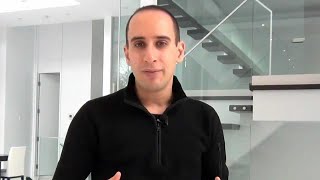
Evan Carmichael walks through launching a consulting firm for small businesses. Start with genuine passion, work for an established consultant first to learn the ropes, take early clients for free to build case studies, then create consistent expert content like blog posts and videos. Credibility takes time and patience.
Questions this video answers
Evan outlines a five‑step approach: build the business around your passion; work to learn by interning or working for an established consultant; take on free or low‑cost clients to build a portfolio and case studies; create expert content (blog, video, guest posts) to establish authority; and be patient, recognizing credibility takes time and sustained effort.
Chapters
Hi, I'm Evan Carmichael. Welcome to another edition of Ask Evan. Today I'm going to answer a question from one of our YouTube readers, uh, viewers I guess, Rihanna, who wrote in saying, "I want to start a business, but I want to help small businesses be more successful. I want to help by starting a consulting company, but who would want to listen to someone who's never owned a business? How do I become more credible?" Thank you, Rihanna. So thanks for the question, Rihanna. So when I'm giving advice to entrepreneurs to have them start up their own business, the number one thing I always recommend is build a business around your passion. So you've got to do something you're really excited about, you'll jump through, you know, brick walls to solve, and something that kind of keeps you going and gets the energy pumping and the blood flowing. So if you found that with helping small business owners, so that's a great start. So you found your passion. The next thing I usually recommend doing for somebody just starting up without a lot of experience is work to learn. So go find somebody who's doing exactly what you're doing or what you want to do and work for them for 6 months or 3 months or a year. Just to get a sense of how the industry works to A) make sure that it is something that you want to do and B) also learn all the tricks of the trade from somebody who is in your industry. It's a great way to learn about the business figure out all the mistakes on somebody else's watch and also get paid to do it. So you're getting paid to learn about how to be a successful business owner in your field. So as much as possible, try to find somebody you might be able to intern with or get a job with at the start who does exactly what you want to try to do, to learn from their experience. Beyond that, you gotta start building up a base. So if you have no experience, it might be hard to convince people to come on board with you and sign you up as a supplier, but you might have to do things for free at the beginning or at a super low cost. So you're building up your portfolio, you're building up your experience, and you're building up case studies so you can say, "Hey, I helped this person go from here to here." So at the beginning, you're looking for small clients, people who could become testimonials or case studies, and even if you're not making money off of them, you're building up your portfolio so that when other clients come to you, you can show them, hey, you've got all this work done behind you and, you know, you're a credible expert. The last thing I would try to do here in terms of just getting started is try to build up your expertise by creating content. So if you have a blog, write great content on your website that talks about how small business owners can help grow their companies. You can create YouTube videos just like I'm doing here. You can share your thoughts in the video or you can just answer questions if you see questions coming in. You may not have an audience yet, people who are asking you questions, but you can go to a forum of entrepreneurs and see what people are talking about and just create a video response and get back to somebody through your YouTube video. Depends on how, you know, if you like being in front of the camera or if you prefer to write, but start creating expert content. And if it's publishing on your own blog or if you're doing guest posting for other blogs, you're starting to build a little bit of an authority presence. Again, you have to have enough of a base knowledge to be able to create this great content. If you don't really know what you're talking about yet, then you have to go back and get the experience by working for somebody else and by starting on these little projects with clients. But once you feel you have a bit of a base knowledge, then you can start creating content, and when people find it and think, "Wow, this is really great stuff," they might contact you or at least sign up for your newsletter or take whatever next step you want them to take. So hopefully that helps. It is a bit of a process. It's probably gonna take a lot longer than you think it's gonna take and be, you know, require a lot of energy. But hopefully if it's something that you're really passionate about and you believe in and this is something you wanna do for the next 20 years, then it'll be worth the investment and be super rewarding for you as you continue to grow. So thank you for the question. For those of you watching, if you like the video, please give it a thumbs up below. Makes me wanna do more of these videos for you. And if you have a comment about this video or you have a question for your own business, feel free to leave it in the comment section below. I always read those and, uh, try to respond to everybody who does write in. So thank you, and I'll see you on the next episode.