If I Only Had $10,000, Here's What I'd Do Instead - Robert Kiyosaki
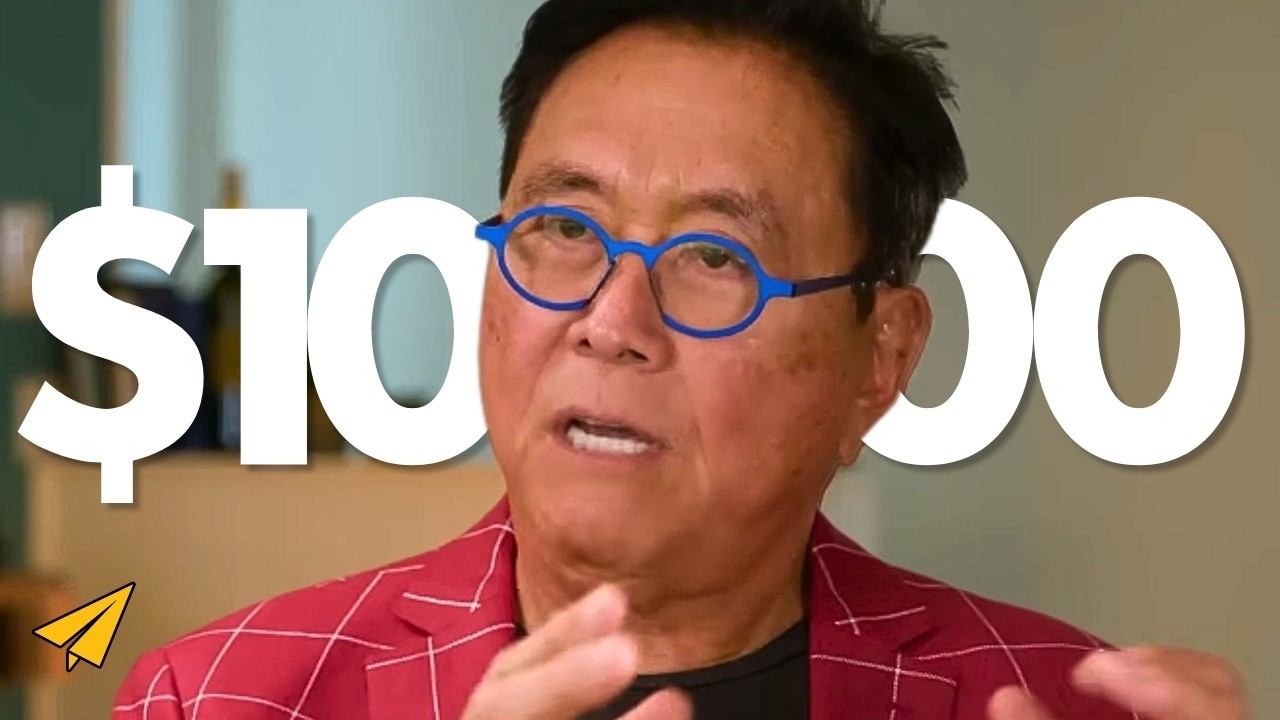
Robert Kiyosaki walks through how he'd turn $10,000 into wealth: buy a $385 real estate course to learn sales, earn commissions, then put a $2,000 down payment on a cash-flow-positive condo. The framework relies on education first, one high-value skill, and small income-producing assets that compound over time.
Chapters
The best thing your $10,000 can buy is one skill that people pay for. Robert Kiyosaki's first purchase was a $385 course, and he says it went on to make him millions.
I took a real estate course when I came back from Vietnam. Cost me $385. That $385 has made me a multimillionaire. What makes you rich is not money, but skills. If you're going to be a real entrepreneur, you have to be a lifelong learner. I am studying, learning constantly. I never stop, and that's my competitive advantage.
The Census Bureau found 63.9% of American employer businesses started on the owner's own savings, not a bank loan.
So many people say, well, I can't afford this, I can't afford that. The reason you can't afford to buy something is because you can't sell. And sales equals income. You have to see the future and you invest into the future. Most people, you know, don't— all the future is what they're gonna have for lunch. You know what I mean? Yeah. That's as far as they can see. So your skillset is you can see the future in technology, but most important thing is you're already taking action.
So what you do with that $10,000 this year decides whether you end up owning something that pays you every month or spending it and starting over.
If you're 30 years old, And you're not rich, you better do a self-examination because it's in your head that's stopping you. One of the most important things you have in your life is time. It's one of your greatest assets, or it's your liability.
So here's what Robert Kiyosaki would do with $10,000 instead. He answered that exact question with his own money in 1974, and that course was only the first thing he did that year. In 1974, Kiyosaki came out of the Marine Corps. He could have walked straight into a job as a commercial airline pilot with the big salary, the crazy schedule that comes with it. But he turned it down and took a sales job at Xerox instead.
Back in 1974, you know, my dad wanted me to go to the University of Hawaii and get my PhD. And I said, no, I'm going to— or he wanted to fly for the airlines because he was a pilot. And I said, no, I'm not going to do that. I'm going to learn how to sell.
But why? He picked Xerox on purpose. Xerox had one of the best sales training programs in the country, and he wanted to learn how to sell. His rich dad's rule was work to learn, not to earn. So he took the job that paid him less But taught him more.
I get a job with Xerox. This is 1974, and I'm over there like, I go to— they send me to the best sales school.
That same year, he paid $385 for a 3-day real estate course in Honolulu.
So the course was free. The introductory course was free. And so I strolled into it and it cost $385. And I took this 3-day course, and that's how I started in real estate.
Then he went looking for a deal. A broker in Waikiki told him about a condominium development on Maui that had gone into foreclosure.
for a nothing-down piece of real estate, and I found on an island of Maui.
Kiyosaki bought a 1-bedroom, 1-bath condo there for $18,000. The down payment was $2,000, and he charged it to his credit card.
And I found a 1-bedroom, 1-bath condo on the beach. It was $18,000 down, and that's— and I, so I gave them my credit card. I put $1,800 down. And I made $25 a month. In other words, I made $25 a month with nothing. I used 100% debt.
After the mortgage and the expenses, that condo paid him every single month from the start. In his own words, he had none of his own money in the deal and he was still making money. By 1978, he was one of the top salespeople at Xerox, and he was putting his commissions straight into more property. Within about 3 years, the buildings were paying him more than his job was.
So as I was getting out of the Marine Corps, my rich dad says, you number one have to learn how to sell. So I left the Marine Corps, I got a job at Xerox, and I hated it.
I hated selling.
But for 4 years I struggled, and I had to stay there until I became number one. So every day I practiced selling, practiced selling.
Now you might be thinking, okay, that was 1974, and there's no $18,000 condo waiting for you on Maui or anywhere else. And that's true. And listen, all progress begins with telling Truth: the price isn't the part to copy. Look at what he actually spent money on that year. It was his $385 on a course, $2,000 on a down payment that he didn't have in cash. He didn't spend money on a logo, an office, an assistant. He bought knowledge. Then he bought a small piece of something that paid him every month, and he kept the job that was teaching him the one skill he was missing, which was sales. So if $10,000 is what you've got, here's what Kiyosaki would do with it instead of spending. There are six moves. They go in this order, and the first one costs less than four hundred dollars. If you've been here before, drop a hashtag believe in the comments below so I can feature you here in a future video. And if you're new, welcome to Believe Nation, the only channel that helps you believe in yourself daily, one video at a time. Believe. Buy the education before you buy the asset. So the first money out of Kiyosaki's pocket wasn't a down payment; it was the three hundred eighty-five dollar course, and he took it before he owned a single thing. That's the order. You learn to evaluate the asset. Then you go and buy the asset. If you do it the other way around, your $10,000 becomes tuition anyway, except the lesson costs $10,000 instead of $385. So put $2,000 to $3,000 of your $10,000 into getting properly taught, not a $19 course you'll watch at 1.5 speed and never finish. Information has been free for years, and free information isn't what has been stopping you. What costs money is somebody experienced looking at your specific work every week and telling you exactly what's wrong with it. So pick the skill closest to money in whatever you're going into. If it's property, then it's how to read a deal, what the real expenses are, and how to tell a good number from a number somebody wants you to believe. If it's a business, it's how to price and how to close. It is almost never how to do bookkeeping, and it's never picking colors for your logo. And judge what you buy by one question: will a real person look at my actual work and tell me the truth about it? Because a recorded course can't do that. A room with somebody in it who has already done what you're trying to do Can so check what the person teaching it does for a living. Ask them what they own, what they've built, and what they lasted themselves. If the answer keeps coming back vague, keep your money and go ask somebody else. So today, write down the one skill that would put money in your account this month if you were excellent at it tomorrow. Then find three people who teach it and email all three and look them up. That's the highest return two thousand dollars you will spend this year. Get somebody to pay you while you learn. So Kiyosaki turned down the airline job because Xerox would teach him to sell. He took less money on purpose. And he came out of it with the one skill that carried him into everything he did afterwards. A sales job is paid education and it costs nothing out of your $10,000. Somebody trains you, they hand you a product, they put you in front of real buyers, and they pay you while you get better. You cannot buy that experience for $10,000 and you can get paid to have it. Sales is a skill because every other thing you want depends on it. So nobody funds you or hires you or partners with you or buys from you until you can explain what you do and ask for the money without your voice changing. So you can take on something where you're paid on results, a commission role, even a few hours a week selling for a business if you like. What matters is that you are the one asking for money and hearing the answer. So you treat it like training. Keep a note of every objection that you hear. After 30 conversations, you'll notice the same 5 objections coming back and you'll have real answers instead of just hoping that the questions don't come up. That training is worth more than the commission, and you need to ask for the money in a clear sentence without hesitating. Say what it costs and then stop talking. The silence After the number is the part that everybody rushes to fill. Filling the silence is how you talk yourself down to a smaller number than the person was already willing to pay. So you're gonna be bad at it for about a month. Everybody is. But being leads to doing. The day that you decide that you are a person who sells is the day you start getting the reps to make it true. So this week, put yourself in one situation where you have to ask a real human being for money. Just one day. Book it before Friday. Build the smallest version first. Kiyosaki's first deal was a one-bedroom condo in a four Not a building, not a block, the smallest he could get his hands on at the time. So he put $2,000 down and controlled $18,000 worth of property, and the rent covered the rest. That's the part to copy. And you don't even need real estate to do it. One client paying you $1,500 a month is $18,000 over a year. And going and getting that client costs you a tiny piece of the $18,000. After the education, let's say you've got $8,000 left. That's the money you start with the smallest version with, and then your customers pay for everything that comes afterwards. So Write down the version of your plan that costs $2,500 instead of the version that's in your head. And think of a service ideally before a product. Get 1 client before 10, your own hands before you hire staff. You rent before you own. The version in your head has a brand, a website, software. It's huge. The $2,500 version has you, a phone, and 1 person that says yes. Small is what lets you be wrong and keep going. If you bet all your money on one thing, the first chance that something goes sideways, it closes your business. And something always goes sideways in business. Keep enough in the account to be wrong once because the business that survives is usually the one that can afford a bad month early. Kiyosaki found a development that had gone into foreclosure, which is another way of saying he went looking where nobody else was looking. Your version of that is the customer that nobody else is calling back, or the job that everybody in your industry finds too boring to do. So today, write 2 numbers down, the smallest version of your idea And what it costs. If that number is over 2,500, you haven't found the smallest version yet. Cut it and write it down again. Also, if you want to take real action after this video, I made a free worksheet just for you. It covers the top lessons from today, gives you space to write your biggest takeaways, and helps you build a simple action plan. It's 100% free. Just click the link in the description below to go grab it, and I'll see you there. Run Kiyosaki's one test before you buy anything. So Kiyosaki's whole definition of an asset is one line: an asset puts money in your pocket; a liability takes money out of. Run everything you buy through that asset test. So the condo passed the test after the mortgage and the expenses. It handed him money every month while he was at work selling photocopiers. This is the only test that he applies. Now take your $10,000 and put every single thing that you're planning to buy through that filter. The laptop, the camera, the car you've been telling yourself is for the business, the course, the website. For each one, answer honestly. Does this hand me money every month or does it take money out? He calls the second kind doodads. And doodads. Doodads are where money goes when there's no asset test. So most of what feels like starting the business is just doodads. A logo takes a couple thousand, a website is a couple thousand, business cards, a banner or booth, a lawyer to set up a company, and you've got all these expenses and never having spoke to one human being who might pay you. Every one of those things feels like progress on the day that you bought it, right? It feels like you're doing something. So let's look at a vehicle, for example. A car you drive to work takes money out every month in payments and insurance and gas repairs. So it's a liability by Kiyosaki's definition, whatever it feels like when you're pulling into the driveway. But a van that lets you take on jobs that you're turning down today is a different thing because you can point at the work that it helps you bring in. So skipping the logo and the website, it's not about you being cheap. You're just not handing your $10,000 to somebody who isn't gonna hand any of it back anytime soon. And the asset test cuts the other way too. So if something genuinely pays you every month, buying it isn't spending. Coaching that raises your rate by $500 a month pays for itself quickly. That's the same asset test that the condo passed. So go through your Notes app right now and find the list of things that you're planning to buy and put an A or an L next to it for asset liability. Anything with an L waits until a customer has paid for it. Takes 5 minutes, will probably save you a few thousand dollars today, and can keep your entire business from going under next month. Keep the paycheck while you build the thing. So Kiyosaki didn't quit Xerox when he bought the first condo. He kept selling copiers and he kept getting better at it. His property business grew alongside his job for years before it replaced it. His phrase for this is mind your own business. Your job is your job and your business is what you're building on the side with the money that the job pays you both at the same time on purpose. The paycheck is what lets you say no to a bad deal. The moment your rent depends on the next sale closing, you get desperate and you take the wrong customer. You'll lower your price that you should have raised. You'll buy the thing that pays this month instead of the thing that pays for the next 10 years. So keep the income while you build. Get up earlier and give it your evenings and put the hours somewhere that they actually compound. You won't be in this situation forever. The goal is to give you the ability to make mistakes and stay in the business longer so it actually works. And be specific about the hours or your job will take all of your hours. Pick the actual blocks and put them in the calendar the way that you would treat A client meeting for your own business, 2 hours before work or 3 hours on a Saturday morning. Whatever you pick has to survive a bad week at the job because there will be bad weeks, and those are exactly the weeks that you cannot lose momentum on building your dream. Also, set the number that lets you leave before you get emotional about it. So write down what the business has to pay you every month and how many months in a row before you hand in your notice. 6 months of covering your costs is a really good signal. 1 month is not. So tonight, write 2 lines in your notes what your monthly costs actually are and the number the business needs to hit for 6 months straight. Now you have an exit plan that's not just risky, it's actually the smart thing to do. Put everything it pays you into the next one. So the condo paid Kiyosaki every month. He didn't spend that money. It went into his next deal. That's the compounding part. And it's the part that everybody skips. The first asset is small on purpose. So what it pays you is small too. And small money is easy to spend on something that you you feel you should deserve, right? You spend it and then you're back to one asset and you've made no progress at all. His commissions from Xerox and the money coming off the condo were both going into more property for him. Within about 3 years, his real estate income had passed his job income, not because any one of them were huge, but because none of the money got spent. So separate the money, open a second account and send everything the asset pays you straight into that second account. Don't attach a credit card to it. That account has one job, which is to buy your next asset and it stays untouched. Touched until it can. Then set the rule that you'll follow when the money does show up. Nothing gets bought until the customer has paid for it. Not the $200 a month tool, not the hired help, not the upgrade. If revenue paid for it, it's allowed. If your savings has to pay for it, then it waits. You'll grow slower doing it this way, but you'll also be here in 3 years, which is when this starts to look like the thing that you are hoping for. And the math gets exciting as you continue to keep building. The first deal might take some information, education, and a year of savings to reach. The second one gets paid for by the first. So But shows up sooner and it costs you nothing that you had to go and earn at the job. The third one shows up even faster than that. That's the machine, and it only starts turning once you stop spending what the first one pays you. So open that account this week and move the first dollar into it. Name it after what it's for. Naming it is the whole trick because you don't drain that account when it has a job for you. Your money was never the hard part. There's a line That is always loved about a bird sitting on a branch. She isn't afraid of the branch breaking because her trust was never in the branch; it's in her wings. The money, the timing, the economy—those are all the branches. You and the skills you develop are your wings. Kiyosaki started with $385 and a credit card. Buy the instruction, get paid to learn to sell, invest in it instead of spending, and let the money it makes buy the next one. Don't wait for permission to start. You know when the best time to start is? Right now. How about right now? And congratulations, you're one video closer to who you're meant to be. Believe. Now let's learn about Cashflow Mastery, how to think in systems instead of salaries. You will never build real freedom from a salary alone. You're not going to get rich renting out your time. You must own equity, a piece of a business, to gain your financial freedom. Profits are better than wages. Wages make you a which is fine. Profits make you a fortune, which is super fine. Gallup found that only 31% of American workers are actually engaged at their jobs, the lowest level in over a decade. This is about more than money. It's about whether you spend your one life building a machine that pays you or renting out your best hours to build a machine for someone else. Let me tell you about a man who figured this out as a teenager with almost no money in his pocket. His name One was Fred DeLuca. Back in 1965, Fred was just 17 years old and stressed about how he was going to pay for college. He wanted to become a doctor, but the money wasn't there. He didn't have it. So at a backyard barbecue, a family friend named Pete handed him an idea and a $1,000 loan: open a sandwich shop. That summer, Fred opened one tiny sandwich shop in Bridgeport, Connecticut. It was not glamorous, and that first shop barely made any money. But Fred didn't want to just run a sandwich shop for the rest of his life. He wanted to understand the system behind it so he could repeat it. He got obsessed with the process— how to make the sandwich fast, how to run the store lean, how to teach a total stranger to do it exactly the same way he did. And once he had a system that actually worked, he did something incredible. He didn't open store number 2 by himself. He taught other people to run his system and let them open the stores so the whole thing could grow without Fred standing behind every single counter. That one idea, turning a shop into a repeatable system other people could run, grew Subway into more than 40,000 locations around the world. Fred DeLuca started with a $1,000 loan and one little store and built a machine that paid him whether or not he ever made another sandwich himself. He didn't get rich from a salary or from Working more hours than everyone else. He got rich by building a system that other people could run and then owning it. Now you might be thinking, okay, that's great for Fred DeLuca, but you can't exactly go build a 40,000-store empire from your kitchen table. You've got a schedule, a boss, a job. So how does any of this help you on a random Tuesday morning? The system isn't about a fast food chain. A system is just any repeatable way of producing income that doesn't depend on you showing up every hour to trade your time for money. It can be small. It can start on the side at night with almost no money. The point isn't to build a 40,000-store Empire tomorrow. The point is to stop thinking like someone who only earns when they clock in and start thinking like someone who's building something on the side that earns on its own. So you don't need permission to do this. You don't need to feel ready. Let me show you exactly how to start thinking in systems instead of salaries. Be a killer at one thing before you chase ten. So I need to warn you about something because the internet is full of bad advice on this. You've probably heard that rich people have seven streams of income, so you go and try. To create all 7 things at once. A little store here, some crypto there, a bit of dropshipping, a side gig, and you spread yourself so thin that every single one of them stays small. That's the fastest way to burn out and end up with nothing. Here's what actually works. The path to real wealth, especially in the beginning, is not using multiple streams. It's being an absolute killer at one thing. Pick one skill, one business, one problem that you can solve better than almost anyone else and pour everything into it until it's genuinely great. Depth beats scatter every single time. When you try a bunch of things that you don't understand and you do them all badly, the market can smell it and you won't make any money. Fred DeLuca didn't run 7 different kinds of businesses. He ran one sandwich shop and he became obsessed with getting that single system perfect. The exact way to build a sandwich, how fast the line moved, how to train a brand new person to do it the same way every time. He drilled that one thing until it was flawless, and only then did he multiply. That's the order that works. Master one thing, then systemize it, then scale it. The multiple streams comes later, and when they come, they'll mostly flow out of that one thing that you mastered first. So stop trying to do 10 mediocre things at once. Build one boat that actually floats and make it the best boat on the water. Here's a simple test to find your one thing. What can you do that people already come to you for? What do your friends ask you for help with? What could you happily work on at 11 at night and not notice the time? That intersection, the thing that you're good at and drawn to, and that other people will pay you for is where you start to— you plant your flag. Then commit to it for real, not just for one weekend. Give it a year of full focus before you ever think about starting the second thing. Almost everyone quits their one thing right before it was about to work, and they jump to a new shiny idea and start the clock over again from zero. Don't restart the clock. Stack your years on one thing and let it compound. Turn yourself into a system, then step out of it. So right now, if you own a small business or you're self-employed, there's a good chance that you don't really own a business. You own a job that you can never quit because the whole thing lives inside, you know, right here, lives inside your head and stops the second that you stop. That's not freedom, that you've just built yourself a job. You have your own form of prison. The fix is to turn what you do into a system that exists outside of you. So you start by writing down every single thing that you do to make money step by step. Like you're writing instructions for a complete stranger. How do you find a customer? How do you talk to them? How do you actually deliver the work? How do you get paid? It's boring, but it's powerful because the moment that it's written down, it stops being just you and it starts becoming a process. And a process can be taught, can be improved, can be handed off to somebody else, can be repeated without you. This is exactly what Fred DeLuca did with Subway. He didn't just hope that each new shop would turn out okay, right? He built a simple repeatable system for making the sandwich and running the store so that someone brand knew could open a location and get the same result that he got in his first one. He removed himself from the outcome by building a system that carried the standard for him through every store. You can do the same thing just at your scale, right? Once the process is on paper, you could train someone to run a part of it, then another part. Every piece that you successfully hand off buys you back a little bit more of your time and your life. The goal that you're aiming at is simple and it's, I think, pretty huge. Build the thing so well that it can run without you because a business that can run without A business that can run without you is an asset, and a business that can't is just an extra stressful job that has your name on it, right? So start with the task that you do most often, the one that eats your biggest chunk of your week. Write down exactly how you do it, every step, and then the next time it comes up, follow your own instructions and fix anything that's unclear. Do that a few times and you'll have an actual playbook, not just some idea that lives in your head. Then find the one task that you hate most or waste the best hours and make that the first thing you train someone else to handle using your playbook. You don't have to hire a full-time employee to start. few hours a week from one person. What matters is that you prove to yourself the work can happen without your hands on everything. Once you feel that for the first time, you get hooked because you just watched your income keep moving while you stepped a little bit away. And that feeling is the whole point of building a system. Stop being an employee of your own money. This one is more of a mindset shift and it just starts to change how you see the, the whole game. You stop thinking like a person who gets a paycheck and you start thinking like a corporation, like an owner, a worker Earns money, pays taxes on all of it, and spends whatever's left over. A smart business does it in the exact opposite order. It earns, it keeps the money working inside the system, and it reinvests to grow and is built to be efficient with what it owes. The difference repeated for years becomes the difference between just running on a treadmill constantly and actually, you know, climbing the staircase towards success. You don't need to be huge to start thinking this way. When your one thing starts making real Get proper advice about setting it up the right way so more of what you earn stays inside your system doing work instead of leaking out to somebody else. A business that's structured well can pay for the tools that it uses, the space that it needs, the help that it hires, all before the tax ever gets counted. While an employee pays for every one of those things with money that's already been taxed. That's not some loophole. That's the entire way that the system's been designed to help people who build and own instead of the ones who just earn and spend. So keep money working in the business to buy tools and assets and help that make you more money. Pay yourself in a smart, planned way instead of grabbing every dollar that comes the second it lands, because every dollar that you leave working in the business, in the machine, is helping build the machine and the business bigger. The rich don't treat their income like it's just this paycheck that they can go off and spend. They treat it like it's food for the machine, and they keep feeding that machine until it's strong enough to feed them for the rest of their lives. Own the thing that does the earning. So a salary pays you for showing up and doing the work. An asset pays you for existing. The whole leap from thinking in salaries to thinking in systems comes down to just one idea. Stop only selling your time and start owning things that produce income on their own. So if we go back and think about what Fred DeLuca really owned, it wasn't one sandwich shop that needed him to be behind the counter. He owned the system and the brand behind tens of thousands of shops, and that system paid him a piece of every store in every city. Whether he showed up or not, the person running one shop earned from the hours that they put in. Fred earned from the entire network all day long, everywhere at the same time. He owned the thing that did the earning, not a job inside of the thing. You want to build your life the same way at whatever size that you're at right now. Own a piece of the business, not just a spot on his payroll. When you help a company grow, ask for a slice of it instead of a flat fee, so you keep. keep getting paid long after the work is actually done. Package your skills into a product that sells while you sleep instead of only trading your time for money. Put your surplus into assets that send you money back month after month, long after you did the work to buy them. Every dollar you move from your hands into the machine, into an engine, is a dollar that never has to be earned by hand again. Every one of those moves does the same thing for you. It separates your income from the hours. The employee is stuck in this simple, brutal equation: no hours, no money. Get sick, no money. Take a vacation, no money. The owner breaks that equation on purpose so that the earning keeps happening even when they're at their kid's game or vacation or sleeping. That's what it really means to think in systems instead of salaries. You build or buy the engine and the engine keeps working for you. And you don't have to own something enormous for this to completely change your life. Owning even one small income-producing thing starts to change how you see the whole world. The first time money shows up in your account from something that you built rather than an hour of you trading your time, something changes. You stop asking, how many hours can I sell? And start asking, how many engines can I build? And that question asked over and over for years becomes the whole difference between a person who retires exhausted and a person who is genuinely free. So start with one small engine, then continue to build. Use leverage so the machine outlives your energy. This advice allows the system to grow far past what you could ever do on your own. Leverage. Leverage just means you're using something other than your own raw effort and money to get the work done. So there are 3 kinds that you can start using right now, no matter how small you are. The first is other people. So you will never scale by being the only worker in your business. The moment you can, you hand off tasks that don't need you so your time goes to the things that actually move the needle forward. The second system is tools. A good piece of software, AI, simple automated process can do the work of several people all day without lunch break or days off. And the third is other people's attention and audiences. So partnering with someone who already has the customers you want can grow you faster than years of just grinding by yourself. It's actually what saved my first company when I was dead broke and about to quit. I was making $300 a month and staring at giving up. And what saved me was I stopped trying to do everything myself and started building partnerships instead, borrowing other people's reach instead of trying to build everything by myself from scratch. One of those partnerships led straight to my first deal, a great deal for me at the time, and that one deal kept the whole dream alive. I didn't outwork my problem, I just created leverage towards solving it. Leverage is how a system keeps producing even when your personal energy might run out, because your energy always runs out eventually. So you're one person with 24 hours. A machine built on leverage doesn't get tired, it doesn't It doesn't cap out at a number of hours in your day. And if you have the ability to build something that serves people while you rest, then I think you have the responsibility to go and build it. If you can, then you must. So don't wait for permission. Don't wait to feel ready. And you know when the best time to start is? Right now. How about right now? You were built to own, not just to clock in. You were never meant to spend your whole life renting out your hours. So start with one thing. thing, make it great, turn it into a system, own the engine, and use leverage to let it grow beyond you. Being leads to doing. So decide today that you are a builder of systems and let the action follow. Your purpose comes from your pain, and every frustrating hour that you have traded for a paycheck can become a fire inside you that builds something that finally pays you back. Now let's learn why you don't need a job to make Security in a corporate job doesn't exist anymore. The safe job is about to be unsafe. So far this year, companies have cut more than 800,000 jobs. That's the highest number we have seen since the pandemic. A major West Michigan company plans to cut hundreds of jobs tonight. Grand Rapids-based AccraSure is telling us that artificial intelligence is replacing actual employees. 80% of students feel they learn nothing about entrepreneurship in school, even though most want to start their own businesses. The only non-gamble in life is going on offense. And you've been taught that going on offense is the gamble because the school system was literally created to create factory workers.
Our school systems teach us nothing about money. Nothing. It's pathetic.
So at 25, I recommitted to my education. But this time I started studying not things that were in books, but people that had actually created wealth. Sticking to a traditional career path limits your impact, keeps you miserable, and stops you from sharing your unique genius with the world. My sense is that even for the, the kids that get into the, um, the elite colleges at this point, it's like you've passed some Mandarin examination in China, but you're just so exhausted you're never going to do anything more with the rest of your life. You're You take a calculated risk to start a company, realizing you may forgo a couple of years of steady income at another job and whatever else. That's a great risk to take, and if you don't take that risk, I think you have a very high chance that you end up regretting that. Where are you going to spend your time and your energy is one of the most important decisions you get to make in life. When I was 19, I had the hardest choice to make. I was in university and I had a job offer for a senior position at a tech company. Safe 6-figure investment banking job. It was a job everybody wanted, but I also had a chance to own 30% of a biotech software making only $300 a month. And I picked the startup. I chose to struggle, eat beans for lunch, because the thought of sitting in a cubicle doing work I hated scared me more than being broke. I knew I had to take control of my own income. Think about Colonel Sanders. At 65 years old, he had a tiny $105 Social Security check. He didn't go looking for a greeter job at a local store, he took his chicken recipe, hit the road, and slept in his car. He faced 1,009 rejections before finally someone said yes to his franchise idea. He proved that you can create massive wealth at any age just by owning your own ideas instead of working for someone else. Brian Chesky and Joe Gebbia couldn't pay their rent in San Francisco. They didn't rush out to get safe, normal jobs. Instead, they put 3 air mattresses on their floor and charged people to sleep there during a local design conference. That simple idea turned into Airbnb. They created a $100 million company because they look for a creative way to solve a problem instead of looking for a safe corporate salary. And right now you might be thinking that you need thousands of dollars in the bank to start making your own money. You think you need rich parents or some giant loan to succeed, and that's not true. Colonel Sanders was broke at 65. Airbnb started with 3 cheap air mattresses. You don't need money to make money. You just need a problem to solve and the courage to take the first step. I'm going to show you exactly how to start generating your own income from scratch right now. Solve your own biggest problem. To make money without a job, you've got to realize where value actually comes from. You get paid for bringing value to other people. The The absolute easiest way to bring value is to look directly at your own life. Your purpose comes from your pain. Whatever you struggle with the most is exactly what you want to help other people overcome. So think about your past. If you had a hard time getting fit and you figured out a system that works, that system is your new business. If you struggled with anxiety and found a way to manage it, that method, that's your business. You don't need a fancy business degree to make this happen. You just need to be one step ahead of the person that you're trying trying to help. Over 62% of billionaires are totally self-made, meaning they've created their wealth by solving real problems, not by inheriting cash. People pay you to solve their problems because they desperately want to skip the pain that you have already went through. You're selling speed and convenience. If you can help someone skip 5 years of painful trial and error, they pay you for that shortcut. So don't think you need to invent the next big tech platform to be successful. Look at the local business in in your town. They need help with their marketing, their accounting, their daily operations. They've got massive problems right now. You can step in and help fix those problems. When you focus entirely on serving others and solving their actual pain points, you stop acting like an employee begging for a simple paycheck, and you start acting like a true entrepreneur commanding a premium price. You stop handing out weak resumes and start handing out powerful solutions for problems. This simple shift in your mindset changes everything. You go from hoping that a boss picks you to knowing that the market desperately needs you. So you've got to stop looking for a company to hire you and start looking for a person to help. The money will always follow the value you provide. So if you fix a $100 problem, you make a little bit of money. If you fix a $1,000 problem, you make a lot more money. It's simple. Your job right now is to identify the most expensive problem you know how to solve and then go find the exact people who are crying out for that exact solution. But finding a problem is only the first step, because your surroundings might be secretly destroying your chances of success. Change your environment to change your mind. Your current environment is perfectly designed to keep you exactly where you are right now. So if your friends all have traditional jobs, they'll constantly tell you to get a safe job. They aren't trying to hurt you, they just don't understand your big vision. Research shows that you're up to 61% more likely to adopt the exact habits and mindsets of the people closest to you. So if you want to make your own money, you must change your daily environment. You've got to completely shut out the negativity, limit your access to people who doubt you, and fill that empty space with extreme positivity and the specific messages you actually want to hear. So if you can't find supportive friends in your own town yet, go find them online. Read powerful books, listen to great podcasts, watch amazing YouTube videos from the exact people who are already doing what you want to do. I started my YouTube channel because I wanted to surround myself with some of the greatest minds in history. I wanted Steve Jobs and Warren Buffett in my ear every single morning. I wanted their intense ambition to rub off on me. You've got to be incredibly intentional with your daily morning routine. Don't wake up and immediately scroll through toxic social media or the depressing news. Start your day with content that makes you believe in yourself. When you consume greatness daily, it starts to feel completely normal. Soon the idea of settling for a boring cubicle will feel totally insane to you. You'll begin to think bigger, act faster, expect so much more of yourself. You can literally rewire your entire brain for massive success just by changing what you look at and who you listen to every single day. So treat it like a garden, right? Your mind is a garden. If you plant negative seeds, you'll grow a massive negative life. If you plant seeds belief, you'll grow a massive, awesome empire. You've got to ruthlessly protect your focus. So stop giving your attention to things that make you feel small and start obsessing over the ideas that make you feel powerful. The moment you change your inputs, the outputs will transform forever. But once you fix your surroundings, you need a system to actually get you moving, which brings us to the simple 2% trick. Use the 2% rule to build massive momentum. The biggest thing you're missing right now is just momentum. You're sitting on a truly great idea, but you haven't taken any real action. You're constantly overthinking it. You want everything to be 100% perfect before you finally launch. You want the perfect logo, the perfect website, the perfect business plan. Stop doing that. Perfectionism is just you being afraid. Studies reveal that perfectionism actually decreases your productivity and increases severe mental burnout. You don't need perfect plan. You just need to execute the first 2%. If your goal is to write a book, bestselling book, the first 2% is writing just one single page. If your goal is to start a massive YouTube channel, awesome. The first 2% is pulling out your phone and recording your first really messy video. Don't worry about step 100. Just focus completely on step number 1. Take the absolute smallest, easiest action right now. Once you take that first step, your brain, it gets a— it's a quick win. And that quick win Builds confidence, and that confidence creates momentum. So when I wrote my book about momentum, I didn't plan it out for long months. I just started typing furiously. The physical action itself creates the energy you need to keep going. So waiting around for the perfect moment—what does it do? It guarantees that you'll wait forever. Action cures fear every single time. When you're moving forward, you simply don't have the time to sit there and doubt. Yourself. So don't let your greatest ideas die just silently here in your head. Put them out into the real world. Start messy, start small, but you've absolutely got to start. When? Today. It doesn't matter if your first attempt looks crazy, ridiculous. The only thing that matters is that you aren't just standing still anymore. You're finally in the game. Every massive company started as some tiny, flawed little experiment. You are no different. So push through the hesitation, click publish, Make the call, and watch how quickly your life begins to change. Now that you're moving, though, you've got to prepare yourself for the hardest phase of all, and this is where almost everyone quits. Expect to be terrible at first. So now you've got to accept a really harsh reality: your first attempt at anything new is going to be absolutely terrible. Your first product will have tons of flaws. Your first video will be incredibly embarrassing. Your first major sales call will. Feel completely awkward, and that is completely normal. Everyone starts out at the bottom. You just don't see the messy hidden starts. Data shows that it takes roughly 10,000 hours of deliberate practice to truly master any complex skill. You just can't skip the struggle. When I first started on YouTube, I was completely terrified. I was shy, quiet, introverted. I did not like being on camera. It took me 350 videos before I wasn't completely embarrassed to watch myself back, and 700 public videos before I actually felt inspired by one piece of content that I made. And I made absolutely hundreds of terrible videos. You can go back and watch them, but I kept going anyway. Most people just quit because they tried 5 times and they expected to be world-class immediately. They let the ego stop you from making actual progress. So the fact that you're willing to try and be terrible becomes an actual secret advantage. So embrace the highly awkward phase. Look at your early failures as data, and that's gonna be part of your story as you climb. Every single time you fail, you learn exactly what not to do the next time. It'll be an inspiration to others. If you can handle looking foolish for a little while, you'll eventually become completely unstoppable. The only real failure in life's quitting before you get good. So you've got to give yourself permission to be a total beginner. Stop comparing your chapter 1 to somebody else's chapter 20. Right? Your journey is your journey, and that is okay. So put in the boring reps, do the unglamorous work. The mastery that you want is waiting on the other side of 1,000 terrible attempts. And once you survive that awkward phase, you can speed up your results by borrowing the exact blueprints of people who've already won. Model the massive success of others. You don't need to figure out all of this on your own. That's one of the biggest mistakes that I made early on. You don't have to reinvent the wheel to make a massive fortune. The smartest entrepreneurs study the exact people who've already won and simply model their success. So if you want to build a $100,000 consulting business, find someone who already did exactly that. Study their public website, look at their specific pricing, see exactly how they talk to their premium clients, then thoughtfully apply those same proven principles to your own unique style. According to the Small Business Administration, businesses that receive direct mentoring and strictly model-proven strategies are 2 times more likely to survive their first 5 difficult years. When my first business was struggling, I felt completely lost. I had no real idea how to turn things around. Then I decided to intensely study a highly successful software company, Microsoft, because I had a software company. I looked at how they operated, looked at how they got their first clients, not how they make an extra million now. I didn't steal or copy them, but I learned directly from Bill Gates's powerful framework. And that single focused decision saved my entire company. Success always leaves clues. There's a roadmap out there for you to do whatever you want and achieve whatever you want. You just have to be humble and curious enough to actively go and follow it. So read the biographies of great leaders, watch the long-form interviews of the performers that you look up to and respect, find the hidden patterns in their daily behaviors, and then creatively adapt them to your situation. Why would you spend 10 years making deeply painful mistakes when you can learn from someone else's expensive experience in just 10 days or 10 hours? So be an aggressive student of greatness, and your path to financial independence will be so much faster. You don't lack the ability, you just lack the right model. So find your ideal model, study them relentlessly, build your own blueprint for your special flavor. And then when you've got the right model, you need the right people. And there's a specific way to get the most powerful CEOs Build real relationships instead of fake followers. So most people think that making money online means you definitely need millions of random followers, right? You think that you need to go incredibly viral to succeed, and that's a massive and actually dangerous distraction. You don't need a million casual subscribers to make a million dollars. You just need deep, highly meaningful relationships. Don't worry about the vanity metrics; they will constantly waste your time. Instead, focus on direct business development through high-value connections. One of my favorite strategies, what we teach inside our Movement Makers program, is a business development show. It's a dedicated interview show. Don't constantly cold call potential clients. Warmly invite them onto your show to share their story. People love talking about themselves. When you feature them prominently, they feel valued and you built a relationship. Statistics clearly show that 84% of B2B sales start exactly with a warm referral. Referral or strong existing relationship. When you interview someone, you spend real focused time with them. You build authentic trust with them. That genuine trust turns into lucrative partnerships, massive referrals, highly paying clients. It literally doesn't matter if your new channel only has 200 total subscribers. We're going after people who have high demand but low media demand. You're coming in as media right now and you can get top industry leaders who built multimillion-dollar networks. So don't worry about the random clicks and start aggressively chasing real conversations. Add massive value to the exact people that you desperately want to work with. Feature their deep expertise. Ask them incredibly great questions. Do your research before you have them on. Give them a beautiful platform to share their story. When you actively become a super connector and a supporter, the big money naturally follows you everywhere you go. Your network is truly your actual net worth. Worth. So start building it deliberately and strategically today. Stop worrying about the algorithm and start obsessing over the actual human beings you want to serve. And building that network takes extreme focus, which means you've got to completely change how you manage your 24 hours. Make every single day truly count. Your limited time is your absolute most precious asset. If you want to permanently escape the endless job cycle and build your own incredible life, you've got to maximize your specific daily actions. So you wake up every morning with a clear intention: make today truly count. Before you hit your head, your tired head on the pillow tonight, do one specific thing that moves you significantly closer to your dream. Make one beautiful piece of art, send one highly important email, record one incredibly helpful video. Create something today that you desperately want your future grandkids to see. Research strongly indicates that completing Completing just one highly meaningful task a day significantly boosts your overall life satisfaction and guarantees long-term success. To make real time for that meaningful work, you've got to ruthlessly manage your busy schedule. You must eliminate, automate, or delegate absolutely everything else. If a specific task doesn't directly serve your core mission, stop doing it. If a basic computer program or AI can do it, awesome, automate it. If someone else can do something significantly cheaper, hire them right away. Don't waste your unique genius on boring busywork. Focus only on the high-level tasks that actually move the big needle forward. When you finally take control of your daily time, you instantly take total control of your personal income. You stop hopelessly trading hours for a flat, boring salary and start aggressively trading massive value for huge financial returns. You already have absolutely everything it takes to build a beautiful life of total freedom. You just have to firmly decide that you're ready to step up and claim it. And this brings us to the absolute most important truth of all, and it's something that I hope that you remember every single morning when you wake up: your belief is your ultimate superpower. You are entirely capable of building a massive life on your own terms. So trust your vision, take the messy action, and never let fear make your decisions. For you, if you want to learn these seven high-income skills to double your income, check the video right there next to me. I think you'll love it. Continue to believe, and I'll see you there. Most of what you learn in school is completely useless for making real money.
School teach you about money, and the answer is nothing. They know nothing about money, and they teach our kids.
The highest earners in the world ignore traditional career paths.
More from Evan


How the Biggest Mistake in History Created A Trillion-Dollar Empire | Sergey Brin



9 Machiavelli Principles That Force People To Respect You | Machiavellian Philosophy



The First 10 Words That Instantly Ruin A Sales Conversation | Vanessa Van Edwards

The Top 1% Mindset Behind The First $5 Trillion Company | Jensen Huang (Nvidia)

