If I Started From $0 Today, This Is What I’d Do To Become Rich | Duncan Bannatyne
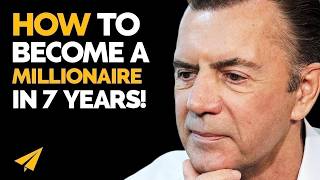
Duncan Bannatyne went from leaving school at 15 and prison to building wealth by buying a £450 ice-cream van, then betting everything on a nursing-home business. He says luck is self-made: success requires taking action, believing in what you're selling, and outworking everyone else.
Chapters
Every single one of you can have a life and have a great life. You make your own luck in life every time, and every entrepreneur makes their own luck. You must have a product you believe in, a product that will sell, a product that people want. If you work hard, if you deal with customers and you talk to your team, that's the best way to motivate them. People are going to have children, they're going to get married, they're going to do a lot of things, and they never plan ahead. You're the first person in my 21 years in my career who's ever asked me, knocked on the door and asked me for a job. It is that easy. Everybody could do it. There's not many people who don't do it. Anyone can go and start a business.
He's a Scottish entrepreneur, philanthropist, and author. His business interests include hotels, health clubs, spas, media, TV, property, and transportation. He's most famous for his appearance as a business angel on the BBC program Dragon's Den. He's Duncan Bannatyne, and here's my take on his top 10 rules for success.
As from this moment, you've got a phenomenal opportunity, every single one of you, can have a life and have a great life and have money and have a privileged future. The only person stopping you is you. Do you think luck ever comes into it? No, you make your own luck. You know, I think you can, you can, you can find somebody who's sleeping in the doorway and he will say he was very, very lucky because he passed this doorway one day and it was empty, so he's sleeping there. You make your own luck in life every time, and every entrepreneur makes their own luck. And I don't know anyone who started out as a businessman and not had a bit of good luck and a bit of bad luck in equal proportions and done very well. Product is a very important part of any business. You must have a product you believe in, a product that will sell, a product that people want. Or in the case of the children's stage school I invested in, Razzmatazz, with Denise Hutton, you have to have a product or a service that people want. And that was recognized by Denise. She recognized that people wanted this type of schools and absolutely now franchised out and doing fantastic. It's a great company. When I was 30, I worked in a bakery. To supplement my income, I'd go to the car auction, buy the odd car, do it up, and sell it. One day I saw this beautiful little ice cream van coming through, and I thought, I'm going to buy that and start a business. I paid £450 for it. That's the quickest way in. Yes please. Hello, what can I get for you?
Oh, um, I just want an ice cream, just plain ice cream, that's all. Just plain ice cream. It was here in Stuart's Park that Duncan acquired the exclusive license to sell ice creams.
This, you could say, was where I really started making money in business. I think people have got to realize that no one wakes up and says, I'm going to make Duncan Bannatyne rich. You've got to go and do it yourself. You've got to get off your backside and go out and actually do it. Thank you. Business is pretty quiet. I remember it being a lot busier when I was here. Many situations are different, but the best way to motivate your team is to lead by example. If you are early in the morning, if you start at 8 o'clock, you're there at half past 7. If you leave last, then you're motivating your team as to when to start and when to finish. If you work hard, if you deal with customers and you talk to your team, that's the best way to motivate them. Plan your life. I mean, in business we plan for 5 years, the finances. But people are going to have children, they're going to get married, they're going to do a lot of things and they never plan ahead.
Right.
You know, it allows them to plan ahead and make a business plan. One of the most important things about any business is the people. The people that you employ, the people that run your business, because when you're a successful businessman, you don't run the business, you manage a staff. One of my most successful guys is my managing director, who started with me in the accounts department, and he just shone. He developed from the accounts department to commercial director, and he now is managing director of the Banateng Group. And all employees have got the opportunity and the chance to expand up my company if they work hard enough. The thing that nobody in Britain ever does, my ex-wife and I, Gail and I, went around knocking on doors asking for work. Went to the local bakery, asked the personnel manager, asked if there was any jobs, she said no. Went somewhere else, 2 days later at 9 o'clock in the morning, the phone rang, it was the personnel manager from the bakery. She said, "I've been thinking about you." She says, "You're the first person in my 21 years in my career who's ever asked me, knocked on the door and asked me for a job." Usually I have to go and look for employees. So she said, "We found 2 jobs for you." So my wife and I, well, she wasn't my wife at the time, we started in the bakery. My job was to get the bread trays as they come out the bread bakery and put them on the vans. My girlfriend's job was to get the cherries and put them on the Bakewell tarts as they came through the system. It was a bit monotonous, but we worked night shifts, worked all overtime, got the payroll up, and managed to get a mortgage. Your organisational structure is very important. Whether you have a pyramid structure where you have a lot of regional managers who then report to another manager and above them, or whether you just have a line management, it doesn't matter. Whatever works for you, whatever works for the business, depending on the business, is the best thing to do. But you must have a structure that works. A finance department over here, a management department here. They must all be able to come together and run the business. Otherwise, you don't have a business.
I mean, to say this is your third book. I mean, the first one was Anyone Can Do It. The second one was Wake Up and Change Your Life. How to Be Smart with Your Money. It kind of makes it sound easy, but it's not that easy, is it? Or everyone would be doing it.
It is that easy. Yes, sir. Everybody could do it. There's not many people who don't do it. Anyone can go and start a business. I mean, you know—
A successful business.
Yeah, but, you know, I was not educated. I left school at 15. I joined the Royal Navy. I got thrown out when I was 19 years old. I spent 6 months in clink. I spent a few days in Borrelia later on, a few years later. I couldn't get a job. I started in business because I couldn't get a job. And I was 29 when I started. I was penniless at the age of 29, and I started in business.
You see, I mean, your story is well documented and you've, you know, summarized it very well there, and it fascinates me. I mean, basically up till 30 you were a bit of a bum, and I say that in the nicest possible way. We're both Scottish, I know what I mean. We know what we mean here. And then within 7 years you were a multi-millionaire. What did you start doing differently? You must have started doing something differently.
Well, I started in business by selling ice cream, and then I bought the opposition van And I bought a few more vans and it went from there. And then I decided I was going to get into the nursing home business. I was going to buy a plot of land to build a brand new nursing home with single bedrooms. And so I sold everything. I sold my house, my colour television, my ice cream business, my car, everything. I mortgaged a lot, borrowed money on credit cards. I knew when the nursing home was open it'd be worth more than what it cost, and it was, and it paid off all my debts, and that was it.
I still think something must have clicked in your head. Does it help having nothing to lose?
Yeah, absolutely, yeah.
Because you said, you know, you sold this, you sold that, But if you've got a family already and you're one of these people who's been brought up to scrimp and save and you've got lots of dependents, then you've got too much to lose to take the risk.
Yeah, if you read the autobiographies of a lot of entrepreneurs, successful entrepreneurs, you'll see that most of them had no education or less schooling, so they couldn't get jobs as accountants or bank managers on £300,000 a year, bankers and things like that. So they had no choice. Either they start in business or they get a job sweeping the streets or some low-paid job. We're all the same, so.
Thank you so much for watching. I made this video because Joshua McNulty asked me to. So if there's a famous entrepreneur that you want me to profile next, leave it down in the comments below and I'll see what I can do. I'd also love to know which of Duncan's top 10 rules had the biggest impact on you, what change you're gonna make now in your business as a result. Leave it in the comments and I will join in the discussion. Thank you so much for watching. Continue to believe, and I'll see you soon.
More from Evan


How the Biggest Mistake in History Created A Trillion-Dollar Empire | Sergey Brin



9 Machiavelli Principles That Force People To Respect You | Machiavellian Philosophy



The First 10 Words That Instantly Ruin A Sales Conversation | Vanessa Van Edwards

The Top 1% Mindset Behind The First $5 Trillion Company | Jensen Huang (Nvidia)

