Evan Carmichael breaks down Keanu Reeves's approach to success through interview clips and commentary. Keanu moved to LA as a teenager, took night acting classes, and kept asking why about everything. He sees happiness as doing work you love with people you care about.
Chapters
I was very self-motivated when I was in school. I was taking acting classes at night. I was going to Summer Stock Theater.
You take the blue pill, the story ends. You wake up in your bed and believe whatever you want to believe.
Since I was a child, I was always asking why.
We want you just to dive off your board into the ground. I got bumps and cuts and boards and elbows.
Your life experience is a resource, you know. It's kind of a resource. It's what you can bring.
Happiness is, uh, I guess I could only do like a kind of emotive run on that, which is like, it's all good.
He's a Canadian actor, producer, director, and musician. He's best known for his acting career, which began in 1985 and has spanned more than 3 decades. His acting career has garnered several awards, including a star on the Hollywood Walk of Fame. He's Keanu Reeves, and here's my take on his top 10 rules for success.
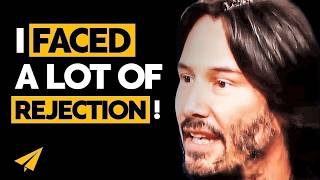
I left home when I was 17, 18. I drove from Toronto, Canada Canada to Los Angeles when I was 20 and moved out of my home when I was 18. So the beginning had, you know, I could take care of myself as a teenager. When I moved to the States, I had some family and I had a lot of rejection.
But, uh, who did you want to be? I mean, how, how do you, how did you foresee your future as act though?
I didn't. I was just wanted to do it, you know. I was very self-motivated when I was in school. I was taking acting classes at night. I was going to Summer Stock Theater. I was doing community theater, um, you know. I was just—
you were simply enjoying it.
I was enjoying it, but I, I was a kind of— I don't want to use the word calling, you know, but it's like destiny. I don't know if it was destiny. It's just what I wanted to do.
Right. You know?
And still, you know, hopefully—
Still enjoying it.
Yeah, still enjoying it and still working at working, I call it.
So he's letting go of his best self for, for one, his own kind of dark passion to fight, to want to have power. But he's using it as like, you know, but I have to take care of the temple. I have to take care of my parents. I have to take care of my master. And so, you know, it's called Men of Tai Chi, and there's these things that we oftentimes, for our— we have responsibilities and so we'll make sacrifices, you know, or we'll be attracted to something and we'll make sacrifices to get something. And the film is kind of promoting the idea that we have to be thoughtful about that. You know, that you can sometimes sacrifice yourself, that you think it's for the good, but maybe there's another way. Blue pill or red pill? Easy, red pill. Okay.
Nope.
What?
You take the blue pill, the story ends. You wake up in your bed and believe whatever you want to believe. You take the red pill, you stay in Wonderland, and I show you how deep the rabbit hole goes. Remember, all I'm offering is the truth, nothing more.
The red pill to me is, is a kind of, uh, a symbolic taking up of the torch of trying to understand and to, in a way, there's an idealism to it, you know? It's almost like, to me, the red pill represents the best of who we can possibly be to ourselves and to other people, to all sentient beings, to nature, everything.
I trained for the film for about 2 months, hanging out with lawyers, going to court, working on an accent. I did some movement exercises just for the guy. And so by the time I got to the film, I was like, I was just ready.
Since I was a child, I was always asking why.
Used to drive everyone around me crazy because it was like, why and how come? So once I started working in making movies and acting in that format, I was always really curious about, you know, where the camera was going, what was the lens doing, and also in terms of what everybody else was doing.
Oh my God, I know, that's the thing, it's like, okay, Keanu, the waves are 3 feet high, you know, here in Hawaii the ocean is just the ocean, and we want you to fall off. We want you just to dive off your board into the ground. I got bumps and cuts and boards and elbows and, you know, jumping and scraping, but that's fun.
Your life experience is a resource, you know, it's kind of a resource. It's what you can bring, you know, and so I kind of describe it just like there's myself and then there's the role and the story that you're telling and, you know, you bring what you bring and then you learn and you go to places that the character will take you to.
I know I'm a pretty simple guy. You know, ever since I was a young kid, I wanted to act. You know, I started professional acting when I was 15. And, you know, I've been really lucky to have the chance to have a career. And I don't know, I just have always tried to keep it simple. Happiness is— I guess I could only do like a kind of emotive run on that, which is like, it's all good. Everything's good. You're feeling good. You're doing something that makes you feel good. You're working with people, loving with people. Yeah. Just, it's all good.
Thank you so much for watching. I made this video because Jason Rosanina asked me to. So if there's a famous entrepreneur that you want me to profile next, leave it in the comments below and I'll see what I can do. I'd also love to know which of Keanu's top 10 rules had the biggest impact on you and why. Which did you like the most? What resonated with you the most? Leave it in the comments and I will join the discussion. Thank you so much for watching. Continue to believe. And I'll see you soon.
I don't know, I find in my career I've had a lot of people disagree with me. But I'm okay with that. And I think, you know, I think that's part of the collaboration. You know, it's like I have to understand what you're thinking and feeling. You know, if you're acting in the piece, if you're the production designer, you know, it's this collaboration of ideas. And as long as you know that I'm always right, it's great.
Right.
It's perfect. What happens if I don't know that?
Then we have to talk longer. Do you say, like, "Let's meet in private"?
Yeah, then we're just, "Okay, come with me and let me just show you." How do you shake it off when you get critiqued?
Uh, drink.
You know. Just keep going.
But you're working on something for 6 months.
Yeah.
And all of a sudden it comes out and gets dismissed.
Yes.
And then you just get harpooned.
You get just— yeah, it's like, yeah, it's awful. Yeah, I hate it. Yeah. You know, and you know, you hope that people enjoy what you do. And when they don't, it's always a drag. And then when you get harpooned, it's like, really?