If You Wanted to Go From $4,000 to $2 Billion, Here’s What To Do | Terry Matthews
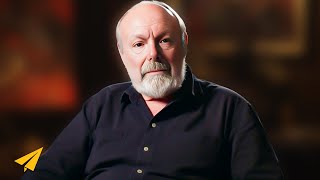
Terry Matthews borrowed $4,000 as a Welsh farm boy in Canada and built a telecom empire worth nearly $2 billion. He succeeded by staying relentless, building strong relationships, and making products that solved real problems for customers.
Chapters
Hi, I'm Evan Carmichael. Welcome to another edition of Modeling the Masters. I believe that the fastest and most effective way to grow your business is to model the strategies of people who've already done what you're trying to do. Now today's post is brought to you by the Amex for Business Canada Facebook page, a great resource for entrepreneurs if you wanna check it out. And today we're gonna look at how a farm boy from Wales moved to Canada, got a startup loan for $4,000, and turned it into almost $2 billion. This is the story of Terry Matthews and the top 3 lessons that you can learn from his success.
Terry Matthews was born on June 6th, 1943 in Gwent, Wales, where he spent a lot of his childhood. As a boy, Matthews would enjoy taking cars apart and building small electric motors with the pieces. He was curious to see how much he could put together on his own. When he found the four-leaf clover in the field behind a local chapel, Matthews says he knew he was going to be lucky in life. Alongside business partner and fellow British expatriate Michael Copeland, Matthews borrowed $4,000 and founded Advanced Networking Devices. He had no business plan to speak of, but was convinced he had an idea worth putting on the market. The pair also wanted to raise seed money for future enterprises they were planning. 6 months later, he changed the company's name to Mitel. While some believe Mitel stands for Mike and Terry's Electric Lawn Mowers after their first failed product, Copeland insists it stands for Mike and Terry Electronics. Acknowledging that importing lawnmowers was not going to be his ticket to success, Matthews shifted Mitel's focus. With the introduction of the touch-tone receiver as well as the PBX call routing system, Mitel revolutionized the telecommunications industry. Now, as a British knight as well as a billionaire, Matthews continues to serve as founder and chairman of Wesley Clover, an investment firm with investments in telecommunications, real estate, and leisure, as well as being directly involved in a handful of other companies, all focused on next-generation generation technologies that Matthews believes will give him his next big success.
By following his passion and by not giving up at the first sign of failure, Terry Matthews was able to go from having to borrow $4,000 to start up a business into becoming a billionaire. To help grow your business, here are 3 action items that you can learn from Terry Matthews.
Action item number 1: Be persistent. If there were rules of entrepreneurship, being persistent would be close to the top of the list. Being an entrepreneur is It's tough. People will reject you, you'll run short of money, you'll even wonder if you're better to just give up and go get a 9-to-5 job. If you have a passion for what you do and you're providing a valuable service or product to your customers, you have to keep going. Remind yourself why you started your business and hold on to the image of you being the successful entrepreneur that you want to be. It's a long, tough road, but it's totally worth it. Be persistent and keep going. Matthew's career has largely been characterized by two things: his persistence and active involvement all of his companies, and his thorough knowledge of the industry in which he's involved. Matthews started 80 different companies and has an excellent track record of success. He is a hands-on investor and persistent when it comes to business. When he first started out, he discovered when you leave things to other people, you stand a better chance of losing money. By being persistent, you can keep reminding others that you have a good idea. By being hands-on, you will not be a passive investor and will know everything about the business, being able to solve challenges as they come up. According to Matthews, I don't think I'm stubborn. I just focus on the task at hand and do what it takes. Persistence is the single most important thing for success. Our shipment of mowers was lost at sea, and while we waited, winter descended and covered our green lawns with snow. That taught me a key lesson: the importance of timing. The ship company lost the lawn mowers. By the time they showed up, no one wanted them, as you can't cut grass when it's covered with snow. Action Item #2: Build Relationships. You can't start a business in isolation. To be successful, you need to develop relationships with potential customers, investors, media, suppliers, employees, and the list goes on. Listen to people and help them get what they want. You not only get the satisfaction of doing good deeds, they'll also come back to help you when you most need it. As a young boy growing up in Wales, Matthews was a born engineer. He loved to fix anything that was broken, and break something, even if it was not, just for the fun of putting it back together again. If anyone in town had an electric motor that needed repairing, or even a music box that needed a second life, they knew where to turn. But it was not just his engineering skills that were being developed at the time. Matthews was learning crucial people and relationship skills that would come in handy years later. That is why he truly believes that business success depends on teamwork and relationships with others. According to Matthews, "I always had engineering in my blood, and I got a reputation for being able to fix stuff. And when people asked, 'How much?' I'd always say, 'It's a pleasure, and no charge.'" it left an obligation, and I very quickly found when Christmas came around, I had so many gifts. If there is a payment, it's a settled account, but if it's for free, it is not settled and it engenders a very close relationship. I helped to build Mitel and then NewBridge and lots of other companies, developing a tight team relationship and a fighting spirit that wins. I love kicking ass. Action Item #3: Make the product beneficial. The amount of money that you make will grow according to how much value you're giving your clients. If you're helping solve a major problem for them, and you're providing outstanding value, you can charge more money. If you're an average company selling an average product, don't expect to get outstanding results. Keep focused on your customer and give them the most value you can think of, and they'll reward you with money in your pocket. The bottom line for Matthews is developing a product that will in turn deliver real benefits to his clients. Under Matthews' leadership, Mitel introduced a product called YourAssistant, which won accolades across the board precisely because of its unique added value. Demonstrating value to clients is one of the biggest challenges companies face. Matthews has reached new heights of success because he has not just pushed new technologies, he's created products that open new opportunities and offered added value to companies. By focusing on the end results, he's been able to stay at the forefront of the industry and always one step ahead of the rest. According to Matthews, to start, you're not looking at the replacement of simple things. So for example, if I said to a business person, "I have really good news. I'm speaking to you through a voice over IP system." Well, big deal. I can do that over traditional phone network. Every different vertical has its own set of killer apps, but the important thing is that IP broadband has created a killer environment for new apps. During 2004, the conditions that would allow getting killer apps were there, but the confusion as to how to get there and what they could gain was not present. Companies want to see benefits in a substantive way. Anything you can introduce that 1) speaks to revenue growth and 2) reduces costs and improves customer satisfaction, that's all good.
So remember, be persistent, build relationships, and make your product beneficial. To finish up this video, I wanted to share one of my favorite true stories about Terry Matthews and some of his best quotes.
In 1980, Terry Matthews purchased a derelict 19th-century manor house in Wales. The biggest reason he purchased the house was because he saw the potential to the community and believed it would benefit the locals as well as Wales. One thing that was left out of this reason is that Matthews had been born in Manor House when it was a hospital. He did not like seeing a place that was personally important to him get torn down. Instead, Matthews invested $125 million in revitalizing the Manor House. It was a commercial venture, but more importantly, it was a place that Matthews found to be a part of his past. Superb countryside and its placement close to a major highway was a good area to start some local businesses. It is now the Celtic Manor Resort that brings in millions of dollars to the community and provides hundreds of jobs to the locals. According to Matthews, "I think the resort can act as a magnet to draw new investment into Wales from across the UK and overseas. I did my best to put up a building that you can see from the West End of London, and I didn't come far short of it." Thank you for joining me for another edition of Molly and the Masters.
If you like the video and you want to see more, please give it a thumbs up below. I'd also love to hear your comments if you want to leave one underneath the video or if you have a question. So thank you, and again, this post is brought to you by the Amex for Business Canada Facebook page. A great resource for entrepreneurs. I hope you'll go check it out and join the conversation.
See you soon. [MUSIC] [MUSIC]
More from Evan


How the Biggest Mistake in History Created A Trillion-Dollar Empire | Sergey Brin



9 Machiavelli Principles That Force People To Respect You | Machiavellian Philosophy



The First 10 Words That Instantly Ruin A Sales Conversation | Vanessa Van Edwards

The Top 1% Mindset Behind The First $5 Trillion Company | Jensen Huang (Nvidia)

