Invest in Yourself: Daily Habits That Will Change Your Financial Literacy Forever!
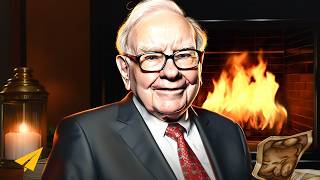
Warren Buffett says developing your own talents is your greatest asset. Evan Carmichael hired an editor to multiply his YouTube output. Jerry Seinfeld and Charlie Rose learned craft by watching countless performances. Brian Tracy argues skill mastery directly raises your results.
Chapters
Rise and shine, it's espresso time! Good morning, Believe Nation, it's Evan Carmichael. My one word is believe, and I believe in you. I believe you have an amazing gift inside you that I want to see explode out into the world. So grab your coffee and sip on today's message: invest in yourself. Over to you, Warren Buffett.
Generally speaking, investing in yourself is the best thing you can do. Anything that improves your own talents— like, nobody can take it away from me. They can run up huge deficits and the dollar can become worth far less. You can have all kinds of things happen, but if you've got talent yourself and you've maximized your talent, you've got a terrific asset. And so that doesn't mean everybody should go to college, but it, it does mean that any way you find to improve— communication skills are enormously important. I mean, I took a Dale Carnegie course that I paid $100 for, and it was worth a college degree. At least I thought it was. Maybe this interview will convince people otherwise. Not at all.
What I love about this clip is you've got Warren Buffett, the single greatest investor of all time, telling you that the best investment you can ever make is in yourself. He's not saying go buy a stock, he's not saying go buy a company, not even saying go be an entrepreneur or get a job or go to university. It's in yourself. The best investment from the best investor is always going to be in yourself, and I 100% agree. If I look back on my career, you look at YouTube, since you guys are familiar with the channel, the best investment I made at the beginning was in one, learning how to do everything so I could become a YouTuber, but then the hire that I made, investing in my business to bring on my first editor, allowed me to go from making a video a week max to video a day. Hiring that editor part-time allowed me to 7x my output. Because I hated editing and I was really slow at it and I wasn't really good at it either. And it allowed me to do more of what I loved. And so investing into my business had a huge impact. If I just took that money and put it in the stock market or put it into real estate and I'm earning 7 to 10% a year or 15% a year are the highest or whatever it is gonna be, it's way less compared to what I ended up creating. This entire business, I don't know how much percentage return, but it's way more than 7 to 15% a year. And so that investment in myself made a huge difference. I also believe in, in what I'm doing here with the YouTube channel. I believe the world's single biggest problem is untapped human potential, is that people are not doing what they're supposed to be doing. They're locked into doing jobs that they hate, doing work that they don't love, and if they just unlock that piece and did the thing that they had Michael Jordan level talent at, the world would be an amazing place to live in. And that's my mission, that's what I'm on every day to try to fight and make better. And I believe a huge part of that solution is education, is this. Here you have free content to consume and get better and learn and get educated every single day. You know, if you go to university, you may not have Warren Buffett come in and speak to you. Maybe if you're lucky, he comes in for one day at a commencement speech. But here on this channel, you get Warren Buffett and his peers every single day, 3 times a day, giving you knowledge, giving you resources, giving you motivation, giving you inspiration, giving you ideas. On how to unlock your potential and how to be successful and how to find fulfillment for yourself. And so I think if you want to live a great life, if you want to have a big impact, a huge chunk of that comes from continually investing in yourself to improve, to not be locked into the environment that you were born in and raised in and grew up in and just do the life that your parents want you to live, to be able to break free and find the thing that you love doing. And have the courage, confidence, boldness to chase after that with all your heart, to go off and make that huge impact in the world. So the question of the day today is, I'm curious, what is the single greatest investment in yourself that you have ever made? I would love to hear from you. Please leave it down in the comments below. Thank you guys as well for watching. I believe in you. I hope you continue to believe in yourself and whatever your one word is. Much love, and I'll see you again tomorrow morning for another shot of Enespresso.
When I started, I just devoured comedy. I went to clubs every night, even if I wasn't— I'd be on stage maybe twice a week, but I was at clubs 7 nights a week. I'd watch every comedian I could, good or bad, friend or foe, didn't matter. I just watched and and just loaded it into my system as a—
Oh, I'm the same way about interviewing. I mean, just see how they do it. Are they doing, if you were in London, watch everybody you can see. Are they doing it differently? Is there a style that's interesting? 'Cause in the end, you have to be yourself. You have to find your own sense. But there's always something to learn about the approach that somebody makes. Whether it's a baseball player watching another baseball player.
Right, because a baseball player is watching another player, but he's watching baseball. He's watching this, they're all doing the same game, you know? So the game, is so the same in stand-up. Whatever the comic is doing is not in a vacuum. You're watching stand-up happen. You're watching how audiences are reacting, and the audience is such a mysterious animal to us, you know? So you're always kept guessing. There's some nights you go to a club and you're like, you know, I feel good, I'm ready to do— have a good show, but the audience has a strange, unanimous, grumpy feeling to them or something. And how did all these people— they're all strangers to each other, but they've— they're all sitting there, we hate this show. Like, how is this happening?
How is this some common response?
Yeah, so I'll never see enough shows to go, okay, I get this.
Yeah.
You know, so it's an unquenchable thirst.
Your level of ability in your field will determine the quality and quantity of your results. The better you get at what you do, the easier is it for you to start moving forward and to get a particular level of results. As you increase your skill level in your field through study and experience, you get better and better at doing the small things that that increase the speed and predictability of your results. Remember, skills are things that can be developed over and over, and all business skills are learnable. You can learn any skill you need to learn to achieve any business goal that you can set for yourself.
Set yourself up to win. Now, this may sound easy, but let me give you some insight into brain chemistry. One of my, my good friends, Dave Asprey from the Bulletproof team, yeah, amazing man, Yeah, shared this with me, and that is that the brain, although it's 1/50th of the body weight, takes up 20% of the calories. 20% of the energy in your body goes to run your brain. Now, if that energy is low, guess what? You feel demotivated. And a lot of the time, people try and rely on willpower, but willpower isn't on demand. Willpower has cycles based upon whether your brain is being fed the energy it needs. So if you are feeling down and thinking, I just— I was going to commit to that, but I can't, I'm just not in the mood, and you don't want to work harder, then first things first, go check your brain chemistry. Get yourself some fast sugars into the diet, yeah, some high-quality brain fuel to be able to perk yourself back up at that level. Then go do it. Another great way of setting yourself up to win is that when you're in the mood to do something, prepare something for when you're going to be doing the project. In other words, I'll give you an example. If you go to bed at night, put your gym kit at the bottom of the bed if you're going to the gym in the morning. Research has shown if you get out of bed and that gym kit is more than 20 seconds away, you're not likely to make it if you're not in the mood. But if your gym kit is at the foot of the bed and you get out, the first thing you do is put it on, you're ahead of the game. Set yourself up to win. Yeah, so when I'm in the mood and I am energized, my brain chemistry is high, and I'm associated to what I'm doing, do something in that that moment to take action towards setting yourself up for when you know predictably that cycle is going to dip. Because you can't be in uptime all the while. That's a superhuman myth. Let me give you the one word secret to happiness. One word. This is all you need to be happy.
The most important word ever.
If you had to think of one word that's most important to you, or that sums you up, or that would be kind of like a little beacon, Hey, Believe Nation!
If you want to know what the most important one word is for Tony Robbins, Gary Vaynerchuk, Oprah Winfrey, will.i.am, and Howard Schultz, I have a very special secret video for you. Check the description for details.
More from Evan


How the Biggest Mistake in History Created A Trillion-Dollar Empire | Sergey Brin



9 Machiavelli Principles That Force People To Respect You | Machiavellian Philosophy



The First 10 Words That Instantly Ruin A Sales Conversation | Vanessa Van Edwards

The Top 1% Mindset Behind The First $5 Trillion Company | Jensen Huang (Nvidia)

