JAMES CAMERON INTERVIEW – His RULES for SUCCESS Will CHANGE You!
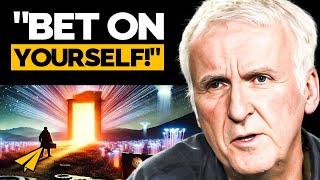
James Cameron shares his rules for success: ignore self-imposed limits, treat failure as an option, and seize fleeting opportunities. He credits dreams for visual ideas in Avatar, describes how janitor and machinist jobs taught unexpected skills, and explains how his films' success let him collaborate with NGOs on environmental activism in the Amazon.
Chapters
Don't put limitations on yourself. Other people will do that for you. Don't do it to yourself. Don't bet against yourself.
A lot of stuff comes to me in dreams, and I remember it. Sometimes I write it down, sometimes it's an image, and I'll go draw or paint that image. Just do it.
Just pick up a camera and start shooting something.
It's all driven by curiosity and the desire to be personally challenged.
You know, now I look back on it, and every single thing that I learned at that time has paid off for me.
I may not be very good at this, but I know I'm better than that guy.
The special thrill thrill as a filmmaker comes from seeing an immediate audience response.
You do have to have a really strong personal ethos in the film business.
We've managed to get the eyeballs, we've got people thinking about this film. Why not use it to focus a spotlight on some very specific issues?
Doors don't just open for you. Every once in a while, one will open a crack, and you have to recognize that that's the moment.
He's a Canadian filmmaker, inventor, engineer, and deep-sea explorer. His first major success was with the science fiction action film Terminator in 1984. In total, his movies have grossed over $2 billion in North America and over $6 billion worldwide. He's James Cameron, and here are his top 10 rules for success.
I have young filmmakers come up to me and say, you know, give me some advice for doing this.
And I say, don't put limitations on yourself. Other people will do that for you. Don't do it to yourself. Don't bet against yourself. And take risks. NASA has this phrase that they like: "Failure is not an option." But failure has to be an option in art and in exploration, because it's a leap of faith, and no important endeavor that required innovation was done without risk. You have to be willing to take those risks. So that's the thought I would leave you with, is that in whatever you're doing, Failure is an option, but fear is not.
So this is going back to 1976, I think, and this was for a film project that never went anywhere. The thing that's interesting about it is that I've already got a tall, hot blue girl in that movie. Her name wasn't Neytiri, and it was in a completely different context, but I was already thinking about it then. A lot of stuff comes to me in dreams, and I remember it. Sometimes I write it down, sometimes it's an image, and I'll go draw or paint that image. I remember waking up from a dream in college, and I remember this very clearly, having leafed through a book of paintings and waking up and saying, "Wow, I wish I could paint like that," and saying, "Wait a minute, dummy, you just painted all those paintings in your head. Now paint them for real." And I quickly painted as many of them as I could remember. One of them was a glowing forest with a river of light running through it and trees that kind of looked like fiber optics. Well, guess what? Cut to, you know, 30 years later, I'm making a movie where we're spending millions of dollars to actually create that image. But that image came in a dream when I was 18 years old.
Just do it.
Just pick up a camera and start shooting something. Don't wait to be asked, because nobody's going to ask you. And don't wait for the perfect conditions, because they'll never be perfect. It's a little bit like having a child. If you wait until the right time to have a child, you'll die childless. And I think filmmaking is very much the same thing. You just have to take the plunge and just start shooting something. Even if it's bad, you can always hide it, but you will have learned something. For me, I would say it's all driven by curiosity and the desire to be personally challenged. Those two things, I can sum it all up.
And I don't know if it's a formula for success.
It's just what drives me.
I'm very curious.
I want to know more.
I choose projects that I'm going to learn from. I choose projects that are challenging. I don't want to do the same thing twice. So I think, you know, I think personal challenge, you know, trying to strive for excellence.
And to me, in filmmaking, the excellence is how excellent can the entertainment experience be for the audience.
And I'll pull out all stops to do that.
These are storyboards for The Terminator. The Terminator was actually my best prepared film that I've ever shot because I storyboarded every shot. Myself. I found that kind of everything that I had been doing before all flowed perfectly to that moment of film directing. And, you know, that's the first time I ever really felt like I belonged where I was. But, you know, now I look back on it, and every single thing that I learned at that time has paid off for me. How to drive a truck, you know, how to be a machinist, even being a high school janitor and scraping the gum off the, off the bottom of the desks, you know, even that was something that I value now. It was something that I needed to go through.
What finally attracted me to film in such a definitive way was it was the only place I could reconcile the need to tell stories and to work in a visual art medium and the desire to understand things at a technological level and my fascination with engineering and technology. I watched a couple of really bad directors work. And I saw how they completely botched it up and missed the visual opportunities of the scene when we had put things in front of them as opportunities, set pieces, props, and so on. They had these great actors to work with and they just blew it. And there was a moment where I said, "I may not be very good at this, but I know I'm better than that guy." And that was kind of a critical moment because when you realize that you can at least be better than somebody else who's already doing it, then you can visualize yourself doing the job. What does it take coming out of you?
What's inside you?
That enables you or compels you to make films with such relentless drive. Where in the world does that come from?
It's— I don't know. It's hard to say. It's— it comes from— You look pretty normal to me. Yeah, I know. Well, you never know. I mean, if the demons weren't unleashed through film, I'd probably go and be, you know, somewhere in— Well, there's a theory about that sort of thing. On Thorazine, you know. No, I don't think that's true. I think it just has to do with how films that I liked and I remembered you know, enjoying and having that exhilaration hit me, and I want to transfer that back to other people. And just studying the craft and learning how to do it. And the special thrill as a filmmaker comes from seeing an immediate audience response. Now, the only other thing, the only other sort of genre, or it's not even a genre, but the only other thing that has that effect in films is comedy. And comedy is not my forte demonstrably yet. It may—
A lot of people found that in Terminator.
And there's some comedy in this film. But for a film to function as a comedy, I think there's a special magic there. And I'm, you know, I'm creeping toward it, but I'm not sure I can do that. But that's the other area where you can look out at a sea of 700 faces and see them all having the same reaction. And you know you're touching them. That's— I mean, I'm not a performer. I can't stand up on a stage and tell jokes or sing or do something that affects people directly. The closest thing for me is being able to sit in a theater and watch a reaction to something that I've put up on the screen. So it's at one remove, but it's the same sort of feeling. That's where the drive and the desire to do that comes from.
You do have to have a really strong personal ethos in the film business because there is so much craziness and backstabbing and fame is very fleeting and fickle and all those things. So ultimately being a person of your word, I think, is really important. And that's what's really allowed me to accomplish a lot of what I've done.
You've been an explorer, filmmaker, What's next? Is there another new Avatar? Well, we're going to make 2 more Avatar films. I guess my most powerful motivation for that, other than, you know, obviously we've got a huge fan base now, is that the films had this interesting effect around the world. They made a lot of money, but they made money in a way that I actually found really inspired hope in me, because people were connecting with the message of, you know, connectedness with each other, you know, "I see you," connectedness with nature, and there was this huge outpouring of interest from environmental groups, NGOs, you know, nonprofits that were involved in indigenous rights and so on, that came to me wanting to be involved somehow, you know, help use— asked me if they could help use Avatar Not to further our message, but to further their message. I thought, "OK, that's fair enough." We've managed to get the eyeballs, we've got people thinking about this film, why not use it to focus a spotlight on some very specific issues? And that's why we went down to the Amazon and got involved in some of the indigenous rights issues there, went up to Canada to the tar sands and did a little fact-finding expedition up there. And I've gotten more involved in a lot of these causes. I mean, I was always involved, you know, as a kind of a lay, you know, environmentalist. Now I'm much more involved. The incentive to make the second and third Avatar film is that I think we can continue to do good. We can do well, and we can do good as we're doing well. And I certainly would encourage anybody, and I would challenge anybody, given the state of the world as it might be if we're not careful, to try to find ways to be entrepreneurs and be innovative and be inventive, funnel all that towards something that also is going to be good for the planet and for our children.
Doors don't just open for you. Every once in a while, one will open a crack, and you have to recognize that that's the moment. The door will open just a crack for a split second, and you have to push it the rest of the way open, and you have to know that that's the moment to step through. It's a question of being prepared, knowing what you want, moving toward it so that you are prepared in that moment to step through the door. I always think of the universe as like a giant bank vault lock, you know, and the tumblers are constantly moving, and every once in a while the tumblers line up and you got to listen for the click.
Thank you so much for watching. We made this video because Henry asked us to. So if there's a famous entrepreneur that you want us to profile next, Leave in the comments below and I'll see what I can do. I'd also love to know which of James Cameron's top 10 rules meant the most to you, had the biggest impact. Leave in the comments, I'll join the discussion. Thank you so much for watching. Continue to believe, and we'll see you soon.
More from Evan


How the Biggest Mistake in History Created A Trillion-Dollar Empire | Sergey Brin



9 Machiavelli Principles That Force People To Respect You | Machiavellian Philosophy



The First 10 Words That Instantly Ruin A Sales Conversation | Vanessa Van Edwards

The Top 1% Mindset Behind The First $5 Trillion Company | Jensen Huang (Nvidia)

