Jeff Bezos: 40 Minutes to a Life Without Regrets at Age 80!
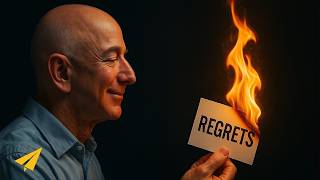
Jeff Bezos shares ten principles that shaped Amazon and his life, from the regret-minimization framework (imagining yourself at 80) to relentless experimentation. He recounts starting in a 400-sq-ft garage, explains Blue Origin's mission to make space travel cheaper and safer, and stresses long-term thinking, adequate sleep, and environmental responsibility.
Chapters
Do something you're very passionate about and don't try to chase what is kind of the hot passion of the day. I think we saw it in the internet world quite a bit where, you know, at sort of peak of the internet in say 1999, found people who were very passionate, so they kind of left that job and decided I'm gonna, you know, do something in the internet because it's, you know, it's almost like the 1849 gold rush in a way. At that time everybody who was in within shouting distance of California was, you know, they might have been a doctor, but they quit being a doctor and they started panning for gold. And that almost never works. And even if it does work, you know, according to some metric— financial success or whatever it might be— I suspect it leaves you ultimately unsatisfied. So you really need to be very clear with yourself. And I think one of the best ways to do that is this notion of projecting yourself forward to age 80, looking back on your life and trying to make sure you've minimized the number of regrets you have. That works for career decisions. It works for family decisions.
Need motivation?
Watch the top 10 with #Believenation.
Hey, it's Evan Carmichael, and I make these videos because in my first business, I quit on my business partner. I struggled to keep going. I was making $300 a month and felt like a complete failure. And the thing that saved me, that pulled me up, was studying the stories of famous entrepreneurs. I got the motivation from them. I also got the strategies of what to do next so that I can go off and achieve my dreams. And quite honestly, I still need the stories today myself to continue continue my motivation to take it to the next level. So today, let's learn from one of the best, Jeff Bezos, and my take on his top 10 rules of success. Enjoy. Rule number 2: Be innovative.
You've built one of the greatest technology companies in the world in just 20-some years. You've taken a company from nothing to Amazon, which everybody in the world now knows and, and most people in the world seem to use. Was that harder to do than trying to get a, uh, company off the ground, which is more of a challenge to you?
Totally different challenges. So one of the things that I find, if I think back on the last 20 years, you have to remember 20 years ago I was driving the packages to the post office myself in my 1987 Chevy Blazer, dreaming that one day I might be able to afford a forklift. And the internet, that's 1995. And 21 years later, the internet is this gigantic thing. And there are many, many successful companies. And the entrepreneurial dynamism that you see on the internet is incredible. And really with Blue Origin, this new challenge that I'm taking on with Blue Origin, what I want to do is put the heavy lifting infrastructure in place so that the next generation can have a dynamic entrepreneurial explosion of ideas. Inventions in space just like we've had with the internet. And the reason you can't do that today is because there's just too much heavy lifting involved, literally. Getting to space is so expensive and so hard. When we started Amazon, I didn't have to build a logistics infrastructure system to deliver parcels. There was something already— UPS already existed and the U.S. Postal Service already existed. I didn't need to build a remote payment system, there were already credit cards. Similarly, there were computers around and that didn't have to get— all those things would have been tens of billions of dollars, hundreds of billions of dollars of infrastructure. The long-distance phone network became the backbone of the internet, but it already existed. So you could have this dynamic entrepreneurial explosion because all the heavy CapEx infrastructure was in place. For space, it's not like that. The price of admission is so high. So that's the big difference. What I'm super excited about is lowering that cost. I want to dramatically lower that cost that cost so that 20 years from now, a new generation of people with startup money, real entrepreneurs, small entrepreneurs, can do amazing things in space. Think how cool that would be.
Rule number 3, find your faith.
If we look back on our past with a watchful eye, what we see is a message of hope. We have been confronting challenges since we have been writing history. And we have always found the faith to rise above them. Nevertheless, once again, it is time to sit down, find our faith, and get to work. Because despite everything that those who came before us have already done, we still find ourselves in a world with astronomical need. Our past achievements must be used to inform today's problems, but not mask their reality. It is time once again to do what many will say is impossible.
Rule number 4: Prioritize your sleep.
I get 8 hours of sleep. I prioritize it unless I'm traveling in different time zones. Sometimes it's impossible, but I am very focused on it. And for me, I need 8 hours of sleep. I think better. I have more energy, my mood is better, all these things. And think about it, as a senior executive, what do you really get paid to do? As a senior executive, you get paid to make a small number of high-quality decisions. Your, your job is not to make thousands of decisions every day. So let's say that I slept 6 hours a day, or let's go really crazy and say I slept 4 hours a day. So now I just got 4 so-called productive hours back. So if I was going to, you know, have, say, 12 hours of productive time during any waking day, now all of a sudden I have 12 plus 4, I have 16 productive hours. So I have 33% more time to make decisions. So if I was going to make I could make 133 decisions. If I did that arithmetic wrong, I'm sorry. And so you make 133 decisions. Is that really worth it if the quality of those decisions might be lower because you're tired or grouchy or any number of things? Now, it's different if it's a startup company. I mean, you know, you're really, you know, when Amazon was 100 people, it was a different story. But Amazon's not a startup company, and all of our senior executives operate the same way I do. They work in the future, they live in the future. None of the people who report to me should really be focused on the current quarter. I always tell people, sometimes I get, you know, we'll have a good quarterly conference call or something, and Wall Street will like our quarterly results, and I'll get— people will stop me and say, congratulations on your quarter. And I say, thank you. But what I'm really thinking is That quarter was baked 3 years ago. Right now I'm working on a quarter that's going to reveal itself in 2021 sometime. And that's what you need to be doing. You need to be out sort of, you know, 2 or 3 years in advance. And if you are— and then why do I need to make 100 decisions today? If I make like 3 good decisions a day, that's enough. And they should just be as high quality as I can make them. Warren Buffett says he's good if he makes 3 good decisions a year.
Also, to make sure you're actually taking action after watching this video, I've designed a special free worksheet just for this video. The worksheet will highlight all the lessons learned in this video as well as pull out our 3 favorite learnings and quotes that will inspire you to actually do something. The worksheet will also give you space to write down what your key takeaways are and your specific plan of action to make sure you're getting results. If you want the worksheet designed specifically for this video, absolutely for free, there's a link in the description below. Go click on it and start building the momentum in your life and your business. I'll see you there. Rule number 5: Experiment.
How do you encourage your employees to be innovative? Well, this is a fantastic and important question. To be innovative, You have to experiment. If you want to have more invention, you need to do more experiments per week, per month, per year, per decade. It's that simple. You, you cannot invent without experimenting. And here's the other thing about experiments: lots of them fail. If you know it's going to work in advance, It is not an experiment. And what happens in big organizations— Amazon's a big organization now too, the Air Force is a big organization— is that we start to confuse experimentation with operational excellence. So, you know, operational excellence is one of our four key principles at Amazon. We're building a fulfillment center. We've built over 150 large fulfillment centers around the world now. We know how to do that. That is not an experiment. If we build the 151st fulfillment center and screw it up, that's just a failure. That's not the kind of failure we're seeking. We want failures where we're trying to do something new, untested, never proven. That's a real experiment. And they come in all scale sizes. So you need to teach people that those two kinds of failure are different. And you need to have— you said something about that hard middle where ideas don't go up. I think this is such an important thing. At Amazon, one of the things we try to do is have multiple paths to yes.
Rule number 6: Fulfill your dreams.
What prompted you after you started Amazon to start a whole separate company? And how much of your time do you devote to it?
Well, I had been hoping to build a space company since I was a little kid. And then reality came into play and I realized it was going to be really expensive to start a space company. And then I kind of moved on. I fell in love with computers. And then I won this kind of lottery called Amazon.com. And then I realized, hey, wait, I can do— that original childhood dream now. And so I started this company and it employs— now we're up to about 700 people and we're building a suborbital tourism vehicle which competes with Virgin Galactic and we're going to— our goal there is to make it possible ultimately for anybody who wants to go to space to be able to afford it. We're just going to keep working at that goal patiently until we achieve it. And then we're also building an orbital vehicle. Vehicle. And we'll fly that at the end of this decade for the first time. And so it is— and my belief is that to dramatically lower the cost of space, it's all about reusability. You just have to make your vehicles reusable. You can't throw them in the bottom of the ocean every time after you use them if you ever want to dramatically reduce the cost.
Now, would you go on one of these space trips yourself?
Yeah, absolutely. I fully expect to go into space myself someday. And, uh—
Have you told your family that or your Amazon shareholders?
I'm telling them. They're sitting here in the front row. So I'm telling them right now. They know. What about the Amazon shareholders? They know I can't be kept away.
Rule number 7, do good deeds.
Talk to me about choosing Dolly Parton. Well, look at what she's done and how she's led her life and the way she's done it, these bold things, always with civility and kindness. She's a unifier. You know, we have big problems in the world, and the way to get big problems done is you have to work together. We have too many examples in the world of conflict and people using ad hominem attacks on social media and so on and so on. You won't find Dolly Parton doing that. Do you plan to give away the majority of your wealth in your lifetime? Yeah, I do. And the hard part is figuring out how to do it in a leveraged way. It's not easy, you know, building Amazon Amazon was not easy. It took a lot of hard work, a bunch of very smart teammates, and I'm finding, and I think Lauren's finding the same thing, that philanthropy is very similar. It's not easy, it's really hard, and there are a bunch of ways that you, I think that you could do ineffective things too. So we're building the capacity to be able to give away this money.
Rule number 8, think long-term.
Talk to me about long-term thinking and your point of view on— Well, long-term thinking is a lever. It lets you do things that you could not do or couldn't even conceive of doing if you were thinking short-term. So if I, you know, that's why, you know, I have a project where I'm helping a group of people build a 10,000-year clock. It kind of ticks once a year and dongs once a century, and the cuckoo comes out once a millennium. It's a big 500-foot-tall thing inside a mountain right here. Inside one of those mountains. In a mountain range. And the 10,000-year clock is a symbol. I don't think it'll do anything for the first few hundred years, but after a few hundred years, once it's old, people start to pay attention to older symbols. And so a few hundred years from now, I hope that people will think about that as a symbol for long-term thinking. If I, you know, if I collaborated with somebody here in this audience and I said, "Look, I want you to solve world hunger, and I want you to do it in 5 years," you would— properly reject the opportunity. You would say, look, it's not possible, it's not practical. But if I said, look, I want you to solve world hunger in 100 years, that's a job you'd take because it's a much more addressable problem. You can first create the conditions. You have time to create the conditions where then you can solve the problem. And so that's, that's a very important way of thinking And, um, and I find it's— and it works with everything. I mean, you have to back up and find the right time horizon for what you're trying to do, but, you know, at Amazon, we probably do most of our things we expect to get some results in sort of 5, 6, 7, 8 years, but we find a lot of our, uh, you know, other companies that compete against us in various ways, they're often trying to get things done in, you know, 2 or 3 years. And so we can do things that, you know, if you, if you, if everything has to work in 2 to 3 years, then that limits what you can do. If you give yourself the, the breathing room to say, okay, I'll, I'm okay if it takes 7 years, all of a sudden you have way more opportunities.
Rule number 9, learn to balance.
I get asked by people at all age ranges, all levels of seniority, what do I think about work-life balance? And my view on work-life balance is that I prefer the phrase work-life harmony. To me, balance implies a strict trade-off. And I have seen situations where people are— they have all the time in the world, maybe they're out of work, have lots of time. You know, it's— they don't have— they have all all the time, and they're so stressed that they're actually terrible at home. Everybody at home is like, "Boy, I sure wish you'd get a job." And my sister-in-law says, "For better, for worse, but not for lunch." And so it's, you really want harmony. You want a, if you're happy at work, If you're finding meaning in your work, if you are— it can be hard. They call it work for a reason. It's not going to be fun all the time. That's a pipe dream. None of us enjoys every minute of every day. And to have that kind of idea would just be naive. But there should be fun at work. You should be laughing. There should be moments of joy. And if you're you're getting energy from work instead of your work draining your energy, then you're going to come home and you're going to be a better mother, a better father, a better wife, a better husband, all of those things. You're going to want to take out the trash. And so even before being asked, that's what's going to happen, Larry. She's going to say, who is this guy? And so you really need to— I think if you're starting to get to the point where you are worried about work-life balance, I would challenge you to think, is just something out of whack? It's probably not the hours. Look, you can— if you're working 120 hours a week, you're also doing something wrong. That's too much. It's not sustainable. Maybe you can do that for a week or two, but that's it. But if you're working, you know, 60 hours a week, that's completely sustainable for most people. And the question, if you're burned out by it, it's not the number of hours, it's that you're doing something wrong. You need to figure out what it is because you're going to take that home and then your home life is going to be stressful and then you bring that back into the office. So it's going to be a negative spiral and that spiral will also be a positive one as soon as you turn it around.
And rule number 10, the last one before some very special bonus clips, is protect the environment.
Major corporations, all of us committed to reaching the Paris Accord goals 10 years early by 2040. Why are all these companies doing this? Well, like all of us, they care about the planet. We all live on it. But it's also because they see that there is a new economic world emerging, and they want to be part of it. You want to drive this new economy and not let it drive you. So thank you, all of you, for your bold leadership in helping to fight climate change. Tonight, I'd like to speak about nature. The loss of nature and the changing climate really two separate problems. They are two sides of the same coin. We simply cannot address climate change without reversing the loss of nature, and vice versa. First of all, I love space. I have been a space lover since I was a 5-year-old boy, and I feel like I won the lottery with Amazon. I know I won the lottery, and, and now I'm investing those lottery winnings in Blue Origin, which is the space company we built. We're built— we are flying a suborbital tourism vehicle, and we'll start taking people up hopefully in 2018. That's coming right up. Working on it for more than 10 years. Hopefully this one, this overnight success is taking longer than 10 years. I don't know, we'll see, you know. And we're also building an orbital vehicle called New Glenn. New Shepard is named for Alan Shepard, the first American in space. He went on a suborbital journey. New Glenn is named after the American hero John Glenn, who was the first American to orbit the Earth. And so these are both, these are reusable, boosters fully reusable. That's the key to lowering the cost. Our vision at Blue Origin is that we want millions of people living and working in space. And my personal hope is that I live long enough to see, um, the kind of dynamism in space. I want to see a whole economy, entrepreneurs in space that I got to witness over the last 20 years on the internet. You know, The problem with being an entrepreneur in the space arena is that the price of admission is so darn high. So, you know, to do interesting things in space, the beginning, you know, kind of the beginning entry level is a few hundred million dollars. So you're not going to get, you know, two kids in their dorm room doing something amazing in space, whereas that's literally what happened Facebook, right? So on the internet, because the price of admission is so low, you can get these amazing experiments where like one kid in a dorm room does something and it turns into Facebook. And, or, you know, Amazon's case, you know, I started this thing with an incredibly small amount of capital and the, you know, it was able to grow because we didn't need a lot to get to begin with. The heavy lifting was in place for Amazon, right? So I didn't need to build a transportation network. It existed already. It was UPS and the Royal Mail and the U.S. Postal Service and Deutsche Post and so on and so on. I didn't have to build a telecommunications backbone to connect with my customers. It was there. It was called the internet. And in fact, the internet was resting on top of the long-distance phone network at that time. You guys remember the dial-up modems? Some of you do. Some of you were too young to— some of you should go to a museum and see a dial-up modem.
What was that sound?
Yeah, and so I want— I recently showed a group of youngsters a payphone. I came across one and I was like, my God, guys, come over here, this may be the last one, you have to see it. And so, you know, the point is that Amazon Amazon was— got to rest on top of— we didn't have to build a payment system. It already existed. It was called the credit card. Computers were already on every desk thanks to, you know, Microsoft, IBM, and Apple. And what were they being used for? To play games, not to buy things on Amazon. And so all that heavy lifting was in place. And I want to, you know, my greatest— I would have such a good feeling if I could be an 80-year-old guy and laying there thinking about my life, if I could say, look, there is now a bunch of entrepreneurs in space because I took my Amazon lottery winnings and built the heavy-lifting infrastructure that does take billions of dollars in CapEx to lower the cost of access to space. That's how you get millions of people living and working. And by the way, we need that. For those of you who like to think about the future at all, you can do a simple calculation. We can argue about what limited resources on Earth and so on and so on, but here's a calculation that you cannot argue with, which is you take current baseline energy usage on Earth, compound it at just a few percent a year for just a few hundred years, and you have to cover the entire surface of the Earth in solar cells. So you have to— we're gonna have to decide, do we want a society of pioneering, invention, expansion, growth, or do we want a society of stasis? And personally, I believe, because the Earth is finite, and if you want a society of stasis, I think it's good. First of all, I don't personally believe that stasis is even compatible with freedom. So I think For me, that's a big problem. Second of all, it's going to be dull. Stasis is going to be very dull. You don't want to live in the stasis world. And so of course we're going to continue to get more efficient too. We have been for hundreds of years. We've been getting more productive, more efficient. That's— that trend is going to continue. But even so, we're going to want to use more energy, more energy per capita. And also, I don't want to stabilize population. I would love for there to be a trillion, a 1 trillion humans in the solar system. With 1 trillion humans, we would have 1,000 Einsteins and 1,000 Mozarts. It'd be an incredible civilization. Don't you want that dynamism? It'd be so much more interesting. This is for your great-great-great-grandchildren, but what kind of world do you want them to live in? I want them to live in that expansive world that is, you know, learning more about the universe and moving out throughout the solar system. So that we have to do it. Anyway, so it's fun to work on that. And, you know, I get— I have a— I won so many lotteries in my life. I have the best parents in the world, my mom Jackie and my dad Mike. My mom had me when she was 17 in Albuquerque, New Mexico. She was still in high school. It was not cool. And she did an amazing job. My dad Mike is a Cuban immigrant who came here when he was 16 without his parents, did an amazing job. So those are the things that are your little gifts in life. You get— sometimes you get— my greatest admiration, by the way, is withheld for those people, and I know several of them, who had terrible parents and still somehow made it through. That's hard.
That was—
I had the opposite. That's it. So I got lucky.
Is there a particular recipe that you have in terms of how you actually innovate in that collaborative culture?
I think, I don't think there's a particular recipe, but there are elements of what we do that I think help. So one of them is that inside our culture, we understand that even though we have some big businesses, new businesses start out small. It would be very easy for, say, the person who runs our US books category to say, "Why are we doing these experiments with things? That generated a tiny bit of revenue last year. Why don't we instead focus those resources and all that brainpower on on the books category, which is a big business for us. And instead, that would be a natural thing to have happen, but instead inside Amazon, when a new business reaches some small milestone of sales, email messages go around and everybody's giving virtual high-fives for reaching that milestone. And I think it's because we know from our past experiences that big things start small. The biggest oak starts from an acorn, and you've got to recognize, if you want to do anything new, you've got to be willing to let that acorn grow into a little sapling and then finally into a small tree, and maybe one day it'll be a big business on its own.
And in fact, that's one of the mottos for one of your initiatives, and forgive my pronunciation of the Latin, but Greta Team Ferocity. What does that mean to you?
Well, it means step by step ferociously, and it's the motto for Blue Origin. And basically, you can't skip steps. You have to put one foot in front of the other. Things take time. There are no shortcuts. But you want to do those steps with passion and ferocity. Blue Origin is a space company that's developing a vertical takeoff, vertical landing space vehicle. And so it takes off on its tail like a normal rocket and then comes back and lands on its tail like a Buck Rogers rocket. It's designed to be reusable. We've built our first development vehicle, we built our second development vehicle, right now working on our third development development vehicle. Great team of engineers located in Seattle, another team of people, test and operations in West Texas where we do our flights, and it's, it's proceeding along very nicely. I'm hopeful that this third development vehicle will be our last, but we can't know for sure, and then we will build our operational vehicle and start taking people to suborbital, uh, mission will sell tickets. The long-term goal of Blue Origin is to not only do suborbital but also orbital, and to democratize space travel so that anybody who wants to go into space can afford to do so. You need reusability. So when you go look at any approach that doesn't have reusability, it's never going to be low cost. There are only two problems 2 problems with space travel today. It's too expensive and it's too dangerous. Other than that, it's fine. So we hope to solve those 2 problems. And if you want to solve those problems and have a spacefaring species, you need to, you need to practice. And you can't practice with expendable vehicles. It's like, you know, it's flying your, you know, you get on a a bunch of other passengers, fly to Hawaii, and then throw the whole plane away. It's just a bad— it's a bad cost structure. And so we need reusability. So you have to get the vehicle back. And one of the ways to get it back is to put wings on it, and then you can land it on a runway. Another way to get the vehicle back is to land it vertically under under rocket power. And both techniques have advantages and disadvantages. One of the things I like about vertical landing is if you get it to work, it's very scalable. It scales to very, very large size, whereas wings sort of, you know, they top out a bit. One of the things that we know about Amazon as a role model for this is that our business is it's a difficult challenge for us because we have deep, large physical infrastructure. We're not only moving information around, we're moving packages around. We deliver 10 billion items, more than 10 billion items a year. This is real physical infrastructure at real scale. And so we can make the argument, and we plan to do so passionately, that if we can do this, anyone can do this. It's going to be challenging, but we know we can do it and we know we have to do it. Where are we today? Today we're at 40% renewable energy. We've done that by building 15 utility-scale solar and wind farms. We've put rooftop installations on fulfillment centers and sortation centers around the world. Where are we going? Well, on renewable energy, By 2024, we're committing to be at 80% renewable energy. And by 2030, we're committing to be at 100% renewable energy. We're also— we have a lot of delivery vans and they all burn fossil fuels today. I'm incredibly excited to announce that we have just placed an order for 100,000 electric delivery vans. They'll be built by a company called Rivian. This is another example of something very important I want to talk about, which is that when you make a pledge like the Climate Pledge, it will drive the economy to start to build products and services that these large companies need to meet those commitments. This is why we invested in Rivian. We invested $450 $40 million in Rivian. That's part of what I'm so excited about. As this economy develops and people get serious about being carbon zero through real changes to their real business activities, that is going to be a gigantic signal to the marketplace to start inventing, developing these new technologies that these global companies will need to be able to meet this commitment. And so that's another reason We have to work together. We have to get a number of companies to sign up for this to really drive that market signal in a strong way. Amazon is large, but if we get lots of large companies to agree to the same thing, that will be an even stronger signal to the market. That together with the fact that the supply chains are so interconnected, it becomes the only way to do it. And that's with collaboration. I did do a lot of soul searching. I went to my boss at the time and I really liked my job. And I told my boss I was going to go do this thing, start an internet bookstore. And my wife had— I'd already told my wife, and she's like, "Great, let's go." And I said to my boss, I was going to do this. He's like, "This is a good idea." He said, "I think this is a good idea, but it would be an even better idea for somebody who didn't already have a good job." And that sort of made some logical sense to me, and he convinced me to think about it for a couple days, so I went away. I was really trying to get my head around how to think about this, and I think for me, the right way to make that kind of very personal decision, because those decisions are personal, they're not like data-driven business decisions, they are, you know, what does your heart say? And for me, it was, I could, the best way to think about it was to project myself forward to age 80 and say, look, when I'm 80 years old, I want to have minimized the number of regrets that I have. I don't want to be 80 years old in a quiet moment of reflection, thinking back over my life and cataloging a bunch of major regrets. And I think that regrets, our biggest regrets, in most cases, you can murder somebody, okay, you'd regret that, but in most cases, our biggest regrets turn out to be acts of omission. It's paths not taken, and they haunt us. We wonder, what would have happened? I loved that person and I never told them. I didn't do this. And so that's the frame of mind that I put myself in. And once I did that, once I thought about it that way, it was immediately obvious to me. I knew that when I'm 80, I would never regret trying this thing that I was super excited about and failing. If it failed, fine. I would be very proud of the fact when I'm 80 that I tried. And I also knew that it would always haunt me if I didn't try. And so that would be a regret. It would be a 100% chance of a regret if I didn't try, and basically a 0% chance of regret if I tried and failed. So I think that's a useful metric for any important life decision. I laugh a lot. Um, so it is, uh, You know, there are— I think stress, you can be— one of the things that's very important to note about stress is that stress primarily comes from not taking action over something that you can have some control over. So if I find that some particular thing is causing me to have stress, that's a warning flag for me. What it means is there's something that I haven't completely identified, perhaps in my conscious mind, that is bothering me and I haven't yet taken any action on it. I find as soon as I identify it and make the first phone call or send off the first email message or whatever it is that we're gonna do to start to address that situation, even if it's not solved, the mere fact that we're addressing it dramatically reduces any stress that might come from it. So stress comes from ignoring things that you shouldn't be ignoring, I think, in large part. So stress doesn't come— people get stress wrong all the time, in my opinion. Stress doesn't come from hard work, for example. You know, you can be working incredibly hard and loving it. And likewise, you can be out of work and incredibly stressed over that. So— and likewise, if you kind of use the— you know, use that as an analogy for what I was just talking about, I'm talking about, if you're out of work but you're going through a disciplined approach of a series of job interviews and so on and working to remedy that situation, you're going to be a lot less stressed than if you're just worrying about it and doing nothing. Let's talk about failures. I know Amazon has had its share of failures. In fact, I remember having been part of some of them at Amazon. I'm curious to know, how do you think about failure and how should we deal with failure when we see it? Well, Amazon is the best place in the world to fail. And the reason for that is we have a lot of practice. Nobody likes to fail, by the way. Failure, even when you know it's important and good, it's embarrassing. It doesn't feel good. We're all human. We had a good idea, we thought it was a good idea, and nobody came to the party. That happens. And here's the great thing though: one success, one winner, can pay for dozens and dozens of failures. And that is is why you should fail. We got this company just about ready to launch, and we're looking at it, looking at this little tiny fulfillment center. We were here by then in this building. We had a basement fulfillment center. To call it a fulfillment center was very grand. There's a lot of puffery. It was 400 square feet, which is about the size of a one-car garage. And we launched this business, and we're looking at it, and we didn't know if anybody would would order from us. We really didn't. And in fact, one of the software engineers looked at this little space and he said, "I can't figure out whether this is incredibly optimistic or hopelessly pathetic." And indeed, we didn't know. We had no idea whether anybody would want to buy things in this way. The business plan called for generating sales very slowly as customers changed their attitudes. The original business plan, which I thought was very optimistic at the time, called for Amazon.com to generate $70 million in sales in the year 2001. We actually generated in excess of $3 billion in sales in the year 2001. And we knew, by the way, that we were really on to something in those first 30 days. In the first 30 days, we got orders from all 50 states and 45 different countries with not a dollar of advertising, just all word of mouth. In the first year, we didn't spend spend anything on advertising. All of it was word of mouth. And that really forged the company as a— that we were going to focus on customer experience because we saw the power of word of mouth so very, very clearly in those early days. There's something great about word of mouth online, by the way, and feedback from customers, which is that email turns off the politeness gene in the human being. It's wonderful. So people actually tell you what they really think, usually in all caps. And so we get lots of info and feedback from our customers, and we try to, try to use it well. The professional pride part is so important because 90% of what all of you do, nobody ever sees. It's something— it's inside the work. People see something finished. but they don't see what's inside it. Only you see that while you're doing the work. And that, so you have those, and those things can't be great since nobody's seen them. Nobody's inspecting it. You're not gonna get any credit for it. The only thing that's gonna make you have high standards on that piece of the work that nobody's ever gonna see is your own professional pride and operational excellence. Those are the 4 cultural attributes that are at Amazon. We use the same ones at Blue Origin, we use the same ones at AWS. Those things, I would, if they start to erode at the edges, that would make me very nervous. So, I spend a lot of time trying to inspect that, audit that, teach that. Teaching things like that is about repetition. Senior leaders need to be broken records. On the things that are important to the organization. And if everybody in the organization, like, you, you have succeeded when you start to see people roll their eyes because of your repetition on certain important things, because senior leaders don't have to do a lot of things. They have to pick a few big ideas and enforce tough execution against those big ideas. And that requires a lot of repetition. Directionally, our goal, and this has been true for, it's kind of a cultural trait at Amazon, our focus is going to be to be the low-cost provider of these kinds of high-quality services. So, as we are able to get smarter, as we're able to, you know, figure out how to do things more efficiently, we are going to be returning those cost efficiencies to customers in the form of lower prices on things like EC2. There are other things that, you know, that it may be that we need some instance sizes— is— instance sizes is sizes that are smaller than what we have today. So the smallest instance we have today is 10 cents per compute hour. And we're also looking, you know, always at, you know, returning some of the cost savings we get on things like bandwidth charges, disk space charges, and so on and so on. The good news The good news is that those things do get cheaper over time, and as we get more efficient and organized, we'll be able to return, I think, quite a bit of savings to customers. One of the great paradoxes of inventing at a high level is that you need to be an expert in your domain area and you need to have a beginner's mind. You absolutely need both of those things. The world is too complex to actually just be a beginner. So, you know, I can't, no matter how inventive I am, I can't go invent a new kind of brain surgery. You have to be a neurosurgeon. You have to already know all there is to know about brain surgery and then take it to the next level. The problem is, for many people, by the time they become true experts, they've lost that ability to see things in a fresh way. They've lost the beginner's mind. And so that's another thing you always need to be stepping back and saying, if I'm an expert, I'm an expert in launch vehicles or whatever it is, I need to step back and say, okay, what if I were looking at this for the first time? What would I be seeing and noticing? These are just some of the things you need to do to be innovative. Day 2 is stasis. Followed by irrelevance, followed by excruciating painful decline, followed by death. And that is why it is all Always. Day one. I went to my boss and said to him, you know, I'm going to go do this crazy thing and I'm going to start this company selling books online. And this is something that I had already been talking to him about in a sort of more general context. But then he said, let's go on a walk. And we went on a 2-hour walk in Central in New York City. And the conclusion of that was this. He said, you know, this actually sounds like a really good idea to me, but it sounds like it would be a better idea for somebody who didn't already have a good job. And he convinced me to think about it for 48 hours before making a final decision. And so I went away and was trying to find the right framework in which to make that kind of big decision. And, you know, I already talked to my wife about this, and she was very supportive and said, look, you know, you can count me in 100%, whatever you want to do. It's true, she had married this kind of, you know, fairly stable guy in a stable career path, and now he wanted to go do this crazy thing, but she was 100% supportive. So it really was a decision that I had to make for for myself, and the framework I found which made the decision incredibly easy was what I called, which only a nerd would call, a regret minimization framework. So I wanted to project myself forward to age 80 and say, okay, now I'm looking back on my life. I want to have minimized the number of regrets I have. And you know, I knew that when I was 80, I was not going to regret having tried this. I was not going to regret having wanted, you know, trying to participate in this thing called the internet that I thought was going to be a really big deal. I knew that if I failed, I wouldn't regret that. But I knew the one thing I might regret is not ever having tried. And I knew that that would haunt me every day. Um, and so when I thought about it that way, it was an incredibly easy decision. And I think that's a very good— it's, it's, if you can project yourself out to age 80 and sort of think, what will I think at that time, it gets you away from some of the daily pieces of confusion. You know, I left this Wall Street firm in the middle of the year. When you do that, you walk away from your annual bonus, and that's the kind of thing that in the short term can confuse you. But if you think about the long term then you can really make good life decisions that you won't regret later.
Because you made it this far in the video, I want to celebrate you. Most people start and don't finish. Most people never actually follow through. Most people say they want something, but they don't ever do the work to actually get it. But you are different. You are special. Believe Nation is You made it here all the way to the end and I love you. So as a special celebration, if you put a hashtag #believe down in the comments below on this video, I will showcase you and celebrate you somewhere on the screen in a future video because you are awesome. For 10 more amazing rules from Elon Musk, check the video right there next to me. I think you'll love it. Continue to believe and I'll see you there.
Everything is available basically for free. You can learn anything you want for free. It is not a question of learning. There is a value that colleges have, which is like
More from Evan


How the Biggest Mistake in History Created A Trillion-Dollar Empire | Sergey Brin



9 Machiavelli Principles That Force People To Respect You | Machiavellian Philosophy



The First 10 Words That Instantly Ruin A Sales Conversation | Vanessa Van Edwards

The Top 1% Mindset Behind The First $5 Trillion Company | Jensen Huang (Nvidia)

