John Hope Bryant: The Hidden Weapon Against Poverty: Financial Literacy Explained!
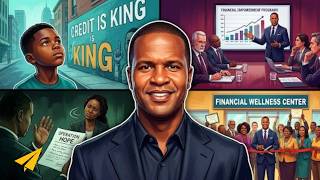
John Hope Bryant, who grew up homeless in South-Central Los Angeles, argues that poverty is a mindset, not just lack of money. He distinguishes being broke from being poor, and says financial literacy creates ripple effects because teaching someone to fish changes their life and their family's future.
Chapters
Oh, people say I'm nuts.
People are not waking up in the morning and saying, "Ooh, let me be broke." That's just a winning attitude. Why are you hanging around with that guy? Rainbows after storms.
You can't fall from the floor.
Confidence. Well, half of success is confidence and self-esteem.
The minute you think you know everything, at that moment you know nothing.
If I gave the guy a fish, he'd eat for a day.
He's an American financial literacy entrepreneur and businessman. He's the founder, chairman, and CEO of the nonprofit organization HOPE. He served as vice chair on the U.S. President's Advisory Committee for Financial Literacy. He's John Hope Bryant, and here are his top 10 rules for success.
People say I'm nuts, and that's a compliment because they said that Steve Jobs was nuts. They said that Ted Turner was nuts. They said that Bill Gates was nuts. They said that my hero, Dr. Martin Luther King Jr., was nuts. Let me tell you what, I'll take it.
People are not waking up in the morning and saying, "Ooh, let me be broke. Let me be poor and ignorant. Let me be stupid. Let me go into some deep, uncomfortable waters." Because I thought I understood poverty.
Because I'm, you know, if you haven't noticed, I'm black.
I grew up in South Central LA in Compton, California. I'm going to tell you a little bit about my story, but I actually thought I thought, Dr. Franklin, that I was poor. I now realize I wasn't. There's a difference between being broke and being poor. To be broke is economic, but to be poor is a disabling frame of mind and a depressed condition of your spirit, and you must vow never, ever, ever to be poor again. I was talking to Dr. Franklin and others, and there was an experiment He was telling me about some gentlemen who were very well-meaning. They were going out, hanging out with homeless people to try to relate to their experience, and they dress like them, they act like them, they walk like them, they talk like them, they live like them, but the legitimate people who were homeless knew that these were instigators. They knew that they were not homeless.
Why?
The twinkle was still in their eye. The hope was still in their eyes. I can give a homeless guy a million dollars, he'll be broke in 6 months. With the best of intentions, because nothing changed here and here. The word capital comes from the Latin root word "capitas." It means knowledge in the head. It doesn't even mean money.
I told you the issue is confidence. But if I can make you immune to failure, not ashamed to trip and fall, if you can have an opportunity to have somebody invest in you at an early age, believe in yourself, have some, some experience with free enterprise, with starting something on your own, believing in yourself, pursuing it no matter what the outcome. An entrepreneurial mindset works whether you're running a household or whether you're running a community center or city government or your own life or your own business. It is the can-do, empowerment-based what I'm for, not what I'm against mindset, that I will do anything from anywhere for any purpose at any time, that is unique to an entrepreneur, that is always reimagining everything and creating solutions. That's just a winning attitude about life.
So here's a rule for you: talk without being offensive, listen without being defensive, but always leave even your adversary with their dignity. Because if you don't, they'll spend the rest of their life trying to make you miserable. So, help people win. When George Bush was in office, my friends said, "Why are you hanging around with that guy?" I said, "What do you mean? He's the president." And so, I got the— I talked to him for a while and I got him to sign his executive order around financial literacy and I'm proud that he did that. And by the way, I've honored to serve now 3 presidents from both political parties, Republicans and Democrats. I serve Obama today. But I think we need to talk to everybody, and you never know who your friends are going to be, and she'll make friends everywhere. And people who you, I think, least expect to provide the sort of leadership you need may be the ones that actually end up doing it. So, make friends everywhere. You cannot grow without legitimate suffering. You cannot grow without legitimate suffering.
Rainbows follow storms.
My last book, the favorite chapter was "Loss Creates Leaders." Nobody woke up in the morning and said, "I want to start a cancer foundation." People who start cancer foundations are people whose lives have been impacted somehow by cancer.
Rainbows after storms.
I was homeless for 6 months of my life.
And what did that teach you?
You can't fall from the floor. That I had to redefine failure as going from— redefine success, actually, from going from failure to failure without loss of enthusiasm. That I had to learn to do for myself. That PhDs were good, but PhDus were better. And it made me get real with success and failure in my life and made me resilient. You know, for you to sit here and ask me questions or to approach me this morning takes personal confidence.
For you to look me in the eye right now takes personal confidence.
Well, half of success is confidence and self-esteem. But if you're poor, you've been beaten down, you've been depressed, you lack hope. So it's very interesting, the very thing you need as the first option to be successful, you actually don't have by virtue of the fact that you been in this poor environment.
And so today my life makes sense, but the minute you think you know everything, at that moment you know nothing. And so I was in India and I was teaching a course on leadership in India and I had gone to this university and I spoke there and after I left, I got back to the hotel and I realized I didn't have my wallet. And so I called the hotel and I said, "Can you please bring the car back? They have my wallet." And they said, "I'm sorry, sir, we don't have a car, that was a taxi." we used. And so they tried calling the taxi company, nobody answered the phone. They tried again and nobody answered the phone. And I became a little cynical. I went from hopeful to skeptical to cynical, and I started thinking the worst of people. And of course I said, "Well, my wallet is gone." By midnight they called and said, "We're still trying, he's not answering the phone," the taxi cab driver. But at 2 in the morning they called and said, "He answered his phone, his phone was off. He's coming back to your hotel with your wallet." So I get dressed and I run downstairs and a man meets me and the bellman translates for me in India, in the dialect, and I ask the man, "Well, how—" and I get my wallet and everything is in my wallet, everything. My passport, my money, my credit cards is all there. And I reach into my wallet and there's $70 US. I ask the man through a translator, "What do you make a month?" He says, "About 2,500 rupees," which about, at that time, which is about $70 US. So I reach out and I say, "Let me give this $70 to you. This is my way of saying thank you." And the man says, "No." I said, "No, I don't think you understand. I have one month's salary for you. I want to say thank you. Here's $70." And the man says to the translator, "No." And I said, "There must be a translation problem here. I'm talking about paying you. I'm talking about giving you a month's worth of your salary." One more time he said, and this time he became a little visibly angry, he said, "I told you no. I didn't bring you your wallet because I wanted a reward. I brought you your wallet because it's your wallet." Now this may not sound like an incredible story, but think what would have happened if I had lost my wallet in a taxi in New York City. Or a big city anywhere in the world. Think about what are the chances of me getting my wallet back. Think about it and be honest with yourself now. This is a slum, as they call it, in India. So I said to the man, "What can I do to be thankful to you? What can I do to say thank you?" He said, "The next time you're in India, come to my house and have tea. Be my friend." Whew. Sometimes when you give, you get. Sometimes whatever goes around comes around. And so Ubuntu, as they say in South Africa, Ubuntu, I am me because you are you. I didn't give that man a thing, he gave me a sense of purpose. He let me understand that there's hope in people and that you can believe in the humanity and the decency of people and sometimes people just do things because of the right thing to do? What if we all just made a commitment to be someone's friend, to show up in their house and have tea, or better, to invite them into our house and make that connection? You gain more by giving. You get more by building. You learn more by listening. We have a chance and an opportunity to change the world because nobody changes in good times. People only change in bad times. No one changes when they're comfortable, they change when they're uncomfortable. We have a chance now to change the world. And so here's my question as I wrap up, and I'm now gonna come right to you. I'm gonna ask you what kind of bird do you want to be? But I want you to answer in your own dialect, in your own word, but I'm gonna Start with something easy, and you're going to repeat after me. I can change the world. I can change the world. I will be the change in the world.
I will be the change in the world.
You guys sound really weak. Talk like you got passion in your life. Talk— oh my God. Remember now, you honorary black people, you gotta have some soul. I'm gonna ask you one more time. I am somebody. I am somebody. I can change the world. I can change the world. I am. I am. I. I. Question: What kind of bird do you want to be? I don't know. No, no, say it with passion. What kind of bird do you want to be? Give them a round of applause.
So if I gave the guy a fish, he'd eat for a day, okay? But I taught him how to fish. Not only is he eating for a day, not only is his family eating, his employees are eating. He's actually now teaching other people how to eat. And that ripple effect, that financial literacy is the only philanthropic or charitable or nonprofit activity that has leverage, that uses leverage. Once I teach you, you're never untaught. You know, once your rubber band is expanded, it doesn't go back to the same size. It's expanded. So your understanding, your appreciation for life is different. And that is the special sauce. To me, that is what makes this transformational in its potential.
But I was a dancer on Soul Train. Okay. Um, and American Bandstand. Wow. They were, they were, they taped across the hall from each other. Uh, so, um, I've never done this publicly. Is there any music? Let me, uh, I'm gonna get out the way. Yeah, please. I hope none of my shareholders are watching. My, my investment may go down.
No, no, no, no, no, no.
I need something with some beat to it. That is far too— That actually might have been like the theme music for Soul Train. You know, I don't have to do this, so you can just cut the music altogether.
Whatever. I don't need all that. I've got many problems.
Soul Train's not one of them.
Come on!
I'm sure I'll be paying the price for that later. Luckily, that show kept me in shape, and I stay in shape, so I have minimal pain. I'm sure that was pretty unique amongst your speakers. That pretty much falls in place with my life philosophy. Which is take life seriously, but don't take yourself too seriously. Just, uh, have a light touch. So one of the diseases that we have in this world is seriousness. People take themselves very serious, and people take themselves very serious and force other people to often suffer from this disease. Of insecurity, which is then connected to fear, which is then tied to how you treat other people.
Thank you so much for watching. I made this video because Bishop asked me to. So if there's a famous entrepreneur that you want me to profile next, leave it in the comments below and I'll see what I can do. I'd also love to know which of John Hopes Bryant's top 10 rules meant the most to you, had the biggest impact. Leave it in the comments and I'll join the discussion. Thank you so much for watching. Continue to believe, and I'll see you soon.
More from Evan


How the Biggest Mistake in History Created A Trillion-Dollar Empire | Sergey Brin



9 Machiavelli Principles That Force People To Respect You | Machiavellian Philosophy



The First 10 Words That Instantly Ruin A Sales Conversation | Vanessa Van Edwards

The Top 1% Mindset Behind The First $5 Trillion Company | Jensen Huang (Nvidia)

