Kevin O'Leary: Shark's INVESTING Rules - #MentorMeKevin
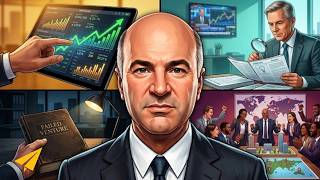
Kevin O'Leary limits any single stock to 5% of his portfolio and puts over 60% into corporate debt because it gets paid before equity dividends. He learned from his mother to spend interest, never principal, and keeps cash reserves. Seventy percent of market returns over 40 years came from dividends, so he builds his equity portfolio around dividend-paying large-cap stocks.
Chapters
What's up, Believe Nation? I started the Mentor Me series with the goal to try to learn from people who've done a lot more than us, hang around them a little bit longer, and by being in their environment, hopefully some of their mindsets, their beliefs, their way of thinking seep into us to help us become the best version of ourselves. So today we're gonna learn from Kevin O'Leary and his investing rules. Mentor me, Kevin. And as always, guys, as you're watching the clip, if you hear something that really, really resonates with you, Please leave it down in the comments below and put quotes around it so other people can be inspired. And also, when you write it down, you're much more likely to lock it in for yourself too.
Enjoy. Diversification is the only free lunch in investing, and I see this happen so many times. Here's my basic lesson that I've learned that I never vary from. From, and this works, trust me, it works. Never more than 5% of your portfolio in any one name, no matter how great the story is. If it's the next Nortel, if it's the next RIM, who cares? 5% max weighting. For me, usually it's 2.5 to 3%. I never let a stock get bigger than that in my portfolio. I sell into the strength all the time. Secondly, never, ever, ever more than 20% in any one sector. So if you love gold, You just can't get past 20% of your net worth in gold or energy or any other sector, financial services. So good sectoral diversification is crucial. And finally, for me, I'm over 60% weighted in debt now versus equity. Not government debt, not Treasury bonds, but corporate debt. Remember that a BB or BBB bond is serviced before they pay the dividend on a common stock. So I like to own right up the balance sheet. So I own a lot of prefs, converts, Senior debt, floating rate notes. I love that stuff because when they get upgraded, I get capital appreciation. Meanwhile, I get a check. The key to life is the check coming in. It's the cash. If you always, always, always look at the free cash flow, this will keep you safe because the only friend you're gonna have when you're old and crusty is not your dog, not your kids, it's the cash in the bank that's still gonna love you.
In your book, you also say when you're investing, you should have an element of fear.
In there?
You should make the assumption when you make an investment there's some probability you'll lose it. It'll go to zero. And that's why you need to have, you know, a reserve, like a backup plan, some cash set aside that if everything blows up, you're okay. I find it extraordinary when people make their first, you know, liquidity event and they have some capital that they blow it all again. That is the biggest mistake. You've got to take a nut, even if it stays in cash or it's a very, very liquid safe security, to say, "That I don't touch." It goes back to what my mother taught me: spend the interest, never the principal. I mean, look, you know, I make a lot of crazy investments. I don't touch the principal. I learned something a long time ago from my mother. You're going to find this fascinating. When I was a 7-year-old boy, and she was working at that time, she used to take me with the bank to her every Thursday. That's when they paid the girls where she worked, and she'd take a third of her paycheck and put it into bonds and dividend-paying stocks. She used to say to my brother and I then, "Boys, never spend the principal, only the interest." I had no idea what she was talking about, but she was drilling that into my head for a reason I think became very important decades later. After she passed away, I became the executor for her estate. And for the first time, I saw a secret account she kept from both of her husbands her whole life, made up of dividend-paying large-cap stocks and corporate credit. Do you have any idea of the performance of that portfolio? She blew away every indice. I was amazed. She wasn't a portfolio manager. She was just a concerned mother that needed to have capital no matter what happened. I started to do some research. You may find this fascinating. Over the last 40 years, over 70% of the market's returns have come from dividends, not capital appreciation. She must have intuitively felt that and knew that. That forever changed my investment philosophy. I'm a dividend guy. I only buy stocks that pay dividends. I'll never buy a stock that doesn't return capital because the data tells you not to. Unless you're a masterful stock picker and you know exactly when to buy and sell, you can't, in my view, beat those odds. 40 years, 71% returns? That's it for me. Dividends only. I like gold because in a way it's a stabilizer. It's an insurance policy. You know, I listen to all the gold pundits and they're always wrong as far as I'm concerned. It's impossible to time the moves. I've owned gold for decades and I simply have a 5% weighting. I look at it quarterly. When it becomes more than 5%, I sell into the strength, and when it weakens, I buy into the weakness. It's just a stabilizer. You know, I'm not one of those guys that's gonna go to 40% weighting in gold. I don't believe the hyperinflation story. It hasn't happened. Gold is popular for a whole host of reasons, and 5% seems to be enough. It's worked for me in portfolio management. It's the only security I own that doesn't pay a dividend.
So Kevin, I guess, do you not care if gold goes to $2,000 or $5,000 an ounce? You're still going to buy gold?
Yeah, I don't care. Like, let it, let it run. I'll be selling into that strength, keeping a 5% weighting. You know what I've learned? I'm an old crusty investor. When everybody's saying you gotta own it, you should be selling it, because when it corrects, it doesn't touch the sides on the way down. So I simply say 5% is good for me. Some people like a 10-15% weighting. I'm a 5% guy. And I'm disciplined about it. I hope it runs to $5,000. I don't care. I'll be selling, selling, selling, selling, selling all the way up, keeping it 5%. And when it corrects back down to $2,000, I'll be buying it in. It's fun. That's the way you should work with gold. Never get so caught up that you take all your dividend-yielding securities that are also a hedge against inflation and put it into a commodity like gold. What's the value of a stock that never returns capital to its shareholders? I don't know, because the only way you can make money is if somebody else is willing to buy that position at a higher price for some emotional reason, perhaps, or for some, you know, foresight that maybe the company will return capital one day. And I think of, you know, what you learn as an investor over multiple decades is the only thing that matters is free cash flow. That's it. There is no other reason to own a stock. And with that philosophy, it brings you into a place where you focus on a company's ability to generate incremental cash flow. Because just owning a dividend-paying stock is not good enough. Because, you know, let's say we find a stock today that's paying a 3% dividend yield, and tomorrow, because its forecast for sales get cut in half, the stock drops by 50%. Now it's yielding 6%. I don't want to own that stock either. So my tests in this index that I've, you know, created with FTSE Russell looks at the balance sheet. Every year we test to make sure that the company is viable in its ability to generate cash. This is extremely conservative investing. This is for the long haul. These tools are not for, as you're suggesting, for spicy, you know, the hot stock du jour. I've done that. I've been there. You know, let the young legs do that. I have zero interest in that. I don't care what the hot new stock is. You know, when a company comes public, I won't own it either. It's got to prove to me over multiple years that it can continue to generate cash before it even fits into what I'm doing. So I'm really boring, and I like it that way. So a great company doesn't necessarily have to equal a great stock.
They can be two very very different things from your perspective.
There's many companies where I buy their products and services I would never touch their stock. So, you know, it's sort of— we're talking about real money here, the stuff that you need to preserve. You know, when I think about my family trust, I can't afford to mess around with that.
What investments are you liking today?
I'm liking very simple deals where I can understand the business model. I'll give you an example of how boring and simple and how successful it can be. This is from Shark Tank. I look at a lot of deals on Shark Tank and on Dragon's Den because I invest 5% of my net worth every year in venture deals. I used to have to go find them. Now they come to me. I've got 2 platforms to work on. This is a Shark Tank deal. Oprah has a hairdresser. Interesting guy. His hobby was tea. This tea you drink. And he became what's called a nose. He had a certain skill to be able to smell Ceylon teas and blend them. One day he gives, a couple of years ago, a cup of tea to Oprah while he's doing her hair, and she sips it and says, "This is the best tea I've ever had." She goes on the show half an hour later and says, "This tea, called Talbot Teas, is the best tea I've ever had." He gets orders the next day for $500,000. You know the Oprah effect. You You've heard of it, right? He can't finance that. So he comes on Shark Tank and he's looking for $250,000, and I agree to buy 35% of the company for that. I love tea. It's so simple. Gets on Oprah, 500,000 orders, Neiman Marcus, all kinds of individuals ordering on the internet. Simple. Tea, orders, cash flow, right? While we're in the middle of doing the deal, the show airs and Jamba Juice, a public company, says, "We want to be in the tea business. We love this story. We love the brand." I want to buy the company. I haven't even written the check yet, and bang, the deal's done.
Wow.
Yes, wow. That's the kind of deal I like because it was simple. It's not a complicated tech story. It's tea. Tea with a brand. Now you go into a Jamba Juice anywhere in North America, that's my Talbot Teas. That's right. Isn't that wonderful?
It is wonderful. That's why you are—
Well, that's why I am Mr.
Wonderful.
But you know, I look at it this way. The simple The simple deals are the ones you make money on.
Okay.
So I take that cash back, I redeploy it. So I like simple stories with revenue attached to them. You know, the high-tech stuff, I came out of that market, it's so complicated, so much can go wrong, so I just love deals where they see an easy path to revenue.
So thank you guys so much for watching. I'd love to know what did you learn from this video? What clip spoke to you the most, and what are you going to take you take from these clips and immediately apply to your life or to your business somehow? Leave it down in the comments below. I'm super curious to find out. Finally, I want to give a quick shout out to The Lonely Bookineer. Thank you so much for picking up a copy of my book, Your One Word, and for making that awesome YouTube video on it as well. I really, really, really appreciate your support and I hope you enjoyed the read. I definitely think that this book is about finding the core thing you want for your work, your life, and your business. So thank you guys so much for watching. I believe in you. I hope you continue to believe in yourself and whatever your one word is.
Much love. I'll see you soon.
More from Evan


How the Biggest Mistake in History Created A Trillion-Dollar Empire | Sergey Brin



9 Machiavelli Principles That Force People To Respect You | Machiavellian Philosophy



The First 10 Words That Instantly Ruin A Sales Conversation | Vanessa Van Edwards

The Top 1% Mindset Behind The First $5 Trillion Company | Jensen Huang (Nvidia)

