Kevin Spacey PROVES You’re Auditioning all wrong!!
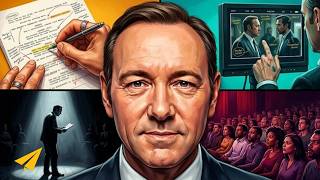
Kevin Spacey shares ten rules for creative success, arguing that auditions are about building relationships, not landing jobs, and that storytelling matters more than product. He emphasizes trusting yourself over comparing to others, learning from mentors like Jack Lemmon, and taking the long view of your career.
Chapters
Why is it certain businesses can hover above their competition? I mean, is Starbucks really serving the best cup of coffee? I mean, to want and to be ambitious and to want to be successful is not enough. Very often, the thing that actors tend to do is, I think, they tend to focus on the wrong thing. And every time I take on something, the only thing that interests me is what scares me.
He's an American actor, film director, producer, comedian, and singer. He began his career as a stage actor in the 1980s. Since 2013, he's played Frank Underwood on the Netflix series House of Cards, for which he's won numerous awards. He's Kevin Spacey, and here's my take on his top 10 rules for success. Rule number 8 is my personal favorite, and make sure to stick around all the way to the end for some special bonus clips. Also, as Kevin is talking, if he says something that really is meaningful to you, Make sure to write it down in the comments below and put quotes around it so others can be inspired as well.
Well, we all are in the business of storytelling. I mean, it's not just exclusive for people like me who are in the entertainment business. I think that no matter what business you're in, no matter what you're, you're selling or doing, why is it certain businesses can hover above their competition? I mean, is Starbucks really serving the best cup of coffee? Maybe not. I mean, I like a caramel macchiato myself, but is American Express really the best return rate on a credit card? Probably not. But it's the story they managed to tell. And I think that the more that we think about that, the more that we— you know, sometimes we see commercials and we see stuff and we just go, "Ah, it's a turn-off." But somehow those people that manage to tell a story, that manage to even temporarily move us in a certain way, That we remember. We don't feel like we're being sold. We feel like we're being told something that we can connect to. So I've always been driven by that very idea, that very notion. Can we help us appreciate this early experience, these lean years, these very difficult years leading up to the ultimate prize? There is no prize out there. The only prize is this one and what you feel and what you want to accomplish. And if you can, as you start out these what could be lean years or could be fat years, I feel that I very often watch a lot of young people sort of meander around without any idea about why they're doing what they're doing. I mean, to want and to be ambitious and to want to be successful is not enough. That's just a a desire to know what you want, to understand why you're doing it, to dedicate every breath in your body to achieve. If you feel you have something to give, if you feel that your particular talent is worth developing, is worth caring for, then there's nothing you can't achieve. I think that when I was beginning as an actor, I was fortunate to have gone to Juilliard when I did go study drama with a great number of actors and actresses who were going on to become very well known very quickly, and I wasn't. And I think the sort of greatest lesson I came out of about that was that comparing yourself to other people is a real mistake. I mean, my struggle wasn't any worse or less or whatever than anyone else's. It was just mine. I think the audition process is, uh, no different than, uh, going for a meeting as a cinematographer, or, uh, if you want to be in any of the, of the disciplines of this industry. Uh, very often, uh, the thing that actors tend to do is I think they tend to focus on the wrong thing. So if I were to say to you, what do you think the purpose of an audition is? What would your answer be? What's the purpose of an audition? To live truthfully in the moment. To live truthfully in the moment. Very nice. Most people would say to get the fucking job. Right? Now, that is a very, very, very dangerous place to start, to want to get the job. Now, look, let's— Face facts, if you get the job, how great, that's fucking great, it's icing on the cake, it's fantastic. But I believe that if actors were better willing to adopt a philosophy that it is an opportunity to walk into a room and to begin a relationship that may not pay off with that particular job. Sometimes actors are so nervous and they want that job so much, or they can't pay their fucking rent, they gotta get that fucking job, they gotta get that fucking job. Hi, I'm— Hi. Well, we see that. You know, the director sees that. So the problem with that is that you're not being yourself. You can't be truthful in the moment when Your focus is on the result instead of what on that day at that moment is the beginning of a process. Can I work with this actor? The director's thinking, does this actor pay attention? Do they listen? And when I give them direction, do they actually change anything? Do they take direction? Go that way. And if You can stand in a room and say, I may be raw. I may be undeveloped. I may have no experience. But I trust myself enough, and I believe in myself enough on this day that I want to introduce myself to this director, casting director, producer, assistant. And by the way, be really nice to the assistants. Because no one behind that table is any different than you. Everyone behind that table is just as ambitious as you are. That director wants to be doing better things. That casting director wants to be a director. That assistant— that assistant wants to be the casting director. Everybody wants to be somewhere else in 10 years, just like you do. So we're all in the same boat. And It's sometimes hard to believe this, no matter how rude they might be, no matter how, you know, because some of them are just— they're dicks in those kind of situations. But my point is this: they're on your side because they have to cast this thing. And because people are fundamentally lazy, they'd rather be home smoking pot and watching TV. So they want you to be good. They want you to solve their problem. And too often, I think people don't realize that you have to take the long view. The short view is, "I want this job, I need this job, I want this job." The long view is, "I have a chance to meet someone I may admire, someone I could work with, but I may not be right for this job on this day." That has nothing to do with my talent. It could be a thousand reasons why you don't get a job. But if I'm good enough, if I stand on that stage and I show them where my talent is on this day, I walk out that door, they might look at each other and go, "She's really good. She's really good. She's not right for this, but she's really good." And the next time they do a film or the next time they do a play, they'll bring you back. And someday along that long road, you may get that job. But it's about relationships, and it's about trusting yourself and where you are, and realizing you are good enough for where you are right now on that day. And I believe in the long view. And I also believe that audiences have remarkable attention spans. You know, there's always this sort of argument— you sometimes see it in the way movies are cut, where there's a cut every 3 seconds because God forbid something isn't happening on screen, something isn't distracting. But if you go back and look at the great movies, there's just a camera capturing people in a space. That is compelling. And I believe audiences actually, at the end of the day, they don't care about platforms. They don't care that it's on Netflix or on Instagram or a 6-second Vine or a 13-hour miniseries on PBS. They want good stories. If we give them great content, not just to fill the time, but great content that are great stories, they will watch it on whatever platform it's on. But there is something different in a story, a complexity that's possible obviously with time. And do you think that there is, if you like, a swing back against short, snappier, bite-sized pieces of content to something that is much more textured? No, I actually think there's room for all of it. And I think that that's why we're seeing so many different kinds of platforms emerge. You know, people are adapting storytelling for the platform that they're on. And that's actually kind of exciting and opening up new doors. I travel, I play a lot of tennis, I play a lot of ping pong, I see a lot of friends and make a lot of dinners. I enjoy my life. In fact, in the last 7 years, I've carved out more time for me than I think ever before in my life. I think you have to. I think it's hugely important to be able to balance your life with your work. I'm loving living life, and I think it's just hugely important. I'm fortunate I don't have a 9-to-5 job, but this job does require an enormous amount of my attention, and I live full-time in London, and I only leave London if I'm going to make a movie. But even if I'm able to carve out, you know, 2 hours in the middle of the afternoon to go play tennis or go to a gallery or take a walk, that's hugely valuable, you know. Even a 2-day weekend can feel like a 5-day holiday. You've worked with unbelievable directors and other actors and great work— Mamet's work, O'Neill. Can you just talk about that at all, about the collaboration or about the way these— Well, I mean, that is it. I mean, that is the key to doing anything and doing it well, either in film or in theater. You know, it's about bringing all the elements together. And if you are fortunate enough to not be driven by your own ego and not believe that all your ideas are the only good ones and are open to suggestion and to criticism— "That's not a good idea." "Don't play it that way." "That doesn't serve the writing." As long as, as actors, and to a large degree directors, our job is to serve the writer, serve the writing. If you serve the writing, you will ultimately serve yourself. I think we have gone through a couple of decades where actors have been spending more time serving themselves, and they have forgotten that it is about the writing. It is about finding out the world that a writer wants to create and doing everything you can to give a director as many choices as they possibly can have in editing, and collaborating and being open about it and loving that aspect of it, because it's so incredible. If you, A, trust the people that you work with and bring an atmosphere of openness and humor to the proceedings so that everybody wants to come to work every day and do to do their best job. So it is about collaboration. There's lots of films that people know, you know, that are always sort of mentioned as, you know, "Wasn't that your favorite?" And I hope I haven't done it yet. And every time I take on something, the only thing that interests me is what scares me. The only thing that interests me is what I think I can't do. Well, when you're doing the TV show, you know, every day is a different day in the sense that it's never the same. And you might be shooting 2 scenes, you might have 1 scene, you might have 5 scenes. So your level of preparation is different every time. Generally, I'm up early, I exercise, I run, I do whatever it is I'm doing in terms of my physical life other than playing tennis, which I, I, you know, stack up during the course of a week quite a lot of if I can. And, you know, get to set depending on your call time, but very often it's very early. And then you, you know, try to be there and be alert and awake and alive and ready to go every hour of the day. And if you work 12 hours, then you have to be alert every one of those hours. It's an important thing to stay focused.
When someone has the gift, I cannot resist. I am told that You are so adept at it. If our audience closes its eyes, they will actually have the impression that I am privileged to interview some people who might otherwise never have appeared on this stage. Our guest is Jimmy Stewart. And, uh, Mr. Stewart, generations of actors have admired your naturalism and your simplicity. Now, is that just Jimmy Stewart, or is it Jimmy Stewart playing a kind of Jimmy Stewart.
Well, not— not Jimmy. I, I, I, I know what you're saying. I'm aware of what you're trying to say, and the answer is yes.
You can all testify now to the the fact that I have interviewed Jimmy Stewart. Now, here I am. This is, after all, a kind of interview show, a talk show, and Johnny, you reigned for years as king of talk show hosts.
Oh, now we're talking.
What was the secret of your success?
You know, Jimmy, I'd love to answer that, but I don't work on Mondays.
Now I understand that you have conducted a long correspondence with Kevin Spacey and that he approached you once, Miss Hepburn. And I, and I would like to know whether What's that story? Have you actually corresponded? What do you write?
He's a stalker. He just won't leave me alone.
When he writes to you, what do you respond?
He writes letters, goes on and on about himself, and I just say, good for you.
I would like to ask you, please, because you are a very good director as well as a wonderful actor, Mr. Eastwood, what is the— just a word of advice for our many directors out there in our school?
Well, I'd say get it done by 4 so you can hit the links.
Mr. Gielgud, am I on the right track? Mr. Gielgud, American actors envy your impeccable diction. How did you acquire it?
Oh, went to school, you know, trained for years and years.
Marlon, English actors do not admire your diction. How did you acquire it? Could it by any chance have been a result of your training at the Actor's Studio.
Listen, I didn't learn tiddly twat at the Actor's Studio, and frankly, I'm just sick and tired of all you cats just living off my name forever. So leave me alone and bring me the a Dorito.
Mr. Walken, you are, you are, despite what was just said, a distinguished member of the Actors Studio, and this is your second time on this stage. Do you have a response for Marlon?
Well, you know, He's just stoned, you know. You gotta forgive him, you know. He's crazy that way.
I'm going to call on another member of the Actors Studio, distinguished member of the Actors Studio, to respond. Mr. Pacino, you've already been immortalized by Kevin Spacey on Saturday Night Live. We all said, saw that, how did you feel about it?
Did you—
were you pleased?
Oh, funny.
Didn't bother you at all?
No. Can I get a cappuccino?
I know that like so many of our students who remember your evening here on this stage with us, Kevin Spacey often looks to you, Jack Lemmon, for professional wisdom. What is your final word tonight? What is your advice to our young students?
I wish to hell he'd stop calling me and leave me the fuck alone.
Thank you guys so much for watching. I made this video because Dante DeLuca asked me to. So if there's a famous entrepreneur that you want me to profile next, leave in the comments below and I'll see what I can do. I'd also love to know which of the 10 rules had the biggest impact on you, what change you're gonna make as a result of watching this video. Leave it in the comments and I will join in the discussion. Finally, I want to give a quick shout out to Anna Weber from successfullypublished.com. Anna, thank you so much for buying my book. Really means a lot to me. For those of you who want a chance at a shout-out and some bonuses in a future video, make sure to pick up a copy of the book and email in your receipt so we can keep track. Thank you guys so much for watching. Continue to believe, or whatever your one word is, and I'll see you soon.
I can tell you the moment I did the very first thing in drama class where we had to do a pantomime to music. And I created a Western scene where I was riding a horse. I had a six-gun, and it was to the music from Dueling Banjos. The ride got faster and faster as I went. And everybody applauded and laughed. And I was like, "Well, that's a sound I have." And then the drama teacher there, who was really remarkable, remarkable and a great mentor, then led me toward a workshop that was being run by one of my idols, which was Jack Lemmon. I mean, his work in Some Like It Hot or The Apartment or The Odd Couple, some of the finest work I'd ever seen. He just did comedy and drama brilliantly. He was a kind of everyman. So he was running this workshop at the Mark Taper Forum in 1974. And I got a chance to go. And one of the things we had to do we had to do scenes and Mr. Lemmon was going to critique our scenes. And so I did a scene. And you know, I was very shy. I was very nervous. I— and he came up to me after I did my scene. He put his hand on my shoulder and he said, "That was yachacha terrific." He said, "No, I'm not kidding. What's your name?" I said, "Kevin." He said, "This young actor has been doing what I've been talking about all afternoon. He was connected to the material. You're terrific. I'm telling you that you should go to New York." "and you should study to be an actor because this is what you were meant to do with your life." And I was 13 years old. And it is kind of extraordinary that sometimes in life a teacher, a parent, an adult, a mentor can say just the right words to a young person at just the right moment and it can be life-changing. And it was life-changing for me because I did go to New York. I did study at Juilliard for 2 years. And then I began my career as an actor in the theater in New York. And then 12 years later, after we had met in 1974, I found out that Jack Lemmon was coming to Broadway to do a production of Eugene O'Neill's A Long Day's Journey into Night. And I felt at 26, I was the right age to play one of his sons. And I particularly wanted to play play the role of the alcoholic, Jamie Tyrone. So I tried and tried and tried and tried to get an audition. I couldn't get an audition. I finally had to sort of sneak my way in. And I finally got an audition with Jonathan Miller, who was going to direct the production, the great British director. And then I had to audition with Jack. And so once again, after we had met 12 years before, I found myself in a room with Jack Lemmon doing a scene. Or we did like 4 scenes together, and I was relentless with him. I mean, I prepared for this audition unlike anything I'd ever prepared for. I was toppling over his lines. I was pushing him. I was— I wanted this part so bad. And at the end of it, Jack Lemmon once again walked up to me, put his hand on my shoulder, and he said, "That was a touch of terrific." He goes, "You know what? I never thought we'd find the rotten kid, but you're it." Jesus Christ, what the hell was that? And I won the And I got to spend the next year of my life working on stage with my idol. And he then became the greatest mentor I could have hoped to have had. A father figure. And really somebody who was such an extraordinary example of a man who had reached absolute— the heights in his profession. But it never went to his head. he was the sweetest man. And we then ended up doing 3 films together, ending with Glengarry Glen Ross, which he used to love to call Jean Barry Glenn Close. It's easier to say. And, you know, there's really not a day that goes by where the influence he had, the lessons he— just by example that he taught— I've always I've always sort of gone through my life feeling like if I just keep a little twist of lemon in my heart, then I'm gonna be okay. We were talking about this outside in the hallway about, you know, do you— 'cause we were talking about Sean, about how sometimes you can love what you do and be good at it, but sometimes you don't have to love what you do and still be good at it. That Sean in acting? Yeah, we were having this discussion out there, and right now, you know, not everything is great, you know. I certainly want things— I, I fight for things to be better, and I fight to do things better in myself. But I also feel like I've been given so much opportunity that to even start to whiff of a sort of whine or complain, as certain other people do who I know— a little whining, whining and complaining hosts— the I feel that it's disingenuous. If I saw someone like that, I'd shoot them on sight. You'd smack them. That's right. But I, I, so I feel like I, I, the best thing that I can do is be grateful and, and honor it and, um, continue to try to do the best work I can. And, and I'm fortunate that, um, you know, every time, you know, someone says, oh no, he's not the right guy for that, and I'm able to go out and, and prove that I can do it.
More from Evan


How the Biggest Mistake in History Created A Trillion-Dollar Empire | Sergey Brin



9 Machiavelli Principles That Force People To Respect You | Machiavellian Philosophy



The First 10 Words That Instantly Ruin A Sales Conversation | Vanessa Van Edwards

The Top 1% Mindset Behind The First $5 Trillion Company | Jensen Huang (Nvidia)

