Kid Cudi Interview: This One-Track Mindset Hack Will Change Your Music Career
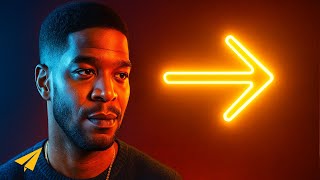
Kid Cudi shares his top 10 rules for success, stressing that a record deal is just the start. He credits his outsider status for pushing musical boundaries across hip-hop, rock, and electronic genres, and worked with Dr. Dre, Kanye West, and Timbaland to develop his sound. He also emphasizes artists' responsibility to combat loneliness and suicide, drawing from his own five-year struggle with suicidal thoughts.
He's an American recording artist and actor from Cleveland, Ohio. In 2009, his debut single "Night and Day" reached the top 5 of the Billboard charts. He has sold over 5 million digital singles and has worked with some of the most prominent artists in the music industry. He's Kid Cudi, and here are his top 10 rules for success.
It's really just about, like, the right timing and having some good stuff and just being creative, you know, because that's half of the battle. It's like You know, kids think that it's just easy to get a deal, and it's— that's not even like half of it. Like, getting a deal is like very easy to do. It is, but it's after that, you know what I'm saying? What you gonna do and what kind of music do you have? Like, what kind of product are you bringing to the table? And I think what made me, you know, kinda get to where I'm at right now is because of the originality in the music and the fact that I was trying to push the envelope on just everything, genres of music. And I think that's what made me more noticeable out of everybody else, you know, in the underground scene. Like, I always kind of, when I grew up, always kind of felt like an outcast and shit, you know what I mean? But instead of like being worried about that shit, now I kind of like embraced it. And that's why I made such a leap creatively into my music. That's why we are hearing about me, because when I stopped second-guessing myself and going in, that's when I created that new, new energy. Day and night, you know what I'm saying? It's been— I've been consistent ever since the mixtape and the album and all the features I've been doing. Like, ever since I made that change within me, shit's been good, man. At the end of the day, my mama told me don't let no one break me. At the end of the day, nobody can ever stop me. It's just like, those things are true, you know what I mean? It's like, nobody can be the commander of your destiny but you. Yeah. You know, only if you let somebody else take over, but that you always have the power and have the control. And that's what people need to remember, man, on their day-to-day is, you know, it'll actually spark more minds and have people want to be more leaders than followers. I think people are just a little scared that they'll lose the audience's attention, which is a very real fear. It's like, I get it, you know. But it also goes back to what I was saying. Like, I've just been blessed with a fan base that like you know, is into what I'm doing no matter what, you know. And that's, that's just dope, you know. But the average artist, no, they can't just experiment. And there's a fear where they might not sell records, and then that's bad for business. And this is a business, you know. So, you know, it's, it's understood why most guys don't really do it, you know. I would like to see people do it. I feel like there's— that's not an excuse. I feel like there's a way where people can be a little bit more creative and push the envelope a lot more with the music, uh, where it fits in in a way that makes sense and it's true to their art, um, and their formula. I feel like, yeah, there's always a way to try something new and be innovative and bring something different to the table. Just Dre's whole thought process, how he's just so thoughtful from the beats to every little meticulous sound, and I was inspired by that. You'll hear that in my production. You know, my favorite producers are as follows: Dr. Dre, Swizz Beatz, Timbaland, Kanye West. Wow, that's your 4 right there. You know what I'm saying? That's my 4. And then of course, you know, there's my family, Plain Pat and Emile, who are fucking phenomenal, who they eat humble pie every fucking day they wake up, so you'll never get it out of them. But those motherfuckers are genius. No doubt. They had to be to fuck with me in the first place, to see it before I saw myself, what I could be. Like, so, you know, I'm going into this project thinking about those people. Like when I wanna add a sound at the end or I wanna switch the beat up, I'll be like, yo, I used to love when Timbaland used to switch the beat up at the end, you know what I'm saying? And it would just be a whole nother song damn near. Let me try to do my own kind of flavor of that. You know, how could I recreate and reimagine this beat in the same song? You know, or give them a little something, a sound in the beginning that they won't hear until they hear it at the end, you know what I mean? Like, just was very like meticulous and strategic with a lot of the production. I nerded out a bit, and that was the fun part, that I got to be a straight-up nerd on some of the most aggressive fucking like hip-hop shit. I look at genres as different races in this game. It's like hip-hop is one race and rock and roll is another race and R&B and so on and so forth. What I'm doing is trying to end the segregation between genres. You know what I mean, and kind of just fusing them together and making it one super song, you know, so to speak. And that's what I'm trying to do, but just do it in a way where it's like appropriate, not like just, "Oh man, I want to do a record with this band because it's a band and we need to fuse hip-hop with alternative rock just because that's a new thing to do. So I'm just going to go get this band to do this hook for me and I'm going to just rap on this rock and roll beat." And it's like, no. You know what I mean? That's been done before. What's the next shit? You know what I mean? Maybe we can fuse alternative rock with some electro and still put hip-hop on it. Infuse all three of those together. Maybe we can take some folk, put some nice drums on it, some hip-hop drums, mix it in with some country, some guitar or something. You know what I mean? And get like someone like, uh, Leaky Lee to jump on it and really kill it on the hook side of things. Give her a verse. Give me a verse, we do a duet, you know what I mean? But at the same time, it's a song that you've never heard before with a sound that you've never, you know, heard before either, you know? And it's done in a way where it's like, okay, it's different, but we— it's believable, it sounds good, you know? And Kid Cudi is trying to execute that shit in a way that nobody's ever done before. I wanted to surpass Day and Night 10 times over. You know, I wanted to make this album like it was my third album. You know what I mean? Like, I wanted to go in and just no holds barred, just come with it, man, because it's like people didn't know what to expect from me because of Day and Night just being such a big success. It's like, "All right, man, this guy could just be a one-hit wonder and he could just have all these really wack songs after this." But I love that pressure and I kind of took that and put it into my creativity, you know, and just really went in and made some new sounds and shit. You got— I find that when you have your friends in the studio, you got, you know, couple guys on WorldStar, couple guys on Twitter, couple guys over here, and everybody's talking about what's going on over here and what's going on over here. You're trying to write this song, you get distracted, you're like, "What happened? Oh, hell nah, that's funny, funny!" Next thing you know, it's 2 hours have gone by, you still working on this record. You had some laughs, but What you came to the studio for is not done yet. Right. You know, and there's money being spent and there's time. Time is of the essence. This is what we hustled and worked hard for, you know? And I have to, I had to remind myself, it was like, man, this has turned into a fucking party. Like, we're here for work. So I also have this like really gnarly work ethic. Like, 'cause I've been working since I was 15. Like, my first job was Wendy's. I remember why I wanted to work. It was 'cause I wanted my own shit. I was tired of asking my mom for stuff. And also didn't think it was fair, you know, to ask my mom for stuff because I know we didn't have much. So, you know, I just had— work for me is always like one of those things that's very important. I think it's important, you know, in life to know who you are in order to progress. And that's what this album is about, self-reflection. And at the end, just being, alright, it's a new day, it's morning, let me start right, you know what I mean? Being confident, and that's ultimately what Man on the Moon is. That's the message in this first installment. What does hip-hop need to do? I think the braggadocio, money, cash, hoes thing needs to be deaded. I feel like that's holding us back as a culture, as Black people. It doesn't— that doesn't advance us in any way, shape, or form. We've been doing that same theme for years now. It's been like, what, 4 decades of the same old [MASKED]. Sorry for my language. And I feel like, you know, if you're gonna be an artist, there's a time where you just have to, you know, embrace the responsibility and understand that the power of music is something so special and be able to do it on this magnitude where you reach millions of people. It's like, why not use that for good? Why not tell kids something that they can connect with and use in their life? And like, really my mission statement since since day one, and I'm getting so worked up talking about this. All I wanted to do was help kids not feel alone and stop kids from committing suicide because— thank you. And, and I, I'm, I'm never try to be political, and I'm actually like shaking. I can't believe I'm, I'm saying this. Those two specific Yeah, yeah. Where does that come from? Well, I dealt with suicide for the past 5 years, you know? Like, there wasn't a week or a day that didn't go by where I was just like, "You know, I wanna check out," you know? And I know what that feels like, and I know it comes from loneliness. I know it comes from not having self-worth, not loving yourself. And these are things that, you know, kids don't have music that can coach them and give them that guidance. I didn't have that. I had to listen to Jay-Z and take certain things from it. And then the other shit, I just didn't know what he was talking about. Yeah, yeah, yeah. And like, now I'm 30, and I'm like, oh, that's what Hov was talking about. I get it now, you know? But what about the kids who, you know, you never really had an artist where you connected with them all across the board, you know? And I think that that's my job. I'm just really just trying to guide people and help people. Because, you know, loneliness is a terrible, terrible thing, man. And if you don't know how to conquer it, it can eat you alive.
Thank you so much for watching. I made this video because Obinna Ijeoma asked me to. So if there's a famous entrepreneur that you want me to profile next, leave it in the comments below and I'll see what I can do. I'd also love to know which of Kid Cudi's top 10 rules meant the most to you. Leave it in the comments below and I'm going to join in the discussion. Thank you so much for watching. Continue to believe and I'll see you soon.
More from Evan


How the Biggest Mistake in History Created A Trillion-Dollar Empire | Sergey Brin



9 Machiavelli Principles That Force People To Respect You | Machiavellian Philosophy



The First 10 Words That Instantly Ruin A Sales Conversation | Vanessa Van Edwards

The Top 1% Mindset Behind The First $5 Trillion Company | Jensen Huang (Nvidia)

