Larry David: Honest Advice to Someone Who Wants to Become a Comedian!
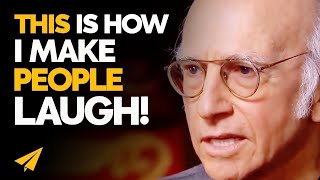
Larry David talks about starting in stand-up, creating Seinfeld and Curb Your Enthusiasm, and what it takes to make it as a comedian. He discusses his writing process, building confidence, and why pushing boundaries matters even if it offends people.
Chapters
I was raised to think that there was— I couldn't do anything. You know, don't get your hopes up, OK? It never occurred to me that anything I was doing—
Ever.
—could ever make anybody uncomfortable. I could see it offending someone. Yeah. Which—
great.
There was nothing else in the world that I could possibly do. There was nothing else I could do. What's up, Believe Nation?
It's Evan. My one word is believe, and I believe in you. And I want to see that great thing that you have inside of you come out so you can help change the world. So to help you on your journey today, we're going to learn from comedian and writer Larry David and my take on his top 10 rules of success. Rule number 1 is my personal favorite, and I'd love to know which one you guys like the best. And as always, guys, as you're watching, if you hear something that really resonates with you, please leave it down in the comments below and put quotes around it so other people can be inspired. And when you write it down, it's much more likely to stick with yourself as well. Enjoy!
Do you know why you wanted to be a comedian?
Yeah, because I had no— there was nothing else in the world that I could possibly do. There was nothing else I could do. I, yeah, I had nothing and it seemed like I was funny, so why not try and use this particular skill that I had to make a living? Because there was nothing else that I could do. I was raised to think that there was, I couldn't do anything. Don't get your hopes up for OK. I remember one day, I remember one time I was asked in front of my mother what I might want to be. I said, gee, I really like sports. Maybe I could be a sports announcer. And she goes, you're not special. You're not going to be a sports announcer. You know, she wanted me to be a mailman, really. That was her dream. Yeah, she wanted me to take the civil service test and become a mailman, 'cause you know, you get the security and you always have a paycheck and a pension. So being a comedian didn't occur to me. Then I got out of college and my friend's wife kept saying, "You know, you're funny. Why aren't you doing stand-up comedy?" Because I was floundering. I went to watch a night of comedy. And as I'm watching it, I'm going, Jesus, you know what? I think I could do this. And in the middle of the show, I walk up to Bud Friedman, who's the manager of the club, the owner of the club. And I say, I'd like to go on. Yeah. Like, how insane is that? I want to go on. I have nothing, OK? I've never been on a stage. I want to go on. Thank God he said, "Who are you?" No, of course not, you can't go on. You gotta audition. I go, "Okay." So then I wrote some material and I started trying to do it. Before I did Seinfeld, I was very bleak. I would wake up in the morning and my first thought in my head was, "Oh no." You know, "Oh, I gotta go through this now." Another day. Another day, yeah. But once Seinfeld started, all those thoughts were gone.
So Seinfeld did what? For you? It gave you—
it gave me a reason to, um, I don't know, it focused me on something. But success can give you confidence, I guess. Yeah, um, I don't know, you know, when you're working hard, you're focused, you just do it, you don't really think about it.
You work on Seinfeld for what, it was 8, 10 years?
I worked on it for 7 seasons.
Okay. It's one of the most successful and now revered television shows ever. And yet you were a writer on it. You appeared once in a while, but you weren't a performer. Did you have some— were you feeling thwarted as a—
No. No. Not in the slightest. First of all, there was no way that I could have done the amount of writing that was required and also performed on the show. It would have been impossible. And it never even occurred to me. First of all, Jason Alexander— Is you. You have your stand-in. Yeah, right. And he's so amazing and so incredible and so funny. I— no, no. No way I'm gonna be as good as he is. So I was— quite content to just be behind the scenes and writing. And I didn't know really that I had any talent in that area anyway. I never thought of myself as an actor. I took an acting class, I didn't like it. I didn't like waiting for the other person to finish talking. I have to wait to say my line? What kind of bullshit is that? What is that? I wanna talk when I wanna talk. So there was something about it that I didn't like. So I had no desire to do it. And the writing was fun. Some of the best times of my life were working on those scripts. And then working with Jerry in the room, we had just a fantastic time. Time doing it.
Wherewithal behind that now classic Larry David as a stand-up comedian moment of walking on stage and saying, "I don't think so," and walking off. The level of confidence behind that you may not even be aware of, because what you're saying is, you people, it's not just that you're not up to this, so I'm leaving. I'm gonna be invited back. The fact that I'm not gonna perform right now is not going to affect anything. Right, well. That's a level of confidence I don't think you were aware of.
Yeah, it was, you know, I think they, because they got a kick out of my shenanigans. I think they did.
So. And when that happens you kind of.
So that gave me.
Yeah, the confidence. That emboldened me. Right, you lean into it a little bit.
Yeah. By the way, I love the word. I love using the word emboldened, so make sure to put that in.
Part of the job is to go too far enough to push the boundaries, to make people uncomfortable, to make people laugh, but also to make them squirm a little bit.
Okay, you know what? I never knew about the squirming stuff.
Yeah.
So, you know, we do the show and it's on the air. And all of a sudden, people started coming up to me and saying, "I had to leave the room. I couldn't watch that scene." I go, "Really?" You know? And then I kept hearing it over and over again. People were closing their eyes. In this one? No, no, no, not in this one. Just in general. That, yes, they were squirming. They would cover up or, you know, they couldn't look at it because I was making them so uncomfortable. It never occurred to me that anything I was doing Ever. Could ever make anybody uncomfortable. I could see it offending someone. Yeah. Which, great, you know. That's the point, you know. What does that mean, that's the point? Well, as S.J. Perelman said, the office of humor is to offend. So I don't mind that.
When have you ever offended? When have you felt sort of out there, oh, this one really— this one pushed the outer limits?
Well, the Survivor episode.
You should explain a little bit.
Well, there's a show on CBS called The Survivor, a reality show. And then there are Holocaust survivors. And one day I heard Survivor and And then I thought Survivor, and I went, holy shit. And you know, my head exploded over how funny that could be. And I thought, I have got to write this and film it as fast as I possibly can, because somebody's going to come up with this idea. It's just so obvious. Survivor, Survivor. How can nobody have done this?
—One of the things I've heard is that a lot of Curb is improvised, much more so than Seinfeld. So I'm curious, in a scene like that, how does it work when you're writing? So you just write Larry rants about something?
I mean—
—Most of the time, yeah. It's an outline. Seinfeld was a script and all the dialogue was written. Everybody had their lines. That scene you just saw, there were no lines. Cheryl knows that, she knows what happened. She sees that they toilet papered the house because I didn't give them candy. And we just go. And that's what happens. And that's it.
And the same thing in the scene, the interaction with the cops, the whole riff on baldness? That's just something you just—
The cops are there, I'm trying, yeah, I'm upset about what happened, I want satisfaction, and that's pretty much the scene.
Writing this way, is that easier than when you were doing Seinfeld with everything scripted, or is it harder because it puts more pressure on getting everything right?
It's, It's easier. It's easier because, first of all, the reason I knew I was, that I wanted to do this was because on Seinfeld, there were scenes where I would go, "Oh, the scene is so set up that it kind of writes itself. There's nothing to write, really. All I have to do is just say what people are gonna say, but I know what they're gonna say because it's so simple because of the way the scene is constructed." So here I just thought, well, why even memorize? I'm not even an actor anyway. We'll get to that. Yeah, I'm not an actor. I don't want to memorize stuff and wait for the other person to stop talking before I want to talk. I've got a lot to say, and I want to interject. And also, I remember I took an improv class. Improv class years ago, many years ago, and I can remember almost every compliment I've ever had in my life. And I remember at that improv class, I remember the teacher said to me, "You're very good at this." And that kind of stuck in my head. I'm good at improvising. I'm very good at it. And so I thought, well, let's see let's— I'll just write the outline and we'll, and we'll improvise and see what happens.
When Seinfeld— who made the decision to end it?
Well, I left 2 years before it was, it was over. Yeah. And then Jerry went on for the last 2 years, and then he decided, even though he was doing quite well. Yeah.
Because he just was working so hard. Yeah.
Well, that would be 9 years for him or 7 years for me. Was it hard to leave? Um, I, I think I was ready. I just thought like 7 years was a long time to be doing that. And also, you know, after you do these shows for a while, the bar is so high that it's almost intimidating to think, how am I going to do another 22 shows? It seems impossible, you know. So I would go through that same thing every year. And then finally I thought that, uh, that's what the guys from Monty Python told me.
They said, we didn't think we could be that good every year out.
We didn't know that we could be that funny. Yeah. It's— You're running against yourself. Yeah, right. You're in competition against your previous seasons. And what did you think you were going to do when you left Seinfeld? I didn't really know.
Go ahead. This is actually a question from my sister Annabelle. And she's actually watching. So— Watching online? She's watching online.
Online? This is online? Yeah. Hello? Honestly, you can't breathe in this world. You cannot breathe.
It's all online. Yeah, and anyway, so I was wondering if you could respond and look at the camera and say Annabelle, because it's to her, if that would be all right. I mean, just rather than looking at me.
Let's pretend this is Larry David from the show. That's right.
Just what I was going to suggest.
Exactly. Tell your sister she could have come, okay?
She's in California. Ask your own goddamn question.
Yeah. All right, what's your question, Annabelle? I'll play along. Okay, all right.
Yeah, well, well, she's in California in school, so that's why she's there. Sorry, Annabelle.
It's okay. I'm sorry, Annabelle.
What are you studying?
She is She's studying public relations and film at USC.
Fascinating. And Annabelle, what is your question?
Her question, if you could look at the camera.
Can you believe the balls on this guy? Jesus Christ. Okay, do you have any other direction for me? What else do you want me to do?
Should I stand? If you want. I mean, that's her question.
Ask the question.
But really, her question, you've answered part of it, but—
I hate your brother. He is so annoying. I hate him. Oh, I'm going to strangle this guy. I can't even look at him.
Ask the question.
So I don't have to look at you.
Wait, first, the funniest part is when you stood up, I was actually gonna say, "Gong," because of the Howard Stern Show. When you stood up and you were doing that. Anyway, I thought that would have been funny. But maybe you'd hate— maybe you would have hated me more. But anyway, her question is, what made you want to make a satirical show about your life? I mean, obviously you said why it wound up happening, but what actually made you personally want to do it? Do what?
Curb your enthusiasm. Well, we did this special like we talked about, and people seem to like it, so why not?
Was there a feeling of—
Is that OK? I'll tell you what, why don't you call me at the office, and we'll go out to lunch, and I'll tell you anything you want to know.
We got 2 more. Hi. I was just wondering, when you're coming up with ideas, do you sort of Parse it as a—
New Yorker. He's a New Yorker. Yeah.
If he'd gone to the Vanity Fair thing— Nothing like this. Go ahead.
So you come up with an idea. Do you immediately label it as something you might use in a stand-up act, or you sort of then think it might be a part of a show? So do you, when you come up with an idea, just immediately scream stand up?
Or more—
I have to, I have to say you're a bit of a low talker. Didn't hear any of that. Yeah, I I, uh, all right, let's, all right, let's repeat the question. Come on.
Essentially, when you come up with an idea, do you immediately decide whether it's something you'd put in a stand-up act, uh, or whether it's something you'd put in a show, uh, when you come up with the idea? Or does it sort of, uh, marinate and then you determine later on?
Just say marinate. Yeah, a little bit. What was it? What was it? Be nice. This is one of my guys. I'm good. Very good. Yeah. You're going to get a good answer.
How did I go from being Larry David, radical narcissist, to Larry David, radical environmentalist? Let me give you some background. I grew up in Brooklyn. Of all the wonders and pleasures that exist in nature, none of them could be found in Brooklyn. The only grass I ever saw was on the divider of the Belt Parkway. There were no flowers, just artificial ones. Every apartment had artificial flowers. People took great pride in their artificial flowers. And fruit, let's not leave out the fruit. Anything fake. We love good fake things. The greatest compliment you could give somebody was to mistakenly pick up a piece of their artificial fruit and take a bite out of it.
That made their day.
But I couldn't smell a real flower anyway. I was born with the ability to only smell disgusting things. I never smell anything pleasant, ever. You can shove a lilac up my nose and I wouldn't smell it. But urine and B.O., I can smell from 3 blocks away. And Brooklyn was not wanting for disgusting odors. Bus fumes, garbage, cigarette smoke. Everybody in Brooklyn smoked, even 9-year-olds. The whole borough was hacking and coughing and spitting. There was phlegm everywhere. It was flying in you from every direction, out of windows, cars, anywhere you walked. You had to keep ducking so you wouldn't get hit. It was like a shooting gallery. And of course, needless to say, there were no animals in my life. My mother hated animals, all of them. If she had a way, she would kill every living animal on the planet. She looked at extinction as a good thing. When an animal was put on the endangered species list, she went out and got drunk. Let them all die. Who needs them? What good are they doing? There was nothing in nature we appreciated. Sunsets were mocked. The moon in particular held no fascination for anyone. I don't think I ever heard anyone even use it in a sentence. Anyway, whatever harm has been done to the environment, and I know there's been a lot, it's never really affected me personally in any way. That is, until a few months ago. The first thing that happened was I noticed something on my face, and it turned out to be a benign skin cancer, which was caused by ozone depletion on me.
All right, you know, it was benign.
Of course, when people noticed the bandage and asked me what happened, you know, I told them it was cancer. I played it up a bit. It's the first time anyone's felt sorry for me since they published my income 8 years ago. When you have money, the only way you can get any sympathy at all is to say you have cancer. You could lose a limb, no one would care. Only when they know you're going to die do you get anyone feeling sorry for you. And even then, some people don't. Serves them right, the rich prick. That's what I am now, a rich prick. Prick always follows the word rich. If you're rich, you're a prick. Just the way schmuck always follows the word poor.
Thank you guys so much for watching. I made this video because Todd Thomas asked me to. If there's a famous entrepreneur that you would like me to profile next, check out the link in the description and go and cast your vote. I'd also love to know what did you learn from this video that had the biggest impact on you? What lesson are you going to take and immediately apply it somehow in your life or in your business, leave it in the comments below. I'm really curious to find out. I also wanna give a quick shout out to Helen from Stronghold Media. Helen, thank you so much for picking up a copy of my book, Your One Word, and doing that review on your website. I really appreciate the support and I'm so glad that you enjoyed the read. Thank you guys again for watching. I believe in you. I hope you continue to believe in yourself and whatever your one word is. Much love, I'll see you soon.
You were a sort of a comics comic that the people read.
Yeah, the comics like me. Well, no, I mean, it's like being a writer's writer. Yeah, the audience did not like me, I can tell you that. They did not like me. I would be doing it, I would hear the vile, vicious comments that— it's unbelievable. Unbelievable, the disrespect. It was startling to see what people would do with a couple of drinks in them, what they would call out, what they would say. And I'm a sensitive, vulnerable guy. I couldn't take it. I couldn't stand it. So, you know, stuff like, "Oh, you're so much funnier than him. Why don't you go up?" Talking to their friend. So it was rough. It was rough. But there would be some really good ones interspersed with the awful ones. But there were many, many awful ones.
But finding your own sense of humor is kind of a whole different thing. Is that something that maybe comes alive at summer camp? Is that something—
That came alive in college. It did? Yes. I had no idea that— I mean, I would watch comedians, and I loved them and laughed.
Right. But never crossed your mind, though.
Couldn't get enough. Somebody was a comedian, was coming on TV. Yeah, I would definitely want to watch it. But it didn't cross my mind that I could do it, nor did I even dream that I was funny. Yeah, I had no idea I was funny.
Nobody, nobody laughed at anything I did. Nobody. Nobody. So it's not even in your thoughts?
Not even in my thoughts that I'm the least bit funny. Okay, so then in college, then I, then I leave, I leave Brooklyn, go to Maryland, and I go to Maryland. And all of a sudden I meet some new people, so I make some new friends, and I'm suddenly this funny guy.
To them, or you feel a freedom?
To them, yes. I'm starting to say things that they're finding funny, you know. Are they the real— most of them were self-deprecating. Sure. And, um, it had to do with my own inadequate particularly with women. But they were real thoughts. Well, they were real thoughts. That you had. And they're laughing. Yeah. And I'm shocked. But I love it. Yeah, sure.
Yeah. It's a ridiculous response the first time you're getting it.
Yeah. And so, and now all of a sudden I'm a funny guy. Like overnight. You know? Yeah. Whereas I wasn't before. And then was there a moment of, hey, look at this? What is this? I don't know. I don't know if I had that moment, but—
But at some point you cross from receiving to making the effort. Yes. To get those laughs. Yes. Yeah. And that's a transition.
Yeah. But still didn't translate at all into becoming a comedian.
No, no. Yeah. Just for attention.
Maybe in general. No, just because I like getting laughs. Sure. But I never equated myself. The thing you have to understand is that I had a very low opinion of myself. Weird. Didn't see that coming. And didn't think— I never ever thought of myself as being able— that I would ever be able to do anything. So to be— Create? Create? Or anything. So to go up on a stage and be a comedian— That's out of the question. That wouldn't even enter my thoughts. Right. It was too out of this— out of the realm of possibilities.
But it has to enter your thoughts at some point.
At some point it does, yeah.
Because what happened?
Um, was it a dare?
No, we're nowhere near the possibility right now, and there's a chasm between that place. Yes. And you being on stage.
Yeah. Um, after college, um, didn't know what I wanted to do. I had a series Jobs, cab driver, having everything to do with your major that you graduated. Yeah, my major, cab driver, paralegal, private chauffeur, you know, stuff like that. And I'm lost. I'm a lost soul, you know, in New York. Yes, a lost soul. Parents beside themselves. What are we going to do? Yes, I would overhear conversations that were heartbreaking, you know, terrible about you. Yeah, about me, yeah. Oh, you know, what are we gonna do? What's he gonna do with himself? They send me to a psychiatrist, you know, and so I take the subway to Brooklyn to the psychiatrist, and, you know, what do you go— what is it? Well, he can't do anything for me. No. So then I don't know how or why I thought of this, but I decided to take an acting class.
Yes. You don't know how or why?
Well, I guess, I guess maybe I thought, I was in plays in elementary school.
Aha. Yeah.
You had a little stage time.
I had a little stage time in elementary school. Fantastic. So I did that. You know what, I'm gonna try that. So I thought I'll try that. So I tried that and I didn't really like it all that much But this one time I had to speak in front of the class as myself, and there were laughs.
Mm-hmm. Was it prepared text in front of the class, or read a scene? You just had to do something by yourself?
I had to take a character, what a character was, some bullshit.
You had to improvise.
I had to improvise, yeah, right. Which allowed you to think on your feet.
Yeah. And incorporate your own thoughts and ideas. Right, right. Not somebody else's script.
Not somebody else's script. Script. Just, yeah, exactly. So, um, that got laughs. Yeah, it did. And so after that got laughs, that's— that was the, the moment for me that I thought, okay, wait a second, stand-up comedy? Yeah, that's, that's what I'm— what am I—
what am I having this cross my mind before?
Yeah, look how easy that was, right?
I just made some shit up about the chalk and the board and the teacher and— yeah, this could be a thing, right? Was there a sense like that? There was an actual momentum? Yes. 'Cause that's pretty fantastic.
And that's a moment. And then I knew somebody who was doing it, somebody from college, and I had coffee with him and he said, "Well, here's what you have to do. You have to write some material and you can go on here, you can go on here and go on there." So he gave me a list of places and I started, okay, and then I told everybody, I said, "I'm gonna do stand-up comedy." I have a notebook filled with ideas. I write down ideas when I think of them, and sometimes it's like driving a cab. You can go hours, not hours, but in this case, weeks without getting one. But when I was doing the show, when I was into it, that was my main focus, coming up with ideas. So everything was an idea. Didn't matter how bad it was. I was writing everything down that I could. I'll go, OK, what's— it's like a Mission: Impossible team almost. What's the idea that I want to use for this week? And I'll get an idea. And then I'll start looking at some of my other ideas. And I'll go, oh, this one. All of a sudden, some of the ideas start to connect with me. And so I pick out my Mission: Impossible team.
More from Evan


How the Biggest Mistake in History Created A Trillion-Dollar Empire | Sergey Brin



9 Machiavelli Principles That Force People To Respect You | Machiavellian Philosophy



The First 10 Words That Instantly Ruin A Sales Conversation | Vanessa Van Edwards

The Top 1% Mindset Behind The First $5 Trillion Company | Jensen Huang (Nvidia)

