Mark Cuban's Advice if you’re Struggling to Get Sales
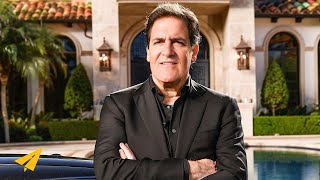
Mark Cuban says the best ideas make you think "why didn't I think of that?" He stresses differentiation and founder capability, and calls AI the next 100x inflection point for business. Start anywhere, learn continuously, and nail your product before scaling.
Chapters
I've always looked at it about putting myself in the shoes of another person and asking a simple question: can I help this person? Can my product help them? From the time I was 12 years old selling garbage bags door-to-door and just asking a simple question: do you use garbage bags? Do you need garbage bags? Well, let me save you some time. I'll bring them to your house and drop them off. To, you know, streaming, um, why do we need streaming when we have TV and radio? Well, you can't get access to your TV and radio everywhere you go, so we kind of break down geographic and physical barriers. And, you know, Cost Plus Drugs, you know, what's the product that we actually sell, we sell trust. In a simplistic approach, we buy drugs and sell drugs, but we add transparency to it. And bringing transparency to an industry is, is a differentiation, and it helps people.
Hey, it's Evan Carmichael, and I watch these videos every day because I need them for motivation. Being around successful entrepreneurs every morning helps me believe that I can do great things too. It's like your morning coffee but for your goals, kickstarting your day with a blast of positivity. So here is a challenge for you. Try watching one video every morning for the next 30 days, and let's find out together if they help you do great things too. If you're in, leave a hashtag #believe in the comments below so I can celebrate with you. So today, let's get some incredible motivation from the one and only Mark Cuban. Believe.
I guess a good question to ask, are you born with it or can you develop it? Oh, you can definitely develop it. Yeah. I mean, because selling garbage bags door to door was easy, right? It was like 12-year-old Mark going, hi, my name is Mark, do you use garbage bags? You know what the answer is going to be, right? Can I just drop them off for you, you know, once a week? Whenever you need them, you just call and I'll bring them down. Sure. So that was easy. But I'm sure you've been rejected. Oh yeah, of course. Not everybody says yes. What's your— what was your percentage? I don't remember, but it's pretty close to 100%. Oh, okay. So that's why you don't remember. Yeah, right. Because who's going to say no to a 12-year-old kid who's going to save them time and money? But, you know, Typically, my career where I've started companies, it's to do something that other people aren't doing, whether it was connecting PCs into local area networks and at MicroSolutions. And, you know, the salesmanship was walking into a company and just saying, look, talk to me and I can help you improve your productivity and your profitability. Is that important to you? And the answer is obviously always yes. And then the question is, can I do the job and can I do it cost-effectively? And so you didn't have to be a born salesperson to be able to ask those questions, but you have to be able to be willing to put in the time to learn that business. And that's the hardest part. I'm sure there's a skill thing to it too, in like how you solve the puzzle of communicating with the person and convincing them. Yeah, I mean, there's skill from the perspective that I read like a maniac. Then like now you can give me an example of any type of business and it'll take me 2 seconds to figure out how they make money and how I can make it more productive. And I think that's probably my biggest skill, being able to just drill down to what the actual need is of if any. And then, you know, from there being able to say, well, if this is what this company does and this is what their goal is, how can I introduce something new that they haven't seen before? And is that a business that I can create and make money from? Key to success is agility. You got to always be willing to learn because always— yeah, like my dad used to say, you don't live in the world you were born into, right? Right. I mean, what— especially now it's going so fast. Yeah. And like, iPhone was what, 2007? So 16. So if you're older than 16, you lived in a world with no iPhones, right? Right. And you no wireless broadband. So stuff always going to be changing, which means you've got to always be learning because if you're not learning, it doesn't matter. You're stuck. And that's where, you know, and if you're learning and you don't change, then it's on you for not being agile. Right. So like I tell curiosity, loving to learn and being agile. If you're those three things, you're going to find a way. You read something in the articles like the market's changing, streamers are spending less. What are we going to do? That's part of our, you know. Oh, I know that. I guess, you know, It's scary.
You get scared.
It's like, oh, shit. Like, I don't wanna leave the house. Like, what do I do now? What do I do now? That is the flip side. You have to power through those. But that's what makes a great entrepreneur great. Yeah. It's a competition, right? You know, sometimes they run a play you didn't expect them to play. Exactly. And so it's like, oh, I mean, I can't tell you how many times in my life that stomach is just dropped. Dropped. Dropped. But it doesn't stop that fear. It doesn't stop. Fear does not stop, right? 'Cause now you're at the next level. Yes. And you're always looking around going, okay, who's here now? And then you have that imposter syndrome, right? I still get that. It's just like, oh, look at the people in this room. Why am I here? Why me? And in sports, it's actually, it's hard, it's almost impossible, but it's still easier than business. Because there's always a new season. There's a new season. I was gonna be honest. Right? There's always a new season. And somebody ages out. Yes. Right? They're gone. Michael's still not playing, right? No one plays forever. But in business, there's still Warren Buffett doing his thing. McDonald's is still here, Google's still here, companies still here. Yes, and you're still competing. You know, and I have all these stupid sayings that I use to like motivate myself, but it's like when you run with the elephants, there's the quick and the dead, right? And so if you're agile and you're quick and you're learning and you're curious, you can beat the big guys, right? They're easier to beat. But once you get there, like you were saying, man, you look around and you just wait. Now I'm dealing with the real players, right? Now I'm with the big boys. Yeah, I'm with the big boys, right? And then even when you're the big boy sometimes, right, you don't want to be the big boy.
No.
The amount of change we're going to see over the next 5 years, 10 years will dwarf everything that's happened over the last 30. We went from automating pen and paper, right, with spreadsheets to connecting PCs into local area networks to, you know, connecting them, connecting people locally, locally, right, to connecting networks to get the internet. To getting the network effect of communicating people globally. But now we're introducing machine intel, you know, artificial intelligence, machine learning, deep learning, neural networks, etc. So, and what that enables is the automation of automation, right? And so the people who were writing software, particularly at the lower end, unless you are doing these advanced things, they're gone, right? The people that was writing itself and doing itself, right? It's just math programmer back in the day. So when I was writing code, It was the algorithms were if this, then that, right? X or whatever it may be, right? But you had to guess, right? You had to use your, your best instance. And then it got smarter and smarter and smarter, and libraries to do bigger and better things. All that is being automated. And so now you have to know how to use that stuff. So either software works for you or you work for software, and once the software takes over, you're gone, right? So unless you understand that, you don't understand the nature of work is changing, the nature of employment is going to change. And from a business, from a stock perspective, if you're in the Fortune 500, if you're an S&P 500 company, if you're in the Dow 30, right, if you're one of the bigger companies, you already know this. And in talking to a lot of these big companies, they know their workforce is, you know, and given the supply and demand of stocks, the supply is shrinking. Right. And the demand is going up just as the economy grows, that's probably good news for stocks over the long term, but it's bad news for employment and it's bad news for people who are disrupted.
Also, to make sure you're actually taking action after watching this video, I've designed a special free worksheet just for this video. The worksheet will highlight our favorite lessons from the video that will inspire you to remember what you learned today and actually apply them. The worksheet will also give you space to write down what your key takeaways are and your specific plan of action to make sure you're getting results. If you want the worksheet designed specifically for this video, absolutely for free, there's a link in the description below. Go click on it and start building the momentum in your life and your business.
I'll see you there. Love your life, right? You know, find the things that you can enjoy. Be curious. You don't have to have all the answers when you're 12, 15, I get emails from 13, 15-year-old kids, right? What do I do? What do I do? Right? You know, I feel like I'm being held back. I'm like, at 15, you feel like you're being held back? But just be curious because you don't have to have the answers. You don't have to know what you're going to be when you grow up. I'm a hardcore believer that everybody has something that they're really, really, really good at that could be world-class great. Every single human being on this planet. And the hard part is just finding what that is. And in some places is having resources to enable it. But be curious so you can find out what it is. I didn't take a technology, I took one technology class in college, Fortran programming, and I cheated on it, right? I mean, it wasn't until I got a job at Mellon Bank and I started learning how to program in this thing called REMUS, this scripting computing language, that I realized, oh, this is interesting to me and I like it. And that's what got me, you know, a job selling software. You know, going on from there, you just don't know what that's going to be until you go out and experience different things. So for anybody young out there listening, you know, enjoy your life, find things to smile about, be curious, read, watch, you know, expose yourself to as many different ideas as you can because something's gonna click at some point. You may be 15, you may be 25, you may be 55, but it can happen. Do you reach a point where, I mean, money-wise, it's what's another zero or another— It's not going to change anything. Yeah. So for you, it's just about personal interest or determination, ambition, or is part of you like, I'm good. Like, I don't need anything new or anything more. Being competitive, right? Business is the most competitive sport in the world. Right. You see it. Oh, who's coming in to be the next Barstool? How often do you hear that? Right. Pat McAfee doing his own thing. Now he's part of us. Fuck you, Pat. Fuck you now. There you go. Right. And so it's competitive. And so that's That's why you come to work every day, so it's competitive. But I'm in a position now where it's not about my next dollar. That's why we started CostPlusDrugs.com. We're literally fucking up the pharmacy industry. I mean, we're having meetings where I'm just going, oh, shit, if this works, we're changing people's lives.
Yeah, are you thinking legacy stuff?
I mean, you already have a sports legacy, but if you were to be known as the guy who made pharmaceuticals available at $37 a pill. The guy who changed the pharmaceutical industry, the guy who changed healthcare. Yeah, that's huge. Yeah, I mean, like, having people come up to me now, we're like, oh yeah, I was paying $6,000 a month because I lost my thing and I was going to have to sell my house, and now I pay $61. Jesus. You know, literally people crying on me, crying. Yeah, like, they might cry when the Mavs lose a game. Yeah, we won a championship. But like, yeah, every— not every day, but every week, um, I'm hearing from somebody about how you changed my life. And what exactly are you doing? Like, subsidizing it somehow? So CostPlusDrugs.com, what we do is when you go to our site, if you take— if you're having to get a prescription, right? So you put in Tadalafil, which is generic Cialis, right? And normally you were going to Hims or whatever and you were paying $1 a pill, right? And you need your generic Cialis. Like on our site, you can get 90 pills for, you know, $8 plus shipping and handling. And so what we'll do is we'll show you our cost which is, you know, let's say $6, $7. And we'll show you our markup, 15%. And then if you buy it mail order, it's, you know, an extra $10 for shipping and handling. And so you pay your $8 plus shipping and handling, but you know exactly what our cost is. And so we were the first ones to ever be transparent with drug pricing. As an entrepreneur, I wake up with that feeling every day that something's on the line, like it could all go wrong tomorrow. I kind of— that's a great part of it. You still like that? Oh, hell yeah. You get that. You get that. That juice in you, right, where you get so amped up, right? So you're preparing for something, you're learning, and then when you come to that point where you think you found something that gives you an edge, right? So good. That's when you just like— that's like making the game-winning shot, even though you haven't finished anything yet, right? You know, where it's just like you get so fired up and it's like, well, what motivates you to keep on going? It's like, I want to keep on kicking ass because that feeling of getting that juice going and getting excited, that never goes away. What's made you successful? I have all these stupid little sayings that I tell myself all the time, or tell employees, or whatever. And one of them is, the one thing in life that you can control is your effort. And I always work my ass off.
Always.
You know, first in, last out. I went 7 years when I started my first company without a vacation. I lived like I was broke because I was, and Obviously today I still do. Yeah, I don't know why me in terms of why I'm here and somebody else isn't, but I've always just tried to bust my ass and be smart about it and always keep learning and trying to improve. How often do you educate yourself a day? Like, is it like an hour? Every day, every minute. Everything I do is about learning more because that's the only way I can kick your ass. I'm not going to out-athletic you. It's not about my basketball IQ. It's about my business IQ and technology and business. And everything's always changing. 5 years ago, if someone would ask me about artificial intelligence, I wouldn't know shit. Yet AI is the most important part of technology and really business going forward. So, if I'm going to be an effective investor, an effective mentor, an effective operator of businesses, even with the Mavs, I gotta understand AI. 'Cause like with the Mavericks, when you talk about analytics, it's changed so dramatically even over the last 5 years, going from different types of things per and advanced RPM and all these different metrics for basketball to how do you implement artificial intelligence and pose estimation and computer vision and how do you understand all that stuff to make the right decisions for the Mavs? And so if I want to be in a position to make those decisions and not just ask somebody else to do it, I got to learn it. And so I put in hours, I do tutorials, I take little online classes, and it doesn't make me an expert. It's not like I'm going to say, you know, I could get a job if I needed to running AI or running tech for a big company. I couldn't, but I understand all the concepts and understand the issues and how to apply them to business. So, if you're going to be good at anything, you got to stay ahead of the game. And business is the ultimate sport. You know, I used to say it to Dirk and I always say it to Luka. You know, it's like, dude, you know, you play 48 minutes, you know, a 48-minute game, you practice a couple hours, you go home and you relax and you play, you know, you play Call of Duty. You know, business is 24/7. I'm going every day because there's some 16-year-old kid out there trying to kick my ass in one of my companies. And it ain't going to happen. I'm that competitive and I work that hard at learning to try to stay ahead of the game. When instead of just holding on to all of the stock that you got from Yahoo, you did what we call a collar, you collared it. Hedged, yeah. You hedged it. Tell everybody what went through your mind because that was a big bet with huge dollars. It was actually pretty simple. Hedging stock, Yahoo paid us in Yahoo stock. I was smart enough to recognize, I guess, that what goes up could go down. But it wasn't that big a step because I was worth more than $1 billion. How much did I need, right? I was telling everybody, just find me a way to hedge it so in the event, look, if the stock price goes up and I leave something on the table, so be it. But I like that B next to my name and I wanted to keep it. And so I sold calls, bought puts, and effectively hedged it so that by the time— so there was a period of time from when I'd done that and the internet stock market kept on going up. And I told people I'd hedged it, and Goldman Sachs, the company, had told people what I'd done. And I remember going on CNBC, the business channel, and And the guy going, "Boy, don't you feel stupid that Yahoo stock has kept on going up and you had this hedge?" And I'm like, "Yeah, I feel so stupid riding around my G5 that I bought online." And it was just like, not to sound like a crazy greedy capitalist, but yeah, it was like I just didn't want to screw it up. And so I hedged it and then the internet bubble burst and I was fully protected and actually even made a little bit more money. And, you know, the motto that— what I learned was you just don't need to be greedy. You know, I was very, very blessed. I was very fortunate. Look, I didn't plan the internet stock market to go up, and I didn't plan it to go down. So I was lucky in terms of scale, and I didn't want to screw it up. And so I hedged. Raising money always seems to be like the big thing to entrepreneurs coming in. Well, if I can only raise this money, raising money isn't an accomplishment, it's an obligation. The best equity is sweat equity. You know what you can do and what you— seriously, if you're putting in there, if you're putting in the sweat and you're putting in the time and you're not out there raising money and you're grinding it out and you're hustling, then you deserve to give yourselves a hand because that's what it's all about. Because if you don't do that, it's not going to work. Literally, I had a Fiat X1/9 that had a hole in the floorboard. I mean, you could tell I was living the high life, right? I mean, and I was putting changing oil every 60 miles and, you know, working as a bartender at night, what did I have to lose, right? You know, and so it wasn't like, oh man, you know, this is— I could lose all this. Um, and so, yeah, and so it was just like, you just go for it. Now, later on, after I'd had some success and we got back and we started AudioNet, which turned into broadcast.com, the, the math was different, the equations, you know, the calculus was different. It was Okay, I'm investing a lot of my saved money into this whole idea of netcasting, right, or internet broadcasting in early 1995 when people didn't even know what the internet was. That was all risk because I literally was putting everything that I had on the line for something people just laughed at me and said, wait, audio over the internet? You know, you can turn on the radio. You know, you know you can turn on a TV. Yeah, but you don't get it. No, that's just dumb.
All right.
You know, and so being able to overcome all that resistance because remember back then, A, you had to have a PC, B, you had to know what a modem was and install it, C, you had to know what the internet was, and then you had to download a TCP/IP client that worked over a modem and then connected to a browser that you probably didn't even know what it was or how to download it. It, and we had to take it on faith that all this was going to grow. The thing about no matter what you're doing, whether you're trying to be a bartender and learning drinks, whether you're a sales rep, whether you're a programmer, whether, you know, you're a consultant, whatever it may be, information now is available to everybody. And, you know, the common phrase, knowledge is power, and acquiring that knowledge is just effort. Going out and connecting to people and learning is just effort. And the one thing— I have all these stupid sayings, you know, but the one thing in life that you can control is your effort. And that's 99% of the time, that's the difference between being successful and not being successful. Who worked a little bit harder? When you walk into a room to sell something, or to be sold, or to try to understand something, or to to deal with, you know, a problem with your kids or whatever it may be, education, who worked harder? That's typically who worked harder at learning. That's typically going to be the person who has the advantage in the situation. Because we've all walked into situations where we weren't as prepared as we would have liked to be, or we thought we were and somebody knew more. That's the thing. The one thing in life each and every person in this room can control from now to evermore is your effort.
What is your one personal characteristic that has helped you most in your entrepreneurial journey?
I'd say 2. 1, I'm super competitive. I hate to lose. And 2, I'm relentless. I mean, I'm the guy, I mean, I remember my first company, MicroSolutions, I'd buy a bucket of ribs, and we did system integration, and I wrote software. I'd buy a bucket of ribs, and that ribs I would just eat as I would write software, and I'd be there, and all of a sudden, it'd be 36 hours later, you know, or I'd lose track of days just because I just get so focused and so involved in it. That's what I do, and, you know, I still, you know, I read the Haddock manual and learned a little bit about Pig Latin, and I just want to keep up, right? And so that's probably my biggest strength. You can fake it till you make it in a lot of areas, particularly if you're working for somebody else, but at the end of the day, if you're going to be great at something, you've got to make the effort to be great at something. Whether it's sports, whether it's physics, math, science, business, whatever it may be, you know, it's not just a natural skill. You've got, you've got to, to learn. And particularly if you're in the technology industry, because it changes every day. You know, when I got started, and, and, you know, after I got— I got it— I was a bartender when I first came to Dallas. Got into the PC industry, got fired, started my own company. But there, I learned early on that there was always something new, and most people didn't put in the time to learn it. It's like now with artificial intelligence. Lots of people talk about artificial intelligence. Lots of people talk about machine learning and neural networks. Not a lot of people are putting in the time to take classes or do the tutorials or to learn how to apply it to business. And That's what it takes, and, you know, that's just something I've always enjoyed, so I've been fortunate at that. You may not be a leader to anybody more than, you know, the 2 people who work for you, but it's still a responsibility, and I think as you gain more success, however you define that, being a leader becomes more and more important. How you define success becomes more and more important. What you're able to do and the impact you're able to have becomes more and more important. Where I am in my life at this point, it means trying to accomplish things that I've dreamed about but was never in a position to try to accomplish or succeed at. And that's what I'm trying to do now. I think people will always stop me and say, well, I want to start a business, what should I do? And if you don't know, you're not ready, right? You know, you've got to have something that you're good at. And if you're gonna be— if you're gonna do it, you got to be the best at it. Because I'll tell them, look, if I come in and compete with you, I'm gonna kick your ass. Are you ready to compete with me? Yeah, right. And you've got to work like there's someone working 24 hours a day to take it away from you. I always say, you know, for every one of my businesses, I said, what would I do to kick my own ass? You're right. So whatever business you have, there's somebody trying to put you out of business. There's somebody trying to, to take a bite out of your business. Business, and it's better for you to figure out how they're going to do it rather than they do it. Um, and so yeah, that's being paranoid. And so you have to be paranoid. You have to anticipate other people's next moves, and you can't ever, you know, downplay the competition. You know, I was telling— I was at a business plan competition this morning for— at a college, and they were kind of being dismissive of the competition. And so you can't ever do that. You know, they're out there trying to take you down, and They're not just going to sit still. And if you're good, really, really good, you're going to inspire them to work even harder, faster, better. And so you have to be, you know, very self-aware of what you're good at and what other people are good at. And, you know, a healthy dose of paranoia makes a big difference. I mean, it's very helpful. Sales cures all. Lots of companies come in and say, I have a great idea, or I have a company and we've got some sales, but we only need to do this and we only need to do that. And you talk to them and you talk to the entrepreneur, and I'm like, why aren't you selling? This is your whole company. There's never been a company in the history of companies to survive without sales. And so I think, you know, now as more and more people watch Shark Tank, they're seeing it. But if you can't sell, if it's your company and you can't sell, you're not going to be in business long, particularly when you're starting up and it's just you. Sales is not something you can give to somebody else and say, okay, I'm just gonna hire salespeople. Michael Humecki, remember that guy I told you about that fired me for handing him the check? He was the guy who wouldn't— he was the CEO and owner. He would never sell. He thought he could just bring us in and sell it, and the company failed afterwards. You've got to sell. What is it that drives you? And if you understand that, then deciding to sell or not to sell is easy.
What is it for Mark Cuban today? Is it being the owner of the Mavericks? Is it investing? Is it being in the moment on Shark Tank? Which one of those is the moment you most enjoy?
I mean, I'd say my family now, because I put off a family forever. I mean, you know, having my 10-year-old come home and talk about starting companies and stuff like that. My 4-year-old, for the first time, literally we watched a Mavs game last week, and he's high-fiving me. And before that, he's like, Danny, I don't like basketball. But now he was into it. That's number one. One, but after that, competing. You know, like I mentioned earlier, I just love to compete. And two, what the Shark Tank thing— again, I'll say it, I can't say it enough times— it's the fact that I truly, truly am part of the solution to letting people know that anybody with a little bit of work, a little bit of help, a little bit of vision can do anything. Takes luck. It's not going to happen to everybody, right? Not everybody has the resources. Businesses, but if they watch Shark Tank, and there's just one thing that they learn, or just inspires them to say, okay, if this person from Iowa can go on Shark Tank, and I like that idea, or they can get an investment, or even if they don't get investment, they can create a business that's successful, whether they're 15 years old, whether they're 80 years old, whatever it is, if they can do it, I can do it. And if I can be part of that, how fucking cool is that?
It's pretty rad.
Yeah, so that turns me on.
Big conversation in San Francisco these days. I don't know if you saw Tom Perkins, former venture capitalist, saying all kinds of crazy shit. When you hear rich people saying how persecuted they are and how, you know, all this kind of stuff, and you see the income disparity— I know you work with a lot of— on a lot of causes for people who are suffering. What did you think of those comments? And what do you think about polarization of wealth in society, the income gap.
So two things. One, I said, dude, I called him up, said, dude, come on, we had the billionaires meeting and we said not to say that. I'm just kidding.
He was very clear to say, I am not a billionaire. He owns a $100 million boat, but he's not a billionaire.
And can I also tell you that I thought when I became worth billions of dollars, I'd get a call from the Trilateral Commission and the have not called me and I'm pissed. So if any of you are out there— no Illuminati, no Illuminati.
All the billionaires are in it but you.
Come on, man, it's just you, Mark.
The Illuminati is meeting right now, they just left you out.
I hate when that happens. It's always another velvet rope. Um, but income disparity is a problem. Michael Jordan had the body, he had the temperament of a champion, so he goes into sports. Do you think— they call that bounded rationality. Instead of saying I could be every possible thing in the world, you kind of limit it and say, all right, I'm more of a math guy, more of a people person, and then you try to find your destiny within that? Well, I think they go hand in hand, right? Because the type of person you are, you know, kind of points to the things you're good at. Are you 12? You're not gonna know. Are you 16? You're not gonna know. If you're 18, maybe if you have a special talent, yeah, right? You know, you can throw a baseball 100 miles an hour, you can sing, and you're Your voice is incredible. You're a concert pianist. You're a chess grandmaster. If you have a specific skill set or talent that just immediately propels you to the top, yeah, you want to follow that. But I remember having a list. I still have it. When I graduated from college, I was getting ready to graduate, and all the different industries that I thought I might want to partake in. When you find something you're good at, go for it. And I also always say it's not about passion. Everybody's got passion for something, right? Don't follow your passions, follow your efforts. Because people say, you know, I was passionate to play baseball, I was passionate to play basketball. It doesn't mean all of a sudden I was going to be good enough. Yeah, but I found myself spending— being really curious about business, being really curious about technology, and that curiosity is really what drove me. And I think particularly if you're young today, curiosity is great. Always learning and trying to find new things and being curious about new things because that's what leads you to that path. Trying to figure out in advance. Yeah, that's hard because you don't know what you don't know. You have lived your life as an iconoclast, and in a way that's a template for other people, but in a way it isn't. So in other words, how much— you've got an ordinary person, ordinary man or woman— how much of an iconoclast could you or should you be like Mark Cuban? Oh, I don't care. Just, you should just be yourself, right? I mean, I take pride Behind the fact that I didn't give a shit what anybody thought or said, I was just going to be myself. And, you know, I'm my dad's son, I'm my mom's son, I'm my brother's brother, you know, I'm Alexis, Alyssa, and Jake's father, Tiffany's husband. This, you know, I just try to do the best like everybody else. I mean, I've been blessed, you know, like I say all the time, I'm the luckiest guy in the world. And I just try not to take it for granted. I try to enjoy every minute. And I think now as I've gotten a little bit older, I try to give a little bit more back than I have before and, and try to help more people. And I, you know, in terms of whatever, if anybody else finds themselves in my position, just enjoy the moment, enjoy every minute of it. I mean, I guess my question is, are you a role model for people in society? I don't know. I mean, I never thought of it. I mean, it's not something I try to be. I just try to be myself, you know. I just try to to help where I can, do what I can, be a good dad. And, you know, I'm not trying to be something for somebody else, just myself. I'd like to talk a little bit about failure. You know, you've had some. And famously, I think you've been— were fired from your— from early jobs, right, which forced you to be an entrepreneur. Were there any failures that, you know, in hindsight were just super valuable and like set you on the path? Yeah. Yeah. All of them. Yeah. I mean, I learned more from the places I got fired from and the places I worked that I hated than I did from the places I liked. You know, I learned what not to do. You know, I got fired because I went to close a sale instead of opening up a retail store and sweeping the floor, yada yada, thinking that when I brought back a check from a closed deal, he would be all excited and he fired me. I learned from that that sales cures all. That company was out of business not much later. And it just taught me so many lessons about how to deal with things, how to treat people, what to focus on. And that led to me getting started and also taught me that when I was living 6 guys in a 3-bedroom apartment, I had nothing to lose. Nothing. Right? And so, being young was a perfect time time to start a business because what was my downside? You know, we take in a 7th roommate. It's like, and so, you know, there's so much I learned from the places where things on the surface seemed to go wrong, but I learned what not to do. And sometimes that's just as important as what you do do. You've got to go to AFWERX to see our AFWERX team. You just got to meet some of our Spark Tank finalists. What, what advice would you give them on innovation and and how to take it forward? I mean, learn from what you saw up here. I mean, the brilliance of each and every one of those ideas is that someone saw a problem. And let me add, all of us have had ideas that we thought were gonna be the next great thing, right? We get that feeling in our stomach, oh, this is gonna be amazing, and then you talk about it with your friends or who you work with and they say, what a great idea, and then most of us stop. What you saw up here, what made it so compelling is that they didn't stop. There weren't complicated solutions, right? I mean, some of them were advanced technologically or they were super smart, but they were simple in that they just took basic problems and they tried to solve them. There's nothing— that's, that's something each and every one of us can do. And so the best advice that I can give you is do it. You know, when you have that idea, when you have that opportunity, Do it because that's what separates the people that— just separates the entrepreneurs or the intrapreneurs from everybody else. They just took that first step. Don't be afraid. Take that first step. What's the worst thing that can happen? Innovate. Be agile because we're all going through a reset. And, you know, like I say all the time, we're going to look back in 10, 15 years and there's going to be 5, 10, 20, 50 companies that are world-class game changers that were created because of this pandemic. Why can't it be you? Why can't it be your company? Why can't you change the game? You know your competitors are struggling as well, and even if you're competing with larger companies who maybe can work on smaller margins, or maybe you can work on smaller margins because you're lean and mean, they're worried, they're worried about protecting their legacy businesses. You know, they can't be as agile as a small business can, and that's the other point I'm making.
Innovate.
And that innovation doesn't have to come from the top. Again, when you're talking to your customers, when you're talking, you know, when you're talking to your employees who may be talking more to your customers, ask them for ideas on how you would do things differently. Because every CEO, every entrepreneur goes through that thought process prior to all this where they say, if I only had the time, I would do A, B, or C. If I only had the time, I would redo my marketing materials, my website, whatever. If I only had the time, I would redo my supply chain. Or if I only had the time, I have all these new ideas I'd like to try. Now you have the time. Now's the time to do it. Now's the time to be agile. Now's the time to innovate. You know, one of my favorite sayings is when you run with the elephants, there's the quick and the dead. And now you got to be really, really quick because the elephants can't run at all. They can't dance. And so this is a unique time, a unique opportunity. Got to be great at something. It's not just about being good and doing your job and getting through the day and not creating any problems. It's about what can you be great at? And that's where the effort comes in. Now you're not going to just be able to pick and choose and be great at it. At it, I couldn't be great at basketball or hockey or a lot of different things, right? So you gotta try as many different things, 'cause like I said before, doesn't matter how many times you fail, you just gotta be right one time. That's it, one time. So if you're busting your ass in the mailroom and that ain't it, what are you doing at night? What are you doing the weekends? What can you make that you can sell to other people? What is it that you can buy that you can sell to other people? What is it you can sell online? What is it that— what service that you can offer? Can you go and teach Alexa how to do skills and go door-to-door? Whatever it is, you've got to find that one thing you can be great at, build a business around that, bust your ass, and it's possible. Do you have a favorite Shark Tank behind-the-scenes story? Like, is there some other— some of them? Yeah, there's so many of them. Um, most of the time, so Shark Tank, when you come on, they might last anywhere from 30 minutes 10 minutes for a stupid deal to 60 to 90 minutes. So in real time, they go on forever and a lot gets edited out. And there's just times, particularly Lori, where she'll say something and didn't realize that it's completely inappropriate. And so, you know, because she just doesn't think that way. And so it would be a complete double entendre. And so one time, she'll kill me for saying this. So one time we had, a vitamin company, and I hate vitamin companies on Shark Tank because they make all these claims, any supplements, right? And so they came on and it was spray, and the guy's sitting there and he goes, you know, a lot of people have problems swallowing vitamins, pills, right? So we created this, this spray. She goes, I have no problem swallowing. And we— You know, guys on the set. And then, you know, her husband's back in the back laughing. And then it dawned on her what she had just said. So just those types of moments, or Barbara, you know, or Kevin too. Kevin, you know, we like to pick on Kevin a lot because he's kind of a one-trick pony with royalties and licensing, you know. But there's times when he's got a really great heart and he tells great stories. You were a successful entrepreneur before you bought the Maverick and become an owner. What common element do you see in running a successful business versus running a successful sports team? Effort. You know, I've always said the one thing in life you can control is your effort. A lot of people, like we were just saying, a lot of people like to talk and don't like to do the work. I think salesmanship. There's never been a company that succeeded that doesn't have sales. You have to have a product that people want. You have to be nice to your customers. I think nice is underrated. I wasn't always this way, but I think over the last 10, 12 years, I've realized that just by being nice, you get a lot better results and people tend to want to work with you a whole lot more. So I've recognized that sometimes a smile and just chilling out a little bit goes a long way. One of the attitudes I got from my dad was, when you're older and you look back at your life, What would be the things that you remember? And think about that when you say yes or no to doing something that's really bizarre, really interesting. And so I've tried to take that attitude, whether it was, you know, buying the Mavs or doing Dancing with the Stars, or if you really want to see me embarrass myself— and look, I have no problem embarrassing myself, as all my friends will tell you— but if it's something different and it's just something bizarre and interesting, I'll do it. So if you turn to TNT tonight, there's a show called Drop the Mic, and you'll see me rap. And I am the world's worst rapper, but it was so much fun. And so, you know, when I'm 90 years old and I look back and say, should I have done Drop the Mic and rapped and looked like an idiot? Hell yes. Hell yes, right? Because I got this unique experience where this professional rapper taught me how to rap and they gave me all this stuff and I got to, you know, battle with Rusev, this guy who wrestles for WWE, who's like 5'8" and 400 pounds of muscle and, you know, who threatened to kick my ass in our little battle. So it was fun. Let's just say if we put 10 guys here, you interview them, okay? You could, within a 5-10 minute interview, say this dude's not going to make it as an entrepreneur. Could you pretty much know that? You know, I'm not very good at interviewing. The issue is my interview skills. Those more than— really? Yeah, I'm horrible at it. Shark Tank interviewing? Well, yeah, it is, but I get to do due diligence after the fact, right? So I get to play my hunches, but I get to check. Yeah, I mean, I can, I can typically tell, right? I can tell, um, but by, um, their passion. I can tell by their focus. I can tell by their preparation. You know, there's a whole realm of things in any business here. You know, here's, here's the business you're in, and here's There's 1,000 things that influence whether or not you're going to be successful. And really to me, by, you know, through my experience in businesses, I can put myself in his position and say, okay, here are 900 of the 1,000 things he has to be aware of, and then go through and ask. And by how many of those or her issues they've been able to address already, that kind of gives me a sense of how hard they're willing to work, you know, and I can tell by the questions they ask me. So all I have to do is say, okay, What do you want to know? And, you know, when they start saying, what should I do? They ask you. Yeah. Yeah. And that's fine. Right. And I want them to ask questions. But, you know, people like to say, you know, the only stupid questions are the ones you don't ask. And that's not right. Right. Because the questions you ask tell everybody, tell me, tell whoever more about you than anything else you do. Because in particular, it tells me about your preparation. If you ask me questions about just basic things that you should have known and you should have down to a science, that's going to disqualify you almost more than anything. In terms of content, there's never too much content. It is just because what we want and who we are and how we consume content changes every day through our experiences. The challenge of content isn't can you make it or is there too much. The challenge of content, whether it's business content, the proposals you make, what you put on on your website, how you connect to people, is can you tell a good story? You know, and now storytelling has evolved. It used to be we all congregated around the TV and there were 250 channels, but you know, it was the best alternative to boredom. You come home, you're worn out, you sit there, one hand goes in the pants, the other hand goes on the beer, and you watch TV. Now all the content comes to us no matter where we wherever we are, there's, there's a source of content. And who we are and how old we are and our experiences, that defines what we like. Just go to Twitch. Like, I have a 9-year-old son who plays Fortnite all day, every day, if we would let him, right? And he'll watch Ninja. Now Ninja is a— I don't know if you all know who he is. He's a big guy on Twitch that streams Fortnite games. And he came to the Mavs practice facility one day because we got to be friends just through random sources. He was a bigger star than when Tom Hanks came to visit. I mean, and this is a guy on Twitch. Now, Twitch is unlimited options of content related to gaming and other things, and they're expanding. YouTube, obviously, just unlimited content, and it's not like YouTube's struggling. Where the takeaway from all this is when there's so many options for content, as business people, you have to figure out how to connect with people. You have to know your audience, and you have to know how to tell a story. And honestly, that's not my strength. I literally— and I forget the name of the book, I'd have to look at my phone— I'm reading a book on storytelling because that's how people connect. We have so many choices. If you can't absorb us with something that engages us, a story, and simplify it into a story that we want to connect with, the next person is going to be who come— the next person is going to come in and take your business. My best mistake, that's a great question. Probably buying the Mavs. Everybody told me I was an idiot. And why? Just because we were the worst team in all professional sports, and that's what everybody said. And I had paid the highest price for a sports team up until that point, and everybody said I was a moron. The second thing, the other time was after When we sold to Yahoo, it was for 28 million shares of stock, and I immediately collared my stock to protect it on the downside. Now, this was not when the internet stock market was cratering. It was still going up, right? And so I collared my stock, meaning I didn't really share in much of the gains going up, and there was a limit to the gains I shared. And Yahoo stock immediately went up 30%, and I remember going on CNBC, and they said, don't you feel bad about losing? You know, it's gone up another 80 points and you'd be worth another $700 million. And I was like, it's tough to feel bad when you're sitting on your G5 watching CNBC. But yeah, so collaring my stock, everybody thought was a big mistake because they thought the market was going to keep on going up, and that's not how it turned out. If you're gonna have and run a business, if you don't understand accounting, you're already behind the 8-ball. Can't you hire a guy that knows? But then they still have to communicate to you. Right? I mean, there's people that don't understand the concept of, you know, the difference between profits and cash. You know, oh, your accountant might tell you you're profitable, but your cash is going down, you know, not understanding the breakdown. And when you don't— you think you need college to learn that? Yeah, I think you do, right? Because it may not— for some people, look, if you're so self-motivated that you can take an online course in accounting and teach yourself everything everything, you're way ahead of the game anyways, but most people aren't. And I'm not saying you have to go to Indiana, I'm not saying go to an expensive school. I don't care if you go to a community college and take accounting and spend $99 for the class. Just, you know, spending the money forces you to be more obligated to do it, but accounting, finance, to a lesser extent marketing, sales if the school offers that, these are all the, that's the language of business. And so, while it's possible to teach yourself these things. And while it's possible to hire them, when you're starting your own company, you don't want to have to spend money hiring an accountant, right? You're already probably going to have to hire a lawyer to set up your— well, let me take that back. If you've gone through all these classes, you probably don't have to hire a lawyer to incorporate, right? You can probably figure it out yourself. And so, your cost of opening up a business drops. But even more important than all that, that's the blocking and tackling, that's the language of business. The thing I learned at Indiana that that was more important than anything else, I learned how to learn. And learning became far more important to me because the one certainty in business is that it's always gonna be changing. If you're not always learning, to this minute, if I'm not continuously learning, if I'm not just absorbing as much as I can absorb, someone else is gonna kick my ass.
What are you looking for when you get pitched? Like top to, I mean, you get pitched on television, you get pitched in your real life, you clearly like answer your DMs.
I get pitched in the restaurants and the restrooms.
Bathroom, yeah.
Um, I look for something that makes me think, why didn't I think of that? You know, or it makes me think, oh my goodness, that's a good idea. And then the follow-up questions are, you know, is it differentiated enough? Can they protect it? Um, what's the unique element? And then the secondary part to that— or not even secondary, the, the other part of it is, you know, how good an entrepreneur is it, and can I help them? And so once you get— once I get past those initial hurdles, whether it's Shark Tank or just people emailing me. Literally, I've invested well over $100 million in the companies for people I've never met to this day. Interesting. My biggest regret was I wasn't as nice as I should have been. In my mind, I didn't suffer any fools. If I didn't think you were using common sense, then I would get annoyed. And no one liked to be around me when I was annoyed. Annoyed. And for me, it was just like, faster, faster, faster, faster. The train's speeding up. How fast can we go? That was a huge regret that I would do over again. I think with the Mavericks, when we had our problem with sexual harassment and I wasn't there to oversee it— by that point in time, I wasn't— like today, I didn't go into the office ever. And so I missed it, and it hurt a lot of people, and, and that was awful. So I'd say, you know, those two things are probably the lowlights of my career. The best money I ever spent was when I bought a lifetime pass on American Airlines right after I sold my first company. I got really, really inebriated with a bunch of my really good friends and they were all like, what are you gonna do? What are you gonna do? What are you gonna do? And, you know, I'm not a fancy guy, as you can tell. You know, I'm not into this and that, but I like to travel. I like to have fun. And I bought a lifetime pass on American Airlines for $125,000, which let me travel 100,000 miles, I think, a year for the rest of my life. So if today, if all of a sudden I turn 20 years old, with $20 in my pocket in this crazy year 2020, could I be successful again? The answer is yes, and I'll tell you exactly what I would do. I'd get any job, any job at all that allows me to pay my bills. Doesn't matter what it is because now I know I can learn from anything that I do. Number 2, now that I have a little bit of a tech background or a lot tech background, I teach myself to do Amazon Alexa and Google Google Home skill. A lot of people have Amazon Alexa in particular, and they know how to use it generically, but they don't know how customizable it is. So I would, just like I did back in the days when I started MicroSolutions, that I went to all these different retail stores handing out my business cards saying, if you ever have questions or need help with PCs and computers, I'm your guy. I would do the same thing now. I think now I've really evolved some of my focus to trying to help disadvantaged entrepreneurs, people who have less opportunity. I just invested with a woman, Arlen Hamilton, who we together created a little million-dollar fund where she's going out and finding 10 businesses run by people of color or disadvantaged LGBTQ type communities and just opening doors. Because I think my, my experience applies to anybody, right? Any entrepreneur, no matter what you're trying to sell. And I also I also think that it's a great business opportunity simply because the markets that they want to sell to are underserved. There just aren't as many entrepreneurs, so there's more opportunity. And so I think it makes great business sense as well. I focus on things that are AI-driven, artificial intelligence-driven, whether it's machine learning, deep learning, neural networks, medical applications. But within AI, AI is a buzzword. Word that everybody's using right now, you know. Every— and, and to that point, you know, we as old guys, we go back and it's like 1995, we talk about the internet. And I would say to people back in 1995, look, if you don't understand the internet, you're not going to be able to do business. And now that's just blocking and tackling, it seems obvious. Back then it wasn't, right? I could even take you further back to my first company. You know, what we did was a company called Micro Solutions, and we did low local area networks and wide area networks. And I used to walk into companies and say, you're going to have to hook these PCs together at some point. That'll make you more productive, more effective, you know, give you a competitive advantage. And people are like, now I just carry this floppy from this PC to that PC. Yeah, okay. But today we're at the same type of inflection point with artificial intelligence. You don't have to be an expert and be able to to put together your own neural network. You know, you don't have to know what weights and biases are. But, but you have to have more than just a cursory understanding. Just like you have to know the difference between, you know, different types of websites, and you have to understand e-commerce if you're in e-commerce. You have to have a cursory understanding of how apps work. You're going to have to have at least, if not more, cursory understanding of artificial intelligence. Because it will change everything we do. And if the internet was 10x in terms of change to business, artificial intelligence will be 100x or more. There's going to be a disruption and change in the types of jobs that's going to impact your customers, that's going to impact your businesses, that's going to impact the future of business. And so I can't— I don't want to be, you know, I want to be as clear and as forceful as I possibly can, because as fellow entrepreneurs, we always have to look for an edge. We always have to understand how our industry's changing. We always have to understand not only how we differentiate ourselves and our companies, but you always— I always want to know who can kick my ass, right? In all my businesses, who can kick my ass, and can I kick my own ass first? Because if you can disrupt yourself first, you're the person who could otherwise otherwise do it is not going to do it, and you can compete and be successful. So pay attention to AI. It's important. I mean, look, if you go to my house, right next to my bed there's a book, Machine Learning for Dummies. If you go into my bathroom, there's Deep Neural Networks for Dummies, right? If you go on, there's a something for dummies in every room of my house, you know. That can go two ways, I know, but I'm just telling you, put the time— I mean, I've taken, you know, I can't even tell you how many hours now I spend every week, if not daily, working. Like, I'll go into Amazon AWS and go through their machine learning tutorials. Don't think to yourself, I'm not technical enough, or I'm not going to get this, or I don't get into this, or it's too much. Try it. Get as far as you can, because it's like doing a basic website and a little bit of HTML. Just having done that, you feel smarter and you feel a little bit more confident about this. You know, I don't want to be an alarmist, but I'm trying to scare the hell out of you because it's important. We just sold a company out of Atlanta that went on Shark Tank, Cycloramic. They had the iPhone that used the buzzer and you ran this app on it and it just turned around and did a panoramic version of the phone. Of panoramic pictures. Well, they changed the format of the iPhone, which is great. This is a great lesson for entrepreneurs, right? So this guy came in with this really cool app, worked with an iPhone 5, and it just turned around and take panoramic pictures and then stitch them together, and it was a cool picture. Well, not— so I give him $250,000, I think, for 20% of the company or 25% of the company. Not 4 months later, Apple Apple changes the iPhone, and it's got this like rounded thing underneath, and we're like, oh, what's— what are we going to do? But the guy was smart. And one of the things I always look for, for companies coming in, is what's your unique advantage? What is the one thing you have that differentiates you from other companies? And for this guy, the product was interesting, but, you know, as I said on the show, the ability to, to program video and use what became computer vision was a unique skill that was hard to find. And so we worked with him and actually brought it— worked with him to bring in another CEO, and they used that same technology to be able to scan cars. So now if you go to websites like Carvana to buy a car and you see how you can turn the car around just right there, that started with their software. And the guy's name His name is Bruno. So Bruno, we just sold his company for $22.5 million a couple weeks ago. And so I walked away with, you know, 25% of that. So I was like, yeah, Shark Tank. Amazon's the world's greatest startup. Netflix is the world's greatest next one. Which makes it harder to innovate. If you were Mark Cuban— I think you can still kick their ass. Starting all over again, I still think you can kick their ass, right? You do? Yes. Because I think on the margin, you can't, even at that scale, even with all the AI that they both use, there's still on the margin places to make money where they're inefficient. Because it's still vertical, and it still takes time to get to the edges. And so, I think there's a lot of opportunities for small companies to come in. And you're seeing a lot of that now. Like, you see growth hacks on Kickstarter. Well, I have one of my companies, a Shark Tank company, that all they do, their whole entire business now, is just releasing products on Kickstarter, delivering them, and then going on to the next product. And it's just a pure growth hack. There's other companies that they measure what's selling the best on Amazon. And then they go out and buy those products, brand them, and sell just on Amazon. And by Amazon, it's just its own little ecosystem where kids are— I tried to give this kid some money, literally, because he was so good at it. Didn't need it. He was already making a million dollars a year working an hour a day just by tracking Amazon. Really? Yeah. And it's just— so you can be smart because they're so big. We gave it a good go, right, from '01 to '08. We raised it back up, but it was— they did slip on a big banana peel, purple and yellow banana peel for Yahoo, for you that know their colors. That was another thing. Wait, so we sell to them, right? And our office is in Dallas, and the way we ran our business, it was just like lean and mean, right? You invest in your product, you invest in your customers, you invest in your people, people, and we had open offices. You don't need fancy stuff. They immediately came down and just redid all the furniture in purple and gold. I'm like, it's cool, that's my high school's colors, but why are we spending this money? Got a whole new office, a whole new building. I'm just like, why are we spending this money? One of the things in my rules when I look at companies to invest in, if someone walks in with swag, Here's my coffee mug with my logo. Here's your t-shirt with my logo. I don't see anybody wearing a t-shirt with a startup's logo. Do you? No. Would you wear some other startup's logo polo shirt? Hell no! Hell no, right? It's just a waste of money. You know, put your money where you're able to differentiate yourself and add value that separates yourself so so you can get ahead. Don't waste it.
People often ask me what it takes to start a business. What is the key ingredient? How do I start the business and how do we grow to about $20 million in sales so quickly? They all come up with some new whiz-bang idea. They're going to invent the better mousetrap. They're going to come up with new software, new hardware. More often than not, it seems like they've spent their millions before they've they thought through their idea. But when we talk about new companies and growth and success, there really is only one common ingredient across any type of business, whether it's oil or computers or software or anything. And that key ingredient is customers. Without customers, whether you're starting a business, running a business, expanding a business, you don't have a business. There is no business. Customers are the key ingredient to get those profits. You got to have the customers. You got to have happy customers. That's the bottom line. You know, MicroSolutions, we've been going and growing, and it's impossible not to have growing pains. It's impossible not to make mistakes. We screw up all the time. And you know, it doesn't bother me as president if I have an employee who just didn't do something right. You just made a mistake. It's good. Because if you're not making mistakes, you're not trying hard enough. You know, these things I'm saying, they're not unique. They're not things that I just thought up in some Miracle Growth. You know, things when I talk to people in our company, when I talk to people about our company, I never have a unique thought. I can't remember. I don't know that I ever did. I can't remember if I ever will or don't expect ever to. There's no magic formulas to customer service. There's no magic formulas to doing things right. These sayings that you hear me say are things that I've read elsewhere and just regurgitate back. But how many people do them? You know, we all know the Golden Rule: Do unto others as you would have them do unto you. And that's nice, you know, but do you do it? But even more importantly than the Golden Rule, what about the Lover's Rule? Do unto others as you would love to have them do unto you. That's what we try to stress at MicroSolutions. That's what we try to use to differentiate ourselves. Not just to get by, because everybody is going to be nice. You know, when you invite someone into your house that is an acquaintance that you like, okay, you're going to offer them coffee. You're going to offer them a doughnut. And that's really what you expect, you know, if you went to their house. Because you're just acquaintances. But when you leave their house, it was nice. If you go back, fine. If you don't go back, fine. That's the way customers look at businesses.
If I go back, fine.
If I don't go back, fine. You know, they say that 80% of the people who have a problem tell at least 10 people. Only 10% of the people who had a good experience tell anybody. It's the same way when you go to visit an acquaintance. When people come to try to do business with MicroSolutions, I hope and I pray and I try to convey to each and every one of our people that we give them a reason to want to come back. We give them a reason to do a good morning rap to say, "Okay, let's do business with MicroSolutions." You've got to really concentrate to do unto others as you would love to have them do unto you.
We all are entrepreneurs or wonder if we're entrepreneurs at heart. You know, we all have that idea inside of us. We've all been through it. "Oh, I got this idea. It's a great idea." You know, and you get all excited. You get that feeling in your stomach, right? And then you go to Google and you Google, there's nobody else doing this. Ah, then you call your friends, you go, what do you think? What do you think? Oh, that is really cool. I'd buy one, you know? And then most people stop, you know, what's for dinner? But some people, they found their way to turn those into companies and they found their way onto Shark Tank. And we got to see examples of people from any little town in any, you know, anywhere in the country with backgrounds that weren't from some big Ivy League school. Maybe you didn't go to college at all. Maybe it was their last dollar and they started it up and they were desperate to get an investment, but they started it. And we showed examples of people who were willing to take that first step and start that company and where it could go. And I think that really, and to this day, really excites people and encourages them. And really shows them that there can be an upside. And on the flip side, you know, there can be failure too. And so you have to be realistic about what can happen. When people get some momentum, they want to all of a sudden go big, right? Particularly, that's kind of a dot-com thing. Let's buy our customers, raise a ton of money. Well, one of my buddies, Howard Tolman, says it best. He goes, you got to nail it before you scale it. If your company doesn't work, making it big Big won't solve your problems. It'll just add to your problems. We're going to get to— in my opinion, we're going to get to a point where decisions are made individually on arbitrage of time. Right? We'll value our time. You'll value your time. That's the whole Uber economy, right? Where people say, what's it worth? We do that now. We do. What's it worth for me versus I can hire somebody, right? And that somebody can be for 10 minutes. That somebody can be for 10 hours. It could be for 2 seconds. Like, a couple of my companies, we have scripts now for Mechanical Turk on Amazon where it might cost us a penny to label things. Really? Oh, it's crazy, right? I invested in the company because the guy was a computer vision genius. All he does is hand puppets. So you do like this, you know, hand puppets like you do with your kids when you were little, right? Right. Only it digitizes it using AI because he has to write computer vision AI scripts that say, okay, this is a knuckle, here's a second knuckle, here's the thumb, right? And I'm going to recognize— Shows it spatially. Right. And all that stuff is advanced. It's computer vision. But it all goes back to hiring people based off the value of their time. When I make decisions, build versus buy, robotics are now part of the decision. It's what's the most cost-effective way? What's going to give me the best return? What's going to be the path of least resistance for me effectively? And now, it's not just, OK, who can I hire? It's what can I hire? I dropped out of high school, so I wanted to take business, and the high school I went to didn't offer any business classes unless I was a senior in high school. And I'm like, come on, I mean, I'm trying to be ambitious, and they're like, no. And so I took some classes at night at the University of Pittsburgh, and then just since I was enrolled at Pitt, I just stopped going to class in high school and kept on going to class at Pitt, and they allowed me to transfer back my credits. Credits to graduate from high school. So I officially was a high school dropout until I rectified that. When I talk to entrepreneurs, you have to make a decision what's important to you. Time to go out and do whatever, be whoever you are, help whoever you want to help, raise your family, whatever it is. Or do you want to create a world-class company? What is your goal? And you have to understand your goals. And there should always be a price, you know, if there's a— if it is about selling at some point, what's the price? I just Conversations with two of my companies today. Like, you always have to have a price in mind, and then you put that price out there because someone might say yes.
So always be open to it.
Well, just always know why you're there, right? What is it that causes you to work 24 hours a day? What is it that causes you to dream about this company? What is it that gets you so fired up you can't think about anything else? What is it just that you just say, this is me, right? I am— you know, what is it that What is it that drives you? And if you understand that, then deciding to sell or not to sell is easy. One time, you know, as you know, I went to Indiana, and in Dallas in the mid-'90s, you know, when we had a good basketball team, we literally would, when we wanted to listen to our big games like Indiana-Purdue, go Hoosiers, we would call somebody in Bloomington who would put a radio next to a speakerphone and dial us, and we'd sit on the other side listening over a speakerphone, drinking our beer and whipping it up or doing whatever. And the internet was just starting to happen, and now I'm a tech geek and I'm like into all of it. And we're like, there's got to be a better way to do this. And so one of my buddies from Indiana, Todd Wagner, was like, look, we've been thinking about this. And I'm like, no, I'll figure it out. I'm a networking guy now. And so So we looked for ways to stream Indiana basketball. We called it netcasting back then, over the brand new internet. And so I went out and bought a Packard Bell 90 MHz computer and an ISDN line and downloaded all the software. And I said, you know what, I'm going to figure it out. And lo and behold, by, oh golly, early 1995, we had figured out a way to— we took these 8-hour VCRs and connected it to a local radio station, record them, we'd bring them back, go through this process called encoding, and put it up on this website we called AudioNet. And then I'd go to any online forum— AOL, Prodigy, CompuServe, UUNET, whatever it was, or Usenet— and I'd like— if you're interested interested in Dallas sports at all, because we hadn't gotten to Indiana yet, if you're interested in Dallas sports, go to this website, AudioNet. And back then you had a dial-up modem, you had to download this software called TCP/IP, and you had to have software from your internet provider, which meant that so few people knew how to use it, we had no idea if it would work or not. But all of a sudden, AudioNet went from 10 people a day to 100 people, to 1,000 people a day. And as we added radio stations, they're getting calls from all over the world from people who are listening to their shows on demand, not even live. And then we worked with a company that put together live software, a company called Zing, and we made it live, and then everything changed. And that's really when streaming was born, and we just grew that. And then in 1998, we got into video, changed the name to Broadcast.com, went public, and it was the biggest IPO in the history of the stock market at the time. And then we sold it to Yahoo. Even after you had done your thing, there was still an ache to make sure that Yahoo itself was on track. You know what that was about? Yeah, they were screwing everything up, you know. I mean, look, they had, they had an opportunity to dominate streaming media. They also owned, at the same time, the patent to cost per click. Yeah. Right? Now Google's entire business to this day is built around pay-per-click rather than cost per click. Pay-per-click. Yeah. So they had the entire patent for pay-per-click. Had they just said, sorry Google, you can't use it, there would be no Google. Instead they said, yeah, $133 million and give us some stock. They were just too nice. Which blinded them in a lot of respects. I remember walking in with a $32 million sale, saying, "Okay, we're gonna do streaming. We're gonna sell all this company's content. It's worth $32 million for us, and it's gonna preempt these other potential competitors." And I forget if it was Jerry or Tim or whoever said, "No, we don't work that way. We don't preempt competition. We just leave it open." I'm like, "Okay, it's time for me to go buy a basketball team." They just didn't see these things. I mean, it's a lesson in your businesses. There's going to be— everybody's always trying to kick your ass. You have to figure out how to kick your own ass first. Seriously, because if you're not brutally honest with yourself in your own business about what your frailties are, someone else is going to find them. Yahoo didn't get that. Yahoo just thought, you know what, we're just gonna continue moving forward and we'll just compete with everybody else and, you know, there's, we have no other problems. Didn't quite work out for them, did it? No, it did not. I went to Dallas after college because a bunch of my buddies were down there and I got a job working as a bartender at night and was looking for a job during the day and got a job working for a retail software company. And this was in the early days of PCs. And was doing okay there. And then about 9 months in, I made— let me add, I was living 6 guys in a 3-bedroom apartment. And I was sleeping on the floor. It was the rattiest, nastiest shithole you've ever seen in your life. I mean, and I literally didn't have a closet, didn't have a drawer. All my shit was in a pile on the floor. I had my one towel that I stole from Motel 6 that had a hole in it that was mine. And so I was trying to grind it out and learn tech, which I really realized that I loved. And I made the— one day I called up my boss, a guy named Michael Humecki, H-U-M-E-C-K-I. And I said, Michael, I've got this deal I'm going to close. Now, it's $1,500 commission to me, which meant I can move out of the shithole. And so I said, now, one of my responsibilities was to open up the retail store, you know, make sure the door was open, the floors were clean and all that kind of stuff. I said, look, I've got this big deal, I want to close it. And he said, no, you need to be at the store. I'm like, I got someone to watch. He goes, no, you need to be at the store. So I made the executive decision that if I went and picked up a $15,000 check for this company, Your Business Software, he would see the light and all would be good and I'd have my $1,500 commission. Fired my ass. Seriously, Michael Humecki. And so I'm assuming you've spoken to You haven't talked to him since then? One time, one time, literally after Broadcast.com went public, he sent me a letter asking if I would invest in his company. You should bring him on Shark Tank. Anyway, so that was the only time I've talked to Michael Humecki.
And so to get some incredible Mark Zuckerberg motivation, check the video right there next to me.
I think you'll love it.
Continue to believe and I'll see you there.
I just think part of learning is failing. But obviously when you're getting started with something, you're not going to be an expert at it immediately. So you just need to be willing to go with that. The thing that determines your destiny is not a competitor, it's how you
More from Evan


How the Biggest Mistake in History Created A Trillion-Dollar Empire | Sergey Brin



9 Machiavelli Principles That Force People To Respect You | Machiavellian Philosophy



The First 10 Words That Instantly Ruin A Sales Conversation | Vanessa Van Edwards

The Top 1% Mindset Behind The First $5 Trillion Company | Jensen Huang (Nvidia)

