Mark Jeftovic Interview on Ponzi Schemes, Bitcoin, Crypto & the Economic Collapse!
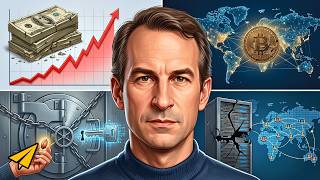
Mark Jeftovic argues the fiat system is a Ponzi scheme and Bitcoin protects wealth from seizure. He explains non-custodial wallets and cold storage. Alexander Green counters with traditional advice: work, save, invest, compound over time through index funds and insider-buying signals.
Chapters
Our entire economic system is a Ponzi. The economic system is a Ponzi. It's a Ponzi built on debt. It's a Ponzi built on inflation. So this system is going away whether anyone wants it to or not. It's just happening. And we already see it with the US dollar. The risk used to be, should I buy cryptocurrencies or not? And people would say, only put in what you can afford to lose. The risk is not having crypto. The risk is not having wealth that somebody else can't take away from you. Money Revealed is an exclusive video series where self-made millionaires share their secrets on how they got rich.
In this episode, you'll learn how to protect your wealth, invest in cryptocurrencies, and use economic cycles to your advantage. These are the lessons that they don't teach you in school about making money, and we've partnered with the series creator Jeff Hays to bring it to you on my YouTube channel.
Enjoy.
One of the more recent news stories that got a lot of attention was the Canadian trucker protests. And of course, you can think whatever you want about it and you can understand why they were protesting and etc., etc. But there is a part of the story that got very chilling when they started to talk about seizing the accounts of not only maybe protesters, but seizing the accounts of people who were supporting the protesters through a GoFundMe account, etc. My next interview is with Mark Jeftovic. And I have to say, he had some keen insights about what happened there, what might happen in the future, and why you might want to invest in crypto to protect your assets, to protect your wealth. And of course, we've had many conversations around this with a variety of people. But in this particular one, I think it takes on sort of a new perspective or an angle that I found to be quite fascinating. So enjoy this interview. Mark, thanks for taking the time to have this conversation. You're quite an interesting guy.
Oh, well, thanks. I'm thrilled to be here.
So let's get into your background. How did you get to be doing what you're doing right now?
Do you mean in the crypto sense or just in the IT sense?
Both, because you have both in your background and it's sort of like you— and those two things are sort of related. But yeah, like, what was your career that got you here?
I came across the internet in the mid-'90s, and it was like a lightning bolt hit me. I just knew this was going to change the world. I knew it was going to be big. I was studying. I was just finishing a diploma in computer programming at a community college in London, Ontario. I was playing in a heavy metal band. I was, you know, partying by night, coding by day. And I just knew that the internet was going to be huge. I was graduating from college, and then I moved to Toronto, and I just— I remember I used to read these Wired magazines and Mondo 2000, and I would just pound the pavement of the streets of Toronto, just almost frenetically, like, how am I going to break into this business? This is going to be so big, and I don't— long story short, I did get into the business. I started working for a dial-up ISP, and then I just started, um, building my own business on the side, which is a recurrent theme of mine. And, uh, I realized that someday the World Wide Web was going to be programmable. In those days it was just flat HTML files, and I thought someday you're going to be able to put if-then-else statements in here, you're going to be able to do database I/O, and it's going to be really off the hook when it— when that happens. And so I started a web development company that did that kind of work, and it was very customized and very different at the time. So every time we got a new customer, we had to bring them onto our platform. And every time we tried to bring them onto our platform, we ran into the same problems over and over again, which was they couldn't control their own domain name.
So what do you mean by couldn't control it?
Well, so we'd say, we need you to point your web server at this IP address, or we need you to change your name servers to our name servers. And then every single time, well, the guy who registered our domain name is AWOL. We don't know where he is. He was a consultant. We've lost track of him, or the web hosting company we have now doesn't want they don't want to lose the business. Just somebody else was in the way between what they wanted to happen with their own domain name and what had to happen. So we started by building a system for our customers. It's like, okay, look, what if we just had a system where they could just control their own domain name from their web browser? It picked up on a lot of work that I was doing for the ISP at the time because I was a sysadmin there, and I had the same job, right? On the other end, they were like, filling up my work queue all day is like, switch this guy's IP address, add this email alias. And so it was like, we just should have a system that does this. And that system took on a life of its own. We started another company called EasyDNS in 1999. And then by 2000, we just shut down the old business, and we just ran with EasyDNS. And that's how we just started building on it until this day. So we've been at it for 22 years now. And I think we've seen everything. I mean, we've seen 3 economic crises, so 3 financial crisis cycles. We've seen the rise of cancel culture. We've seen the rise of the blockchain and cryptocurrencies, which was the second time in my life where I felt that same lightning bolt hit. Like, this is going to be big.
And I want to get to that. But you didn't take a run at being a guitar legend or—
Well, I feel like I took my run. Whether it's relevant or not, around the time that I started EasyDNS, I actually had to hang up. I still play guitar, but I got sober. I got— and I've been so ever since, going on over 20 years now. And it was like, OK, we had our shot. That was fun. And I still played in a band after that. And that was a lot of fun. But there were no illusions then. We weren't setting out to be rock stars. And I probably had— more fun in that band, and actually got a little bit more airplay and traction and being known further when we weren't trying. It was just to let's just blow some steam and have some fun.
Funny how that works, isn't it?
Yeah.
Then crypto comes along. Lightning bolt strikes, like what did you see? What struck you about it?
Well, I have to say, like 10 years before crypto, there was e-gold. So, that was a digital gold currency. And I got interested in that because the dot-com blowup had just happened. And so, just to set the table a little bit to lead to crypto, it's 1999, 2000, I'm in this dot-com company, but we didn't take on any VC. We were stupid or clever, I don't know which, but we just said, we're not going to go that route, we're going to do business the old-fashioned way. It's actually more credit to my business partner at at the time who just said, look, all of these companies are going to blow up at some point because they're not making any money. I wanted to do every single harebrained deal that came in the door, like VCs and roll-ups, and I wanted to do them all and he put the brakes on them and said, this is not long-term sustainable. He was right. A lot of those companies did blow up. When the dot-com era imploded, I found myself realizing I don't know anything about how how markets work, how the economic cycle works, how finance works. So I did a really deep dive into that. And of course, anybody who does a deep dive into economics comes across this schism between like Keynes and Hayek and Austrian school economics. And then you kind of take that path. You go down that rabbit hole. You realize our entire economic system is a Ponzi. The economic system is a Ponzi. Things that get called that down the road. It's a Ponzi built on debt, and it's a Ponzi built on inflation. And so around the mid-'00s—
Can you just pause there for a second and maybe elaborate a little bit? When you say Ponzi built on debt or on inflation, describe how that works.
Well, I'll tell you something. One of the first books I read that sent me down that rabbit hole was a book called Gold Wars by Ferdinand Lipsz. And I remember, I still have that book. When I read books, I have notes scribbled all over the place. And you look at the front pages, and it's just page numbers and tags. But in the back of the book, I wrote— I don't have it memorized, but I know the gist of what I said— is that we live in an economic system where money exists in two places at once, more than two places at once. I can have a dollar, and it gets lent to you, and the bank creates another dollar, and then it gets— fractional reserve banking creates multiple dollars. So in essence, you have a single currency unit that exists in like a factorial across the economic system. And that works fine as long as that factorial keeps on going, as long as that system keeps expanding, and the debt keeps expanding, and the number of dollars coming in keeps expanding. I mean, sound familiar? It sounds like a Ponzi.
Right.
But the worst thing that can happen in that kind of a system is somebody pays off their debt, or a debt defaults, or a debt gets liquidated, because that's a rug pull. That's a rug pull on every other dollar that's sort of sitting in front of it, and it decreases the monetary supply. And so when the monetary supply shrinks in a system like that, it feels like heroin withdrawal to an addict. And that's why I realized this is kind of a Ponzi. And so you realize, well, classical gold standard era was a better period of money. For 150 years, they had even mild deflation, and the dollar held its purchasing power. I mean, that's one of the big aha moments you come across when you realize that inflation and the erosion of purchasing power isn't just a natural occurring phenomenon that's like erosion and winds. Like, people think this is the most natural thing in the world. You see that famous graph of the US dollar that goes from, you know, the dollar down to like 10 cents where it is today, and they think it's— that's just the way it works. But it's really a historical aberration that we're in this period of debt-based money not tied to anything behind it, no gold behind it. So that brings us to the e-gold thing. So when I discovered E-Gold, I thought this could be the perfect hard-backed currency to power e-commerce and the World Wide Web. E-Gold had some governance issues. It was centralized. And so it was shut down. It didn't make it. So then 2013 comes along, and then Bitcoin. Well, Bitcoin was around for 4 years already, or 5 years. But I discovered it in 2013. And I still kick myself for not discovering it earlier, but I got it instantly, instantly. And so, I knew that it addressed a lot of the shortcomings of Eagle, that it was decentralized, and this one just might make it. So, I started doing a deep dive into Bitcoin. Within a few weeks, we were the first non-crypto sponsor of the Let's Talk Bitcoin show, which is quite iconic, I guess. And then within a couple of months, we were the first domain registrar to take Bitcoin payments. And we just huddled it. I mean, that was the plan. That was always the plan. So most of the Bitcoin that we hold today, or that I hold today, I didn't go out and buy it. I earned it through a business, and that's my recommended way for accruing cryptocurrency in the era we're going into.
Mm-hmm. So when you saw this, and obviously you're studying economics, and you said, wow, this, this really is more of an Austrian school phenomenon, right, as far as how the whole thing is programmed. Are there concerns, though, as we're saying, okay, it's decentralized, the blockchain is kind of inviolable, you can't mess with it really, it's independent of government currency. So maybe two questions as you're describing the Ponzi. If the populace start to adopt more and more of a crypto approach towards their wealth and economics, does the Ponzi collapse? And number 2, if that's a threat, what's the likelihood of government intervention into cryptocurrencies?
Well, the Ponzi is going to collapse anyway. There's no stopping that. So that's definitely happening. And I think everyone, even in polite company, people say that.
And does collapse mean, just so we're clear, is it 2008 all over again, or is it something much worse, meaning it's it's irrecoverable, it can't come back.
Yeah, I believe that 2008 was a foreshock. I'm not original in that thought. I mean, a lot of people sort of in our circles think that, so I agree with them. But I do believe that 2008 may have been the last best chance to salvage the system. So if they didn't do the bailouts, and if you read Stockman's book, The Great Deformation. I mean, it's, it's 800 pages long or 600 pages long, and he goes through in exhaustive detail. If we didn't do the bailouts, this is what— how it would have played out, and it wouldn't have been this civilization-ending depression that it was framed to be. I think that was our last best chance. We kept the monetary stimulus going for too long after that. We kept interest rates too low for too long. That's another pet theory I have is that once you touch the zero bound, it's like an event horizon. You can never normalize again without crashing the economic system. Look at Japan, right? 35 years, and they haven't really gotten too far away from it. So, that was the last best chance. And then they kept going for too long. And then COVID hits. And that was— If you look at the graphs, you look at the graph of the Fed balance sheet, you look at the graph of the M2 money supply, and it's going up and up and up from 2008 till 2020. And then it hockey sticks. And it's like, OK, this is now a blow-off top. There is no— you can't walk this back. You can't taper a Ponzi. That's the phrase you hear a lot. So this system is going away. Whether anyone wants it to or not. It's just happening. And we already see it with the US dollar. And we can talk about that if you want.
But is it apocalyptic? I mean, so, you know, this blows up, you know, what happens, you know, as far as in as you process this and say, okay, you know, we— there's no recovering from it. Timeframe, how long do you think? But then is it like an apocalypse in the world? I mean, is it going to be really, really bad, or is it going to just be kind of a tough, tough time, but not like—
I think every policy intervention to try and make it not so bad makes it inevitably worse. I mean, if you look at the— I had a blog post a while ago where I did a chart of like the interventions, like where was the money, where was the interest rate at the time, what was the size of the M2 money supply, what was the size of the intervention, and they're just— it's one direction. It's just getting larger and larger and larger. So these policy interventions are— the more concerted, the more determined they get to interfere with policy, the more the odds are of an apocalyptic collapse. And I think No one wants to take the pain on their watch. If we let it happen, as it will inevitably happen, we can get through this. Monetary regimes do change over history. But how violent it gets or how turbulent it gets, I think, is going to be the inverse to the amount of, like, let the market do what it has to do versus how much policy intervention. But there is no letting this play out on its own. Unless it just simply takes the power away from the policymakers, and it just— it becomes pointless.
Do you think the people at the Fed or at the Treasury are delusional, or they know that this is coming and they know that they can't stop it, and they're just trying— like you said, they— not on our watch, we'll just try to prop it up, and then, you know, once we're gone, you know, somebody else is gonna get caught, you know, without a chair?
That's an amazing question because I oscillate, right? I'm from Canada, the People's Republic of Canada. I listened to a guy like Mark Carney, who was our central banker, and then he went to England. And I think he believes it, right? I think he believes that you can policy tweak your way to economic nirvana. Down here, past Fed chiefs— I really don't know. It almost doesn't matter if they believe it or if they're just trying to kick the can because my assumption, my hypothesis was the last can kick was the last one. There's no kicking the can. We're finally at a runway. We're finally here.
So the inflation we're seeing now and the other dynamics that are at a chilling rate going in the wrong direction. Do you feel like this is the first dominoes that are really falling toward the end? And will this sustain for decades like this or years? What do you think?
I mean, I'll start by saying I think in the long run, we get through this and we get to a better system on the other side. I think humanity's superpower is adaptation. But in the short run, it's gonna be brutal.
Yeah, right.
And you've got to get across that wasteland. And maybe it's because it's convenient or kind of fits with the other theories, but I kind of look at the Fourth Turning, sort of like the Strauss-Howe book and the people who are paying attention to that in these various different cycle theories. He's not wrong. I mean, it's matching what's happening.
Explain the Fourth Turning.
So the Fourth Turning series, especially with American history, was a book by, uh, Neil Strauss and, um, how— I can't remember his first name. It stated that there are generational cycles to economic and even political history within America, and that that cycle had held up since the, the Revolutionary War, and that roughly every 80 years, every 4 cycles, um, so you have 4 generational cohorts, let's call it. There's like the hero, the nomad, the— my mind is actually going blank on the other two, but they play different roles, right? And, and so when, when one of these cycles is in adulthood, it means you have a certain kind of a climate. And so it really is kind of like the four seasons of economic and geopolitical sort of currents under society, as— and it's driven largely by by demographics. And so you have this euphoric rise up after some sort of crisis like World War II and the baby boom, and they kind of have like, uh, um, this long heyday. And then you get to this, um, start of breakup, like the Third Turning. Things kind of start to break down a bit, like the wealth gap starts to increase and, and There's more disaffected people. And then it comes to a head in the Fourth Turning. And in the Fourth Turning, it's really institutional bankruptcy. The credibility of existing institutions just goes to dust, which we see a lot of happening. It is either a violent or a tumultuous— turbulence— it's either a violent or a turbulent transition where all of the existing institutional bedrock that got us through the last 3 waves just turned to dust, and they're replaced with something new. And then out of that, you have the next first turning of the next generation. And that takes about 80 to 100 years to play out. And one of them passed away, one of the authors, the other one's still alive. And the one that's still alive was saying that he believed the Fourth Turning started around the 2008 crisis. That was the beginning of it. And they'll last about 20 years, which would take us to somewhere around 2030 when this all kind of like— we see like light at the end of the tunnel. So we have close to a decade, according to that model, of really unhinged, off-the-hook craziness coming at us that we have to get through.
And it seems the world right now, between COVID and then this whole Russian invasion into Ukraine, and if you take a step back, you say, wow, these dynamics are really disturbing and seemingly threatening. And really, I think, starts to show the fragility of what we're dealing with as culture or society being together. I mean, we sort of have this thing, I think, every day psychologically, that, yeah, the sun is going to come up in the morning. We're not worried about that. You know, we're going to get through a day. There's going to be another news cycle. We're going to go to sleep and the sun's going to come up again. But it starts to, when you take a step back, say, hmm, you know, this sort of sunrise, metaphorically speaking, that we're depending on might actually not start to happen. We might start to see some pretty disturbing things occur. So with that, which is, of course, kind of depressing conversation. Now, we turn to saying, well, how do we safeguard? How do we— what are the solutions? And one of which we've been talking about is crypto. So do you think that from a monetary standpoint, that crypto is a good place to store your wealth right now? Because if and when this comes, that's a place where you're going to be somewhat protected. Is that your view?
There's no if and when this comes. It's here. All right? This is already happening. And yes, the answer to your question is yes. The starting— the bell was rung with actually my guy back home in the People's Republic of Canada.
Let's talk about that.
With Trudeau, he almost crashed the financial system in Canada. If you look carefully at the way events unfolded, But he rang the bell because they said they were going to seize bank accounts for a political opinion with no due process. They were going to indemnify the banks against liability. And there was no real vetting process on how they would source which bank accounts would be seized. And the banks started doing it before that was even ratified by the House of Commons.
Meaning that they started seizing accounts?
Correct. Right there.
And incidentally, the motivation behind seizing the accounts was what?
Well, he had this trucker convoy, the Freedom Convoy, had convened on Ottawa. They had galvanized a movement globally. And outside of a few very small pockets of support, although one of them was the mainstream media, because they're federally funded for starters, everyone was pretty well in favor of this. Because they all wanted these mandates to end, and they all wanted to put the pandemic behind them. But for a guy like Trudeau, he couldn't back down. I mean, I don't know how far afield you want to go on this, but he hid, right? The truckers came to Ottawa, and he hid for a couple of weeks, and then he said he had COVID. And then he calls the truckers racists and misogynists. It was very unstatesmanlike and very not really becoming of a world leader at all, especially not the one that he imagines himself to be. But he really just wanted to break up that protest because it was gathering momentum. And so, that rang the bell. That means the big risk now, the risk used to be, should I buy cryptocurrencies or not? And people would say, well, only put in what you can afford to lose. And after that moment, that moment changed everything, not just in Canada, globally. After that moment, it became the risk is not having crypto. The risk is not having wealth that somebody else can't take away from you. And then events— I mean, sticking with Trudeau, they rammed it through Parliament. And then 2 days later, they called the whole thing off. Why? Well, a couple days after this announcement was made, all 4 major Canadian banks went off the air at the same time.
When you say off the air, meaning they froze?
Their platforms went down. They were unreachable. Their websites were gone simultaneously at the same time. It wasn't a DoS attack. It was just— no one really knows. It hasn't really been remarked upon. And then the rumors started flaring that the Canadian banking system was teetering on the edge, because what's going to happen?
People are pulling their money out of their accounts.
People are pulling their money out, right? So this is what these policymakers don't understand is incentives, how incentive structures and second-order effects work. You tell me you're going to take my money away, what am I going to do?
Yeah, take my money out of the bank and hide it. Yeah, right.
And then, so a few weeks later, the United States government takes Afghanistan's foreign currency reserves.
All right, what do you mean by takes it?
They confiscated the foreign currency reserves of Afghanistan because Afghanistan is run by the Taliban. They didn't actually say we're going to put this on ice until democracy returns to the country. They took half of it, I believe, and they said they're gonna— we're going to redistribute this to the plaintiffs of the 9/11 lawsuit. So they took the money and then they just redistributed it. Again, don't want to comment on the government in Afghanistan, don't want to comment on 9/11.
Just the fact that that can happen.
There's no due process. It's rule by edict.
Well, are we seizing assets of oligarchs?
Foreign countries. Yeah. Then Russia, the Russian seizure was over 10 times what was seized from the Afghans. Then today, this morning on my way here, I just noticed an article that The Russian— the Russians wanted to make payments on their US-denominated bonds to bondholders, and the American government blocked them from making their payments.
Under what pretext?
Well, this is all just part of the sanctions, right, to incentivize them to withdraw from Ukraine. And again, I mean, I'm categorically anti-war and don't approve of any country invading another, including the the US or Canada, right? Right. But, um, the point is you have governments— so citizens can't trust their governments to protect their savings or their wealth or their property rights, and governments can't trust each other from taking each other's sovereign wealth, right? So that really leaves only one thing. I mean, you have gold. I like gold. I've been invested in gold. But gold isn't as frictionless as cryptocurrency. I can't walk out of the country with 12 words memorized in my mind and regain access to my wealth in some other jurisdiction where there's not a boot on my throat. It's harder to do that with gold. So events of this year have changed the game. And it's no longer it's coming. It's here. It's already happened. So it's game on. And you have to have some crypto wealth to protect yourself from confiscation and redistribution.
So let's get into some of the deeper mechanics now, because I think this becomes important. Let's start with government. So now, Canada, Trudeau, which they showed their colors, and I literally was startled. I mean, people are protesting, and now you're going to threaten to seize their bank accounts, and that's how you're going to stop them from protesting?
Not just protesters. People who donated to the protesters.
I didn't realize they were reaching back to them also.
Oh, yeah. Wow. Yeah. And so interestingly, my company— we took a bit of heat for this— we said, look, we take Bitcoin payments. We're going to donate any Bitcoin payments that we get to the trucker convoy. And so our lawyer said, it's possible you could come under— you could be captured by this new rule. And just because of the way things played out, we were in touch with the Tallycoin guys and the people who were doing the fundraise. And when the province declared a state of emergency, we all just, OK, everybody hold on. Don't do anything till we have some regulatory clarity here. So we never actually— we had our Bitcoin sequestered. We never actually sent it over, but our lawyer said, you've come out and said this. So there's a possibility, depending on how aggressive your bank manager is, how aggressive the government is, your company could be captured within this.
Because I mean, with Bitcoin, in the circumstance you're talking about, there's— you can have it, you can even have your 12 words, you know, and go to another country. But at some point, at least the way the system is today, you know, there's no efficiency in being able to just trade food or services for the most part, you've got to still now take that coin, turn it into some denominated currency so that you have cash, right? So what are the mechanisms? Keep yourself— you know, keep it in Bitcoin. We'll talk about maybe Bitcoin versus altcoins, but, but just keep it there. And then also keep a certain amount of cash maybe out of banks, or, you know, how do you hedge what are the actual mechanics of saying, I need to protect my wealth and shield it? And I know there's a couple of questions here, but—
How do you actually use it?
Yeah, part and parcel to that also is, now I would say Trudeau is very capable of saying, you need to report what your crypto holdings are, and we can— we need to be able to have access to seizing those assets should we deem it necessary.
Well, part of that's already happening. There's already new FINTRAC regulations in Canada. And so you're talking about moving from crypto into fiat currency somewhere, you're going to have to go through a centralized exchange. And anywhere in the world, you go through a centralized exchange, you're going to get KYC, know your client, right? So anywhere that you want to convert crypto into money or the other way around, put money into crypto, you're going to upload photo ID. It's going to be reported to the tax authorities. And EasyDNS reports our crypto holdings on our balance sheet. And the one time we cash some out, we filed a tax return, we paid the capital gains on it. And that's where it happens. But a phrase you're going to hear more and more often from this point on is the circular economy. So it means a couple of things. One, an increasing amount of fiat money moving into the crypto verse is on a one-way journey. It has no intention of ever coming back out. And two, more and more companies are going to start accepting Bitcoin as a payment method. And people are going to start wanting to get paid in Bitcoin. And they're just going to keep the money in Bitcoin.
Now, just a quick question here. Can you do that without going back onto the exchange? Because basically what you're talking about right now is I'm taking my fiat money. I have an exchange. Yeah, I use that money to buy Bitcoin. You know, in this case, we'll say Bitcoin. And, and now I have to take it off of that exchange so nobody has access to it. Yeah. So now it's in a wallet or what they might call storage, cold storage, and, and I can access it just through my 12 passwords. Now, I need to go pay your company for services I want to do in Bitcoin. Do I have to put it back on the exchange to pay you, or I can do it directly?
You can do it straight from your own wallet. What you're talking about is a phrase that everyone should take to heart, which is not your keys is not your coins. You put money in the exchange, you buy crypto, you get it out of there instantly. You don't leave it in there for a second, unless you're—
You're trading, yeah.
Unless you're trading it or staking it for yield and stuff like that. But generally, you get it off, you put it in. Now, there is an inexhaustible supply of potential Bitcoin addresses. It's more than IPv6, even. I have a slide in one of my presentations that says there are this many possible Bitcoin addresses in existence or that can come into existence. And I don't even know how to describe the number. So many commas in it, and it's this many per every human being on Earth. So you can create a new Bitcoin address. You can move— you can sliver off some funds from your cold wallet, move it to this other address, and just use it as kind of like your own personal checkbook and say, OK, I'm going to pay this bill out of this wallet.
So each address is a wallet, basically?
Correct, yeah.
And so your recommendation here— here, just getting tactical, is pull your stuff off, have it in a wallet, but then have other wallets where you might want to utilize them for the exchange of goods or services.
Yeah. And you can usually do that within a wallet. You can say, generate a new receive address, generate a new spend address.
You can have multiple ones in one wallet.
Yes, exactly.
And then you have to have a company like yours that's set up to receive that way directly.
Yeah, companies that take Bitcoin. And we've been doing it since 2013, like I said. And yeah.
Did you have to custom program that?
Yeah, we did. We did. And there are companies today that do that kind of thing. And then there are open source projects, like there's MyBTC Pay Server— or BTC Pay Server, sorry. Open source, download it off the net, just like Bitcoin is open source. Set it up on a commodity VPS, like on DigitalOcean or Linode or EasyDNS, right? And then you've got your own personal Bitcoin payment server. So you're not trusting a third-party company.
And that's not an exchange.
And it's non-custodial. So the Bitcoin doesn't even pause on the server. You just configure your— even a cold wallet that's completely disconnected from the internet, you can configure that to be your recipient of your funds. And it just— because just a minor distinction that's important to know. The cryptocurrency never goes to the wallets, right? The cryptocurrency exists on the public blockchain. It's just all out there. It's like a dial tone, right? What's in the wallets are your private keys. That's, that's what controls the Bitcoin on the chain, but they're so cryptographically secure that it's unhackable.
So, so when somebody says, oh, I have my I've got my little USB drive here. That's my wallet. There's no real asset there except for the passwords to know how to access the blockchain that verifies that you—
Exactly.
So now— and this gets kind of— we're in this sort of frantic need to get there at the same time for people who are let's call them typical as far as their technological prowess, this gets very complicated and very scary, and they don't know what they're doing. So how do you recommend that people— they're watching us now, they're saying, yep, what happened in Canada sent a chill down my spine. And it was kind of like the truckers inspired the world, right? Got everybody saying, yes, they're representing my sentiments about what's going on right now. And then the The governmental response sent a chill, I think, down everybody's spine. And as you're starting to cite the other asset seizures that are happening just without any due process whatsoever, and now it's like, OK, I feel completely exposed, and I need to now protect my wealth. And further on the horizon, something bad is going to happen, so I want to be protected there. How do I hedge against inflation? And another thing— I mean, all these things are considerations, right? It seems like all these roads are leading to Rome. Yeah, Rome is crypto. Yeah. And, and now, but I'm like, oh my God, setting up an exchange, that's one thing that's kind of tough. But yeah, you're uploading your photos, you're doing all that. I've set them up. So I know, you know, it's an arduous process to finally get an account approved. Then you got to fund that account and then I get to buy it and then I got to take the crypto off that account. And then I want to figure out, you know, all these things. Is there So somebody comes to you, says, I'm new at this, what's the roadmap I can follow? Where can I go to learn to do this so I can do it right?
There's a lot of good channels on YouTube for beginner crypto people. Like, the one, one in particular that I recommend to a lot of people is this girl named Crypto Casey, and she does these like intro level things to like how to get your money off an exchange to a crypto wallet. We just sent that to all our Crypto Capitalist members, because they're asking. But, you know, you go to a place like Coinbase, right? They're a pretty good company. I know they take heat in crypto circles because I think the centralized exchanges kind of have to play this almost like necessary evil role. But I find that they're generally pretty good. And what they did recently was they bought a wallet called Bread Wallet, and they rolled it into the coin -based system, and it's now— so you have this centralized exchange that now has this decentralized wallet. And they warn you, they say, look, best practices— the CEO of the company even said, don't donate to truckers from your centralized account, do it from a decentralized account. We have this decentralized wallet, so you can— it integrates quite nicely with your centralized one, but they warn you You mess this up, we can't help you. Here, we can help you. So if you trust in a centralized exchange enough— and I don't think you should, again, to reiterate it— but Coinbase or a big company like a Kraken or a Bitbuy in Canada, they will help their customers. But they will also adhere to the law. And they will, even if that law is unjust, or you're only going to survive for 48 hours. You get like an Exodus wallet or a Coinbase wallet, which used to be a Bread wallet on your phone. You could even put it on your phone, move your money to that wallet. It's pretty easily menu-driven. And power down the phone and put it in a safe or something like that. And you don't even need to power it back on to keep moving crypto to it. You can just configure it in your exchange accounts. And then just send it to that address, and you don't even have to power that back on.
Do you actually need the— everybody hears wallet, they're thinking in terms of the device that they carry around or the phone that you're describing. Let's say that you flee Canada and go wherever. If you know your passwords, do you even need those devices?
You don't. That's why if you lose your— like, I use a Nano Ledger, if you lose that, it's not all is lost. You just— you can buy another ledger and say, what do you want to do? You want to set this up as a fresh new ledger, or do you want to reinstate an old one that you may have lost? And then so you put your words in. Doesn't even have to be the same kind of device, just any, like, standards-compliant wallet, right?
So the only way for you to totally lose it is by losing your passwords, losing your keys. Yes. And that's considered the key, and that literally goes in your head. But— and then I imagine You have to figure out backup ways, you know, like safe deposit boxes, whatever, other people that would know that if something happens to you, you know, they can, they can go ahead and gain access.
Yeah.
So this is, you know, what's interesting is what's being forced now is an enormous amount of personal responsibility.
Yeah. I mean, from the beginning, I've said crypto forces you to take a level of personal responsibility that most people never thought they would have to in their lives.
—right?
You're born and raised being told, oh, you don't have to worry about if your bank goes insolvent because the government's going to bail you out, which wasn't entirely true, by the way, because around the 2008 crisis, I actually did some work on the Canadian version of the FDIC. And I realized in a real big crisis, they're going to go insolvent too.
They're not going to be able to— right? Yeah, you're only as secure as the people who are insuring you.
Exactly. Because I realized— I don't I don't remember the exact numbers, but it was like they can bail out maybe 6% of the deposits if it's a cascading failure. Beyond that, they go down with the system.
So they really don't have the wherewithal. Correct.
But people aren't— I mean, I think the bigger picture is we're coming out of an era where reliance on the state was cultivated, like you were trying to— there was this impetus to make— and I think it's a dying impulse, like they just want to make the people as reliant and dependent on the state as possible. But the bigger picture is part of this revolution, this fourth turning that we were talking about, is a move to decentralize, not just money, decentralized everything, because people are realizing that top-down, centrally planned structures in anything don't really work. I mean, they can maybe work at a localized level, but they can't for huge, big issues— an economy, pandemic response. Like, it just doesn't work. It's just a comedy of errors. It's a clown show.
Yeah, a clown show is what I literally used that term the other day. I'm watching. I said, this is a clown show. I mean, I'm looking, I can't believe that the intellectual prowess of the people who are making decisions is wanting. And they look like a bunch of clowns. And in the end, I mean, you really get back to the philosophical schism, which is radical self-reliance versus a nanny state that's going to take care of you. And the people who literally are going to cower and just say, oh, the government's going to take care of me, that's the vulnerable population. If we were to maybe do the thought experiment and move past this kind of tragic thing that's going to have a monetary collapse, whatever. The people who took responsibility, saw it coming, planned for it— people who are watching us have this conversation right now and then act on it— they're the ones who get through the other side of it in a relative sense, relatively unscathed. But now, everybody else, they're going to fall victim to saying that they were relying on outside forces to take care of them.
And what's worse is when this really comes to a head, And the people who have taken responsibility for themselves will take the blame for what happened. Of course. So the gold bugs, the crypto people, they've crashed our economy.
Yeah. And of course, they're going to be scapegoated. They're going to be the culprits. Anyway, the whole thing, you can see it unfolding. So this is— how can I put it? I can't say that this is, oh, this is exciting and uplifting, except for the fact that we're dealing with reality and that you're saying, hey, there's actions to be taken right now to be able to secure your future. And even if, let's say that there's not this apocalyptic thing that happens as we're describing earlier, inflation is here, it's happening. So no matter what, you're still hedging against inflation, staying kind of in cash, Cash in an account, you know, is just— you're losing money every day.
Yeah, I mean, we bought a new house 5 years ago, and I've been waiting for the real estate market to crash in Toronto for 25 years, right? Yeah. And my wife and I were like, okay, I'll finally do it. And I wrote down my goal. I took a 5— you know, it's a 30 or 25-year amortization, 5-year term, and I wrote down my goal. I said, I'm going to pay off the whole thing in 5 years. I'm going to just pay off this whole damn house. And we just renewed about a month ago. It's 5 years later. And I could have paid it off. I paid it down quite accelerated. The banker was like, how did you do that? Well, crypto. Thank you, crypto. And then I looked at it. I said, OK, my bank is going to lend me, keep lending me the rest of this money at 1.35%. And I keep the bulk of my savings in gold and in crypto and investing in private companies. That stuff's going up, whatever it's going up per year. All right? It makes no sense to cash out. Any of that to pay off this debt that's costing me 1.35% today. Now, if the interest rates get away from us and they're going, it's like, OK, we'll just liquidate it when we have to liquidate it and pay an early penalty. But now, the incentives have completely flipped. And I come from European immigrant parents who are like, debt is evil incarnate. And they're right. They're not wrong. We talked about debt and Ponzi finance. You get to the end of the runway for this system and everything becomes, you know, the clown show. Everything becomes a caricature. So now it's like bad news is good news, right? And debt is like, you know, it reminds me of Howard Steen's character. Well, he's not a character, he's a historical figure from the Weimar Germany hyperinflation. He was wealthy. He inherited a small industrial conglomerate from his father in like 1915, 1918, but he saw the hyperinflation coming, so he just levered up to the gills. Yeah, and he turned that small, you know, industrial conglomerate into a ginormous industrial conglomerate by the end of the hyperinflation. Then apparently— I mean, having a hard time teasing out the real details from that chapter— but then he liquidated it all by like selling one asset.
Well, yeah, it's interesting times. It was occurring to me as you're talking hyperinflation in Germany and kind of what transpired there, and of course, how wars tend to also be another intervention into those types of circumstances. And suddenly, we're seeing wars now, and we're seeing pretty rapid inflation and all kinds of— Unbelievable. The stark irrationality in so much of this, though, is it's almost like saying it's like a caricature. It doesn't— you know, it's like they're trying to say up is down and left is right. It just doesn't make any sense. So, so I guess, you know, the overall message is radical self-reliance right now. Don't trust any outside forces and pay attention. Yeah, I think long term.
We're going to get to a better place. Humans are great at evolving and adapting. Right now, it's not just— I don't mean radical self-reliance in like every man for himself, dog eat dog. I think like libertarians and the like, we're very community-minded. We understand a basic of Austrian economics or even anarcho-capitalism is Look, it takes two people in a pure market force-driven economy, which is what we all pine for. It takes two people to have a successful transaction, and both sides of that transaction have to feel like they got more value than they put in. And there's a kind of alchemy that happens when you do that and you multiply that infinitely. You actually— you have to have self-reliance for yourself, and then you have to, I think, we're going to hear more about this circular economy, we connect with each other and we create a community. There's got to be this community of self-reliant people.
And I think Atlas Shrugged portrayed this in fiction form perfectly. What happens when you have people trading with each other without any interference from the government and the goodwill that goes along with that and how things are based on reality as compared to a non-reality. So, this has been quite fascinating. You'll watch how this unfolds over time, but I certainly appreciate your activism around this as far as what you're putting out into the world and you coming here and sharing all this information with us.
Well, it's great to meet you, and I'm thrilled to be here.
So, thanks for having me. Next up, my partner, Jeff Hayes, interviews Alexander Green. Alexander is the chief investment strategist for the Oxford Club, which is one of the most prestigious financial fellowships in the world. He's a guy who's got a lot of expertise, and a lot of people around the world listen to him. And now you get to right now enjoy this interview.
So, Alec, thank you for being here. I've been looking forward to this interview.
Thanks for having me.
So tell us a little bit about who you are and what it is that you do.
Okay, well, my name is Alec Green. I live in Charlottesville, Virginia, and Orlando, Florida, share a home homes there. And I'm the chief investment strategist of the Oxford Club, which is a private club. It's dedicated to showing people how to achieve and maintain financial independence. And essentially, I write about what's happening in the world and the economy and the markets and make recommendations that people can act on to further their net worth.
So how did you get to this? There has to be a story here.
So there's a long and winding road. Good. Let's take it. Well, let me begin by saying I've always been fascinated by money. I came from a very middle-class household in a small town, Staunton, Virginia. I often say I grew up in a Norman Rockwell painting, a little quiet town in the Shenandoah Valley. And we had a few people in our town who were very wealthy, and I sort of looked up to those people. Every time they needed to raise money for some project or some worthy cause, whatever, they would go to these people first. And I always thought like, wow, what do these people do. They must be a little smarter, a little sharper, worked a little harder. And I was fascinated by money, how it's earned, how it compounds, how it's created, and so forth. But unfortunately, in school, they really don't teach you much about money. You know, most high schools in the United States still don't even teach basic personal finance. It's as if money is something that either doesn't really matter or you're just supposed to figure it out on your own. And so people graduate from high school and they don't know know what compound interest is or a 401(k) or what an adjustable rate mortgage is or why we even have a stock market. And then oftentimes they go off to college and their professors tell them that we live in this unfortunate economic system that's based on greed and selfishness and exploitation, which is such a mischaracterization because, you know, the beautiful thing about capitalism is it says you can have anything you want if you just provide enough other people what they want. I mean, what a beautiful foundation. So that's not greed and selfishness. That's how do you get rich by helping other people get what they want. And the more people you help, the richer you'll get. People like Jeff Bezos and, and Bill Gates have helped millions and millions of people, probably billions. And so they're, they're billionaires themselves. So, so I've always been fascinated by money. I think a lot of people are fascinated in how to spend it, but I'm interested in how to grow it. And so I majored in business and psychology and college, and then not long afterwards I found myself working in the money management industry, and it became my passion to show people how to achieve and maintain financial independence. And so I retired from Wall Street actually almost 20 years ago now, and I've devoted my professional career to showing everyday people how to become wealthy. And I say how to become wealthy because there are principles of wealth creation that are well understood, but just not by most people. So I talk about those things, write about them regularly, and show people the path to financial independence.
Okay, so you're, you're in the dead center of the whole purpose of this series. And when we talk about this financial illiteracy, and, you know, I know PhDs and medical doctors that still know nothing about money. I had them as clients.
You're exactly right.
So let's go back, you know, starting from that blank canvas, these principles you're talking about. What How can we help somebody today, what they need to know about creating wealth?
Okay, well, the first thing they should know is everybody should be rich in America. When I say everybody, you might have seen the story a few years ago of this fellow who died in Vermont, and he had two jobs. He was a gas station attendant and he was a janitor at JCPenney's. And the community was stunned when he died and left $8.6 million to the local library. And how had he done that? All he had done is work, save, invest, and compound his money over a long period of time. Again, gas station attendant and JCPenney's janitor. Those were his two jobs. No great inheritance, no great connections, no high-paying job, no high education, nothing. Okay? So I always say, if you're not rich in this country, one of these things is true: you either haven't worked or you worked and you didn't save, or you saved but you didn't invest, or you invested but you didn't do it properly, or you did it properly and successfully, but you couldn't keep your hands off the money. You spent it on the new boat, the bigger house, whatever. So really, there's a fellow by the name of Dr. Thomas Stanley who wrote a book called "The Millionaire Next Door." It's probably 20 years old now. And he surveyed the nation's most affluent people to determine how they became wealthy. And I think the conventional wisdom is if you're rich in this country, you founded a computer company in your garage, or you play third base for the Yankees, or you had a million-selling record, whatever. That's not the case. I mean, those people are rich and for those reasons, but most people simply worked and saved and invested and compounded their money over a long period of time. And that's something that's open to anybody if they're willing to work, save, invest, and compound.
So if somebody is my age, 60 years old, is it too late to right my financial ship?
It's, it's never too late to get started, no matter where you are. If you're later in life, you're going to need to save more. You're going to probably need to earn a higher rate of return, and you may need to work a little longer in order to let your money compound. But it's never too late to get started. Never. There's never a bad time to make a good investment.
So let's take somebody that's, uh, like, I'm thinking about, I've got kids that are now in their 30s. Yeah. What would you map out for them as a strategy to end up wealthy?
Well, the first thing you should tell your kids is they have a huge asset that you don't have— lots of time ahead of them. I mean, I'm about the same age as you are, so I know that if I were starting now, it'd be tough for me, for me to develop the net worth I have now. But they are in a situation where if they save just a little bit of money— for instance, let me give an example. If your kids save $190 a month, and they may have to scrape and cut some corners to do that. They saved $190 a month and nothing more. And they'd invested in, say, the S&P 500 index fund, which has generated a 10% average compounded return for over 100 years. And they earned nothing more than that 10% return from the age of 25 to 65. They would have over $1 million if they reinvested their dividends. $190 a month, every month for 40 years, you've got over $1 million. And yet look at the United States today. 40% of Americans live paycheck to paycheck. 40% say they couldn't get their hands on $400 in an emergency. Now, if someone can't work, has mental or physical disabilities, I'm fully for a social safety net for people, for what Ronald Reagan used to call the truly needy. But that doesn't describe 40% of Americans. What's happening is people are spending everything they're making. They're not— They're not saving, they're not investing, and they're not compounding their money. And if they would get on the right track starting today, then they can have a financial future that's much more secure than otherwise. And think about it, what is money? Money is power. If you're— doesn't matter whether you're male or female, old or young, black or white, gay or straight, educated or not. If you have money, you have power in the best sense. You have security, peace of mind, choices about how you can live your life, where you can live, what you're going to do, who you're going to do it with. You have all those choices. If you don't have money, life is a constant strain. You're worried about your bills, you're worried about your future, you're worried about being able to help people in need, your kids, or the charities that you want to donate to. So it makes the whole difference. And that's why it's such a shame that financial literacy in this country is so low, and it's such a good thing that you're doing this series to teach people the basic financial literacy they need to move forward and enjoy some type of financial security.
So it's interesting, I know you have specific strategies, and I know people come to you for— because of your experience, but a lot of what you're talking about is just this preparatory mindset. It is. The delayed gratification of choosing wealth over a new boat.
You know what, it's almost like raising a garden. It's beautiful to plant the seeds and nurture the seeds and pull out the weeds and watch them grow, and at the end you have this beautiful garden. If you can start to enjoy the process and not just think about what you're sacrificing now— and you don't— this doesn't mean that you don't enjoy yourself. It's a matter of finding balance. Now, I'm not saying that someone should save every penny they possibly can, but if they're saving nothing I mean, let me give you an example. If someone told you tomorrow that you're going to have to live on 10% less, by hook or by crook, you would find a way to live on 10% less. Most people could save at least 10% of their after-tax take-home pay. They should be doing that. And if they could afford to save more, they should be doing that. So it's just a matter of getting into that mindset and realizing that what you're going to realize down the road is a level of independence and freedom that other people can only dream about.
I had a business coach several years ago that like a savings account is not exciting. It's like I remember as a kid, my parents make— we had an old savings and loan and, you know, my parents making me put money from my paper route in my savings account. And I would much rather convert it into Snickers and, you know, something useful like that. And that boringness. And then And this business coach I had talked to me about setting up a wealth account. And, you know, it's separate from a savings account. And the wealth account was something I was going to build for me to build wealth. And for some reason, that was exciting to me. I'm not just saving money that I don't get to spend. I'm building wealth. If somebody is, you know, is willing to build a wealth account, What advice are you giving people now of how to build that wealth inside the money that— inside their wealth account?
Well, I would begin by saying that when you talk about a savings account, there is a truism that if you take very low risk, you're going to earn very low returns. Right. So you're going to have to get comfortable with the idea that to earn higher than average returns, you're going to have to see fluctuations, sometimes pretty wide fluctuations, in the value of your investments. Investments from month to month and even week to week and day to day. I encourage people not to watch their investments too closely. It's not necessary. If you're investing to reach a financial goal 10 or 20 or 30 years down the road, what the stock market does this week or this month is totally irrelevant. And one of the things that's not taught that should be taught is the stock market has given, on average, a 10% return for the last 200 years. And I encourage people to read an investment classic by Dr. Jeremy Siegel of the Wharton School called Stocks for the Long Run. And he shows that over long periods of time, stocks generate much higher returns than any other type of investment. And he goes all over the world. And one of the most interesting things in the book, I thought, was even if you had invested in the German stock market and the Japanese stock market on the eve of World War II, and even though those countries faced total economic and political destruction. 30 years later, Japanese and German stocks had returned exactly what US stocks had returned. It shows incredible resilience. So, even when we have wars, recessions, depressions, corrections, all kinds of setbacks, stocks are resilient. And the reason for that is we all have economic needs, not least of which are food, clothing, shelter, healthcare, etc. Okay. It's not the government that provides these things, it's private businesses. And so they have to find a way to offer these goods and services and make a profit. And over time, as their sales and their profits rise, so does the value of the business. And so all these stocks are doing is reflecting the rising value of the companies themselves. And so if you're a young person, especially, and you're looking at a at investment goals decades away, you should essentially be 100% invested in stocks. And yes, you're going to see some hair-raising bumps along the way, that's inevitable. But if you can resist the urge to panic and sell, to do something— unless that do something is to add to your stocks while they're cheap, that's the something you should do. And when I'm writing my investment letters, when those periods come along, like during the Great Recession, I said very clearly, You're looking at one of the great buying opportunities of your lifetime. And you can either panic and sell and regret it, or you can add to your holdings, reduce your average cost, and reap the benefits as the market returns to normal. And that's exactly what's happened. We've had this incredible, almost 11-year run. We'll have downturns again in the future, and that's fine, because behind every bear market is another bull market. And so, don't worry about the people that tell you, "Oh, a bear market's it's coming. Yeah, a bear market is coming, and another one after that, another one after that. But the history of the stock market is higher highs and higher lows. So the first thing I would say is save, yes, but invest your money in the best-returning asset of all time, common stocks.
And is your advice to your readers, is it mostly this long-term strategy? No, it's partly a long-term strategy.
I have something, I wrote a book It was a national bestseller about 12 years ago called the Gone Fishing Portfolio. And all the Gone Fishing Portfolio is, is a portfolio of Vanguard index funds that you invest in and you rebalance them once a year. It takes 20 minutes a year. The rest of the time you're encouraged to go fishing, which is why it's called the Gone Fishing Portfolio. And that's all it takes is a few minutes to set it up and 20 minutes once a year to rebalance it. And that's a long-term asset allocation plan. And if that's all someone did, they would probably earn a generous return. And $100,000 invested in that portfolio in the inception is worth almost $500,000 now. And it's a very conservative portfolio. It's 30% bonds. But most people want to be more active. Like, for instance, if you're in your 60s, and you say, wow, I should have saved more, I should have saved earlier, then you probably want to do something to earn even higher rates of return. And so for those people, I suggest they own individual stocks. Because, for instance, I've been shareholder not just for years but for decades of Apple and Amazon and Netflix and other companies that have gone up many, many fold. And so you get a performance boost from owning companies that outperform the benchmark, the averages, by a substantial margin. So what are companies right now that are the Amazon, Netflix of the future? Well, we wish we could know. But you knew Apple. But you know what, here's the Here's the thing, I won't try to brag about any great perspicacity when I bought those stocks. Here's an interesting thing that happened to me. One of the things is if you're a learner and you're interested in how to make your money grow faster, I found that if I listened to the smartest people at managing money, I could do better with my own money. And so two of the people I used to listen to were Warren Buffett, who decades ago, as now, was running Berkshire Hathaway, and Peter Lynch, who's retired now, but was— the manager of the Fidelity Magellan Fund, and he is the best performing equity manager of all time. So, one month, I just happened to be reading some things that these guys had written. And first of all, Peter Lynch said, if you patronize a company, you really ought to consider owning its shares. Because if you like the company, probably other people like the company. If other people like the company, then probably the sales and earnings are going to grow. And so, you should consider investing in the companies you patronize yourself. And I thought to myself, I thought, hey, that makes a lot of sense. And the same month I read something from Warren Buffett, which was equally interesting. And he said, you know, the capital gains tax is not a tax on capital gains, it's a tax on transactions. And by that he meant if you don't sell a stock, you don't owe any capital gains tax. And that's one of the reasons he's one of the richest men in the world. His fortune is almost entirely untaxed. So I thought to myself, wow, if I buy the companies that I patronize, and I don't sell them, then I could have a huge gain and no taxes. Well, I was a Mac guy back when Windows ruled supreme, and there was no such thing as an iPhone or even an iPod. This is how long ago I bought my Apple. But I bought the stock, and I held it. And Amazon— I mean, I was using Amazon as an internet user from the very beginning. So I bought some Amazon. And Netflix— I had a neighbor who came over with that little red envelope they used to put the DVDs in. He showed me that, and I said, I'm going to buy some of that. This is before they had streaming or so. So I had no conception that Apple was going to become what it did and Amazon was going to become what it did and Netflix would become what it did. And quite frankly, there are some companies I invested in that went right down the tubes. But a company can only drop 100% in value. It can go up many hundred— a hundredfold or more, which those stocks are up over a hundredfold. So it wasn't some fantastic business insight that I had. It was the fact that I patronized these companies and I don't want to pay taxes. I owned them all in a non-retirement account. If I'd have sold them, I'd have owed a big capital gains tax. So I just held them. And now, for instance, the dividends I get off of Apple are many, many times the value of my original investment. So, for example, with Amazon, the annual dividends that I receive are many times the amount of the total investment I made in the stock originally. That's what happens when you hold on to a great company for a long period of time. I'd love to be able to sit here and tell you what the Apple and the Amazon and the Netflix are of tomorrow, but we'll never really know until we're looking in the rearview mirror. That's why you want to own a diversified portfolio of great companies. The truth of the matter is most people would have a small fortune for for themselves, if they'd gone out and bought some shares of the company that they have their cell phone plan through, like Verizon or AT&T, or that they bank with, like Bank of America or JPMorgan, or car brand they buy, Ford or BMW, I mean, over the years, these stocks have gone up and up and up. So you don't have to be a macroeconomist, you don't have to be a market timer or a fantastic stock picker, That strategy I mentioned is just about buying the companies you patronize and hanging on to them. If you got to the point where you thought that Ford was making lousy cars instead of great cars, you'd probably want to sell the stock. But if you continue to be a happy customer and you like the new models and you like the quality and you like the prices, it would be a good reason to hang on.
And I like this concept because it offers consistency with my own values. If I see a company I think is doing good in the world, I would actually enjoy having that in my portfolio. If I have a company that I think is making the world a worse place, I will enjoy not having that in my portfolio.
It sounds like you'd be interested in socially conscious investing. That's become a big deal.
And it's interesting where I believe that companies just doing well, whether they're making a social contribution are making a social contribution. Capitalism, you know, a rising tide lifts all boats. And so this was missing for me in the first part of my financial career, is participating in this. And I literally had to be shown the joy of being a part of it. But I really like your philosophy of pick companies that you like, that you patronize. Yeah, I like owning Apple because I I spend enough on Apple that the company can probably do okay just on me. Yeah, right.
Yeah, yeah, believe me, my Apple stock has paid for all the Apple products I've bought over the years many times over.
So what are things that have your interest right now or that you're recommending to your readers right now?
Well, I use a number of different strategies, and let me just explain one particular strategy and how it works and why. One of the things I've done very well with over the over the years is buying the same stocks that the insiders are buying. Now, in today's world, anybody who knows anything about anything is called a Wall Street insider. But from a legal standpoint, an insider is an officer, a director, which means a member of the board of directors, or a beneficial owner, which means he owns 10% or more of the outstanding shares of the company. And these people have access to material, nonpublic information about the future prospects of the business. And so when these people go in the market to buy or sell their own company shares, they have to file what's called a Form 4 with the SEC detailing how many shares they bought, on what date, at what price. And this information becomes immediately available. And so I'm tracking these SEC filings on a daily basis. And so when I see that the CEO of a company, the president, the chief legal counsel, any of the insiders buying millions of dollars worth of their own company stock with their own money at the current market prices, then we ride their coattails. And no investment strategy is foolproof, but generally it works off. In fact, there's been lots of academic studies that have shown that, that 6 months after an insider buys his own company stock, the shares tend to be significantly higher than the market. So what I often do is just recommend stocks based on heavy insider buying by the officers and directors.
That's great, because people generally act in their own self-interest, their own best interest. True. True.
There are lots of reasons an insider might sell his own company shares that have nothing to do with the outlook of the business. He might be diversifying his portfolio. He might be putting his kids through an expensive private school. Maybe he's getting divorced and he has to sell half his shares. Who knows? But there's only one reason reason that the insiders would buy huge amounts of their own company stock with their own money, and that is, given all they know about the company, about its customers, its employees, its suppliers, its competitors, including all sorts of material nonpublic information, they feel the stock is trading for a lot less than what it's worth. So it tends to be a very good signal.
If you were just going to do one thing to enter the market, would that be the strategy?
If I was going to buy individual stocks and I could only follow one strategy, that would be the one strategy I'd follow. I've used other techniques that are also very effective. But I think that the value of this is, you know, it just rings everybody's bell as it— well, of course, nobody knows more about these companies than the people running it. And maybe they're not 100% right, but they're going to be right more than they're wrong. And so, if I had a diversified portfolio of stocks being accumulated by the insiders, I'd be a pretty good way to go.
Yeah, it's— what strikes me about this is I know that the person is sincere if he's betting his own money. Now, he can be sincerely wrong, but at least I'm on the sincere side, right, of the equation, right?
I will give you an example when it didn't work out, because I want to say that there's no foolproof investment technique. I mean, whether you're looking at growth, value, arbitrage, insider buying, nothing's foolproof. John Sculley, when he came in from Pepsi and kicked out Steve Jobs at Apple. He not only bought millions of dollars of the stock, he mortgaged his home, he bought all the stock, and then he drove the company into the ground. This was actually right when I bought Apple was when Steve Jobs first came back. So sometimes the insiders are wrong. In fact, he was really what was wrong. I mean, Apple is not the culture of Pepsi, and he tried to turn it into just another Fortune 500 company, which is not what Apple is, a kind of classic company. It's not that kind of a business. So, sometimes the insiders are wrong, but more often than not, they're right. And they know things that you can't know. People often will ask me like, well, what did that chairman know when he bought those shares back then, they were so low? You can't really know what it is that they know. Later on, you'll find out that the earnings come in better than expected, or there's a new product launch. But that's just it. They know all sorts of things that are going on behind the scenes that those of us on the outside looking in couldn't possibly know. They know about the new products. They know if the company's considering any takeovers or being sought as a takeover themselves. They know whether any litigation is about to be settled. They know if the company's gained or lost any major customers. They just know all sorts of things. And as time goes by, these things become news and the news moves the stock higher.
So every public company has insiders, so that gives you a pool of every public company in the world. How do you narrow that focus a little bit in your world?
Right, yeah, it'd be great if you just saw an insider buy a few shares, then you buy shares and everybody makes money. But like most things in life, it's not quite that easy. I do quite a bit of due diligence, and here's what I'm looking for. The first thing I'm looking at is the size of the transactions. I don't want to buy a stock that someone bought $50,000 of or $100,000. I wanted to buy millions of dollars or the stock to shoot, because greater volume means more conviction. I'm looking at the track record of the insider. Has he bought the stock in the past? And if he bought it before, did he buy it low and sell it high? And oftentimes an officer at one company will sit on the board of directors at another company. Well, that's also public information. So I look at those stocks he bought as a board member. Did he buy those shares high and buy them low and sell them high? And the better their track record in the past, the higher I score their insider buying. I'm looking for widespread insider buying. It's great if the CEO is buying some shares, but if the president's buying shares, the chief legal counsel's buying shares, the chairman's buying shares, that— I'd like to see some reinforcement. I often look for what I call the divergence indicator, and by that I mean ordinarily when you see insider buying, there's been a problem at the company. There's been an earnings miss or a product recall or a class action suit that's knocked the stock down, and and the insiders will come in and start buying the stock. And what that generally means is, yes, we got a problem, but it's not the end of the world, and the stock's— there's been an overreaction in the stock. But paradoxically, when the insiders buy at the high end of the range, it's an even better signal. And you might think, that seems kind of crazy that the insiders would be buying at the high when they could have been buying at the low. So why would the insiders pile into the stock at the high end of the range? What I've learned that this means is when the insiders buy at the high, What they're essentially saying is, yes, the market recognizes that things are good here, but it still doesn't recognize just how good things are. I mean, things are even better than people think. So, it seems counterintuitive, but if a stock is hitting new highs, and the insiders are buying at the same time, those stocks tend to really take off. So, I'm looking at all sorts of additional factors in addition to the fact that just some insiders are buying some shares at the company that they own. Where they work.
So this simple idea that I love to— buying with insiders— then you go into the detail on it, it's actually fairly labor-intensive. So I'm getting a sense that it's not just you with a green visor on sitting at your desk figuring all this out. What does your support staff look like?
Well, I have quite a few dedicated researchers that are looking at this information, collating it for me every week. I'm looking at every single company that has insider buying, but I'm starting— I want to see the biggest insider buys first. So I'm narrowing it down to the biggest buys by the most knowledgeable people in the companies that I think have the best prospects going forward. So it is very labor-intensive in that we're going through the electronic filings at the SEC, we're digging into the companies, because it's great to see the insider buying, but What's the sales outlook? What's the earnings outlook? Is the company earning a higher return on equity? Have they got new products coming out? Is there strong institutional support? What do the technical indicators on the stock look like? So we take all these things into account. And really, it's just a matter of continually winnowing out stocks so that you start with a large number and you get a smaller and smaller. And then in the very end, you're left with just a couple of candidates to choose from, and those are the ones that I make my recommendations on.
And then you're not compensated by these companies in any way? No, no, no.
So, no, they don't— they have no idea who I even am. But, but that's— this is a great thing. This is public information. I can tell you all the smart money, the hedge fund managers and other big Wall Street bigwigs, they're watching what the insiders are doing like a hawk. They know exactly what this means. You know, here's the surprising thing though. What will often happen is a CEO or Chairman will buy millions of dollars worth of his own company stock with his own money. It hits the wire, and on the news, the stock spikes up. But then time goes by. Oh, there's been a delay in the trade deal with China. Oh, the Fed is not going to cut rates anymore. And the stock starts coming right back down. And I'm telling you, within a couple of weeks, you can buy cheaper than the chairman did. So if you just know what's going on and watch carefully and pick your spots, you'd be surprised that you can actually buy these stocks cheaper than the insiders did. It happens all the time.
But going all the way back to the beginning, like, this to me sounds like fun, but it's all based on the mindset of taking some money out of your spending and putting it into your wealth.
Yeah, I often say if you don't work and you don't save, I can't help you. And that's why I think that we're in a tough moment, because I think a lot of millennials tend to think that if they vote for the right person who will redistribute wealth in the right way, that they will somehow get the money they need to— that's not going to work. It's never worked. That's just not the American way. If you want to change economic inequality, the only economic inequality that matters, which is your own, it's— you have to take action. You have to work. You have to save. You have to invest. You can't vote for somebody who's going to redistribute it to you. That's just— it's really It's just not going to happen. It's a pipe dream. And I have to say that when I was a young man and I was indigent, I didn't have savings, I didn't have health insurance, I didn't have a retirement account, I had nothing. It never even occurred to me that if the government would just take it from those people over there and give it to me, I mean, that never, never struck a chord with me. I would have thought that's pathetic, quite frankly. I mean, you really have to get into the mindset that if things are going to change for the better, you're gonna be the driver behind it, you're gonna make it happen, not somebody else. And that's the mindset that leads to wealth creation. And so I would encourage people, if you wanna get rich, start not just dreaming, but making plans, setting goals, and follow through. Perfect.
I know that you have subscribers that pay for your thinking. Is there a place where people can, follow you without paying, without subscribing to anything, just see what's—
Yeah, I have a free e-letter that I write. I write 2 columns a week for Liberty Through Wealth, so go into libertythroughwealth.com. You could see exactly my thoughts on the economy and the markets and life in general. I write about everything under the sun. And I'll show you exactly how our business model works. We offer a free e-letter, which we obviously lose great gobs of money on, in the hopes that people will subscribe to our investment letter. And then beyond the investment letters, we have short-term trading services, one of which is based solely on insider buying, for instance. But that's how our business model essentially works. I love it.
I love your philosophy and love what you're doing. Yeah, thanks. Thank you very much for being here.
Thanks for having me.
One of the first things that people do when they start to make money, or they start to accumulate money, meaning that their income is outpacing their expenses, they start to accumulate some money and they have to figure out what to do. And what they do typically is they'll hire a wealth manager or a wealth management firm. However, that can be fraught with all kinds of difficulties, maybe things that aren't in your best interest, etc. So, you have to really understand what wealth management really means and the things that you have to consider. So, I got to sit down with Mimi and Jim Doo, who are a husband and wife team that founded and run Doo Wealth Management. and there's a lot of great insight here, so I'm excited for you to listen to it right now. Well, Mimi, great to be with you, and also Jim, great to be with you. I was going to make some kind of a joke about, you know, the better half, but, you know, I don't know where that— that might degenerate into some other conversation that we're not looking to have at the moment. So anyway, thanks for being here. I'm going to start with Mimi. Mimi, let's get into your background a little bit. How'd you get to doing what you're doing today?
Well, first of all, Patrick, it's so good to see you. It's been a while, and thanks for inviting us. First of all, well, 1999, we decided to— Jim and I decided to start the firm because he was part of a large broker-dealer type of a firm where he was handcuffed and being told to sell products and things like that. And so I said in 1999, Jim, we've got to do our own thing. Where clients come first, where we can control the destiny of what we believe is the right thing in serving clients in the whole wealth planning area. And so that's why I am here today with a very thriving firm. Thank you.
And Jim, so that's a little bit of the background, but when you hear this term wealth management, what does that mean exactly? Or Maybe what does it mean traditionally and what does it mean to you today?
Well, traditionally, I think it means having someone help you with your money. And unfortunately, the wealth management industry has been run and is still run to a large extent by banks, brokerage firms, insurance companies, and broker-dealers. And often, I believe and Mimi believes that they are driven by profits for their shareholders and not driven by the best advice to give to the clients, to the people who need the advice. And because of the way that system has been set up, we believe it's a broken system. That's why we started our company 23 years ago, is to give advice directly, really, to entrepreneurs, because we're entrepreneurs, about wealth planning, but in a way that truly represents them and is not confusing and, I would say, tripped up by the fact that these big institutions are selling products. They have multiple ways they get paid that the consumer or the client doesn't know about and isn't sure about where the conflicts of interest are. So that drove us to kind of create our own thing and do what we do.
Who should be interested in wealth planning? I mean, I think typically middle-class Americans, if you will, don't think in terms of hiring wealth managers. You know, that's for, people who make a lot more money than them. And I guess the standard routine is, you know, you get a job, you have a 401(k), you fund it over time, you pay off your house, and kind of that's retirement. I mean, that's kind of the traditional thing. How do you see it? Who do you think wealth management is for? Wealth management is really for everyone.
The problem is, what does that mean for each individual? So for an individual that doesn't have a complicated situation, like your example about someone who has a job and a 401(k) and who is interested in this and wants to spend the time and energy getting good at this, I believe that there are people with simple situations that can be their own wealth manager. One thing they have to be careful of, of course, is making bad decisions because we can always trick ourselves. There's a famous quote by Richard Feynman, one of the greatest physicists who ever lived, and he said, principle number one is is don't fool yourself, and you're the easiest person to fool. So, you want to be careful if you're your own wealth manager not to get overconfident, not to think you know everything, to be able to go to different people that you know who are experts in the area to get advice and to bounce ideas off of. But you can be your own wealth manager if you have the time, energy, and if you want to get really good at it. On the other hand, if you don't want to do that or if you have a more complicated situation, then you need to start thinking in terms of what do you really need and how can you get objective advice.
So we're living in a kind of strange world right now. And I'll ask both of you maybe to comment on this, but maybe starting with Mimi. It seems that the traditional rules aren't applying so much. We're seeing right now very strange dynamics in the world where our debt is going up quite a bit. We're seeing inflation, which is in my mind really a tax on the middle class that is crippling. We're seeing, you know, wars, COVID, you know, more money being printed, etc. I think there's also a growing distrust in our financial institutions. All these things are happening at once. So you've been doing this stuff for 23 years. Years. You've had clients, you know, for a long time. I know a lot of your clients. Are you giving them different or new types of advice in today's world or are you kind of still following the same paths that you had before?
Yeah, and the one thing is, Patrick, you're absolutely right. We are the information society where drop of a hat, things that are proliferating are just easily available. And also there's a lot of the scare tactics. That's what media— that sensationalizes. So people are thinking of the negative things right away. So you have to— what I say is, first of all, is look at the information, take personal responsibility, first of all, instead of being scared and going into the masses. And now with that said, as far as the wealth planning, the wealth management side of things, you have to stay current as far as what is going on today. What worked yesterday is not so much working today. So what we in particular decided to do is we started off as generalists, just servicing everybody. And what I mean by that retirees, young professionals, startup entrepreneurs, etc. And over 10 years ago, we just said, who do we like working with? We're entrepreneurs ourselves, we're business owners ourselves. We need to specialize and dedicate in knowing all the information on how to help and serve entrepreneurs and business owners. And because of that, that's where we specialize. That's where we have all the information. And most of the wealth planning industry, unfortunately, still consists of the information of yesterday, still trying to service everybody and becoming generalists. And so that's where we just said we can only specialize in one area. That's where we're good at. And so what I would say to the public is get as much information, delve into the people who are specialists, delve into the right people who can help you, but don't fall into doing the same things over and over from yesterday. Gotcha.
Jim, anything else that you would like to add to that, looking at current predicaments and how that might influence decision-making of people who are trying to generate wealth or protect it?
I do think there's a lot of things that have changed, and there are things that are concerning out there. But there is one thing I want to say, that's there's always been things that are concerning. If you look at the '70s and early '80s, there were all kinds of very scary things. Inflation, not like we're seeing now, multiple times higher than what we're seeing now. We had the oil embargo, we had lines down the street, people waiting for gasoline, our economy was in the tank. I mean, there were all kinds of bad things going on then. As well, but we didn't have 24-hour news, we didn't have blogs, we didn't have the internet. So, I think people have this heightened belief that things are worse now than they've ever been before, and that's not necessarily true. One thing you have to be careful about is the old thing, "It's different this time," and often it's not different, it's just different things, but it's the same. And what I mean by that is when you're investing for the long term, you don't want to make big bets. Tell you that you get rich by being concentrated in America. So, if you're really focused on building a small business, 95% of people who have more than $20 million of liquid net worth in America were small business owners. They have to be concentrated and take a lot of risk. That's how you can get rich is concentration. But you stay rich by being diversified outside of that. And you want to be a long-term investor if you're going to have growth in your portfolio. And I see often— people are reading the news, they're listening to their friends, and they're saying things like, "The government's printing too much money. The deficit's going up. The dollar is going to collapse." And they create these stories in their mind where then they start to think they can predict the future. And they start making these huge bets, whether it's, "I'm going to sell everything and sit in cash and wait till the clouds open up and there's a perfect moment to rush in and buy all these cheap assets." And generally, people who make big bets, whether it's taking too much risk or not taking enough risk, usually long-term they have poor performance in whatever portfolio they're invested in. That being said, there's new things coming out like cryptocurrency, and I think you'd be unwise to ignore that and say that there's not opportunities to invest in things like that, or NFTs, all the different stuff that's kind of coming out now. However, you still want to have, for your long-term growth, your money that's not concentrated. You want it in a diversified portfolio. You want to bet on probabilities, not possibilities. And you don't want to create a story in your mind where you think you know more than everybody else. We all know the same things. It's not a secret how much the government's printing. It's not a secret about the deficit. It's not a secret about things like corporate earnings have been fantastic and that the consumer financial situation is very strong. So, those things are not secrets. So, taking those things that everybody knows and then thinking you can make a prediction and be a better investor is a dangerous endeavor.
You know, you're making a good point. The pundits, you know, that speak to all these issues, you know, they don't agree with each other. There's some people saying there's an inevitable, you know, collapse coming. Other people think that, well, no, you know, that the Fed has the tools to be able to navigate through all this. But one thing is for sure. There are cycles of, you know, boom and bust, you know, over time. And, you know, you can kind of look in a— you brought up historically like the '70s and the '80s. And you said one other thing I'm going to highlight before I ask the question, actually, that there's one thing called going to work every day and generating your income. There's another thing called investing outside of that to be able to build wealth, correct? How does someone try to navigate through all this, meaning You know, you know, I'm not an expert in, you know, any of these, like, you know, am I familiar with cryptocurrency? Yes. NFTs? Yes. Do I, you know, do I invest in them? Yes. Do I have real estate? Yes, etc., etc., etc. But if I'm listening to real estate experts, if I'm listening to the equities markets and those experts, and I'm listening to people who are, you know, talking about and debating maybe crypto and these things, They don't, you know, they are experts. They don't agree with each other, right? And I'm sitting here as a non-expert saying, you know, it makes sense. So, at some point, I have to make a decision. Here's what I think I need to do. How do I make that decision?
The most important thing you can do is decide what's your allocation going to be. In other words, where are you going to invest your money in a diversified portfolio? So, let's say, for example, you want more real estate than the average How much of your overall portfolio is going to be real estate? Is it going to be 20%, 40%, 60%? Within the real estate, how much is going to be multifamily? How much is going to be rental properties? How much Airbnb luxury rentals? How much is it going to be self-storage? And once you make those decisions, and the same thing with, let's say, stocks or bonds or cryptocurrency, how much of the overall amount you're going to invest is going to be in those categories? Once you really nail that down, it makes your investment decisions much easier going forward. Because if you say, okay, I'm going to have 40% real estate and I want to have 15% multifamily and I've got 5% multifamily, then I want to be looking for good multifamily deals. It simplifies the playing field rather than chasing your tail and asking yourself, okay, well, this expert said I need to own Polkadot or Ethereum, and this other expert said that I should own small-cap 'No, I should just own emerging market stocks.' And this other expert says, 'No, I should just own,' let's say, 'storage facilities and warehouses in the real estate space.' Then it gets really confusing. And the other thing really to think of is risk assets, if you're diversified across the board, over time, you're going to do better than if you're trying to time where you should have your money then. Because the one thing that we know for sure is over long periods of time, one of the worst places to have your money is cash. And cash right now is earning— I always forget this— oh, yeah, zero. And when cash is earning nothing, get invested in something. And with inflation where it is today, cash is especially getting beat up. If you have cash for a reason, so, for example, part of your allocation is a specific asset class that you think is way overvalued and you're pretty sure that there's going to be an opportunity, then you know exactly when you're going to invest that cash. Or maybe you're saving it for a house. Or a car, or maybe it's your sleep-at-night money and your money for emergencies. That's a good plan. But a lot of people I meet have cash just because they say, "Well, I think something bad's coming. And I think at the moment when something really bad happens, there's going to be opportunity." Usually, over time, those people fail because that's not a really hard-set way to have a strategy. And the problem is when the opportunity arises, things are really scary and things could get worse. And it's hard to pull the trigger in those environments.
How much cash do you think I should have then as a percentage of my total portfolio? It really depends.
So, if you have, let's say, you want to buy a vacation home in the next 18 months and you're building up cash for that, that's going to be a different story than if you've got all of your money allocated and deployed and you're just saying, how much do I need for emergencies or how much do I need to sleep at night? If it's just for emergencies, and how much should it sleep at night, you can really look at your income streams and how predictable they are. So, you could have passive income streams from your investments, you could have active income streams from your business. And if those are very predictable, maybe you need 3 months' worth of expenses or 6 months' worth of expenses. Maybe they're unpredictable and you need 12 months' worth of expenses. And then other times, people have a sleep-at-night number. They say, hey, if I just have $100,000 or $500,000 or $50,000, whatever the number is that makes you feel good so you can sleep at night and so you're not tempted to panic with your long-term investments, then you should put that aside. Just realize that's dead money that's going to get eaten by inflation year after year because that's what happens to cash over time.
So, maybe being that the two of you work together, you both are wealth management experts, what's it like at home when you're managing your own stuff? You know, I'm looking to say, okay, you know, I'm hearing what Jim's saying and, you know, what his kind of philosophy and approach is, and I'm hearing a lot of wisdom there. I'm just wondering if you guys typically agree or how do you make decisions? And maybe I'm saying this a little tongue-in-cheek because it could be funny, but the reality is for households where you have, you know, two people that live together and share you know, their wealth, incomes, what have you, they've got to get together and sort of agree in order to be able to proceed, right? So, you know, I'm asking how you do it, but maybe in general also, I'm sure you deal with couples, you know, married couples that you have to advise them. And some might say, well, you know, I want to go more into crypto. And they would say, well, no, no, no, I don't feel comfortable there. I want to have more cash at home. You know, I could see these conversations how they might happen. So I want to start from Mimi's point of view on that particular question.
Well, Patrick, first of all, I love this question. Yes, we're a married couple. In fact, we're going on 30 years here in the— Congratulations. So thank you. I know we survived as well as working together. What I say that's really important, especially among couples, is you have to know your money story. And bring the two philosophies together. And what I mean by that is, let me give you an example. I'm an immigrant. We immigrated here from South Korea when I was 5 years old, so we had absolutely nothing. But what my parents taught me is, if you work hard, there's so many opportunities in this country. And so my father especially taught me abundance and Well, what he did with that, though, is he spent it on experiences and things, but that's what I saw is just money is easy to make and then enjoy it as much as you can. Jim, on the other hand, um, was a Depression baby. His parents grew up in the Depression, so he was taught money is really scarce, it's hard to make, every time money comes in, you've got to save, save, save. So that's the mindset that Jim came into this relationship is money's hard, so we've got to save everything. So just imagine that two different philosophies like that coming together. So what we do, and back in the day had deep conversations about our money story and we molded the two together. So what we do today is we plan. So once a year, usually January, we plan on How much we're going to save, what are the types of investments, what are some of the new things that we want to do, and then we also say, what are the experiences, what are the trips, what are the things that we want to buy, and we commingle that way. And so again, as a couple, it's really important to understand your money story, really discuss in depth and see how the two different philosophies, if they're different, as especially like ours, can commingle and you can really exist and do well together that way.
I guess if you've been married 30 years, you somehow figured it out. So, I think so. Yeah. Jim, anything that people should be avoiding right now, basically saying, you know, I steer people away from X. Is there anything that we should be avoiding?
I would say avoid watching too much on YouTube and watching videos and watching programs that get you all worked up. And really be very careful about who you're listening to and who you're trusting. And the first thing you need to know when you're gathering information is what is the incentive of the group or the person that I'm listening to? Because there's a lot of conflicts of incentives that can cause a problem. There was a movie about Watergate in the '70s called All the President's Men. And there's a famous quote in there where they say, "Follow the money." So, make sure you understand. So, if someone is selling you a newsletter and they're predicting all of these kinds of things, they want you to keep buying the newsletter. Or if you're watching a media outlet, they want to sell advertising, so they're going to probably sensationalize things and try to scare you because that sells much better than making you feel good. That's why the squirrel on the water skis is at the end of the news and it's for 30 seconds. All the other stuff is is the scary things. So, make sure you're really looking at your sources where you're getting information. And then watch out for one of these biases that happen to all of us mentally, and that's called confirmation bias. Once you think you know something, the human being wants to find ways that confirm what they believe. And a simple example of that is no matter where you stand politically, if you're on one extreme, try to watch the news outlet that's the opposite extreme of the way you believe. And I bet you can't last 30 minutes. You'll go crazy. You go, these people are insane, they're lying to us. And that just shows that the brain does not want to have things that conflict with the way you believe. You want to find things that confirm what you believe. And that's dangerous because often we run down a rabbit hole creating a story and then we look for more confirmation of what we already believe. So look for experts that do not agree with your beliefs. That do not agree with what you're believing and what you're reading and what you're listening to, just so you get a different perspective to think differently about that. So, be careful about that. And also be careful about thinking you know more than you do. So, anytime you say— I've had people say this, "The stock market is going to crash or the real estate market is going to crash." And I always say, "How do you know?" And they give me all these reasons and I say, "Okay, when's it going to crash?" "Well, I don't know, but it's going to crash." And I've got clients who've been sitting on cash for the last 6, 7 years waiting for the crash, and they're missing out on all these gains. And of course, when COVID hit and the market dropped and there were opportunities, they couldn't pull the trigger because at that point everyone thinks, well, heck, it's just the beginning. It's going to go down way more. So, be careful about what you let into your mind and about believing too much that you know too much and you can make conclusions that are 100% right. Right, because a lot of the predictions I'm seeing, I think, are wild guesses, and they could come true, but I wouldn't bet my future on it.
So, what's interesting here is the psychology of this, and it's kind of what you're alluding to here, right? How, you know, this seemingly should be a pretty cold, calculated thing when it comes to money, investment. I mean, if you look at how investment banks operate or how any, you know, mergers and activities and the types of due diligence that's done and the depth of, you know, really getting in and studying, you know, where people are going to invest money or when a company is going to buy, you know, another company. And, you know, it's so it seems like a pretty straightforward, almost dehumanized process. But what you just said is, I think, very real. In the sense of that there's market psychology, right? If you're looking at the, you know, the varying markets, how much they respond not to, you know, just raw data and, and, you know, adjust accordingly, but that the psych— the psychology of it is what's driving the market very often. And how people can get tied up in that and it absolutely impact their decisions. Even if you have people who are traders, right? They're supposed to to try to put their emotions aside, if they're day traders, swing traders, what have you, and they try to say, "I can't get emotional about my trades. I have to be very calculated about how I do this and follow the rules," et cetera, et cetera. You're dealing with something very important, maybe the most important thing for most people, their own security, their financial viability, not only for themselves, but they're maybe taking care of family, kids, what have you. So psychology has to come in and play a role And then, as you said, confirmation bias, saying, well, I think the market's going to crash and I'm going to just keep doing things, you know, and look at things that confirm that this is going to happen. And it has a double-edged sword because I'm one of those people, I'm looking at all this right now and I'm saying, I got a bad feeling. I'm really concerned about inflation. I think, you know, I don't— these market valuations in the equity markets make no sense to me, etc., etc. But to your point, you know, if I'm sitting here saying I'm waiting and waiting and waiting, I'm not, I'm not realizing the gains that have happened. And then, of course, at the same time, you're sitting in cash. It's kind of compounded because the valuation of the dollar is decreasing. So it's kind of a double whammy. And then, of course, if I were writing the movie, I'd be like, okay, I must have been wrong on this. I'm going to jump in. And 3 days later, crashes. Yeah. So and that's the fear, right? So I guess my All this leads to a question, and it may be somewhat similar to the earlier question, and maybe Mimi, you could start with this one, is if I'm you and I'm helping people to invest and to build wealth and going through all their stuff, how much of a psychologist do you have to be to do the work that you do?
Very much so. We're dealing with people, like you said, Patrick, emotions, psychology. Psychology brings so much to it. You know, many of our advisors, it's really holding hands at times to say things are going to be okay, don't listen to all the hype, as well as just deeply listening as what money means to you. And yeah, so we're definitely— we feel like we're psychologists in many ways.
Jim, do you feel the same way? Do you feel like you're having to have, I guess, sort of some background in psychology to understand how to speak to people about these kind of hot topics?
Absolutely. It's an important part of what we do. And it's really getting people on a path where they're going to have success over time and not follow the wild swings of the ups and downs that can happen emotionally. And then often with emotions come mistakes. So we don't want them to be making mistakes that can hurt them in the long run. And if you talk about emotion, when emotion's heightened, often we make our worst mistakes. So if you think about a pilot, for example, on a commercial jet, you would not want that pilot, if something went wrong, an engine went out, trying to think like, what do I do now? What do I do now? The pilot's not thinking that. The pilot knows exactly what to do. They've trained on all all the steps of what you do when an engine goes out. So, it becomes autopilot, so to speak, no pun intended. But you want to have a plan ahead of time so when things are scary, you can stick to that plan. I'll give you an example with cryptocurrency. We work with entrepreneurs exclusively. And often, I meet entrepreneurs who want to invest and have invested in cryptocurrency. And so, I'll say to them, "Well, tell me about your strategy for investing in cryptocurrency." They go, "What do you mean? I threw $1 million into Ethereum and Bitcoin." I bought these other coins. I said, yeah, but what's your strategy? They go, what do you mean? I want to buy crypto. No, no, no. Let me give you an example. If your strategy is you throw $1 million into crypto and you hold it and you're going to hold it for the next 20 years, that's a strategy. That's fine. I don't have a problem with that. Or if you say, I'm going to put in $500,000 and if Bitcoin drops 20%, I'm going to put in another $100,000. If it doesn't drop, I'm not going to add money. That's a strategy. It might be I'm going to put $200,000 in crypto and I'm going to add $20,000 a month to these certain coins. So, I'm dollar-cost averaging over time. That's a strategy. But often when I ask them, they don't really have a strategy. They're like, what do you mean? I want to make money. If it goes down, I guess, you know, maybe I'll buy more depending on how much it goes down. You can't have these really blurry lines about how you're going to react when things get scary because if your portfolio drops from $1 million to $200,000 in cryptocurrency, currency, and you don't have a game plan, you're probably going to do something that's not very smart. So you want to think of that ahead of time when you're unemotional, and then just follow the plan when things get scary.
It's interesting that you bring this up, because I think you're 100% right. Entrepreneurs do things very quickly. They sat down and heard a lecture on crypto. I guess I need to buy some. They go buy some, and then they get back to work. I'm actually quite shocked that you still have all your hair, you know, probably having to deal with this over time as long as you're doing it. Because, you know, it's like, oh my God, what are they doing? Right. But, but it's interesting in that, as you said, it doesn't mean that there's only one right strategy. It's just a matter of saying I have some parameters around my thinking so that I don't let emotions make the decisions. I let my, you know, my prescribed strategy make the decision. And I guess that's true for any type of investment, probably crypto being the most volatile. And, you know, we've done a whole docuseries on crypto and we've got people who are just— would let you believe this is going to the moon. And then, of course, we had Peter Schiff and they're saying, looking at the camera, saying, I'm telling you, it's all going to zero. You guys are just deluded, etc., etc. And, you know, and this is, you know, so, you know, you get caught in the middle of all this and and maybe a strategy is, like you said, holding, maybe strategy is trading, who knows. But when you just buy without a strategy, I guess you're saying that's the danger. And that would be true, I guess, of real estate or equities, of any type of an investment. Is that just true across the board?
That is true across the board. You need a game plan about how you're going to handle these different things. And if you don't, the other thing that happens is you take your eye off the ball of where you could really make money. So, because we work I work with business owners. I'll give you an example. The pandemic hits. One of our clients and his company does about $30 million of revenue. He calls me up one day and we get on the phone and he talks to me about American Airlines stock, about he's watching it, he's thinking about buying it because it had gone down a bunch and he's thinking that the government will support the airlines of something. So, he has this whole story and he goes on for 30 minutes with me. And when he finished, before we even talked about whether he was going to buy American Airlines stock or not, I said, I said, "Hey, how long have you spent on this in the last few days?" And he said, "Oh, I don't know, 6, 8 hours." And I said, "How much are you thinking of buying?" He's like, "I don't know, maybe $100,000." And I said, "You know what you'd be better off doing? Spending that 6 or 8 hours thinking about how to take your $30 million a year company and turn it into a $35 million a year company. That's an easier thing for you to move than to figure out whether you should buy $100,000 worth of American an airline stock. That's the other problem is people get distracted when they get emotional, and then they spend all this time researching, researching, and then often it doesn't put them in a better place. That's why having a solid strategy— now you can change the strategy, but you shouldn't change the strategy monthly or weekly. Maybe once a year, once every 6 months, once every 2 years. But have a very defined strategy so that you can be successful, because every great investor who doesn't get lucky— now there's some some people in crypto who've just, in my opinion, gotten lucky. They got in really early and they got lucky. But if you're going to be really good as an investor long-term, you have to have a discipline. You have to have a strategy that you stick to through good times and bad. Otherwise, you're going to make a mistake that's going to cost you dearly at some point in your investment life.
Mimi, are you guys recommending some amount of gold and silver, precious metals, for people that are trying to build wealth? What's your What's your view on that?
Well, if you look at what's going on today and look at the history of gold, it's not doing very well. And so that's, again, is it's another emotional purchase, and that has been brought up by our clients. But we always say, look at the history, where is it today? Don't buy something emotionally. Just what everything Jim was saying is you have to have a strategy. How does it fit in? And then again, you know, really listen to the experts. But again, don't spend all this time looking at gold, looking at gold. Just look at the history and then have the experts help you.
So, so, Jim, do you talk people out of it then?
I usually start with this when someone calls me up and wants to buy precious metals. And by the way, precious metals are a diversifier like anything else. I am not of the camp that anything is off the table as far as being well-diversified. And gold and silver obviously act differently than certain other investments. But my first question with a client is, "Hey, Jim, I want to buy some gold," or, "I want to buy some silver." And my first question is, "How much are you thinking?" And if they have $10 million of liquid net worth and they go, "I don't know, $20,000," I go, "Do it," because that's not material in any way in the overall portfolio. Portfolio, but it makes them feel better and it makes them feel like they're getting some hedging. If on the other hand, they said, "Well, I'm thinking about selling my $10 million of real estate and stocks and I'm going to put $5 million in gold and have $5 million of gold and $5 million of cash," that's where we're going to say, "Okay, timeout. Timeout." That's a huge bet. And a lot of times, it's interesting that people think taking a bet that's predicting a bad outcome like a crash of real estate or stocks isn't a bet. They almost feel like that's a security move. Move, but it is a bet. It's a bet whether you go all in and put all your money in Tesla stock, or you bet and put all your money in cash. Those are huge bets, and not bets that I'd be willing to make, especially when you create wealth and you have wealth and you want to sustain that wealth. There's not a single billionaire other than the stock of their own company— like, obviously Elon Musk has most of his wealth in his own company— but once a billionaire has a liquidity event, and they're liquid, they don't put all their money into one stock. They don't put all their money into gold or cash. And we should learn a lesson from that. So anytime you're overweighted in something very dramatically, whether it's cash or a stock or one building, like if you bought a skyscraper in New York and that was the only real estate you owned, probably not very smart when it comes to your long-term investment success because you have to invest based on probabilities long-term and being invested in one thing Hoping you've got it all figured out, I think, could be a mistake.
It begs, I guess, the philosophy or the philosophical question when it comes to this type of thing. You've been talking— both of you have been talking quite a bit about diversification, right? And the philosophy of diversification says nobody really knows what's going to happen. And therefore, you diversify since you don't know what's going to happen so that if something bad happens in one place, at least you have holdings in other places that kind of offset it. And then, of course, there's the other philosophy that says diversification is basically saying you don't know, you don't know what's going to happen, you don't know what you're doing, shouldn't you just invest in areas that you're very expert in? And incidentally, with entrepreneurs, I have to imagine that this is a common thing, saying I just invest in my own company. I mean, that's what I have control over. It kind of makes sense. And I guess I could say I personally have made that mistake for decades as an entrepreneur. All money went just back into the company to grow it, and it did pay off, and it did, you know, we're— but having outside investments is, is a discipline I think that really is a critical foundational principle of wealth development and wealth building. So, uh, so how do you, how do you respond to that, um, you know, the idea of saying that if I'm only diversifying, you know, I'm now investing in things I really don't have expertise in, but it just sounds like a good idea as compared to saying, you know what, I just studied the real estate market like crazy. I'm constantly studying it, and that's where I put my money because it's the only thing I know. So I'll let you each maybe chime in on that.
Well, I think first of all, you do have to support the entrepreneur, and that's a mindset that they come with. The business is what they know, and that's where they should concentrate on that. The main thing about the diversification is to have a strategy, just what we've been emphasizing over and over, is there— as an entrepreneur, Jim had mentioned, you know, you're— that's why you're a successful entrepreneur. You're betting on yourself. You're betting on the possibilities. After you become successful and you look into investing elsewhere, you have to look at the probabilities. And what I mean by that is Okay, this is the area that I know. Who can I reach out to? What are the experts who are trustworthy where I can get some sound advice and really build out this strategies? Because creating wealth isn't just all about money back into your business. So you have to understand, first of all, what wealth means to you. And then after that, Is it passive income? Is it investing in other areas? Is really have a plan, have some strategies in place to bring forth what wealth means to you. So, with that said, I know Jim will talk to you more about the strategies. Go ahead, Jim. Yeah, very good, Mimi.
When it comes to what you just brought up, Patrick, which is a great question, and you do kind of see those two extremes, my question is, are you trying to get rich? Are you trying to stay rich? If you're trying to get rich, the only way is concentration or slowly over decades and decades of saving and investing. If you want to get rich and you don't want to take decades and decades of saving and investing, which you can do, it's a slow way to get rich. But if you want to get rich, you have to be concentrated. And the best way to be concentrated to get rich is owning your own business. So, that's what I would say is you're never going to find an investment as good as your own business. However, when you get to a point when you're rich enough, how do you stay rich? And in that environment, diversification is the way to stay rich. Because if you continue to stay concentrated, your wealth could grow much faster and probably should grow much faster, but you also have much more risk. And if something goes wrong, and believe me, no matter how much someone believes they know a particular asset class or investment, things can go wrong in that particular investment. Investment in ways that nobody can imagine until it happens. And when it does, you could lose that significant wealth. So, are you trying to get wealthy or are you wealthy and trying to stay wealthy? And sometimes, it's a combination. You're still trying to get richer through your closely held business, but you're trying to keep the wealth through diversification outside of that. Let me just say one more thing, if I could, on the whole question of diversification and investing in what you know. I've heard many speakers and supposed wealth coaches who say, "Only invest in what you know." And what I would say is if you're concentrated trying to get rich, only invest in what you know. If you're going to plow all your money into one specific business or one narrow niche, you better know that really, really well. So, in that case, when you're trying to get rich, only invest concentrated in something you really know. However, to stay rich and to be diversified, it's impossible. To be well-diversified and invest in everything you know. Just in real estate, as I mentioned earlier, I mean, there's multifamily, there's self-storage, there's luxury Airbnb, there's commercial, there's retail, there's hard money lending. There's so many different— within everything. Within stocks, for example, right, you've got large, small, mid. You've got international and emerging markets, which, by the way, U.S. stocks are elevated in their valuations, but actually, international is is very cheap, pretty cheap right now because they haven't had the run-up. But there's no way you can invest and be diversified in all these different areas and be an expert in every way. So, what I like to tell entrepreneurs is, look, I don't need to know how an airplane flies to enjoy the benefits of flying in an airplane. I just know that there's a maintenance crew and I know that there's a good pilot and I trust that they know what they're doing, but I don't need to know how to fly the plane. So, when you want to be diversified, when you're already rich enough or you have your concentration to get rich and now you're trying to stay rich with these other areas, in those other areas, I would make sure that you invest in areas that you also don't know but you have experts who know that space. So, if we're going to invest in multifamily, that's not our expertise, but I'd want to make sure we're using an expert in multifamily who can guide us through that investment and someone that we trust and has a good track record. Track record. Okay.
So I think in summarizing, I'd say that I think I understand now why you have a career. You know, it reminds me of the Einstein quote, you know, make things as simple as possible, but just not simpler. And, and it's, it's a little bit more complicated than just a phrase like only invest in what you know. There's, there's, there's layers to this of complexity that require somebody who lives this every day like yourselves to kind of comment on those things. And I think people like a drive-by solution, you know, you drive by, you buy crypto, okay, that's what you need to do or do that. Yeah, whatever the thing is, it's got to be given more consideration. It sounds like there's more complexity to all this and then you have to take that and then intermingle it with the psycho-emotional states of the people you're dealing with. And the next thing you know, Man, this has got to keep you busy, but a very worthwhile cause you have in your life. So, I appreciate not only what you do for people every day and helping them to manage and build wealth, but also taking the time to come here and share with us your wisdom.
Thank you so much for having us.
Could I say one more thing, Patrick? Please do. It's just on this whole topic of wealth. Often, people focus so entirely on investments, and investments are very important. But often, they forget the other categories. So, we always like to talk about the 3 main areas for everyone are protect, manage, and grow when it comes to wealth. And under grow, 1 of 3 parts we talk about is investments. So, that's 1 of 9 areas. There's a bunch of other areas like asset protection and tax planning. And if you have a business, how do you develop your business value? And many times, we see people so focused on investments that they forget all these other ways that they can build and protect their wealth that are not being addressed. So, I would urge anyone listening to this, make sure you have a good team of professionals helping you in the areas of legal, tax, insurance, and investments, and that you're looking at things more than just how do I invest my money, where do I put my money, but also how do I protect it? What kind of insurance do I need? What kind of tax strategy and tax plan do I have in place? All of those things come together to really build and sustain wealth. Sustain wealth and often get overlooked because investments are fun to talk about.
Yeah, I'm glad you said it because this is the complexity, right? All these things have to be looked at. And one that you highlighted that wasn't really the subject for this conversation, but the tax planning, which every time you save a dollar there, you made another dollar, right? So, these are all things, and I think the integration of approaching it is probably what you guys really have studied, you know, a lot and, you know, speak and write about and what really needs to happen. So again, I appreciate you coming here and taking your years of experience and sharing them right in this forum so that the people who are watching here right now can benefit from that. Thank you. Thank you. You're welcome.
Great to see you, Patrick.
Great to see you, too.
To see the next episode of in the Money Revealed series, check the video right there next to me. I think you'll love it.
Continue to believe, and I'll see you there. Everyone has a target demographic or target market, right? So in NFTs right now, I would say the target demographic and the target market essentially is investors. So you own essentially the rights to that image. If you're a collector, like collecting baseball cards
More from Evan


How the Biggest Mistake in History Created A Trillion-Dollar Empire | Sergey Brin



9 Machiavelli Principles That Force People To Respect You | Machiavellian Philosophy



The First 10 Words That Instantly Ruin A Sales Conversation | Vanessa Van Edwards

The Top 1% Mindset Behind The First $5 Trillion Company | Jensen Huang (Nvidia)

