Maximize Your Success: The Unstoppable Drive of Facebook's Billionaire Founder | Mark Zuckerberg
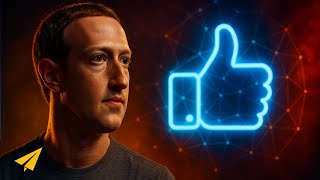
Mark Zuckerberg shares ten principles for success drawn from his speeches and interviews. He turned down Yahoo's $1 billion offer to pursue long-term vision, argues great products solve personal problems not company ambitions, and says the real risk is standing still.
Chapters
In a world that's changing so quickly, the biggest risk you can take is not taking any risk.
It's really good to be idealistic, but be prepared to be misunderstood.
People say that, you know, I built Facebook, or Steve Jobs built Apple, or whatever, but you know, that's really not true.
What's up, Believe Nation? It's Evan. My one word is believe, and I believe in you, and I wanna see that great thing that you have inside of you Come out so you can help change the world. So to help you on your journey today, we're gonna learn from the billionaire founder of Facebook, Mark Zuckerberg, and my take on his top 10 rules of success, volume 2. Rule number 8 is my personal favorite, and I'd love to know which one you guys like the best. And as always, guys, as you're watching, if you hear something that really resonates with you, please leave it down in the comments below and put quotes around it so other people can be inspired. And when you write it down, it's much more likely to stick with yourself as well. Enjoy.
Ideas don't come out fully formed. They only become clear as you work on them. You just have to get started. If I had to know everything about connecting people before I got started, I never would have built Facebook. Movies and pop culture just get this all wrong. The idea of a single eureka moment is a dangerous lie. It makes us feel inadequate because we feel like we haven't had ours yet, and it prevents people with seeds of good ideas from ever getting started in the first place.
In a world that's changing so quickly, the biggest risk you can take is not taking any risk. And I really think that that's true, right? I mean, a lot of people, I think, think that, um, you know, whenever it comes to— whenever you get yourself into a position where you have to make some, some big shift in direction or do something, um, you know, there are always people who are going to point to the downside risks of that decision. And locally, they may be right, right? I mean, for any given decision that you're going to make, there's upside and downside. But in aggregate, if you are stagnant and you don't make those changes, then, then I think you're guaranteed to fail.
Right.
And not, not catch up. So to some degree, I think it's really right that over time, the biggest risk that you can take is to not take any risks.
You know, it wasn't so, so long ago that, you know, I was a student and, you know, sitting in a seat in an auditorium like you guys are here today listening to— I remember very specifically this time when Bill Gates came to talk at Harvard, and I'm just like, "Wow, how do you do that?" And— but, you know, the trick is that the media likes to sensationalize this as if you have some eureka moment or you are some singular person who builds something on your own, and that's just not how the world works. You know, when I was in school, I built a lot of stuff that I just liked building. There was not a single moment when I had some revelation that Facebook was gonna be awesome. That's not maybe how the media or movies or whatever would like to— portray things. It's not— it's much less exciting. But the reality is I think most services in the world that reach the scale that Facebook has, you start off building something that you care about. And, you know, you don't necessarily think it's gonna be that big. I didn't. You know, I built Facebook, the first version of Facebook, for my college community because I wanted to be able to connect with the people at my school. And I remember very clearly talking to my friends at the time and saying, "You know, how cool is it that we have built this community for our school? You know, one day it's going to be awesome when somebody else builds this for the world, because something like this needs to exist for the world." But it didn't even occur to me that, you know, my friends and I might be able to play a role in doing that, right? Because we were college students, right? I mean, we didn't have any, you know, engineers to work with or scientists servers or resources or anything like that. And, you know, there are these huge companies that deliver products for hundreds of millions of people, right? There's— I always assumed that it was gonna be like Microsoft or Google or someone would build this for the world. And what basically just happened is, um, at each step along the way, we just kind of kept doing the next thing and growing from there. And, you know, there were teams inside these other companies that— that thought social media was important and were working on it. But there were all these different memes and narratives in the world. You know, people would say, "Oh, well, this is just a fad. People are going to use it, but then they're going to stop." So a lot of the teams who were working on it didn't take it that seriously, or the higher-ups in those companies didn't care, so they didn't get resources, and we just kept going and going. And then people would say, "All right, well, all right, fine, so maybe people are using it, but—" It's never going to make any money. Right? I mean, social media doesn't make any money. And we just kind of kept going and going. And then pretty soon we had a service that was bigger than any of these other ones. And that kind of is how we are here where we are. There's no magic. A lot of times I think people just get afraid because, you know, often your dream is— it seems like it's so, so far off. But if you just kind of focus on building stuff that you think is good, and you keep on going at each step along the way, and don't let people deter you from that, and you just really care about what you're doing, and kind of don't give up at each step along the way, then, you know, I think that's how you build something good.
It's really good to be idealistic. But be prepared to be misunderstood. Anyone working on a big vision is going to get called crazy. Even if you end up right. Anyone taking on a complex problem is going to get blamed for not fully understanding it, even though it's impossible to know everything up front. Anyone taking initiative will always get criticized for moving too fast because there's always someone who wants to slow you down.
There are probably a lot of people who can run Microsoft and do a reasonable job. When I was growing up, Bill Gates was my hero.
Oh, come on.
Yes. He's like Darth Vader. He's not Luke Skywalker. No. He's the bad guy. No, he is not. Bill Gates ran one of the most mission-driven companies that I can think of, right? And, you know, right now I think Microsoft, their mission is less focused than it used to be. But when I was thinking about, you know, what would I want it to be when I grew up, you know, Microsoft I thought had a great mission. Put a computer on every desktop and in every office, right? Or maybe it was every desktop in every home. But, and, you know, I mean, there are companies that define themselves by a way of doing things, right? I mean, there's, um, like the HP way that I was talking about, and there are companies that define themselves by making a concrete change in the world. And, um, you know, Microsoft did that. And I have a huge amount of respect for him for doing that. He pushed them, and it was an incredibly inspiring company during the time that he was doing that. I think that they still are doing a lot of things, but I think that they've lost some of the focus. And, um, I don't know, I mean, I think he's like one of the greatest visionaries that our industry has ever had.
I built the first version of Facebook because it's something that my friends and I wanted to use at Harvard, a directory and a way to connect with the other people around us. And I didn't think at all that it was going to be a company. I remember very specifically the night that we launched the first version. I went out to get pizza with a couple of my friends who now work here. And You know, and I remember really clearly we were talking about how one day we thought that someone was going to build a community like this for the world, uh, and that that would be some company. But it, like, it clearly wasn't going to be us. I mean, it just, it wasn't even— It didn't even occur. Yeah, no, I mean, it wasn't even an option that we considered that it might be us. I mean, we just weren't focused on building a company back then. We were just building something that, that, that we thought would be useful at our school. With Facebook, there was just such, you know, people loved it, right, and had such an intensity of using it. I think within a couple of weeks, two-thirds of students at Harvard were using it, and all these other students at MIT and other local universities were writing in asking us if we could open up Facebook at their school. So we kind of just followed that, right? And, you know, again, we didn't— I didn't set out, and, you know, my roommates didn't set out to to build a service that we're going to turn into a company, but we just kind of followed what people wanted, and that led us to expand it to all these other schools and, um, and eventually beyond schools. And to, you know, at some point, uh, once we'd hired a bunch of people, we decided to turn it into a company and, and, um, and go for this mission of connecting the world. But that's not where we started. You know, I always think that you should start with the problem that you're trying to solve in the world and not start with, um, deciding that you want to build a company, right? I mean, the best companies that get built are things that are trying to drive some kind of social change, even if it's just local in one place, uh, you know, more than starting out because you want to make a bunch of money or have a lot of people working for you or build some company in some way. So, you know, I always think that this is kind of a perverse thing about Silicon Valley in a way, which is that, you know, people decide often that they want to start a company before they even decide what they want to do. And that just feels really backwards to me. And, you know, for anyone who's had the experience of actually building a company, you know that you go through some really hard things along the way. And I think part of what gets you through that is believing in what you're doing and knowing that what you're doing is really delivering a lot of value for people. And that's, I think, how the best companies end up getting made. I think the media—
there's a little bit of this cultural bias towards thinking that, you know, one person does this. I mean, people say that, you know, "I built Facebook," or "Steve Jobs built Apple," or whatever, but, you know, that's really not true. Right? I mean, it's— we're people, we helped, but there were thousands and thousands of other people involved in building these things. And the reality is, is that as strong as any one individual is, no one person can deal with all the challenges that are gonna get thrown at them in anything that you do. And one of the ways that I think we maintain resilience is by having co-founders and partners who complement our strengths and fortify our weaknesses and can kind of encourage us and give us a push to, to keep going when things are tough. And there's actually a lot of data on this that suggests that companies that get started with more co-founders are more likely to be successful. And it isn't quite clear, um, exactly from that data why that's the case, although it is very clear in terms of the outcome for the startups that it is the case. Um, but I would guess that the reason why that's the case is because of this resilience point where people who start something by themselves, I just think like there's no way that any one person can overcome all of the different things that you need to do to, to build a startup or take on any kind of other project in the world. But if you have 2 or 3 or 4 partners, then I don't know, I mean, maybe over time one of them doesn't like it and drops out, but you still have enough strength on the team to power through all the challenges that you have, and that's kind of how you go. And, you know, at Facebook today, one of the things that I always find a little bit funny is, again, that so much attention is placed on me as the person running the company, whereas I think, you know, people like Sheryl, who really is my partner running the whole business, or folks like Chris Cox who run a huge amount of our product, or Mike Schroepfer who's our Chief Technology Officer and kind of makes sure that a ton of what we're doing works, or Jay Parikh who runs all of our global infrastructure and all the data centers around the world. We couldn't make Facebook work without those people. And there were really hard days where I'm not sure what to do next, and they keep me going.
We've made a huge number of mistakes along the way. Right now, I always say I just think we've made probably every possible mistake you could make.
Is there a decision that you've made that the people around you told you was a mistake and you defied them and you were right?
You know, I mean, the most famous one, I think, probably has to do with selling the company, right? I mean, in 2006, right, we had this opportunity to sell the company to Yahoo for $1 billion, and we turned that down. I think a lot of people at the time thought that we should sell the company. Absolutely. But, you know, I felt really strongly, and I think like now people generally think that that was a good decision. A lot of people who I think build startups or companies think that selling the company or going public is this endpoint, right?
It's like you win when you go public, and that's just not how I see it.
Today I want to talk about purpose. But I'm not here to give you the standard commencement about finding your purpose. We're millennials. We try to do that instinctively. Instead, I'm here to tell you that finding your purpose isn't enough. The challenge for our generation is to create a world where everyone has a sense of purpose. One of my favorite stories is when JFK went to go visit the NASA Space Center and he saw a janitor holding a broom and he asked him what he was doing, and the janitor replied, "Mr. President, I'm helping put a man on the moon." Purpose is that feeling that you are a part of something bigger than yourself, that you are needed, and that you have something better ahead to work for. Purpose is what creates true happiness. I remember that night I launched Facebook from That little dorm in Kirkland House. I went to NOX with my friend KX, and I remember telling him clearly that I was excited to help connect the Harvard community, but one day someone would connect the whole world. The thing is, it never even occurred to me that that someone might be us. We were just college kids. We didn't know anything about that. There are all these great big technology companies with all these resources, and I just assumed one of them would do it. But this idea was so clear to us that all people want to connect, so we just kept working on it day after day after day. And I know that a lot of you are going to have your own stories just like this. A change in the world that seems so clear that you are sure someone else is going to do it. But they're not. You will. But it's not enough to have that purpose yourself. You also have to create a sense of purpose for others. Maybe you're asking yourself, "Can I really do this?" Well, remember when I told you about that class I taught at the Boys and Girls Club? One day after class, I was talking to my students about about going to college, and one of my top students raised his hand and said that he wasn't sure he could go to college because he's undocumented. He wasn't sure if they'd take him. Last year, I took him out to breakfast for his birthday, and I wanted to get him a gift, so I asked him what he wanted, and he just started talking about struggles that he saw other students in his class facing, Finally he said, "You know, I'd really just like a book on social justice." I was blown away. Here is a young guy who has every reason to be cynical. He wasn't sure if the country he calls home, the only one he's known, was going to deny him his dream of going to college. But he wasn't feeling sorry for himself. He wasn't even thinking of himself. He has a greater sense of purpose, and he's gonna bring people along with him. It says something about our situation today that I can't even say his name because I don't want to put him at risk. But if a high school senior a kid who doesn't know what the future holds for him can do his part to move the world forward, then we owe it to the world to do our part too.
Back at Harvard, I am outside of my old dorm room, and this desk, minus the poster in the background, that is not my— that is not my poster, and I would not have had a poster that cool. This is where my desk was, and this is where I programmed Facebook for, you know, it took me about 2 weeks to program the, to code the first version of this. It was a very simple version that I launched in February of 2004. So yes, I'm probably never gonna be back here again, in this specific room, but this has been a place where a lot of really special things happened in my life, and I'm really grateful to this place.
Thank you guys so much for watching. I made this video because Hassan Moussapour asked me to. If there's a famous entrepreneur that you would like me to profile, next, check out the link in the description and go and cast your vote. I'd also love to know what did you learn from this video that had the biggest impact on you? What lesson are you going to take and immediately apply it somehow in your life or in your business? Leave it in the comments below. I'm really curious to find out. I also want to give a quick shout out to Joseph Austin. Joseph, thank you so much for letting me know that Kevin O'Leary tweeted out his top 10 rules of success that I made on him. I really appreciate you letting me know and for all your support. Thank you guys again for watching. I believe in you. I hope you continue to believe in yourself and whatever your one word is. Much love. I'll see you soon.
Many of our parents had stable jobs throughout their careers, but in our generation, we're all a little entrepreneurial, whether we're starting our own projects or finding our role in another one. And you know, that's great because our culture of entrepreneurship is how we create so much progress. An entrepreneurial culture thrives when it is easy to try lots of new ideas. Facebook wasn't the first thing I built. I also built chat systems and games, study tools and music players, and I'm not alone. J.K. Rowling got rejected 12 times before she finally wrote and published Harry Potter. Even Beyoncé had to make hundreds of songs to get Halo. The greatest successes come from having the freedom to fail.
And we want to give everyone in the world a voice to express what matters to them, right, and help bring people together to be able to solve important challenges. One of the big things that I think that we need to do is just help connect the half of the world that's not on the internet to the internet. And that sounds like a very basic thing, and you and I probably take that for granted because we've had the internet for a while, but, you know, for a lot of people in a lot a lot of parts of the world, just having access to share your opinion or send a message to your partner or your friend or learn what the prices are for products at the market, look up basic jobs. I mean, those are important things that a lot of people don't have an equal opportunity and access to do. So there are a lot of things that we can do to solve this. At Facebook, we're building technology like solar-powered planes to beam down internet access to places that might be remote islands or in the middle of a rainforest. We're working on new business models with operators to do this, but this remains one of the things that I'm most excited about for the next decade and beyond, is just unlocking access to the internet for the next 3 or 4 billion people. And I think if we can do that, all these folks who today don't have the tools to start businesses or create new tools, they'll now be able to make our lives better too.
How many of you remember your first lecture here at Harvard? Mine was Computer Science 121 with the incredible Harry Lewis. Harry! I was running late for class, so I threw on a t-shirt, and I didn't realize until afterwards that I put it on inside out and backwards, and my tag was sticking out the front. I couldn't figure out why no one in class would talk to me. Except for this one guy, KX Jin. He just went with it. We started doing our problem sets together, and now he runs a big part of Facebook. And that, Class of 2017, is why you should be nice to people. So let me give you the one word secret to happiness. One word. This is all you need to be happy. The most important word ever.
If you had to think of one word that's most important important to you, or that sums you up, or that would be kind of like a little beacon.
Hey, Believe Nation!
If you want to know what the most important one word is for Tony Robbins, Gary Vaynerchuk, Oprah Winfrey, will.i.am, and Howard Schultz, I have a very special secret video for you. Check the description for details.
More from Evan


How the Biggest Mistake in History Created A Trillion-Dollar Empire | Sergey Brin



9 Machiavelli Principles That Force People To Respect You | Machiavellian Philosophy



The First 10 Words That Instantly Ruin A Sales Conversation | Vanessa Van Edwards

The Top 1% Mindset Behind The First $5 Trillion Company | Jensen Huang (Nvidia)

