Meet The World-Famous DJ That Started With No Music Training!
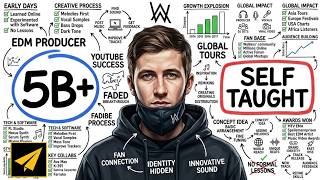
Alan Walker started making music in 2012 with no training, learning from YouTube tutorials and Facebook communities. He performed for 70,000 people on the Rihanna tour early in his career and made a major mistake that taught him to keep going. His mask and hoodie became symbols of unity for his online gaming audience.
Chapters
I think every rookie makes mistakes, and certainly so did Alan as well. The big difference though is that most people are fortunate enough to do that within, you know, their pre-production rehearsals or whatever. Alan did it on his first show on the first leg of the Rihanna tour in front of 70,000 people.
When it comes to making music, I try to not look at it as a full-time job. Do not give up because you never know when success is around the corner. That's exactly what happened to me.
What's up, Believe Nation? It's Evan. My one word is believe, and I believe in you, and I want to see that great thing that you have inside of you come out so you can help change the world. So to help you on your journey today, we're going to learn from record producer and DJ Alan Walker and my take on his top 10 rules of success. Rule number 8 is my personal favorite, and I'd love to know which one you guys like the best. And as always, guys, as you're watching, if you hear something that really resonates with you, Please leave it down in the comments below and put quotes around it so other people can be inspired. And when you write it down, it's much more likely to stick with yourself as well. Enjoy!
I started making music back in 2012-ish. I was looking for new music because I was tired of the mainstream stuff. I wanted to find something else that I would actually like and enjoy and listen to. I discovered this YouTuber who went by the name DDNUS. I decided to leave a comment on his YouTube video because I'm very interested in learning how those things actually work. How do people make what we listen to or we use, like for example websites, graphics, music, and therefore I was very interested in like how did he do it. Then we started to get We got in touch even more and more, and he started teaching me the basics of music production.
Making it through that first performance, I guess, was in many ways a relief. But we also quickly realized there was a lot of work to be done and a lot of improvements that had to be made. With the full-scale festival tour throughout Europe just 8 weeks away, well, we really had to get our grind on.
I was so super nervous. Yeah, I was like, oh my God, I can't believe that I'm doing this. We basically had all the festivals that we wanted that summer. Tomorrowland, Creamfields, Lollapalooza. We had a solid plan for the whole summer.
Then came the phone call. Hi guys, we got a call from the US. Does Alan want to do support on Rihanna tour? I was like, okay, can't say no to this. Do I really dare to say yes? I think every rookie makes mistakes, and certainly so did Alan as well. The big difference though is that most people are fortunate enough to do that within, you know, their pre-production rehearsals or whatever. Alan did it on his first show on the first leg of the Rihanna tour in front of 70,000 people.
I was unlucky and actually hit the cue button on one of the songs, and then I messed up. Okay, that wasn't supposed to happen, but— Alan, in that part of his career that he was, should be doing mistakes. I hate myself for every mistake that I make, but I also know that making mistakes and learning from them is an important part of the process. If I didn't make any mistakes, then I probably wouldn't have been where I am today. When it came to me, the decision between choosing to work with other music or stay in school, it was pretty hard because It was a 50/50 chance either I would succeed with the music or I would have to go back to school, pretty much. And so I took the risk and I went all in for the music. So yeah, it was a really important decision and I think it was worth it. When it comes to making music, I try to not look at it as a full-time job. I try to mainly look at it as a hobby because I think I will get more pressure on myself if I look at it as a job, so when I look at it as a hobby, it's a lot easier to avoid that pressure and be more creative.
I wrote something down, I think it's in your bio or something, everything started out with people, or rather nicknames from around the world helping each other out. So can you explain a little bit more?
Well, back in 2012 when I first started to make music, I got in touch with, for example, producers from Spain, Canada, Australia, Chile, and pretty much around the whole world. And we made Facebook groups, for example, just where we could sit down, discuss music, get tips and tricks, what we should do, what we should not do when it comes to music production. And it was really, really great, and it's been a really, really good help for me actually establishing myself as an artist and also learning things on the road.
Especially like you say, yeah, the beginning as a musician, and then were you surprised by this community, so to say?
Yeah, because that's what I was— I, well, that was pretty much the first thing that I got introduced to, and it was really good help because me just starting out with pretty much nothing, I just get in touch with people that way, what was really, really good for me as an artist.
What kind of tips did they give, or is there maybe one thing that sticks out that you kind of got from those groups?
Well, one thing that they helped me with was, for example, changing my artist name. I used to go by the name DJ Vaux, and we were just discussing, like, should I change my name from DJ Vaux to either Vaux, Walker, Alan Walker, or something else? And they all agreed upon, you should use your real name, Alan Walker. And that's, for example, one thing that happened. And also, when I first released Fade, for example, they gave me feedback before before I released it, and pretty much with all my other songs as well. And it's been a true help because they give me feedback and they're just trying to be as brutally honest as they can be. And I think that it's a very good thing because I learned so much just by getting honest criticism instead of people just saying, "Hey, yeah, it's good." So, yeah. Do not give up because you never know when success is around the corner. That's exactly what happened to me. I just kept on uploading songs and songs and songs. To my YouTube channel and to my SoundCloud page, and I got picked up by No Corporate Sounds, and that's where it all started. And that was pretty much the major key for my success. I know like motion picture soundtracks like really inspire you with your music, but how do you keep that mindset when you're creating music? Do you— I mean, because you can listen to any of your tracks and I could put it onto any film. So how do you keep that mindset going? I don't actually know. I'm just trying to make whatever I like and whatever I think that's listenable because I'm thinking like, as long as the melodies are good, then the song is pretty much good to go because I'm a very— a guy that really cares about the melodies in a song because I feel like the number one most important thing in the song is the melodies. If the melodies aren't good, then I don't know if the audience would listen to it, so. But yeah, with Alone and Faded, like, the melodies has been quite simple but also very catchy, so I think that's also what's catching the audience.
You like to stay unrecognizable to a certain extent, so why is that?
It's just a symbol of unity, pretty much, and like just to tell anyone that they can be a walker, they can accomplish anything. Like, and what we also did in my brand new music video for Alone, like, was that we wanted to send out a very powerful message, and that was like just including so many other people in the music video. Instead of having one person or three people as in Singularity Unfaded. And we just wanted to like have it in a way like that everyone is connected, but also like just send out a message that you're not alone because you may feel that you're alone, but you're not actually alone. I grew up pretty much in an online community, and what I want to do is to embrace the unity of that community. And that's why I wear the mask, just to symbolize and create unity. All you have to All you had to do was to put on a mask and a hoodie and you'd become a walker just like me. Alan's visual image is born from his core fans, the gamers. It's about this mystical identity with his hoodie and his mask. That's also from the gaming community, that you're always behind the screen. There's something between you and the others.
We wanted to keep that and build something very interesting by not telling everything from the start.
Well, part of this is because you also were interested in graphic design, and so part of kind of this new internet culture is the way you present, like to present yourself, and so where did this come from?
Graphic design was pretty random because when I was even younger, I downloaded Photoshop and just started messing around making like signatures, like people on forums that I was in gaming with, like, you can have a signature with a picture that said your username. So I kept on making those with a transparent background and people really liked them. And later on I started to combine this with the programming that I used to do before, with graphic design, and I even got to combine this with music production because I also designed my own logo and Just all those things just fit perfectly together. And also, for example, making my own logo or being able to actually give criticism to my own art or gathering when we're making the COVID arts, for example, for Faded, Sing Me to Sleep, Alone, etc. It's just like, just by doing these kind of stuff, I would say I would take a closer look at the details because I used to do it before myself. And what I'll also say that all these have in common is the programming part. Like, you have to program everything so it fits perfectly together. Today I'm going to show you guys the making of my song "Sing Me to Sleep." It pretty much started with one of my, one from my team sent me a melody and they want me to work on the melody and to give it like Andy Allan Walker vibe. So we just started to work on it and then we got es en su lengua to sing demo vocals and they just kicked ass. So in the beginning we have like kind of like this reversed piano along with some pads and actually the vocals as well. We actually chopped up the vocal and made a pluck The thing with this, combined with the piano in the beginning, is that it creates that, yeah, that right atmosphere that I think just creates the whole track. First verse, we kind of like start to build up the track, so I try to keep it simple. Some chords and plucks and also muted guitars. We also have like a pan flute. And at this part here, we also added like the soli that I also used in, for example, Fade, Spectre, and Faded. Like this sound. Some sounds are self-made, but most of the sounds that I use are from plugins. And when it comes to plugins, I mainly just use Nexus and Silent One and Spire.
Thank you guys so much for watching. I made this video because Sujit Justine Barwa asked me to. If there's a famous entrepreneur that you would like me to profile next, check out the link in the description and go and cast your vote. I'd also love to know what did you learn from this video that had the biggest impact on you? What lesson are you going to take and immediately apply it somehow in your life or in your business? Leave it in the comments below, I'm really curious to find out. I also wanna give a quick shout out to Braulio Damian Calzado from surfbounce.com. Thank you so much for picking up a copy of my book, Your One Word, taking that picture. It looks a little beaten around the top, like the top part of the COVID is messed up, but I hope you're not reading and driving at the same time, pull over to have a read. Thank you so much for the support, for taking the picture, for posting it. I really appreciate it, and I'm so glad that you enjoyed the book. Thank you guys again for watching. I believe in you. I hope you continue to believe in yourself and whatever your one word is. Much love. I'll see you soon.
I just kind of tried to do something new. So what I did was like, I took an electro house track that I made that was about, I don't know, 128 BPM. I took the speed down to 90 BPM and felt like that opened up the melodies and made like the emotion come out easier. What motivates me the most is the great feedback that I get from my followers. I'm really looking forward to releasing new music because I do really enjoy like releasing new content to my followers and listeners all around the world. I mainly learned how to make music on YouTube because I never had like a musical background or anything. So I just stuck behind my computer for maybe a year just watching YouTube tutorials, and from that I just kept on learning the basics and new things. And I got in touch with people on Facebook, for example, in music groups, and we just kept on giving each other feedback and tips. So let me give you the one word secret to happiness.
One word.
This is all you need to be happy.
It's the most important word ever.
If you had to think of one word that's most important to you or that sums you up or that would be kind of like a little beacon.
Hey, Believe Nation, if you want to know what the most important one word is for Tony Robbins, Gary Vaynerchuk, Oprah Winfrey, will.i.am, and Howard Schultz, I have a very special secret video for you. Check the description for details.
More from Evan


How the Biggest Mistake in History Created A Trillion-Dollar Empire | Sergey Brin



9 Machiavelli Principles That Force People To Respect You | Machiavellian Philosophy



The First 10 Words That Instantly Ruin A Sales Conversation | Vanessa Van Edwards

The Top 1% Mindset Behind The First $5 Trillion Company | Jensen Huang (Nvidia)

