My Favorite Top 10 RULES for SUCCESS - April 2017 - #EvansFavs
Evan Carmichael compiles ten success rules from actors, entrepreneurs, and athletes. Hustle harder, take big risks, love your work, persist through failure, help others first, and reframe setbacks as keys to future success.
Chapters
What's up, Believe Nation? Today I'm going to share with you my favorite top 10 rules to success, April 2017 edition. And as always, guys, as people are talking, if you hear something that really resonates with you, please leave it down in the comments below. Put quotes around it as well so other people can be inspired. And when you're writing something down, it's much more likely to stick with yourself as well. Enjoy.
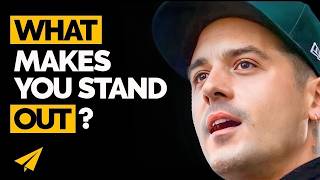
Go hard. And then when you think you're going hard, go harder. Like, that's really it. Just hustle. You know what I mean? There's nothing in life that you can't put enough work in every single day and not get better at. You know what I mean? Like, if you want to be good at something, you know what I mean? Like, you can't just like not like do it every day and not get better. It's the same shit with music. It's the same shit as learning how to play an instrument or something. If you spend your time practicing your craft, like, you know, that's really it. It's just, you know, because nowadays it's like with the internet, everything is so accessible and, you know, Everybody in the world is a rapper, you know what I mean? Everybody's putting music out. So it's like, how do you stand out? Quality is always gonna matter, but also being different. You can't try to be different, you know what I mean? But you just gotta be yourself.
What's the biggest risk you've taken that you feel has paid off?
The biggest risk I've taken that has paid off— I'm about to say Cookie. I mean— I was very nervous when I received the script. She wasn't the most likable character, and I've played some pretty edgy characters, but this one was particularly a challenge because it was primetime network television, and I wasn't sure how people would receive her. I mean, she beat her son with a broom, even though he deserved it. She called one son a faggot. I mean, Oh, it was, it was scary, but I'm the type of artist that if the role doesn't scare me, I don't want it because it's not going to change me as a person. So I took a risk, and that's what you do as artists. You jump in feet first and you see where it goes. And I knew that we had something special. I don't just jump feet first for any project, I knew this was something special. I knew that what Fox was trying to do with Lee Daniels and Tani Strong were trying to do, and what I was trying to do, was shake up television. Too safe. You know, life is not safe. And I think we did that with this show. So I'm so proud to be a part of this project, and I'm so proud that Fox believed in us and took a chance, because that's what art is about, isn't it? Taking chances, taking risks.
Yeah, I think if you don't actually believe what you're doing is really important, if you don't derive satisfaction from what you're doing, then you will not be able to sustain all of the bad things that happen in the incredibly long period of time that the bad things happen over. And so the only motivation that I have seen work for people over a long period of time is enjoyment in what they're doing and an intense belief that it matters, and ideally liking the people that they go to work with every day. But the— I think the reasons that a lot of people— and by the way, it's totally cool when people start off saying, well, I want to make money, or I want to be famous. I think a lot of people start that way and they don't like to admit it. But pretty quickly, or at least in the first few years, I think a lot of people find a deeper mission for why they do what they do, and that drives them then for the rest of the time they work.
I look around at my girlfriends and my, my guy friends, and they're in jobs that they don't really have a lot of growth potential in, that they're not passionate about. And I think if we're ever gonna make bold decisions, it has to be at this point in our life. You know, we have to be out there, we have to be experimenting, we have to be looking for that which makes us tick. And I think a big part of that evolution for me was really summer jobs and working, um, and making sure to actually, you know, get into the world and try different things and eliminate those, which is as useful, eliminating those career paths that you're not interested in as it is, you know, doing things that do interest you. But I think just being bold and taking risks when you're young is so important because I can't imagine working the hours that I do if I didn't fundamentally love it. And I think that's the difference between somebody's— successful and somebody that's extremely successful, somebody that's good and somebody that's exceptionally good, is the level of drive, which directly stems from passion.
There's different types of people in this world, and one thing that we're all going to deal with is like difficulties in our tasks trying to become successful. As good as things get, you gotta have the same amount of bad that's going to try to impede your progress. Whether it be people, whether it be the IRS, whether it be whatever, something will rear its ugly head and try to block you. Now, a lot of people can't handle that shit. When you have a vision and something or someone throws a curveball, it hurts. It stings, right? It's like your baby. And now I can't put my baby out there like I want to do it. So it really throws people off. They get really negative. They may get depressed. They may want to stop. They may want to just go back to their 9 to 5. That's fine. It's not for everybody to push through. But for those who can push through, like he said, the difference between those who really succeed and those who don't are the ones who, when they're faced with whatever these difficulties are, they're like, fuck it, I'm gonna keep pushing through. I'm gonna keep pushing through because it sounds corny and cliché, but it's always sunshine after the rain. You know what I'm saying? Rain don't last that long. You got to know that, be aware of that. That's something you can take with you through everything in life. But in business, you cannot stop because things are not going right at the time, because it's going to happen. I've dealt with it. I'm sure I'll deal with it again at some point.
The number one thing that's going to change your life, the only thing that will change your life, change your business, change your money, change your relationship, is you must raise your standard. Now I know that sounds boring, stupid, basic, but it's the truth. The only thing that changes our life long-term is when we raise our standards. What does that mean? That sounds so boring and dumb. It means that all of us in life have things we want. We don't get what we want, we get what we have to have. Remember I said earlier, we all get what we tolerate in ourselves and other people. But when you're no longer willing to tolerate something, that's when your life changes. The difference in people is their standards, period. The difference in people is their standards, period. And what do I mean by standards? Everyone in the world has a list of things they think they should do. I should lose weight. I should work out. I should spend more time with my kids. I should work harder. I should make more calls. I should, I should, I should, I should. And then you know what? People don't do their shoulds and they get mad at themselves and they what I call shit all over themselves. They beat themselves up about it. What changes people is when your should becomes a must. When suddenly the thing you said should happen has to happen. That's when human beings change. It's like if you want to take the island and you're the head of the army and you want to take the island, the most powerful way to take the island is burn the boats. 'Cause if there's no way to go back, it's amazing what happens when it's a must to do something versus a should. That's what makes human beings succeed.
If you want to be a fireman, go and do it. If you want to be a ballet dancer, then go and be a ballet dancer. If you don't believe in yourself, then no one else will believe in you. And, um, yeah, it's, it's an important— it's so important for me to people to understand that I want to be an inspiration. I was bullied, as kind of 9 out of 10 children are, and I want it— I want to be a role model. And I think now I'm in the kind of limelight to go, it's okay. And it's the special people that are bullied, you know, the ones that have something magical. And it's something It's something that you can turn into a positive and not let it eat you away. And there'll always be someone that says you can't do it. There'll always be someone that says, "I don't believe in you." There'll always be someone that says, "I do believe in you." And there's always someone that says, "You can do it." And that's the people that you have to focus on. However much people try and put me down, which they do, and they say, you know, "Every time I hear your song, I wanna burn my ears," I say, "Who's laughing now?" But I say what it finally comes down to in your business and how you run it is you first and me second.
Take that home with you. You first and me second. The first thing you wanna do is help your people succeed and then you succeed. Just keep it in the right order. It's not you succeeding and then hopefully they come out okay. It's all about them, not about you. And I think that was the foundation of our business. You know, we never, Jay and I never talked about how much money we made or how much money we wanted to make. We talked about how big we'd like to have our business, but it was never a personal financial goal. But our focus was on how we could enrich the lives of our people and make them better, oftentimes influencing them with our faith as well.
I feel a genuine need to communicate with an audience, and it might just be the attention I didn't get as a kid. It can't come from anything I don't do anything good. But what I try and do is bring the best information I can to the stage and broadcast it. So, I'm— it's reportage from distant points, from a fairly unique standpoint. And so, basically, I'm not keeping it all to myself, but I earnestly try to— it's not about entertainment. It's about communication. Warning, broadcasting, emitting, and trying to leave something of myself with these— with the audience. Not— it's not mere entertainment. It's not just making people laugh or not. It's, uh, it's gotta hurt me. It's gotta leave lines in my face. I don't like any artistic endeavor that doesn't extol a price on the one doing it.
So I don't—
I'm not looking to get through these things okay. These things are actually very difficult. And very hard on my psyche, which makes me think I'm doing the right thing.
Hublot came out with a product in 1980, a product that was based on an innovation to introduce rubber as a strap. It seems very common today, but rubber in 1980 was a real courageous move. It was even the provocation. People said, "Hey, on a gold watch? Rubber?" Because people didn't know rubber comes from a tree, rubber is natural, rubber is very comfortable, it's very flexible, and rubber is very resistant, and it's waterproof. So finally, it's ideal for a watch. But in those days, people thought it's a provocation. Hublot could not evolve, they stayed on a product and I said we are not a product, we have a message first, we have a concept and the concept is fusion.
Why?
Because in 1980 when we put gold together with rubber, we created a fusion because gold and rubber never come together. They were together only one time in life during the Big Bang. Then everything was in one. And then rubber went away and said, "Okay, I go now on my tree." And gold said, "Okay, I go and rest in South Africa under the earth." And since then they never met. Till people take them and connect them. So I said Hublot made a fusion. And fusion must be our message, must be our philosophy, must be our religion. And once we have this religion clear and it is named fusion, then we can develop further products that not necessarily need rubber anymore, because fusion goes further away than just rubber. It can be carbon, it can be ceramic, whatever. So I was capable to free Hublot from the product and give Hublot a message, and from that message, new products were born. And that was the most important element in the revival of the brand. It's to take it away from a product concept and to give it a brand message. And from the brand message were then later born in 2005 new products.
When you finish a film, your job basically is over. And when you, you have a desire to share your work, and so you put it out into the world. And you realize that yes, you can help the film some by giving interviews, or you can go to some places and have talks, but basically the film is on its own. And you can't tell whether it's going to go good or going to go bad. It's important that you believe in your work, and that's— The most important thing.
I watched so many matches in my life, unbelievable. And they're really not so— there are some boring games and then I sleep and I'm— it's so boring. I think, why they meet each other and make this? 20, 40, 50, 60, 70, 80,000 people in a stadium and it's boring game. It's not okay. So that's what we want to see. We want to enjoy our own game. If we lose, okay, we like to win, but if we lose with our way, it's okay. If we lose with the way of somebody else, it's, it's, um, you cannot work with this. So that's it. It's, um, very emotional, very fast, very strong, not boring, no chess like this.
No.
Yes, of course, tactical. Yes, but tactical with with big heart. And tactical things are so important. You cannot win without tactical things, but the emotion makes the difference. Life in our game, that's important.
I remember I gave this talk to a group of entrepreneurs, and this one woman raised her hand. She goes, well, you're real positive, but what do you do? What do you tell yourself when you just wasted a year and a half of your life doing something and it didn't work out. And I told her, that's a real negative way of looking at it. I did that already, right?
Why didn't you— why—
can you rephrase the question and then ask me again? Because it's just, you're looking at it really negatively, first of all, so I didn't want to answer it that way. So she thought about it, she said, well, I'd learned an important lesson the hard way. I said, that still sucks. No wonder you don't want to move forward, because you feel like you've done something wrong because it didn't work out the way you had predetermined you wanted it to work out. You have to look at it a different way. If you feel like you want to do something, you should just step forward. It may not work, but you're gonna hit a step in your career and in your development that you could not have taken had you not gone that way before you can get over there. And I say, in the ashes of all your failures, if you look close enough, you'll find keys to success. If you're a very negative person, all you would focus on is, wow, I have a really bad movie on my resume that I wish I had never done. But if you're a positive person, you will go, I'm so glad I took that step that most people would not have taken because that got me to a place that no one else can follow.
Thank you guys so much for watching. I'd love to know what did you think? What was your favorite clip? What are you going to take from this video and immediately apply to your life or your business somehow? Leave it down in the comments below. I'm super curious to find out. I also want to give a quick shout out to Riza Pereira. Thank you so much, Riza, for picking up a copy of my book, Your One Word. Really, really, really means a lot to me, and I hope you're enjoying the read. So thank you guys again for watching. I believe in you. I hope you continue to believe in yourself and whatever your one word is.
Much love.
I'll see you soon.
More from Evan


How the Biggest Mistake in History Created A Trillion-Dollar Empire | Sergey Brin



9 Machiavelli Principles That Force People To Respect You | Machiavellian Philosophy



The First 10 Words That Instantly Ruin A Sales Conversation | Vanessa Van Edwards

The Top 1% Mindset Behind The First $5 Trillion Company | Jensen Huang (Nvidia)

