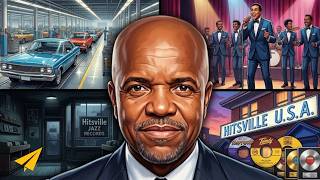
Berry Gordy's boxing career ended with the Korean War, jazz failed, and Ford upholstery work seemed like a dead end. A legal dispute over his songs taught him he needed to own production, not just write. That insight became Motown Records, a multimillion-dollar empire.
Chapters
Welcome to another edition of Famous Friday. And what I try to do is learn from the success of famous entrepreneurs because any problem that you're facing right now has already been solved. You don't have to go out and find this solution yourself. Somebody else has already solved it. And by studying famous entrepreneurs and how they became successful, you too can become successful really quickly. So today's theme is believe in your dreams. And the story is of Berry Gordy. Now, Berry Gordy is the founder of Motown Records and hugely successful in the music industry, made him a millionaire many times over, inducted into the Rock and Roll Hall of Fame. But how he started, it's a story that most people would have given up on. And it's a good lesson to learn that you need to continue to believe in your dreams. So when Berry was growing up, He had two loves: boxing and jazz. That's what he loved most in the world. And he figured, okay, I gotta pick one. You know, I gotta— I'm setting out on my life, I gotta pick what I love and work on it. So he chose boxing. He won 15 straight fights. He was an up-and-coming boxer. He was doing really well. And then the Korean War broke out. He got drafted to go fight. And by the time he came back, he felt he was too old to continue his boxing career. And, you know, even at that point, a lot of people give up, right? You know, you were doing well at something and it's taken away from you outside your control. And, you know, you say, okay, well, I took my shot, it didn't work out. But Barry didn't give up. He decided, okay, I can't do boxing anymore, so I'm going to do my second love, which was jazz. And he opened up a jazz store in Detroit. And what he found out was that the Detroit audience didn't really like jazz. They wanted rock and roll. And so his company had to close down. He went bankrupt. He had to close his business. And so another shot to the gut, right? Another, wow, both my dreams now don't work out. What am I going to do? And he was out of money, so he went to go work at Ford. And he was nailing upholstery inside their Lincoln automobiles. And again, a lot of people at that point would quit. They'd say, okay, you know what? I tried twice. I tried both my passions. It wasn't working out. I have a nice, safe, steady job that doesn't really make me happy, but, you know, I tried. I tried to bet on myself and it didn't work out, so what do I do now? But not Barry, you know, he had to continue going. And what he did was he turned to songwriting. And he started writing songs and he sold a few of his songs and got to the point where after he sold 2 songs, he said, you know what, I'm gonna try being a songwriter. And he quit his job at Ford and started writing songs. And then he found out that the industry was a really tough one, and it was hard for him to get paid. And the turning point for him— this is what helped him really explode— came when he was— he had sold the song to a New York company and they refused to pay him, and he was going to take them to court. And when he realized that the legal costs would be more than the royalty payments that he would get from them, that he dropped the case and he realized, you know what, I can't just be a writer. I need to have power, and the power is in being the production house. And so he launched his company, and that led to the creation of Motown Records, and that led him to become, you know, a multimillionaire and an icon in the music industry. But it all started because he continued to believe in his dream. You know, one dream was taken away from him, the next dream was taken away from him, but he continued to believe, he continued to fight for it, and he continued to think that, you know what, I don't want this average ordinary life that everybody else has. I don't want to be working on a Ford assembly line for the rest of my life. Even though he bet on himself once and it didn't work out, and he bet on himself again and it didn't work out, he continued to bet on himself and it eventually worked out. So believe in your dreams. For those of you watching, if you like this video, you can subscribe to the channel. You can support me by clicking on the link in the description. And leave a comment, let me know what you think. The comments you leave mean a lot to me. So thank you, and I'll see you soon.