“Nobody is Going to #BELIEVE in You Unless YOU #BELIEVE in You!" - Robin Sharma (@RobinSharma)
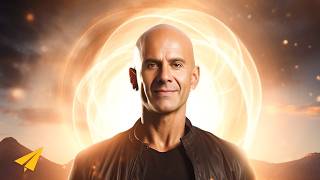
Robin Sharma argues self-belief fuels the disruptive vision others follow. He uses Travis Kalanick and Kanye West as examples of people who believed in themselves first. Sharma's "7,000 Ferrari" philosophy: excel deeply in a few things rather than spread yourself thin across many.
Chapters
If your vision is not routinely called crazy, then perhaps your vision isn't big enough and disruptive enough. Are you being busy being busy? Have you lost that connection to the life you wanted to live when you were a little kid? You can be a history maker, or you can be liked by everyone around you. You can't be both.
Hello, Believe Nation, it's Evan. My one word is believe, and I believe in people more than they believe in themselves. And my sincere My hope is that if you see in yourself what I see in you, you'll be able to change the planet. So to help you on your journey today, we're gonna learn from bestselling author and leadership speaker Robin Sharma, and my take on his Top 10 Rules of Success Volume 2. Rule number 2 is my personal favorite, and I'd love to know which one you guys like the best. Also, as you're watching, if you hear something that really resonates with you, please leave it down in the comments below and put quotes around it so other people can be inspired by it as well. And if you leave it within the first couple hours of this video going live, you have a chance to win one of two daily prizes.
Every genius entrepreneur has an eccentric vision. So they're possibilitarians. They are the people who said, you know, Well, here's the way the industry has always been, and here's the way the status quo is, but here's what we're gonna do. What's coming to the top of my mind right now as I record this is Uber. So you've got Travis Kalanick, and literally through that single app, I mean, they don't own any taxis, they don't own any cars, they don't really have any inventory, but through that single app, Uber disrupted the entire industry of that level of transportation. And so, you know, these people, these genius entrepreneurs, come up with a ridiculously disruptive idea that is absolutely eccentric in its vision. And that's why people call them crazy. And I'll simply say to you, if your vision is not routinely called crazy, then perhaps your vision isn't big enough and disruptive enough. And we change the world when we change the game. And Bono is sharing the story that I believe he heard, and it was the person walks inside Kanye West's living room, surveys the living room, and cannot believe what's on one wall of Kanye West's living room. And it's this giant poster of Kanye West. And so the person who's in the living room goes, Kanye, it's a beautiful living room, but Why do you have this massive poster of yourself in your own living room? And Kanye replies, well, if I don't believe in myself, no one's going to believe in me. And my take on that insight is simply this: no one's going to believe in your lofty vision. No one is going to embrace and enroll in your mighty mission if you don't viscerally believe in it. I mean, no one's gonna believe in you unless you believe in you. And Kanye, you know, in many ways is a disruptor in his field. And Kanye in many ways is playing at mastery in terms of his craft. But that's coming from this incredible self-belief. And yes, I understand some people will say he's arrogant, and I in no way am encouraging anyone to be arrogant or vain. But the larger point for you and I as people on the rise to mastery and creating lives that are legendary is to really dial in on that insight, which is, you know what, we really do have to have the confidence to believe in ourselves. Because a lot of time as a leader, a lot of time as a business builder, a lot of time as a craftsperson, we will be in the wilderness. We will have an idea for a business or a product where the rest of the world says that's impossible. And we have to be coming from a place from within where our "I can" is larger than our "I can't." You absolutely must do the interior work required where you have these fiery levels of confidence where when the world is saying, "You know what? I dismiss your vision," or "That is impossible," you have to be that lone voice who goes, "No, you know what? It is possible, and just watch me do it. You may have read my book, The Monk Who Sold His Ferrari. Sometimes I speak about Ferraris because I don't have a Ferrari, but I love the way that Ferrari rolls. And here's what I mean by that. A Ferrari is in many ways mobile art on four tires. A Ferrari in so many ways is a distillation of Enzo Ferrari's philosophy on mastery. A Ferrari in so many ways is a reminder to you and me about what world class stands for. And what I want to really dial into today is this: did you know that every year Ferrari only produces 7,000 Ferraris? And the point of wisdom, or the powerful idea I want you to really think about and deconstruct in your journal tonight after this mastery session, is why go really wide when you can be singularly deep? I'm gonna repeat that again. But a great company and a great performer goes really, really deep on one or two things, and that's how you rise to iconic. We live in a world, I call it the cult of superficiality, addicted to distraction, afflicted by interruption. So we take the trinity of our performance assets, our mental focus, our physical energy, and our willpower. Those are the 3 primary assets of a world-class producer. And we diffuse them, we disperse them around thousands of projects, lots of little things. And yet I think of the 7,000 Ferrari philosophy. You know, they are world-class in terms of producing iconic automobiles, vehicles, but they don't want to be— they don't appeal to everyone. They don't produce hundreds of thousands of vehicles. They want to do a few products. They want to bring out a few things but do them really, really well. And that's really the craftsman's mindset. That's how craftsmen think, or craftswomen. It's do a few things but do them really, really well. You are an artist. My invitation to you is to produce poetry in terms of your work that the world reveals as mastery. And that is really all about bringing rigor to your game. It's not about doing a lot of things. It's about doing one thing well. Because the secret of genius is not complexity. The secret of genius is simplicity. You look at any genius entrepreneur, You look at any genius producer. You look at any genius athlete. They're not doing 5 sports. They're doing 1 sport incredibly well and then putting in the training time to be monomaniacally focused so that they can become otherworldly brilliant at their 1 thing. And I guess what I'm suggesting to you ultimately is this. Think about the 7,000 Ferraris philosophy. And if you are a business builder, let's say you're a startup entrepreneur, let's say you're a Fortune 500 manager, let's say you're a professional athlete, because a lot of professional athletes are watching these Mastery Sessions. Let's say you are a mother, father, a yoga teacher, or a chef. What are the few things that you could actually do in your work so that you take all of your mental focus, your physical energy, and the willpower that you wake up with every single morning, and you really monomaniacally focus those Trinity of Performance Assets on on the few things, the few projects that when consistently iterated and improved every day over time will allow you to reach a place where the world calls you world-class. And if you can not only get this idea on the 7,000 Ferraris philosophy, but apply it so it becomes a way of being, you really will own your game. When I was growing up, my dad took out this poem and he translated it from Sanskrit into English, and it was a poem from the Bengali poet Rabindranath Tagore. And allow me to share it with you. It simply said, spring has passed, summer has gone, and winter is here, and the song I meant to sing remains unsung, for I have spent my days stringing and unstringing my instrument. And my brother and I used to look at it every morning before we'd go off to school, but I never really understood it. And so when I got a little older, I said, Dad, you know that poem you had on our refrigerator door? What was it all about? And my dad looked at me, he said, he said, Robin, that was a poem written by a man whose heart was filled with regret over a life half lived. He said, Robin, that was a poem written by a man who postponed his life. He always wanted to do something special. He always wanted to do important work. He always wanted to be loving in the world. He always wanted to be creative. He always wanted to see the world, but he got busy being busy. Are you being busy being busy? Have you lost that connection to the life you wanted to live when you were a little kid? Are you so busy stringing your instrument that the song that you your life was meant to sing has died or is dormant within you. And my challenge to you is simply this: to do whatever it takes before you sleep tonight to reconnect with the best within you that you may have lost. Because one of the things I've noticed is this: there are too many amongst us walking the planet today who are sort of in a waking sleep. They have lost a sense of who they truly are, and your life will never work if there's a huge huge space between who you truly are and the person you know you're meant to be. Your life will never be flooded with energy, creativity, productivity, and happiness if there is a large space between your life right now and your unlived life. And my request and encouragement and challenge to you is truly that you make things happen so that the person you are starting tomorrow is more of who you know you truly are. It makes me think of George Bernard Shaw. He was asked on his deathbed, "What would you do if you could live your life over again?" And he replied, after a long pause, "I wish I could become the person I know I was meant to be." And I suggest to you, it's never too late for you to become the person you've always wanted to be. But don't postpone it for next year. Don't postpone it for next month. Start being that person, that human being, that creative force, that business builder, that mother or father, that athlete, that humanitarian, that force of good that you have always wanted to be, beginning right now. You can be a history maker, or you can be liked by everyone around you. You can't be both. I mean, the very nature of living your personal greatness and doing something otherworldly in our world of ours means you're going to have to think differently from the majority. You're going to have to install the habits and routines that most people don't do. You're going to have to live, talk, breathe, walk, work, produce, create in a way that most people who are card-carrying members of the cult mediocrity just don't buy into. When you look at most people out on the world today, and this is not judging, this is just reporting, but they're addicted to entertainment, they love gossiping, they're negative, they're toxic. Anyone who wants to do anything great, they want to bring them down. They dismiss the game changers, and they're just coasting through life. And so the very nature of you stepping up your game, living your greatest potential, owning your craft, dominating your field, and living a life that's legendary means you're gonna have to leave the 5% and make a decision to live as very few people do. And what does that mean? It means you're gonna be laughed at. It means you're gonna be ridiculed. It means you're going to be misunderstood, because leadership is a lonely sport. And it means you just might be hated. And so there is great value when people start start to hate you. Because if you look at Jay-Z, I mean, I was reading his biography and he said, you know, I really knew that I was having influence in the popular culture when people started hating me. If you look a lot of the great authors, when their books go to number one globally, a lot of the amateurs actually start to say, oh, that's garbage. I could put them down. I watched a documentary last night on Steve Aoli, the famous EDM, electric dance music DJ, who's getting so much traction in the world right now. And he was talking about some of the comments that he sees in the social media, and it was things like garbage and, you know, boring and amateurish music and whatever, even though he's so skilled. I mean, you just watch the documentary called I'll Sleep When I'm Dead. And you just see the skill. And you can just look at any great athlete, and you can look at any great scientist, you can look at any great chef, you can look at any great artist, you can look at any great author, you can look at any great statesman, you can look at any world-class stateswoman. Anyone who has done something at an exceptional level breeds cynics and dismissers. So the point is simply this: the very nature of doing something that very few people are willing to do means that the majority will laugh at you.
Why?
Because deep inside they know they have the opportunity to do something great too, and your example makes them feel guilty. And all I'm suggesting to you with great love and respect is simply this: You do have a choice. You can listen to your haters, you can be one of the haters, you can join the victim herd, you can dismiss people who are doing great things, or you can reach into yourself and ask yourself this fundamental question: What do I want to stand for for the rest of my life? Do I really want to rise to mastery? Do I want to get to the last hour of my last day and know that I took every ounce of the human potential I was blessed with? And through easy times and difficult times. I brought it on. And as a result of my values, my mindsets, my heart set, my habits, my routines, my disciplines, I was— I owned my game and I modeled possibility and I served lots of people and I built a great lifestyle. And now it's the last hour of my last day and I'm surrounded by my loved ones. And even though people threw stones at me, I took those stones and rather than being knocked down, I constructed a monument of mastery that stands as my legacy. And if you live like that, you'll be one of the great ones. Which is my greatest wish for you. You're in a restaurant, the server generally gives you what you expect or less than what you expect. You go into a clothing store, it's what you expect or less than what you expect. You do business with any organization, it's generally delivering on what you expect, but more often even less. So you have a gorgeous opportunity to lead the field in everything that you How do you do? By doing one thing. Practicing every single day, because it's a muscle, the ritual of overdelivering. Don't just give your customers what they expect, give them 10x more than what they expect. Don't just give your organization what your manager, what your boss, what the organization is expecting from you. Show something that is so rare in today's economy, initiative.
Initiative.
So you're asked to do a project, give them 5 more things than they expect. You're asked to give a presentation on something, go the extra mile. Consistently dial in the daily habit of over-delivering on people's expectations, and guess what? You become a merchant of wow. You become indispensable to your organization. I wrote a book a little while a while ago called The Greatness Guide, and one of the chapters talked about the importance of being indispensable. And I learned that when I was a young lawyer, and I remember talking to my mentor, and I asked my mentor, you know, the top litigator at this firm, how come he is the icon of the legal profession in this region? And my mentor looked at me and said, Robin, because that person is indispensable to this firm. Well, how do you do that? By practicing the ritual of overdelivering every single day for the rest of your life. Be yourself, everyone else is taken. Well, that really speaks to the power of being an original. It speaks to this concept of authenticity, being yourself. I mean, we live in a world where there has never been so much of a seduction to be like everyone else. There's never been so much influence and hypnosis through the social media and through society to talk in a certain way, to walk in a certain way, to buy certain things, to measure your success by the same philosophy. And what I'm encouraging you to do based on this Oscar Wilde quote is to be yourself. I mean, talk your talk, walk your walk. Take the time to reflect on your dream. Be true to your own values. Because life's greatest heartbreak is self-betrayal. Make your I can more important than even your IQ. Now you're saying, Robin, what are you talking about right here? Well, a lot of people get stuck in victimhood versus leadership by the seduction of saying, well, I'm not smart enough, I'm not intelligent enough. Well, you are intelligent enough. What's even more important is your mindset of possibility. You see, if you look at the best athletes in the world, the best musicians in the world, the best entrepreneurs in the world, the best managers in the world, the best CEOs in the world, the best coders in the world, the best pizza makers in the world, the best moms and pops, etc., etc., etc. Those who get elite-level results are not the most intelligent or naturally gifted people the people in their field, but these are the people that have that mindset of possibility, and it's all about "I can." And that might sound like a bit of a platitude, you know, having an attitude of "I can," a mindset of possibility, a mentality of legendary. But when you really deconstruct it, it's really true. The way you begin each day sets up the way you live each day. I mean, the Spartan warriors said it so well: Sweat more in training, bleed less in war. And if you want to be literally undefeatable in business, literally unstoppable in life, you really want to dial in your morning routine. And so you want to do things like starting the day sweating, because that releases BDNF, brain-derived neurotrophic factor. Factor that repairs brain cells from stress. You want to sweat because that's going to increase your metabolic rate, which is going to give you energy, and we live in a world where energy is even more valuable than intelligence. You want to, in your morning routine, take the time to write in a journal so you actually can detect your values, reconnect with your goals each day, get to know yourself even more, because awareness is the beginning of transformation. And you want to get your morning routine right so you take some time at the front end of your day to learn. Because as you learn more, you know you're going to achieve more. And as you understand better, you can achieve larger. For the past number of years, I've been reading obituaries. And you might say, Robin, that's negative. And I don't think it's negative. I think it's really positive. Because I think few things are as powerful to wake you up, to remind remind you about what's most important, to fuel your energy, to get you into the game so you let go of your fears and you do what you need to do to get big things done than connecting to your own mortality. When you realize that every single day could be your last, or when you appreciate that no matter how long you live, life is a short ride, you just sort of let go of the fears and you let go limits and you live full-on and you seize opportunities and you have real conversations with real people and you sort of wear your heart on your sleeve and you bring on the fullness of your authenticity and you do whatever it takes to get your loftiest dreams to get done. And so I read these obituaries and it reminds me about what life is all about. And relatively recently I've started walking in cemeteries. I was in Mauritius a little while ago. It's— I don't know if you've been to Mauritius, but it's this paradise on earth. It's this tiny island about 4 hours off the coast of Cape Town. And I've been to Mauritius a number of times. I was there to give a big leadership event. You know, I talk about leading without a title, so it was filled with iconic CEOs and people running big industries and big companies and entrepreneurs. And and startup people, and it was really wonderful. But I also took about a week and a half just to refuel and to work on my new book and to reconnect with my values and to set myself up for the coming months. And one of the things I did was I went for a long walk. I love walking. I find, interesting, like I find a lot of the most creative people, the most productive people on the planet, they all have one thing in common. They have the routine of walking on a regular basis. And so I love walking. I've walked in nature for many, many years. And so here I am in Mauritius, and I just started walking. And I was actually listening to an interview of Charlie Rose and Steve Martin, and it was done in New York in front of an audience of a few thousand people. It was about an hour and a half long, and Steve Martin was talking about his career, and Charlie Rose is one of the great interviewers of our time. So he was asking about how he became so good at what he did and his life and his love of art and stand-up comedy and acting. I mean, he, you know, Steve Martin became an actor after a stand-up comedian, etc. And so I'm walking and the sun is setting and I'm walking along the Indian Ocean and I'm looking at the flowers and I get to this little village And it's this really, you know, this little village with a lot of character. And as I'm walking along the edge of the village, still close to the seaside, I spot a cemetery. And I've learned to follow my instinct more than ever before because instinct is more powerful than reason. And life will lead you to an interesting place if you stay with the flow. And so I walked towards the cemetery, and I walked into the cemetery, and I started walking through the cemetery very respectfully and carefully. But it was interesting to me because a lot of the tombstones were just made out of wood, and somewhat sadly, some of the wooden crosses were actually really, really small, and you could tell that the grave sites were of kids. And as I walked through the cemetery, I saw these crosses and I saw some tombstones. Some looked very old, a few graves looked fresh, and it reminded me really about the shortness of shortness of life. I mean, Marcus Aurelius has written one of my favorite books, The Meditations of Marcus Aurelius. And actually, he didn't write it. Marcus Aurelius was a Roman emperor, and during a long military campaign, in his journal, he wrote his thoughts and his philosophies. And someone found those diaries, those journals, and made them into this book called The Meditations of Marcus Aurelius. And he does talk about the shortness of life, and so does, you know, Titus and a lot of the great Stoic philosophers. And being in this cemetery and walking through it with great delicacy, it reminded me how short life is. And it reminded me we all have hopes and dreams, and we never know when those dreams are going to get dashed. And, you know, we never know when our last day will unfold. Some people will wake up tomorrow morning, they'll get in their car You know, they'll take a shower, they'll have their coffee, they'll say goodbye to their loved ones, and that will be the last day that their loved ones will ever see them. You know, some people on the planet, the day after tomorrow, will go into their doctor's office to get the result of a routine checkup, and the doctor will say, sit down, I've got some sad news for you. And they'll be diagnosed with maybe some kind of a terminal illness. I mean, accidents illness, tragedy, catastrophe is also a reality of humanity. And so what I'm suggesting to you is do whatever it takes to be in the moment and to stay positive and to stay on your game and to optimize your craft and to spend time with your loved ones and to take care of your fitness and to learn something new every day and to enjoy the beauty the beauty of sunsets and star-filled nights, and at the same time, as much as possible, please do not lose perspective. Stay connected to your mortality. You know, Steve Jobs in that famous Stanford speech said it really well. You know, you are naked. You have nothing to lose. And he learned that when he connected to his cancer. And so maybe you will install a ritual once a month on the way home from work. You will pull over to a cemetery and you'll spend 5 minutes even in meditation looking at the tombstones, looking at the crosses, studying the graves, or whatever your tradition is in whatever nation you're from, because not every tradition I know has the gravesite. Sometimes it's the, the funeral pyre, which really reminds me that life is really short and you never know when your last day is going to be. And so just build some kind of a routine to remind you on the shortness of life so that you Tell the people you love how you feel about them. So you write the letters that need to be written. And I know people don't write letters, but writing a letter to someone you need to express forgiveness to or gratitude to is really powerful. Pursue the projects that will allow you to be the legend of your industry. Chase the passions that fuel your joy and live every day as if it was your last, because we never know when our last day will show up.
Thank you guys so much for watching. I made this video because Jamal M asked me to. If there's someone you'd like me to profile in a future top 10, please check out the link down in the description below and you can cast your vote on who we should do next. I also want to give a quick shout out to Jude. Jude, thank you so much for picking up a copy of my book Your One Word and taking the that awesome picture and sharing it with me. I really, really appreciate the support, and I hope you enjoyed the read. Thank you guys again for watching. I believe in you. I hope you continue to believe in yourself and whatever your one word is. Much love. I'll see you soon.
Run your own race. And that's really the first lesson I learned from one of my mentors. Run your own race. Stay in your own lane. You know, you have no competition if you are in your own division. And what I mean by that is simply this: it's so easy to get swept off your game, swept off your vision, swept off your values, swept off your focus when you're measuring your success and your performance by your so-called peers in your industry or your competition. Within your craft. And that first lesson was so profound. He simply said, run your own race. You know, come up with your ambition, come up with your vision, and have the singular focus and the character discipline to say, I'm just gonna put these blinders on and stay true to myself, true to my values, true to my vision. So I've been living my life recently under one compelling standard, and simply this. Be only with people, do only the work, and be only in the spaces and places that fuel my joy. I think life is too short to be depleted. And so I've spent a lot of my life helping people rise to iconic as producers and performers and creatives and entrepreneurs and leaders. And so what I wanted to do in this Mastery Session is really share with you some of the things I do in my own life to fuel my joy, fuel my energy, fuel my creativity. And what I'm really speaking of here is adventure. So if you talk to any good neurobiologist, they will tell you that the brain craves novelty. The way we are hardwired is to pursue joy, to pursue novelty, to pursue newness. And that's why so often we start something but we really don't finish it. We're always looking for that one new thing that will fuel our joy, fuel our ideation, fuel our creativity. It's almost like we've got this inner child within us constantly longing to see the light of day. And you know, adults are nothing more than deteriorated children. You never want to lose that connection with that festive, fiery, sparkling, creative, playful inner child. I mean, you know, the more you can connect with that inner child, the more you're going to find your productivity growing exponentially, your creativity firing up, and basically you just going out into your industry and out into the world and radiating positivity. So what are some of the things that I do to fuel my joy and to keep that sense of adventure alive? So I don't lose the sparkle in my eye. Traveling. I just love being on airplanes. Fundamentally, I am a nomad. So I love being in Rome and eating the pasta and experiencing the fresh mozzarella di bufala or di burrata, watching the way the light falls over the architecture. I just love Rome so much. I love getting up in the morning while the Romans are asleep and running up to Monte and then past the Colosseum and then past Trevi Fountain. I mean, that is one of the greatest runs, I think, on the planet, at least for me. I love going to Mauritius. Why do I love Mauritius? It's this island paradise where no one can find me and I can immerse myself in creativity and I can refuel You talk about adventure, going to Mauritius and swimming with the dolphins is one of the things you need to do on your before I die list before you die. I just love places like Stockholm. I love Latin America. I love the Middle East. I adore Europe. I love London. I love Switzerland because I love to ski. I love going to India. I love going to South Africa. East Asia. I love traveling the planet because here's the thing, I don't think there is a better education known to humankind than traveling.
Michelangelo is really a great story on willpower and self-control.
He was beaten severely when he was a young kid by his father.
His father wanted him to be, uh, to pursue a more noble profession, a more lucrative profession. And Michelangelo wanted to be a sculptor. And his father beat him. And his father tried to get him off course. And Michelangelo said, no, I want to be a sculptor. And finally, through his grit and perseverance and unrelentingness, Michelangelo's father said, you know what, okay, fine, you're 14 years old, I'm going to allow you to go to apprentice with a Florentine master, and he will help you become a sculptor. And Michelangelo moved to Florence and he started to study and he started to practice. And again, this is a story of self-discipline and world-class willpower. And through his mastery and through his practice and through his suffering and through his persistence and through his focus, all of these great lost traits that are no longer celebrated in this world where all too often people are card-carrying members of the cult of mediocrity. Through this practice, through this devotion, He became well known. He became known far and wide. He created the, the beautiful sculptor David. If you go to Museum of Academia in Florence, you will see David. You will see some of his other masterpieces. And part of that whole region started to honor the way that Michelangelo was appearing and performing as a sculptor. Because of his mastery, a lot of the other artists like Raphael, the Renaissance painters, became that became jealous. And so they devised a very elaborate and interesting plan to discredit and to ridicule Michelangelo. And Michelangelo's peers went to the Pope, who was Julius II, and they said to the Pope, "Why don't you get Michelangelo to paint the Sistine Chapel?" And the Pope said, "Sounds good." And so the Pope went over to Michelangelo and said, I want you to restore the greatness of Rome, and the greatness of Rome is now on your shoulders because I want you to paint the Sistine Chapel, and I want you to make it a masterpiece that holds the world in awe when they see it. And Michelangelo replied to the Pope, he said, you know, I am not a painter and I've never painted. I'm a sculptor. But Julius II was very persistent, and eventually Michelangelo said, fine, I'm going to agree. And over 4 years, 4 hard years, 4 years that took incredible self-control, incredible grit— we're going to talk about grit in this webinar— incredible focus, incredible discipline, Michelangelo created the Sistine Chapel. Now let's put this into perspective. I mean, Michelangelo had never painted fresco before. Michelangelo had to paint something on the ceiling of the Sistine Chapel that people standing many feet below could look at that and see with great detail. Michelangelo dealt with the fact that the painting on the Sistine Chapel was moldy. There were paint issues. He had to deal with the fact that the Pope was very ill and he thought he might not get paid. He actually developed this incredible elaborate system of scaffolding which allowed him to paint, to paint backwards for 4 years on the Sistine Chapel, and he damaged his back in the process. But he did it for the art. He did it for the discipline. He did it for what it made of him. He did it for his commitment, because the great artists and the great performers are much less about ego and applause and money, and they do their work for what it makes of them as human beings. And after 4 years, Michelangelo's eyesight was so damaged from looking at the images on the Sistine Chapel that he suffered permanent eye damage. But like I said, once he was finished, the world was awestruck at what he created. And now 20 million people a year go to the Vatican and they do experience this breathtaking work of artistry and human ingenuity constructed by an ordinary man who exercised world-class willpower named Michelangelo. Ladies and gentlemen, I guess what I'm suggesting to you is one of the fundamental points. The myth of the talented genius, the myth of the gifted genius is nothing more than a lie society has sold you. I don't know if I expressed that clearly, but what I'm trying to suggest to you is the world says the Michelangelos and the Beckhams and the Jay-Zs and the The great entrepreneurs, the Carlos Slims, the Warren Buffetts, the Jack Dorseys, you know, the founder of Twitter, the Jeff Bezos, the founder of Amazon, the Mozarts and the Picassos and the Bachs. Society teaches us and trains us that these people are somehow born with special talents. What I'm here to remind you with deep respect for all 25,000 or 24,922 of you on this webinar from around the world is that is a lie that society has sold us to keep us small. If you look at the science, and science coming out right now is indisputable, we're going to get into that science, but what science says is genius is much less about your genetics and much more about your self-control and your discipline. Genius is much less about natural talent and much more about practice, persistence, focus, grit, dealing with suffering, dealing with failure, dealing with laughter. While the rest of the world thinks you should stop, genius is much more about continuing practice, developing your craft.
More from Evan


How the Biggest Mistake in History Created A Trillion-Dollar Empire | Sergey Brin



9 Machiavelli Principles That Force People To Respect You | Machiavellian Philosophy



The First 10 Words That Instantly Ruin A Sales Conversation | Vanessa Van Edwards

The Top 1% Mindset Behind The First $5 Trillion Company | Jensen Huang (Nvidia)

