Noel Gallagher has some advice
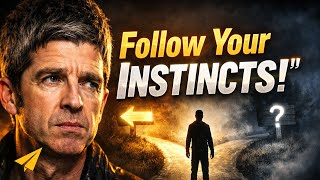
Noel Gallagher says great songwriting is the only real advantage for new bands. He credits Oasis's success to the lack of internet forcing them to work harder, and believes they would have been "bigger than the universe" with modern platforms. He lives by work-life balance, dismissing awards and fame as irrelevant.
Chapters
When Oasis came along, we didn't have the internet, you know. If we'd have had the internet, we'd have been bigger than the universe. I don't live to work, I work to live, you know. And what's the point of being a rock star if you can't just bum around for a year? The gigs and the tours and all that, you should be having fun on doing those things, or what the fuck are you doing them for? I don't know.
He's an English musician, singer, songwriter, and guitarist. He was the vocalist, songwriter, and lead guitarist for the rock band Oasis. Many have praised his songwriting, with George Martin calling him the finest songwriter of his generation. He's Noel Gallagher, and here's my take on his top 10 rules for success. And as always, guys, as you're watching the videos, if you hear something that really resonates with you, please leave it down in the comments below and put quotes around it so other people can be inspired as well. Also, as you are writing something down, it's much more likely to stick in your head too. Enjoy.
There can't be the greatest band in the world playing in a pub somewhere tonight that nobody's heard of with the internet. If you're great, you're going to make it. Yeah, you know, that's just a fact. You know, there's not— there can't be any, well, we didn't make it because, you know, we're working class or something. Do you know what I mean? It's like, if you're writing the best songs in the world, you're going to make it. The end. You know, when, when When Oasis came along, we didn't have the internet, you know. If we'd have had the internet, we'd have been bigger than the universe, you know what I mean? We could have reached everybody. Yeah, you know, but we did it— we were forced to do it the hard way, you know. These new bands have all the advantage of, you know, these devices that can get you to everybody in the world at the click of a button. And, you know, all they've got to come up with is— all right, yeah, the difficult bit Is the fucking songs. If you're a songwriter or a composer, you're kind of in it for life. I enjoy the writing, although it can be very frustrating when it's not happening, but I do enjoy that. I genuinely don't know what I would do. Some people in some quarters give you stick for being like a formulaic songwriter, but I'd say Chasing Yesterday is kind of progressive really, isn't it? Some, um, some— well, relatively speaking. What does that mean anyway? What does it mean? And who, who, who are— who are some people? The Guardian? Who gives a fuck about the Guardian? Well, everybody's got an opinion anyway, you know what I mean? But I'm not— I don't, I don't really think about it too much. If it's— if it sounds good to me, I put it out there. I'm not begging people to come and see me or buy it or anything like that. If my audience, which if such a thing exists, gets it, that's great. And if they don't, that's great too, you know what I mean? I kind of like it. Creatively, where were you at at the end of Oasis? Um, creatively, well, I, I would always take a lot of time off after big world tours anyway, do you know what I mean? You've got to— if I was— because each project that we used to undertake would be 2 years with the tour, and from the minute you go in a studio to the end of the last gig would be 2 years. So you've got to If I was working for 2 years, I'd have to balance it out with time off because I don't live to work, I work to live. And what's the point in being a rock star if you can't just bum around for a year? There's no point working every day of your life. Do you consider it work? I mean, some people would look at your life and think that that work isn't, it's something, it's your passion, so it's what you live for. Well, on the one hand, it's my hobby, do you know what I mean? And I don't have any other hobbies by watching football. You know, like I say, I couldn't go from spending 2 years on a project and then 6 weeks later saying, "Right, well, I'm gonna start something else now." There's gotta be, now this is just me personally, but some people like to work all the time. I have to go away and I don't pick up the guitar and something happens and then I have to feel that I really, really miss it. Like I might go and see a show from another band and think, I really want to get back on stage, and then I'll think about doing something. We all— we're all in the music game for different reasons, you know what I mean? And I am not a workaholic. I'm just not. And I pay for and release my own records, um, and I produce that. I don't have anybody saying to me, well, I think it's a bit long, you know, or an A&R guy saying, why does the guitar solo come in after the first chorus, and then there's a big gap, you know what I mean? Yeah. I'm allowing myself now to follow my instincts, and sometimes they're wrong and sometimes they're right, you know. Well, I believe in what I do, in the same reason that I believe in and I'm comfortable with who I am and what I wear and how I look and how I— and how I'm perceived. I take the writing and the recording of my music very seriously. And the rest of it, I don't take seriously at all. I don't take myself seriously. I don't take things like these interviews seriously. I would never do an interview where I'm like, well, you know, tell you how I wrote that song or what it means. Nobody gives a shit. I don't care, you know. So yeah, I don't take a great deal of it seriously, if I'm being honest. Apart from the records, they're serious because they last forever. Gigs and the tours and all that, you should be having fun on doing those things, or what the fuck are you doing them for? I don't know. Funny thing about gigs is there's so many factors that make a great gig. Like, I mean, I've come off stage so many times thinking that was awful for whatever reason. You know, your sound man will come in, it was out front, and say, that's the best thing I've ever seen. You go, really? Or then you'll be off stage and think that your band has played great and you've really— and then Simon will come in and say, "Well, I lost the bass for 6 songs." And you're like, "Really?" Or the lighting man will say, "Yes, one of the lights didn't work." So you know what I mean? It's kind of— I don't really judge gigs. While I'm doing it, I'm just in the moment, I'm singing the songs, and when I come off stage, I don't like talking about it. So when you're writing a song, I mean, how do you put it to— what's the process? I just play the guitar, and I might be playing a set of chords for 3 months, and I will just be fascinated by the chords, and nothing will happen, and then one day, if I persevere with it enough, a melody will arrive, and then the lyrics will evolve, and then to get a band to play it, I come from a school of music, well, we all did in Oasis, where you just say, "Right, it goes like this." I don't know, I know the chord E, I know quite a few chords, the major chords now and the minor chords, but when you get into suspended, augmented things and all that. I find that I just, I don't know what they all are. But yeah, it was more the punk ethic. It goes like this, just play along, you know, copy it. You're an independent artist these days. What do you enjoy most about being, I guess, not releasing music on the major labels? I enjoy the lack of money that I make. I enjoy the lack of record sales. I also enjoy the lack— I enjoy the lack of recognition and the lack of awards that I receive. Because quite frankly, my mantelpiece was chock-a-block with the fucking things. So it's nice to take a back seat. I enjoy not working with people in record labels who are, in fact, as we all know, cunts. So it's nice to get away from that mob. I've never felt the need to be in the public eye or the need— even when I was in Oasis, I was always the last person to get on board to go back to the studio. I never really— I never— I don't chase my, uh, I don't chase fame or success or anything like that. I mean, I was kind of taking about a year out and, um, you know, I'd written a lot. I'd written a lot of songs and I, I demoed most of them. And there just came a point where it just felt, yeah, I should get in the studio, but not for any other reason than to record these songs and see what they sounded like. And I didn't really tell anybody, you know, I kept it quiet for a year and a half. And it was all very relaxed and low-key, there was just me, an engineer, a drummer, and a part-time keyboard player who came in and out. So there was only 3 of us in there, and it was done very kind of leisurely. And then, you know, my wife went and got pregnant, and so that, you know, I had 6 months off with looking after my new son and all that. So it was very— it was quite a leisurely pace, some might say majestic. You could have easily decided to, you know, start to retire. Well, yeah, yeah, you're still enjoying making music. Well, I've never lost the sense of wonder of writing songs, you know. In that sense, I still feel like I'm 25 when I was writing "Definitely Maybe" and thinking, "This is fucking great," you know. I just mastered the art of writing songs and I loved it. And every time I finished a song, it was like, "Fuck, that's another song." I still get that feeling. And as long as I don't lose that, I'll always make music.
Thank you guys so much for watching. I made this video because IGPK1987 asked me to. So if there's a famous entrepreneur that you want me to profile next, leave it down in the comments below and I'll see what I can do. I'd also love to know what did Noelle say that had the biggest impact on you and why? What will you take from this video and immediately apply to your life or to your business somehow? Please leave it in the comments and I'm gonna join in the discussion. I also wanna give a quick shout out to Reverse Stereo. Thank you so much for picking up a copy of my book, Your One Word, and making that fun YouTube tribute video. I really, really, really appreciate your support. So thank you guys again for watching. I believe in you. I hope you continue to believe in yourself and whatever your one word is.
Much love.
I'll see you soon.
More from Evan


How the Biggest Mistake in History Created A Trillion-Dollar Empire | Sergey Brin



9 Machiavelli Principles That Force People To Respect You | Machiavellian Philosophy



The First 10 Words That Instantly Ruin A Sales Conversation | Vanessa Van Edwards

The Top 1% Mindset Behind The First $5 Trillion Company | Jensen Huang (Nvidia)

