Oprah Winfrey’s #1 MINDSET STRATEGY for IMMEDIATE Self-Belief
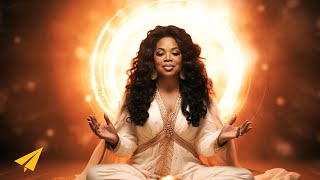
The speaker shares how surrendering obsessive thoughts led to a breakthrough call from Steven Spielberg, then uses Oprah's approach to self-belief: redefine failure as direction, practice gratitude before checking your phone, and listen to life's whispers before they become crises.
Chapters
Wanna be happy? Build a life, not just a business. Hey, it's Evan Carmichael, and this channel was created to help you overcome the number one challenge that is holding you back: a lack of belief in yourself. You watch these videos because you know you've got something more inside you too. You have Michael Jordan-level genius at something. So today, let's live your best believe life and get some amazing motivation from the one and only Oprah Winfrey. Enjoy. There's a bigger dream waiting for you, just waiting for you to step into it, to step into it. Your life is big, your life is huge, and we spend so much time wanting to be in somebody else's life, and you don't get honor. You don't get revered. You don't get celebrating wanting what somebody else has because that which created you, divine intelligence that dreamed you from before your ancestors ever knew they would become your ancestors, That which dreamed the seed of you wants you to know how special, how wondrous, how mysterious, how complex, how glorious, how phenomenal you are. And you get no credit messing in somebody else's territory or trying to have power over something you have no control. Another one of my favorite teachings is The Wizard of Oz. When the Wicked Witch of the West says, go away from here because you don't have any power here— you have no power in any territory other than your own. Oh, but you are the master of that. You get to be the master of your own fate. You get to be the captain of your own soul. And if you just manage that, if you just took care of your territory, oh, the glorious, glorious, glorious, wondrous, wondrous opportunities and possibilities that are waiting for you. So the question is, what are you resisting? What are you pushing against? What are you not allowing? What are you blocking because you have this idea of who and what you're supposed to be instead of leaning into the dream that's already been created and waiting for you. It's waiting for you. And the second, I mean, it doesn't— it's an instant thing. It's a shift in the way you see yourself and the power from which you have come. You see, your life whispers to you all the time if you're paying attention. From the moment you open your eyes in the morning until the moment you go to bed at night, it's just speaking to you. And really, hearing those whispers is one of the most integral pieces of the puzzle, I believe, that's needed to put together the bigger picture of your best life. Now, there might be a message sent or meant for you that first comes in a whisper that to you sounds like, "Hmm, that's strange," or, "Hmm, that seems odd. I didn't leave that door open." But Then if that whisper isn't addressed, the whisper will become amplified, getting louder and louder until it suddenly becomes what I call a big thump on your head. And if you're still not paying attention, that little nudge transforms into a brick of a problem. And then eventually all of those ignored bricks that make up the structure and stability of your life come crashing down. So Know this for sure: life is whispering to you all the time, then turns into a brick of a problem. You ignore that problem, you get a brick wall of crises. So the key is learning to get the whispers before they turn into bricks. So this has shown up most often in my life through relationships, bad relationships when I was younger, when someone who's shown me who they are in a whisper and I keep hanging on until they do something that's like a brick upside my head. So last year, listen to this, I toured for WW from January 4th to March 8th. And immediately after that last show, I went to the Bahamas to take a week's break. And after 2 days, I started feeling the strong whisper, just a feeling that maybe I shouldn't be relaxing in foreign waters and should get home in case our country went into some kind of shutdown. Literally at 3 in the morning, that feeling came over me that I need to leave. I need to get home. So I returned home on March 11th, stayed in lockdown for the next 321 days. And I've learned over the years to kind of pay attention and heed what's whispering before it has to knock me upside the head. So many things in life, like the pandemic, are out of our control, but I do know that many things are in our control unless you choose to sleepwalk your way through it. So I ask you, what is whispering to you right now? Some of you may have realized the life you lived before the pandemic no longer actually serves you and that returning to working in an office is not your next best move. Or maybe you gained a deeper appreciation for your family and friends or alone time, as we talked about last week. You might even have turned a passion or hobby into a full-on business. But there are others who are just gonna get right back to their routine without heeding those whispers and understanding what is really calling to you. If there's one message you take away from me today, it's to listen to the whispers because you are in the driver's seat as to where they leave you. So for the 25 years that I did the Oprah Show, I would often get frustrated because some guests who would come back and they just weren't paying attention to their life. But I realized too, it's easier to observe it. It's often much easier to observe someone else's situation more clearly than your own. So I encourage you to take the time to observe and listen, become aware. And learn to discern what your head is saying versus what your heart is saying. And sometimes you may follow a voice in your head that's not your true calling, and that's okay too, because you get as much from the losses as you do from the wins. So I say, just keep listening, being aware of what is whispering to you now. All of you know the story of how this great school came to be, how the Stanfords lost their only child to typhoid at the age of 15. They had every right and they had every reason to turn their backs against the world at that time, but instead they channeled their grief and their pain into an act of grace. Within a year of their son's death, they'd made the founding grant for this great school. Pledging to do for other people's children what they were not able to do for their own boy. The lesson here is clear, and that is, if you're hurting, you need to help somebody else ease their hurt. If you're in pain, help somebody else's pain. And when you're in a mess, you get yourself out of the mess helping somebody out of theirs. And in the process, you get to become a member of what I call the greatest fellowship of all, the sorority of compassion and the fraternity of service. The Stanfords had suffered the worst thing any mom and dad can ever endure, yet they understood that helping others is the way we help ourselves. And this wisdom is increasingly supported by scientific and sociological research. It's no longer just woo-woo soft skills talk. There's actually a helper's high, a spiritual surge you gain from serving others. So if you want to feel good, you have to go out and do some good. But when you do good, I hope you strive for more than just the good feeling that service provides, because I know this for sure, that doing good actually makes you better. So whatever field you choose, if you operate from the paradigm of service, I know your life will have more value and you will be happy. I was always happy doing my talk show, but that happiness reached a depth of of fulfillment, of joy that I really can't describe to you or measure when I stopped just being on TV and looking at TV as a job and decided to use television, to use it and not have it use me, to use it as a platform to serve my viewers. That alone changed the trajectory of my success. So I know this, that whether you're an actor, you offer your talent in the way that most inspires art. If you're an anatomist, you look at your, your gift as knowledge and service to healing. The problem is everybody is meeting hysteria with more hysteria, and then we just are all becoming hysterical, and it's getting worse. What I've learned all these years is that we're not supposed to match it or even get locked into resisting or pushing against it. We're supposed to see this moment in time for what it is. We're supposed to see through it and then transcend it. That is how you overcome hysteria. And that is how you overcome the sniping at one another, the trolling, the mean-spirited partisanship on both sides of the aisle. The divisiveness, the injustices, and the out-and-out hatred, you use it. Use this moment to encourage you, to embolden you, and to literally push you into the rising of your life. And to borrow a phrase from my beloved mentor Maya Angelou, just like moons and like suns, with the certainty of tides, just like the hopes springing high, you will rise. How do I define success? Let me tell you, money's pretty nice. I'm not going to stand up here and tell you that it's not about money, because money is very nice. I like money. It's good for buying things. But having a lot of money does not automatically make you a successful person. What you want is money and meaning. You want your work to be meaningful because meaning is what brings the real richness to your life. What you really want is to be surrounded by people you trust and treasure and by people who cherish you. That's when you're really rich. I'm content. I'm not just relaxed, I'm content. Because I know a lot of rich people who are not happy, but I am not one of them. But when you're— I am one of the happiest rich people you are ever going to see. When you're trying to just— when you're trying to get away from it all and just get away from everything, you just relax at one of your homes, or— Yes, I relax. Well, and also it doesn't take a lot for me to relax. I can, uh, I can be happy looking at a leaf. Gail, can Gail will say, what are you, sitting out under the trees with your thoughts? And I'll say, yeah, I'm really— I can be happy with a book. I can be happy reading poetry. I can be happy in front of a fire. I can be happy with my dogs. I can be— yeah, I like that. Me up. I don't know why. Having compassion for other people is at the top of that list. I would say commitment is at the top of that list, and also a spirit of constructive engagement. And by compassion, I don't just mean sympathy. It certainly isn't pity. It's being present, and it's also feeling with other beings. You know, during the years of the Oprah Show, I interviewed over 37,000 people one-on-one. So whenever I'm telling my girls anything and they say, "Uh," and they start rolling their eyes, I go, "I'm the only person you're going to talk to that's talked to 37,000 people. So if I were you, I would pay attention." But during all those years of talking to over 37,000 people one-on-one, I could feel what they were feeling so strongly. Sometimes it made me sick, literally. So I had to learn how to feel how others were feeling, feel with others, which is what it means to be compassionate, to feel with others without taking in all of their stuff. Being compassionate means I feel with you. It is one of the greatest qualities in the world to have if you're going to be majoring in what it takes to be a great human being. I feel with you means I not only am willing to walk in your shoes, it means my heart beats with yours. It means I see myself in you. It means I may not have shared that circumstance, but I know what heartbreak feels like. I know what pain feels like, and all pain is the same. It means I can feel your will to want to do better and be better, and I feel and I am with you in spite of everything that's happened to you. I feel your need to rise. I want to help you rise. I want to rise with you. Letting go of energy that's clouding your vision and holding you back. It's a life practice that I learned long ago that has freed me so many ways. It's a fact that holding grudges against somebody who's done you wrong, or replaying, revisiting hurtful situations in your head over and over over only weighs you down and prevents you from being who you're meant to be right now, because you're still energetically holding on to the past. The energy that you put into constantly rewinding to the resentment— why did they do that? Why did they say that to me? I didn't deserve to be treated that way— all of that only keeps you stuck. It will never change what happened. You gotta press stop and reject the urge to keep replaying so that you can then fast forward into the now for yourself. You know, a lot of people think that holding on to things that disempowered them is going to somehow magically turn it around. As I said in my message a couple weeks ago about forgiveness, you have to release the notion, give up the hope that the past could have been any different. And you also must release the idea that people would do what you might do in any given instance. This is a big one. I had to learn and relearn before I actually got it. Expecting people to do what you would do in a situation only leads to your disappointment, not theirs. They're going on with their life. So let people be who they are, and either you accept it or you don't. Not doing that keeps you stuck in a circumstance that actually costs you time, costs you energy. And I can guarantee that oftentimes the person on the other side of the bitterness you're holding on to, they're not even thinking about you. In fact, they probably have just moved on. They certainly aren't obsessing the way you are. Think of it like Letting go of any bad habit that just doesn't serve your well-being. Not an easy task. Taking the road to a more enlightened, healthy existence never is. So this is what I want to ask you to ask yourself: why am I holding on to this? How is this serving me? And really think about the answer. Maybe it makes you feel validated. Maybe it makes you feel righteous. Or maybe taking on the pain is your way of recognizing the injustice so that even though it won't be made right, it can at least not be forgotten. Then I ask you again, ask yourself, do you want to be right or do you want peace? Woo! This was huge for me. The unfortunate fact is that having both may not be possible. And also, you may never get your moment of righteousness, so why wait for it? Choose peace. What I know for sure is that in this world, time is a moving on, and it's our most valuable commodity. You can never get it back. So staying in that loop, playing it over and over in your head of hurt, only amplifies your pain. Let it go. Exhale. Make room in your heart for something that is uplifting. Surround yourself with people who want the best for you. You have the ability to shift the DNA of your spirit and control how you perceive life. So why not lighten your load and let it go? The way to make movies is to do stuff that you love, because, you know, for 25 years I worked on the Oprah Show and Stevan will tell you that there were nights that I came home and I almost, you know, it was hard to even like take off my clothes because I knew I was going to be getting up 4 hours later. But I never really felt exhausted, like depleted. I never felt exhausted, but I never felt depleted. So do the work that comes straight from the soul of you, from your background, from stories that you've grown up with, from stories that bring you passion, from stories that you not just yearn to tell, but that if you don't tell them, they won't get told. And when you are operating, you know, the single greatest wisdom I think I've ever received, other than when people show you who they are, is that the key to fulfillment, success, happiness, contentment in life is when you align your personality with what your soul actually came to do. I believe everybody has a soul and has, you know, their own personal spiritual energy. So when you can use your personality to serve whatever that thing is, you can't help but be successful. So if you do films that come from the interior of your soul, you do work, you do art that comes from the interior of you, you cannot miss. It's only when you're doing stuff that you think might make money, you think it may be a hit, or you think it may bring you some level of attention or success. That isn't what does it. I would have to say that all of the great, wonderful experiences of my life that have brought me to this moment have come from working from the interior of myself. And so That's why it feels so authentic, because it, it actually is. So when you do that, you'll win. And everybody has a different talent. And the reason we're all so messed up is because you're looking at everybody else's talent and wishing you had some of their talent. All the energy that you spend thinking about, wishing about, being jealous of, envious of anybody else is energy that you're not only putting out is gonna come back to you negatively, but you're taking that away from you. All your energy should be forced on what do I have to offer, what do I have to give, how can I be used in service? Because Dr. King's message of not everybody can be famous, but everybody can be great because greatness is determined by service. And there is not a job in here that you can do that you don't switch the paradigm to service and not make that job more fulfilling. I don't care what the job is. If you say, I'm a singer, I'm a dancer, I'm an artist, I'm a teacher, I'm a nurse, I'm a doctor, I'm a janitor, I'm a clerk. If you say, if I look at this from how do I use this in service to something bigger than myself, it no longer becomes a job. It becomes an offering to the world. This is the beauty of my life. There's not a thing that happens to me that I don't look at it as a teaching, learning experience. And so whenever I'm going into any kind of crisis, I've said this many times before, I'm always looking for what is this here to teach me. For me, colored girl, Negro child, growing up in Mississippi, that one of the greatest gifts I was ever afforded was not to have been put in a segregated school system. Had I been put in a segregated school and taught in a segregated school system that said you are less than because you're a woman and you're less than because you're a colored woman, I probably wouldn't be here today. I would have had to then overcome that belief, that conditioning of a belief. But because I was raised by a grandmother who raised me in the church, and I went to church, Sunday school, lived in the church. And I would sit there, second pew on the right, third row, every Sunday. Just taking it all in. And I would listen to the stories, listen to the Bible stories. And I would hear that through God all things are possible. I would hear the story of Jesus talking about if you have the faith of a mustard seed. And, you know, as many years later that I actually saw a mustard seed, I could not believe what a mustard seed actually looked like. Have you ever seen a mustard seed? Here, I have some here. I want to pull one out. Now, Jesus said if you had the faith of a mustard seed, you could move mountains and anything was possible. Now, I heard this as a kid and I really believed it. And so the question is, what do you believe? Do you believe that you are worthy of happiness? Do you believe that happiness, success, abundance, comfort, fulfillment, peace, joy, love is a part of your birthright. Is that what you believe? Or do you believe something else? Because you will manifest the life that you believe. I've always known that no matter what my belief is, I'm going to be all right. Why? Because I have that faith. Of a mustard seed. Empowerment is authority. It is a signed permission slip to actually seize the day. It's the process of getting stronger and more confident and more engaged. And to be empowered is to move through the world without any kind of fear or any kind of apology. And with these gifts comes an even deeper privilege, I believe, and that is the ability to take charge of your own life, to own yourself and claim your rights. And here's what I know for sure, that to whom much is given, much is expected. And I have been given so much. I've earned it. I've been blessed with it, but I've been given a lot. And that's why I've chosen to use my life to lift other people up. Nobody's journey is seamless or smooth. We all stumble. We all have setbacks. If things go wrong, you hit a dead end, as you will, it's just life's way of saying, time to change course. So ask every failure— this is what I do— every failure, every crisis, every difficult time, I say, what is this here to teach me? And as soon as you get the lesson, you get to move on. If you really get the lesson, you pass and you don't have to repeat the class. If you don't get the lesson, it shows up wearing another pair of pants or skirt to give you some remedial work. And what I found is that difficulties come when you don't pay attention to life's whisper, because life always whispers to you first, first. And if you ignore the whisper, sooner or later you'll get a scream. Whatever you resist persists, but if you ask the right question, not why is this happening, but what is this here to teach me? What is this here to teach me? It puts you in the place and space to get the lesson you need. My friend Eckhart Tolle, who's written this wonderful book called A New Earth, that's all about letting the awareness of who you are stimulate everything that you do, he puts it like this. He says, don't react against a bad situation, merge with that situation and the solution will arise from the challenge. Because surrendering yourself doesn't mean giving up, it means acting with responsibility. Okay, many of you know that, as President Hennessy said, I started this school in Africa. And I founded this school where I'm trying to give South African girls a shot at a future like yours, Stanford. And I spent 5 years making sure that school would be as beautiful as the students. I wanted every girl to feel her worth reflected in her surroundings. So I checked every blueprint, I picked every pillow, I was looking at the grout in between the bricks, I knew every thread count of the sheets, I chose every girl from the villages from 9 provinces. Provinces, and yet last fall I was faced with a crisis I'd never anticipated. I was told that one of the dorm matrons was suspected of sexual abuse. Well, that was, as you can imagine, devastating news. First I cried, actually I sobbed for about half an hour, and then I said, "Let's get to it." That's all you get is half an hour. You need to focus on the now. What you need to do now. So I contacted a child trauma specialist, I put together a team of investigators, I made sure the girls had counseling and support, and Gayle and I got on a plane and flew to South Africa. And the whole time I kept asking that question: what is this here to teach me? And as difficult as that experience has been, I got a lot of lessons. I understand now the mistakes I made because I had been paying attention to all of the wrong things. I built that school from the outside in, when what really mattered was the inside out. So it's a lesson that applies to all of our lives as a whole. What matters most is what's inside. What matters most is the sense of integrity, of quality and beauty. I got that lesson. And what I know is, is that the girls came away with something too. They've emerged from this more resilient and knowing that their voices have power. I have always known this about celebrity. The real power of being somebody that somebody knows, and I really think that the only difference between being famous and not is that more people know your name. So the only difference between understanding that is understanding that what Selma has done, what Susan has done, what Anna has done, Rebecca has done, what Jim has done, what I've done, you too can do. Because true philanthropy comes from living from the heart of yourself and giving what you have been given. How will you do that? How will you use your personality, the energy of your personality to serve that which is your soul's calling. I know this for sure. Any life, no matter how fantastic it is, how glorious it seems, how much attention you receive, how much square footage you have, any life and every life is enhanced by the sharing and the giving and the opening up of the heart space. Your life gets better when you can find a way to share it with someone else. So what we've done, you can do. The real empowerment comes when every person leaves this room and makes a decision. Makes a decision. Maybe that decision is that you will write a check and support some of the wonderful organizations you've heard here today. But the true decision is, How will you use yourself? How will you use everything that you have been given to serve that which is greater than yourself? How will you use that to become truly, authentically empowered? Now, it is a beautiful thing to receive an award and to be on the COVID of Variety. Thank you very much. It's a beautiful thing. But the true reward is in the lives that you are able to touch and the people who you know you have impacted. Well, you know, I managed to get here. Steadman and I have absolutely differing philosophies because he teaches the idea of— he has a book called— not— yeah, what is the book called? The book is called "You Can Make It Happen: 9 Steps to Success." And he's always— talking to me about having a vision, that with no vision, the people perish. And I always say, I didn't have a vision. I didn't have a vision to get here to where I am. My vision was surrendering to what I believe was God's vision for me. And I always say, God can dream a bigger dream for you than you can dream for yourself. I now believe that I need a vision. I think Stedman is finally right, that in order to continue to move forward, that I need to develop a vision for myself. And one of my big goals is to use this television show as a forum and a catalyst for change in people's lives. That's one of them. Yes. The other is to move out into the world in a more impactful, global format to help women and children across the globe. Without education, the people perish. Without education— Nobody will be able to survive. Without education, women cannot overcome poverty, will not be able to learn to take care of themselves, will not be able to move forward on the planet. So I want to use my life and this television show to continue to do that. You find that behind the facade of all of your opinions and your beliefs, that at the heart of us, we all want the same thing. I want the same thing that you want. And I know that whether you are Republican or Democrat or Libertarian or whatever you call yourself, that underneath everybody is this desire and need to be valued and to know that what you say, what you think, what you want to do in the world, your fullest expression of yourself, that that thing matters. I think some people think that, or under the impression that I was born empowered, that I was born coming out of the womb ready to interview a Klansman, then cut to commercial, we'll be right back. But the truth is, I know very well what it's like to be marginalized, to be told either subtly or quite directly that my contribution isn't or wasn't welcome, that my face was invisible, and that my needs were an affront. So back when I was doing the news in Baltimore, I asked to be paid the same as my co-anchor who did exactly the same job as I was doing, and I expected that I would be compensated. So I went in and I asked that I would get the same amount of money. So he was doing the same job I was doing, except that he called me babe all the time. Babe, yeah, babe. Anyway, I was told by my news director and by the general manager, because first I went to the news director, then I went to general manager, and I was told that because I was a single woman who didn't have a mortgage and I didn't have kids, that I was not entitled to earn the same kind of money as the man who was sitting next to me doing the same thing. And I realized in that moment that my employers did not get it. They did not understand my value. But you know what? I did. So cut to AM Chicago. The team's hard at work, and they had been working for a long time. And after a year or so, we were asked to be syndicated. That work began to pay off. And before long, we were now no longer called AM Chicago. We're the National Oprah Winfrey Show. I got a raise. This is before I owned myself. So. I got a raise, but my producers did not. So I went into the boss at the time, and I asked that my producers, who incidentally were all female, I asked that they would be given a pay raise increase. And my boss, this is in 1986, said, "Why? They're only girls. What do they need more money for? Girls." I've used the word affectionately sometimes, referring to women as girls, and there was no affection in his tone. It was absolutely condescending. So, you know, it takes a while to develop a voice, but once you have it, you damn sure better use it on stuff that matters. So I took a deep breath in that moment and said, either they're going to get raises or I'm gonna sit down. I'm not going to work if they don't get paid more, babe. Now, I would like to believe that I could have spoken that kind of truth to misogyny even if I'd been all by myself. But here I was on the brink of finally getting what I really wanted and had been working many years for, a national show. I mean, I might have been too intimidated to stand my own ground against this guy if I were actually alone. But here's the thing: you're never alone. You're never alone. The sovereign sound of Maya Angelou's voice was pushing me forward that day, whispering, "I come as one, but I stand as 10,000." So when I was faced with the opportunity to advocate for my producers, I silently called on some of the 10,000 and walked into my boss's office, hand in spirit with the women who had come before me. I could feel Bessie Smith and Billie Holiday and Ella Fitzgerald and Pearl Bailey and Sarah Vaughan and Lena Horne clutching their Green Books, looking for a place to eat while they sang in supper clubs for whites only. And I could feel I could feel Recy Taylor and Rosa Parks refusing to relinquish their dignity in the face of death threats. All these women were with me that day walking into the office in Chicago, as was Diana Carroll and Petula Clark and Joan Baez and Mary Tyler Moore and Moms Mabley and Barbara Walters and all of the astonishing women whose names none of us will ever even know, despite their sacrifice. And I'm pretty sure I even heard Shirley Chisholm urging me on with this thought: If they don't give you a seat at the table, bring a folding chair. And I understood, I understood that there were so many times that many women from my mother's generation, and God knows my grandmother's generation, who were forced to grit their teeth and just take it because standing up for themselves wasn't even an option. The risk was too great, and they knew it. But they also knew in their bones what my dear friend Maya puts so eloquently into words when she says, "You may not control all the events that happen to you, but you can decide not to be reduced by them." Because these women and so many others like them made the decision not to allow themselves to be reduced by the many injustices they were subjected to, I found the strength to act, if not just for myself, not just for my producers, but for all the women who in their ingenious ways subverted the rules, laid the foundation, and pushed the envelope just a little bit further for me. I know exactly the moment I started to feel valued, and for me it was school. I wanted to be a 4th grade teacher because of Mrs. Duncan, and I haven't seen Mrs. Duncan since then, and Mrs. Mrs. Duncan is here today. Mrs. Duncan! Hi! The moment I felt the most value was in my 4th grade class when Mrs. Duncan said to me I was the one who was chosen to lead the class in whatever it was. So what was that like? I don't really remember. I do remember you. I remember you were such a fluent reader. Oh, if I had had a class full of students like Oprah, I would have been floating on air. Mrs. Duncan instilled in me this sense of believing that I mattered. And that is what every human being is looking for. When you first heard that I had, like, done something in life, did you know that it was me? Yes. I kept up with you. Without your being aware of it. And it was Mrs. Duncan who helped heal you? For me, yes. It was Mrs. Duncan, and then it was my, my 6th grade teacher, Mr. Graham. It was school that made me feel a sense of value and connection. You learned a lot on this story. Oh, I learned a lot on this story. This story was life-changing for me. Life-changing, really? Life-changing. And people use that word rhetorically. Life-changing. It's changed the way I operate with in my business, with my people, with my school. 1, 2, 3, hey! You say that the most important question to ask of people who have gone through trauma is not what's wrong with you, but what happened to you. Yeah. Yeah. Yeah. So when you see, you know, a church being shot up, or you see, you know, all of the headline-making stories of people seemingly gone mad, your first thought is, what happened to that person? Right. Right. You know, what has been life-changing for me is the question, what happened to you? Not what is wrong with you, but what happened to you? Which is an important question, not just for people who have been so-called traumatized, but it's the most important question you can ask of anyone. I can say that of all the stories I've ever done in my life and all of the experiences I've ever had and people I've interviewed, this story has had more impact on me than practically anything I've ever done. It's changed the way you see everyone? It's changed the way I see everyone. So when I have an employee who is acting out of line or who is just being a jerk, I don't think, "What's wrong with that guy? What's wrong with that girl? What's wrong with that person?" I think, "I wonder what happened to them. I wonder what happened to them. I wonder what happened that caused them to behave that way." That's what this story did for me. For me, I've already made more money than I expected. I've already got more shoes than I know— I'm like, "Okay, what to do with the shoes?" You know, so— and it never was about material possessions. I don't think if I could have— if I'd sat down and said, "How do I dream myself up to be able to get all this?" I wouldn't have known how to do it. So I was driven by a passion that was bigger than the show in the beginning, and I believe that in order to continue, every person has a responsibility to use their life. You, everybody who came here today, your life may not be as big as mine, meaning not as many people know you, and the only difference between being famous and not, is it more people know your name. The real reality is what Billy was singing and what Matty talks about in his poetry is that we are really all alike, except for our hair. We are really— we are really all alike. And that has been one of the greatest lessons I've learned in doing this television show is that what everybody is looking for is validation. In every experience, people are looking to know that they matter, that you matter, that I matter. In every encounter, in all of your fights at home, all your arguments with your boss or with your children, with your husband, when you really peel back the layers and get down to what is— what is this? What are we arguing about? You're arguing— you want to say, I matter. And I think that what we've been able to do on this show is to help people see that for themselves. And if I can be able to give that back to people, in a way that makes them matter to themselves, then this is worth billions of dollars. Billions. It's priceless. It's priceless to be able to do that. Nobody's journey is seamless or smooth. We all stumble. We all have setbacks. If things go wrong, you hit a dead end, as you will, it's just life's way of saying, "Time to change course." So ask every failure, this is what I do. Every failure, every crisis, every difficult time, I say, what is this here to teach me? And as soon as you get the lesson, you get to move on. If you really get the lesson, you pass and you don't have to repeat the class. If you don't get the lesson, it shows up wearing another pair of pants or skirt to give you some remedial work. Work. And what I found is that difficulties come when you don't pay attention to life's whisper, because life always whispers to you first. And if you ignore the whisper, sooner or later you'll get a scream. Whatever you resist persists. But if you ask the right question— not why is this happening, but what is this here to teach me? What is this here to teach me?— it puts you in the place and space to get the lesson you need. My friend Eckhart Tolle, who's written this wonderful book called A New Earth, that's all about letting the awareness of who you are stimulate everything that you do, he puts it like this. He says, don't react against a bad situation, merge with that situation instead, and the solution will arise from the challenge. Because surrendering yourself doesn't mean giving up, It means acting with responsibility. Okay, many of you know that, as President Hennessy said, I started this school in Africa. And I founded this school where I'm trying to give South African girls a shot at a future like yours, Stanford. And I spent 5 years making sure that school would be as beautiful as the students. I wanted every girl to feel her worth reflected in her surroundings. So I checked every blueprint, I picked every pillow, I was looking at the grout in between the bricks, I knew every thread count of the sheets, I chose every girl from the villages from 9 provinces, and yet last fall I was faced with a crisis I'd never anticipated. I was told that one of the dorms one of the matrons was suspected of sexual abuse. Well, that was, as you can imagine, devastating news. First I cried, actually I sobbed for about half an hour, and then I said, let's get to it. That's all you get is half an hour. You need to focus on the now, what you need to do now. So I contacted a child trauma specialist, I put together a team of investigators, I made sure the girls had counseling and support, and Gayle and I got on a plane and flew to South Africa. And the whole time I kept asking that question, what is this here to teach me? And as difficult as that experience has been, I got a lot of lessons. I understand now the mistakes I made because I had been paying attention to all of the wrong things. I built that school from the outside in, when what really mattered was the inside out. So it's a lesson that applies to all of our lives as a whole. What matters most is what's inside. What matters most is the sense of integrity, of quality and beauty. I got that lesson. And what I know is, is that the girls came away with something too. They've emerged from this more resilient, and knowing that their voices have power. Now, before we came here, Deepak Chopra, great thought leader of our times, I had called him wanting to do an interview with him, and he said he was going to be coming to India. And I, I have a vision board. I keep a vision board. First vision board ever, ever started was to get Barack Obama elected. So I just had Barack Obama, and then I went back And that vision board was right by my— in my bathroom by the bathtub. So every morning I would say, "Barack Obama president. Barack Obama president." And then— this is in 2007— and then I decided I had to go back and put 2008 so that whoever was listening would know I didn't mean Barack Obama president 2012 or 2016. So I only had that as a vision, and then I put a picture after Barack Obama won. I put a picture I cut out of a magazine of a woman on a camel and it said, "Come to India." Come to India. And I've held that as my vision on my vision board for the past 3 years. So when this idea of coming with Deepak, I went, now it's time to fulfill the vision. So first impression coming in the city, chaotic, and then being in the city with more people than I've ever encountered in my life, but still feeling not a sense of being unsafe. If I leave you with nothing else, it's just know this for sure: there is not one thing that has ever happened to you not one experience, not one encounter, not one crisis, not one joyful thing that hasn't happened just to make you better and help you rise. Every single thing you're calling in, whether you know it or not. When you figure out that you are calling it in, when you actually start meditating or praying or doing or having a spiritual practice, which is the number one thing you need if you want to be successful in the world. You need something that gives back and nourishes you, regardless of what you call that. You need to fill your cup so that you can be so full your cup runneth over and you have enough to give to other people. If you don't fill your cup, you end up dried up. You end up tired, exhausted, and don't have enough to give to other people. You end up resentful every time somebody asks you because your cup is empty and now they want some of yours. So your number one job, your number one job is to fill your cup and make yourself whole. That's your job. You will find true success and happiness if you have only one goal. There really is only one, and that is this: to fulfill the highest most truthful expression of yourself as a human being. You want to max out your humanity by using your energy to lift yourself up, your family, and the people around you. Theologian Howard Thurman said it best. He said, don't ask yourself what the world needs. Ask yourself what makes you come alive and then go do that. Because what the world needs is people who have come alive. The world needs people like Michael Stolzenberg from Fort Lauderdale. When Michael was just 8 years old, Michael nearly died from a bacterial infection that cost him both of his hands and both of his feet. And in an instant, this vibrant little our boy became a quadruple amputee, and his life was changed forever. But in losing who he once was, Michael discovered who he wanted to be. He refused to sit in that wheelchair all day and feel sorry for himself, so with prosthetics, he learned to walk and run and play again. He joined his middle school lacrosse team. And last month, when he learned that so many victims of the Boston Marathon bombing would become new amputees, Michael decided to banish that darkness with light. Michael and his brother Harris created MikeysRun.com to raise $1 million for other amputees by the time Harris runs the 2014 Boston Marathon. More than 1,000 miles away from here, these two young brothers are bringing people together to support this Boston community the way their community came together to support Michael. And when this 13-year-old man was asked about his fellow amputees, he said this: First, they will be sad. They're losing something they will never get back. And that's scary. I was scared. But they'll be okay. They just don't know that yet. We might not always know it. We might not always see it or hear it on the news or even feel it in our daily lives, but I have faith that no matter what, Class of 20,000— 2013, you will be okay. And you will make sure our country is okay. I have faith because of that 9-year-old girl who went out and collected the change. I have faith because of David and Francine Wheeler. I have faith because of Michael and Harris Stolzenberg. And I have faith because of you, the network of angels sitting here today. One of them, Khadijah Williams. Who came to Harvard 4 years ago. Khadija had attended 12 schools in 12 years, living out of garbage bags amongst pimps and prostitutes and drug dealers, homeless, going into department stores, Walmart, in the morning to bathe herself so that she wouldn't smell in front of her classmates. And today she graduates as a member of of the Harvard Class of 2013. Are you ready to allow abundance and blessings? People can't figure out how I got to be so successful. It is because I have lived in the space of spirit my whole life. My favorite Bible verse, because I am Christian, is Acts something. I used to know the number, but this is an act. Y'all can Google it. But it says— thank you— 1728. In God I live and move and have my being. I live and move and have my being. And you want to know why I am really so successful? I knew that at 4 years old. I knew that when my grandmother said, "You better watch me now, 'cause one day you gonna have to learn how to wash these clothes and hang 'em up like this." So I had to watch how I hold these clothespins in my mouth. I went, "Mmm." And the reason I could do that is because spirit, otherwise known as intuition, my instinct said, "Mm-mm, that's not gonna be my life." So we all have that spiritual side, and this lesson tonight is about connecting to it. I believe that beneath the surface of all physical problems is a spiritual solution. There is a spiritual solution. Why? Because you are a spiritual being having a human experience. That's the beginning of understanding spirituality. You are a spiritual being having a human experience. First law is the third law of motion in physics, which says for every action there's an equal and opposite reaction. And we showed that very beautifully in The Color Purple when Miss Celie says to Mister, everything you even try to do to me is already done to you. That is not just a rhetorical saying. That is law. That is Newton's third law of motion in physics, which says everything that goes out is coming back. It's just like everything that goes up is coming down. May take a long time to come down. Is coming down. Everything that goes out is coming back. It's coming back. So to answer the power of manifestation and meditation, what meditation does is sync you up with the source. What meditation does is allows you to literally tap into the power that created you so that you are in alignment with that. And so when you carry that out into the world everything that you do comes from the center of that alignment that's coming from the source that we call God, we call divine energy, divine intelligence, whatever name you want to give it to. We call life. When you are synced up with life, life just gives to you. We all are here to fulfill the dreams of those who came before us. Maya used to say, "You've been paid for. You've been paid for, young people, so put your crown on your head and wear it." We are here not merely to bear witness, but to be the new voices of an extraordinary new age. You see, when I was growing up, there were no black people in the media, just buckwheat on television. And I was constantly doing that thing, looking to find myself. And what I found instead was Leave It to Beaver and Donna Reed and Lassie, although technically I guess Lassie was mostly brown. The point is, though, we are now able to see ourselves reflected through entertainment. But what pleases me most is that we're beginning to see on screen— what we're beginning to see is starting to change the landscape of what we see behind the scenes. What Kamau was talking about, true inclusion. And what I realized during all those years doing the Oprah Show, and the reason that OWN is now thriving, is how essential it is to see yourself reflected in other people's stories. It's something that you, as white people, never have to even think about. Because the more you see a broader and richer and more nuanced depiction of yourself and your your neighbor, and the world, the more empowered you become. And it's that sense of empowerment that actually tethers us to the universe. It gives us at least a glimpse of how connected we all are. So what a blessed sign of progress it is to know that millions of kids in 2019 don't have to stand with their noses pressed up against the window or the television screens looking in at a family that makes them feel less than by comparison. Today we can point to work that says you are every bit as valued and vital to the fabric of life as anyone else. You are a part of a community. But it takes time. It takes time to see yourself. It takes time to hear yourself and to feel, to feel appreciated for just being yourself. Empowerment does not happen overnight. Like change, it is never just one thing. It is a series of consistent steps, great and small, that proves to us again and again that genuine change is actually possible. Gwendolyn Brooks wrote a poem for her children. It's called "Speech to the Young, Speech to the Progress Toward." And she says at the end, live not for battles won, Live not for the end of the song. Live in the along. She's saying, like Eckhart Tolle, that you have to live for the present. You have to be in the moment. Whatever has happened to you in your past has no power over this present moment because life is now. But I think she's also saying, be a part of something. Don't live for yourself alone. This is what I know for sure. In order to be truly happy, you must live along with and you have to stand for something larger than yourself because life is a reciprocal exchange. To move forward, you have to give back. And to me, that is the greatest lesson of life. To be happy, you have to give something back. So many people are worried about building a brand. I hear kids on social media talking about their brand, and I used to really resent the word when people would say to me, oh, you have this brand, because I never, never even thought about a brand. I just thought about day in and day out making the best right choice for me. But now I embrace it because I recognize people see me as a brand. But for me, it's not a business. It is a question of what do you stand for? And I will say this: you're nothing if you're not the truth. So I have made— I've made a living. I've made a living. I've made a life, made a fortune, really. It's fantastic. All good from being true to myself. And that's the— if I could leave you with any message today, that is it. The biggest reward is not financial benefits, though it's really good. You can get a lot of great shoes. Nothing wrong with great shoes. But those of you who have a lot of shoes know that having great shoes and a closet full of shoes or cars or houses or square footage doesn't fill up your life. It doesn't. But living a life of substance can. Substance through your service, your offering of your whole self. And the baseline for how do you live a life of substance is whatever is the truth for you. What do you stand for? People may not remember your every word. They may not remember all of your actions, but they certainly remember how your words and your actions made them feel. So let's leave here today with the collective memory of wanting to create enlightenment in the world. Let's leave here knowing that we can give people the sense that they have been heard and respected. Let's foster original thinking and humane treatment. Let's seek out the words we don't know. Let's do away with the us and them. I've seen us and them create a whole lot of problems, but I've never seen it solve one thing. Instead, let's nourish our artists. Let's offer the possibility of something better for all of us. Because a new day is no longer on the horizon. The new day is now. If you can capture the humanity of people, if you can just capture the humanity of the people, of the stories that you're telling, you then get that much closer to your own humanity. And you can confront your bias, and you can build your credibility, and hone your instincts, and compound your compassion. You can use your gifts— that's what you're really here to do— to illuminate the darkness in our world. There comes a point, and I'm really, I'm really good at this, is at not holding on to what was. And being able to live in this present moment. You know, I never was one of those women who's afraid to tell your age, or you're trying to be something you're not. I mean, I think for everything there's a time and a season. The Bible, completely right about that, I think. I think, and you know in your own self when it's time to move from that. My television career began unexpectedly. As you heard this morning, I was in the Miss Fire Prevention contest. That was when I was 16 years old in Nashville, Tennessee, and you had the requirement of having to have red hair in order to win up until the year that I entered. So they were doing the question and answer period, because I knew I wasn't going to win in the swimsuit competition. So during the question and answer period, the question came, why, young young lady, what would you like to be when you grow up? And by the time they got to me, all the good answers were gone. So I had seen Barbara Walters on the Today Show that morning, so I answered, I would like to be a journalist. I would like to tell other people's stories in a way that makes a difference in their lives and the world. And as those words were coming out of my mouth, I went, Whoa, this is pretty good. I would like to be a journalist. I want to make a difference. Well, I was on television by the time I was 19 years old. And in 1986, I launched my own television show with a relentless determination to succeed. At first, I was nervous about the competition, and then I became became my own competition, raising the bar every year, pushing, pushing, pushing myself as hard as I knew. Sound familiar to anybody here? Eventually, we did make it to the top, and we stayed there for 25 years. The Oprah Winfrey Show was number 1 in our time slot for 21 years, and I have to tell you, I became pretty comfortable with that level of success. I'm going to continue developing shows that speak to the humanity of people in a way that makes them want to live better and do better, and that exalts their, their victories and lets them know that they are important and meaningful in the world. You know, I would have to say that every day, David, that show was such a— it was like therapy for me. Kind of like now. Every day the show was— I paid attention. So I've never been to a therapist, but I paid attention all those days on the show, and I made therapy acceptable for a lot of people who thought, "Oh, not me." So one of the things I started to get around mid to late, no, no, mid to late '90s, is that everybody that I had on the show at the end of the show would say something to me like, "Was that okay? Was that okay? How was that? Was that okay?" At the end of the interview. And I started to then track it. It didn't matter if it was, I had gone and done a show where I was in a prison. I was interviewing a father who was in jail for life for murdering his twin daughters. And at the end of the interview, even behind bars, he said to me, "Is that okay? How'd I do?" And Barack Obama said it when he sat in the chair the first time. And George Bush said it. Beyoncé said it at the end of— she taught me how to twerk and then said, "Is that okay?" Right, right, right. So that's an accomplishment. It's a required skill, isn't it? Yes, it's a working thing. But this is what I learned sitting in that chair for 25 years, that at the end of the day, whether you are interviewing me or I get to interview you, whatever your profession is, wherever you are in your life, in your relationships, every person that you encounter, every experience, the person wants to know Was that okay? Was that okay? And what I started to hear was that what people are really saying is, did you hear me? Did you hear me? And did what I say mean anything to you? And so I started to listen with that in mind, with that intention of validating that you're being here, you're speaking to me, you're taking the time to do this with me. Is important because you matter. And that's true for everybody who's watching or listening, that every argument that you ever have, every encounter, the person just wants to know, did you hear me? Did you see me? And did I say anything that mattered? Everything you try to do is already done. So when I figured that out, oh, what I'm putting out is what's coming back. Let me get real clear about what it is I'm putting out. Real clear. So I read a book about 1989 called "Seat of the Soul." And in that book, Gary Zukav talked about the laws of karma, of the laws of cause and effect, the third law of motion. And in that book, he talked about how intention, your intention is always one with the law, meaning before you even think about a thing, you have an intention for the thing, and that the intention is going to determine the outcome. That's why the same people can go to the same church service and somebody walk down the aisle just to be seen to put some money in the church, and somebody else who just goes and just has a little bit to offer. The intention with which you give, the intention with which you serve, determines the outcome. So when I figured that out, I went, whoa! I changed everything I did on my show. I called in the producers and I said, From this day forward, I will no longer be speaking to the KKK. I will no longer be speaking to people who are fighting each other in a way that it is damaging to the character of myself and other people who watch. From this day forward, I am only going to do intentional television. So when you're saying, I know who I am, and I'm telling you, it's the thread that runs through everything. It's the thing that allows you to stand in your own truth. And one of the things for years that Maya Angelou used to say to me is, "Baby, you need to know that you alone are enough. You alone are enough." When I started the magazine, they said, "You will not see a profit for at least the next 5 years." And we were profitable the first month, the second month, and and have been since. And so I thought, oh, okay, those predictions, that is not really true. I had no idea how difficult it would be. However, I am really— there's an old spiritual that says, wouldn't take nothing from a journey now. I really was speaking to Stephen this morning. He was saying, it's a good thing that you went through that because you were living on the mountaintop for the past 25 years. You created this machine of the Oprah Show that It just felt like walking into, okay, here we go. So no struggle, no, just, it had become easy for me to do. So to be in a position to build from scratch this network and to go through everybody thinking it was going to fail, and there were days when I had doubts myself, like I had to force myself to actually practice what I had preached for years about going inside, staying with the vision, taking— having every step move you in the direction of the vision and trusting, trusting that, building the right team. Every single day I would have a pre-show meeting and have the producers come in and state to me, what is your intention? How do we want to use whoever is on this show? Whatever is happening on this show to serve the audience in a way that fulfills the mission of uplifting, enlightening, encouraging, as well as entertaining. And if it doesn't do that, then I can't do it. I can't put my name on it. I started feeling like— I think everybody knows I've moved my whole life on instinct, you know. I feel like now it's time to let the show go. I feel like it's time to move on because I've grown as much as I can grow. When I've grown as much as I can grow in a space, that's my instinct to move. I went through some tough times after I left the Oprah Show. I made a conscious decision that I did not want to be sitting on TV with the Oprah Show and y'all saying, "She should have left that show." That show was really good 2 years ago. I made a conscious decision that when I felt I had said all that I could say and the audience had heard it, that I would move on and that I would not spend my life regretting or trying to hold on to what used to be or hold on to what I had. So I dreamed this dream of starting a network. And in the beginning, it was a struggle. It was a struggle because I didn't— honestly, goodness, I did not know what I was doing. I was trying to figure it out. I was trying to figure it out. I thought that the Oprah Show audience would follow us to OWN, and then I realized y'all didn't have cable. And if you had cable, you did not have the OWN package. So it took me a minute. And unlike most people who you get to have your mistakes in private, something don't go right in your life, you get to sulk about it in private. If I make a mistake, it's on the CNN crawl or the CNN News. So when I was in the climb and there were so many wonderful owners, I see Cheryl Action Jackson here. There were so many wonderful owners, people who said, "Oh, we're gonna stand with you. We're gonna stand by you." Thank you, Roland Martin. There were so many people who said, "Listen, we believe that this can happen." So I dreamed the dream along with Tyler Perry, who was my friend who came to me and said— Tyler! Tyler said, "I'm gonna help you out," 'cause Tyler can go home and write a script and direct it, produce it, and shoot it. And do it for less money than anybody in Hollywood. So we started with the foundation of Have and Have Not. If Loving You Is Wrong, Love Thy Neighbor, Mama Hattie. And then I started to dream another dream about scripted television, because in the beginning I was told you couldn't do it. You couldn't do it, didn't have enough money to do it. And I dreamed the dream. I read Proverbs 11:28 that says, "Those who trust in their riches will fall, but the righteous will rise and thrive like a green leaf." It is your job to make yourself whole. Not perfect, but whole and full. Your real work in life, your real work, is to fill yourself till your cup runneth over so that you're never grasping and needy, clamoring and insecure, but that you can live your life assured in your worthiness and your right to be here and to become the best version of yourself as a woman being? Most embarrassing? Oh my God. My most embarrassing moment was when the— I told this on The Tonight Show once, so if you've heard it— you didn't hear it on The Tonight Show? No. You missed Jay that night. My most embarrassing night, when the— what was that, the World Soccer Cup thing came here, Dean? World Cup Soccer opened here in 19— Was that '94? '94! 'Cause you guys were shooting it. Okay, World Cup soccer. I am asked to introduce— I am the emcee for the World Cup soccer, okay? And I am coming out, and I'd rehearsed the day before, and I'd said to them, "You guys have this plastic covering the stage that is the same color as the stage, so you guys really need to change that." They did not. So the next day, I'm on stage and I'm introducing Diana Ross, who's coming across the other end of the field. Ladies and gentlemen, Diana Ross. And Diana starts, I'm coming out. And so she's coming across the field. I turned to walk off the stage and fell in a hole. The hole that was covered with the plastic, I went straight through the plastic. I went down in this big pit in the hole, fell, scarred up my legs, was bleeding, and couldn't get out, but I could still hear Diana singing. So I'm in the hole. The security guy's going, "Get her out! Get her out! Get her out of the hole! Get her out of the hole!" So 4 guys, they pick me up like this, spread-eagle, and carry me out of the hole. Out of the hole. I'm bleeding. I go to the other side. They bandaged my legs, and I limp back up, and I say, "That was Diana Ross!" The greatest lesson I've learned throughout my career came from Maya Angelou, actually, when I was, you know, first meeting her. And after I'd known her for a while, she said, "Baby, you know, you need to know that that when people show you who they are, you believe them the first time. Oh, you know that lesson too now. First time. And your problem is it takes you 29 times to see the same lesson coming in a different skirt or wearing a different pair of pants. So I think that has been one of my greatest wisdom teachings, is to assess from people's behavior, their actions, not just towards me but towards other people, uh, who they are and how they behave. Because if people talk about other people, they'll talk about you. So I think in business and in personal relationships, that's also been my greatest, uh, lesson. The challenge of life, I have found, is to build a resume that doesn't simply tell a story about what you want to be but it's a story about who you want to be. It's a resume that doesn't just tell a story about what you want to accomplish, but why. A story that's not just a collection of titles and positions, but a story that's really about your purpose. Because when you inevitably stumble and find yourself stuck in a hole, that is the story story that will get you out. What is your true calling? What is your dharma? What is your purpose? And I would say reading is the strongest signal for success in the future that I've ever seen. It is the strongest, strongest, strongest. I got my first job in radio when I was 16 years old, because I've been broadcasting since I was 16 years old. But my first job I got because I was a great reader. When you are a great reader, you can articulate and speak and command the English language in ways that other people cannot, and people think you're a lot smarter than you are lots of times because you're a great reader. Have you ever met a person who was a great reader when they were young who was not successful? Never. Never. It is the absolute best foundation ever in life. The reason why I was number 1 for 25 years is 'cause I figured out early on, there is no story anybody has ever heard that somebody else hasn't experienced. Nothing. And I also figured out, probably maybe the first or second year, that all pain is the same. That a mother in Somalia feels the same way as a mother in Seattle when she loses her child. And the common denominator in the human experience is our emotions and our feelings. And the more vulnerable and open you are willing to be with your story, the more actual understanding you create with other people and the more powerful you become. People don't think less of you for sharing your story. They think more of you for having the courage to share it. The biggest transformation for me was living my life with intention. You know what I know? I live by this law of the That's the third law of motion physics. What you put out is coming back. But before you even put it out, you have an intention. And so to have a clarity of intention about what you actually want to do and why you want to do it is the most important thing. And then to just set that vision and have every step you make move you in the direction of that vision. It doesn't mean that every day it's going to happen. Some days you're off track. Like, I intended to work out 45 minutes. I only got in 37 this morning. Well, that's better than nothing. It's better than zero, and that's what I said, okay? At least you got some movement in, and I'll go back and I'll make up the other 8 later. I think you just made it up. Actually, as I was walking, I think this is going to be 8 minutes. I'm going to make it up. So it's about— it's daily renewal. It's not one big gigantic goal. It's every day coming back, giving yourself the opportunity to get it right. 'Cause that's what every sunrise means. It's, oh gosh, it's another chance to get it right. It is. Yeah. There has to be some way that this darkness can be banished with light, says the man whose little boy was massacred on just an ordinary Friday in December. So whether you call it soul or spirit or higher self, intelligence. There is, I know this, there is a light inside each of you, all of us, that illuminates your very human beingness if you let it. And as a young girl from rural Mississippi, I learned long ago that being myself was much easier than pretending to be Barbara Walters. Although when I first started, because I had Barbara in my head. I would try to sit like Barbara, talk like Barbara, move like Barbara. And then one night I was on the news reading the news and I called Canada "Canada." And that was the end of me being Barbara. I cracked myself up on TV, couldn't stop laughing, and my real personality came through. And I figured out, oh gee, I can be a much better Oprah than I could be a pretend Barbara. What would you say to your younger self? Oh, honey, honey, honey. Oh, baby girl. What the world has in store for you, first of all, would be relax. It would be stop being afraid. And it would be everything's going to be all right. No matter what, you're going to be okay. I did this movie called Their Eyes Are Watching God, and I was an extra in, and it was a movie that Oprah was producing, and she had walked by, and I was making all the other extras laugh and stuff. I was telling jokes, and she, she was like, you're a very funny young lady. I was like, yeah. And she was like, what's your name? I said, my name is Tiffany Haddish, and I'm a stand-up comedian. And she said, well, keep me updated on your career. Write me. Let me know what you got going on. I love comedy. I said, oh yeah, I know, I know. And so I would write her, right? And I never got any reply. Nothing. And I think it's because it was a lot of misspellings or something. Because I wasn't a good reader at that time, so definitely not a good writer. I see. But I'm better now. Well, she— But she never wrote back. I wonder why. Let's ask her why she didn't write back. Oprah, why didn't you write back? I didn't write back. I love you. I know. So happy for you, girl. So this is a deal. I love you. You are so, so, so good. Thank you. You are so, so, so— come on. You told me that before in a dream. You know it's true. Dr. King said, "Not everybody can be famous." And I don't know if everybody— everybody today seems to want to be famous, but fame is a trip. People follow you to the bathroom, listen to you pee. It's just— try to pee quietly, it doesn't matter. They come out and say, "Oh my God, it's you! You peed!" That's the fame trip. So I don't know if you want that. So Dr. King said, "Not everybody can be famous, but everybody can be great because greatness is determined by service." Yet those of you who are history scholars may know the rest of that passage. He said, "You don't have to have a college degree to serve. You don't have to make your subject and verb agree to serve." You don't have to know about Plato or Aristotle to serve. You don't have to know Einstein's theory of relativity to serve. You don't have to know the second theory of thermodynamics and physics to serve. You only need a heart full of grace and a soul generated by love. I have a very big life, and so people with big lives can do big things. And so I started to think about what was the best Christmas I ever had in my life. I grew up poor, on welfare with my mother for part of my life. And I remember that the best Christmas of my life was when I was 12 years old and my mother had said, we're not going to have Christmas because we can't afford it. And my feeling at the time was, OK, well, so that ruins that Santa Claus bit. I was 12. That's when I realized there was no Santa Claus because now he ain't coming because we're poor? And I remember feeling like it's going to be really hard on Christmas morning to go outside. Does everybody have— you know, you go outside with your toys? What am I going to do when everybody else is outside? That's what I thought. What am I going to do when everybody else is outside? And what am I going to do when I have to go back to class and say I got nothing? So that's what I was mostly worried about. And then some nuns showed up. Some 3 nuns came to our house, and they gave me a doll, and they bought us food, and we had our Christmas. That was the best Christmas of my life because somebody remembered, and I wasn't going to have to be the kid that said, "I got nothing." So I wanted to be able to create that same feeling for children who had nothing. So I decided to go to South Africa. Originally, I wanted to do 1 million kids, 'cause I thought, "We can do 1 million kids." And then just realized with— I only had 4 weeks' vacation. So in 4 weeks, I could not reach 1 million kids, 'cause I didn't want to just write a check, send a donation. I wanted to be able to look in each kid's face and say to that child, "Somebody remembered you." And so that's what I did with my life this Christmas. I took 41 people from here, hired another 50 people over there, and we were a traveling caravan from one village to the next. We did 2,000 kids a day. We had parties for children who were orphans. And it was singularly— I will tell you, I could weep thinking about it— the singularly the best experience of my life. The singularly best experience of my life. The first day in Africa where we had 280 kids in a room, and every single one of those kids had lost a parent. Every single one of those children. They were aged 3 to 17 in that room. And my team that you're talking about— I have the greatest team in the world. My team in the— here in the United States had been in contact with the orphanages so that by the time we got there, we had a present with every child's name on it. I had, um, uh, this summer Every black doll manufacturer in the country had sent me dolls because I— these girls had never seen black dolls. And so it was my mission to do for them what the nuns had done for me, was to let the African girls see a black doll. So I wanted every girl to have a black doll. I wanted every boy to have soccer balls. We bought radios. We bought clothes. And the most important thing is we had their names on every box for every child. And I called up the children one by one, and when those children You know, received their gifts and then waited for the next child to receive their gifts and said— I said, nobody can open their presents until everybody can open their presents. And on the count of 3, when I counted to 3 and those children opened their presents, was the single greatest moment of my life. And I share that with you. I share that with you because that's what I That's what I can do. I can be— I have a big life, so I can take 50,000 presents and do that over and over and over again to orphanage after orphanage. But what I felt in that room for those— from those kids is a lot of what you're talking about and what you're talking about and what you see in the faces of those women. When you look into the eyes of someone and you give them a gift, whether that be a physical gift or it be a gift from your heart, spiritual self, from your presence, from the essence of you, and you see the light, you see the joy. What I felt in that room was not just that I was remembered, that the child felt that I was remembered, but you felt a sense of hope, a sense of validation, a sense of validation that somebody cared about me. And I will tell you that of all the years and shows that I have done and every theme for every show that I've done, the single common denominator that I found that every human being is looking for is validation. Every single person needs to know, wants to feel that they matter, that they matter. And what happened in that room, that was the greatest day of my life. I knew that those children knew in that moment that they mattered, that they mattered. And so I encourage you— it's exciting to be able to write a check. It's even more exciting to be able to touch one life, to be able to do that for one person. It's like Cynthia was saying, when you can do that for one person, when you can do that, you will know that your life has meaning. And I will tell you, when I left that place, my friend Gayle and I were there, and we were all boo-hooing. We're like, boo-hooing with the children. Oh, my God. And Gayle was saying, what is it? What is it? We're so full. And Gayle said to me, she said, you know, as big as your show is, as big as your show is, what happened in that room seemed bigger. What happened in that room seemed bigger. And that is true. That is true for me, who has this big life and a television show. And I'm telling you, for everybody here, extending yourself beyond your world, your kids, your family, your stuff, And reaching out to somebody who is not like you, somebody who is like you, who is in need— if you are feeling depressed or you are feeling down or you're feeling like things aren't going the way you want them to go in your life, the way you turn that around is to reach outside of yourself to somebody else. Reach outside of yourself to somebody else. It will change you. It will change you. I don't make resolutions anymore. I have a word. So at my dinner table, we all go around the table and we say, what's your word for this year? And my word is purpose. My word for this year is purpose, because when I look back on my— you know how you can't even figure out what you did in a year because your life's so full? Yeah. So another— now I just go back and I look through my phone. So I was doing that on New Year's Eve, looking through the phone at all the pictures, all all the stuff you've done. And I did a lot of things, but I didn't do a lot of things on purpose, with intentional purpose. So my thing this year is don't do anything unless you have an intention and a purpose behind it. So it is my intention, my intention to fulfill the dream of the Creator. It is my intention to live to the highest calling and be pressed to the mark of the highest calling that I have come to do. And when you can ask the Creator, ask that which made you you, what is your dream for me? I guarantee you, instead of you trying to define the dream, what is your dream for me? If you're able to lean into the dream that the universe and all the forces of light and love and power and grace, by all the names that we call God, has for you. Nobody can touch you. Nobody can touch you. That show was on for 25 years in Chicago, and when you did it, you won, I think, almost 50 Emmy Awards, and it was voted one of the best TV shows in the history of TV. So you ended it though after 25 years to do other things, and we'll talk about that, but no regrets about ending that show? No, no regrets whatsoever. You know, I didn't want to be punch drunk in the ring still trying to come up with what is the next thing, what is the next thing, because over the years we became our own greatest competition. So when I first started, went national in 1986, '96, every time there'd be another talk show, I'd be, oh, Geraldo Rivera, oh, what are we gonna do? And then I realized a couple of years in that you run your own race better than anybody. If you take the time to see what everybody else is doing, you lose your ground. And that I could be a better me than I could be anybody else. And so no need to try to compare myself to other people. One of the things I tried to do all those years on the Oprah Show, sometimes people would criticize me because they felt that I didn't do enough. For race or racism. But this is what I always understood, that for me, my role and my goal in life is to open this, open people's hearts. That's what I do, is I, I try to tell stories that allow people to see themselves in the lives of other people. And for me, it was always more powerful and effective to do a show for example, on single parents raising their children, and just on the panel of parents to have a black father and to show the photographs or images of that father putting his child to bed and reading a story at night. That to me is more powerful than doing a story on let's talk about fathers, black fathers who are raising their children because the goal For me is to show that we are all more alike than different and that in our humanity, in our ability to express our humanness, we are the same. So when you see a father putting his child to bed at night and reading stories and that man is black and you know that's what your husband does and that's what you do, you feel a sense of connection and humanity. One of the things I started to get around mid to late, no, no, mid to late '90s, is that everybody that I had on the show at the end of the show would say something to me like, "Was that okay? Was that okay? How was that? Was that okay?" At the end of the interview. And I started to then track it. It didn't matter if it was, I had gone and done a show where I was in a prison. I was interviewing a father who was in jail for life for murdering his twin daughters. And at the end of the interview, even behind bars, he said to me, is that OK? How'd I do? And Barack Obama said it when he sat in the chair the first time. And George Bush said it. Beyoncé said it at the end. She taught me how to twerk and then said, is that OK? So that's an acquired skill, isn't it? Yes, it's a working thing. But this is what I learned sitting in that chair for 25 years, that at the end of the day, whether you are interviewing me or I get to interview you, whatever your profession is, wherever you are in your life, in your relationships, every person that you encounter, every experience, The person wants to know, was that OK? Was that OK? And what I started to hear was that what people are really saying is, did you hear me? Did you hear me? And did what I say mean anything to you? And so I started to listen with that in mind, with that intention of validating that you're being here. You're speaking to me. You're taking the time to do this. You're doing this with me is important because you matter. And that's true for everybody who's watching or listening, that every argument that you ever have, every encounter, the person just wants to know, did you hear me? Did you see me? And did I say anything that mattered? And this is the thing, I think I have to just say, please, everybody is feeding yourself on the hysteria and the negativity. You gotta stay in the light. But one of the reasons why I was so excited is about A Wrinkle in Time, because the message is that the darkness is spreading so fast these days. You must become a warrior of the light. And the reason that's so meaningful to me is because that's how I've led my whole life. And every moment in that film, I just felt like, "I'm just saying what I normally say." It's true. And for these times, the darkness is there to show you your light. Look at what has happened. So if you put the focus on— look at what happened with the darkness that showed up in Parkland and the darkness that showed up on the streets of Ferguson and the darkness that showed up in many, many, many, many, many, many homes in Chicago with shootings and senseless murders. It brings out the best in people. It brings out the best. And so that's what it's there. We live on a planet where there is darkness and light. I teach them that there is no life without cultivating a spiritual life, because you are first and foremost a spiritual being having a human experience. And if you lose sight of that, it's easy to get lost in the world, and no one can save a world that they're lost in when they've lost sight of their own North Star. So having a spiritual life actually means actively and ritually creating the space in your life all the time for gratitude, for kindness, for empathy, for inspiration, for joy, and for reverence for life in the home of your soul first, and then working to spread that inner joy outward. It means slowing down. It means taking in the moment. It means being exactly where you are, not distracted somewhere else. It means knowing who you are and getting about the business of fulfilling why you really came to our planet. You came from very modest circumstances. You didn't come from a wealthy family. Well, modest is not the word. Well, I was trying to be polite. I was actually poor, and I, you know, a lot of the girls at my school actually, all the girls from my school are poor. And I was saying to them just recently, I was just in South Africa for a graduation, you know, you all come from the same circumstances. You were poor. And one of the girls raised her hand and said, I don't like using that word. I go, well, if you're not poor, then you should excuse yourself because that's why I'm paying for you, because you're in this school. So if you're not poor, you don't like the choice of the word. So I don't have a problem with the word. I don't have any any shame about it. I think, you know, probably earlier in my life or career, the word would have bothered me, but it truly— it was, it was— I was poor. No running water, David, or electricity, living with an outhouse. Okay, that's poor. You can't get what you want by focusing on what you don't want. This is about the need to establish as many meaningful connections as we can. If we're going to save the world, we have to find a way to connect to each other, to connect to the nature that we're killing, to animals, to history, to an acknowledgement of the lingering trauma of racism and sexism. We need to connect to the people we love and mean something to us, and more than that, to the people who don't. That doesn't mean we always have to agree with another person's philosophy. It means we, if we're going to continue to survive and thrive on this planet, have to find ways to transcend the politics of division and embrace the places that bond us where we find our human ground. Everybody works hard and everybody has their own dreams. There is— there was a time where I used to spend a lot of energy wanting things. Wanting things. Of course, it's easy for me to say, oh, things don't define you, because I got a lot of things. Things are nice, I like them. But this is what I learned: when you can surrender to the dream, you get to live in the space of the higher power. You get to live in the space that you purposefully have come to Earth to claim for yourself. So Around 1984, I was sitting in bed one morning, Sunday morning, should have been in church, but I wasn't. I was reading the New York Times review of The Color Purple, and I thought, whoa, this sounds like a really great book. I got out of bed in my pajamas, put on my galoshes, and went to the store to get the copy of The Color Purple. I read The Color Purple in one afternoon, got— went back to the bookstore, bought every book of The Color Purple. I took the books to the office and I said to everybody, y'all gotta read this book. Oh my God, you gotta read this book, Color Purple. I needed a book club, I didn't have one. So I passed out the book to everybody I knew. Please read The Color Purple, read The Color Purple. Then I start to hear, that somebody's gonna do a movie about The Color Purple. But I don't know anybody in the movie business. By this time, I was on AM Chicago. I don't know anybody. I start praying to God. God, please help me find a way to get in The Color Purple. I say, Jesus, I don't even have to have a speaking part. I will be— 'cause I went to the movies and I saw on the movie credits, at the last credit, there's something called best boy. So I said, Jesus, if you just let me be best girl, that'd be all right by me. I can be best girl. I can carry the script. I can help the people with the water. I can do whatever. So I start praying for The Color Purple. As divine law would have it, Quincy Jones comes to Chicago. And he is in Chicago for one half of a day because somebody has filed a suit against Michael Jackson claiming that Billie Jean was their lover and that's not his song. So Quincy had taken the red-eye to Chicago. He was in his hotel room. He was coming out of the shower and the television In his hotel room is on AM Chicago. There sits little chubby me with my Jheri curl on AM Chicago. Quincy Jones tells Reuben Cannon, the casting agent, I think I found Sophia. So I get a call from Reuben Cannon who says, I'm calling about a movie It's called Moonsong. Would you be interested to come and audition? And I say, I have not been praying for Moonsong. No. I have not been praying for Moonsong. I've been praying for The Color Purple. He said, well, I think you should come and audition. So I go to audition. You know, movie people, they're making everything all secret. Steven Spielberg didn't want anybody to know he was doing Color Purple. So on the outside of the script, it says Moon Song, but I know all the words by heart. So when I open the script, I know this is the Color Purple. Jesus, this is the Color Purple. Yes. So I auditioned for The Color Purple. I can't even believe it. They don't just want me to be the water girl or the best girl. They are asking me, do I want a part in the movie? Oh, that— I'm thinking prayer. Prayer works. Prayer works. But listen to this. 3 months pass. 3 months is a long time. I auditioned in February. March, April, May comes. I haven't heard anything. So I call Reuben Cannon. I say, "Mr. Cannon, I'm sorry, sir, I haven't heard anything. I expected to hear something by now." And Reuben Cannon, African American man, says to me, "You don't call me. I call you. And I didn't call you." Do you understand that I have real actresses who have auditioned for this part? Real actresses. And he tells me who just left his office. And I went, well, okay, I'm not getting that part. So I hang up the phone and I start crying. I can't believe that God has played this trick on me. I think this is a trick. So I decide that this is because the fat The fat has finally caught up with me. The fat has finally caught up with me, and now I must get rid of the fat in 2 weeks. I am going to go to a fat farm, and I'm going to lose 25 pounds. I'm gonna drink a lot of green juice. I'm gonna have some cleanses and colonics. So I also was trying to make peace with it. I said, God, I don't understand. I thought it was for me. You ever had that talk with God? I thought it was for me. I thought it was for me. God, You let me audition with somebody named Harpo. That's my name backwards. Jesus, that was a sign. Wasn't it a sign? And then 3 months pass and then Reuben Cannon says real actresses have just left his office. So I start to pray on the track. I'm out on the track at the Fat Farm. And I am running around at the track at the fat farm. It starts to rain. Y'all know how that is. But I don't even care because I am praying to God to help me to let it go. Help me let it go because now I've become obsessed with it and it's now controlling my life. I start praying, running around the track. And I keep hearing this noise and I can't— there's nobody on the track but me and I'm running around the track. And I look around and it is my thighs rubbing together. It's my thighs. My thighs are rubbing together, causing this thunderous sound. There's nobody on the track, so then I really start to cry. "Oh Lord, help me. Help me let it go. Help me let it go. Help me let it go, God. Help me let it go." And you ever did this prayer where you say, "Okay, Lord, okay, I'm gonna let it go." Then you get up and you go, "Well, I think I still got a little bit of it." I did. "Help me let it go, but I'm not gonna be able to see the other actress in my part." I won't be able to see it? I won't be able to see The Color Purple. Just can't never see it the rest of my life. I won't be able to see it. So then I started, I don't know where it came from. I surrender all. I surrender all. All to thee, my blessed Savior. I surrender all. I sang and I cried. I sang and I cried and I prayed some more until I could reach the point where not only, not only will I be able to go to the movie, but I can bless the other actress. I can bless her. I can say, I bless you. I bless you. I bless you with this. I surrender all. I surrender all, all to thee, my blessed Savior. I surrender all. And I tell you in my greatest testimony that the The instant I laid that thing down. I'm telling you, when I laid it down, when I laid it down and it didn't have me anymore, it had no control over me anymore. I didn't feel anything about it anymore. When I let it go, when I intentionally surrendered it to the power that was greater than I could ever know. The instant that happened, a woman comes running out of the cafeteria screaming, "Oprah! Is your name Oprah?" 10 years, nobody could pronounce my name. I said, "Yes?" She said, "Somebody's on the telephone for you. He say his name's Spielberg." I get to the phone. He says, "I hear you're at a fat farm." I said, "No, sir." This is a health retreat. He says, I'd like to see you in my office in California tomorrow. This was in Wisconsin. I was— I'd like to see you in my office, and if you lose a pound, you could lose this part. No problem do I have. I'll have no problem not losing a pound. So honey, I packed my bags and I stopped at the Dairy Queen. I got 3 scoops just in case I'd lost half a pound. And the next day, I was in Steven Spielberg's office and he said, "You're hired. You're hired." Oprah, I'm dying to know, what is in your purse? I'm not quite sure myself. OK, so somebody's going to bring out my purse. This is Kelly Hurliman, who dresses me every day. So this is— who did a real good job today, except I said to her, I think these boots are size 9, and I wear a size 10. But you look so cute, though. But I look cute, but damn, my feet hurt. OK. OK, hold it. Hey, no, no, Kelly, just stand here. I don't know. This is the bag I was carrying this morning. It was right— where'd you find it? Where did you find this? Oh, boy. Upstairs in the closet on the table. On the table. OK. This is what's in my purse right now. OK, so there's my little makeup bag. OK, it's cute. All in one bag. This was given to me by Nate Berkus. Then there's my wallet. There's my BlackBerry. This is The Color Purple. Y'all should go see that. I saw that the other night. Now, these are the sunglasses Ellen— I carry a black pair and a brown pair because you never know what you're going to be wearing. This is contact lens cleaning fluid. This is charger for my BlackBerry. This is movie Freedomland. This is a— oh, this is great. This is a poem Maya Angelou just is going to do at the White House. OK, what is this? Oh, this is Maya Angelou's itinerary, so I know where she is. And that's about it. OK, what I would like to know is— oh, I got some pens down here and some glasses, reading glasses. And I got Sophie's balls, just whenever we're playing. She only likes the clear ones. And that's it. OK, let's see how much money do I have in my wallet. I got receipts. I keep those for you. When I was shopping the other day— Of course. This is how much money I got. Pull out all my money. Here we go. Yeah, I have a wallet. I have South African rands. Rand. And hold on. $2. It's bad. Wait a minute. Oh, oh no, there's more. There's more money. Okay, there's more. There's more money. There's 10, 11, 12, 13, $14! It doesn't matter how far you might rise, at some point you are bound to stumble because if you're constantly doing what we do, raising the bar, if you are constantly pushing yourself higher, higher, the law of averages, not to mention the myth of Icarus, predicts that you will at some point fall. And when you do, I want you to know this, remember this: there is no such thing as failure. Failure is just life trying to move us in another direction. Now, But when you're down there in the hole, it looks like failure. So this past year, I had to spoon-feed those words to myself. And when you're down in the hole, when that moment comes, it's really okay to feel bad for a little while. Give yourself time to mourn what you think you may have lost. But then, here's the key: learn from every mistake. Because every experience, encounter, and particularly your mistakes are there to teach you and force you into being more of who you are. We have to make the choice every single day to channel our own inner Jucindas, to exemplify the truth and the respect and the grace that we actually wish for the world. We need to tell it, as we're doing at this conference. We need to write it. We need to sing it. We need to proclaim it. We need to be it. We need to be the truth. We have to be the respect. We have to be the fierceness, the love that we want to see. And when we do that, mark my words, A change is already coming. I wake up in the morning. What you do? And the first thing I say is, thank you. That's my first thing. Even before I'm awake, even before my eyes are really fully open, I say, thank you. I can feel the gratitude, like, ooh, I'm still here. I'm in a body. Thank you so much. I thank you for that. Gratitude. And then I go through the letting the dogs out, the whole brushing your teeth and all that stuff. And then I have either silence or prayer or something that acknowledges that I'm still here. I do not reach for that phone first. That's your problem. That's my problem. That's your problem. You have no idea of the power of noticing another human being and what it feels like when somebody knows that they have been seen, truly seen by you. It is the greatest honor offering you can give. And all those years of the Oprah Show, the greatest lesson I learned was that, you know, after every show, someone would say invariably in one way or another, how was that? I'd finish an interview with a father who killed his twin daughters. I'd finish an interview with politician Barack Obama, Joe Biden, George Bush, Beyoncé. They all say the same thing. How was that? And so I started to see that there's this common thread in our humanity where everybody wants to know, how was that? Did I do okay? Did you hear me? And did what I say mean something to you? So I would have to say that recognizing that in other people has helped me to become, you know, a person of compassion, a person a person who can interview anybody about anything, because I know that the core of you is the same as the core of me. You just want to be heard. I know you all understand better than most that real progress requires authentic— an authentic way of being, honesty, and above all, empathy. I have to say that the single most important lesson I learned in 25 years talking every single day to people was that there is a common denominator in our human experience. Most of us, I tell you, we don't want to be divided. What we want, the common denominator that I found in every single interview, is we want to be validated. We want to be understood. I've done over 35,000 interviews in my career. And as soon as that camera shuts off, everyone always turns to me and inevitably in their own way asks this question: Was that okay? I heard it from President Bush. I heard it from President Obama. I've heard it from heroes. And from housewives. I've heard it from victims and perpetrators of crimes. I even heard it from Beyoncé and all of her Beyoncé-ness. She finishes performing, hands me the microphone, and says, "Was that okay?" Friends and family, yours, enemies, strangers, in every argument, in every encounter, every exchange, I will tell you, they all want to know one thing: was that okay? Did you hear me? Do you see me? Did what I say mean anything to you? And even though this is the college where Facebook was born, my hope is that you will try to go out and have more face-to-face conversations with people you may disagree with. That you'll have the courage to look them in the eye and hear their point of view and help make sure that the speed and distance and anonymity of our world doesn't cause us to lose our ability to stand in somebody else's shoes. And recognize all that we share as a people. This is imperative for you as an individual and for our success as a nation. What about something that you feel like you've personally achieved or overcome? Is there something that you are especially proud of yourself for? Yeah, I'm especially proud of myself for not living in the world of comparisons. You know, years ago when I pulled out that wagon of fat, I was I was actually comparing myself to everybody else, or what I thought you're supposed to look like, or what size you're supposed to be. So I've now reached the point where I'm really okay exactly where I am. And that's, you know, it's taken me a lifetime practically to figure that out, and being okay exactly where you are. Comparing is a dangerous thing. It's so hard because we are in the world of insta-comparison, you know. And so the real spiritual practice is to like like live from within and not let the world define who you are, but you do that for yourself. That's the hardest work. You are now the CEO of your company. You're the owner and the CEO, and you've got thousands of people working for you. Yeah. And as a CEO, do you have to say no to people all the time, and is that hard to do? You get other people who say no for you. Saying no is hard. That is what That's one of the big, big lessons, life lessons for me. I grew up, obviously, girl, raised in the South, woman, need to please, wanting to please everybody. So it took me a long time to get that lesson of only saying yes to what you intend to say yes to. And so I try to do all of my business decisions and personal decisions based upon my intention. Many of you, as I have been, as I am, are where you are in your life based upon what you believe. And it's not just what you think you believe on the surface. It's also your shadow beliefs that are holding you back from moving into the life that you believe you deserve. What I know is if you're not looking at the shadows, if you're not looking at what is subconsciously running through the tape in your mind, telling yourself you're not good enough, you're not worthy enough, you're not smart enough, you're not enough, which is a tape that's playing for a lot of people. If you're not conscious of that, then you end up acting out of that belief system and not out of what you know to be the truest or want to be the truest for yourself. You don't become what you want because so much of wanting is about living in the space of what you don't have. That's why Jim Carrey's story is so powerful, because he started to act as though he already had it. He would go up to Mulholland Drive. He would drive away thinking, I already have those things. I just haven't accessed them as yet. I believe those things are going to come to me, and I'm going to act like they are. So I'm going to move forward in my life in order to draw that to myself in such a way that my actions are in alignment with what I say I believe. So if you start to think about that, really, why are you where you are in your life? The choices that you have made have been because of what you believe to be true for yourself. You wish yourself— they call her Auntie Gayle and me Mamo. I said, you all wish to have a friend like Auntie Gayle. You want to have a friend who wants the most, the best, and the highest for you. I have never seen a person like Gayle. I've never— Okay. All right. Thank you. Yeah. You know, everybody, especially if you are on the rise in your career and you have had certain friends, and they all act like they're happy for you, but not everybody's happy for you. And every now and then, you can hear just a teeny-ninety bit of jealousy. You can hear it. You can sense it. I've never had a moment's jealousy from Gayle in, you know, the 30-odd years of her friendship, except for the one time I was onstage dancing with Tina Turner. That's the only time I ever heard Gayle goes, "I wish that was me." In all of the years of doing "The Oprah Show," there were many days that I sat in my chair across across from 1 or 2 or 5 or 6 or 7 people, and I would be so frustrated because I just wanted to shake people sometimes and say, why didn't you pay attention to your life? I said on the show, probably the producers tell me that they counted 33 times, but I know I thought it at least 1,000 I would say listening to your life as it whispers to you first so that it does not have to knock you upside the head with a brick or come crashing down on you as a brick wall is one of the greatest principles of life because there are many things that happen in life that are beyond our control—natural disasters, death, unexplained events, but there are also many, many, many things in life which we can control and become out of control because you're just not paying attention. You are sleepwalking through your life. And I have seen this so many times on the show. I wanted to take the guests and go, "Would you just pay attention?" So this is what I've learned and how I've explained it explained it to myself. Life whispers to you all the time. Your life is speaking to you all around, from the time you wake up in the morning and every single experience that's coming into your personal space, into your physical space. All of those experiences are speaking to you. They're telling you something about your life and about your your circumstances. It whispers, and if you don't get the whisper, the whisper gets louder. If you don't get the whisper when it gets louder, it gets— I call it like a little pebble, like a little thump upside your head. When I was a kid, if I was doing something my grandmother didn't like, she'd just turn around and thump me. She wouldn't even look at me. She'd just give me a thump, and I'd know that's my cue to stop it, or we're going to get worse. The whisper is the message. The pebble or the thump upside the head— usually it's gone into a problem. You don't pay attention to the problem. The problem becomes a brick upside your head. The brick upside your head is a crisis. You don't pay attention to the brick upside your head. The crisis turns into a disaster, and the whole house brick wall comes falling down. Okay, let me ask y'all this. Have you ever made a complete made a fool of yourself over a celebrity? I'm sorry. Okay. I have. I've never shared this story with you, but today I feel I have to let it out. It was 1973 or '74. I was 19 or 20. I can't quite remember. But I was working in Nashville, and I had this obsession— I mean obsession— Session with Neil Diamond. Now, I would wake up— I would wake up in the morning playing Song Song Blue, everybody. And I would go to bed to Cracklin' Rosie, and— which is not an easy thing to do in high school because I could have lost my Negro membership card. You know, there There were not a lot of Negroes singing Cracklin' Rosie, but okay. So I'm working in television at this television station, and there was some kind of benefit, and Neil Diamond was there because he was performing in town. And so I'm in the green room, and I am— by the time 1973, I'm already an anchorwoman on TV. And so I walk into the green room, and there he is, and so I say, Mr. Diamond, would you like some shrimp? And he says, and he says, yes, yes, I'll take a shrimp. And he took a shrimp and I'm like, okay. And then he moved across the room and then I followed him across the room. That's a big mistake. That's the big mistake people make. So I follow him across the room. And so I'm like, would you like another shrimp? And he said, yeah, I'll take a shrimp. He did. And then I followed him again. So I'm just staring at him across the room. And finally, I walked up and he goes, enough already. Enough already. OK, so that was my meal. Diamond moment. I figured this out early on in the show. I had read this quote from Dr. King, one of my favorite quotes from him, that says, "Not everybody can be famous, but everybody could be great because greatness is determined by service." And I literally shifted— I used that quote to help me shift the way I saw the platform of television instead of like, oh, I'm on TV, how do I use that platform as a platform of service is what I did. Yeah. Yeah, we know, and you did that pretty well too. But when you think about growing and being empowered yourself, it is what you've been able to do for other people that, that leaves you the fullest. Yes, because you made it this far in a video, I want to celebrate you. Most people start and don't finish. Most people never actually follow through. Most people say they want something, but they don't ever do the work to actually get it. But you are different. You are special. Believe Nation, you made it here all the way to the end, and I love you. So it's a special celebration. If you put a hashtag #believe down in the comments below on this video, I will showcase you and celebrate you somewhere on the screen in a future video because you are awesome. If you want some amazing Mel Robbins motivation, check out the video right there next to me. I think you'll love it. Continue to believe and I'll see you there. If you're in a situation where you should do something and the excuses roll in, you only have 5 fucking seconds before the excuses win.
More from Evan


How the Biggest Mistake in History Created A Trillion-Dollar Empire | Sergey Brin



9 Machiavelli Principles That Force People To Respect You | Machiavellian Philosophy



The First 10 Words That Instantly Ruin A Sales Conversation | Vanessa Van Edwards

The Top 1% Mindset Behind The First $5 Trillion Company | Jensen Huang (Nvidia)

