Peter Dinklage: The Shocking Truth About Peter Dinklage's Struggles Before Fame!
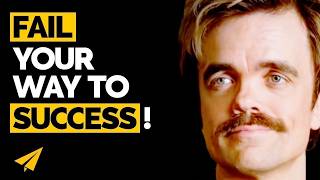
Peter Dinklage quit his data-processing job at 29 to pursue acting full-time. He talks about learning to fail, rejecting external validation, and why writers should stop mimicking originality and follow their own path instead.
Chapters
I waited a long time out in the world before I gave myself permission to fail. You need a time in your life right after college to suffer a little bit, to keep you on your toes. I think it's not so good to live in the past. Or have the clarity of the past. I'm guilty of being a dwarf.
Hello, Believe Nation! I'm Evan Carmichael. My one word is believe, and I believe that entrepreneurs are going to solve all of the major problems of the world. So to help you on your journey, today we're going to learn from Game of Thrones actor Peter Dinklage and my take on his top 10 rules for success. Rule number 1 is my personal favorite, and I'd love to know which one you guys like the best. And as always, guys, as you're watching, if you hear something that really resonates with you, please leave it down in the comments below. Put quotes around it so other people can be inspired, and when you write it down, it's much more likely to stick for yourself as well. Enjoy!
When I was 29, I told myself the next acting job I get, no matter what it pays, I will from now on, for better or worse, be a working actor. So I quit my position at the Professional Examination Services. My friends really weren't happy about that because it was so easy to find me when I worked there. Work was the only place I had the internet. This was at the beginning of the internet. And now I didn't have either the internet or a cell phone or a job. But something good happened. I got a low-paying theater job in a play called "Imperfect Love," which led to a film called "13 Moons" with the same writer, which led to other roles, which led to other roles. And I've worked as an actor ever since. Woo! I didn't know that would happen at 29 walking away from data processing. I was terrified—10 years in a place without heat, 6 years at a job I felt stuck in. Maybe I was afraid of change. Are you? My parents didn't have much money, but they struggled to send me to the best schools. And one of the most important things they did for me— and graduates, maybe you don't want to hear this— is that once I graduated, I was on my own. Financially, it was my turn. Parents are applauding, graduates are not. But this made me very hungry. Literally. I couldn't be lazy. Now I'm totally lazy, but back then I couldn't be. And so at 29, and at very long last, I was in the company of the actors and writers and directors I'd sought out that first year, that first day after school. I was, I am, by their sides. Raise the rest of your life to meet you. Don't search for defining moments because they will never come. The world might say you are not allowed to yet. I waited a long time out in the world before I gave myself permission to fail. Please don't even bother asking Don't bother telling the world you are ready. Show it. Do it. What did Beckett say? Ever tried, ever failed, no matter. Try again, fail again, Fail Better.
I'm a writer, so I'm kind of curious, what type of scripts do you get coming your way that you're tired of?
Originality. I know that's a very— but without it being aware that it's being original. A lot of scripts are trying to be very original in that they're so self-aware. I think we're living nowadays in a meta-society, and we can't help ourselves in that. And I think it manifests a lot in scripts that I read. Like, they're— Charlie Kaufman, for example. He came into this world and he wrote those movies. And since Charlie, people have tried to be like Charlie's movies. You know, they've sort of followed— tried to follow that form. But it's not their own. It's Charlie's. And so, sort of follow your own— take your own path. Write what's true to you and no one else. And then it'll be wholly original. That's what I look for. When you grew older, you moved to Brooklyn, and in those days Brooklyn was Brooklyn. It's different now. Yeah, Williamsburg in the early '90s. What was your life like over there? Terrible. Really? Yeah. Well, I think you need a time in your life right after college to suffer a little bit, to keep you on your toes. But I remember I had this apartment that didn't have any heat. None of them ever had any heat back then. We put up plastic on the windows in the winter. Sort of like in here. Yeah. I want to go into the future. I think this— I don't know if I would use this machine or relieve any memories. I think it sort of can be destructive. That's my takeaway from it. I don't know. I would, yeah. I would use the machine, yeah. Yeah, I'm with you. I'm with you. Yeah, it's interesting, yeah. Would you use it? I think it's not so good to live in the past. Or have the clarity of the past. You should romanticize it. That's what we do. It's storytelling. But Peter, this is the last season of Game of Thrones. Like, there's nothing you would miss or you have favorite memory of that? Oh, you gotta move on. Gotta move on. Yeah, it's all about moving. It's all moving on. It's all about moving on. Yeah, people taking pictures, especially a place like this, they just, they want the proof of a memory, but they don't actually experience something to remember. It's sort of strange. Can I have your picture? And they don't really meet you. or it's just this sort of thing that's happening now. It's replacing an experience, a memory that you will have. Instead, it's just a memory of a photo. And I'm sure you start to apply your own memory to that photo and change the events and how they went down. What is the most important lesson that you have learned in your course as professionals? I think with the culture we live in today, the internet and web and things and the Twitter and the The Gobbler and the blub blub. You know, I think part of the reason why Marlon Brando is who Marlon Brando was, why he was one of the— if probably, yes, to me, the greatest actor ever, because we didn't really know too much about him when he was younger, and that left it very mysterious. So we were able to get lost in his characters more. But nowadays it's a bit— there's so much knowledge of everybody's personal life that you sort of can't get lost in the characters they play. So my professional thing is just to shut up, and less is more.
Time and again, we find that we have an innermost trend of going back to basics, because today people complain that we have been insulated for too long by digital technology, too many special effects. We want to, you know, to have more real human characters in the movie. What do you think?
Well, yeah, I mean, what I, I just, I kind of don't understand. I mean, films from the Far East have always done it, uh, that I've seen. Why can't a, uh, an action movie also be very heartbreaking and personal? Why can't a, uh, a horror film be very dramatic? Um, I feel like sometimes in America we get, uh, trapped by our genres. And we don't overlap. And I think that's unfortunate. And something like this, which has such science fiction elements to it, it also is a very deeply personal film for a lot of these characters, and very dramatic, and very sad, and heartbreaking. You get very emotional watching a film like this, and you sort of forget that you're watching a big summer blockbuster film. I think it's— I find it kind of sad that that's so most surprising because writing has gotten so sort of formulaic, especially I think— sorry, in television. But you just got to push the envelope and challenge people's expectations and ideas of what's going to happen next. And I think we do that. And I think that adds to the addiction of the show. You never know what's around the corner. Well, she's beautiful. All awards mean that people are— It's just great. It's another award that, you know, people loved what you did, and that always means well, means good. Actors, I think, need a lot of confirmation for what they do. I think that's why we have all these award shows. It's just a movie we made for no money in 20 days, and it just feels good to get recognized for something like that, you know. We made the movie for half a million dollars and we struggled to get it made and, uh, and it's just, it's found an audience which we didn't know it was going to find. You know, it's a very personal movie. Tom McCarthy, the writer-director, it's his first film and he wrote it for the three lead actors and, uh, and then Miramax bought the film at Sundance about a year and a half ago. So it's been great. It's been a crazy ride. I saved you— I saved this city— And all your worthless lives! I should have let Stannis kill you all! Tyrion! [FOREIGN LANGUAGE] Do you wish to confess? Yes. Father, I'm guilty. Guilty? Is that what you want to hear? You admit you poisoned the king? No, of that I'm innocent. I'm guilty of a far more monstrous crime. I'm guilty of being a dwarf. You are not on trial for being a dwarf. Oh, yes I am. I've been on trial for that my entire life. Have you nothing to say in your defense? Nothing but this. I did not do it. I did not kill Joffrey, but I wish that I had. Watching your vicious bastard die gave me more relief than 1,000 lying whores. I wish I was the monster. You think I am. I wish I had enough poison for the whole pack of you. I would gladly give my life to watch you all swallow it. Ser Meryn! Ser Meryn! Escort the prisoner back to his cell. I will not give my life for Joffrey's murder, and I know I'll get no justice here, so I will let the gods decide my fate. I demand a trial by combat.
Thank you guys so much for watching. I made this video because Roderick asked me to. So if there's a famous entrepreneur that you want me to profile next, check out the link in the description and go and cast your vote. I also want to give a quick shout out to Imran Dean. Imran, thank you so much for picking up a copy of my book, Your One Word, and posting that awesome picture on Instagram. I really, really appreciate the support and I'm glad that you enjoyed the read. So thank you guys again for watching. I believe I hope you continue to believe in yourself and whatever your one word is. Much love. I'll see you soon.
Your career, when I look at some of the roles you've had in the past, the breakout role people describe as being in the movie The Station Agent a while back, even a big budget film like Elf where you played a very sort of pugnacious children's publisher, if that is an accurate description. Yes. It seems like you've managed to find the roles that upend whatever those stereotypes might be. Yeah. Well, I try to, you know, and that's— I'm not always successful at it. You do have to make a living, and I do not fault anyone else who makes choices to play characters that they wish they hadn't agreed to do. And because at the end of the day, none of us are happy with our jobs all the time. But I just sort of, uh, I had some perseverance in terms of what I wanted to do and what I didn't want to do. And I think "no" is a very powerful word in our business that is very hard to use early on in your career. But I also think I was pretty arrogant when I was younger. So I used that word maybe too much, but it also helped me with finding roles that I did like. What was the first time you stood on stage and thought, "I want to act, and this is the only thing I want to do"? Oh, it was so many years ago. I don't remember. Oh, you're a baby. Give me a break. I, uh— Oh, I think a lot of us are just little hams when we're children, and it just starts that way. You know, my mom's a music school teacher, and kids would come in. It was a revolving door policy at our house growing up in New Jersey, where piano lessons were given all day throughout the day. My brother and I would be putting on puppet shows down in the basement and constructing these elaborate sets and putting on these shows for all the octogenarians of the neighborhood that were kind enough to pay a nickel. So the arts was sort of— this was something in your background already. It just came at an early age, yeah. I don't know when it starts. When you trace it back to when you were a little child, you can't really remember this big moment. I think it's a lot of little moments that build up into something that just forms who you are and your need to be an actor. Can you just catch me up on what's happened so far in the first few seasons of Game of Thrones? What? We got a minute. We got 45 seconds now. Stabby stabby stabby stabby. Sexy sexy sexy, stabby stabby stabby. Beautiful beautiful language and beautiful scenes of poetry and musing on the world as we know it in King's Landing and then a couple jokes. And more stabby stabby. All you need to do— and brother-sister. Woo! Ew! Ew! Ew! Wait, what's that? What does that mean? They're having a party? Like a tea party? Yeah! They're going, "Look at my fingers in a circle. Look at that." Sounds good. Yeah, man.
More from Evan


How the Biggest Mistake in History Created A Trillion-Dollar Empire | Sergey Brin



9 Machiavelli Principles That Force People To Respect You | Machiavellian Philosophy



The First 10 Words That Instantly Ruin A Sales Conversation | Vanessa Van Edwards

The Top 1% Mindset Behind The First $5 Trillion Company | Jensen Huang (Nvidia)

