Peter Hollens: How Passion and Consistency Built a YouTube Music Career
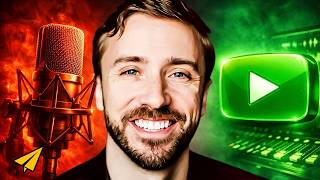
Peter Hollens built a multi-million-subscriber YouTube channel by uploading weekly a-cappella videos and collaborating with creators like Lindsey Stirling, whose viral partnership paid his rent for months. He monetizes through ads, Patreon, licensing, and direct sales, and now runs a Creator Academy teaching music production and branding.
Chapters
Welcome everybody to another YouTube Hangout. Really excited to be here with a new friend of mine. Mr. Peter Hollens has a super successful YouTube channel, 1.5 million plus subscribers. He is a singer extraordinaire, does tons of a cappellas, has his own songs, does a lot of mashups and collaborations. If you haven't checked out his channel, I highly recommend you check it out. I would start with the Amazing Grace version that he did. That's some epic listening that you should get into. Uh, but he's also managed to make a name for himself and a career off of YouTube, making more than a full-time income, building up a team. He's on Patreon, makes 5 figures every time he puts out a new song. He joined the board of Patreon. He's expanded that to go work with major companies like Disney and do collaborations with people like Jason Mraz. Lots of fun stuff. He's just launched a new Creator Academy that is coming up to help creators make a full-time income plus from their art. Mr. Peter Hollens, welcome aboard, man.
Hey, thanks so much, Evan. Glad to be here.
So I gotta tell you, you just launched a song from The Lion King, "The Circle of Life." Yeah. My wife and I wake up to that song every day. It's our get-out-of-bed song. I have my phone set for 7:00 AM every day and we hear that. The original. The original. Seguena.
Yeah, yeah, yeah, the original. Yeah.
Well, yours came out like 6 days ago or something, right?
Yeah, yeah.
That was a great version though. Like, how hard was it to learn the words for it?
Um, man, Swahili is not an easy one. It is not an easy one. Uh, the, uh, the language is definitely one that is easy to reproduce if you like break it down phonetically. I, I did a, a full Swahili song, uh, by the name of Baba Yetu, uh, and that, that was incredibly difficult. But this is just like the beginning part, and then it goes into English, and everybody thinks they know how it sounds, but putting in the click, like the correct like click, that's the hardest part.
But I'll have to talk to Nina, my wife. Maybe we'll switch our morning routine to wake up to Peter instead of Disney. We'll see. Cool. Well, thank you for joining us today. I'm wondering, just quickly share your story, how you got started, you know, how you got just from putting up videos on YouTube to where you're at now, some of the lessons learned for the audience. There's already a ton of questions coming in, but just a little more background on your path.
Yeah, sure. You know what, my mother forced me into choir in high school. I thought singing was for girls, so go mom, they're always right. I ended up going to college on a full ride of music education and voice performance because I wanted to be a choral director because my choral director kind of changed my life. I ended up figuring out very quickly that classical school of music kind of like drain your soul and passion for music. Like, you know, God love them, but they're only like forcing down Mozart and Bach. And I'm like, yeah, but no one cares about that. And studying 3 months for an opera that you do 2 performances for, it's not too rewarding. So I started an a cappella group at the college after my freshman year. We got to do pop music, the 18-year-old version of Peter Holland's desperately needed affirmation from my peers. And so it was really nice to start doing pop music that people appreciated. And so I fell in love with the human voice. I started eventually taking all my money that I had saved for my master's degree, and I basically bought myself a home recording studio. I started recording a cappella groups all over the nation. I did that for about 7 years. Along the way, fell in love with my wife. She auditioned for a cruise ship, so I basically had to go sing on cruise ships if I wanted to stay stay married to her. I mean, stay, you know, make that happen. And so I turned into a cruise ship singer half the time and then kept on recording a cappella groups, you know, Yale, Georgia, I mean, just about anywhere. And then the Sing-Off called me, the producers of the Sing-Off. That was an NBC show that was very similar to American Idol but for a cappella groups. And they asked me to put a couple groups together for them because I knew a lot of a cappella people. I ended up helping my wife put a group together for the show. And then my collegiate a cappella group was in recording an album at the time, and I convinced them to do it because they didn't want to do it. And, uh, one thing led to another, and I went down and auditioned with them, and I ended up having like 3 or 4 solos on national television. Um, and that actually— 2010, like November, December of 2010— did nothing for my social brand or input. Like because it was in the name of my a cappella group. It wasn't the name of Peter Hollens. I had never started any social media sites. So like during the show when it was airing, I opened up my first social media account, like Twitter, only because I saw on Twitter that they were talking mad smack about me and I like wanted to respond. I was like, oh yeah, yeah, I love my hair, it's really cool. No, um, so after being in that experience, being surrounded by a bunch of singers who wanted to make a living singing, I was like, "Yeah, I want to do that." And so, I kind of turned the mic on myself and my tens of thousands of hours in the studio really paid off because I was like, "Well, I know how to do a cappella music. I could just sing all the parts." And so, I started recording my own content. It was very obvious to me back then that YouTube was the best distribution platform for music. And so, just like I had taught myself music production, I started I teach myself video production, even to the point, and this is like the one thing that everybody gets caught up on, whether you're any type of creator, like I was, it was completely bare bones. Like my music, my video production was literally start it, no, no, no, focused on like an object where I was gonna move the object and then stand in front of it, start the camera, go in front of it, do my thing, go back and be like, crap, that's out of focus, do it again, like, you know. And then I just taught myself the platforms and started releasing content and being the most shameless self-promoter as possible and started reverse engineering what other people were doing. And one thing led to another and I'm addicted to working now and doing what I love for a living.
I love it. I did the same thing. I actually had my sister record for me, focus the camera, but then leave the room because I couldn't do a video with her in the room.
Yeah, I hear you.
I couldn't figure out how to focus it myself and put like a mannequin or something in the room, so I had her. But I think we all go through those phases. So continuing on the journey, at what point did it turn from, okay, this is interesting, you know, I'm having some fun doing this, to actually breaking through when either getting an opportunity or starting to make money from it? Or, you know, Patreon wasn't even around, I think, in those days. What led to that breakthrough for you?
So, um, yeah, Patreon started 4 years ago. That was like 2013. But, um, so 2011, I was doing it part-time. Obviously, any business you start, you start losing money. All my videos are getting maybe somewhere between, you know, 15,000 and 45,000 views at the, like, tops, which is just isn't enough distribution to, like, make it work. Although I had extremely low overhead, it was literally just my blood, sweat, and tears. So all of the quote-unquote profit was just like I put in time equity and I made some money back vis-à-vis ads and then selling and distributing my music online. So I think I maybe had 10 or 12 pieces of content on my channel when Lindsey Stirling reached out to me and she said, um, you know Lindsey Stirling? She's like an absolutely incredible musician. She makes electronic, like, dubstep, right? Yeah, yeah, she's won, like, best, um, electronic album, like, Billboard Musician of the Year the last 2 years. But yeah, she reached out and said, you know, I saw, I saw one of your videos, you look like you're a lot of fun, we should do something. And I, I went online and I checked her out and I was like, this person's like tenfold or more like what I— I'm like, why did she want to work with me? But then I— but in my head I was like blown away. I was like, how, how do I work with a violinist? I'm like, that doesn't work with my brand. And anyway, I got over that quickly, uh, and we worked together. And she, uh, she taught me in one, in one collaboration in like 1.5 days that like you treat your fellow creator as a peer and not as competition. And that it was all about kind of like the raising tide lifts all boats, like that it's about the ecosystem and helping one another. It just kind of completely shifted my mind. Not only did that specific video, I think it's at like 70 million views or something on our two channels, but it paid for my rent. That was like the one song, it just kept on consistently paying for my rent, just that one song. And I'm like, okay, So I need to collaborate with people nonstop. But more specifically, just shifted my mindset from what we were subconsciously taught growing up that like, you know, the person that's trying to do what you're doing is your competitor. And if they succeed, you're not going to succeed. I mean, that's kind of what the music industry like throws into your head, you know, with all these award shows and like album charts and like, because all that stuff doesn't matter. Like music isn't about competition. It's about, um, well, it's about music, which is like the language of love. And the more of whoever your favorite artist is working with another one of your favorite artists, you're going to be stoked. It's not like you only have one artist on your iPhone, right? Right. Um, so anyway, so she kind of was my, uh, I entered that entire wave of thinking with that collaboration. And moving forward, I collaborated non-stop, and I tried to provide as much value to every single person that came in contact with, just like she did that for me. So it's nice when you get basically single-handedly have your mind like shifted by just one person. I owe her so much. She knows that. I basically tell her that every single time I see her.
And everybody you talk to too. It's great.
Yeah.
I love it. So for the YouTubers watching, or artists feel they have a skill set, whether it's singing or playing an instrument or being a thought leader, and they want to use YouTube to expose their message, turn it into a full-time career, and plus build a team and have a bigger impact. But they're struggling, you know, they're in the early days. What kind of advice do you have for them?
People that are just starting out? Yeah. I think considering that this is, you know, May of 2017, now I think it's quintessential to make sure that you are doing something that you love and that you can, that you can do, you know, 80, 90 hours a week. Um, and that you're positioning yourself to start thinking about, and I know this is not like a popular thought process, but because of the oversaturation in the marketplace, just entirely online and on every platform, I really view it as quantity over quality, which is completely not what most people talk about. But you need to bombard, um, an audience with your brand and your content nonstop. Uh, and that's almost a necessity, not only for like the YouTube algorithm that is basically a nonstop treadmill that's only speeding up more and more. So you need to be able to feed that monster. But truthfully, like the metric that you want to be paying attention to is just getting yourself, your brand, your face in front of an audience as often as possible. And in doing so, you're able to then provide value to them nonstop. And hopefully, you know, I mean, I hate talking just like business because it sounds like I don't, because I care such a great deal about my family members, my Hollands family, which is like my core audience than anything. But like, You need to be able to get your face in front of them so that you can then push them and monetize them and convert them in places that where you can actually keep doing what you do for a living. So find someone that you look up to, that you respect, that is doing something similar to you, and literally copy what they do. I know everyone says like, oh my gosh, don't copy. I'm like, if it isn't broken, don't fix it. Like, if something is working for somebody, it's working because They've done it, they've failed, they've started succeeding, they've like figured out what's working, what's not working. So at least start there and then start adjusting it and making it your own. I mean, that's literally what I did. Who's my— Mike Tompkins is like one of my really good friends now, but in the beginning I was like, this is working for this guy. He's creating music in a similar style to me. I'm gonna release content identical to him. And then I was like, Okay, this worked, this worked, this worked, and then all of this didn't work, and then I slowly started adjusting it, making it my own, and I feel like no matter whatever kind of content you're creating, that's quintessential. Just like it would be so intelligent for you to find 10 like-minded or similar creators to you and start making dark Facebook posts, like $5 a day to each of their audiences say like, if you like so-and-so, I think you would like me, or I think you would like— and use yourself in a talk of a third person. But you need to grow your brand on YouTube. You need to grow your brand on Facebook. You need to grow your brand on Instagram. I see those as the three pillars of content right now. I mean, I don't know. I'm very ADD. I'll just start talking in circles until you like point me in one direction. Also, everyone, I'm so sorry that I look like this. I'm shooting an Anastasia video after this, so I had to shave and part my hair in the middle like a total freako. But this is not how I usually look. I usually look much more groomed and handsome like the man right here with it. Look at how nice his beard is. It's the same size and everything.
This is, this is as long as it's allowed to go before the wife starts freaking out. So I hear you.
I hear you.
I love it. I'm a big believer in the content. I like to tell my audience the quantity leads to the quality. Like the more you make, the better you're going to get at doing it. You got to put in your hours. What kind of quantity are you suggesting? So if I'm getting started, I want to get my brand out there, I want to produce on YouTube, how often should I be doing it in your eyes?
Yeah, I guess there's two ways of thinking. I hate like saying the actual truth to people who haven't started yet because it just paralyzes them. And 99% of the time people just need a freaking start.
Yeah.
With that said, that if you truly want to be successful building a digital brand online, you have to be releasing significant pillars of content at least weekly. And I, and that even comes from somebody who had to stop doing weekly because he had a kiddo and I'm building back up to it now. But I have a digital brand and I have to record 200 tracks and it's impossible for me and I lose my voice and I can barely keep up with it. But The right answer is at least weekly, if not biweekly or every day. I'm sorry that I said that. I don't— don't hate me.
I think— I honestly, I think daily is the new minimum.
You know, it depends on what you're doing and what your specific niche is and how smart you are at building your audience and then how far down like the fan acquisition funnel they are and how much of an evangelist they are so that you may truly only need 1,000 real patrons or evangelists to be able to be totally successful, but daily is pretty quintessential. I think you can also look at it as you have strong pillars of content that take much more time to create, and then maybe the other content you're creating is documenting that journey or doing behind the scenes. But you, you need to put your face in front of your audience as often as possible.
Yeah, and the daily is really one for you to get better at whatever skill, talent you're trying to improve. But also, like, that point, it's the YouTube algorithm. Like, they want daily. You can win without going daily, but you're riding on the slow streets instead of going on the highway. You know, like, it has to be good, right? It's got to be— you don't want to produce daily crap. But again, the quantity will lead to the quality. It's really— I mean, we do 3 times a day on my channel and did, you know, 100 million views, almost there, 700,000 subs we just crossed today. Um, yeah, yeah, I want to do a live party, but we crossed it at like 1 in the morning or something. I'm not staying up that late. Um, cheers. Anyway, and I think so for somebody who is struggling, I think, I think the truth is helpful to know that this is what you need to get to even if you're not there now. Like, you don't need to produce daily content because as you get better, right, you want to work faster, right? Like, your first video probably took you a week to do, and now you can sit there in the studio and bang that out way faster, right?
Or something very similar, but, but more time. But yes, yeah, um, I think musicians are at a, at a total disadvantage for the current, um, algorithm, even though that's not the best term to use for the learning processes and like AI that they have like basically created this algorithm for that, you know, is much more considerate of watch time, session watch time, audience retention, um, than anything having to do with a view, right? Like the view metric has been destroyed ever since Facebook came out with their, um, video marketing scheme. That was brilliant. Um, so yeah, I mean, the one thing I, I would like to point out that, that hasn't been talked about is like, you know, even though I've built my hub and I am so aligned and, and interested in always being on YouTube because I feel like they care about the creators the most, but it's not, it's not about what platform you build your following on. Um, in fact, as we go further into the fact that we're kind of all turning into robots because of technology. There's gonna be more and more platforms coming out all the time that will, um, basically get to like 100 million users quicker and quicker and quicker. And if you're an early adopter of the next Snapchat or the next Musical.ly and you're anywhere near like the top 1%, you're able to then take that audience that you put there provide a value proposition to other creators on other platforms that you want to cross-pollinate and cross-promote, and they want to become something on that platform and vice versa. It's— I think this marketplace is all about being a creator, being an entrepreneur, and being an incredible early adopter. And it behooves you to be reading all the time, paying attention to the industry leaders in whatever vertical you care the most about. And basically, I mean, honestly, it's not rocket science. It's like, if the 10 people that you care about most that are doing similar things to you, if one person starts doing something new that you've never heard of, you might as well take half an hour of your time and try it too, because there's a reason why that person just started on Marco Polo or whatever, you know, and follow what they're doing and how are they utilizing it and see if— and mimic it. I mean, you don't have to be the first, but you have to, you have to move very quickly.
It's interesting, I take an almost opposite approach where I want a platform to really prove itself and then I know I can come in and just out-execute.
But not everybody has the ability to do so. Yeah, and I feel like I would say that your approach and my approach can live harmoniously because, uh, you can still out-execute and be an early adopter and then double win. Because, okay, yeah, so you can, you can, you could, then you could say, but I only have so much time to put in the day towards XYZ. And, and sure, but there's certain processes that you can put into account where it's like I can streamline Twitter this way, I can streamline Instagram this way. I mean, I could get so much, so too granular, maybe I should back up, but there's multiple approaches, right?
Yeah, I like it, I like it.
I think people that are just starting have to be early adopters because there's too much saturation in the marketplace for there to be 100 Evan Carmichaels, right? I mean, I just don't think that necessarily will work just on YouTube. But your entire brand and idea and ethos in a different setting on a new platform could work terrifically. But competing with you on your own platform is very difficult, right?
Right. Unless you find your own unique angle, right? Like, you're not going to—
Everybody has to have that.
You can't out Peter Hollens Peter Hollens no matter how hard you try. You'll just be a cheap imitation, right? But you could be the best Jimmy Stewart or like whoever you want to be next. So let me ask you this, and if I'm just getting started, if I'm a musician coming up, I'm just starting today, am I even on YouTube or am I going— am I following your strategy and say—
You're on everything. So if you release— so if you record one song and you're like, this is my thing, I did my research, I know that this song is going to be successful because it's— the SEO is growing and the Google Trends show that it's growing. 'Hey, Spotify accounts are picking up. It's getting more radio play. I know that this is gonna hit at the right time.' And you release it, you do it first, you do all your tags right, you do it in a way that's incredibly personable so that you're not a product, but you're a person. And secondary to the fact that you're charismatic and you're passionate and you're inspiring, you also sing and you're also good versus the other way around. You can't be a musician first and a person second. You have to be a person first and a musician second. I'm sorry, this is 2017. There's a reason why people like the Kardashians just annihilate the world, not only because the mother's a genius, but because personality reigns. That's just where we are right now. So you need to be performing directly to camera. I need to be looking directly into— you need to be looking directly into the soul of your viewer. On every single, like, you know, here's a 14-year-old kid that's just going through YouTube and they find you. If you're in some like high-production slick music video, I don't care how good your song is, I don't care how good your voice is or how attractive you are, this person isn't gonna connect with you as a human being. And we're living in a digital world where there's very little human contact and the best way to now connect with an audience is to be singing directly into your audience, like directly into the lens. So release your content simultaneously on Facebook and on YouTube and create multiple versions for Instagram. Those would be my 3 platforms to concentrate on specifically.
But if I'm just getting started, do I— following your early adopter strategy, am I really like over-index on understanding Musical.ly and whatever is coming up next and say like, I need to dominate this because my talent is still rising and here's where I can crush?
Well, how old are you? You mean you kind of have to like break it down, right? Musical.ly is like for the 10 to 15-year-old. So where— I mean, if you're, if you're like a grizzled old man, you're not gonna, you're not gonna, you're not gonna do that well on Musical.ly. You're gonna come across You know, you're not going to be authentic for that platform.
Right, okay, but let's say, okay, let's say that Lion King song just dropped, right? Like it just came out this week, and here's Peter Hollens doing a version, and here's all these other guys who've been doing it for years, have their version, they have their crew, they have their team, they have their system down, they're going to make super polished YouTube videos. Here I am, I want to make my version of it, I'm just sitting on my iPhone doing it, it's not going to be as good, so I won't get as much leverage as you guys will. I'll get something, but you may not be on some other platform. And this is where I can over-index potentially if I understand it, where even though I'm not as good because I'm earlier, I can get that leverage. What we're essentially talking about. So is there— is there— if I'm just getting started, is there another platform that you— yes, I'm going to post to Facebook, Instagram, YouTube, but should I be somewhere else with my content? Because it's going to be hard for me to compete on the big platforms right now until I get better.
I mean, literally, if, if that's your example, then I would say there's no reason why you aren't releasing a cover or a version, you know, once a day or twice a day. Because if it's just you in your bathroom with an iPhone, you know, then, then there's multiple places I would tell you to go. Like, you should be able to build a fan base singing live on like YouNow. You should be lip-syncing to the, the same content that you're releasing on other platforms and pushing people there. You should be utilizing hashtags on Instagram to search the exact artist that you just released, and you should be DMing influencers and trying to provide value to them and to get them to be, uh, to check out what you just did. I mean, it's like when I started, I mean, gosh, there was this website called Empire Avenue. Oh yeah, Empire Avenue was like Clout 2.0 but like gamified and really weird. But it allowed me to become like a top dog on there and have people who, you know, I mean, it's very much internet marketing, but those people had 100x, 150x the following that I did, and I was able to provide value to them in order to get them to share my stuff. And that, you know, maybe early on that gave me an extra 25% better distribution. It's like, my point is you have to constantly be looking and seeing what other people are using. Where is other people's eyeballs? Like, we're dealing with an attention currency that is hard to quantify by like specific metrics of like, you should release on Facebook, you should release on YouTube. Like, yeah, you should be everywhere. If I'm starting now, I'm following exactly in the footsteps of the people I look up to most. I'm utilizing their playbook. The thing that they have to their advantage now is they have a road that has been like basically created for them. I mean, the early innovators, what they, what they had to their advantage was that less saturation. They were the first to do something, but they would run into multiple, multiple failures. Now you can go back and you can see How did Boyz Avenue get to where they were? How did Kurt Hugo Schneider get to where they were? How did Pentatonix actually break into the mainstream? How did, like, and you can watch from the first video.
Yeah.
What did they do? And like, just learn. So to your point, like, it would depend, like, I would need to do one-on-one consultation with who that person is, what's their instrument, what makes them unique, what makes an audience actually attracted to who that person is. Are they super, like, personal-centric? Like, should they be opening up the beginning of their video with, like, jokes? Because, like, Josh Groban, people don't know unless they've seen him live, but that guy's, I think, more funny than he's even— like, I mean, he's a terrific singer, but he's like, he should be a stand-up comedian. So, like, if I was Josh Groban, I would, like, lead into my content. Okay, Josh Groban does whatever he wants because it's Josh Groban. He's amazing.
Hey, you can always get better.
But, but, but my point is, you know What are your biggest strengths? And you should utilize that because in the end, it's only about creating engaging value to your audience. If singing is one element of it, great. But if you're great at juggling— this is ridiculous— if you're great at juggling and you can sing, I mean, like, in the beginning, if you need a shtick, you need a shtick. You need to build an audience. If that shtick is the algorithm of doing covers, then great, do it. Make it your own eventually, but initially copy what you like and that you think works. And if you're doing something over and over and over and over again and you're not getting any traction, then you need to change and experiment. And it depends on the platform. I would need you to be so much more specific to like—
Join the Creator Academy. Well, we're going to talk about that, but just quickly, my own thinking of your channel. So, I mean, all your stuff is such amazing high quality, well-produced, multiple angles. To your part about storytelling and Kardashians and, you know, be a human first, what was the conscious decision to lean away from mixing in, you know, Peter at the dining room table just doing a live sing-along or some song just comes out, you're in the car on your phone like blasting away. Like, why not do more low-quality personal stuff and only go the high-quality?
Sure, yeah, well, I mean, I created a digital brand that's impossible to recreate live, right? I can't clone myself. That's not a possible thing. So I created a means where my brand was only able to be reproduced in high production. I mean, when I was stupid enough to sign a major record deal and I had an agent banging down my door to sign a contract to do, you know, a 25-citywide national tour and a manager and my wife telling me to do it, my family telling me to do it. I was like, there's just no way that I can create any type of real value live that I can online. It would be stupid for me to do so. And I would rather take all my time and energy and keep creating content that people can take in in perpetuity online, because the future is digital. The future isn't analog in person. But, uh, I digress. If I was a different musician, I would be experimenting much more so. Um, and I'm going to start creating content that's much more documentary education, behind the scenes, place-based, that's like lifting the veil because I want people to be able to learn from watching me, not only for me teaching them, but literally like watching my process so that I can have more, more content. Um, so to your point, I need to take my own advice. I think I did pigeonhole myself into a place where it's almost impossible for me to provide real value to my audience at scale given the brand that I've created. So it's kind of like— and maybe it's easier for me to say because it's easier for me to point and be like, I know this will work better, why aren't you doing it? Than to be pointed on myself. But I am changing my entire strategy this year. 'Cause I do want people to know and learn and understand me better and know the people that make my work amazing. 'Cause it's not just about me.
Yeah. Well, and you know what? Brands can evolve. You just have to decide. You say, this is a new direction, people will follow you along the new direction. And you'll lose some people who's like, Peter, I don't wanna hear your vlogs, man. Like, that's not why I signed up. And other people like, dude, thank you so much for sharing your journey. This is awesome, I'm so glad you did it. Like Gary Vee was only doing his #AskGaryVee Show, that's what it was, and then he added his vlogs.
Dude, I am not like a fanboy of anybody, but I am in love with that guy. I just love him so much. I think he's just so real, and he's so unapologetically him, and he actually does, I mean he says it, 'cause Gary says everything, but like, He provides so much value to people. If you just listen and see what he's doing and see how he's acting, but then even just listen to like, he's trying to force-feed you to basically get you to act and get off your butt and stop making excuses. I'm like, yeah, that's human nature now. I'm like, this guy is legit. And so it's so fun for me to watch him and be like, what I'm doing is the right thing. 'Cause I'm in Eugene, Oregon, I have no one to talk to, so I listen to him and I'm like, pep talk. Thanks, Gary. I'm going to go back to work.
Well, but look at how his YouTube brand has evolved, right? His channel was only his public speaking speeches, right? Him on stage for an hour. Then he launched the #AskGaryVee Show and that picked up traction and he started the vlog and that picked up more traction. And he lost some people. Some people are like, you know, I don't like the vlog. Like, I just want the practical tips. But he gained more people because people like following along the journey as well. So you can evolve your brand. Anytime if you want to go in that direction and share. I know we're running short on time. I want to respect what you're up to, but I want to also quickly touch on Creator Academy, new program you launched. I know it's sold out right now, first round. We're gonna link in the description afterwards. People want to join quick. Like, what is it about? Why did you start it? What can people learn?
Yeah, absolutely. Um, you know what, I like waking up in the morning and making my daily life not about me and not about just making music. And every single time I collaborate with people, I I force-feed them with, uh, I consult them whether they like it or not. I, I love educating people. I want to do it at scale. I want to help people do what they love for a living. I think the only way to make this world a better place is, is to allow people to basically do what they're meant to be doing. Like, if, if you know in your heart that you should be doing X but you've never tried it, I want to help give you the tools to, in which to do that. Um, And I can't take somebody from 0 to 100, but I know I can take hundreds of thousands of people from 0 to 60. And I want to do it in a way that isn't about me building a company and making lots of money, but me actually providing value to the students. And so I'm building lots of courses. Specifically, proof of concept initially will be music. I'll teach you how to teach your instrument, teach you music production, teach you video production, and then teach you macro ideas like community management, branding, Licensing, distribution, legalities, just if anyone wants to be a creator. And then yeah, we're gonna go from there with lots of other partners.
But it's sold out now? When is round 2?
It's not necessarily sold out, actually, to be honest. I just stopped advertising 'cause I had too many people sign up. I was like, oh crap, I don't wanna make all these people wait. I'm still building the curriculum. But it's, yeah, it's just my website, peterhollens.com/creatoracademy. Honestly, the people who sign up early, I'm gonna be basically giving stuff away in the beginning because I want people to just like digest it so I can easily create multiple iterations. But like, you know, like I'm gonna build it in a way where if you buy course X and that course gets changed to like 50 different versions, you're gonna own that in perpetuity, like, you know, in perpetuity. So you can get every iteration of that forever. So it's not about like, it's a subscription and you owe me $150 a month and every month I'm like, no, I mean, I just, ah, Full Sail, Berklee School of Music, all these like internet marketers are taking advantage of the people who are the poorest, the people who have the most desire to do what they love for a living, and the people who I think can actually change the world and I want to create something that allows them to succeed at least at a part-time living. And teach them what companies to do, like to trust. Like the infrastructure of the creator revolution that's occurring right now is one of which I want to be a part of. And so that's what I'm going to do.
I love it, man. I love the passion. Looking forward to see how this all unfolds for you. Last question, one of my fans, The Duke Favorite, wants to know, Peter, what is your favorite Disney song to sing?
Ah, no, no, um, God, you know, um, Gosh, I just love Disney so much. Honestly, anything that Alan Menken wrote is just gold.
Like what? What did, I don't know Alan Menken.
Alan Menken's like Aladdin, Lion King, Beauty and the Beast, like all like the iconic literature, you know? I did a Disney medley back in 2014 with my friend Alex G. I really like that because it's like you get like a minute and a half of like a bunch of different iconic songs. I guess that's really fun to sing. I think I might do that at VidCon this year.
Cool.
But yeah. Again, I apologize for this face and this hair. This is not usually the way I look like.
It's all good. Peter, I know you got to run. Thank you so much for spending some time with us today, the great answers you gave, the wisdom you shared, and best of luck with the songs coming up and Creator Academy as well. I really appreciate it, man.
Thanks, Evan Carmichael. I appreciate it.
More from Evan


How the Biggest Mistake in History Created A Trillion-Dollar Empire | Sergey Brin



9 Machiavelli Principles That Force People To Respect You | Machiavellian Philosophy



The First 10 Words That Instantly Ruin A Sales Conversation | Vanessa Van Edwards

The Top 1% Mindset Behind The First $5 Trillion Company | Jensen Huang (Nvidia)

