Pierre Omidyar's Top 10 Rules For Success (@pierre)
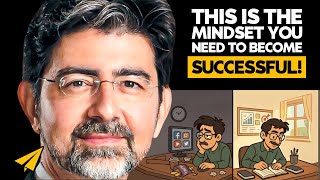
eBay founder Pierre Omidyar shares the principles behind building a global marketplace. He built trust through transparent feedback, believes people are fundamentally good, and says code can change lives. His philanthropy now focuses on rekindling community connections.
Chapters
You know, when you look at something that looks hard, that was probably easy.
You know, and I had this firm belief, which I still believe, that people are basically good.
Don't take no for an answer when people out there are giving you advice and saying, "No, this will never work." If you're passionate about something and you work hard, then I think you'll be successful.
Code does change the world and, you know, it can change people's lives.
If somebody does something nice for you, wouldn't it be nice in this world if we could actually start recognizing that?
I think we've lost a lot of that in America. It's something that here in Europe we're a lot more familiar with.
There are no entrepreneurs out there that are more hardworking and innovative than the small business.
I didn't sit down and say, "Hey, I'm gonna be innovative today." And if I say that you should treat people with the benefit of the doubt, it's because I believe in that as a way of life.
He's a French-born American entrepreneur and philanthropist. He's the founder of eBay, where he also served as chairman from 1998 to 2015. He has an estimated net worth of $7.2 billion. He's Pierre Omidyar, and here's my take on his top 10 rules for success.
When you look at the accomplishments of accomplished people and you say, "Boy, that must have been really hard," when you look at something that looks hard, that was probably easy. Conversely, when you look at something that looks easy, that was probably hard. And so you're never gonna know which is which until you actually go and do it. So just go and do it, try, learn from it. You'll fail at some things. That's a learning experience that you need so that you can take that on to the next experience. And don't let people who you may respect and who you believe know what they're talking about, don't let them tell you it can't be done because often they will tell you it can't be done. And it's just because they don't have the courage to try it.
I started— I started this just with the idea of let's bring the power of interactive technology, you know, the web, to ordinary people. And, you know, and I had this firm belief, which I still believe, that people are basically good. And as I said, if you— if you treat them well and if you treat them with— with, you know, benefit of the doubt, you're not going to be disappointed. And in the modern world, despite, you know, we're bombarded with negative images all the time about how bad the world is, how dangerous the world is, and it is true, there are some dangerous things going on and there are some bad actors out there, but the vast majority of people out there are just good, decent, honest people.
There's something about an entrepreneur that is somewhat sort of anti-establishment, somewhat disrespectful of the previous generation, and although that can grate people people the wrong way a little bit. That's a really important element, actually. You need to be passionate about what you want to work on, and, and don't take no for an answer when, when people out there are giving you advice and saying, no, this will never work. I mean, you know, you look at eBay, the idea that, that in 1995 that you could create something over the internet, which is this brand new thing that nobody, you know, was really using at the time except for scientists and academics, and, and it would be a place where strangers could actually people could do business with one another, could actually exchange merchandise for money without ever meeting. And the notion that people could actually buy and sell cars over the internet. I mean, that's crazy, right? It's totally crazy. So in fact, lots and lots of people told me that was crazy. And I didn't, I have to say, I didn't have this vision, oh, it's going to take over the world, it's going to be this fantastic thing overnight.
I didn't have that kind of delusion either.
But I did say, you know what, there's something worth trying here.
It's not crazy.
I say that, you know, you should pursue your passion. If you're passionate about something and you work hard, then I think you'll be successful. If you, if you start a business because you think you're going to make a lot of money at it, then you probably won't be successful because that's the wrong reason to start a business. You have to really believe in what you're doing, be passionate enough about it so that you will put in the hours and the hard work that it takes to actually succeed there, and then, then you'll be successful.
I know I've heard the story that the first line of code that you wrote was an apartment in Campbell.
That's right. Not too far from just down the street. That's right.
I mean, did you have any idea, you know, you wrote this, you put it out on the internet.
Yeah.
You didn't sort of do it thinking, hey, I'm going to build an $83 billion business.
No, of course not at all. Not at all. Really. I mean, it was just this, as I said, I as a software engineer, I wanted to write some tools that I thought could be useful to ordinary, ordinary people, regular people. I had a day job, started as a nights and weekends project. And it's amazing. Of course, now, you know, we all understand code does change the world and, you know, it can change people's lives. But I think what makes eBay unique, despite the fact that there are many sort of now there are more marketplace businesses out there. We are really— have always been about people. It's always been about bringing tools to ordinary people and giving them the tools and the opportunities that they need, that they can use to then be successful and define success in their own way. So yeah, those early, those early weeks and months were Crazy, you know. So I remember one of the very first items listed. This was in, you know, 1995, in September of 1995. One of the very first items listed was a 1952 Silver Dawn Rolls-Royce.
Okay.
And, and the seller— and I wish we could find the seller— the seller was amazing because he or she had done this beautiful listing. And so, you know, you could put HTML in there. The seller had created a server somewhere to actually host photos. Back in those days, you know, you had to actually own, you know, run your own server to host photos. And actually had this beautiful listing on there. I looked at that and I said, this is incredible. There is no way anyone will ever buy a car on the internet. Like, that's just ridiculous. That'll never happen. And of course now there's a car sold every 4 minutes on a mobile device. I mean, it's It's incredible. It's totally incredible. So who could have imagined that?
It was actually in February of '96, I came up with the idea of creating this feedback forum. And basically what that was, was to encourage people to give each other feedback based on how did their transaction go. And since I was getting all these complaints, I assumed that it would be mostly negative. That, you know, it was a forum for people to give each other negative feedback. And so I wrote this little letter to the community in February of '96 announcing the feedback forum, and basically in it I said, hey, listen, people are basically good. We all try to do a good job. We all try to do our best, but sometimes things don't work out. It'd be great, you know, let's give each other the benefit of the doubt. But if you're having real problems with somebody, now there's a feedback forum. You don't have to complain to me, but there's a feedback form. If your complaint is worthy of complaint, then you should do it publicly, you know, and complain in the public forum. But while you're at it, also think about giving praise where praise is due. If somebody does something nice for you, wouldn't it be nice in this world if we could actually start recognizing that? And, you know, let's give each other praise where praise is due. And, you know, we found that when you give somebody the opportunity to give praise, to give positive feedback when it's well-deserved, people love to do that. It's very gratifying to yourself. To be able to give praise to somebody else. And so anyway, so the feedback forum was just a remarkable, incredibly gratifying testament to human nature and the fundamental goodness of human nature. But then also from a business perspective, it was really the thing that allowed eBay to succeed because it gave people a chance, a way to know that they could actually trust a complete stranger.
What I realized through the eBay experience was that people are hungry for personal communication. And personal relationships that they can build around a shared area of interest. And I received hundreds of letters, thousands of letters from eBay users that say, you know, eBay has restored my faith in humanity. I've met my best friends on eBay. You know, there have been people that have been married that have met on eBay. I mean, it's a little bit strange. It's definitely not the, you know, the majority of the users, but there's something special going on there. And I think what it is, is when you give people a forum in which to communicate and communicate around a shared area of interest, no matter, you know, what socioeconomic classes they come from, what neighborhoods they come from, or geographies, they realize that they're human beings and they realize that they can be a community together. So what we want to do with our philanthropy is to just help people rediscover that, especially in America. I think we've lost a lot of that in America, something that here in Europe we're a lot more familiar with, we're a lot more comfortable with the notion of an individual being a part of a community and having a responsibility to be a part of that community. In America, through a variety of reasons that I won't go into here, I have some thoughts on it, you know, people have become isolated and people are afraid to talk to their neighbors sometimes. But at the core, people do want to be part of a community. And all we have to do now is figure out how to, how to kind of rekindle that a little bit. And that's, that's our mission. We've got, you know, I'm young, I'm 33 years old, my wife and I are 33 years old. We've got at least 50 good years ahead of us to work on this, and it's going to be a lifetime pursuit.
There are no entrepreneurs out there that are more hardworking and innovative than the small business owner. I mean, like Give me a break. So everybody, it's okay, Silicon Valley, you look at these wonderful entrepreneurs. But, and of course, you know, we all work really hard in Silicon Valley here as well. But it is really hard to be, to run a small business. And even though, you know, eBay's growth was very fast in those early days, I learned some of the difficulties myself as an individual, just having to deal with all that. So that for me is true entrepreneurship. Now what people here in Silicon Valley also do is we have this incredible sense of vision of what's possible in the world, and I think to be a successful entrepreneur you have to have also a little bit of self-delusion in your own ability to make that happen.
I didn't sit down and say, "Hey, I'm going to be innovative today." I really, it was really trying to experiment with new tools. I mean, I'm a software engineer, so basically the latest, coolest, shiny toy at the time was the web, was interactivity, and the way I expressed my creativity was through writing code. Fast forward to Labor Day weekend of 1995, I sat down at my computer and started writing a script, a Perl script, to to create a very basic auction mechanism, and the code was really simple. It just allowed you to list an item for sale, you could have a title and a description and a starting price, and you could also see a list of all the items that were listed, obviously that was important, and then you could bid on an item.
If you think about a retail environment where people are buying things in a retail environment, the retailer has a whole bunch of control. They choose the products, they design the store or the catalog, they train the salespeople, They control the experience. And if there's a problem with a sales— you know, with a salesperson, they retrain and so on and so forth. At eBay, our customer's experience is based on how one customer interacts with another customer, okay? And you can't control customer behavior. So the only thing you can do is have a certain set of values that you encourage people to adopt. And the only way your customers are going to adopt those values is if they see that you're living those values as well. So when I say that I believe people are basically good, it's because I believe people are basically good. I mean, it's not something that I came up with for eBay. And if I say that you should treat people with the benefit of the doubt, it's because I believe in that as a way of life. And we have to do it internally at eBay, at the company as well, because if we don't, then eventually that seeps through and customers will see that. And that will harm our business because You know, we can't control customer behavior, so our business is based on that.
Thank you guys so much for watching. I made this video because Morteza Daryani asked me to. So if there's a famous entrepreneur that you want me to profile next, leave it in the comments below and I'll see what I can do. I'd also love to know which of Pierre's top 10 rules hit you the hardest, meant the most to you. Leave it in the comments and I'll join in the discussion. Thank you so much for watching. Continue to believe, and I'll see you soon.
More from Evan


How the Biggest Mistake in History Created A Trillion-Dollar Empire | Sergey Brin



9 Machiavelli Principles That Force People To Respect You | Machiavellian Philosophy



The First 10 Words That Instantly Ruin A Sales Conversation | Vanessa Van Edwards

The Top 1% Mindset Behind The First $5 Trillion Company | Jensen Huang (Nvidia)

