Remembering David Lynch - COFFEE and MEDITATION are All You NEED for a Better Life! | Top 10 Rules
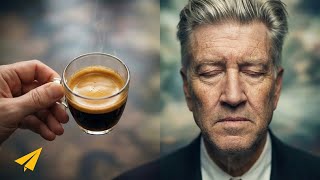
David Lynch on creativity: ideas are bait you catch and expand, meditation enlarges consciousness like a golf ball expanding, and coffee is part of the daily ritual. Learn by doing, not film school. Follow your true voice, embrace restrictions, make work that feels correct.
Chapters
It's great to go to film school and you can learn a lot of intellectual knowledge, but learn by doing. If you have a golf ball-sized consciousness, when you read a book, you'll have a golf ball-sized understanding. Meditate regularly, and then the second thing I do is drink coffee.
He's an American director, producer, screenwriter, and photographer. His films have been known to disturb, offend, and mystify audiences. He was described by The Guardian as the most important director of his era. He's David Lynch, and here's my take on his top 10 rules of success. Rule number 9 is my personal favorite, and I'd love to know which one you guys like the best. And as always, guys, as you're watching the videos, if you hear something that really resonates with you, please leave it down in the comments below and put quotes around it so other people can be inspired as well. Also, as you are writing something down, it's much more likely to stick in your head. 2.
Enjoy. An idea comes and you see it and you hear it and you know it. How does it come? It comes like on a TV in your mind. You know, there's a line I've always loved of Leonard Cohen. He said, if I knew where the good songs came from, I would go there more often. Absolutely. People, we want— we don't do anything without an idea. So they're beautiful gifts. And I always say you desiring an idea is like a bait on a hook. Yeah, I can pull them in. And if you catch an idea that you love, that's a beautiful, beautiful day. And you write that idea down so you won't forget it. And that idea that you caught might just be a fragment of the whole, whatever it is you're working on. But now you have even more bait. Thinking about that small fragment, that little fish, will bring in more, and they'll come in and they'll hook on, and more and more come in, and pretty soon you might have a script, or a chair, or a painting, or an idea for a painting. But they come as in small more often than not, small fragments. I like to think of it as in the other room, the puzzle is all together, but they keep flipping in just one piece at a time. In the other room over there, in a sense, David, there's always another room somewhere. That's a beautiful thing to think about. Let's think about it a bit. No, you think about it. And my advice is to do what you truly believe in. Don't do something to impress any studio or some money people. It always seems to backfire, as far as I've seen. Do what you really truly believe in and learn by the doing. It's great to go to film school and you can learn a lot of intellectual knowledge, but Learn by doing. And now the cost has come down, you can really, really go. And then you can see how things go. There's lots of film festivals you can enter into and see if you can catch some distribution or some financial help. If you have a golf ball-sized consciousness, when you read a book, you'll have a golf ball-sized understanding. When you look out, a golf ball size awareness. And when you wake up in the morning, a golf ball size wakefulness. But if you could expand that consciousness, then you read the book, more understanding. You look out, more awareness. And when you wake up, more wakefulness. It's consciousness. And there's an ocean of pure, vibrant consciousness inside each one of us, and it's right at the source and base of mind, right at the source of thought, and it's also at the source of all matter. I loved two scripts by a guy named Gregory Brooker, Spring of '61 and The Fall and Rise of Glen. And, um, those three, those three I loved. Yeah, and plus, and so that hit And Mary wants you to direct it. She says, take a look at this and see if you're interested in directing it. Right. But everybody notes, first of all, this is not like anything you've ever done before. Right. I, um, it was curious. I'm reading the script and I'm feeling things. And I've always said that film is such a beautiful language, it can do abstractions. It can do abstractions, and abstractions are the combination of all these different elements that you have in a film. It can do an abstraction of emotion, and I felt this emotion coming from the script, and that's what I really— that's what lit my fire. The emotion of what? The emotion coming from a scene, from a word, from a look. When you read something, we all have the experience, we picture it in our minds, and those pictures, those initial things, are what guide us from then on. And so as this thing, you know, I was picturing it, I'm at the same time I'm feeling things, and I'm thinking film can do this and it could be beautiful. This thing about emotion, you know, it's, it's, it's an intuitive thing. Uh, the, the, the film talks to you and, uh, the story talks to you and, uh So it's a little bit action and reaction. You know, you're experimenting as you go to get the thing to feel correct. And how come it has to feel correct to me? And so you work and work until it does feel correct. I think it's very important sometimes to look at older work, and it can give you ideas for, you know, the present work, and/or even ideas for the future. It's kind of important to sometimes go back, and I felt that same way about seeing the films with my son. I was glad I went back, and it kind of inspired some things for the future, and it was basically a good experience. I personally love restrictions because it forces you to create, you know, in this kind of like boundaries, and maybe you think of neat ideas and with— because of these restrictions. Always in a film you wish that you could be doing something else. It's just like having a— it becomes, uh, you want to escape. And I think it's like this pressure and responsibility, just yearning to be doing anything, uh, you know, and going anywhere. So many times going to the studio in the morning, I wish the driver would, you know, become crazy and take me anywhere. Uh, but when you get there, you're back in it and working. In spite of the restrictions, it's such a fantastic process, and it's creating, and creating is the coolest thing that we can do. For me, what has happened is the heavy, you know, weight of anxieties and fears, those things have gotten less and less and less, and For me, life has gotten to be more like a game. And the things that used to, you know, almost kill me don't kill me so much. And the enjoyment of doing gets so beautiful, and the ideas are flowing more and more. And the thrill of it all, the thrill of it all. I appreciate people more. I see people and I see their faces and I feel like they seem familiar. And I just don't have so many problems. And life gets more and more beautiful. And I still love the same things, you know, painting and making films. It just gets better and better. That's my experience. Be true to yourself. Have your own voice ring out. Other things can inspire you, but find your own voice. Be true to that voice. Don't let anybody fiddle with it. Never turn down a good idea, but never take a bad idea. And be true to the ideas all the way along, every element. When you finish a film, uh, your job basically is over. And when you, you have a desire to share your work, and so you put it out into the world, and you realize that yes, you can help the film some by giving interviews, or you can go to some places and have talks, but basically the film is on its own, and you can't tell whether it's going to go good or going to go bad. It's important that you believe in your work, and, and that's the most important thing. Transcendental Meditation is obviously the most important thing to do day in and day out. Transcending is the key to a better and better life, and this idea is catching on more and more in the world. The receptivity to Transcendental Meditation is growing is growing by leaps and bounds thanks to so many in this room and so many others around the world. It's really happening. It's built for the human being and transcending our nervous system is built to transcend and experience that unbounded, eternal, infinite, immortal, immutable ocean of pure consciousness within. It's money in the bank. Meditate regularly. And then the second thing I do is drink coffee. Your coffee? Yeah, my coffee.
Thank you guys so much for watching. I made this video because Luke asked me to. So if there's a famous entrepreneur that you want me to profile next, leave it down in the comments below and I'll see what I can do. I'd also love to know what did David say here that resonated the most most with you? What are you going to take from this video and immediately apply it to your life or business somehow? Leave it in the comments and I'm going to join in the discussion. Finally, I want to give a quick shout out to Luke. Is it the same Luke who requested the video? Shout out to Luke. Thank you so much for picking up a copy of my book, Your One Word, and making that awesome art piece around hustle, which I guess is your one word as well. I really appreciate the support. So thank you guys again for watching. I believe in you. I hope you continue to believe in yourself and whatever your Your one word is much love. I'll see you soon.
I spit up, but the spit up keeps coming. Jeremy, what are you doing? Sorry, what are you doing? Just answering a phone call. I'm sorry. Okay, no problem. Come over here. You're in the shot. Take— you know, you've seen this kind of crazy, you know, many times tonight. Right. And you just hold it like this. Okay. And you guys just get up and you stand right next to her. It looks like this. And I got it. I got it.
Yeah.
And then start bouncing up and down. Yeah, yeah, yeah. Okay. Pals around and kissing. Yeah. Okay. Okay, you got 30 seconds. This is absolutely unforgivable. I don't care. Unforgivable. We could have shot this scene 3 times. How many minutes will be Justin and Laura ready on the set in the bed? She leans against this column, I'm on her, and that's when you get in here with the monkey. Alfredo, don't paint the door. Okay. Graffiti is— No, no, no. You're gonna shoot yourself in the crotch. Masumi is racing into that chair with the monkey. I come off, that chair is empty. I come off and I go over here to Masumi and the monkey. Okay? Okay. Now when I go over to Masumi and the monkey, You race into this chair. Yes, exactly. Yes, exactly. With the reflection of the light. Oh, so beautiful. I remember it now. I need a very microscopic small amount thick. Eric, I need a watch, a cigarette, pack of matches, and the silk. Do we have a mirror ball? I tell you, take that Mylar, wrap it around, uh, one of your rubber— the rubber ball. That's better than a disco ball, Edgar. And then behind— what do you mean the staircase? There's a staircase right here that goes up, which I didn't— I'd take photos. Yeah, I didn't think of it. Oh, I want to see that staircase so bad, man. Eric, where's that hammer you've been talking about? Not yet. Sweet. There's Jay. Good. So the only other moment— we're still not shooting. We're still not shooting. Where's Julia? She's coming. Where is Julia? She's coming. Okay, she's not here. I'll tear the pump off of her. Tear the pump off? What about Dominic? What do you want him to say? Summer night. Why would he be different? Asumi, this is David. Hi, how you doing? Good. Are you ready to work Friday night with the monkey? You're shaking. God. You've been— have you been taking drugs while you've been here? Okay, now listen, Uli. Quit the drugs, okay? We'll start you in on meditation really soon, okay? Get the sticks in the meantime. Dreadful. Do you need to get through? Sorry. Sorry. Oh man, unbelievable. Well, that is really good. Take another one. And you will use the— Jeremy? Eric?
More from Evan


How the Biggest Mistake in History Created A Trillion-Dollar Empire | Sergey Brin



9 Machiavelli Principles That Force People To Respect You | Machiavellian Philosophy



The First 10 Words That Instantly Ruin A Sales Conversation | Vanessa Van Edwards

The Top 1% Mindset Behind The First $5 Trillion Company | Jensen Huang (Nvidia)

