Richard Branson Motivation: The One Decision That Made Richard Branson a Billionaire!
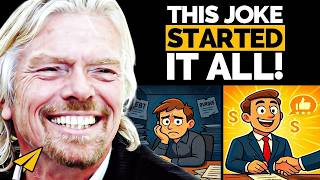
Richard Branson explains how a missed flight sparked Virgin Atlantic and why he only enters industries that enhance the brand. He protected downside risk with creative deal structures like a 12-month return clause on aircraft, used outrageous marketing stunts for free publicity, and built a company culture around fun and employee care over pure profit.
Chapters
Hello, Believe Nation! I started the Mentor Me series with a goal to learn from people who've done a lot more than us and try to seep some of their knowledge, their wisdom, their mindset, their habits, the way that they think, and filter it into our brains to help us become the best version of ourselves. So today we're going to learn from Richard Branson on some of his most motivational speeches. And as always, as you're watching the video, if Richard says something that really means something to you, please leave in the comments below, put quotes around it so other people can be motivated and inspired as well.
[FOREIGN LANGUAGE] I was flying from the British Virgin Islands— no, sorry, from Puerto Rico to the British Virgin Islands. And I was 28 years old, and I'd been away from home for 3 weeks. And I had this gorgeous lady waiting for me. And American Airlines announced that they're not going to fly the flight till the next morning. They didn't have enough passengers. And I was damned if I was going to wait till the next morning. So I went to the back of the airport and I borrowed a blackboard and I scribbled Virgin Airlines as a joke, $39 one way to the British Virgin Islands, and went around all the passengers and I managed to fill up my first flight. And when I got to the BVI, the guy on my left, you know, turned to me and said, you know, sharpen up the service a bit and you could be in the airline business. And the next day— anyway, the night went well. The next day— the next— she's now my wife 40 years—
still 40 years later.
Thank goodness she likes you. The next day, I rang up Boeing, and I said, I'm thinking of going into the airline business. In fact, I've just had my test flight. Do you have any secondhand 747s for sale? And the person who took the phone call, I thought he was going to put the phone down on me, but he, you know, he hung on in there. So he said, well, you know, what does your company do? And I said, well, you know, we're a record company. We've got the Rolling Stones. We've got the Sex Pistols. And again, he didn't sound very, very, you know, and they said, what's the name of the company? And I said Virgin. And there was a long pause and he said, well, look, we'll send a salesman to see you, With a name like Virgin, I just hope your airline goes the whole way.
There's no point in us going into something unless we can really shake up an industry, make a major difference, unless it's going to enhance the Virgin brand. If there's any danger of it damaging the brand in any way, even if it's going to make us a lot of money, you know, cigarette companies or something like that, we just wouldn't do it. And because life's short, we want to enjoy the experience. So I mean, we're not—
I've never—
very rarely have I actually sat down and thought, can we make a lot of money by going into this industry? Almost all our new ventures have come about from— I mean, if you go right back to the beginning, Vietnam War, let's you know, let's edit a magazine to try to have young people campaigning to stop the war, and let's give young people a voice. The actual business aspect of it, the paying the bills, you know, we had to sort that one out later and hopefully sell enough magazines and learn about the printing and the paper manufacturing, but that wasn't our principal interest. And almost every venture we've gone into, we've seen a gap in the market. You might get frustrated flying on other people's airlines. Screw it, let's do it. We'll just start an airline. And then we try to make sure we can get the bills paid. And actually, I think it's the better way of doing it. If you think, how can I make lots of money? Let's bring the accountants in. We'll work out some business plans. I mean, it's the wrong— it's just the wrong way around. I mean, you get one set of accountants will say, you know, yes, you can make lots of money. Another set of accountants with exactly the same input will say, no, you're going to lose lots of money. It's got to be, you know, from your heart, you know, and, and, and do something which, you know, you're passionate about, which is going to be your hobby, and then it's likely to be successful.
I've been struggling with this business for 2 years. The economy seems to be falling apart.
I'm ready to give up.
What does Richard Branson tell me to do? Do everything you can to survive and not to give up. You know, as long as you tried everything you can, then if you fail, you'll sleep okay, and you'll pick yourself up, and you'll learn, you know, and when things are better, you'll learn from your mistakes and you'll start again. You know, if on the other hand you give up, you know, you give up too readily, you'll forever kick yourself. And I wish you all the best of your best in your quest, because there's going to be— I'm afraid there's going to be a lot of people who will fail. But I think the other important thing is just not to take failure too seriously. I mean, it's something that happens to— something like 80% of all small business people fail, either go into Chapter 11 or actually go bankrupt. And that's a lot of people. And some people take that really badly. And they should realize that, you know, the important thing is just to learn from it and come back and start again. And an awful lot of, you know, really big, you know, multimillionaires and billionaires who've been through 2 or 3 bankrupt companies in their lives. And have learned from them and have come back, come back the stronger. It's what, you know, it's what limited companies were designed for by governments. It was, it was to say to people, try, try things. And, you know, if you fail, it shouldn't affect you personally. People know the risk they're having in dealing with you. And, you know, don't be embarrassed about your failure as long as you've tried everything you can. To avoid it. Don't take it too personally.
Well, I mean, I also think fun should come into marketing. There was an occasion where British Airways decided to sponsor a giant wheel opposite the House of Commons in London, England, and this giant wheel was lying flat on the ground, and they got all the press together one morning where they were going to lift the wheel up. And I got a call at about 7 in the morning saying that BA had technical problems and they couldn't get the wheel up. And all the press, the world's press, were there waiting. We had an airship company, so I rang up the airship company and we scrambled an airship. And the airship went right over the wheel and it had a massive big banner across it which simply said, "BA can't get it up." And anyway, we got more coverage around the world for that than I think any other one single thing we've done. On marketing generally, I mean, again, I think that the cheapest form of marketing is not full-page adverts in the press, it's free advertising. So If you're up against a big corporation, you do need to use yourself to try to get free advertising. And try to do it in fun ways like that so you stand out from the crowd. Try to make sure you end up doing something that hits the front page of the newspapers rather than the back page. But obviously, we've gone to extreme lengths to try to put Virgin on the map, whether it's trying to be the first across the Atlantic in a hot air balloon or the Pacific in a hot air balloon, or, you know, but it did help, I think, create the Virgin brand, make it a fun brand, and a brand that people could identify with.
There's a very thin dividing line between survival and not surviving, and most people who start in business end up the wrong side of that dividing line, because the bigger businesses out there will try to crush small upstarts. We were no different from anybody else when we set up our airline. British Airways set up a unit behind behind closed doors, and that unit was set up to crush Virgin Atlantic. And they had people illegally accessing our computer information. They then had a team of people ringing up our passengers pretending to be from Virgin Atlantic, suggesting that Virgin Atlantic was cancelled that day, and maybe British Airways, we could maybe move you over to British Airways. They had people going through my rubbish bins, they had people— anyway, the lengths they went were extraordinary. So, you know, any small business going up against bigger businesses are likely to come up with ferocious competition. So to beat a big business, you have just got to use your strengths of being small. Generally speaking, if you work for a big corporation, it's quite impersonal and quite often the staff are not looked after well and quite often the staff actually don't like going to work because they're not treated well. In a smaller company, you can make sure that your staff are looked after well, you can make sure your staff are proud of what they're doing, you can make sure that they believe in what they're doing and they work long hours to try to to make the company a success. As a small company, you can be more nimble, you can move more quickly. I mean, with Virgin Atlantic, for instance, if we want to change all our seats in our plane to better seats, we can do so in maybe 9 months. For British Airways, it would take them 7 years. So by being more nimble, one can move quicker, one can be more innovative and innovate more. So it is possible for small companies, if you can keep your overheads lower, so you can actually undercut the bigger guy, and most likely the bigger guy has had years of building up overheads that you as a small company haven't yet got and hopefully never will have. So it is possible for smaller companies to beat bigger companies, but you have to be quick of foot and, as you say, never take no for an answer.
One of the most important sort of phrases in my life is, you know, is protecting the downside, and it should be, you know, one of the most important phrases in any businessperson's life. So, okay, we made a big, bold move from going from music company into airline business. but, you know, I set myself a condition that I could hand that plane back at the end of the first 12 months if the business— if people didn't like our business. And so one of the most important negotiations with Boeing was, you know, we have the right to give you that plane back after 12 months. And that meant that I knew that, you know, I could put my toe in the water, I could see whether people like, like the airline. But if it didn't work out, it wasn't going to bring everything else crashing down. I'd be able to look my record company bosses in the eye and we'd still be friends because they'd still have jobs. And, you know, so protecting the downside is critical. And so we'll make bold moves, but we'll also make sure we've got ways out if things go wrong.
If you lost it all, you lost everything, What would you do? What would be the first thing you would do to try to rebuild your success?
Well, I think you have to define what success is. I mean, to me, I've spent a lifetime creating things that I hope— that hopefully, I think, can make a difference to other people's lives. Genuinely, I've never set about to sort of think of myself as a businessman. If I lost it all, you know, I'm sure I'd want to carry on creating. Most of my time is now spent creating creating not-for-profit ventures like the Elders or the Carbon War Room or, you know, Centre for Disease Control, or, you know, trying to protect species. And that's where I get my main satisfaction from. And somehow, even if I didn't have any money, I would do my best to continue to do that.
Life is short, life should be fun, and it should be fun— not, you know, it should be— if, if the, the chairman of the company is having fun, you know, if you go to a party and, you know, if I let my hair down and I'm the first to be thrown in the swimming pool and I'm not just standing in the corner of the room sipping sherry or something, then everybody will have a laugh and everybody will have fun.
You know, if you're chairman of a company, be the first to dance on the table.
You know, just get everybody else up dancing on the table and make sure the party's, you know, the party's a laugh. So, you know, so play hard and play hard, work hard, and, you know, follow certain principles in life. You know, be you know, love people, make sure you make a positive difference in this world while you're on it.
I love learning. I've never actually thought I was, you know, starting a company as such. I just saw situations as I traveled in life where I felt I could improve on the way things were being done by other people. So, you know, so I would You know, one of my favorite phrases is "screw it, let's do it," and I've used that phrase a lot of times. And we've, you know, we just love going in and trying to shake up industries and doing it better than it's been done before.
I am dyslexic, and therefore I think I've been very good at keeping things simple because, you know, as a dyslexic, I need things to be simple for myself, and therefore Virgin, I think, you know, when we launch a financial service company or a bank, you know, we do not use jargon.
It's—
everything's very clear-cut, very simple. And, and, you know, I think people, you know, people have an affinity to the Virgin brand because we don't, you know, we don't talk above them or talk down to them.
Thank you guys so much for watching. I hope you enjoyed. I'd love to know, what did you think of this video? Did Richard's words move you? Are you going to make a change now somehow in your life or your business? What did you enjoy the most? What clip was the most motivational for you? Leave it down in the comments below. Whatever thinking that you have, whatever new goal you set for yourself, if you write it down and leave in a comment, you're much more likely to follow through. That process of taking it from the brain and put it on the screen really dramatically increases the chance of you doing something about it. So don't waste this opportunity. Please leave a comment below. Believe Nation will jump in on discussion. I will too. Thank you guys so much for watching. Continue to believe, or whatever your one word is, and I'll see you soon.
More from Evan


How the Biggest Mistake in History Created A Trillion-Dollar Empire | Sergey Brin



9 Machiavelli Principles That Force People To Respect You | Machiavellian Philosophy



The First 10 Words That Instantly Ruin A Sales Conversation | Vanessa Van Edwards

The Top 1% Mindset Behind The First $5 Trillion Company | Jensen Huang (Nvidia)

