Robert Kiyosaki (@theRealKiyosaki) Top 10 Interviews - #MentorMeRobert
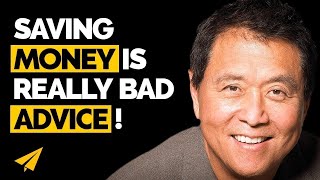
Robert Kiyosaki argues wealth comes from financial knowledge, not assets alone. He advocates using debt strategically to buy during crashes, evaluates 100 properties in 90 days before investing, and says the education system fails to teach money skills that separate rich from poor.
Chapters
So it's not the stock or the asset, it's knowledge that makes you rich or poor. You know, if you want to stay small, be the smartest guy on the block. Every time I fail, at minimum, I'm gonna get smarter. When you see stuff like that, you know, how can I quit? I never want a job. I don't ever want to work for anybody else, and I don't want to work for money. You don't marry the first man or woman you meet. Hopefully you kiss a couple of them, you know, before you do. I make a lot of money. But I give a lot. Why struggle for money when you don't have to? I don't watch Oprah. I didn't know who she was. The people that are winning are people like me who understand debt. With perspectives that often contradict conventional wisdom, he's known for straight talk, his courage, and his irreverence. He has challenged and changed the way tens of millions of people think about money. He's Robert Kiyosaki, and here are his top 10 interviews. Mentor me, Robert. The first one you say that I thought was really interesting is that money is knowledge. Right. Let me go back again. You know, most people say save money. Well, it's no longer money after 1971. So today, if you're saving money when bonds are paying zero and the Fed is printing trillions, saving money is really bad advice. So, but everybody's now saving, which is the worst time to save. So you can lose— if you had bought gold in 1980, you would have lost money. You can buy real estate and lose money. You can buy stocks and lose money. So it's not the stock or the asset. It's knowledge that makes you rich or poor, because a true investor can make a lot of money when the market's up, will make more money when the market's down. For like right now, this is my best time ever. Bad economies. So this is the secret is you've done your research, you've done your homework, you know where you should be putting your money. Well, it's common sense that markets don't always go up, you know, and most people buy, hold, and pray for the long term. That's insanity in this volatility. All right, so knowledge. Inform yourself, and that's how you become powerful. You know, if you want to stay small, be the smartest guy on the block. And that's why most accountants, most attorneys, most doctors never get rich. It's because they're too narrow. You know, they're experts in toenail removal or something, you know what I mean? Or my attorney, that poor guy is an A student, but he knows jack about outside of that. Whereas I never had— I flunked out of high school twice because I can't write. It's ironic I'm a writer today. But the reason I'm pretty good is because in the military, we're taught to be generalists, not specialists. So, when I sit down with my team, I have accountants, I have attorneys, I have media guys, I have IT guys, I have graphic designers and all this. So, I operate as a team since I don't know anything. So in actuality, being a great entrepreneur means I could be the laziest guy and I can know the least, but I have to have a very smart team which is the ring finger around me. So because I was never smart, I had respect for people who are smart. And a lot of times I meet A students and they think they're the smartest guys on planet Earth, and that lack of respect is what keeps them small. And that's what most corporate guys want to do, stay small, you know, you got to You gotta climb that corporate ladder, you gotta beat the other guy for the job, and it's all that stuff. It's not the way an entrepreneur really works. It's corporate. It's school system. You know, you gotta beat out for the grades, you gotta have the best grades. I don't have to be the best, but I have to hang out with the best. We had fast cars and very fast women, and we took our mind off of the business. And the business came crashing down. So when people said, asked me, you know, was it undercapitalization, was it this, was it that, I said no, it was good-looking women. The most fun 3 years of my life. I highly recommend it. But I was depressed for about 5, 6 years because I had to pay back, I didn't declare bankruptcy, I paid back the money. So I spent the next, you know, it was a million dollars and I just kept chugging away. Making the money. And so one of the reasons I became a good entrepreneur was actually straightening out the company, figuring out what I did wrong, mistakes I made. And I couldn't pay back the million dollars as an employee, so it kind of forced me to stay in the— as an entrepreneur and become a better entrepreneur. So the failure was really a great thing in the end. So today I'm not afraid of failing because every time I fail At minimum, I'm going to get smarter. And when I get smarter, I make more money next time. And that's what an entrepreneur does. Is there a time to bail out on a project though? I mean, when— I don't— that's not in my vocabulary. Yeah. Look, I have an unfair advantage. I went to war. And at war, I'm alive because other guys died for me. When you see stuff like that, you know, how can I quit? Most guys are just wimps, pussies, cowards. They don't have it. So they should get a job. Please hear me. This is the thing I'm trying to say to people. It's how you think. I never want a job. I don't ever want to work for anybody else, and I don't want to work for money. My money works for me. And people work for me. Until you can make that shift, you'll always be poor or middle class. So until that shift comes, and I say, I swear I'll never work for anybody anymore, that I'm going to be the guy that owns the plantation. And today I own large companies, oil companies, mining companies, publishing companies, and all this. But that is the most important thing. You see, if you need money, then your soul is weak. If you need to go and say, I need, I need a paycheck, I need job security, I want job benefits, the government should take care of me. You don't have a prayer. And my question has always been, why don't we teach kids about money at school? I totally agree with that. Why don't we have like finance, some kind of investing 101 when you're in the 5th, 6th, 7th, 8th? How about high school? None of that. None. But there's a reason they don't teach you that is because otherwise we would have no employees. That's the reason. They want to make sure that you're silly enough to just keep working hard. You see, if you're an employee, you're in a different tax bracket than me. You know, percentage-wise, you'll pay more in taxes than I will pay. Did you know that? Absolutely. So if you work for money, the harder you work, more money you make, the more your taxes go up. Absolutely. Okay? So when I work, my taxes can go down the more money I make. Everyone says finding good real estate is hard when you're getting started. What's the value of good network and good partnerships? Well, I'll say it again. In 1973, I came back from Vietnam, and I was a pilot out there, and I took a real estate course. It was $385, 3 days long, and that was a lot of money back then. I was only making $500 a month, so $385 was all I had. And the instructor at the end of the program said to me, he said, well, to the whole class of about 30 of us, he says, your education begins now that you leave the class. You don't get educated while in the class. So his assignment was that everybody, 30 of us, we had to pair up in teams, get up in teams, 2 or 3 to a team, and we had to look at 100 properties in 90 days. And he says, don't buy anything, just look at 100 properties, do an evaluation of each property, write a short blurb about it, why it's good, why it's bad. And he said, at the end of 90 days and 100 properties, then you make up your mind if you're going to buy something. He says, if you haven't found one property in 100 deals, you start again, you know, you start again with another 100. And that's what most— that's why most people are not rich, is they're not willing to go through that process of looking at 100 deals to find one deal. And there's sometimes— and you and I know, you look at a lot of frogs to find one princess, you know. But when you find that one princess, everybody goes, oh, well, how do you get so lucky? Well, I looked at a lot of dirt dogs out there, you know. And that's Like anything in life, you don't marry the first man or woman you meet. Hopefully you kiss a couple of them before you do. Money and Spirituality. You know, I don't know what the heck people think about money, but that's what I get a lot of, is kind of this, well, you know, money's not spiritual. I'm just saying it's your attitudes, you know, a person's attitude towards money. I make a lot of money. But I give a lot, you know what I mean? It goes to biblical principle: the more you give, the more you receive. So when I meet somebody who's not— doesn't have any money, it just means they're not giving something. Yeah, you know, so a lot of times there's people who would like more, but they're not giving anything. So they're like my poor dad, you know. He belonged to the labor unions, and he wanted to work less and get paid more. Well, that's anti-religious to me. If you want to get paid more, work more, give more. That's how I see it. My message to people is, you know, why struggle for money when you don't have to? You know, it's really simple if you have good advice. The problem is money is not taught in school, and so what we do is oftentimes follow in our parents' footsteps. We may do different jobs, but we oftentimes follow in the same financial pattern and my rich dad used to say, you know, he says, you can't, you can't end poverty by giving somebody money. Giving a poor person money keeps them poor longer. Yeah. And that's what breaks my heart because I want to help people change the way they think about money. That's all it is. Yeah. And I think one of the most important things is that I noticed between my rich dad and my poor dad was the vocabulary. My poor dad, PhD in education, very smart man, but he had the vocabulary of a schoolteacher. And my rich dad had the vocabulary of a rich man. And so when I say to people, what's the first— What do you mean by vocabulary? Well, I know what the word means, but what kind of vocabulary? Well, my, my, uh, I sit around the dinner table and listen to both dads, and one would talk about algebra and geometry and trigonometry. Nothing that ever made me any money. And my rich dad would sit there and he'd talk about return on investment, assets, liabilities. Discount cash flows, etc. And a lot of people use, you know, what you just said about your house is a liability, it's not an asset. Most people think it is their biggest investment. Yes, and that's one of the biggest middle-class traps. They say, my banker says my house is an asset. And my rich dad would say, if you can read a financial statement, you'll see, you can read that your house is actually a liability. I'm not saying don't buy a house, and I like big houses, and I like the finer things of life. Just don't call a liability and asset. And what's trapping the middle class is they're buying liabilities they think are assets. Is your advice to other entrepreneurs to be searching for a big break? And if so, how— what's your advice on how for them to position themselves in the best way to increase the chances to get a big break? Well, again, I say to myself, you've got to have 5 things going for you. And when you're prepared, it helps. Happens. But if you're not prepared, it doesn't happen. For example, I was out here in Aussie when Oprah called. I didn't start preparing when she called. I was prepared when she called. My wife calls up and says, "Hey, Oprah called." I go, "So what?" She says, "Well, she wants you on the program." I go, "So what?" Because real men don't watch Oprah. Pussies watch Oprah, not me. I don't watch Oprah. I didn't know who she was. My wife says, "Get your butt home now." I fly all the way from the bush, way inland from Brisbane, to Brisbane, to Phoenix, to Chicago, and I'm sitting on Oprah. It's too late to practice. I have done so many PR stunts, stuff like this here. I've practiced, practiced, practiced, practiced, practiced. When Oprah, the lights went on, Oh my God, this is it. It's too late to practice. And I learned that in the military as a pilot in Vietnam. You know, I don't say, well, I should have studied a little harder before I got to Vietnam. You got to practice, practice, practice, practice, practice, because when that little Viet Cong was shooting at me, you know, there's only one guy going home that day, him or me. You know, that is too late to practice. And what happens for most entrepreneurs is they don't have the skills. They don't they don't practice enough. There's a very good book called Outliers: The Story of Success. I think it's the best book for entrepreneurs because it talks about how the Beatles became the Beatles. You know, they played more than any other band in history. They played almost for free in Frankfurt or Hamburg, wherever they were. And the average person doesn't practice enough. Okay, great advice. How do we take your teachings and apply them to ourselves to make sure that we are not victims and we are part of the solution rather than part of the problem? You used exactly the words I would use. What Fuller says, we're supposed to be architects of the future, not its victims. That was one of the final quotes in this book. So The Second Chance is in 3 parts: past, present, and future. And the reason I recommend Part 3, which is the future, is financial education, because what you'll find is everything they teach in school, it is opposite to what my rich dad taught me. I don't save money. Why would I save money when they're printing money? Why would I save money when they're giving me, you know, at best 2%? Why would I invest for the long term when there's front-running, high-frequency trading, and all this, you know? Why would I get a job when people Who pay the highest taxes are jobs, people with employees. So everything is the opposite. So what happened, as I write about in Second Chance, is in 1971 Nixon took us off the gold standard. At that point the U.S. dollar became debt. So it makes it hard for people to understand the people that are winning are people like me who understand debt. You see, debt is the name of the game today, not money. That's what this guy Phillip is saving. What about Zimbabwe? The debtors are winning. See, most people use debt to consume— new car, new house, new cell phone, new clothes, credit card debt. But I use debt to invest. Now that, most people say that's dangerous, and it is. But that's why financial education should teach you how to use debt to invest. Particularly now, I guess, when interest rates are so low. Oh, I just, you know, when the market crashed in 2007, it hit a high in October 14th, 2007, and went down. A crash is good. You see, I started to buy stuff at bargain basement prices, but I used debt to buy it. You're concerned about the stock market, but there are times when it offers value? Absolutely. And that's why I don't hate anybody. I love my banker. I love the JSC. I love the stock market. That's where I got my money from. I love my insurance company because they give me money because I can use debt. They want debtors. It's a difference, it's the opposite in thinking. I don't save money, I use debt. Thank you so much for watching. We would love to know which of the interviews had the biggest impact on you. Leave a comment below and we'll join in the conversation soon. Even though that's your line. That's all good. Continue to believe. And we're out. Can I— that's what you want to do? Yeah, that's it, we're done. What's what Bucky Fuller said? You must trust your intuition. You know, and it's called your gut feeling a lot of the times. And scientists have just recently found out there's actually brain material in your gut. That's why you get a bad feeling. And that's kind of where intuition comes from. It's more from your gut rather than your brain. And my intuition kind of changed because I went to Vietnam twice. I was a good Marine, US Marine pilot and all this. I was doing it for God, country, and America, you know, all this stuff. And one day I was standing on the battlefield in 1972 and I said, what am I doing here? You know, why am I killing these people? I don't hate them. They don't hate me. And that's when my life, you know, you start waking up as you grow older. So I learned to trust my intuition and say what I had to say. Like, this book is about the future also. Fuller was a futurist. So for me to write Rich Dad Poor Dad in 1997, nearly 20 years ago, was about the future. It wasn't about 1997. I think the most important thing we have to do is we have to convert to solar power as quickly as possible. Because what keeps people poor is guys like me selling oil all the time. As soon as there's solar power, there will be more wealth on planet Earth. There'll be less destruction, less environmental damage. But there are people who don't want solar or wind or tidal energy to come in. And as soon as that happens, there'll be greater wealth. Right now it costs too much money to live. You know, it costs too much money to drive a car. Oil affects everything. It affects food, it affects clothing, lights. So the other thing with when people say live below your means, you don't like to live below your means, do you? No. And I think when you say to somebody live below your means, you wipe their spirit out. It's like saying to somebody, if you want to lose weight, go on a starvation diet. It doesn't make you healthier to starve yourself. So I would rather get financially educated. That's why I read your books, because I want to— this is my greatest asset. I want to feed my brain so that I can expand my means without getting into excessive debt or where I start to lose. Because debt, you could say, is a two-edged sword. But telling asking somebody to live below your means is almost inhumane. I never felt good doing it. I wanted to strive to do better every day. I want to do better every day. I liked a good life. Like I tell the story of taxiing underneath your jet. You know, I was in my jet, but it was a little Learjet. I look up and there's a 727, and I taxi under it. Holy mackerel, you know, it's big boys and their toys, but nonetheless it inspired me. I said, okay, I'm in a Learjet now, it's time to step up. And it doesn't mean the jet will make me happier. What makes me happier is the wanting to get better, to get smarter, to do better.
More from Evan


How the Biggest Mistake in History Created A Trillion-Dollar Empire | Sergey Brin



9 Machiavelli Principles That Force People To Respect You | Machiavellian Philosophy



The First 10 Words That Instantly Ruin A Sales Conversation | Vanessa Van Edwards

The Top 1% Mindset Behind The First $5 Trillion Company | Jensen Huang (Nvidia)

