Robert Kiyosaki's Top 10 Rules for Success
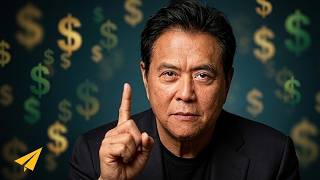
Robert Kiyosaki lays out ten rules for building wealth: create assets through debt, learn from crashes, master sales, understand cash flow, fight for your values, use debt strategically, focus on inside investing, become financially literate, and take risks. He argues a house is not an asset and that sales skills matter more than formal education.
Chapters
This is the best investment in the world today. It's called silver. And the reason I say that is because I study history a lot. This here is fake money. I would never work for this stuff. It's good as toilet paper. So the biggest investment today is this. This is $35 US, and I think everybody in the world can afford this today. I tell people every day, you should buy this. No, I'll save this. You see, they don't know the difference between this is fake money, this is real money, and this here is gold. Real money, fake money. So the yen, The rupee, the dollar, the peso, all fake.
Need motivation?
Watch a top 10.
Belief Nation. Hey, it's Evan Carmichael, and I watch these videos every day because I need them for motivation. Being around successful entrepreneurs every morning helps me believe that I can do great things too. It's like your morning coffee, but for your goals, kickstarting your day with a blast of positivity. So here is a challenge for you. Try watching one video every morning for the next 30 days. And let's find out together if they help you do great things too. If you're in, leave a hashtag #believe in the comments below so I can celebrate with you. So today, let's learn from one of the best, Robert Kiyosaki, and our take on his top 10 rules of success.
Believe.
Rule number 2 is create assets.
In Rich Dad Poor Dad, I said there's 3 main rules. The rich don't work for money. What I do as a capitalist is I create assets. So I take debt, all this, I assemble, I put a piece of real estate together or business, or like right now I'm up in Northern Canada buying lithium fields. We're gonna crush lithium for batteries, EV batteries and wires.
So we create assets.
And so that asset pays money. So every month, let's say I have 1,600 rental units. Every month, 1,600 people who probably went to school, paying me rent. God bless them.
And guess what?
Because they're paying me and my property's 100% debt, I pay no taxes.
Rule number 3 is learn from your mistakes.
At Camp Pendleton, California, I had to crash every single day. So I'm not afraid of crashing. That's what kept us alive. So as this market is crashing today, I'm going to get richer. I want you to be able to do the same. Once the markets crashed here in Phoenix in 2008, It was the best real estate in all of America went on sale. So I'm not trying to scare you. I'm just trying to make you aware of it.
Rule number 4 is learn to sell.
I meet so many people who say, well, I can't afford this. I can't afford that. I can't afford to buy real estate. I can't afford to buy Bitcoin. I can't afford to buy— well, the reason you can't afford to buy something is because you can't sell. And sales equals income. So back in 1974, you know, my dad wanted me to go to the University of Hawaii and get my PhD. And I said, no, I'm gonna, or he wanted to fly for the airlines 'cause he was a pilot. And I said, no, I'm not gonna do that. I'm gonna learn how to sell.
And he was upset. He said, you know, salesmen are crooks, they're con artists. You know, it's not a very honorable profession.
but that's why he was poor.
You know, so many PhD types, academic types, they think they're above the capitalist process. They think their PhD entitles them to the better life.
But if you go for your PhD, you really don't have the skill sets to be in the capitalist world.
You know, like when my father, you know, bless his heart, he ran for lieutenant governor against his boss, the governor. As a Republican in the People's Republic of Hawaii. You know, Hawaii's 100% communist. And so he ran as a Republican and he lost. And the governor said to him, "You'll never work in this state again." So the power the governor had over my dad was his job. And the hardest thing for a schoolteacher, Patrick, is you, as a capitalist, you really don't need a schoolteacher. You need a salesman. And my father just couldn't sell. He wouldn't, you know, he just kept holding up his PhD. I have a PhD, but he couldn't sell.
Wow.
And you know what I mean?
And I saw that. And that's when my rich dad, who had no education at all, said, you better learn how to sell pretty quickly.
Also, to make sure you're actually taking action after watching this video, I've designed a special free worksheet just for this video. The worksheet will highlight our favorite lessons from the video that will inspire you to remember what you learned today and actually apply them. The worksheet will also give you space to write down what your key takeaways are and your specific plan of action to make sure you're getting results. If you want the worksheet designed specifically for this video, absolutely for free, there's a link in the description below. Go click on it and start building the momentum in your life and your business.
I'll see you there.
Rule number 5 is understand cash flow.
We don't save money and your house is not an asset. So the average poor person, you know, went to college like my dad, PhDs, go to school, get a job, work hard, save money, get out of debt and buy a house 'cause your house is your biggest asset. That is the dark side of the coin, but it's the light side for the idiots. They're doing what they think is smart. And the guys on my side, like Trump's side, are going, "I wouldn't do that." But you can't tell 'em that 'cause they got this stupid piece of paper that says you're smart.
My dad says, "I'm smarter than your rich dad." I said, "Yeah, you're also broke." So this is a radical thing for people to hear that haven't read your book, the idea that your home is an asset. I mean, this is, I think this is the largest asset on most people's, personal portfolio, personal balance sheet?
Their home.
Is their home, right? So, but how is your home not an asset?
'Cause you have to understand cash flow. Two most important words.
If you read a fina— if you read financials, that's what your banker wants to see.
Your banker wants to see your financial, not your GPA, not your report card, you know, not your college degree. They wanna see assets, liabilities, and cash flow. So there's three basic parts to a financial statement, income statement, Balance sheet, statement of cash flow. You can teach a monkey that, but our schools don't teach that.
Rule number 6 is fight for your values.
What is happiness?
I love what I do.
I don't think, I really don't think about those things.
Really? Yeah.
I have work to do. You see these here? I was a pilot in Vietnam. I went to school to kill people.
Okay.
I killed a lot of people. Went to military school. We think differently. I fought for my country. I fought against communism. They killed us, we killed them. Now I fight with education, the same intensity. I fight for the freedom of people. So if you can understand this, I don't care if I live or die. I went down 3 times in Vietnam. My friends don't come back. I came back to America, this is in 1972. I lost so many friends. And the hippies, you know, the hippies and the peaceniks and all the Maharishi who the Beatles went to see, they were spitting on us and hitting us with eggs. So I don't play that game. I said, I treat everybody with respect. You do your job, I do my job. So when I came back from Vietnam, you can tell I'm still a little bitter about it. Eggs were hitting me, people were spitting on me, and I lost my friends. But we fought for our country. We fought for freedom. If we don't fight for freedom, we've lost our freedoms. That's why I don't like this guy Biden. Okay, so just hear, I have my values, you have your values, but I fight for the freedom of speech, the freedom of religion, and none of this racial stuff.
Rule number 7 is use debt.
I went to listen to my rich dad. My rich dad very simply said, I said, I want to be an entrepreneur. I don't want to be an employee. I didn't want to be a pilot flying for an airline, even though I'd probably making $500,000 a year. That's chump change. To me. So what I'm going to say to you is I followed my rich dad's path. I'm going to say to you today will disturb some of you because it's opposite of what they tell you in school. So everybody ready for this? Understand it's opposite. Raise your hands.
Okay.
Because if you don't raise your hands, I'm not going to say it.
Okay.
Thank you. This is what's opposite about financial education and being an entrepreneur. How many people have heard live debt-free? It's the biggest lie they could ever tell you. The US dollar is debt. America America's the biggest debtor nation in the world today, but they don't teach you guys that. The US dollar became debt in 1971 when I was flying in Vietnam. I was growing up fast out there. Today, I'm a billion two in debt. And what they don't tell you in school is debt is money. The US Treasury is debt. A bond is debt. I own no bonds. I just borrow money. Financial education on the capitalist side, my rich dad side, is I use debt I use debt to finance my investments. How many people pay taxes? I don't pay taxes legally. That's why if you saw the debate between, you guys are too young for this, but Hillary Clinton and Donald, my friend, you know, like Hillary says, "You don't pay taxes," and Donald says, "Because I'm smart." Rule number 8 is focus on inside investing. Invest in stocks, bonds, mutual funds, 401(k)s, IRAs. When I was coming out of the Marine Corps, my poor dad wanted me to come here, go to school, go fly for the airlines, you know. My mother wanted me to come here. She said, why don't you become a lawyer or a doctor? I said, Mom, lawyers and doctors are smart. She goes, you're right, you can't get here. So these here are the lawyers and doctors, sometimes called self-employed, small business, less than 500 employees. This is all tax law. You have to study tax code. Over here is 500 employees or more. So I have employees throughout the world. I create jobs, I don't have a job. But it takes a different type of education. So the reason the Marine Corps was so good for me is this takes leadership. You have to be able to move people, money across the world. And I stands for insider. So when you're inside here, it's very, very different than a 401(k), which is outside. So I don't own any stocks, but I sell stocks. I create my own stocks. So one of my goals in life is not a very high goal, but I want to take companies public. They're called IPOs, initial public offerings. That requires a lot of financial education. So I've listed companies on the Toronto Stock Exchange, the TSE, New York Stock Exchange. Now next year, probably NASDAQ. So I sell stocks. I don't buy buy stocks. That's the other side here. So this is poor dad's side, this is rich dad's side. And so what they say to most kids, I don't know what they say here, go to school, get a job, or be a doctor and a lawyer. Worldwide they pay 40% in taxes. These guys here pay about 60%, and over here 20% in tax, over here zero. So when I was talking to my rich dad, I was 26 years old. Everybody's coming in late. So what I set out to do 25 years ago was to teach people how to move from here to here. And they're completely different people. You know, it's like I said, I'm a billion two in debt.
Rule number 9 is become financially literate.
All coins have 3 sides: heads, tails, and the edge. So you have Republicans, Democrat, but I stand on the edge, you know, look at both sides. And you have right and left and all this stuff. So when I look at money, you have to see what's invisible. You have to see the other side. And so when the 2008 market hit, like I said, money was debt. What the banks were doing was they were borrowing money and then packaging debt as an asset so they could borrow more money. They're called derivatives. And the average American, since they're financially illiterate, they don't speak the language of money. When I speak a derivative, that's like if you get an orange, you cut it, you squeeze it. The orange juice is a derivative of the orange. So what a derivative is in 2008 was a derivative of debt made into bigger debt. So the debt accelerated. So Warren Buffett has called derivatives weapons of mass financial destruction. So I'm sitting there like this watching it, and 2008 comes, it blew. I went, thank you, God.
Thank you.
Because when you see the other side, I made more money in the crash than I did when it was going up. So the average person, because they don't have financial literacy, definition of words, and they're taught to just work for money, They don't see the other side. They cannot see what they cannot see. So when the markets crashed in 2008, I borrowed $300 million.
You borrowed $300 million?
And I bought the best real estate in the world for pennies on a dollar. That's how you get rich.
And rule number 10, the last one before a very special bonus clip, is take risks.
The big thing about risk here is this. In school, they compensate for risk by telling you to memorize the right answer. So in other words, these kids leave, young people like you leave school thinking, oh, if I know the right answers, then there's no risk. And it drives old guys like me crazy, 'cause everybody's talking about millennials, what's wrong with them? Millennials are the most highly, in many ways, the most highly educated generation in history. They have the cell phone, they didn't get educated in school. They got educated on social media, on the cell phones. They know all the answers, but they're afraid of doing anything. The biggest complaint about my generation is millennials know all the answers, but they can't do anything. And the reason they can't do anything is because you might hurt somebody's feelings, you might make a mistake. That just keeps you guys just trapped in this little box here. So that's one of the reasons I think millennial money is such an important point here, because if you're going to come into my world, old guy's world, or the information age, you've really got to understand what is risky and what is not risky. And in my world, if you play it safe, that makes you stupid, because if you don't take risks, you don't get smarter.
Yeah.
You know, so you may know the answer, but you can't do anything. And one of the best things I had is I went to military school, then I went to flight school. I had such great teachers, you know. All of them could fly. So my flight instructor could fly. What a novel idea. A flight instructor can fly. But when I was in high school, most of my teachers were terrified. They're all cowards, you know. Job security. Don't make mistakes. Just memorize the right answer and you'll be safe. And that's why most school teachers aren't rich. And they teach that to your generation today.
And most of them are teaching us things that they don't do on a daily basis. Like we have entrepreneurship classes and they're not entrepreneurs, you know? So it's kind of frightening when you think we're relying on the school system and the fact that they're teaching us So the way to get through college, right, is practicing all the right answers, taking the exam, putting in all the right answers. When in real life, that's the last thing that'll ever happen, right?
No.
Like, you talk about fake, you know, this is my book, Fake here. Fake money, fake teachers, fake assets. The reason it's fake money, fake teachers, and fake assets is because it all has to be fake. You have to have fake teachers to understand fake money. They have to have fake assets to buy those stocks, bonds, and mutual funds. Fake assets. But without fake teachers, fake money, you can't do it. So that's why I love working with them on these programs here. Because if you're going to be successful, you've got to take some risk. And when you take a risk, you make a mistake. And you might learn something, because we're supposed to learn from our mistakes. Look at Tiger Woods, the greatest golfer in the world. One of the greatest athletes. He's made a lot of mistakes. He would not be a great golfer sitting in a room listening to a teacher who never played golf tell Tiger how to be a golfer. And so, but Tiger, remember, don't take any risk. Don't pick up that putter, don't pick up that driver, don't hit something 'cause you might go out of bounds. So don't take any risks. And that's why your generation is more screwed than my generation. You know what I mean?
And in class, we look up to the person that knows all the right answers. So really, it's just this mentality of having to be perfect and have this perfect intelligence.
And know all the right answers.
And know all the right answers, when that's the person that'll probably be the least successful in life because they're not willing to make these mistakes.
So let me say this again. Education is more important than before, but you gotta be careful what you're learning. That's why I wrote the book, Fake Money, Fake Teachers, and Fake Assets. Don't listen to fake teachers. I have a friend, he teaches entrepreneurship at UC Santa Barbara. And I call him up and I say, how in the world can you teach entrepreneurship? He says, well, I have a master's degree. I said, I ask the question again. What gives you the right to teach entrepreneurship? He says, I have a master's degree in entrepreneurship. And I say, I said, hey Doug, you and I have been friends for a long time. You've never started a business. You're a fake teacher. He goes, but I have all the answers. I said, yeah, but you don't know how to start a business. So that's why I do, again, what I do. Education is more important than before, but be careful. There's fake money, fake teachers, and fake assets. Like some of the biggest fake teachers are those financial planners. They're telling you to save money. Why would you save money when the government's printing money? Then they tell you to invest for the long term in the stock market. And you guys know the stock market is ultra short term. There's high frequency trading. Today, long term is a split second. But they're telling you guys like my generation to keep your money in the stock market for 40 years and you have nothing left at the end of it. Then they tell you to save money. What the heck's wrong with this? My attitude is this: if you're going to be a real entrepreneur, you have to be a lifelong learner. I am studying, learning constantly. I never stop. And that's my competitive advantage. But also my core advisor team, we never stop together. You know, I have my accountants, my attorneys, my bankers and all that, we study together. That's what we do, we get together. We don't play golf, we don't drink beer, we study. Because study is the way you win. But you have to know what you're studying, because what you put in here, garbage in, garbage out, right? The other thing you have to be careful is who's your teacher, who's your mentor. I took golf lessons once at the Biltmore, and it was the most horrible golf lesson I ever had. Because not because I wasn't a golfer, the teacher and I just did not get along. So they brought a new golf instructor in and I learned to love the game again. You know what I mean? So as an entrepreneur, be very careful who your teacher is because they can either kill your spirit or increase your spirit. A good teacher will inspire you to learn more. A bad teacher will tell you you're stupid and you should study more.
To learn Kiyosaki's money rules that most people miss, check the video right there next to me. I think you'll love it. Continue to believe, and I'll see you there.
Rule number 1 in Rich Dad Poor Dad is the rich don't work for money. Most people miss that one. One of the biggest mistakes, I still hear it today from young people, oh, I don't have to worry because I'm still young. Yeah, and that is death to most people.
More from Evan


How the Biggest Mistake in History Created A Trillion-Dollar Empire | Sergey Brin



9 Machiavelli Principles That Force People To Respect You | Machiavellian Philosophy



The First 10 Words That Instantly Ruin A Sales Conversation | Vanessa Van Edwards

The Top 1% Mindset Behind The First $5 Trillion Company | Jensen Huang (Nvidia)

