Robert Zemeckis's Top 10 Rules For Success
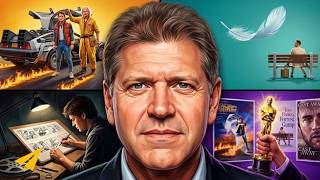
Robert Zemeckis shares his filmmaking philosophy: never repeat yourself, always follow your creative instinct, and prioritize collaboration. He cast Eric Stoltz in Back to the Future before realizing the mistake, and says a film must pass two tests: he'd watch it, and audiences will too. Directing is daily compromise between vision and reality.
Chapters
I don't want to do the same type of movie over and over again. I completely identified with that thing that happens inside all of us when we have to do something creative. Because what's the point of doing all this hard work if it's not appreciated? Because that's the art form. That was horrible. That was the worst experience in my career. It was just horrible. Directing is waking up every morning and compromising.
He's an American filmmaker and screenwriter. He's credited as being one of the greatest visual storytellers in filmmaking. He's directed some of the biggest blockbuster hits over the last few decades. He's Robert Zemeckis, and here is my take on his top 10 rules for success. Number 8 is my personal favorite, and I'm curious to figure out which one you guys like the best.
All I want to do is are good scripts. However, they have to manifest themselves.
Have you ever had an agenda? Have you ever been in that mindset?
I never have. I never have. I've never had like a— I'm too restless. I could never— I don't know what I want to do, but I know what I don't want to do. Is that— I can answer the question like that. I don't want to do the same type of movie over and over again. I wouldn't want to just be doing comedies. I wouldn't want to just be doing suspense movies or action movies. I would— I mean, I would— I mean, I always want to, like, mix it up. Why did you decide to give this tribute not only to Philippe Petit but also to the sense of freedom and follow your dreams in a way? Well, exactly for that reason. I mean, I completely identified with that thing that happens inside all of us when we have to do something creative. And that thing that happens when you have a passion and you have a dream and you have to follow that dream at all costs. I think it's a very universal story. I think we all feel that in some level. And that's why I thought that everyone could identify with this character. When I decide to make a film, I have to make it. You know, I have that— there's that drive inside of me, that passion. That dream that I have to realize the film, and I completely understand that. If you spend a lot of time assembling a team of really, really talented artists who are also reasonable people, then the best way to make a film is to collaborate and to take good ideas from from everybody. And, you know, rejecting— the hardest thing to do is when you open your setup to collaboration, what you don't want to do is you don't want to hurt people's feelings when you reject their ideas. But basically, as a director, my feeling is I'll take a good idea from anybody. I'll very often ask everyone for help. I'll sit here and say, "Okay, I don't know what to do." But then at the end of the day, you're the one responsible to getting the work done. And so you have to ultimately make decisions to keep everything moving forward. So I know that that's kind of a long-winded answer, but I think if you said, "What is your directing style?" It's much more collaborative than it is dictatorial.
So for you, how much of the judgment of whether you were happy with what finally came out is about you, and how much is it about the idea of an audience having that experience? How do you mean? Is reaction to the movie as important to you as your own satisfaction with what you did?
Yeah, I mean, well, it's a close second. Because what's the point of doing all this hard work if it's not appreciated? 'cause that's the art form. The art form is to be exhibited to a mass audience. So, if I, you know, it's not like writing poetry, which I love, but that's a different art form. So, I guess what I'm saying is, is that every movie has to satisfy two criteria for me. First is, Is this a movie that I would like to see? Mm-hmm. That's number one. And if that's yes, then the next question right alongside is, and is this a movie I think anybody else would like to see? And if that's a yes, then those are the only two criteria. I can't think of anything else. Everything else is up to the movie gods. You guys included it on the Back to the Future series, but on the later DVDs, but it was on the internet before that, the idea of you shot it with Eric Stoltz. Yeah, but it had nothing to do with his ability. It was— there was a situation where, you know, Eric is a brilliant actor. I mean, we love him in all things. Just that I simply, I simply miscast him, and I learned a very serious lesson. And, you know, it's like, it's, it's not worth it. It's too painful for everybody. What you have to do is you have to cast the movie the right way and feel really right about it. Otherwise, don't go down that road. He's a great actor, though. That's a great— absolutely. With a little clip of it, just so people can see that Eric Stoltz was Marty McFly at one point. He just said, I don't think we're getting the laughs that I was hoping we would get. And I looked at Bob and I realized that he was absolutely correct. And I said, Bob, what do you want to do? So I had to make this horrific decision, which was very heartbreaking for everybody. Yeah, that's rough. Yeah, it's tough. What a director who's the leader of— when you sit down and tell the actor, what was that like? Telling him that I was going to replace him? Yeah. That was horrible. That was the worst experience in my career. It was just horrible. It was like, you know, never want to do that again. Well, I always loved going to the cinema to see action and special effects. I love seeing horror movies. I love seeing monster movies. I love seeing war movies. You know, when I grew up, there was many World War II movies. And I loved watching movies to see the action and the special effects. But it wasn't until I was in high school, when I was about 13 years old, and I saw a film. It was an Arthur Penn film called Bonnie and Clyde. And I remember feeling my emotions being, you know, being moved by the film. And I remember having a vivid thought at that point. I was thinking, Wow, this is very interesting. This is sort of an amazing power. And from that moment on, I— Then I started to learn what a— Oh, films have directors. And I learned the process of how films are made and then fell in love with the art form. And from— So since— I was 13. All I ever wanted to do was make films, and it's the only thing I know how to do. So I can't do anything else. Directing is waking up every morning and compromising. You have this idea, this ideal of what you want to do that day, and you then, you know, you just— it just gets stripped away and stripped away and stripped away and stripped away, except for those magnificent moments when the cast does something that you couldn't imagine, and you go, wow, that is really awesome. And then you immediately get a feeling of dread because you're expecting then, as soon as you say cut, that someone will say, yeah, we missed the focus, there was a boom in the shot, there was an extra in the background who tripped and fell, whatever the thing is that ruined the moment that you may not get back again. He saw the two towers and he literally drew a pencil line between the two towers and said, "I've got to put a wire between those towers. I got to walk." It's like, you know, in his mind, he believes that those towers were built for him to create this performance, just like he felt that Notre Dame was for him. Notre Dame was for him. And what's amazing about Philippe and why I think his story is unique, but yet it's a universal story, is that that's what happens to all artists. You know, you ask an artist, why did you do this? Why did you paint this painting? Why did you make this movie? Why did you write this music? There's never any answer for it. It's just something I have to do. And anyone who creates any type of art, and we all do, so we all have our own artistic expression will identify with, with that thing that was inside Philippe where he had to do this no matter what. I've always— well, my— I've always given the same advice. I think that the, the, the premium thing, the thing that is the, the most valuable thing, the thing we don't have enough of, is ideas and screenplays. So my, my recommendation is to always write, not only to Do I believe that that's the most, like I said just now, is that that's the most valuable commodity in the industry is to have a good screenplay? I think it's also what makes you into a good filmmaker. No, no, no, I've never regretted any movie I've ever passed on. Huh. Ever. Really? Ever.
And any one you've ever made?
Never. No, not one. I'm proud of them all, love them all.
So you're a very happy man?
Content. Happy is a dangerous word. You know, uh, somewhat content. You know, happy is a very dangerous word.
Thank you so much for watching. I made this video because our Bibi Rodriguez asked me to. So if there's a famous entrepreneur that you want me to profile next, leave it in the comments below and I'll see what I can do. I'd also love to know which of the top 10 rules had the biggest impact on you and why? What lesson are you going to adopt and apply now to your business or life? Leave it in the comments and I will join in the discussion. Thank you so much for watching. Continue to believe and I'll see you soon.
More from Evan


How the Biggest Mistake in History Created A Trillion-Dollar Empire | Sergey Brin



9 Machiavelli Principles That Force People To Respect You | Machiavellian Philosophy



The First 10 Words That Instantly Ruin A Sales Conversation | Vanessa Van Edwards

The Top 1% Mindset Behind The First $5 Trillion Company | Jensen Huang (Nvidia)

