Roger Federer's Top 10 Rules For Success (@rogerfederer)
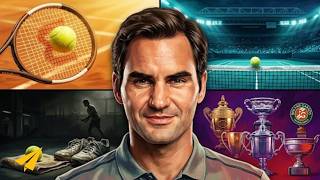
Roger Federer shares the principles behind his tennis success: setting clear goals, focusing on strengths over weaknesses, and genuinely enjoying the work. He credits a mental trainer early in his career, learning from losses, and building a team willing to challenge him with keeping him sharp.
Chapters
Because if you never set yourself goals, you can never question yourself because you just move from one to the next and you say, "It's gonna be okay." In tennis, working on your weaknesses makes you maybe an overall complete player, but you won't be dangerous anymore.
As long as I enjoy what I'm doing, I train hard, I have no regrets, and all I can do is give my best, then it's gonna be fine regardless of the outcome. I don't think it's enough just to love it and then just to do it and go out and win it. It's important for me to actually hear criticism sometimes, you know, because I think that's what makes me a better player. If you're prepared, you don't panic. For me, it's the same thing. If I'm winning or losing, I need to concentrate on what was my game plan.
I used to work with a mental trainer, but that was when I was probably 16, 17, because I was just— I just had bad behavior.
The moment I left the tennis courts, I tried to forget what I just did on the tennis court for at least a moment. My dream was always to get number one in the world, and I'm gonna try my best for that. Oh, it's all talent. I don't work. I just sit on the couch.
He's a Swiss professional tennis player. He's regarded by many to be the greatest tennis player of all time. He was named World Sportsman of the Year for a record 4 consecutive years. He's Roger Federer, and here are his top 10 rules for success.
For me, very important are the short-term goals. Then the long-term is where do I want to be in 6 months' time? Because if you never set yourself goals, you can never question yourself because you just move from one to the next and you say it's gonna be okay. And the best thing I've done, to be honest, in the last 10 years, I think it was question myself in the best of times. When things are going great, what more can I do? How much better can I become? How much harder can I train?
Incredible! Let's hope Berdych's okay. What an amazing chip backhand! Backhand from Federer. Yeah, he's fine, just a little shocked.
Remember where your roots are and remember where your strengths lie. I think it's especially also important for me that I always believed these are my strengths and this is what either in tennis I work on, or these are my strengths in my personality and this is what also maybe people want to see and hear. And feel. I think many people always feel like they have to work on their weaknesses, you know. I mean, I don't know how it works in the business world as much, but in, uh, anyway, in, in tennis, working on your weaknesses makes you maybe an overall complete player, but you won't be dangerous anymore, you know. So I think you can sometimes relate to that in, in some businesses as well. That's why I like to work on the strength, and it's, it's really helped me through throughout my career.
¡Ah!
You know, it starts very locally and so forth, and you move on and on and on, and And you have to prove yourself time and time again, and that pressure can definitely weigh on you. You lose— the fun goes away sometimes just because instead of now it being this lifelong dream you've had of wanting just to enjoy yourself and play tennis like your heroes used to, now people sort of expect you to win. Like losing in the quarterfinals, which was a dream 5 years ago now is like a disaster. It's— it changes the mindset of you as a player and as a professional athlete. And that's where I always try to remember, well, you know what, as long as I enjoy what I'm doing, I train hard, I have no regrets, and all I can do is give my best, then it's going to be fine regardless of the outcome. How did you get to a point where you could have that kind of perspective in your career? Took me a while, to be honest. I was very emotional when I was younger. So I think by the age of 22, maybe I thought 25, maybe I'd say even, I was like, okay, losing is fine, you know. But I think that only came because I've won that much all of a sudden. So I knew that those wins nobody could take away from me. That's sort of in the vault, and that's good to have, good to know. And now you have to just prove yourself every single day, and everything that comes is like a bonus. So I've been on this bonus trip since a long, long time, and Playing this way has been actually much more enjoyable, even though, you know, chasing records and playing against the other top guys has also created its own pressure, you know, but a different one than when you're up and coming and trying to make the breakthrough. It's quite challenging, and especially you're young and you're emotional, it's quite difficult.
Oh my goodness, starting where he left off yesterday. Yeah, and Del Potro will have to look back on this point and say, gosh, I couldn't have done any better. He really did. I mean, that was just a remarkable shot.
But open court or no, the danger Dangerous place to put the ball.
Better on the run with the forehand.
I don't think it's enough just to love it and then just to do it and go out and win it. It's not that simple. You need to have structured goals. You need to tell yourself, okay, what are my goals for the short term? What are my goals for the long term? Now that I've accomplished almost everything, I'm supposed to go out on the tennis court thinking, let's just play free, let's just hit the ball, who cares, you know? But this is not how you're going to win matches because it comes down to margins and you have to be so clear in your mind exactly what you want to do and what you want to achieve. And for me, it doesn't work without any goals, without any targets. I cannot compete properly.
¡Oh!
Well, I think the team's always very important, you know, in any aspect of your life, if it's in business, or in your life, you know, to have a good team, good friends around you is key. To be able to pick the right ones is another quality I think, you know, leaders tend to have. For me, always harmony in the team has been very important, but then also people who can challenge me, you know, who can tell me, Roger, don't you think you should change this? We have an idea for you, a solution maybe to problems. And I'm very happy if they tell me that if they do see a problem or they I think that I can still improve. It's important for me to actually hear criticism sometimes, you know, because I think that's what makes me a better player. And it questions— that means someone's questioning me who really cares about me. And I think that's really important in the business world as well. And, you know, I think I've done actually quite well over the years considering always having a team around me for the last 12 years.
My word, well, he's been written off at times this year, but when you watch a shot like that, he's playing better than ever. Oh, Jean Gachassac getting into it as well. He's the president of the French Tennis Federation. He's an international rugby player at heart. And he knows a little bit of brilliance when he sees it. Look at that!
You know, it's like in school. If we think back when we went to school and we prepared for a test and the paper comes in front of you. If you're prepared, you don't panic. For me, it's the same thing. If I'm winning or losing, I need to concentrate on what was my game plan, what did I come here to do. I'll try. Okay, maybe make it a more physical match if it's going too easy for the opponent, adjust a little bit but not really go completely off track.
Oh, that is unreal! Under this sort of pressure, in a moment like that, one of the best shots you will ever see under pressure. Federer waving his Wilson wand, a moment of genius.
I used to work with a mental trainer, but that was when I was probably 16, 17, because I was just— I just had bad behavior more than anything. And I'm happy I was able to get away from that. No more breaking rackets, no more throwing, you know, stuff around, no more complaining, no more commentating my own points at each time. But at the end of the day, it was myself who had to convince myself of changing, and I was only able to change that when I was about 20. I think it's It's important to learn from mistakes and losses because usually you learn more there than from wins. It's natural.
Work-life balance.
Yeah, finding the rhythm.
Okay, I'm trying to get this one, okay? The moment I left the tennis courts, I tried to forget what I just did on the tennis court for at least a moment. Okay, in the back of your mind, you have to stay the business person, or you have to stay the tennis player, just to— because that's who you are, you know, that's your number one priority, maybe next to your family if you have or not. But so that to me was always really key, and I think honestly I've mastered cutting the two things from each other, you know, the business world to the private, the personal life.
¡Oh my God! Oh, he's going!
I'm more going like on, I would say, year by year. I tried to reach top 15 till the end of this year, and my goal was also to win a title. That's what I've done already, so I want to get more now, of course, after winning my first one. And otherwise, I mean, in 5 years, I haven't thought about it at all yet, but my dream was always to get number 1 in the world, and just, I'm going to try my best for that because it's a kid's dream for me.
Quel échange! Magnifique! Quel point! Quel point! Ah, le public là qui est debout. Pourtant c'est une filière qui correspond pas forcément.
You thought you had something going, right? That you were one of those, like with Lendl, that, you know, made us generation work hard. Not with me anyway. I didn't get inspired. No. All I do is really just take care of the kids, you know. I won't say no if Andy Murray decides now, all right, he's a nice guy, Rog, he's a father, and let's— I won't say no. But I know that He'd like to win the first for British tennis since, what is it, 150,000 years? So I'm just happy waking up in the morning and feeling not like an old man. So that's very positive. Uh, felt like that. You're looking right at me when you say that.
Thanks, buddy, appreciate that.
You're not that old. A little bit old. How's he hitting him? He warmed me up. And I won. So, very well.
The interview was great, but then I needed Roger to stick around so I could ask a few questions in Spanish for a CNN en Español program. You don't have to do anything. I'm just going to read out some questions in Spanish. Just a couple of questions while you're in shot.
Okay. And I don't need to answer them?
No, you don't need to answer them at all. Here we go. Usted es un hombre record.
This is tough, I tell you.
No, it's okay. I can keep going even if you're smiling. I'll keep going. If you crack up, that's when I lose it.
Okay. Okay. Don't worry.
Okay. Usted es un hombre— Since this is for Latin America, maybe I can undo one more button.
Maybe that's good with them.
All right, shut your eyes, Roger. Yeah, you don't have to, like, it's just the back of your head.
Can I shut my eyes?
All right, all right. 3, 2—
I can't believe he's closing his eyes!
This is hilarious!
I've never asked someone a question when they're closing their eyes.
Oh!
No, da wird aufgegeben. Thank you so much for watching. I made this video because @oworldgirl asked me to. So if there's a famous entrepreneur that you want me to profile next, leave in the comments below and I'll see what I can do. I'd also love to know which of Roger's top 10 rules meant the most to you, is going to have the biggest impact. Leave in the comments below and I'll join the discussion. Thank you so much for watching. Continue to believe, and I'll see you soon.
More from Evan


How the Biggest Mistake in History Created A Trillion-Dollar Empire | Sergey Brin



9 Machiavelli Principles That Force People To Respect You | Machiavellian Philosophy



The First 10 Words That Instantly Ruin A Sales Conversation | Vanessa Van Edwards

The Top 1% Mindset Behind The First $5 Trillion Company | Jensen Huang (Nvidia)

