Ryan Coogler: 10 Success Habits From Ryan Coogler That Will Change Your Filmmaking Career Forever!
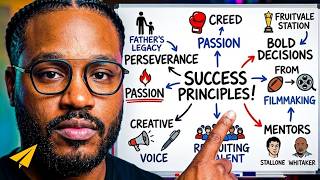
Ryan Coogler recounts his path from football scholarship to filmmaker, including how a BART shooting inspired Fruitvale Station and how he pitched Creed to Sylvester Stallone as a love letter to his dying father. He shares lessons on casting, work ethic, and empathy from collaborators like Forest Whitaker.
Chapters
Then along comes this young guy out of Oakland. I'm going, what?
Ryan Coogler.
Ryan Coogler.
There's a short-sightedness that comes with playing sports. I don't even know if college has a dean of discipline, but my high school did. So it's like the dean of discipline at the school, and it's her, and I'm going for this horrible meeting. I was shocked. I was angered. I was frustrated, scared. There's nothing like seeing a great movie and being a filmmaker yourself, because it's inspiring.
He's an American film director and screenwriter. His first feature film, Fruitvale Station, won 2 awards at the 2013 Sundance Film Festival. He also wrote and directed the 7th film in the Rocky saga, Creed. He's Ryan Coogler, and here is my take on his top 10 rules for success. Rule number 1 is my personal favorite, and I'm really curious to figure out which one you guys like the best. Also, as Ryan is talking, if he says something that's really impactful to you, that really means a lot to you, please leave it in the comments below and put quotes around it so other people can be inspired as well. Enjoy.
The last Rocky movie before Creed, the final scene, was it your way of saying goodbye to the character? Goodbye to that?
Yeah, goodbye to everything. Goodbye to the best chapters of my life, at least professional life. It really was. Then along comes This young guy out of Oakland, I'm going, what?
Ryan Coogler.
Ryan Coogler.
When director Ryan Coogler first met with Stallone, he was untested as a feature filmmaker, but he had an intensely personal idea for reviving the Rocky franchise. Coogler's father had fallen gravely ill a few years earlier. With Ryan by his side, there was only one thing the elder Coogler wanted to watch.
The father is a very soulful, powerful man. And now he's being reduced to a shell of his former self. But oddly, he watches Rocky again and again and again. And his son, who loves his father, sitting right beside him, and he's watching his father disintegrate before his very eyes. The traumatic impact was so imprinted on this young man that he never got over it. So he comes to me, he goes, hey, look at this great idea, we're gonna, you know, revive Rocky. I go, how? And when he told me the story, I said, this is insane, wrong. You're a young kid. You haven't done anything yet. But I appreciate the thought. He goes, OK, see you around. And he goes out and he does a masterpiece, Fruitvale Station, wins the Cannes Film Festival. Every studio wants him. What's he want to do? Creed. I went, now either this guy here is just trying my patience, or he reminds me of a guy I used to know.
I was going to say, that was you 40 years ago.
Yeah, it was. Absolutely. Then I realized this is not a movie for him. It's for his father. This is all about a love letter to his father.
You know, if you really dug down deep and ask a real Rocky fan why he likes the movies, it's usually because they watched them with someone that they love. What's so great about them is they're so personal to people. You know, people just associate them with their family. You know, the first time I told my dad that I was gonna go to film school and not continue to play football, he was heartbroken. You know, he was really upset. He didn't want me to do it. You know, I thought that was gonna be— I thought that was gonna be what I was. But there's a short-sightedness that comes with playing sports, man, like, you know, for so long, man. And the shelf life on a career in athletics is much more compressed than a career in other things, you know? So I was, you know, I kind of thought about this idea that, you know, you playing football, if you're fortunate enough to keep playing professionally, man, by the time you're 30, you know what I mean, you're considered a veteran, you know what I mean? I was very interested in getting into a space where, you know, that was flipped, you know what I mean? If you tell somebody you're a 30-year-old filmmaker, they're like, oh, you're a baby. Right, right, right, you are, yeah. You got so much more time to grow, so much more time to learn more about the craft and continue to stretch. You can do it until you're in the winter of your life, you know what I'm saying? So that was what kind of attracted me to switching careers. A college coach once said, you know, 95% of coaching college football is recruiting. You know, if you're able to get talented players, a lot of your work is done for yourself, you know. And the same thing goes for directing. When you cast the right actors, you know, you find talented actors that are generally great people, you know what I mean, to spend time with and to be around, a lot of your work is done for yourself. I definitely got into this because, because, um, I believe in the power of emotion, you know what I mean? And I think that filmmaking is an incredible way to trigger empathy, you know, in other people and through telling stories, you know, to get people to relate to characters that they never met before. And I think that that is something that I always want to be in tune with, you know, not just as an artist but as a human being, you know, putting passion into my craft and putting emotion in into my craft. You know, it's kind of like this creature of two worlds. You know, I went to private school, you know, but I lived in some of the more difficult neighborhoods in the Bay Area. So I didn't really fit in anywhere except the football field. I really liked math and science, and I got a football scholarship to a liberal arts school called St. Mary's College in the Bay Area. And I went in there and I wanted to major in chemistry, you know, because I really liked chemistry. And I figured that if football didn't work out, I could always go to med school, become a doctor. And that school, because it was a liberal arts school, they made you take these creative writing classes. So I took this creative writing class taught by this professor who was also a novelist named Rosemary Graham. And on the first day of class, we sit down and she just talks about how much she hates football players. Really? Yeah, how football is like the most barbaric, ridiculous sport, how it should be outlawed. And I'm like, in front of the class, like, I think I want to leave. You know, but, you know, we talked. You know, we had a little argument, and we agreed to disagree at the time. And she assigned us an assignment, which was, you know, tell me about your most emotional experience you've ever had in your life. I want you to write about it in prose, and then turn it in. And I wrote about mine. I didn't think much about it. I did it honestly. If I, you know, if I would have been thinking, I probably wouldn't have written about what I wrote about, you know what I mean? But I turned it in. And I was in my dorm room hanging out with a bunch of my football teammates and people from my neighborhood. And I got a call from her on my dorm phone. And she's like, "Hey, you know, what are you doing?" I'm like, "I'm in the dorm." And she's like, "I need you to come down to my office immediately. It's about your assignment." So I'm like, "Jesus Christ." And I'm like, "Man, why did I write about that?" You know, so I kicked everybody out of my dorm. I'm like, "Y'all gotta go." And then I walked down to her office. And I'm just imagining, like, you know, I got an overactive imagination. I'm imagining, like, open up the door and it's, like, the police. And, you know, and I don't even know if college has a dean of discipline, but my high school did. So it's, like, the dean of discipline at the school, and it's her. And I'm going for this horrible meeting. And I open up the door, and I go in, and it's just her. You know, she's like, "Sit down." So I go walk over, and I sit down across from her, like I'm sitting down with Eugene right now. And she's like looking at me, you know those uncomfortable silences? She's like looking at me, I'm looking back, you know what I mean? And she says, "What do you want to be when you grow up?" And I'm like, "Man, this is terrible. Like, this is going to be like, you know." So I told her I want to be a doctor, you know, and she's like, "Why?" And like where I come from, if you tell somebody you want to be a doctor when you grow up, nobody asks you why. You know what I mean? They're like, "Great. That's awesome." You know what I mean? And she was like, "Why?" And I was like, "Nobody ever asked me." So I'm like, "Huh, why do I want to be a doctor?" And then I was like, "Oh, I'm good at math and science, and I figure you should use that if you're good at it, and what better way to use it than to help people? You know, I figure doctors can make money honestly and help people while you're doing it, be a good, you know, positive influence on the community. You know, what's wrong with being a doctor?" And she was like, And then she grabbed my paper and she looked at it and she said, "Well, I read your paper and it was really visual. While I was reading it, I felt like I was there." And she said, "That's actually arguably rarer than being good at math or science. And you should consider being a writer. You can do the same things you're talking about, but maybe even on a bigger level. You should maybe even consider going to Hollywood and writing screenplays," is what she said. So I was completely weirded out at that moment. I'm like, just like— What did you think when she told you? I thought she was crazy. Like, I didn't even know what a screenplay was, you know what I mean? And I remember looking at her, and she had all these books behind her. Like, she had this wall of books. And I remember being— I got ADD. So I remember being, like, insanely jealous because she had so many books. And I'm like, well, I like books. You know, why don't I have any books, you know? And I'll come back to that. But she said, you know, I think you should think about even writing screenplays. And I said, so, you know, I was thinking she was crazy. So I'm like, wait, so I'm not in trouble? And she's like, no, why would you be in trouble? And I was like, all right, cool. So I was like, are you— I'm like, I got to get out of this crazy book lady's office, you know what I mean? So I'm like, are we— I'm like, are we all good here? She's like, yeah, that's fine. I just want to talk to you about that. You know, just think about it. So I'm like, cool. So I left. And I went back to my dorm room. And my dorm room was empty. And I was like, man, that was the weirdest conversation I ever had in my life. And I didn't even know what a screenplay was. I'd never seen one. But I remember thinking about how much I liked movies. I always liked movies. I always liked to read. And then I started looking around my dorm room. And all I had was like rap posters. I had no books. And I had no movies. And I was like, "Man, I like books. I like movies. Maybe I should start buying books and buying movies." So then, and I was thinking about what she said about a screenplay. Maybe I should check out what one looks like. So I had $20. I hopped in my car, drove to Circuit City, and I walked around the DVD section. And I found this Pulp Fiction. And I said, "I like Pulp Fiction." And I picked it up. And it was a special edition. It had a CD-ROM with the screenplay built into it. So I was just— it was like $17.99 or something. I was like, "It's perfect. You know, I could buy this." Went back to the dorms, popped the CD-ROM in, and saw my first screenplay. And it was like, I don't know, man, it was like, I don't know, it reminded me of the first time I stepped on a football field and hit somebody.
You know what I mean?
I felt like I was at home. You know what I mean? So I looked at it, and I opened up Microsoft Word, and I thought the formatting was kind of weird. So I started trying to like ape the formatting in Microsoft Word. And I started to write, you know, I started to write my first screenplay, you know, that night. And I stayed up till really late in the morning and I started to do it every day. Like I'll find myself like leaving the weight room. Like I gotta go back and get on that, you know, get on that script. And, you know, I realized that I really, really love to do it. And that professor is like one of my closest friends to this day. You got guys that are solid. You got guys that are good. You got guys that are great, you know? And it's the same thing like in athletics, you know what I mean? You know, it's the difference between a good player and a great player. You know, a great player makes those better around him. You know, a great player is somebody who is incredibly— has God-given talent, but also a unnaturally consistent work ethic. You know what I mean? When those two things meet, you know, that's when you get greatness. You know, I mean, I always had a backup plan. You know what I mean? Like, it was never really a backup plan. Like, you know, I majored in finance. Finance, because I liked it, you know what I mean? But at the same time, I was doing screenwriting. You just, you know, the same way when I was in film school, I still had my job back in the Bay Area. And the doctor thing, you just decided not for— Yeah, I scrapped it. It was tough, like doing chemistry and playing football at the same time. It was like next to impossible. And I know I didn't want to be an undergrad for a long time. And on that track, because of football, ball practice and because of the labs, you know, I would have never graduated on time. It would have took me like 6 or 7 years to graduate. I got the idea for doing this movie like shortly after the incident itself happened. I was back home in the Bay Area when Oscar was shot. And, you know, I heard about it around the same time everybody else did. You know, you get a call from people who were riding the train. And how the Bay Area works is You know, San Francisco is where everybody goes to see the fireworks on New Year's Eve. Everybody from the East Bay going, "Hey, we going to Frisco tonight. We gonna go see the fireworks burst off." You know, and you go down to Embarcadero and you watch 'em behind the clock tower. So everybody in the Bay Area is there. And the only way to really get to the Bay Area is to catch— I mean, the only way to get to San Francisco is to get to that spot, if you're sane, is to catch the BART. You know, so people come from all different backgrounds and everybody's on BART that night. You know, and everybody's coming back. So when that incident happened, a lot of people heard about it. A lot of people called and said, you know, somebody got shot, you know, at the BART station. They couldn't get back home. The train was delayed. And people were saying they were on the train. And I ended up hearing about it, you know, that night. I was actually working as a bouncer at a rave in the city. And I got off, and I heard about it. And later on that morning, we found out that he passed away at Highland Hospital. And, you know, the Bay Area kind of was in an upheaval. Shortly after that, we saw the tape. We saw what happened to him on YouTube and on the news. For me, I was shocked, I was angered, I was frustrated, scared, and more than anything, filled with questions as to how this could happen and why stuff like this continues to happen and how it could happen in the Bay Area. Where I'm from, we thought that this, you know what I mean, thought that we were past this kind of stuff. And fortunately, if I'm a filmmaker, you know, and as an artist, I think, you know, it's very natural for artists to get their fears and their angers and their frustrations out through their art, you know. So anytime I see something that moves me, you know, I think about it being a movie or putting it out, you know what I mean, in that format. And especially after I saw what happened immediately afterwards, and how the case was politicized, you know. And I thought that, what if I was able to make a film about this character, and maybe people who wouldn't be able to come around characters like this could see it, you know, and have insight on what it is to be someone like this, and have insight on why when these things happen, they're a tragedy. It's not just something that you should throw away as yesterday's news. You know, it's something that we should really stop and think about. What was the one thing that Forest Whitaker said to you as you were shooting that really stuck with you, if there was something? Forest said so many— Forest is one of those people who, he doesn't talk a whole lot, and everything he says is really important and really moving. Um, I think that— I think the number one thing he told me was, um, to talk, to always, always mess make the best decisions that you can make in the moment. You know, and that's all you can ever do. And I think he was referring to, you know, the pressures that surround, like, making a film based on a true story, making a film that's set in an area where it's taking place, making a film where you don't have a lot of resources, you know, making a film on a short schedule. He just told me, you know, make the best decision that you can that's facing you and then move on. I love movies, man, and I watch them, you know, I watch them incessantly. You know, and it— does it inform your work? Are you— absolutely. No, absolutely, definitely informs my work. Um, I think that, that, um, that's the best thing for a filmmaker to do is to watch movies, you know. Um, you know, I love, I love doing it, and then when I see good movies, it reminds me of why, why I do this, you know. Um, there's nothing like seeing it, seeing a great movie and being a filmmaker yourself, because it's inspiring, you know. It's like, it's like, wow, man, like, this is what This is what, this is what the industry that I'm in is capable of doing. This is the effect that it's capable of having on people. And it makes you want to get back, get back into the lab and get to work, you know?
Thank you guys so much for watching. I made this video because Jaime Martinez asked me to. So if there's a famous entrepreneur that you want me to profile next, leave it down in the comments below and I'll see what I can do. I'd also love to know what did Ryan say that had the biggest impact on you? What was the biggest lesson that you learned? From watching this video? Super curious to find out. Please leave in the comments below. I'm going to join in the discussion. Finally, I want to give a quick shout out to Rose Tan. Rose, thank you so much for picking up a copy of my book. It really, really, really means a lot to me. So thank you guys again for watching. I believe in you. I hope you continue to believe in yourself and whatever your one word is. Much love.
I'll see you soon.
More from Evan


How the Biggest Mistake in History Created A Trillion-Dollar Empire | Sergey Brin



9 Machiavelli Principles That Force People To Respect You | Machiavellian Philosophy



The First 10 Words That Instantly Ruin A Sales Conversation | Vanessa Van Edwards

The Top 1% Mindset Behind The First $5 Trillion Company | Jensen Huang (Nvidia)

