Ryan Leslie’s SECRET to Building a GLOBAL Brand from SCRATCH
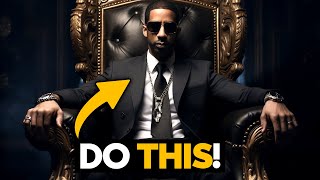
Ryan Leslie, a Harvard graduate and multi-instrumentalist, built his brand around live performance and touring, not album sales. He releases every song with a free video, treating music as advertisement for his shows. Hard work, believing in your vision, and living within your means are his core rules.
Chapters
Doing what you love to do. Doing what you love to do is the way that you're going to give the best to the world.
And for me, my brand is about the live performance. It's about touring. It's about, you know, coming out here and hosting these parties and having fun touching the people. Once you make your stuff, put your stuff out there so people can hear it.
He's an American recording artist and record producer from Washington, D.C. He's produced hit singles for a number of prominent artists in a variety of genres. He's also the founder and CEO of Superphone and Next Selection Lifestyle Group. He's Ryan Leslie, and here is my take on his top 10 rules for success. Rule number 10 is my personal favorite. Also, as Ryan is talking, if he says something that's really meaningful to you, please leave it in the comments below and put quotes around it so other people can be inspired as well. Enjoy.
At 15 years old, you went to Harvard, scored 1600 on the SAT.
I done research.
Graduated at 19. And at 19, when you gave the commencement speech at Harvard, you said that you wanted to be a performer. And some people laughed. Tell me about that.
Well, I mean, you just have to think, you know, after 4 years and $120,000 worth of, you know, arguably one of the greatest educations that the world has to offer at Harvard, there's so many other opportunities and pathways that you could take as a young, bright, and even an African American. You know, there's like, oh man, you know, there's already so many African Americans that want to rap or that, you know, that want to make music. Like, you know, why can't we why can't we have an incredible outlier? Why can't we have someone who's an incredible spokesperson? [Speaker:BALL] But we can. [Speaker:WATKINS] Another Barack Obama, so to speak. And for me, it always once again comes back to what we touched on before, which is doing what you love to do. Doing what you love to do is the way that you're going to give the best to the world. And I knew that anything else that I did, whether it was taking a job at Boston Consulting Group or even the community service and philanthropy philanthropy initiatives in which I was involved. You know, I have a passion for those things, but none of them even remotely touches the passion that I have for live performance and music.
Number 2, hard work. 'Cause guess what? The life that I live, going from country to country, stage to stage, shooting music videos in the studio, it seems like everywhere I go people ask me, "Brian, how can I get that life?" The only way I was able to get it was by working harder than everyone else who said they wanted it but didn't work hard enough to get it.
My words of advice are really the same words that I spoke on when I was a teenager and I needed money for college. And so I entered a speech competition for Rotary International, and the topic that they asked me to speak on was, "Do what you believe in and believe in what you do." And even now, 12 years later, When I look around, that's what I strive to do every day. Do what I believe in and believe in what I do. And for everyone out there that has an aspiration to do something, don't let anyone tell you what you can and cannot do. If you got a dream and a goal and a passion to do it, you know, I can't tell you the amount of people that told me like, look, Ryan, stick to staying behind the synthesizer, or if you're going to sing, don't try to rap, or if you rap, don't try to sing, or if you produce, don't try to be an artist, or if you, if you, if you, if you're an R&B dude, don't try to go into the, the the rock or alternative side, or if you don't dance, don't try to dance, or if you dance, don't, you know, don't decide that you're just gonna stay behind the keyboard. Really, for me, I think artistry, the beauty and the joy of artistry, and the beauty and the joy of just having the freedoms that we enjoy in life, is that we can pursue anything that we want to pursue, and with the right mix of drive, desire, discipline, and dedication, we can achieve anything that we want to achieve. And so for all y'all out there that have a dream, I encourage you to keep striving, pushing forward towards that dream and make it happen, man.
There's a lot of rap artists or hip-hop artists, you know, or urban music artists that go overseas and they just assume that, you know, it's a privilege for that market to have them there. Mm-hmm. And they don't really deliver in terms of a live experience. You know, they come over, they might give a half an hour show, 40-minute show, they do it to track. They go out there, they collect the money, 'cause it's good money out there, and they come home, and because their touring base is in the States, they leave a lot of fans really disappointed, you know?
Mm-hmm.
And it's been my strategy to go out there and really just shatter anyone else's live performance, at least at the level that I'm doing it. Right now we're doing, like, 1,200 to 2,000 seaters, you know, maybe 3,000 in some markets. And really just shatter everyone's expectations about what egotism, you know, an American artist might have by coming out there. And we built an incredible touring base. You know, we honestly, if you average it out, we're doing probably $1.2 million a month in Europe, you know, if we go out there for a month. So that's, that's 40,000 tickets at €35 a ticket, top line. You know, you do the math.
I also read that this new project, you plan to release each song with a video?
Absolutely.
For free?
Absolutely.
So why did you take this major bet, like, to give music?
Well, I mean, really, if you look at the economics of the music business right now, you're really making money when you're on the road and when you're touring. And so it's like, it's like, have you ever paid to download a Coca-Cola commercial?
No.
Have you ever paid to download a a commercial for a car? No. So all the money that they spend in creating an advertisement for just a can of Coke or Pepsi— I mean, the Super Bowl just happened in the United States. All the big advertisements, the amount of money that they spent to create those advertisements, you're watching them for free. And what it really is is a call to action for you to buy into the brand. And for me, my brand is about the live performance. It's about touring. It's about you know, coming out here and hosting these parties and having fun touching the people. And so when people are paying that, you just really have to think. When someone pays $20 to come to the club, that's double the price of an album, you know? And they might do that 3 or 4 times a year as opposed to just buying your album one time for $10. So I'm looking at this as an advertisement for Ryan Leslie, the brand, Ryan Leslie, just the personality, 'cause I like to come out, you know, say, "Sucka, yeah, yeah, yeah." Je me débrouille en français. Parce que, I want to be able to touch the people and I want people to have a reason to want to come and interact with me. Yeah, so I look at it that way.
Okay, so you plan in the future to no more rely on the album and CDs?
I would say there are very few artists that actually even make money from record sales, right? Because their record labels have given them an advance and They only make money when they do shows or they do appearances or they sell t-shirts. We got the NS4LIFE hoodies, man. You look at my man right there, you got the NS4LIFE hoodie, you know. That's something that you can't download. That experience you can't download. And I'm not stupid, man.
I know what's going on.
I mean, you know, when you look at the streaming services, when you look at the file sharing services, people are going to share your stuff anyway. It's digital, you know, whether it's a photograph or a song So the concert experience, that's something that you can't download, you know. Either you have a ticket to the Jay-Z concert or you just at home. You can't download that experience. So my interest in making an album with all the visuals and all the music is to create a demand for that concert experience that you can't download.
So you're not strictly an artist. You're, you're a businessman.
Yeah.
What, what could you really say in terms of handling your business in an economy like this to people really have to focus on these days? You know, I mean, because I think very few people who are watching this right now could really say, you know, I'm good for 10 years financially.
Yeah.
You know, I—
most people are living paycheck to paycheck, month to month. They may have a little bit of savings, but they're not sitting on a decade's worth of living expenses.
Yeah.
Well, it also depends on on what your living expenses are. You know, I live within my means, you know what I mean?
So that's the first thing. The first thing is you got to live within your means.
Yeah, you know, so if you decide that, you know, and I have friends that decide they want to be in the penthouse before they can afford to really be in the penthouse, but they can afford to be in the penthouse for a year maybe, so they go and do that for a year. I mean, and to each their own.
Everybody can is—
has the prerogative to live however they want to live.
So we're not promised tomorrow.
So there are a lot of people who just have the idea, hey, let me live for today, you know what I'm saying?
Fall till I fall.
Yeah, you know what I'm saying?
So it's all good.
I mean, for me, it's just about, uh, uh, just being responsible and cognizant of what you need to be happy, you know? And so for me, all I need is the ability to keep creating Okay. And I'm good.
The first time I met you, you told me that— this is when you were a producer for Bad Boy— and you told me that Tommy Mottola and Puffy used to always tell you, "Why do you want to be an artist? You're hustling backwards." Right. What did they mean by that, and why did you persist to continue to become an artist?
Well, I think they really, being the luminaries that they are, and the moguls that they are, you know, they were talking much more in terms of just the generation of income. And for me, generating income in a way that, you know, is just left of center of what you love to do is not the way I want to live, you know. And I feel like the American dream, which is, you know, what I really consider myself the embodiment of, I feel like the American dream is being able to make a living doing what you love to do. And so for me, production was always just a stepping stone to amass enough money so that eventually, as the music industry shifted, I could buy my contract out and reinvest all the money that I had earned into doing what I really love to do, which is being on stage playing and, you know, just going running around the world and playing shows for screaming audiences all over the world.
When you want to get your music out, People usually think in two ways: radio and television. In 2010, there's a new way. It's called the internet.
Right?
YouTube.
Right?
So once you make your stuff, once you make your stuff, put your stuff out there so people can hear it.
And if enough people respond— I'll give you three examples: Soulja Boy, Justin Bieber. And also, and also the guy that you see standing right here. If someone's a true fan, they will actually, you know, they'll let you know what their opinion is, but at the end of the day, it's entertainment. So if they don't don't want to listen to what I'm talking about, there's plenty of other people. I mean, just go search YouTube R&B singers, you can go find a whole bunch of R&B singers. But if you like what I do, which is just being as honest as I can be and, you know, making the records from scratch, I mean, that's really, that's really where I have the biggest fan base, right, is from the YouTube videos of me in the studio. So nothing about that has changed at all. I mean, I'm still in the studio making the songs from scratch, and, you know, I have a different perspective I have a different life experience that I'm writing from.
I'm going to say an affirmation, and at the end of the affirmation, I will ask, who am I?
And you will respond, I'm a Harlem Jet.
Who am I?
Harlem Jet!
That's right.
Now I understand that obstacles are really opportunities to learn and to grow stronger. So when I am met with a challenge, I will rise to the occasion and I will do my best to set an example of perseverance, of persistence, and of discipline for my community. Who am I?
That's right.
Now, I might not have all the money in the world, but I do understand that I have the same 24 hours in a day as anyone else. And so, in the interest of becoming great, I have no problem making the commitment to invest more of my time in becoming the best representation of myself that I can be.
Who am I?
I am Evan Carmichael.
Now I understand that whether I'm on the field or off the field, the same principles of love, teamwork, fairness, and collaboration— I understand that those principles apply in my everyday life. And I will do the best that I can to treat others with the same respect with which I want to be treated and do the same for our environment as well. Who am I?
I'm a man!
Now I understand that no matter where I am today, no matter the struggles that I'm going through or that my family is going through, no matter what my world looks like today, The world that I will live in tomorrow will be the world that I create. And I will never allow anyone to keep me from pursuing my dreams. I love life. I love my family. I love my community. And I love my country. Who am I?
I am K. Who am I? I am K. Who am I? I am K. Who am I? I am K. God bless y'all. God bless Harlem.
And God bless the USA.
I'm Ryan Leslie.
Thank you guys so much for watching. I made this video because Pearl Ponds asked me to. So if there's a famous entrepreneur that you want me to profile next, leave it down in the comments below and I'll see what I can do. I'd also love to know what did Ryan say that left the biggest mark on you? What change are you gonna make now after watching this video? Leave it down in the comments. By writing it, you'll It will solidify your intent to actually follow through on it and hopefully inspire other people as well. So leave it in the comments. I will join in the discussion. I also want to give a quick shout out to Paulette from totallyinspiredmind.com. Paulette bought 10 copies of my book. Thank you so much. It really, really, really means a lot to me. Thanks again for watching. I believe in you. I hope you continue to believe in yourself and whatever your one word is. Much love.
I'll see you soon.
More from Evan


How the Biggest Mistake in History Created A Trillion-Dollar Empire | Sergey Brin



9 Machiavelli Principles That Force People To Respect You | Machiavellian Philosophy



The First 10 Words That Instantly Ruin A Sales Conversation | Vanessa Van Edwards

The Top 1% Mindset Behind The First $5 Trillion Company | Jensen Huang (Nvidia)

