Science Is Broken—Gregg Braden’s Revolutionary Vision to Fix It!
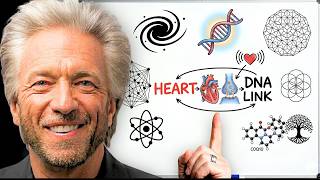
Gregg Braden argues that five core scientific assumptions taught in schools are wrong: evolution as complete explanation, civilization starting 5,500 years ago, consciousness separate from matter, empty space, and survival of the fittest. He cites Göbekli Tepe (11,560 years old), Neanderthal DNA, and satellite data showing collective emotion spikes Earth's magnetic field, claiming the heart's electromagnetic field is far stronger than the brain's and that belief shapes reality through quantum mechanics.
Chapters
The way we think about ourselves and our world is broken, and Gregg Braden is here to challenge us to fix it. Speaking to an audience hungry for answers, he declares that we are living in a moment of unparalleled crisis and opportunity, a convergence of cycles, choices, and consequences that will define our future. If we don't reassess the deep truths of our existence, we risk perpetuating the very mistakes that have brought us to the brink. In this transformative speech, Braden dismantles outdated scientific assumptions, highlights humanity's interconnectedness with natural cycles, and reveals the immense power of the human heart to influence the world. He points to ancient wisdom, suppressed discoveries, and groundbreaking research to show that survival depends not on competition, but on cooperation and coherence. The choice is clear: embrace the science of connection and the wisdom of the heart, or let the weight of old paradigms drag us down. The stakes have never been higher. And the time to act is now. Special thanks to Liz Dawn for partnering with us to release this content exclusively on our YouTube channel. And if you make it all the way to the end of the video, leave a believe in the comments so I can celebrate with you.
Believe.
If you're in this room today, if you're at the conference this weekend, what I know is that you know this is absolutely no ordinary time in the history of our nation, It's no ordinary time in the history of this world. Right now, in this very moment, there are decisions that are being made in two different places in the world that will forever seal the fate or the destiny of our global family. One of them is with regard to our global economy, and it's more than just a crisis of money. I think you know that this goes much further than that. And right now, this weekend, at a war room halfway across the world, there is a decision being made as to whether or not the West is going to try to take the nuclear power plants out from Iran. And it was just announced yesterday, they started floating the ideas publicly. These are huge, huge events that have huge consequences, and I think you know that. So this can be No ordinary time in the history of our world, and what that means is this is no ordinary weekend. This is no ordinary Celebrate Your Life conference. This is a pivotal weekend. If you're in this room, I would imagine most of you have spent most of your adult lives in search to understand who you are, your relationship to your past, your relationship to your world. You have been on what's called the spiritual path. Whatever amount of time it is that you have been on that path, my sense is that whatever it is that we've all learned over these last 30, 40, 50, 60, 70 years, now is the time to apply it. Now is a really good time to put into place all of the principles that we claim to live in our lives, to believe in our hearts, and to understand about our world. And that's what this program is about today. My work over the years has been my offering of helping us to understand different aspects of our lives, to weave it all together into a really healthy, holistic way of thinking of ourselves and our world. Now, in the time I have with you here this afternoon, I'm not going to speak about other books directly, but they will be implied. So I'm going to just say this very, very quickly. The book, "The Divine Matrix," it was released in 2007. It is the science of the field of energy that connects all things. It is no longer a theory. It is no longer a hypothesis. It's no longer wishful thinking or some New Age idea. It is a scientific fact that the field is there. It is a scientific fact that we influence the field that connects all things. The question is, how much do we influence that field? How much? You and I were born speaking the language that communicates with the field that connects all things from the moment we take our first breath in this world. The book, "The Spontaneous Healing of Belief," is the book that shares the science and the techniques from indigenous traditions all over the world of how we communicate with this field through our hearts, not through the language and the words and the voice, but it's through feelings and emotions and beliefs in our hearts. This is one of the most closely guarded secrets of our indigenous ancestors. Science is only now beginning to catch on and understand. The book entitled "Fractal Time" was released in 2009, and it is a book that helps us in the West remember our relationship to cycles of time. Almost universally, indigenous traditions throughout the world tell us we live in a world of cycles. Some of the cycles are obvious, some are not so obvious. In the West and in science— I was trained as a scientist, and from the scientific perspective, much of our world is linear. We're taught to think in a linear fashion. So the book Fractal Time is about cycles of time in the past And if we know where to look in the past, it gives us a really good idea of what we can expect now and in our future. Whether we're talking about 2012, or whether we're talking about our relationships of hurt and disappointment and loss, or the good things in our lives like abundance and success and joy. All of these follow patterns. They're all cyclic experiences. And if we understand those cycles, it gives us an edge in terms of how to deal with those things when they happen in our lives again. These are the books that precede what we're talking about today. In October, well, last month now, October 15th, this new book was released. It's entitled "Deep Truth: Igniting the Memory of Our Origin, History, Destiny, and Fate." I'm gonna begin by sharing with you where the title even comes from. Because the title, for many people, it's a very presumptuous title, "Deep Truth." Truth means different things to different people. Where does that title even come from? Well, the title comes directly from a statement that 20th century physicist Niels Bohr made in a conversation that he was having with Albert Einstein. And it was a casual conversation. I wonder if when he made this statement, if he knew how profound what he said would be perceived later in the 21st century. But what he said is this, I'm just gonna share it with you. They were talking about truth. The nature of truth, and in this case, scientific truths. And what Niels Bohr said, he said, quote, "It is the hallmark of any deep truth that its negation is also a deep truth." Now, the first time I read that, I thought, "Wow, that's really deep." I mean, it's a very deep concept. Think about what he's saying. He's saying that in the world of science, things that we have accepted as the foundation of our beliefs, as the deepest truths of science, when they are proven to be false, what it is that proves them false becomes the new deep truth. That is precisely where you and I are here today. The experts, the best minds of our time, are telling us that you and I, this generation, in these years of history, that we are facing the greatest number of crises, and each crisis is of the greatest magnitude ever to face a single generation in 5,000 years of recorded human history. Now, that sounds scary at first, but the flip side of this is that the same science that's telling us we're in trouble, the same science has made new discoveries that give us new ways of thinking that help us solve the problems. That's the rest of the good news. Here is the flip side of that. There is a reluctance in mainstream media. There is a reluctance in mainstream classrooms, mainstream teachers, mainstream textbooks. In some cases, there is absolute, flat-out resistance to share the new discoveries that help us change the way we think of ourselves and our world, to help us change the thinking that got us into the problems. Now, that would be important at any time, but it's especially important right now because the best minds of our time are telling us we've got about 3 to 5 years only to figure this stuff out, or nothing else is going to make much difference. So the reason that I wanted to share this book, Deep Truth, and share it right now is because there are fundamental elements describing your relationship to your world and my relationship to my world. We're all in this together. When you were in school, when I was in school, if your kids are in school now, we were taught something that we now know is no longer true, and to still teach it is unscientific. But it's also perpetuating a belief. It's perpetuating the very thinking that got us into the problem. So this is what I want to talk to you about today.
Where are we going?
I want to talk about the breakdown, the world in crisis, the false assumptions that led us there, the deep truths that have been discovered, and it wouldn't do any good to talk about it if we couldn't do something, so what do we do about it? So, it is not our imagination. I've been on some panel programs, some media, some television programs where the panels are there and they're saying, "Every generation has their problems." You know, they're absolutely right. Every generation does. Has one generation faced so many separate crises, and each crisis of such great magnitude, all converging in one time in history. That's what makes this generation different. It's not our imagination. We are living what is now being called a perfect storm, and I love this terminology. It's a rare convergence of natural cycles of the Earth changing and pushing our unsustainable ways of thinking and unsustainable ways of living to the limits. That's where we are right now. Now, this is a complete program today.
I don't want to leave you hanging or dangling, and I don't like to be teased in a program, so I'm not going to tease you.
But I am going to say, if you're with me on Monday, we'll go into this part of it in much more detail. As a geologist, I love to talk about the ice cores of Antarctica, the cycles of the past, what the new discoveries are showing us, and I cannot give it justice in here in 90 minutes today. But what I'm going to tell you right now is many of the cycles that we are now living, they're rare.
They haven't happened for a long time.
But you and I didn't break the Earth. We didn't break this Earth. We are living a time of rare convergence of cycles that humans haven't had to deal with for a long time.
And we do need to clean up our act. We definitely need to go green.
We need to clean up the fossil fuels and get the carbon out of the air. But when scientists tell you that you cause global warming, it is absolutely false. And I can show you in the graphs 420,000 years of Earth's history and where we are right now to show you that global warming is a natural phenomenon. And global warming isn't the biggest problem. It's what comes after the warming that is the problem. What comes after the warming?
The cooling. The cooling that affects the northern hemisphere where most people live, where most land is, and where our food is grown.
You're not hearing anybody talk about that very much.
So we're going to talk about that kind of thing on Monday.
But what I'm going to say right now is that there are natural cycles that the Earth goes through that are rare. And those cycles test our belief systems. They test the way that we have implemented the things that we believe in our lives. Those cycles are triggered by Earth's orbit in space, the tilt of our planet, the angle, the wobble.
It sounds very technical, but it's very intuitive.
And our indigenous ancestors knew this.
Our indigenous ancestors—
if you leave the Western world, if you leave Western Europe and North America, And you go into the indigenous traditions throughout the world, they all have known, prepared, and have been expecting the changes that have caught much of the modern world off guard. So the changes are triggered by Earth's location in space. Our own science confirms that, and our indigenous ancestors have told us about it for a very, very long time. They actually created calendars and systems of timekeeping to give us a heads up in terms of when we could expect the greatest change. Now, just in case there's any doubt in your mind that Earth's position in space affects the way we live in this world, I just want to show you one little chart. I was up at 2 o'clock this morning. I took it out, and then I got up at 2 o'clock this morning and put it back in, because I think it really helps to understand how powerful these cycles are. When Earth changes position in space, it changes our relationship to the Sun, for example. It changes our relationship to the center of our Milky Way. It changes our relationship to other planets. This is a graph. This is the year 1750, and it ends up in the year 1920. And what you're seeing right now is the rise and fall of solar cycles over that time. So this is about our relationship to the sun. Here's the rise and fall of these cycles. And what you can see—
can you see there's a rhythm there?
There's a pattern.
Can you see?
That's all I'm asking you to see.
Alright?
The next graph I'm going to show you is the blue line above this that shows the ebb and flow of human activity in the same period of time. So these are cycles of war, cycles of peace. Cycles of innovation and discovery and art and music, as well as cycles of destruction that are all plotted against the same thing. And all I'm going to ask you to see is that there appears to be a correlation. That's what we can say. I mean, we could go into a lot of detail on this, but there's a relationship between what happens with our planet and its location in space with the sun and what happens here on Earth. If you're a psychologist or if you're a healthcare practitioner, you know, you all know this. What happens on a full moon? If you work in a hospital room, emergency room, you know what happens. Full moons, you get a higher incidence of traffic accidents, emergency hospital room visits, violent crime. What statistics clearly show is that when these solar cycles increase, they affect you and me. The average heartbeat, the blood pressure of humans on the Earth increases in the presence of these solar cycles. It creates a surge of energy that can either be a gift or it can be confusing. If you're an artist or a musician, when these surges happen, that's when some of the most amazing music and the most beautiful art is created. If you don't know what to do with that powerful surge of energy, it can be confusing. And scientists link these cycles to social conflict. Social conflict.
That's going to be really important later in this program and where we are on Monday.
Because you and I are at the beginning of a powerful solar cycle that began in January of this year when the Arab Spring began. So we are once again being powerfully influenced by Earth's location in space, our relationship to the Sun. And this is just one example of cycles. So all I wanted to share with you from this, all I wanted to illustrate, is that Earth's location in space influences us in a powerful way here on Earth. And it does so on a cyclic basis. And it's not just our imagination. If you happen to see this article, this was September of 2005. It's more than an article, it is an entire special edition. Scientific American released this special edition in September of '05. Now that sounds like a long time ago to us right now.
Think about the world in '05 and where we are now.
This was scientists coming together, and the title tells the whole story. Look at the title: "Crossroads for Planet Earth." These are some of the best minds of our time telling us something has changed. I just want you to see some of the things that they were talking about in this special edition. They talked about climate change. Of course, we already know that that's happening. They talked about the growing shortages. Of fresh water and food, about the economic crisis they saw coming in 2005. They saw the patterns that were there in '05. They knew it was coming. That community knew. They didn't tell— maybe they didn't tell us, but they knew it was coming. The dangers, the growing dangers of global war, unsustainable population. You know, was it last week we just reached the 7 billionth person? Member of our global family. If you think about it in the extreme, what does that mean like at Christmas time? I mean, 7 billion people at Christmas time.
I don't know what I would do with that.
So a lot of people think that's a problem, but you know, it actually can work in our favor. Because if there's 7 billion people here on this planet, and we are all working to tip the scales of peace, peace and balance in life in our favor, the more that choose peace and life and balance, the quicker we're going to see that. So this may actually be working in our favor, and I'll talk a little bit more about that as well. But here, Journal Scientific American, they're identifying some of these crises. They're saying each of these, if left unchecked, is enough to forever change in a bad way the world. The way that we live our lives on Earth today. So E.O. Wilson, Harvard biologist, was one of the contributors to that special edition, and I love what he said. He said we're entering what he called a bottleneck in time.
I love the imagery, a bottleneck.
It's like this little narrow place where everything that we've learned is trying to pass through this little narrow passage. Entering this bottleneck in time, when our resources, our physical resources, our natural resources, our emotional resources, our psychological resources, and our ability to solve our problems are going to be pushed to the limits. He said that in 2005. You feel like maybe we're at those limits now? Do you? Yes? No?
I don't know. I do.
I think we're really close to those limits right now. So, we are obviously living a time of extremes.
And they're telling us that we've got to act.
This is where it gets really interesting. They're saying, "Okay, we're in trouble, you've got to do something, we've got to act." My question, and the reason I wrote this book, is this question right here: How? We're supposed to act, what are we supposed to do? How can we act? Here's the question right here: How can we make the greatest choices of our survival, if we're to believe these experts, How can we make the greatest choices of our survival until we know the deepest truths of our existence? If we don't understand our relationship to the world and to one another, how can we make the choices and get it right?
Does that make sense to you?
So this is what I want to talk about here. There's one answer. The way we answer a single question holds the key. The way you answer this one question is the reason for every decision that you've ever made any time in your life or will ever make again. The way you answer the question I'm about to ask you is the basis for every choice that you've ever made or will ever make. The way you answer one question is at the heart of every challenge that will ever cross your path. Are you all feeling that there are a lot of challenges in your lives right now? Does it feel like there's a lot of stuff going on? I don't know about you, I'm feeling like there's a lot of stuff going on. I feel like I'm okay, there's just a lot of stuff going on around me. You ever feel like that?
Okay. One question.
The way we answer this one question— you want to know what that question is? You have to say yes.
If you say no, it's a really short program, okay?
All right, the way we answer this one question holds the key. Here's the question. It's deceptively simple. Here's the question. The question is this: Who am I? Or, when there's a lot of us together, it's: Who are we? My adult life, the bulk of my adult life, I've spent looking for the answer in my own way for myself. And I love to put this picture up here, this slide, because what people have pointed out in the past, that my journey is documented by the length of my hair over the years. But it's only recently that now they started to point out that my journey is documented by the color of my hair over the years. So I say I'm just happy that it's all there.
I don't care what color it is.
And I'm sure you're going to see more later on. I've spent the bulk of my adult life looking beyond what I was taught in the Western world, through my family, through my community. Through my academic training, through the corporate training, through the science that I was taught here in the West. The science is good, but it doesn't have all the answers. The science can only go so far because it is limited by its own way of thinking. So the bulk of my adult life, I have searched to answer that question: Who are we? And I just want to say to you, this is probably the most difficult part of the program for me right here. Because every image that you're going to see is a whole story unto itself that I would love to share, and for the 90-minute timeline in here, I'm not going to be able to. But I've learned from people and places all over this world. I've been very, very blessed. I've had the opportunity to go to some of the most magnificent monasteries on the planet where the records and the repositories are held, and some of the most humble mud-brick monasteries in places like the deserts and the mountains of Egypt. I've been in temples throughout Asia. I've had the opportunity to meet these amazing monks and nuns who have opened the doors to their ancient libraries, some of them have been sealed for over 800 years, and share with us their books that record their traditions that come from even older traditions that have been on this Earth long before the borders between the nations were ever built. I've had the opportunity to look and translate for myself some of the keys that were offered in all of these traditions, and there are common themes that run through all of these. I've had the opportunity to live and dine and share and love and cry and laugh with the people that live those traditions every day in their lives. Those are the sadhus. From northern Nepal, for example, the tantric masters from northern India. Isn't that an amazing looking man? Okay, so I'll tell you one story. When I take a group into Nepal and I go down the street where this man lives and the women in my group all disappear, I'm not worried because I know they found his shop. And every— I mean, look at his eyes.
How can you not want to spend time with him?
He's an amazing man. But the tantric masters in northern India, I've had the opportunity to spend time with the monks and the nuns and the lamas in some of the highest monasteries on Earth. This is 16,500 feet above sea level on the Tibetan Plateau. We've met not only the holy men but the holy women who are highly revered in their traditions and had the opportunity to learn from the feminine perspective The feminine power that lives within each of us and that's been hidden for so very long. This man, those of you that travel with me to Peru, you know him very well, the one in the center. And he's standing up. We're all standing up, by the way. That's why I love to go to Peru. I am just towering over everybody in Peru. He's our shaman from the high Andes of Bolivia and Peru. And the opportunity to study with native musicians from throughout the world, and the power of the music to open our hearts and tap the language that speaks to the stuff that holds this world together. Our healing begins in our hearts, not in our minds, and that's a powerful lesson unto itself. I've met pilgrims like this man who for 8 months went across the Tibetan Plateau to be at the temple where I met him, but he didn't walk To get there, what he did was full-body prostrations.
He would take one step like this, and then he would go down, completely down.
And he's wearing pads on his hands so he doesn't rub his hands raw. I don't know if you can see this. He's got a callus right in the center of his forehead. How many times his head has touched the ground to be at the place where I met him. And I've met pilgrims as well as nomads, who have lived to the best of their abilities the traditions that are recorded in those temples, in those texts. All of those people, as different as they are from one another, there are common themes that run through what I've learned from my time with them. One of the themes is this: our ancestors, for over 5,000 years, they've done their very best to answer the question I just asked you: who are we? They've answered the question in their way, and it worked for them. Science is a language that's only about 300 years old. And for 300 years, science has tried to answer the question in the language that we have come to rely upon and trust in the Western world. Science has tried to do the same thing. You're going to see this slide a lot, right here.
There's a problem.
With the scientific answers that we have for many of the questions that we're asking today. The problem is that science doesn't believe their own answers. We spend a lot of money, we unleash brilliant minds to go find an answer to the question of our origin or our history, and they come back with answers and scientists discount them. They disregard them. They won't carry the peer-reviewed science. They won't reflect it in mainstream. Science is stuck on the big questions. Now, I'm going to make a distinction between science and technology. Our technology is amazing. The technology of an iPad or an iPhone, the cloud that's out there holding all of our life's data, and the little chips that we carry in our passports. I mean, that's the technology. But you know, that technology is a refinement largely of ideas that were introduced in the 1950s and '60s. The big questions of who we are and our relations to the Earth, science is stuck on. Science still has not answered the question of what is life. Science cannot arrive at a definitive definition for life. Every branch of science has their own definition. We sent probes to other planets.
I work for Martin Marietta.
Martin Marietta built the Viking spacecraft, went to Mars looking for life.
We didn't even define what life is. Maybe we found it and we don't even know it. I mean, really, how would you know? How did life begin?
This is a big one, and this is going to be a big part— many of the topics you see here, they're going to be big in the election cycles next year, here in this country. What can be taught, what we know, what we know about our past, what we know about climate, what we know about our relationship to one another, big election issues you're going to see. How did life begin? Where is the unified field theory? We've been looking for almost half a century with the best minds of our time, the most expensive equipment, throwing at the problem of trying to find the unified field theory.
If we were on the right track, don't you think we'd have it by now?
Honestly, don't you? I mean, maybe you don't.
If we were on the right track, don't you think we'd have the answers by now?
Yes, no, audience participation? Cool, OK.
I think we would. I think we would. Where did we come from?
We're going to talk about some of these here in just a few moments. I think science is a good method. Science is designed to update itself. Science says when we find an explanation, it's only good until we find a new discovery that overturns that explanation. Then we must incorporate the new data. That is what is not happening today. It's not being allowed. It's being resisted in mainstream media, mainstream classrooms, textbooks. There are teachers in the United States of America who are losing their jobs because they even suggest an alternative theory to who we are and where we may have come from. They're losing their jobs for that. False assumptions. We're on the wrong track. Alright, so what I'd like to do now, quickly, I'm going to share 5 key false assumptions of science, and then you and I are going to choose some that we're going to go through, and I'm going to share some new discoveries with you today. So, evolution explains life and human life. This is being taught as a key assumption, a fact today in classrooms and textbooks. Civilization began about 5,000 years ago. When I was in school, when you were in school, your kids are in school, this is being taught as a fact today. And I'll tell you why it's important here in just a moment. Consciousness is separate from our physical world. This is being taught in our physics classrooms today. The space between things is empty. The space between me and you, or me and you, or between the nucleus of an atom and the first electron is empty. That's being taught. Is a fact today, and nature is based upon survival of the strongest. If you're taking notes, I'm going to make this real easy. Just jot down a couple of keywords, and then at the top, write the word "false," and then put that right through all of it. Every one of these is categorically proven through peer-reviewed science and published technical journals as absolutely false. It's still being taught in the classrooms, Still being taught in the textbooks. Mainstream media is still doing very authoritative specials telling us that these things are so. And this thinking is what has led largely to many of the crises that we're facing today. If we try to solve the crises through this kind of thinking, where's it going to get us? Nowhere, precisely. That's why this is important. Alright, I want to just briefly say something about a pyramid of thinking.
This is important.
We're gonna see this twice today. This is a pyramid of the fundamental questions about our relationship to the world. The origin of life, the origin of human life, our relationship to our body, our relationship to the world, the history of civilization, and how we solve our problems. These are all related. And you might think this doesn't affect you. I wanna tell you, this is so deeply ingrained in your community, in your church, in your family, in the way your doctor tells you to take care of your body. This is so deeply ingrained with all of us. This is very— this is probably the most important thing I could even say to you here today. All right, the false assumptions of science, and because they're scientific, we tend to believe them. The false assumptions tell us that life, the origins of life, are random.
I'll go into it more on Monday, but right now they say it's random.
Given enough time and the right conditions, life would happen anywhere, just like it happened here. Nothing special. That's, that's the way science teaches it. Human life, it's the same thing. The false assumptions tell us that we're random. We are taught to believe that we are separate from our bodies and powerless to do very much when it comes to healing our bodies. Things just kind of happen. That our relationship to our world is that we are separate and independent. What we do in one place has very little effect on what we do somewhere else. That the history of civilization happened once, began 5,000 years ago. It was linear. And we now are at the pinnacle of sophistication of this thing that we call civilization. And that the way to solve our problems is based on competition and conflict. Now, if all of these were true, if it's true that life is completely random, that human life is completely random, that we are separate and powerless from our bodies, separate and independent from our world, that civilization happened once, maybe it would make sense to fight our way through our differences. The problem is that the science and the new facts do not support this. Every one of these is a false assumption. So, our false assumptions have caught up with us. They have led to the crises that we're looking at right now. If you want to see where the thinking doesn't work, take your pick. Look at the economic system, look at the way we deal with climate change, look at the way we're trying to solve our problems with other countries, look at the way we grow our food, our relationship between our food and the world. All these are based on these false assumptions. They have led to the global extremes. I live in the high desert of northern New Mexico. People move there because they don't want to be affected by any of these things. They say, "It doesn't have anything to do with me, here in my little community." But it does, because the global extremes become human extremes. And every human extreme out there, for all of us, becomes a personal extreme. We cannot separate ourselves from what's happening with our brothers and sisters, our family, and other parts of the world. So I'm going to ask your permission, in the interest of time, I want to go through a couple of these, and some of these we may not need to. If you're in this room, you've probably done a lot of work on yourself. You've been with me in the past, probably. If I say to you, consciousness is separate from our physical world, if I say to you that consciousness is the stuff that underlies our physical world.
Are you okay with that?
The book "The Divine Matrix" talks about it. I think you all know that consciousness is the missing element in the Unified Field Theory. When consciousness is factored in, the equations work out. If I say to you the space between things is not empty, that there's something everywhere, there's no empty space. Without going into a lot of detail on that, that idea has been evolved so well in the book The Divine Matrix, and other books. Are you okay if we do that? In the interest of time. So let's do this, let's do that. Now, let's take a look at the first and the last of these assumptions, because they're related. Evolution explains human life, and nature is based on survival of the fittest. Up until 1859, most of the answers in what was called the modern world regarding who we are, were in the purview of the church and religious communities. They were the ones that told us where we come from, how things are supposed to work here, where we go when we leave, all those kinds of things. In 1859, that changed. Charles Darwin was a scientist. He released a book that reflected his observations, and as a scientist, his observations regarding certain kinds of life and how he believed it applied to other kinds of life. The book you're probably all familiar with. How many of you have a beautiful hardbound copy of Charles Darwin's The Origin of Species by Means of Natural Selection on your bedstand for light bedtime reading? Every night you look at it before you go to sleep.
I do. You don't?
OK, well, this is the title that most of you are probably familiar with. If you go to Amazon, this is the title that the book will come up under. There's more to the title that is now on the inside of the first page. And it gives insights into Darwin's thinking. So I'm going to share that title with you. The original title is called "The Origin of Species by Means of Natural Selection, or the Preservation of Favoured Races in the Struggle for Life." That's a whole different feeling, isn't it? I think it's a powerful insight into Darwin's ideas, Darwin's beliefs, where he was thinking.
Now, I want to be very clear about where I am with Darwin.
I think Darwin, he was definitely a scientist. He was probably a pretty good scientist. Darwin could not have possibly known in 1859 what we know today. And in my estimation, this is a Gregism, the mistake that Darwin made was this: he took some observations that he made for some forms of life in some parts of the world, like the Galápagos Islands, and he tried to generalize them and apply them to all life everywhere, including human. The problem is that the facts do not support that assumption. Evolution certainly happened. I see it in the fossil record. There's no evidence of evolution when it comes to humans. And I want to talk to you about this a little bit right here. I want to share some of Darwin's own language because it's very complex, but it gives insights into his thinking. So if you'll bear with the flowery language, this is the science book that changed forever the way we think of ourselves and our relationship to the world. And I want you to see how scientific it does or does not sound. And I'll tell you right now, I'm biased. So I'll just say it right off. This is Darwin. He's saying that all life began from a single cell sometime a long time ago. This is a direct quote. Darwin says, "Therefore, I should infer from analogy that probably all the organic beings which have ever lived on this earth have descended from some one primordial form into which life was first breathed. Is that scientific? I should infer from analogy that probably— if you saw that in a science book today, they'd throw it out of a classroom. And it doesn't even answer the question into which life was first breathed.
Where did the breathing come from?
I mean, he's not even addressing that. So I was trained as a geologist, and I tend to look at this from a geologic perspective. And what I can say to you is geologically Darwin's ideas of evolution do not apply to humans. This is a geologic map of time. Here's the most recent at the top. Here's the most ancient at the bottom. Darwin said life evolved gradually over long periods of time, little incremental changes. There are some people that now believe that it's what's called punctuated equilibrium, where there were spurts where life actually evolved. 545 million years ago, right here, something amazing happened. 545 million years ago, 98% of all the forms of life appeared on the Earth in a relatively short period of time. I don't know how.
I don't know why.
I just know that this is what the record shows. In a little window of time, 98% of all the forms, if you're a biologist, it's all the phyla of life, showed up at this time. Here's a little graph to help see it. Here's about 545 million years ago. Here's the life that existed before that. And all of a sudden, boom! All these life forms are here. This is not Darwinian evolution. Maybe something else, but it's not Darwinian. And when it comes to humans, it certainly doesn't apply. To what Darwinian evolution says about humans. Now, if you have watched any television specials recently— OK, this last fall, very authoritative television documentaries were showing charts like this. This is said to be our evolutionary tree for the human family. This is us up here on top. This is Homo sapiens. And these are all the forms of life that scientists believe led to the formation of us right here. Can you see the little skinny lines that connect them? Can you see that line there? I'm going to make them easy.
I'm going to put them in blue.
Okay, see all the blue lines? If you look at the legend— this is from a NOVA television special, but you also find it in the history books, many of the history books— those little blue lines, if you look at the legend, They are called speculative or inferred relationships. Inferred relationships. What that means, they're believed to exist. There's no data, there's no evidence stating that they do exist. From my perspective, that might be a hypothesis, but it is not a scientific fact. Because it's not a fact, why not allow other discoveries and other ideas to be taught along with these ideas That's not happening in our schools today. College professors, high school teachers who even suggest that there is another— and I'm not talking about religion, and I'm not saying that they have to use the word God or anything like that. All I'm saying is Darwin's idea of evolution does not account for how you and I got here. Now, these are inferred connections. When I was in school, I was taught about life forms before me, like Neanderthal, like Cro-Magnon.
Y'all remember those?
Neanderthal, Cro-Magnon? Cro-Magnon isn't even used anymore for a really good reason, and I'll share that with you in a minute. Neanderthal cannot be used as our ancestor any longer for this reason. 1987, a discovery was made that should have made front-page headlines all over the world, but it was overshadowed by other things that were happening in Hollywood and marriages and divorces and things like that. 1987, the body of a baby Neanderthal girl was found in a cave deep in the earth in Northern Europe. What made this so interesting was that she wasn't fossilized, she wasn't mummified, she wasn't frozen, she was preserved. And they carbon-dated her body 30,000 years old. So all of a sudden, scientists had a 30,000-year-old infant of a species that's supposed to be your ancestor and my ancestor. She was preserved so well, her hair was preserved, her skin was preserved, her bone.
What else was preserved? DNA.
Good answer. Thank you. Her DNA was preserved. Now the discovery was in 1987. It wasn't published until 2000. When they compared her DNA to our DNA today. Because this is the deluxe 90-minute Celebrate Your Life Phoenix Greg Braden Saturday afternoon program, I'm going to cut to the last sentence of the last paragraph of the summary. And I won't bore you with all the other stuff. The bottom line is this: in the very prestigious journal Nature, volume 404, March of 2000, page 490, Here's the last sentence. It says, quote, "The results suggest modern human was not in fact descended from Neanderthals." There's not enough similarity in our DNA and theirs. As a matter of fact, they went on to find that we shared the Earth with the Neanderthal, which means we couldn't have descended from the Neanderthal. So now we know who we're not. Neanderthals are not our ancestors. Cro-Magnon is no longer a term that's used. It's been replaced with a term that is called A. M-H. Anatomically modern human. And the reason is because you cannot tell the difference between Cro-Magnon and us. Here's another tree right here. The Cro-Magnon appeared about 200,000 years ago on Earth. And if you take a Cro-Magnon skeleton and you put that skeleton on stage next to my skeleton or your skeleton, except for the thickness of the leg bones, theirs is probably a little thicker because they use their legs maybe a little more than we do, you cannot tell them apart. We are them, they are us. The cranial capacity is the same, body proportions are the same. It's saying that we showed in this form, we showed up on Earth about 200,000 years ago, we haven't changed in 200,000 years. That is not Darwinian evolution, but that is not what is being allowed to be taught in the classrooms. Today. So this is the deluxe 90-minute Gregg Braden Celebrate Your Life Phoenix, Arizona Saturday program, and I want to give you all the information. The missing links update. Do you want to know what the missing links update is for our relationship to all of our ancestors in the past? Yes or no?
I knew you would.
So here it is. The missing links update is it's still missing. Okay, and I think it probably will be because I believe I believe the evidence strongly suggests there is no missing link. This is a more recent version of our tree. We're still up on top. But I think what you're going to find over the next couple of years is that this tree is going to become a bush. And the bush is going to be us, and nobody else. Because we appeared 200,000 years ago. There's nothing that led to us, and nothing that has come from us. We are our own bush. Now, these other beings, they lived, they may have shared the Earth with them, but we cannot say that we descended from them. I don't know what did happen. I've got my personal beliefs, but the science does not support the Darwinian evolution. If we want to know who we are, we've got to answer the question, "What happened 200,000 years ago?" And when a high school or college professor attempts to share that kind of information with a classroom, they're in jeopardy of losing their jobs.
But what are we afraid of? Not you and me, but what are they afraid of? I don't know.
So here's what's happening. We've got a whole generation of young people who are about to dedicate their lives to answering some of the great questions of our past. And they're going to be required to do it within the limits of what is already accepted and only accepted and taught, and not allowed to explore those new principles, at least in academia. And I think there's a problem with that. That's, that's my feeling. So, so we appeared 200,000 years ago.
We don't know why.
Darwin knew that his theory was vulnerable, and he said that. I want to share with you what he said. Quote, if it could be demonstrated that any complex organ existed which could not possibly have been formed by numerous successive slight modifications, he said, "My theory would absolutely break down." It has broken down. The academics will not allow it to fall. So I want to be very clear. Science— I support science, the scientific method, but to keep science honest, you have to allow new discoveries to be incorporated into the existing science. That's not happening. Darwin took a first stab at answering the question, and he suspected and expected that his ideas would be overridden when new discoveries came to light. Those discoveries are there. They're not being allowed to be overridden. There's all kinds of reasons why that's happening. We haven't even talked about DNA. Once you get into DNA as information, the whole idea of evolution doesn't even make sense anymore. The information, the data was there 200,000 years ago as it is today. And there's a whole story behind that. So deep truth, this is only the first one that we're talking about. Beyond any reasonable doubt, evolution does not explain human origins. I don't know what did happen, but if we want to find the answers, we've got to allow the new discoveries to be incorporated into mainstream thinking. Discovery number 1. Darwin went on, and I, I love when he does this. He's giving examples of little observations that he makes in nature. Of small expressions of general rules that he believes apply to all life. So he looks at insects and the way they live and he says, "OK, the way they live applies to all life." Or he looks at birds. And I love it when he begins his own statement by telling us it may not be logical. Because that's exactly what he's doing here. So this is a quote. He says, "It may not be a logical deduction, but to my imagination, it is far more satisfactory to look at instincts, such as young birds ejecting foster brothers from the nest." So he— two birds in a nest, another bird of another kind comes in that's different, and they kick that bird out and leave it to die. So he's seeing that. Or he says, "Ants making slaves of other ants." because they are stronger and bigger, they can make slaves out of other ants. So he's looking at those little examples in nature. He says, "It makes sense to my imagination. It is far more satisfactory to look at instincts such as these as small consequences of one general law leading to the advancement of all beings." That law is multiply, vary, Let the strongest live and the weakest die. Let the strongest live and the weakest die. That's Darwin's own words. This is a very dangerous way of thinking. This way of thinking is so embedded and ingrained into your life today. It is the basis for the economic system that's collapsing throughout the world. It's the basis for the corporate system that's being protested throughout the world right now. It is the basis for the way we have been led to solve our problems, and it created some of the greatest wars and greatest human suffering in the 20th century, and you know it continues today. This is a very dangerous way of thinking. Think about our world since 1859 is when Darwin introduced these ideas. Because they were based in science, they were accepted quickly. Because they were scientific. They were accepted widely, and they are deeply entrenched into our lives today. Since 1859, civilization has been based upon these ideas, and the 20th century, we need look no further than our lifetime in the 20th century to see some of the most twisted, distorted, extreme expressions of these ideas. And we don't have to spend a lot of time on this, but I just want you to know why these ways of thinking, false assumptions of science, have powerful implications in our lives. Hitler paraphrased Darwin, but he never even gave him credit. Hitler said they were his ideas. Chairman Mao actually paraphrased Darwin, gave Darwin credit, and said, "Because this is based on science, it justifies survival of the strongest in the way we're treating these people. Now, I'm not suggesting Darwin knew this or that that was his intention, but this is the danger of false assumptions of science. And it goes on today. You all know these things are happening today as well. Since 1859, you look at the things that are collapsing, the unsustainable ways of living in our lives today. They're based in false assumptions. Many of them are Darwinian, and we talked about those earlier today. Here's the good news. I don't want to spend any more time on the bad news because there's good news. The good news: the late 20th century, over 400 peer-reviewed studies asked a single question. They said, "What is the optimum amount of competition?" Violent competition. I'm not talking about a friendly game of chess. What is the optimum amount of violent competition in any setting? In the classroom, in the family, in the workplace, 400 scientific studies all came back with exactly the same answer. The answer is zero. The ideal amount— this is a quote— the ideal amount of competition in any environment— that's a broad-sweeping statement for a scientist— in any environment, in the classroom, in the workplace, in the family, in the playing field, is none. Competition always, always, always is destructive. It is not the model of nature. Nature is not based upon competition. It may happen in nature, but it's not the model. Look at this, the very prestigious journal New Scientist. This was in April of '08. I'm just going to read you the last sentence, the conclusion of the entire article about competition. Quote: What we see in the wild is not Every animal for itself. Cooperation is an incredibly successful survival strategy. In fact, when cooperation breaks down, the results can be disastrous. We're seeing the result of cooperation breakdown in our world today. But we're also now learning that nature is based upon this model of competition, or what's called cooperation, or what's called mutual aid. Mutual aid. So this is a very, very different way of thinking about our relationship to the world and about the way we solve our problems. Nature is not based on competition, it is based on cooperation. So, now we go back, evolution explains human life, we know that's a false assumption. Nature based on survival of the strongest, that's a false assumption. I'm gonna do one more here about civilization, then we're gonna pull it all together really quickly.
Are you doing okay?
Civilization. When I was in school, when you were in school, we were taught civilization's about 5,000, maybe 5,500 years old. That it began in the time of ancient Sumeria, Mesopotamia. That it was a one-way deal, and that we now are the height, the pinnacle of this sophistication of civilization. You say, well, maybe it's right, what if it's not? What's the big deal? Why is that important? This is about to become really important to us, for this reason. Here, if you have kids in school, this is a history chart of pretty much of what they're being taught today. Here's ancient Sumeria, about 5,500 years ago. There's Egypt, it's a little more recent. The Indus Valley and India, Greece, Rome, everything that we thought of, we've been taught to think of as history, is all right here in these last 5,500 years. We're kind of led to believe that before that there wasn't much going on. You ever notice that? It's like, "What was happening over here?" "Oh, nothing. That was just a long time ago." The problem is that the data doesn't support it at all. The facts don't support that assumption. This is one of those places, I'm just going to give you a couple of examples. I'll probably talk about more on Monday. New discoveries are showing us that our idea of civilization, what we think of as civilization, in these last 5,500 years, it's not the civilization for the entire world forever. It's the most recent cycle of civilization of the entire world. And there was a 5,500-year cycle before that, and a 5,500-year cycle before that. And I talk about it extensively in the book. I'm just going to give you some examples. I personally have documented some of these cycles. Sites. And I'm only sharing with you scientific fact. I'm not sharing with you the speculation of Atlantis or Lemuria. They may have existed. We have no science to confirm it in peer-reviewed journals. But this is peer-reviewed, okay? So we're taught that civilization began 5,500, right around 5,000 years ago in northern Peru. In June of 2010, I had the opportunity to document this site It is an amazing site of an advanced civilization. 5 massive pyramids, 2 circular plazas, and it is now dated to have ended when we're told civilization began. It ended between 5,000 and 7,000 years ago. These are some of the images. It's an ongoing excavation. Here's an aerial view looking down on the place. Where I'm standing right now. The confirmed date is between 5,000 and 7,000 years. So this advanced civilization ended when we're told advanced civilizations began. This is one example here in the Americas, but I'm just, I'm going to jump all the way to the bottom line. The oldest scientifically confirmed civilization that is known to exist today, advanced civilization, is in Turkey. A place called Göbekli Tepe. This site right now, it's still an active site. There are 4 circular temples that have been excavated, 15 to 20 more under the ground that are not excavated, but they can see them with the radar. These sites, what makes it so interesting is the site was intentionally buried 8,000 years ago. It was intentionally buried 8,000 years ago, but it's much older than 8,000 years. Because it was intentionally buried, it means it's very well preserved. And so these are some of the columns. You can see these aren't little grass huts that we're looking at here right now. There is a form of writing that is still not understood today. I'm going to show you some of the hieroglyphs that are on here, right here. And it is now being scientifically dated. This site is the oldest advanced civilization now known to exist. It is dated now at 11,560 years old. So that's more than twice as old as what we've been led to believe for an advanced civilization in the past.
Now, what we have to do—
here's the history timeline as we have been led to believe it looks. Let's take a look at this. Here is the Great Sphinx, we didn't talk about. Çatalhöyük in Turkey, we didn't talk about. Here's Caral. Here is Göbekli Tepe. Here's a site in India. And there are other sites. If it was only one site, we could say it's an anomaly. There are so many new sites that the new sites are telling a new story. And the new story looks like this. Now, I'm going to overlay this. Can you all see this blue right here? 12,000 years ago was the end of the last ice age. Okay, so the blue is the end of the last ice age. At the end of the ice age, there were 4,000 years of a really bad storm. Bad storm for 4,000 years.
Right here.
It's when the temperatures— temperatures warmed, there was a lot of rain, the ice melted, the sea levels rose, there was a great flood. You probably heard about it. All right, so now you're getting some perspective. These ancient civilizations were happening right at the boundary between the last ice age and right now. Now you all know, and I'll talk about this more on Monday, you all know 2012 is a big date because it ends a 5,000-year cycle. It began in the biblical era. I'm going to put the 5,000-year cycles up here. Here's our 5,000-year cycle. We're ending now. Here's where it began, interestingly, at the beginning of civilization, as we're being taught. Here's the last 5,000-year cycle, and one before that. And what it appears now is that the history that we're being taught is the history not of the entire world forever, it's the history of the entire world in the most recent cycle. And we have neglected the cycle before then. Why is that important? It's important for this reason: it means that humans lived then through many of the changes that we're living through now. And if we can learn from them and learn from their mistakes, then maybe we don't have to make those same mistakes again. And I'm just going to say, when it comes to conflict and the way we solve our problems, what I'm going to say to you is this: there's no evidence of large-scale warfare by humans prior to 5,000 years ago. All of these archaeological sites, no evidence of weapons, no evidence of walls surrounding the cities, walls surrounding the homes, any moats to protect them, no mass graves, no mutilated bodies. All of that begins right here, suggesting that war is not human nature, that war is a habit. That we developed about 5,000 years ago. And if that's the case, it means it's a habit that we can unlearn as we go into this next cycle. And I think to help us unlearn that, we understand the deepest truths of our existence. That's why these are so important. Civilization began 5,000 years ago? That's a false assumption. These are only some of the false assumptions. Now, why is all of this important? Let's go back. Let's go back to what we were taught in our little pyramid of thinking. Our relationship, the origin of life, human life, relationship to our body, relationship to the world, the history of civilization, how we solve our problems. The deep truths are telling us that life isn't completely random, that there is something much more to life itself, that human life is not completely random, that it is rare, And there is some form of design. Now, that leaves a lot of speculation and controversy, but it means it's not completely random. That evolution, as it's being taught, doesn't describe it. Our relationship to our body suggests that we are connected and linked to our body, that we're connected and interdependent with the world, that civilization is cyclic and repeats on a cyclic basis. And if these now are all true, as the science suggests they are, competition and conflict makes no sense. Cooperation and mutual aid makes a lot of sense. And it all has to do with how we think of ourselves and our relationship to the world. I just did that really fast. Are you okay with that? Does it make sense? Alright, so, the deep truths. There are many more deep truths. Those are some that I wanted to share with you. Some of them we'll go into much more detail. On the program on Monday. I'm gonna bring all this together very, very quickly now. Are you okay with the deep truths? Does that make sense? We did it very, very quick, but I think you're good with it here, right? Yes?
No? Okay, thank you. That's what I need to hear.
Our most ancient and cherished traditions have always told us that together we can tip the scales of peace and life and balance in our favor. They understood those deep truths and they took them one step further. Our ancestors in those previous cycles. This is where we're going to shift from all of the left-brain stuff into something that is much more experiential. Our ancestors talked to us about something called life's longest journey. Life's longest journey. You are all on this journey right now. They said life's longest journey, it's a journey of about 18 inches. Do you know where that 18 inches begins and ends? Take a guess. It's the 18 inches that begins right in the center of your logical thinking mind and carries you right into the center of where? Of the intelligence of your heart. Our ancestors told us that this is the way to tip the scales of life and balance. Now that we understand the deep truths about our connectivity, this is beginning to make a lot more sense. The key is to understand our heart and our relationship, the relationship between our hearts and our world. And our own science now is beginning to tell us precisely why this is. I know that you know you live in a world of electrical and magnetic fields. You've all heard that. It makes perfect sense. If you want to heal your body from a cancer or a tumor or a cold or a flu or a cut or an incision, If you want to heal your body, you have to somehow communicate with those fields. And this is where science is really supporting this indigenous wisdom. Because our own science now is telling us that while the brain has an electrical and a magnetic field, it's weak, relatively weak compared to the heart. The heart's electrical signal is up to 100 times stronger than the brain's. But look at this. But the heart's magnetic field is about 5,000 times stronger than the brain's. It makes perfect sense. If you're going to communicate with the stuff this world and your body is made of, it makes perfect sense to use the organ, the one organ in your body that was designed to do precisely that. And it's not your brain. It's your heart. And this is where the science of today marries the wisdom of our past, because almost universally our ancestors told us that the key to transcending the crises of life is to find the answer in our hearts.
To a scientist, that hasn't made much sense up until recently. Now, a heart— your heart—
very powerful electrical and magnetic field. And we said earlier that we are influenced by the fields. When the sun goes through its ebb and its flow of the solar cycles. It influences the magnetic fields of the Earth. And you know that we're influenced. You know that we are directly linked and we're influenced by the fields of the Earth. That's very well established in the scientific literature. What you may not know, and where this all comes full circle, is that not only does the field influence us, and we saw this a little earlier, but that we influence the field. It's a two-way conversation. And it took one of the most horrific events of the 21st century so far to help us to understand that. If you haven't seen this, I want to show this to you. Every moment of every day, there are two satellites above the Northern Hemisphere. They're sending back a signal to the Earth telling scientists how strong the magnetic fields of the Earth really are. Here's those signals. One of them is in red, one of them is in blue. Each box is a 24-hour day. They ebb and they flow, they ebb and they flow, they ebb and they flow. One day these signals shot right off the map, right here. And it happened right where this little arrow is. Can you see the arrow from where you are? Alright, that arrow tells the whole story. It's 9 AM Eastern Standard Time. September 11th, 2001. 9 AM is 15 minutes after the first plane hit the first tower of the World Trade Center. Scientists say they believe it took about 15 minutes for the images to be carried in the media throughout the world and for humans to respond to what they saw. So what the scientists believe this chart now is showing, for the first time, is the impact of hundreds of millions or possibly billions of human hearts, human hearts that create the strongest magnetic field in the body, human hearts simultaneously responding to the images of 9/11. And what is happening is so many human hearts activating that magnetic field within their own bodies that they actually strengthen, they spike the magnetic field of the Earth. Now, I wasn't there when the scientists saw this, so I'll just paraphrase. I bet they said, "Oh my gosh." That's not what I would say. I'd say, "Dang!" No, that's not what I would say. I can't even tell you what I would really say. This is a big deal to scientists. Now think about the false assumptions. We're taught that we're separate from our world, that we're separate from our bodies, and this is the data telling scientists that we are so linked to our world that we're actually spiking the very fields, the magnetic fields of the Earth that connect and sustain all life. This is important because when it comes to these fields, There is no them and us. There's a we. Every blade of grass, every tree, every hamster, every goldfish, every CEO of every corporation, every leader of every nation is plugged into these fields right now. And what happens in these fields influences—it doesn't control, it doesn't manipulate—it influences the way they think and the decisions they make. When these fields are erratic, when they are jagged and out of phase, then they have one experience. When the fields are coherent, then they have a different kind of experience. Now the scientist said, "Okay, there's a two-way communication. Does it take a crisis for us to have this experience?" What they're showing is that we are definitely related to these fields. All right? The question is, does it take a crisis for us to have that experience? This information led to a hypothesis. The hypothesis is this: that strong collective emotion has a measurable impact on the fields of the Earth. If we can come together and choose to feed these fields, the kinds of heart-based experiences that create what is called coherence, then we nurture the fields and we nurture ourselves. Does that make sense? Did I say that all right? All right, that has led to the Institute of HeartMath, a pioneering research organization in Northern California. That has led to them creating this project. Coherence is an experience between your heart and your brain. Personal coherence is good. Personal coherence is good for the immune system. It is good for anti-aging hormones. It's good for our own personal health. What the studies have shown is that our personal coherence is good for the world as well, that the effects extend beyond our bodies into the world around us. That has led to what is called the Global Coherence Initiative. I'm going to read you the mission statement. For this initiative. It's the first of its kind, science-based initiative. It is designed to do this. It is designed to unite millions of people from varied beliefs and cultures, different backgrounds, different religious traditions, to shift global consciousness from instability and chaos to balance and cooperation. This is the first of its kind, science based initiative designed to do this. That's the only reason this project exists. It's not a byproduct of the project. It is the purpose of the project. The Global Coherence Initiative is a two-phase project. They're building sensors all over the world to help us understand how we affect this world through our hearts. And they are teaching people all over the world to create coherence. Now, interestingly, what they teach through the Global Coherence Project parallels very closely the teachings of our indigenous ancestors. It's about moving into our hearts. It's about the feelings of gratitude and appreciation in our hearts and how those feelings trigger powerful life-affirming experiences inside of our bodies and coherence around the world. Let me just give you a quick example of what I mean by this. I was in Paris teaching a program in 2001. It was right after 9/11. And there was a very angry French man who was in the audience. And security took him out immediately.
And I believe there are no accidents.
So I asked security, I said, "Ask him to stand outside the room briefly." I invited the whole room to go through an experience of creating coherence in their hearts. Then we brought the man back in. I gave him a microphone. I said, "Tell me what you're experiencing." He came back in. He came marching back in. He had the microphone and he had a very unusual look on his face. I said, "What's going on?" through my translator. My French is terrible. And what he said was this: He said, "In my mind, I know why I'm angry." He said, "But I can't feel the anger." That's the power of global coherence. What happened in that room with that one man, we have the potential of creating on a global basis through this project. I want to thank you all for the time that we've had here together today. Thank you.
I'm going to begin this whole program, one of my favorite poets is Rumi. And I think— how many Rumi fans in here? What an amazing man, beautiful man. And God bless Coleman Barks for the translations. I had the honor to have dinner with him a couple of years ago. He's just a really beautiful man. He's done beautiful translations. Rumi makes a statement. He says, what strange beings we are. I could have stopped right there and agreed with everything. I know that's true. But he goes on to say that sitting in hell at the bottom of the dark We're afraid of our own immortality. It's a powerful thing to say. And I thought about this, and I think there's probably a lot of truth to what he's saying. And perhaps it may be even more than that. In addition— how many note-takers in here? People are writing this one down. In addition to maybe being afraid of our own immortality, my sense from traveling the world over the last 20 years is what really frightens us the most is that we know we have the ability to heal the hell that we find ourselves in. And I think knowing that we have that power within us scares us in ways maybe that we're only beginning to understand. I asked yesterday, I'm going to ask again, how many believe there's a power within you that's untapped, that you have not used your fullest potential? I believe that as well. My question, my question is, why aren't we using it? If we were ever going to bring that power to bear on the world, doesn't today seem like a really good time to do it. You look at what's happening in the world. I've had some feedback from some members of the religious community about some of the material that I've been sharing over the last 20 years, because much of what I'm sharing now was part of our literature in our pre-biblical and early biblical texts, and it was edited right out in the 4th century, in, in the year 324-325 AD, 1,700 years ago. Because at that time, the church believed that we were not capable of dealing with the power that those words elicited from our hearts. And what those people are saying to me today, they're saying, Greg, there's a reason why this information was edited out 1,700 years ago. What gives you the right to share it today? And my feeling is, if we're ever going to do the things that we know we can do, what better time than today? Because for the first time, The first time in all of recorded human history we have at our fingertips the power to destroy everything that we cherish as a civilization. And we also have the power to preserve all that we love and cherish and hold dear. So maybe it's the power to heal the hell, our personal hell, our collective hell, that really frightens us that Rumi is talking about. If you were with us yesterday, I'm going to summarize what we did. If you weren't, we missed you yesterday. It was a great day. We talked about the new discoveries. In the world of science, specifically quantum physics, that tell us that maybe we work very differently in this world than we've ever believed. It changes everything about who we believe we are. The bottom line is, number one, that there is now an intelligent field of energy that is called the Divine Matrix, the title of the new book. By the way, I saw my, my new book for the first time yesterday. It's, you know, you write a book and, and you send it off publisher, and like 9 months later it comes back from China as, as something you can open up. And I was just fascinated by it. So I am absolutely thrilled to have that book. They shared a few of us here. Officially it releases in January. It's called The Divine Matrix. So this, this field of energy, the Divine Matrix— Western science now acknowledges this field is here. It's no longer hypothetical. It's not airy-fairy. It's not New Age wishful thinking, although the The spiritual and the indigenous traditions have told us that we're united for over 5,000 years. Western science is now on board. Western science has now arrived at the place where those ancient traditions have always begun, with the fact that we are united through this field of energy. Number 2, the discovery showed that the stuff we're made of, the stuff of our world, literally is a materialization in visible form of the invisible stuff that is in this field of the divine matrix. In other words, this field contains the blueprint for all possibilities. They are a potential. For you engineers out there, they are scalar. And it is the power of emotion and belief that translates that potential into something real in our world and real in our lives. For you engineers, something vector. So we're talking about scalar and vector potential, or what is invisible and what is visible. The question is, now that we know these things exist, how much power do we really have in our lives? How much power do we have to change our lives or to change our bodies or to change our world within the context of everything that we're now knowing to be true? So these new discoveries suggest that this power to change is based in our belief of what is real within this divine matrix. It's based in what we believe to be true, because our beliefs are what's translating these possibilities into the reality of the world. Remember back in the old days when you were in school, probably, and when I was in school, and we were taking physics, and physics and the atoms were about things called protons, electrons, neutrons? Remember? We thought it was a big deal and complex then. It's simple compared to where we are now. We had the mechanical view of the atom that looks something like this, like a little solar system. We now know that our world doesn't work that way, that what we call our reality looks like this. There's nothing there. It's all potential. It is a potential of waves. And this is an actual film footage of what an atom— the way an atom works today. What we know about the way the atom works today, it is a pattern of energy that is vibrating. When it vibrates really slow, it gets real dense. When it vibrates fast, it gets very ethereal. Our world, our bodies are made of this stuff, regulated by our beliefs and by our consciousness. So now we've got to ask ourselves, how real is reality? I mean, how real is this reality? Sounds kind of like— there was a woman in the bookstore and the, the beautiful woman working behind the counter is absolutely mystified about what we're doing here this weekend. So, so we went down, I went down to get my water, and she said, what's this program all about? And a couple sentences I summarized, she goes, well, it sounds like philosophy to me. And I said, well, in a sense it is. It's a philosophy of, of what's real in our world, what's real in our life. How real is reality? We've been exploring this for the last 5,000 years, and even recently in the 20th century We've had programs helping us to explore these. Any Outer Limits fans or Twilight Zone fans in here? There was an episode, and I wrote about this in the books, that's why I'm sharing it with you. One of the most powerful episodes that I saw when I was— I was probably, I don't know, 10, 11 years old when this first episode was, when the old black and white episodes came out. See if you remember this one. World War II, there's a couple of fighter pilots They're in a plane and the plane has been hit. And the way this particular plane works, it's got a glass canopy underneath where a man sits all by himself. He's got a 360-degree view and he can tell the pilot when enemy fighters are coming up. This plane is hit and they're going to have to land. And as the pilot makes the— I'm going to shorten and condense this tremendously— as the pilot makes the arrangements and everything he does to have land. What they realize is they're on their way to their final approach is that there is no landing gear left on the plane. And he's got a choice. He is either going to land and save the crew, but he's going to kill his friend who's in that glass canopy underneath, or they're going to try to ditch it in the ocean and maybe lose everybody. You remember that episode? Anybody see it? It's a powerful episode. And what happens— what happens is so That's the reason I'm sharing this story is because he has to make this decision and you see most of the program is the pilot's turmoil. He's wrenching inside knowing he's about to kill his friend and he says, "I've got to do this. It's what I have to do." He takes the plane in for a landing and all of a sudden something happens and this is what the whole story is all about. The camera zooms in. The man on the canopy knows the same thing. He knows his friend the pilot has to make this choice. And there's not much he can do. And he reaches into his backpack and pulls out a sketch pad. And I thought, now that's interesting. And he sketches a picture of the plane, and underneath the plane he sketches some landing gear and some tires. And these aren't plain old tires. These look like big Donald Duck cartoon tires, like big round puffy donuts that are glimmering and shimmering on my old black and white TV. I lived in the world of black and white up until 1995 anyway, so I'm a low-tech guy in a high-tech world. All of a sudden, the pilot lands this plane. He's on the runway, he's expecting this to come to a skidding stop, and he realizes that he's got landing gear and he can't figure out why. The plane stops, they all jump out, and they turn around and look, and they see their friend getting out of this canopy underneath, and he's in a daze, and he's got his sketchpad. And as he walks towards his friends, that plane is sitting there, and these big fat donut-like tires are sitting there holding it up. And as they hug each other and look back to the plane, the man that did the drawing awakens from his trance. Those tires disappear, the plane drops onto the tarmac and bursts into flames, and they just cry in disbelief. What a powerful story. Powerful, powerful story. Now, that was a make-believe story, but it's important. It's important. It's a fictional story because it reminds us that the very experience of belief that you and I have been conditioned to discount since we were children is precisely the power that the ancient indigenous people told us beyond a shadow of a doubt is the single most powerful force in the world, in the universe, And now Western physics is beginning to find the same thing. You're going to see this. We're going to see the experiments that show how and the quality of what we believe determines what's happening in our world. It determines that. That was a fictional story, but we have all heard about stories that are not so fictional. There was a story a couple of years ago. A woman in the Midwest, upper Midwest, was walking— pedestrian— was walking down the street. All of a sudden she saw a car slip out of gear on a hill from beside a road, rolled down a hill, and struck a young boy who was standing at a street corner waiting for a bus. And the car stopped. And this woman walked over to that car, and she picked up the back end of the car and held it up so this boy would live until rescuers could get underneath, pull the boy out. He was unconscious. Then she got into the the ambulance and rode with him to the hospital and was in the emergency waiting room. And the doctor came out and said, this boy is going to be just fine thanks to you picking that car up so he could get out from underneath it. She was in an altered state. She was in a trance. When she heard the doctor tell her what she had done, she passed out and collapsed because it was more than her belief system could stain. The fact that it happened means that it's possible. What is it within us? What is within us that allows us to perform these miraculous feats beyond our potential? And why does it only happen at those special times? Why don't we do it all the time? The question that we're asking is, who are we? Who are we, these mysterious beings that Rumi talks about, these strange, powerful, mystical, mysterious beings? Are we truly passive observers in the universe? Are we just passing through a moment in time late in the development of this universe with very little effect on the world around us? Or, as many physicists are beginning to say, and as our ancient and indigenous predecessors told us, are we powerful creators actually creating this universe as we go? We talked about this yesterday. I won't go into it a lot, but I'm going to say There are physicists today, particularly Dr. John Wheeler of Princeton University, who is literally saying that the universe exists because of consciousness. Maybe not yours and mine today, but because of consciousness in general. And that our consciousness today is continuing to add to and change and evolve the universe. And this is precisely what our most cherished traditions have said to us, that we're part of everything that we see. We have direct access to the most fundamental creative forces in this universe that gives us the power to heal our bodies, to heal the bodies of our loved ones, to bring peace to our world, abundance into our lives, because that is our ability to do precisely these things. It's all about quantum energy, the stuff that we're made of. We now know that quantum energy is directly affected by belief. Belief. What physicists now know is that quantum energy is directly affected by the power of belief. Belief is literally a code. You all are programmers. You all are programmers. You're physicists. You have to be to live in this world. You also have to be a little nutty to live in this world. You think so? I was just having this conversation with a woman on the plane on the way out here because an absolutely sane rational person probably could not sustain the hurt of all the things that are happening in this world today. We're going to talk about the power of hurt in just a few minutes. So we're all a little out there. We have to be just to get by, but we can have fun with it. Belief is a code. Belief is what translates the invisible potential. What physicists are saying is that the blueprint for everything you could ever imagine already exists. Exist. All of the peace, all of the healing, all of the abundance, all of the joy, as well as the darkness and the Holocaust and the war and the death and the suffering and destruction— they all exist as potential in this quantum field. And it's where we place our focus that locks one of those possibilities into place and brings it into this material world. You're going to see exactly how it happens. The code that translates the invisible energy into what we see as the visible matter. A growing number of scientists, mainstream scientists, are now saying that our universe and our reality works like a giant, massive consciousness computer. I was a senior computer systems designer at Martin Marietta Aerospace, and when I saw this, I said, "Cool. Tell me more." Most of us are familiar enough with computers now that we can use this as an analogy, and I've found that it helps. I even— we did this in Germany and Australia. Well, Australia was English audience pretty much, except for all those Australian words that I haven't figured out yet. But everybody seemed to relate to this model, so I chose to use it here today. A computer, any computer, no matter how small or how big, pretty much operates the same way. All computers have what are called hardware. It's your keyboards. It's your screen. It's where the output from your computer is seen on a printer or a plotter of some kind. We have what is called an operating system. Sometimes it's a Macintosh or a Windows XP or a Unix or a Sun operating system, and we have programs. The programs speak to the hardware through the operating system. The operating system is the intermediary that allows our programs— Word, Microsoft Works, Mac Picture, whatever it is— to talk to the hardware. You're okay with that, right? Makes sense? Okay, if you're okay with that, let's compare our electronic computer to our consciousness computer. An electronic computer has hardware, or the output. Our consciousness computer of the universe has hardware or output that we call the physical world. An electronic computer, as we just said, has an operating system. Consciousness has an operating system that is called consciousness. An electronic computer has programs that speak through the operating system to change the output. Our consciousness computer also has programs that speak through the consciousness to change our physical world. What do we call those programs? Precisely, we call it feeling and belief. What we believe and how we feel about what we believe. Does this make sense? You okay with this so far? Okay, are you sure? Because if it does and this analogy works for you, then I'm going to share something with you that may be a little different from what we've heard in the past. How many people have heard it say we've got to change our consciousness? You hear that all the time. I had a phone call a few weeks ago. They said, Greg, you have to come to this little town outside of Chicago because the forces of darkness are taking over and doing all these programs. We need you to come do a program of light to change the consciousness. Okay, I understand it's well-intentioned. I know what it means. But look at what's happening here. If you want to change what's happening, for all intents and purposes, on your program, if you want to change what comes out of your computer. Do you change your operating system? Do you change Windows XP? Do you go get something else? Or Windows 98? Or Mac version 7? Or where's Mac right now? Version 8? Version 9? I don't even know. 10? That's why my Mac doesn't work anymore. I haven't updated since version 7. It's still there. What is it? It's version what? 10.3. Wow. Cool. So for all intents and purposes, the operating system is fixed. It doesn't change. What changes is the programs that go into the operating system that are communicating. Well, if we're using this analogy and this metaphor, if we want to change our world, if we want to heal our bodies, bring peace to our world, abundance in our lives, nurturing, compassionate relationships, It's not about changing the consciousness because our consciousness is essentially fixed. It's about changing what goes into the consciousness. We want to change in the output on the computer, we're changing the programs. If we want to change our physical world, we've got to change our beliefs and our feelings. That makes sense? Are you okay with that? The way to do that was the subject of ancient traditions, entire libraries, temple walls, and texts were left to us for over 8,000 years, telling us precisely how we do just this. And over time, bits and pieces of that have been lost in the language of spirituality. Edits were made, translations were made. You're going to see a translation here that might surprise you before the end of our hour. Western physics, modern science, is only about 400 years old, however, and they are rediscovering in a language that they are comfortable with precisely the same principles. Reality is a code. It is literally a code. The title of this program is Rewriting the Reality Code because that is precisely what you and I are doing individually and collectively, a code that is based on belief. How many of you are familiar with the cold fusion experiments back in the 1980s? Remember Hearing about cold fusion, it was a big deal all over the news. It was the answer to our energy problems of the '70s that we had. It put out more energy than it took to create that energy, and all of a sudden we didn't hear about it anymore. What happened? How come? Where's cold fusion today? Well, here's what happened. What the scientists found was they could use the same equipment in the same laboratory, and sometimes that equipment would create cold fusion and sometimes it wouldn't. Sometimes the experiments were successful, sometimes they were not, and they couldn't figure out why. And it took a particularly astute young physicist at the University of Colorado in Boulder, about 1 o'clock in the afternoon over a chicken salad sandwich, I would imagine, and he said, "You guys, I don't know if this is important or not, but I've noticed a pattern." He said, "Why is it more often than not, When the scientists in the room believe in cold fusion, the experiments are successful. And when they are skeptical, the experiments fail. And this led to a whole series of studies that are still going on today. The bottom line, they discovered that the expectation of the people in the room was influencing the outcome of the experiment. Well, you can't have a global energy system based on something that people believe in. I've thought about this. I wouldn't want to be flying in a plane with a pilot who is questioning whether or not the cold fusion flying his plane was making it work or not. This is how we're going about finding out this power of belief in our lives. There are sects of Buddhism that literally say the reality of our world exists only where our mind creates a focus. Only where our mind creates a focus. There was an experiment launched in 1909 that began the whole field of quantum physics, and we're still talking about this today. How many of you on your bedstand for light bedtime reading have an illustrious copy of the world-famous double slit experiment? Once you all read that before you go to bed at night— well, in case you haven't, we're going to reenact it here. This is a very bizarre experiment. Again, physicists are still talking about it. Some are familiar with it, some are not. What they did in 1909 was they took a particle, a quantum particle, the stuff our world is made of, a photon or an electron, and they shot that particle into a target that could determine whether or not the particle was still a particle when it got there, or if something else happened. And the only catch to this experiment was that the particle had to go through a barrier that had an opening. Well, this part of the experiment was done early in the morning, and it was an easy part of the experiment. Let's just do it right now. Let's shoot this particle. We're going to go through this opening. It's going to hit that target, and let's see what happens. Boom! Here it goes. The particle begins as a particle. It goes through that opening. It ends as a particle. Right now the particle is acting just like a particle and everybody is really happy and very comfortable with all of their theories and their formulas. Okay, sometime after lunch they did this experiment again. Here's what happened. Everything is the same. They're using the same kind of particle, the same kind of a target. This time, however, the barrier has two openings. Now, this is a physical particle, this quantum particle, so the thinking is it's got to either go through this opening or this opening. Opening, right? Something mysterious happens, and that mystery is the mystery that is still being talked about in quantum physics today. Here's what happens: the particle leaves as a particle and it disappears. That's your contemplation question mark. You're supposed to go, hmm, where did that particle go? Okay, but what happened next is mind-boggling, because somehow the particle knew if a particle can know— that two openings were available, and rather than staying as a particle and going through one or another, it accommodated both openings. It showed up twice at the target, but it's not a particle, it's a wave. It has transformed itself from a particle to a wave so that it accommodates both of those openings. The particle begins as a particle, as matter. It ends up as a wave, as energy. It begins as a visible form of matter. It ends up as an invisible form of energy. And this is where the scientists started to have a bad day, because it messed up everything. It messed up everything. And the question that they asked is, why? Why did this happen? What is it that caused this to happen? The question is, and here's a little clue, I knew it would be early in the morning, I put a clue up here. Who knows that those two openings are possible? Who knows that that particle has a choice in terms of where it goes? And here's your clue, and it'll stay up here all day long until we know who it is. Who knows? It looks really good on a big screen. Okay, I don't do any drugs. I do a lot of Earl Grey tea, and it was about 3 o'clock in the morning when I put this one together. I was having a ball with it. Who knows that those two slits are available? Okay, the particle knows, and the scientists in the room. And they said, my God, does the fact that we know those particles exist influence what's happening with the experiment? And the answer is yes. And this is what is so bizarre about where quantum physics is today. The observer knows. What physicists are now beginning to understand is there's no such thing as an observer. It's impossible for you and I to sit and observe the world. If you're looking at something and your attention and your awareness are focused on that something, you are creating. Whether you're aware of your creation or not, you are creating something. It's the quality of your attention and your awareness while you are focused. This is a direct quote from John Wheeler, a contemporary of Albert Einstein's. He's still with us today. Listen to what he says about this experiment. He says, quote, we had this old idea that there's a universe out there, and here is man, the observer, safely protected from the universe by what he calls a 6-inch slab of plate glass. Plate glass, says, so that we can't touch that universe. However, he says, now we learn that to even observe an electron, we have to shatter that plate glass. So the old word observer has to be crossed off the books. There is no observer. He said we must put in the new word participator. And I love that word, participator. It means that the act of us conscious and aware, looking at the world around us is an act of creation unto itself. It's not about control, it's not about manipulation. This is the beautiful word: participator. You and I are participating in the outcome of our world. Well, that experiment that was done in 1909 was performed again in 1998. And this time they had better equipment. And they could do the measurements even better. And what they found is so beautiful. So beautiful. I wanted you to see this. This was done in 1998. Researchers at the Weizmann Institute of Science in Israel, they conducted a highly controlled experiment demonstrating again how electrons are affected by the act of being observed. So they validated what they found in 1909. However, they found something new. Look at the next piece of this. Look at what they say. It's so important I wrote it right there. Important, because I know we got note takers in here. Important. What they found is not only does the observation affect what the electron is doing, they said the experiment, quote, the experiment revealed that the greater the amount of watching, the greater the observer's influence on what takes place. Which is what our spiritual traditions have always said to us in their purest form. It's where we place our focus and our intent, our heart-based focus and intent, as we discovered yesterday, that is having the effect on the world around us. And it can have all kinds of effects. This is the stuff that made Einstein crazy. Einstein didn't like this. He didn't like thinking that we We live in a world where somehow we're influencing what's happening. I want to put this quote in here. He said, quote, I like to think that the particle must have a separate reality independent of the measurements. In other words, he said, I like to think the moon is there even if I'm not looking at it. Isn't that a beautiful quote from Einstein? What an amazing man. So if we are participating, if we are the participants, how does that participation work? How does it come about? Well, it's where we place our focus, where we place our attention. And what I'd like to do, I want to talk to you about a couple of the different theories of reality that are floating around right now. No one knows for certain. I'm going to be very clear. Scientists create hypotheses and they work with them until they find a place where it doesn't work anymore, and then they modify them and create a new hypothesis. Over the last 70 or 80 years, what I'm about to share with you is the consensus. This is pretty much where mathematicians, physicists, and other disciplines of scientists have, have come to agree that all the, the formulas work and the theories seem to fit this idea. What they're saying is this, and I, I— it's supposed to be transparent to you, the audience, but I carefully orchestrated and planted the seed about 45 minutes ago for what we're going to do right now. Because what they say is this: they say that we live in this quantum flux of possibilities, that there's this field out there called the Divine Matrix, and it's in here. We're part of it. It's a living, pulsating, glimmering, shimmering— you like those words? Essence of stuff. It is like a projector screen that is everywhere. Instead of being in front of us, it's everywhere all the time. And we are like the projectors, except we're not only the projector— what we're— what is projected. It's like we're artists. We're not only the artist, we're the canvas that we place the art upon. We're the brushes that put the pigment on the canvas. We are are the experiencers as well as the creators of the experience. What a bizarre concept, really bizarre concept. And what they say is in this, this quantum flux, everything that you could ever imagine exists as a possibility. This is so important I'm saying it twice. And they say what we do— there are many possibilities. There's, there's possibility A where you married your high school sweetheart. That's a possibility. There's possibility B where you didn't marry your high school high school sweetheart. There's a possibility C, where you married your high school sweetheart but didn't last. There's a possibility D, where you never married your high school sweetheart but you met at your high school reunion 40 years later and had a fling. Okay, I don't know where that came from. It just— actually, I know where it came— I've got a reunion coming up. That's where it came from. But it hasn't happened yet. It hasn't happened yet. They say all these possibilities exist as potential, and what we do is we lock into one of those potentials. This is the power of imagination. This is the power of thought. Thought in and of itself has very little power. Thought in and of itself simply is a possibility. So we think about the things in our lives, about our healing and about peace, or about the disease that the fair and balanced 6 o'clock news tells us we're all going to get with the flu epidemic that comes around in a couple of months. Okay, we think about those things. They have very little power until we breathe and imbue those thoughts with the power of our emotion, our dislike for what we see, or our love for what we are seeing in our mind. And that is how we lock one of these possible possibilities into place. It then moves from the wave potential, the invisible scalar possibility, into the particle vector reality of our real world. This is— you and I are creators, and this is how we do it. We're programming this consciousness computer. Does that make sense? That metaphor work for you? I put this program together. This is probably the only time this program will ever be used, this 90-minute program. I did this just for you, and so I'm asking because I've never used this metaphor in this way before. So we lock that possibility into place. Now, there are different theories about how these possibilities work. They all are in general agreement that there are multiple possibilities and that our attention locks one of them into place and anchors it as a reality in our world. Does that make sense? You okay with that? How do you feel about that possibility? So the question is, the greater the amount of watching, the greater our influence on what's going on. Where is our attention and focus in the world today? What are we being— in the West— what are we being conditioned to focus on? If where we place our attention and our focus is taking these invisible quantum possibilities and locking them into place as what's real, and our world around us is any indication of what that is, where are we being asked to place our attention today? On what? They're telling us. They're telling us where to place our attention. How many of you flew in an airplane to get here? I'll tell you, the airports aren't as much fun as they used to be, are they? I timed it in the Albuquerque International Airport. Everything 15 minutes, we're reminded that the threat level is orange, which doesn't surprise me. The part I really like is then we're asked to report any suspicious-looking people to the nearest airport authorities. And I'm looking around at everybody and they're looking at me. I think I'm probably the strangest-looking one there. You know, they're saying— I mean, what does that mean? Who is a suspicious-looking person? There's no guidelines. They're telling us this is— you just gotta laugh. If you're not scared by the time you get to the airport, before you get there, by the time you're on the plane, you know you're already shaking in your boots. So where are we placing our focus today? Look at what's happening. We are bombarded in the news with all kinds of information about all the bad things happening in our world, the worldwide pandemic of AIDS and HIV and Ebola, what's happening to our environment, about the threat of pandemics that they suspect, like the avian flu. I want to tell you right now, in the longer program we get into this more detail. A dear friend of mine, beloved friend and colleague I've worked with for over 20 years, Dr. Bruce Lipton— if you're not familiar with his work, The Biology of Belief— uh, has an amazing body of information that was just mirrored in the magazines on the newsstands this week in the field of epigenetics that says that we're not governed by our DNA, we're governed by the beliefs that program the DNA. If the belief is that we're all going to get this flu, or every year the cold season comes around, they say, okay, better get ready, here come— better get my shot, you know, here comes the cold season. If you believe that, it's good to have that flu shot if you believe it. It's probably going to happen. However, your body is a very intelligent body, and it doesn't necessarily have to be that reality for all. We're being told how scary the rest of the world is. We're being told about all the frightening disasters that are happening in the world, and we're being told right now if we don't watch out, we're going to end up with a big mushroom cloud on the horizon somewhere. If these these theories that now are being proven in Western physics work out the way it looks like they're working out, and our physical reality is based on where we place our attention and focus and our beliefs of those things, look at what's happening. The good news is the reverse happens, and it can change in a heartbeat. We're looking at two very radical possibilities on the horizon right now, either one of the worst, darkest times in human history or we're all going to figure this out and heal and have one of the most beautiful thousand years of human history. The question is, what's it going to be? And I think we all know what we're choosing right now. Because I'm going to tell you, none of those bad things have to happen. We don't have to see a mushroom cloud on the horizon. We don't have to be inundated by a disease pandemic, because your body has a power. There's a power within each of you that those diseases can't touch. It's been medically demonstrate. You're going to see, we're going to talk about here in just, just a few minutes. It's all based in how you feel. The key is it's not enough to say that you believe in these things unless you embody that belief. If you simply say it and you don't embody it, you set yourself up for some really, really frightening experiences. I know people that have done this. I know people that had cancers and were so frightened they were paralyzed by their cancer with fear and they said, I'm going to beat this thing, I'm going to go the holistic route. Those were the words. They were so frightened that they couldn't really believe and trust their body because their cancer led them to believe that their body failed them. So they did only the holistic route, and they got worse and worse, and they're no longer here today because it's not enough to say say that you believe these things. You've got to embody them. And I want to talk a little bit about how we go about doing these things. If belief translates this invisible energy of what we feel into visible matter, then the question is, why do we die? I asked this question in the book The Isaiah Effect. Before our time, why is it— why is it that we die? What we know right now, what is the leading cause of adults over 65 years of old? Anybody? Exactly. It's called cardiovascular disease. What is that? We know that the average heart beats about 100,000 times every day. We know that our hearts pump about 6 quarts of blood through about 12,000 miles of arteries, vessels, and capillaries every 24 hours. Our heart is a very important part of our body. Would you agree? Okay, as an engineer, I can tell you this. When we create something, a space probe, for example, and send it to another planet where we cannot fix something on that probe if it goes wrong, the piece, the one piece that the whole mission depends on is called mission critical. And it's built to last, and if it fails, it's got backups, and if it fails, it's got backups. Our hearts are obviously very powerful. Very important parts of our bodies. In engineering terms, our hearts are mission-critical. Does it make any sense that they would suddenly stop after only 70 or 100 years? Something that's built so well and works so well and so efficiently— does it make any sense to you that our hearts would suddenly stop after only 70 or 100 years? You know, the, the Essenes, the ancient Essenes, say that we've got 900-year bodies. 900 years. What would it be like to live 900 years? Think of all the things you could get done for 900 years. No, you wouldn't like that? Think of what it would mean when you say, honey, I love you for the rest of my life, and you get married for the next 800 years. There's a whole workshop in there we could do. Why do our hearts— when I saw these statistics, it made no sense to me whatsoever. Here's what researchers are finding. Cardiovascular disease is a catch-all for these kinds of symptoms that result from long-term fear, frustration, anxiety, disappointment. This is what people like researchers Blumenthal from Duke University have found. These all fall under the category of what we call hurt. And what the researchers now are beginning to understand is that the reason that that our hearts stop working after 70 to 100 years. It appears that 70 to 100 years is about the length of time that this magnificent organ in our bodies can function in the presence of unresolved hurt before the hurt steals from us the very things that we cherish the most— our own lives. Hurt. Is it possible that hurt kills us? And this is exactly what they're finding: unresolved hurt. I'm not saying that hurt is a bad thing. It's a gauge. It tells us where we are in the world in our belief systems because our hurts are all based upon our beliefs. Unresolved hurt is what it is they say that takes our lives. Now, the Essenes, the ancient Essenes of the Dead Sea Scrolls— this is fascinating to me, and you'll laugh when you hear this— they say the first 100 years are the toughest. Would you think about this?
They are.
Because it may be those first 100 years, that is where we go through the hurt of losing all of the things that we cherish and that we hold dear. All the things that have been familiar to us, the people, the places, the ways of life. And for many people, it appears that hurt is so deep that they simply don't survive. Or when someone close to them leaves the world, they simply say, I don't want to be in this world without this person, or without my family, or without my friends. They say, if you can get through those first 100, hang in there. If you can get through those first 100 years. Now, a dear friend, Norm Shealy, has just come out with a new book He's saying that we should be on this earth at least 140 years. What I'm going to say right now is Western science has found no good reason why our bodies should fail after 70 to 100 years. What we now know is that every organ in your body and my body can reproduce the cells that makes that organ, including our brains and our hearts that we used to believe couldn't do it. Every one of our organs can reproduce the cells. To heal themselves. We all have stem cells. Or you've got stem cells in your body right now, and they're waiting for you to direct them to the places where they can rebuild and regenerate. And they're waiting for you to send them the code of your belief, of your joy, of love, so that that cell can find its place in your bone or your heart or your muscle tissue. They're already there. You don't have to have newborn infants or zygotes for those stem cells. They happen there, they happen here. We all have stem cells. This is news for some people, but for others it's not. It's all based on what we're believing. If we're going to rewrite that reality code, we've got to change our beliefs. We've got to change the way that we're programming this code. Now, I know some of you were with me yesterday. We went into a monastery briefly in Tibet. We're going to go back to Tibet, but I wanted to show you something different. So over the last— since 1986, I have spent a tremendous amount of my life researching the beliefs of cultures other than our Western culture. Because as I mentioned earlier, 1,700 years ago, the language that tells us precisely what I'm sharing with you now, it was edited right out of our text. We lost 42 books books out of the Bible that would eventually become our Western canonized Christian Bible. And some of those books that were left behind were condensed. We essentially have the Reader's Digest condensed version, and a lot was lost in the translation. In our culture— it didn't happen in other cultures. My thinking was, in cultures that have been least disturbed, you moved— in cultures that have been least disturbed by Western civilization, That's where we might find the essence of how we apply these principles in our lives. I know you've all heard a lot about the monks. You hear about the monks in, in Tibet all the time, beautiful young monks. You don't get to hear much about the nuns. I wanted to share with you some of these beautiful ladies that we spend time with. Look how beautiful they are. How old do you think she is? She's well into her 120s right now, and she's a healthy 120. She walks up and down the hill every day. She carries water. She bakes her own bread out on her little patio. And she's a beautiful lady. There's a lot of wisdom held in this part of the world. Of the many things the Tibetans— it was in this monastery where we had the opportunity to see that library that I shared with you yesterday. It was in this monastery where this little monk rode his bicycle 30 miles in one direction to get some keys while we waited, and 30 miles back because I said, "You have a secret library?" And he said, Yes, wait right here, because in Tibet time means nothing. So that he could take us into this monastery and into this library, this 3-story tall, 12-foot wide library, put there 1,500 years ago, that encapsulates all the books of the Bible are in here because the Dead Sea Scroll material was was transferred into these monasteries in the first century after the crucifixion. So if we'd never found the Dead Sea Scrolls, we would have found them here in these libraries. Anyway, beautiful books. Well, it was in another part of this monastery that we had the opportunity to meet with these men. And they were guarding another room, and this room is what I want you to see. I asked about this room. I knew there was a mural here. I said, can we see this mural? And they said, no, it's not possible. And I said, please, can we see this room? And they said, we can't do it. There's a form of begging in Tibet when you really want something. It's not, it's not a pretty sight, but it's done, it's, it's done in all sincerity. What you do is you bow your head, you don't even look at the person, you hold your thumbs up like this, and you say the words Gucci, Gucci, Gucci. So you go Gucci, Gucci, Gucci, Gucci, Gucci, Gucci. And you get a room full of 40 people asking the monks, Gucci, Gucci, Gucci, Gucci, Gucci, if we can do this. And he knows we're sincere because we've come halfway around the world, 17,000 feet above sea level. We may never be there again. And he said, okay. So they took us down to this room. Can you see this wire running across the top? That is the wire that holds this curtain that covers this wall so that no one can see what's behind here. And so they pulled it back just for a moment, let us take a picture, and then he says, "I have to cover it again." But I want to share with you what's here because it is very non-Tibetan-like. This is what's behind that wall. It almost looks like a Christian icon of Buddha. Let's do a little close-up with a halo around Buddha. What's so powerful? This is part of a teaching that's on this whole wall. Look at who Buddha is talking to. He is teaching people of every color. There are black and brown and red and yellow and even some blue people, which is interesting because of the blue people you see in the Hindu tradition on the walls in India in the Hindu temples. All different walks of life, all traditions, but look at what these people have. Every one of them has a halo, has the pranic aura just like Buddha. Can you all see that? And this is what our little monk said. He said, "This is the teacher." He said, "But the true teacher never holds back what he's teaching. He will share it so you never need your teacher again. Your teacher turns you loose in the world. He said what he has to say and you are now free to live that. You don't have to come back to a true teacher again and again and again." And he said, "Everyone that Buddha was teaching learned to do what Buddha did." And he said, "Here, I'll show you." And I said, "So what is it that they were teaching?" And what they're teaching is precisely what we're talking about now: how to communicate with this field through the power of feeling and emotion and belief. They're saying that belief and feeling— we believe something, we have a feeling about what we believe. That feeling is based in our hearts. Feeling is important, but not just any old feeling will do. There's a quality of feeling in our hearts that heals and creates in our world very precisely, very specifically. And it's that quality of feeling that Amit Goswami, the physicist— anyone here had the opportunity to study with Amit Goswami? Or have you— he was in What the Bleep. I think you probably recognize, just a beautiful, beautiful man. I just have to tell a quick story. I was doing the annual Church of Religious Science conference at the Asilomar Conference Facility in California in July of this year, and there were about 800 people in the room. And I brought this slide up, and there was this murmur in the audience, and I thought, "Oh God, what did I just do?" And they said, "Amma Goswami is here." And I said, "Where?" And they said, "Over there." And he stood up, and he was in the audience. So, and I had presented with him before in the past. So he got to see his own slide. He says, yes, I said that. So I thought, good, it's all validated, you know. He said, we create our own reality. We do, he said, but there's a subtlety in the consciousness that creates it. He said, we do not create reality in our ordinary state, like we are right now specifically, but in what he calls a non-ordinary state of consciousness. And I went back to Rumi yesterday. I'm going to do it again today. That tells us— this is a clue as to what that state is. Rumi says, out beyond the ideas of right doing and wrong doing, he said, there's a field. He actually calls the field. He says, I'll meet you there. He said, there's a place where right and wrong don't exist. That's where the action is. I'm paraphrasing. I don't know if Rumi actually said that. Where is this place? If you're not engaged in the rightness for the wrongness, where are you? What would you call that place? What would you call it? Anybody? Exactly. It's beyond judgment and ego. Non-judgment. And this is just what the scientists now are finding out. Judgment and ego happen in our minds, in our brains, but this place of non-judgment happens right here in our heart. You're going to see another healing in just a moment. Shows precisely how this happens. Non-judgment, it's heart-based. It's feeling the feelings from our hearts as if the healing has already happened and doing it from a place that is not based in judgment. The ancient instructions for how to transcend our judgments are really clear, and it's beyond the scope of what I can do in here really, really well in 90 minutes. I want you to know what's available. 1700 years ago, these are the instructions that were edited in the Council of Nicaea in the year 324, uh, Common Era, 324 AD. We know that they're there because they're being recovered in scrolls and texts just like this. This is part of the New Testament scroll that was actually found preserved in a peat bog in Ireland when this— the shovel of a backhoe driver turned it over and he found This very well-preserved, the original Book of Songs. It was in the news this last summer that they found this. So I've got a little book, it's called Secrets of the Lost Mode of Prayer, in 5 chapters that describes how to transcend judgment and ego in this kind of creation. And I just want you to know that it's available. Just flip through it, take some notes. You don't even have to get the book, just leave it in the bookstore. Just write down the good stuff. And the new book, The Divine Matrix, talks about all the physics that I have skimmed over and much, much more. So I want you to know those are— and Hay House has those. They made those available for us today. What I would like to do is go into a portion of that, part of one of the edits. Here's one of those edits. How many of you ever heard, ask and ye shall receive? You all heard that before? I've had people say, man, I ask and ask and ask, and I never receive, receive, receive. I've asked for a Camaro in the garage. Pile of gold in the living room and nothing's ever happened. How come? Well, not that it's about gold in the Camaro, but this may give us some ideas of what's happening. What I'd like to do is share with you the original, uh, as you and I are seeing it today, the original translation, and then we'll go back before the translations happened. So when we look today, you can either look at this in the King James Version of John 16:23-24 or if you have Secrets of the Lost Mode of Prayer, it's on page 166, 167. You don't have to write it down. The translation that we get today says, quote, whatsoever ye ask the Father in my name— this has nothing to do with religion, by the way, I'm just using the language as the teacher shared it— whatsoever ye ask the Father in my name, he'll give it to you. Hitherto have ye asked nothing in my name. So it's saying that we haven't even asked. Even if you think you asked, you haven't asked. The next piece of this simply says, "Ask and you shall receive, that your joy may be full." They cut out the good stuff. The juicy 2 sentences that tell us how to do this were edited right out of the text 1,700 years ago. Would you like to see what they are? I would too, and that was exactly why I put them in here. When I began to understand this, I said, "Why don't we put these things back in the texts so that we can have them?" Let's go back and look. This is from the Aramaic, the original Aramaic. This translation comes from Neil Douglas Quaute. There are other translators who have done very similar languages. It's very similar. And here's what it says, quote, "All things that you ask straightly, directly from inside my name, you'll be given. So far you've not done this." It's right here. It looks quite a bit like the first translations. We still haven't asked is what it's saying. Here's the next piece. Look at this. It says, quote, ask without hidden motive and be surrounded by your answer. Be enveloped by what you desire, that your gladness be full. That's the peace that was missing. What are they saying? What is the peace without hidden motive? That's where we go where we have no ego and no judgment, no attachment to the rightness or the wrongness or the outcome. Ask without hidden motive Don't ask for it to be present. Come from the place that's already there. Be is not asking. Be means it's already here. Be surrounded by the things that you're choosing. Be surrounded by your joy. Be surrounded by your healing, by the peace that's already there. Feel the feelings as if those things have already happened. Be enveloped by what you desire. Now, what physicists are telling us is this is the a belief that speaks to that field of energy, to the divine matrix. You got to give it something to work with. If it's going to mirror back to you what you've created in your heart, you've got to give it something to mirror back. Where did we learn to feel only the things that we fear and what we don't have? Where do we learn to feel the horror of looking at the checkbook at the end of the month and seeing no mortgage money there rather than feeling the abundance of what we know is true in our lives? Where did we learn to do that? Where did we learn to stop trusting the wisdom of our bodies to heal and become so frightened that we think we've got to run to someone else, like a pharmaceutical company, to heal our bodies? Pharmaceutical companies, they do some good things. I'm not down on pharmaceutical companies. I'm saying I think to a large extent they've encouraged us to come to rely upon them. Remember years ago you never used to see commercials for drugs on TV? Now it's hard not to. And some of the drugs, I still don't know what they do. They have the commercials, I don't really know what they do, but I know the side effects can be really bad. I think, why in the world would I want this, this whatever this thing is? Because, you know, nosebleeds, diarrhea, vomiting. Other than that, yeah, ask your doctor. This is the piece that was lost out of that text. And if that sounds too religious, the teacher and philosopher Neville early in the century said precisely the same thing. He said, "You must make your future dream a present fact by assuming the feeling of your wish fulfilled." Assuming the feeling as if the outcome has already happened. When you ask for something to happen, what have you just implied? Honestly, have you ever thought about this? Even well-intentioned, when you say, "Dear God, please let there be healing in the bodies of my loved ones," or "Let there be peace in the world," you may actually be supporting the very thing you'd like to change. Because when you say, "Please let it be here," you're telling the field, you're telling that divine matrix, or God, however, whatever language you like, You're telling that it's not there now, and that's what's being mirrored back to us. What happens when hundreds of thousands of people get together and pray for peace? What do you think happens? I don't know. We've done it a number of times, and we see what's happening in the world now. It might be interesting to get hundreds of thousands of people together and feel the feeling as if peace is already there. It was done during the Lebanese-Israeli War in the early 1980s, researchers went over, were trained to feel the feeling of peace in their hearts. They were positioned throughout the war-torn areas in Lebanon and Israel. And during the windows of time when they were feeling peace, all that happened was peace. Not one terrorist activity, no, no suicide bombings were happening. In early 1980s, emergency hospital room visits declined, traffic accidents declined, crimes against people declined while they feeling peace. They weren't trying to make the war stop. They weren't trying to impose their will upon the world outside of them. They were simply feeling that peace in their hearts. This became known as the Maharishi effect. If you've ever studied this, or you can, you can Google it and find out. We know this works. People say, why aren't more people doing it? I think there's so much fear in the world right now, people have just have lost faith and confidence that we can really do much to make a difference in what's happening in the world. The key is to feel from the outcome as if it's already happened without attachment to the outcome. Now this, there's a whole workshop right here. Feeling as if the healing has already happened without attachment to the healing. That's hard to do sometimes. If you're standing in an emergency room ICU next to your loved one on a gurney listening to a little heart machine tick away their heartbeats and you think you're going to lose them in 20 minutes, you've got an attachment to the outcome. You don't want to lose your loved one. I've been in that situation. I'm not saying this is easy to do. I'm saying this is what, this is what quantum physicists are finding with regard to how we work in the field rewriting our reality code. And this is precisely the instructions the ancients left. They said if you can— maybe this is what they mean when they say turn it over to God. We've got to let go of our attachment to the outcome. We can still participate without the attachment to precisely what that outcome is all about. Let me share you a story. Some of you have heard this story. A dear friend of mine, the high deserts of northern New Mexico where we live, in the early 1990s, they were experiencing one of the worst droughts in history. His name was David. I'll call him David for, for this program. And David asked me, said, Greg, would you like to go with me to pray rain? And he didn't have to ask twice. I said, you bet. And as an Anglo, I had an expectation of what I was— I thought I was going to see some chanting, some— at least some dancing, some very cool movement. I wasn't prepared for what I saw, because what happened was David took off his old work boots, he stepped into an ancient stone circle that had been there for so long he didn't even know whose hands had placed it there originally. And he held his hands in a prayer position like this. He turned his back to me. He honored all of his ancestors. He literally said the words, all of my ancestors, all of my ancestors are with me now, are with me now. And then he opened his eyes about 20 seconds later and he looked at me and he says, I'm hungry. You want to go get a bite to eat? And I said, sure, but I said, I thought you were gonna— you were gonna pray for rain. And he looked at me and he said, no. He said, if I prayed for rain, rain could never happen, because the moment I pray for the rain to happen, I am just empowering the fact that it is not here now. And I said, what did you do when you closed your eyes? And he said, I felt the feeling of what it feels like to stand with my naked feet in the mud in our pueblo village, and the mud's there because there's been so much rain. And he said, I smelled the smells of what it smells like when the rainwater rolls off the earthen walls of our pueblo village. And I felt the feeling of what it feels like to run with my naked chest through high stands of corn rubbing against my skin. The corn's so high because there's been so much rain. And he said, I gave thanks of gratitude and appreciation for the rain that already exists. Can you see the subtle, the powerful difference? It's a subtle shift in thinking and feeling. He knew that that rain would happen, and it did. By the time we got back up onto our property that afternoon. A big black cloud appeared, and something that hadn't happened all summer long— this is August of '90— it started to rain that afternoon. It rained all the rest of the afternoon, into the evening, into the wee hours of the next morning. It rained all the next morning. By early afternoon, there was so much rain, the fields were flooded, cattle were stranded, roads were washed out. And I called David on the phone and I said, man, this is a mess. I said, what in the world is going on? And he was quiet just for a minute, and he And he said, "That's the part of the prayer that the elders could never really figure out." And I— it's like they could get it started, but they really couldn't regulate it. But I can't prove scientifically that the rain had anything to do with that prayer. I can't prove scientifically that the miraculous healings have anything to do to do with the feeling that people were feeling inside their bodies, except the correlations are high between when those things happen. Scientists have found that this healing happens in the same brain state that we dream in, because it's in that state where we don't have the attachment to the outcome. Right when we're drifting off to sleep, that's that state where we're not attached to the rightness or the wrongness or the goodness or the badness of of what it is that's happening. This is a thermal image of an Asian woman who has an ovarian tumor right here. On this scale, the brighter these colors are— this happens to be a thermal image— the hotter these colors are. And you can see this particular tumor is really warm right here. And what I'd like to show you is a healing that happens in 7 minutes. Where this tumor disappears. And that's interesting to me. I know we've seen those before. The next piece is what's really interesting, because I'd like to share with you a brain scan of the person doing the healing that is affecting this. Would you like to see that? I thought so. That was, was very interesting to me. So here is this, uh, here's an Asian woman, and this was actually done in a university in Japan, is, is where these studies were done. They were studying the brain states of the healer while the healing was being affected. So here is when she first begins, what's called time zero. 3 minutes into the healing, look at what happens. The tumor is, uh, and the other images actually show it disappearing. The reason it's cooling off here is because it literally is disappearing. 7 minutes later, look at what happens. It's gone. Now that's interesting to me, but what really fascinates me is the brain states. Now, what was happening here was that the healer and the woman being healed were separated by a white screen. They never saw one another. There was no conversation, there was no personal contact, there was no interaction. And the person doing the healing had no attachment to the outcome. She was in the diagnosis stage. This is looking down on top of her head. So to orient you, here's her nose right here, those would be her ears. She's facing up. Pardon me? Am I in the way? That happens a lot. Okay, so this is during the diagnosis phase. And this, for you engineers, this is an FFT, a fast Fourier transform. What they've done is they've taken the electrical activity of her brain, converted it to numbers, converted those numbers into colors so we can see how active her brain is. You hear about the left and right brain. Look at what's happening in this state. The left and right brain are very balanced, and they're very low-level activity. She's not doing a lot here. She's feeling. She's not thinking a lot. This is the diagnosis stage. Now the next images tell the story. Watch what happens to her right brain. Look at this. The left brain stays relatively inactive, but look at this. The right brain begins to become very active. And look at this. It's all happening in the right brain, and the left brain is becoming so inactive it's not even registering on the scale. Look, blue, it only goes down to blue. Look at this. Look at the whites that are happening over here while she is affecting this healing. What is she doing? She's coming from the place that it's already happened. She is feeling the feeling as if the healing has already happened. Because if we are always working toward our healing or working toward the peace, we're never going to get there. When you look in physics at the way the quantum atom works and a particle of energy goes from one level to the next, you don't see it gradually going through the space from one level to the next. It makes a jump. One minute is here, It's here, the next minute it's there. It's called a quantum leap. And it appears that that is the way these experiences work. That's the way these kinds of experiences work. Coming from the place it's already happened. David was feeling the feeling as if the rain had already happened. The pilot in our story earlier was feeling as if those tires were already there. And I know you've probably had these experiences in your lives before. Coming from the place without attachment that that outcome has already happened. Reality is a code. To rewrite the reality code, we've got to change our belief. So how much power do we have to change our world? If there's a field of energy out there and everything comes from that field and we are able to select and choose what comes from that field and what materializes in our world through the power of our belief, you tell me, how much power do we have to change our world, change our bodies. I'm going to tell you right now, you have all the power you need to create all the change that you choose. Don't buy into what you're being shown in the mass media. We don't have to have a big war. We don't have to have a pandemic of disease. We do not have to live in a fear-based world unless we choose to do so. And you are a part of that change that's happening right now. That's why conferences like this are so important, because it seems that we We do better with these kinds of changes when we're supported by others who believe as we do. So how do you feel? Are you frightened by the world that you see out there today? I mean, it can look like a scary world. Do you know that that is only one possibility, only one reality, and there are other realities that are available to us? Do you know that? Okay, do you feel like now you have some idea of how we can call that reality into our lives? Thank you. Many of the problems that we're finding in our world today, the experts are telling us We're facing a time unlike any other time in recorded human history where the greatest challenges ever posed to civilization are being experienced right now. And what makes this such a powerful time in history is that for the first time, as far as we know, the first time in recorded human history, the decisions and the choices that we make have the power to either ensure our survival or end civilization as we've known it. And we've never had that power before. We've never had to face those kinds of decisions before. Do you all feel the magnitude of what this time in history is all about? What our lives are all about? It doesn't have to be a sad time, but it certainly is a powerful time. It only seems sad to people who feel powerless and been helpless and victims in this world. And my goal by the end of our time here today is to share with you the reasons why 5, 6, 7,000-year-old traditions told us that we are not victims in this world, either of what happens in our bodies or what happens in the world around us, and how our own science is now coming to the same conclusions. The question is, now that modern science is recognizing that we are directly influencing what happens in our world. Scientists are saying, okay, yeah, the influence is there, but what do we do with it? How do we use it? How do we apply it in our lives? And this is so interesting to me because I was trained in the language of science, and I come from the world of science. Science is good. It is a language that describes our universe and our bodies and how we work. Science is good. It's simply a language that describes how the universe works and, and how we work. But it's, it's a relatively recent language. Science is only about 300 years old, and as good as it is, the best scientists will admit that there are glaring gaps and inconsistencies in what we know in the language of science. On the one hand. On the other hand, there are other languages that have always described the way our universe works in our bodies. They're not scientific. But they've been around a lot longer. Some of them have been around 6,000, 7,000, 8,000 years in the case of the Hindu Vedas. So as a scientist working behind the scenes during the Cold War, a very frightening time in the history of our world, my question was this: if science and ancient spirituality are the two great ways of knowing in our world, and neither one of them alone can solve the problems, what happens if we marry them together? Doesn't that make sense to you? Makes tremendous sense. What if we marry the wisdom of a 5, 6, 7,000-year-old tradition with the best science of today into a greater wisdom? Will that help us to find the language to address the challenges of our time today? That was my feeling. My conditioning, however, was that science and spirituality are mutually incompatible. You have to choose one path or the other. I'm going to tell you, nothing could be further from the truth. And where the greatest advances are being made in understanding how the universe works today, and how your body works, and how your relationships work, is when we cross those traditional boundaries between science and spirituality, honoring both but crossing the boundary that keeps them separate and marrying them into a greater wisdom. Because that's the way we work. Well, what has really, really begun to move this is that the science that our civilization is based upon today is based in two false assumptions. One is the assumption that about 96% of the universe contains empty space, and the other is that our inner experiences of thought, feeling, emotion, and belief have no effect on our outer world. You and I know we're We're at this conference, so we know that nothing could be further from the truth. But this is a very, very different way for mainstream science and for the majority of the Western world to think about our lives. Fair and balanced news doesn't think about our lives this way. If you watch Fox, CNN, 6 o'clock news, either 6 o'clock in the morning or 6 o'clock at night, nothing could be further from the truth. And to even suggest— I was watching There was an interview with Larry King one night, and many of the authors who you are very familiar with, some are here at this program, were on that interview. And when they even suggested to Larry that we somehow can influence what's happening in Iraq, that we somehow can influence the peace in our world, Larry King was upset, and immediately he cut to a commercial break. And when he came back, you didn't hear from that speaker very much anymore. Mainstream. On the one hand, they're not really, really at a place where they're accepting us. On the other hand, they're asking for this kind of information. So I'm just going to share— can I tell you a secret? Okay, just between us and that recording right there, nobody else will know. PBS is working with us on a special that is called The Science of Peace. LeVar Burton is the one who is fronting this project. He's the one that began You know, LaVar Jordi from Star Trek. If you go to our website, you can click on the link, and the trailer is already up. Myself, Dr. Bruce Lipton, Dean Radin from the Institute of Noetic Sciences, John Hagelin, I think William Tiller. It's a little bit different group than what you're going to see here, but what they're asking for is, how is it possible that our inner experiences could affect peace in our world? And the fact that mainstream media is asking for for that. They've asked for a 1-hour pilot. If the pilot goes well, they want a 13-part series, and each of those 13 parts is based on one of the people's work that's in the film. So we're very excited about this because— thank you, thank you very much— but what's interesting is we pitched this almost 6 years ago and they didn't want anything to do with it. And it means that times have changed enough, and there was a willingness and an openness for what's considered mainstream broadcast to explore the possibility that somehow you and I have the ability to influence our bodies and our world in ways that are meaningful, and especially at this time in history. And I think that's a very, very cool thing to be happening. So these are the false assumptions of science. The reason we know they are false is because of the new discoveries. Number one, The discovery of an intelligent field of energy that links everything. It connects everything. And this field I want to talk about— this field isn't out there somewhere. It's moving through you. It is you right now. You are that field. Every atom in your body right this minute and the minute that just passed and that minute that just passed— every atom in your body in this very instant is emerging anew from this field as long as your agreement in consciousness will allow that to happen. When you dishonor your agreement in consciousness, then the new cannot re-emerge and you begin to deteriorate. And if it happens long enough, you're no longer in this world. The field isn't— people talk about this field, their arms go like this. There's a field out there somewhere. Well, it is out there and it's in here. It's everywhere. This intelligent field is where everything comes from. It's a place. It's a pure space where all things begin. It's the blueprint of all possibilities, the template of everything that could ever be, from the lightest of the light, the darkest of the dark, all of your divorces, all of your marriages, all of the children you have, all the children that you never had, all the peace, all the war, all the joy, all the suffering. It exists as a potential in this field. And what we do— and I'm going to share with you from the ancient perspective and the scientific perspective how we do this— but what we do is this: you and I, in our minds, we reach into that field of possibilities because we visualize what it is we choose to have. And for many people, they stop there, and it's not enough. It's not enough. They stop with the visualization. They see it, they do some mantras, they do some affirmations, and nothing happens, and they get frustrated, and they become disillusioned. It's not enough. Once you identify it, once you lock it into place, you've got to give it life. And the way we do that is the great secret that was lost in the Judeo-Christian tradition 1,700 years ago. That's what we're going to go into today, because it is the power of emotion and belief and feeling, and we're going to define these. That is what it is that breathes life into that possibility that makes it real in our world. So that's the review of what we did yesterday. We also shared— I think for me, I'm a very visual person. My man brain likes pictures, okay? So my man brain liked to see these pictures. This was an image from the Hubble Space Telescope, the visual image looking at the center of the universe where everything began. Those arrows and seeing everything, the stars and the galaxies, as separate. And the next image is the same image looking through the eyes of the Chandra Space Observatory, looking and imaging what has believed to be the invisible stuff that connects everything together. And you can see very clearly that things aren't separate, that there's a field of energy. And this is just one wavelength. There are other wavelengths of this field that do the same thing. This field is known by many different names because scientists have yet to agree on one term. It's called the quantum hologram, simply the field, nature's mind. Stephen Hawking calls it the mind of God. Max Planck, father of quantum theory, called it the matrix. We're calling it the divine matrix, and this matrix is what we're going to be— the term that we'll be using today. Is this underlying field of energy that provides the container for the entire universe, the bridge between our inner and our outer worlds, and a mirror in our bodies for what's happening on the outside of our bodies. So this is an encapsulation of what we've done in our work, where we were yesterday. If we're going to use this field, we've got to understand how it works. We've got to speak the language it recognizes. And this leads us to what is called the great spiritual mystery. As different as one appears from another, almost universally the ancient spiritual traditions tell us that there's something that you and I do in our lives that triggers a process inside of our bodies. And when that process begins, it interacts with the forces of creation and affects our physical world. Something that we do in our lives affects affects our physical world. And you're going to see some examples of that before we leave here today. If you do not understand how this happens when it does, we call it a miracle. But if you do understand it, it's no longer a miracle. It becomes a technology. If you can create an experience of your body over and over and over again, on demand, consistently, repeatedly, If you can do something in here and create an effect that touches your world out there, man, that's a technology. And to me, that's a very— Okay, we've piloted this program with young people in secondary schools. And I use different languages, different slides. We have a screen. We use butcher paper from the floor to the ceiling, so the whole wall is the screen, and all the images look very real. And when I shared this with them, my language, I said, "Isn't that cool?" I don't have any kids in my life. Cool is not the word that's being used today. So they educated me. They said, well, this is really sweet. So isn't this really sweet? It's a technology, and I cannot think of a more powerful technology. This rivals anything we could ever build in a machine outside of our bodies. I've worked in the high-tech industry, and I've seen some very sweet technology, but nothing that rivals what we're doing right here. Well, the scientific experiments now are showing precisely the same thing. We looked at some yesterday. It's in the book. I won't do them again today. But what they're saying is that heart-based feeling and emotion changes the DNA inside of our bodies, producing quantum effects that change our physical world. We've said the same thing. And when we do this, we are all participating. We're participating. In what happens in our world and our lives, and it's all based on what we believe about our world. So the new discoveries are telling us the power to change our bodies and our world is actually based on something that sounds very non-scientific. It's based on what we call feeling and belief. The feeling and the belief of what is real. So I thought that would be a good place to define feeling and belief. Everybody's talking about it. I sat in on a program yesterday, and then I've heard some other speakers use the terms feeling and belief, but no one's really defined it. And I think it's useful to do that because it means different things to different people. So let's look at an old Sanskrit drawing. This is a page right off an ancient Sanskrit text. You're all familiar with the energy centers, the chakras, that are linked to the endocrine glands in your bodies. So the, the mineral content of the endocrine glands The crystalline mineral content is what's linked to these chakras. What the ancient traditions, in this case the Sanskrit traditions, are telling us is there are 7 of these energy systems. The upper 3, the communication and the imaging centers, are, they say, what are considered to be or associated with what we call thought. So when we think about something, we're using these upper energy centers. What they say, however, is that the lower 3 energy centers are where emotion comes from, and they say that you and I are capable of only 2 primary emotions, and that's all. Mom and I— I have this conversation with Mom all the time about the difference between feeling and emotion. Mom says, "I always thought feeling and emotion were pretty much the same thing." And I did too. Raised in a very conservative community in the Midwest, and we use them almost interchangeably. But the ancients make a distinction, and it's a powerful distinction. They say that we're capable of only two primary emotions: love and whatever you believe, whatever you think the opposite of love is. Maybe it's love and fear. And when you— I know this is on the recording now, so I have to be really clear. It'll be out here for 20 years. When you get right down to the deepest teachings, love and fear are two aspects of the same thing. They're very, very closely related, even though they're polarities. They're polarities of the same experience. So what the ancients are saying, in this case the Sanskrit texts, they're saying that emotion comes from these lower energy centers, and there are only two primary emotions: love or fear. So we think about something in that field of all possibilities. We capture it in our minds. Visualize it, what it is that we'd like to have— our perfect relationship, perfect health, peace in our world, abundance in the checkbook, whatever it is. And the piece that was left out in many of the teachings, and this is what they're saying, is into that thought we pump, we fuel from these lower creative centers. I used to call them the Michael Jackson centers, but I can't do that anymore because I'd have to go sit in the chair over there if I do. But he always used to do that when he was dancing, so that's why I did it. I was up late. It's okay. It's just us. So into that thought, we pump our love for what we're thinking, or sometimes subconsciously, our fear for what we're thinking. And when we do, what is the one energy center that's not accounted for? Exactly. It's our heart. And when we do, we create what we call a feeling that is linked with the heart. This is where feeling occurs. Heart-based feeling. Feelings don't happen in your mind. They don't happen in— well, they do happen in the lower centers, but that's a different workshop. It's a whole different program. Okay. That was a bad joke. Okay. When we think about something and into that something we fuel it with our love or our fear for that something, we create what we call a feeling. And now we have just defined feeling. It's the union of thought and emotion. Sometimes the emotions that we pump into our feelings are conscious. Sometimes they're unconscious. We do entire programs about how to deal with that. That's not where we are here today. What I'd like for you to see from this is that feeling is based in your heart, and that's going to be really important in just a couple of minutes. Feeling and beliefs are very closely linked. When you believe something, you have a strong feeling about that something one way or another. Would you agree? Yeah, we usually do. Feelings and beliefs are closely related, so when we have experiences of hate, sadness, joy, compassion, those are not emotions, they're feelings. If we're hating, we're generally thinking about something, and into that thought we're having a fear. We may not always be conscious of what it is, or our sadness or our joy. These are feelings and beliefs. They're not emotions. Are you okay on that? For some people, uh, it's review. For some people, you've never seen it before. It's going to be important for where we go. Does it make sense? Okay with that? All right. Feeling and belief, the reason that they are so powerful in our lives is because they are a code. Literally a code. Feeling and belief is a code that translates those invisible waves of possibility into the stuff our world, our universe, our bodies are made of. Belief literally takes the invisible waves of possibility, collapses, condenses those waves into the particles particles that become the reality of our world. Does that make sense? If it does, then what it tells you— if it does make sense, it tells you that we are only limited by what we are willing to allow ourselves to believe, by what we're allowing ourselves to visualize and love into this world. So how does that work? Remember back in the old days, probably when you were in school, when I was in school, and maybe when your kids are in school right now, when we learned about the atom, the atom looks something like this. Remember, it looked like a little solar system. It was a thing in the middle with other things that are rotating around it— electrons. This is a nucleus and electron. Remember that? Well, if you look at the brand new textbooks, those days are long gone. The atoms don't look like this anymore. They don't even talk. Remember Electron, proton, neutron, we thought that was tough. Now they're dealing with gluons and muons and gravitons that may or may not be there and quarks and leptons. And if you're talking about quarks, listen to the spiritual names of the quarks. There are up quarks, down quarks, truth quarks, beauty quarks, strange quarks. And then there's the opposite of all those. There's an up, an anti, anti-truth, anti-beauty, anti-up, anti-down, I've got a whole story about the 2000 elections and anti-truth and strange quarks that happened at the election machines, but that's in a longer program. They don't look like this anymore. Now they're telling us that the atoms look something like this. They aren't things, they are patterns of energy. The quantum atom. Patterns of energy. Electrical energy and magnetic energy. You've all heard this before. We live in an electromagnetic world. Well, if that's true— this is so important. See, for note-takers, I put this up here. I knew it would be early this morning, right? Important. If the atoms that everything is made of are made of electrical and magnetic energy, and you want to change that atom, what does it make sense to do? Change the energy. Absolutely. See, you could have written that slide. That's how good the matrix works. We're all in tune here. If you're going to change the atom, you've got to change the energy. Well, let me ask you a question. What organ in your body creates— okay, the atoms are made of electrical and magnetic energy. What organ creates this? And don't answer yet because I'm stumping you, and I've worked hard to give you two clues that I want you to see before you answer this question. I'm going to use these slides. What organ creates the strongest electrical field and the strongest magnetic field in your body? And you're saying, "Hmm, I don't know," right? Okay, well, here's the first clue. The first clue comes from a Buddhist monastery, but don't answer yet because there's an even better one. The second clue— Okay, so what organ creates the strongest electrical electrical and magnetic fields in your body. This is a powerful, powerful knowing. Now think about this. You have an organ right now in the center of your chest that is the strongest biological magnetic generator and the strongest biological electrical generator in your body, but you don't have to know any of that. All you're invited to do is have a feeling. If you want to know why your feelings are important and why your beliefs are important, what you're about to see is really sweet. Okay, here's the reason why. Because our heart now is up to 100 times stronger than the brain in terms of the electrical field. So if you're asking me the question, Greg, why aren't thoughts as important as feelings— somebody asked me that question. I'm glad you asked that question, and this is the answer right here. Thoughts are good. They're important. I'm not discounting it, but I'm saying is they're not the whole story, and that it's much easier to create through your feeling world than through your thinking world. And here's the reason why. Your heart's electrical field is up to 100 times stronger than the brain's electrical field. But look at this, the heart's magnetic magnetic field is about 5,000 times stronger than the brain's magnetic field. So you remember the images of Uri Geller back in the old days bending a spoon? When he first started doing it, he made it look really tough. Man, he scrunched up his face and his veins were popping in his forehead. And that's our conditioning in our world. It's got to be tough for it to work, right? It's not hard to feel. It's not hard to feel. Feel as if that spoon is bending. And that's the secret. That's the key to the whole thing. We talked about that Patrick Swayze movie yesterday, Ghost. Patrick Swayze kicking a can, a physical can, as a ghost, the way he was conditioned to do it in the physical world. He's a ghost. There's nothing physical to him. He's kicking and his foot moves right through the can. And it's only when another ghost comes along, he says, hey man, doesn't work like that here anymore. You got to feel it. And when he felt that can moving, he felt himself connecting with the can.
That's how easy it is.
Children know this, but it's this little, um, it's just this little subtle shift in perspective, a feeling. And what I've learned in our intensive workshops is many people in our part of the world are not even aware of the difference between when they're thinking and when they're feeling. And if I ask them, I invite them to create a feeling, they're trying to do it with their mind. However, if we go into a Tibetan monastery, monks and nuns, they live in their hearts, and they have to work to create a thought. It's a whole different thing. It's a whole different thing. Does this make sense to you why this is important? Your heart is much more powerful in terms of electrical and magnetic fields, the stuff our world is made of. Feelings and beliefs produce these heart waves of energy, but they're not limited to our hearts. Look at where they go. They go beyond our bodies. From a quantum perspective, you don't end where your skin or your jacket or your hair is in that chair. From a quantum perspective, if I were looking at you through my quantum lens— oh, there you are— you're just a big sea of energy all melding together in a really beautiful way. Because that's the way we work, and that's what allows us to touch our world in ways now that we're only beginning to understand. Those heart waves change the cells of our bodies, and that's very well documented in the open literature. What is a little challenging for researchers right now is that those heart waves are changing the atoms of our physical world. They know it happens. So I'm going to acknowledge this: scientists know that you and I can affect the physical world beyond our our bodies, through what we're creating inside of our hearts. The question is, to what degree? And that is where the controversy is right now. To what degree are we capable of influencing our physical world? If you read the research papers, this is— there's a lot of controversy. This is where the action is right now. How many are familiar with the author Neville? Anyone have the opportunity to see him when— well, we got about 7 hands, and that's, that's a lot for an audience about this size. He was a brilliant philosopher. He died in 1974. He's from the Indies, and he wrote under the name of Neville. If you're not familiar with his work, I'm going to invite you to look into it. He wrote a powerful little book. One is called "The Power of Awareness." One is called "The Law and the Promise." And there are some other ones out there. Each chapter is about a page long, and you read that page and you think about it for a week. It's one of those kinds of books. The Power of Awareness and the Law and the Promise. 1952, Neville was asked why he was writing the books that he was writing, and his response to that question is the reason that we're in here today. Look at what Neville wrote. Neville said he wrote to reveal— this is a quote— our infinite power against which no earthly force is of the slightest significance. Significance. Do you feel, do you believe that it's possible within your body, do you have a power within you in the chair right now against which no earthly force is of the slightest significance? Do you believe that that's possible? Do you believe you have that? Do you use it? Why not? Because you and I have been conditioned to believe that that power doesn't exist. There's a part of us, there's a part of our ancient memory that clings to that possibility. We want to believe it, and that's why we're so powerfully drawn to the kinds of movies like The Matrix and the old movies back in the Middle Ages where, where miracles are happening all the time. People out slaying dragons and falling in love in really cool places and all that, because we want to believe that those miracles are still possible. But we're conditioned, and that conditioning probably runs deeper than even you and I than I can acknowledge right now. I was raised in a relatively conservative community in northern Missouri, the Show-Me State. And I was told over and over and over again that in this world we're little more than insignificant specks of dust, and that's about it. And that things just happen. You can be walking down the street living a good life, and all of a sudden some disease drops out of nowhere, and you're gone in 3 weeks. And that was my conditioning. And even though my mind knows that that is not the case, there's a part of me subconsciously that heard that so many times that to some degree even I still accept that a little bit. But I want to share with you a little bit. Belief. Belief may be the single most powerful force in the universe. If you are capable of imagining anything, anything in your mind and then breathing life into that possibility and feeling it, And when you do that, you're changing the electrical and the magnetic field in your heart and touching the atoms of your physical world to make that happen. Wow! What could be more powerful than that? What could be more powerful than that? What challenge could we not meet? What disease could we not transcend? What war could we not heal? When the general population really, really gets it. Get what you and everyone in this conference and myself, what's happening here this weekend, everything changes. It must. When we really get our power. And the beauty is not everyone has to believe or understand the same thing to benefit. And they probably won't. A relatively few number of people will grasp the power and the significance of this language It's kind of like the stock market. When a few of the blue chips do well, the whole market can benefit. I don't know where that analogy came from, but it's kind of like— I haven't watched the market for the last couple days. Belief, the most powerful force in the universe. I want to share with you an example. This is some of the things I've never shared this in public before. This is from a trip, 1998, a 22-day pilgrimage into the highlands of central China and Tibet. And you've seen seen some of the images, but this particular portion I've never shared before because it's an ancient example of just how powerful belief really is. This is, uh, we were up above 16,000 feet above sea level. Nothing grows there. It's just you and the earth and the sky and the water and God. Have you ever noticed how whenever prophets and holy people, when they have a revelation, where does it usually come from? Usually someplace up high where there's no diversions, there's no distractions, nothing else there, nothing else to do. You might as well receive a message from God because there's nothing to eat, there's no fish in the water. I mean, nothing's happening. So we were on this road right here and it was in the spring. They'd had big snows that year. We thought the roads were clear and they were for most of the trip until we found this. This is a snowslide that has now crossed— here's our road right here. This is a snowslide that has come across the road. It's an avalanche. Someone has been able to tunnel through to let some traffic pass, but we are in a bus that was brought up from the mainland. And this is our translator. No photographs, please, of any of these. This is our translator. He's sizing up the front of the bus to see if it's is going to fit through this tunnel. It's not, and this is where the trip became a real adventure. We never saw that bus again. We left our bus, walked through our little avalanche, and picked up the only mode of transportation that we could find on the other side. We were all on a cattle truck to go down, but it was fun to go down to this mountainside and the entrance to this cave where a miracle happened about 800 800 years ago. How many are familiar with the great Tibetan yogi Milarepa? Anyone in here study? Some of you have never heard Milarepa, some are very familiar with— I'll just tell you the brief story of Milarepa. And the reason that I'm aware of this, my very first yoga teacher 35 years ago was a, a Sikh, and we would begin our yoga sessions and he would share stories of Milarepa's life. Milarepa, 800 years ago, was a powerful yogi and mystic in his own right, and he came from a wealthy family. Very similar to the story of Buddha. He came from a wealthy family, and so he had all the material wealth, and he also had his psychic abilities. A neighboring village invaded his village and killed his entire family, and he was so enraged that he used his psychic powers to kill at least 35 other people. And when he had done that, he realized that it was a misuse of his power. And from that moment on, his life changed. He left all of his material possessions, all of his wealth behind. He went into a series of caves, and this is one of them, and he never left again. And he stayed through the end of his life to deepen his inner abilities and to honor the gift of life, hoping in in some way to compensate for the misuse of his power. The few people that did find him— he had some clothing when he went to this cave. He learned the inner power of psychic heat, so he never had to have clothing for warmth, and his clothing became tattered and shredded. The only thing he ate were the nettles that grow at this elevation around this cave that are rich in chlorophyll, and his hair and his body turned a vibrant green that stayed with him for the rest of his life. And they said if you happen to come up on Milarepa in his cave, it was a frightening sight because his hair was down to his waist, it was green, his body was green, his teeth were kind of yellow-green, uh, he didn't have a lot of clothes on, so it was a pretty scary thing to see. But there were some students that did go and study with him, and one of the things that he was trying to share with them is the power of their belief. And that they are not bound by the physicality of this world. And one of the ways that he went about doing that, he lived in the cave, and one of his students said, "Don't you feel confined in this cave?" And I've got a new book coming out in April, and I tell the story in more detail. But briefly, what he said to his student here, he said, "This cave provides me shelter," he says, "but it doesn't confine me. Here, I'll show you." And he walked over to the wall of the cave, and he put his hand up against the the cave, he pushed on that solid wall, the native earth, and to his student, he felt that that wall was a boundary, and then Milarepa kept pushing and his hand went right into that rock. And it happened a number of places. This is an image of Milarepa on the cave, and pilgrims come by and they place money against the wax. This white is wax that's on the cave. Cave wall. And this is an image of Milarepa doing this miracle. And I don't know if this is going to come out very well or not, but this is the place. Here is the altar where it happened. I can see right now you are not going to be able to see it. It is right there. You can't even see it on this one. Okay, well, I apologize, but there is a place. And I walked over to this place and I put my hand. It is about about 16 inches deep that he went into the cave wall. And I thought, well, maybe somebody hoaxed it. And when I put my hand in there, it fits so perfectly in that place. I just, I felt in that moment that it couldn't have been hoaxed. And then there are other places in this cave where he did the same with his feet. And the whole point of this is that in his mind, in his belief, the wall was not a boundary. And he embodied that and shared that with his student. When his student saw that happen, his student had to do one of two things. He either had to rearrange his belief system to accommodate what he'd just seen, or he had to walk out of the cave and say, "I'm never coming back here again." And this is one of the ways we change our beliefs. We change our beliefs either by being shown the logical reason why something is true or it's not true, And that goes through our mind, logic. Or we're shown a miracle that bypasses our mind and goes right to our heart. And we've seen it with our own eyes and it forever changes the way we see our world. And hopefully we're going to do both in here today. I apologize, I thought the image would come out better than that. The question: is that a miracle or is it a technology? Is it a miracle or a technology? The fact that Milarepa was able to put his hand into that wall the way that he did. Well, just how powerful is belief? This is one of the places I promised you that you would have the opportunity to determine where this program goes. So, are you ready for a choice? Was that a miracle or was it a technology? It depends on how you think about your world. Are you open to the possibility of thinking about your world in a really, a really very different way. Are you open to maybe stretch? This was 2:30 in the morning. I had a good time with this slide, you know. But seriously, I have to ask you this question because once you say yes, we're going to embark upon a journey and it's pretty hard to turn back, and I'm going to have to follow it through, and I need your permission. And if you say no, we won't do that. So, well, here's the question right here. Do you want the safe reality or the deep reality? Deep. Okay, if you want the deep reality— You find a way to achieve the safe reality. You're just pretending. No, I did. We could go either way, but I'm going to show you in just a minute. Okay, well, here's our button. So we got to press that button. Can we do it? Well, it says access denied. Okay, well, let's see. Maybe we didn't ask the right way. Do we want the safe reality, the deep reality? You chose the deep reality, but maybe what we want is the deep or the really deep reality. Maybe that's it. Do you want the really deep reality? Well, if we press that button, what happens? Well, there it is. Good work. Good work. All right, got to make it fun. This is a huge concept, and I'm going to go through it quickly. I'm going to tell you right now, I'm not doing justice to this concept, and I want to introduce it to you if you are not aware. What we're about to discuss here, this is the buzz. It's the hot topic. It's the controversy. It's the cool stuff that everybody is talking about at the water cooler, in the back room of the physics departments of a major university, mainstream physicists and scientists. These aren't old guys and girls out on the park bench feeding the pigeons wondering what the next hot topic is going to be. And it's sort of underground because it is so out there, yet it makes so much sense. You ready? Yeah. Okay, here's the question. This is the question that's being asked. And just work with me through this. The very serious question that physicists are asking is about the nature of our universe and our reality. And it's going to sound like a philosophical question, except it gets very real very quickly. They're asking this question: Is the universe that we're living in a virtual reality? Is the universe that we're living in a simulation that has been created for us to have an experience here that we cannot have anywhere else? Sounds like a movie, doesn't it? Where do you think that movie came from? Is the universe really a very ancient virtual reality? Now, we're not talking about who or what or why. I mean, all kinds of questions come up. The question they're asking: is it possible that you and I could be living in a a world that's not so real. Let me ask, what have the Aboriginal traditions said to us for about 20,000 years? What do they say about this world? Is this the real world? No, they say it's a dream world. Where's the real world? Somewhere else, right? Christian traditions, what do they say about this world? We're here for a while, but where's the real cool sweet place to be? Where is it? Hereafter, heaven, somewhere else. Native American traditions say the same thing. So this idea is not so bizarre from the perspective of many ancient traditions. Are we living a simulation? Okay, well, my man brain, when I began to see how seriously scientists are taking this, I wanted to see— I mean, I kind of know what a simulation is, but I looked it up. I wanted to see what a simulation is for. Look at this. A simulation. What is the purpose of a simulation? It's to master something that is not known in a safe safe environment so that you understand how to use that before you get to the place where you really need it? Is it possible that you and I are living a reality here, learning about something— and we'll talk about what that something is— are we learning something here in a relatively safe environment, given a period of time to do it, because we're going to need it somewhere else? You think that's a possibility? How does that feel to you? I mean, it's a bizarre concept, but how does it feel? Does it feel like maybe— Where have your spiritual and religious traditions said you're going to go when you finish here? Someplace else, right? And when you go there, the rules may be a little bit different. I began to ask the question, if we're here mastering an unknown, maybe how to use the language of the heart to create In a reality, can you imagine what would happen if every thought, feeling, and emotion you had in every instant became manifest immediately? Wouldn't that be a pretty interesting world? I was reading some statistics. Do you know that for the average male, the average male in Western society has around 1,200 thoughts a day average, and if they're creative, it can go up to 20,000 thoughts a day. About 90% of those are sexual in nature. Can you imagine what would happen if they manifested immediately every time we had one of those? It'd be a pretty wild world. But even, even if it's not sexual in nature, can you imagine if every passing thought that you had became a reality, how confusing your life and your world would be? Is it possible that we're here learning about the power of thought, feeling, and emotion, isolating the possibilities, choosing what we would like to experience, and learning to breathe life into that to manifest it in a physical reality and learn it really well here because we're going to need it when we get someplace else? Do you think that's possible? Maybe. Maybe. Well, I began to ask the question, if it's true, who would make such a simulation? And the next question is, Who would benefit from it? Who would benefit from that? You answer me. Who would benefit? Is it possible that you and I have created the simulation? So that we can learn something here that we're going to need somewhere else? You know that you're not even in this room, right? You know that there's a part of you that's somewhere else. You communicate with it all the time. Whether you call it a higher self, or an over-self, or whatever it is. There's a part of you that's outside of this simulation somewhere, whatever it is. How's this concept feel to you? Is it a bizarre concept? Does it make sense? Okay, let's take it a little further. This is a quote from 2006 Templeton Award laureate John Barrow from Oxford University. Quote, he says, "It's long been recognized that technological civilizations only a little bit more advanced than ours will have the the capacity to simulate entire universes in which entities can emerge and communicate with one another. He's asking the question, has it already happened? Has civilization already advanced to the point where this is happening and we are living in the result of that? Does it sound like we just took a big step out there somewhere? Well, signs of a virtual reality. How would you know? Would you even know if you were in a simulation? Would you know it? I mean, the whole idea— if you step into a flight simulator, the whole idea is it's so real you feel like you're in the cockpit of a plane, right? Or I worked for Martin Marietta. We put probes on Mars. We built simulations for the Martian surface. In there, it's supposed to be like the real thing. If you didn't know— okay, let's just do it this way. How many Star Trek fans in here? Do you remember the episode— I didn't think I was going to do this, but I will. Do you remember the episode where— and I think this is Second Generation. What is the prime directive of Star Trek Second Generation? They're exploring the universe where nobody's ever been. However, what? They cannot interfere with any of those realities. You remember? You remember that? Okay, so they're out checking out a new universe like they always do every week. They find a solar system that's kind of like ours. It's got a sun that's kind of like ours. Lo and behold, there's a planet that's kind of like ours, but that planet never became technological. They were happy agricultural people, very cool, very healthy, very sweet. They had good families. Everything was cool. They had no way of knowing that in about 24 hours their sun was going to explode into a supernova and microwave everything in the solar system. Okay, so the Enterprise is in a quandary here. Because those are humans, they want to save their lives, but they can't interfere. But not to worry, they come up with a very cool solution. Here's what they do. When everyone on the planet— you want to hear the story? Okay. When everyone on the planet goes to sleep, what they do is they beam everyone on the planet onto the holodeck of the starship Enterprise, which has been made to look exactly like their planet. So when they wake up, they think they're still on their planet. They don't know that they're now hurtling through space a bajillion miles an hour on a starship. And the whole idea is the starship is going to take them to another place where there's another Earth-like planet that looks so much like theirs. When they go back to sleep, they're going to beam them down. They'll wake up on a safe planet. No one will ever know the difference. Because if all of a sudden the crew just materialized in front of them and they didn't have technology, they would make them into gods. They'd worship them, right? Has that ever happened around here before, do you think? Okay, it's a very, very good episode and everything is going well. They beam the entire inhabitant population of the planet onto the starship Enterprise. They're in the holodeck. It looks just like their planet. They wake up in the morning as if they'd had a dream and they're walking around, everything looks good. But you know something always has to go wrong in these programs, right? Okay, the starship has a power failure and they can't hold the hologram in place any longer. And all of a sudden it starts to break down. And the people that were in the forest and in the rocks and the trees and the canyons, all of a sudden that hologram dissolves and disappears. And they're looking at fluorescent lights in the Starship Enterprise. And they're looking at all the people behind the scenes in one-piece tight leotards. These guys had never seen before, wondering where everybody came from. And then the whole episode The episode becomes an episode of human sensitivity and honoring, and it's a very powerful, very— I get emotional when I see it. But I can't help but think maybe something real similar might be going on here. I believe that the world we're in, it's as real as we make it. What our science is showing us is that reality is malleable. It's soft. We can change it. And we change it through something that we are choosing to do inside of our body. So whether you're talking about the abundance in your checkbook or the healing of your body or the peace between nations or where we go in 2012 or what happens in 2013, all of that is up for grabs because you and I are choosing it right now and we're waking up to the fact that we have the power to make those choices. Signs of virtual reality. How would you know? Here's what a virtual reality looks like. I went to a couple of different sites. Virtual realities have a beginning and an end. Begin and end. They start somewhere and they end somewhere. The users have a point where they begin and where they end. There are rules in a virtual reality, in a simulation. And the idea is that as you use them more and more, you get better and better at what you're doing. Like maybe relationships. Like maybe feelings and emotions. In a virtual reality, the user is communicating with some form of themselves outside of the virtual reality. And there are choice points within the reality where they can change everything. Now that's— this is how a virtual reality is defined. Does it sound familiar? Except for the context, it sounds a lot like what our most cherished and ancient spiritual traditions have always said, in a different language. There's a place where our universe began, whether we call it the Big Bang or in the beginning, somebody created it. It's got an endpoint, whether you call it the end of days or the last of days or whatever you want. It doesn't mean the world ends, it means the simulation ends. Users have a place where they come in and we leave. We're born and we die, or other things can happen. There are rules, and we call them the rules of physics as we're learning them, how we interact with our reality. We're supposed to get better at this stuff as we go along. We're communicating with something outside of our reality, whether we call it God or a higher self or angels or oversouls or whatever language you want to use. And there are choice points where we can jump from one possibility to another, except for the context. Doesn't it sound a lot like what we've been told for 5,000 years anyway? Maybe we are in a simulation, in a virtual reality. Nick Bostrom from the Department of Philosophy, Oxford University wrote a paper. There's no question what this paper is about. Look at the title: Are You Living in a Computer Simulation? I'm going to save you the whole paper. He goes through some very complex mathematics. He uses those mathematics to come up with 3 possibilities. Only one of those 3 applies to, to what we're doing right here. And here's that third possibility. Number 3: We are almost certainly living in a computer simulation. The odds are greater that we are in a virtual reality than we're not based on the mathematics of these papers. I'm going to invite you to check this out. Okay, I see people talking among yourselves, furrowed eyebrows. Are you okay with this? Does it work? Does anybody say, "What the hell is he talking about?" How do you feel about these things? You okay with this? It's going to be important in just a minute. It's going to be important whether it's real or not. It doesn't make any difference. It's going to be important in just a minute. Look at this. This is a quote. Seth Lloyd, MIT professor of programming, MIT professor, he was author of a book that came out last year, Programming the Universe. He says that, quote, "The history of the universe is in effect a huge and ongoing quantum computation. The universe is a quantum computer." He doesn't say it acts like or it's kind of like, he says it is a quantum computer. All right, the far universe is a virtual reality. How does it work? Based in consciousness, in belief. How does it work? Let's go with this just for a minute and then we're going to come back and do something with it. How does it work? Beliefs are binary. Would you agree with me that we either do or don't believe? You have a belief, it's either yes or no, right? Or it's off or on. When we believe, yes or no, off or on, we're having a feeling in our heart, electrical and magnetic fields that are changing the stuff our world is is made of, right? Beliefs are binary. We either believe and create atoms, or we don't believe and there's no atom. Beliefs, binary. Yes, no. Here, not there. Atom, no atom. The physical universe from this perspective is nothing more, nothing less than the beliefs that are on. And you're going to see an example in just a minute of how quickly you can turn a belief off and the atoms will disappear in response to that. The patterns of what we believe, those fields become the atoms of nature. We don't know if this is true or not. This is being seriously considered by people that you would be amazed to know are considering this. That's a whole workshop in there. The question, are we living a virtual reality? Is it a fact or is it a metaphor? Doesn't make any difference, and here's why. Either way, if it is truly what's happening— if it's not, it's a really good way to start the conversation. If it's a fact or it's a metaphor, here's why I'm even sharing it with you today. If you know the code, either way, fact or metaphor, if you know the code, you choose your own limits. Limits. And that's why I'm sharing it with you today. If you know the code of how this physical universe works, then you choose the limits of what's possible and what's not for you in your life. And it's not fairy tale, it's not make-believe, although there are fairy tales about this. It changes everything. It means every one of us has a vote. It means our future right now is up for grabs. I've done some very interesting programs in the last few months. Some of them have been in the DC area. Never know who's going to come to a DC Arlington, Virginia program. We've had government folks in there, and what they say is, you know, there was a time we believed that somebody had a handle on everything, and something has gone awry. And we're here asking the same questions you all are asking. What's up? What's going on? They're asking the same question. Something is changing right now. Electronic computers are based in numbers. You all know that. Underneath everything you type in your computer, you've got ones and zeros. They're programmed by numbers. Our consciousness computer is programmed by belief. So you can see the parallel. In an electronic computer, if your program has a glitch, you create something called a software patch. Have you all heard of a patch before? Remember the famous Y2K patch? All the clocks were going to stop at midnight, and they sent out a little piece of software. That was the patch that changed everything. If we're using this as an analogy in our consciousness program, if we're going to fix a glitch in consciousness— maybe we were never meant to come here to live in the fear, in the pain, and the suffering. Do you think that's the reason we're here? I don't either. I think it's a glitch in consciousness. And if it's a glitch, and belief is the program, Then what's the patch? The patch is to change the way we see our world. The miracle patch. That's where the title of this program— they asked me to come up with a title 6 months ago. I didn't know what I was going to be talking about, so I had to come up with a title for the program that I thought I might be offering at 2 o'clock this morning when I put it all together. So how do we transcend those limits of belief? Well, the ancient instructions were shared throughout every spiritual tradition of the world, including ours. In the Judeo-Christian tradition, They were lost 1,700 years ago. And I know this is no news to most people in here, that 45 books were either completely edited, or they were taken out altogether from what became our Western biblical text. 45 books. 20, I'm sorry, 20 were completely edited. 25, another 25 were edited, condensed, and rearranged. We know this because we found those books in the Dead Sea Scrolls. In the Nag Hammadi Library, in the Coptic libraries of Egypt. We lost them in our culture. Other traditions haven't lost them. And that's, for me, the value. People have asked me, "Greg, why go to these places in the world that are so low-tech when we live in this high-tech world? What can we possibly learn from these ancient traditions and ancient cultures?" And I said, "You know what? We can learn a lot." I was an engineer with security clearance. I was working on the Peacekeeper missile during the Cold War, and I was taking trips to Egypt. And they don't like you going to Egypt a lot when you have a security clearance. They said, "Well, once is a vacation. How come you're going there time after time after time?" Well, this is the reason why, whether we're in— and I'm showing a lot of these images from Nepal and Tibet, but it's from all over the world, because these people have a wisdom, a wisdom today that we lost, and it mirrors what our own science is saying. These are all holy people that have devoted their lives to the understanding that they can create something in their bodies that changes their world. And it's the way they live their lives. Don't they look like a lot of fun to hang out with? There is a man, this man right here, anytime the ladies on our trip disappear when we're in Nepal, I never worry. I know where to find them because they're all drawn to this beautiful man right here. He's a fascinating man. But this guy is my favorite. Doesn't he look like a very intense kind of guy? It's covered with cremation ashes, but this next image tells the whole story. Wait till you see this mischievous little grin that he gets on his face. Look at that. Doesn't he look like he knows something that you'd like to know? The reason I'm sharing this with you is you don't have to go to another part of the world. You don't have to live the life of a yogi or an ascetic, although this guy chose to. And just to orient you, this is— This is the heels of his feet above his head from this yogi that is sitting here. Look at the intensity of his face. First thing he said was, "Don't take my picture." I didn't, but somebody else did, so I'm borrowing their picture. The whole idea is you don't have to live this life of extreme to understand and practice what they know. This is the path that they've chosen. But there are other places, like this monastery in Tibet, The only way to get up there is through these horses. I know you all have heard about Tibetan men. You see pictures of the men all the time. Very, very powerful images of the men. You don't often get to see the ladies. And I wanted to see some of the beautiful, beautiful ladies in this part of the world. Do you see one that's really special on here? I talk about her in some of the workshops. How old do you think she is? Tibetans don't track their age, first of all. If you ask them how old they are, the first thing they do is giggle. Because it's not important. But they know what year they were born and they know what year this is. And this lady is well in advance of 120. I'm going to show you a film in a few minutes. The man that took the film died last year at 151 years old. And this isn't unusual in this part of the world. It's not unusual because they think about things in there. They don't track their age. So every year they don't say, oh, I'm another year older. And their body chemistry doesn't respond to to them getting another year older. But look at these beautiful ladies. You don't get to see them very often, and I really want to honor the feminine energy as well as the male energy in preserving the knowledge and the wisdom that we're sharing. Now, I'm showing different trips. Those were from 2005. This was back in 1998. I'm going to do this quickly. 1998 was the first time we had the opportunity to be in this monastery. My hair was a little darker then. And okay, a little longer. But it was in this place where we met these beautiful young monks, and they asked if they could chant prayers of peace for us. If they could chant prayers of peace. What are we going to say? No. I said, you bet. And when we finished, I always carry a native flute, a cedar flute, and we did prayers of peace back for them. And I saw, look at the look on his face. What do you think he's thinking? He's thinking, sweet flute. I'd love to have one of those. So we did. We gave this to him. He was a very happy man. Taught him to play. He was playing this flute in no time. And the whole thing, they did their chant, they wanted us to chant back. We quickly learned as a group that we didn't know any songs to chant together, and the only song we all knew together was Old MacDonald. Okay, but the words didn't make any sense. So we changed the words. We did a yak yak here, yak yak there. They didn't get it at all. It sounded silly to them. To them. But the part that they got, and I'll do my best morning voice here to do this, the part they got was the refrain because they have this tremendous ear for rhythm. So when we got to the refrain, the part that they really liked was the part that went, "E-I-E-I-O." So that little chant traveled faster than we did through Tibet, and they would meet us at the subsequent monasteries chanting, "E-I-E-I-O," before we ever got there. But the reason— okay, the reason I'm sharing this is because it opened the camaraderie that led us to the library that you all saw yesterday, and it was in this library where we found these books. And it was in these books where they have records of the things that were lost in our traditions. But the pages look like they would fall apart if you touch them, don't they? And they do. They're almost worthless. But what we know is for every one of these pages, there's a wooden block that was carved to make that page. So they shared that library with us as well. This is a library of the wooden blocks. Each block has the name of the book. See, these are all the same up here. That's the name. This is the chapter, everyone's different, and this is the page. And they pulled out one of these, and these blocks of wood will last for thousands of years. They're made from a wood called ironwood. So they pull these out, they ink them up, the block, they lay a piece of paper, they roll over that block, and voilà, you've got a brand new page from a 1,500-year-old book. I asked them to do this so I could share it with you today. And they're almost the same thing that we find in the Dead Sea Scrolls in the Nag Hammadi Library, What do they say? Bottom line, everything's connected through a field. We now know that feeling and belief speaks to that field. We know that, but we're just arriving at this understanding. This is their culture. This is where they begin. It's where they've been for 1,500 years. This was the man, the beautiful man that I met in 1998. He's the abbot of this monastery. And it was this man I asked the question, when we see your prayers for 14 and 16 hours a day, when we see the mudras and the mantras and the bells and the bowls and the gongs and the chimes and the incense. When we see your prayers on the outside, what's happening on the inside? This is the man very, very clearly that said to me, you've never seen our prayers because a prayer cannot be seen. He said, what you see are the things that we do to create the feeling in our bodies. The feeling is the prayer. The feeling is the prayer. Okay, you tell me, where does feeling occur? And what is the heart? What role does the heart play energetically in your body? It's the strongest what? Electrical and magnetic resonator in your body, generator in your body. If you're feeling in your heart, you're changing electrical and magnetic waves. It's changing the stuff around you. And he's telling us, he's telling us precisely this: the key is to feel from the outcome as if. If you're going to create in that world, you've got to give the field something to work with. Not that you're going to get to the healing or get to the peace. Our conditioning is that these things take a long time. A long, slow, arduous process of beginning to start the process of the path of eventual recovery to whatever it is that we're working for. Quantum physics doesn't work that way. Man, when there's a quantum change, what do we call it? It's a quantum leap. It happens like that. We come from the place it's already done. And this is what they're saying: feel as if your prayer is already answered, your body is already healed, your perfect relationship is already here, that peace is already present. And when you do that, you'll change the cells of your body and you'll change the atoms of your world. And if we are truly living in a virtual reality. Maybe this is what we came here to do. It's a different language. Maybe it's time to update our story. Maybe we've outgrown the 5,000-year-old story. When we're looking at cell phones and computers and the internet, maybe there's no wonder there's a disconnect between that and our ancient spiritual heritage, because maybe we've outgrown the language. The principles are there, same principles, but maybe we need a new language. Language to describe that. Okay, you okay with everything we've done here so far? Does it make sense? Feeling as if. We're not finished. But I want to make sure that we're good up to this point. What I'd like to do is give you a very potent example. Some of you may have seen this, some have never seen it. If you have seen it, you know, you have a new context within which to look at this. What we've done is we've laid the foundation of possibilities. We've given the academics. If you were with me yesterday, as many of you were, you've seen some of the science. It was early morning. I didn't want to do a lot of the science because at 9:30 last night I hit the delete button on my computer and redid the whole program. So now what I'd like to do is share something that takes all of that out of the realm of academics. Because if you actually see it applied, if you see a demonstration of what it is we're talking about, then you must do one of two things. You either, in your mind, say, "Well, the whole thing's a hoax." and I'm going to go to my next program and hope they're not talking about virtual realities. Or you readjust the way you think about yourself and your world to accommodate what it is that you've seen. So this is the first DVD that I'm about to begin the process of start talking about. So I'm asking you to not start it, but to prepare the process to begin to start 'cause you wanted a heads up for when we go. Okay. That was secret code to our AV guy. This— the images you're going to see were— they're not professional images. They were done by hand in a medicineless hospital in Beijing, China. It's a medicineless hospital. It's almost an oxymoron. It is a place unlike anything you see here in the West. I have yet to see one of these here in the West. West. What is about to happen is— this is one example, but they do this all the time. This isn't a one-shot deal. I don't want you to think it's just a one-time only. There's a woman who's gone to this— has gone to Western medical doctors. They've diagnosed her with an inoperable bladder cancer, and they said, we can't help you, there's nothing we can do. They said, be comfortable to the end of your days. She said, well, thanks for your opinion, I'm going to go someplace else. She now is at a medicineless hospital. She has learned about her body and she's learned many of the principles that we're talking about right now. She's learned new life-affirming ways to nourish her body, to move her body in gentle life-affirming ways to stimulate the electrical and the magnetic fields in her body. She's learned new ways to believe, new ways to breathe the breath of life, deep life-affirming breasts, with her diaphragm out. I like that. When I say that, I hear people going— I say, oh, good audience, good audience. And at some point, it makes sense to undergo what she is about to undergo. I'm going to answer some of your questions right now. The woman is awake, she's conscious, she believes in the process that is happening. She has prepared her body with life-affirming actions such as the ones I just Through a sonogram, through an ultrasound, we can look at her body while 3 practitioners are doing all the things I just shared. They aren't touching her. They are feeling the feeling as if the woman is already healed. Now this is powerful. They're not judging her cancer is right or wrong or good or bad. They're saying it's a possibility because everything is possible. They're saying it's one possibility. They're not saying you gotta go away or we're gonna cut you out or radiate you. They're saying it's one possibility, and now they're saying we know the language to choose a new possibility. And they're feeling the feeling of what it feels like to be in the presence of a woman who is fully healed, already enabled, fully capacitated. It's already happened in real time in 2 minutes and 40 seconds, on the computer screen of the sonogram, you can see that change mirrored in her body. Her atoms will respond that quickly. And to many people, I've shown this to many medical organizations, they say it's a miracle. It's only a miracle until you understand what happens. And then what is it? It's a technology. But it's not a woo-woo area. Really cool music happening and the light doesn't shimmer and there's no, you know, nothing weird, rainbows in the room or anything. It's just the way things seem to work. And they do this all the time. And I'm going to let the video go to the end because they'll give themselves an applause. They'll say, "Good for this woman." They have a 95% success rate after 5 years if people will do what they're trained to do afterward, life-affirming lifestyle. And then they'll say, "Next." And another one comes in. They do this all the time because it's part of their culture and they allow for it. And I'm going to ask for no audio at first. Bring the audio down. They're going to begin a chant. And there's no magic in this chant. The chant is a word that they have agreed upon that reinforces for them the feeling. So it could be any word. So here's the woman. She's awake. She's conscious. There's her little tummy. You want to bring the audio down, please? All the way down? Okay, on the left-hand side is a reference image, freeze frame. The black is the emptiness inside her bladder. There's the lump right there. That's the tumor. Now they're taking a snapshot, a moment in time for reference. The right side, now the image is coming up real time. If you're trained in ultrasound and you think this might be a hoax, look at the floor of the bladder and watch Watch the registration marks and you see they don't change. That's how you know it's not a hoax. OK, if you go ahead and bring the audio up so you can listen to the chant. And they're saying, "Fah wah sah wah sah." Roughly translates into the words "already done." It's already happened. It's already healed. Watch the right side of the screen. Watch the white right side of the screen.
So the left is reference, the right is real time.
This is her body right now. Saying, "Gone, gone, gone, gone." Okay, will you hit pause please? I'm going to ask our AV, can you hit pause one more time? Let's see if we can toggle the bar. One more time. Lingua mas, por favor. Well, I guess that's where it is. OK, well, you get the idea. The tumor's gone. Some of you have seen it. Some have never seen it. How do you feel when you see something like that?
Is it meaningful to you at all?
Do you feel that you have to go halfway around the world to have something, an experience like this, if you wanted to do this? You don't. That's the, the reason I'm sharing this. You have everything that you need in your body, and you have all the wisdom of how our reality works. All that we are required to do is now have the understanding that allows us to believe in this possibility, to allow it to happen in our lives. Now I'm sharing this with one woman. This is changing the life of one woman. They're feeling the feeling as if the outcome, whatever it is, has already happened. The same principle I shared yesterday applies for a large geographic area. People that were trained to feel peace during the Israeli-Lebanese War, when they felt peace, all that happened was peace. We've done this with Princeton University on the Global Consciousness Project, and we've seen those little eggs that we saw yesterday that show human consciousness all over the world. We've seen that respond. So it's the same principle, whether you're talking about personal healing, global peace, peace, personal abundance, your personal relationships, joy in your life, whatever it is. It's the same principle. Okay, go ahead and let this finish, please. Okay, so you can see that tumor is gone, and that was 2 minutes and 40 seconds real time. I want you to see what they do next. They give themselves a hand. So how do you feel when you see something like that?
Is it meaningful to you at all? Was that a miracle or was it a technology?
It's a very powerful internal technology. It's a technology that you were born with, a power. To communicate with the stuff your body and this universe is made of. Doesn't it make perfect sense that it would be that way? I mean, honestly, doesn't it? Whether we are living in a simulation, a virtual reality, or the real thing, it's irrelevant. If you know the code, you choose the limits. And I think what's happening is that we have placed ourselves in the position where we've created in the world around us the conditions that are forcing us to come to terms with our reality. We must think about our world differently. We must think about our bodies differently because we're creating conditions that we simply won't survive if we don't do that. And the power to do precisely that is what happens when we ask ourselves, "Who are we?" Who are we? I'll tell you who we are, is that we are reality makers. That's who we are. The key is we can make only what we believe, and the power to do that's a power that truly lives in every single one of us, every one of us. So as you go to all of the programs and all the wisdom and the brilliant minds and beautiful hearts of all the people who are here today, I'm just so honored to be sharing this conference with every one of them. My prayer is that this offers a bit of a context, kind of a global context, and everything everybody's saying fits in here somewhere because because they're all giving us tools to know how we do these things, how we become in our hearts the things that we choose to experience in our lives. And that's where I'm going to end today. You've all heard this before. The bottom line to all of this is that you don't have to know any of it. The monasteries in Tibet, those monks and nuns, they don't need to know any of this stuff because they were born accepting it. In our left-brain minds, We need a reason to think of things differently. The key is that we must literally become in our hearts the things that we'd like to experience in our world, and in that way, we are those reality makers. That's where I'm going to end. Thank you.
For another amazing Gregg Braden video, check it out right there next to me. I think you'll love it. Continue to believe, and I'll see you there.
The last human that experienced what you and I are experiencing right now walked this earth about 1,700 years before the biblical exodus from Egypt.
That's how long the conditions it's been
More from Evan


How the Biggest Mistake in History Created A Trillion-Dollar Empire | Sergey Brin



9 Machiavelli Principles That Force People To Respect You | Machiavellian Philosophy



The First 10 Words That Instantly Ruin A Sales Conversation | Vanessa Van Edwards

The Top 1% Mindset Behind The First $5 Trillion Company | Jensen Huang (Nvidia)

