SEVEN Ways to Develop Unshakable Self-Belief | Confidence Boosting Tips
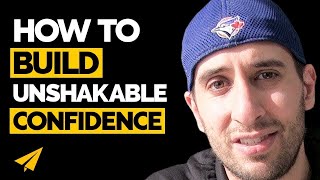
Evan Carmichael shares seven strategies he used to build self-belief, including finding a guiding "one word," creating nearly 4,000 videos to master his craft, and deliberately seeking discomfort to expand his comfort zone. He also emphasizes visualization, consistent habits, and dismantling limiting beliefs like the fear of disappointing others.
Chapters
Hello, Believe Nation. Today I'm going to talk about 7 ways to develop an unshakable belief in yourself. So self-confidence and self-belief is one of the biggest issues that I feel a lot of entrepreneurs go through. People ask me all the time, where do I get my belief from? How do I get more self-confidence? What do I need to do to believe in myself more, to push my mission forward? And so today I'm gonna show you how I went from this guy. I think the very first step for any entrepreneur who wants to get started is to figure out what type of business that they wanna run, and you always wanna build it around something you're really passionate about. To the guy I am today. Now that video clip is only 3 years old, which is super surprising. It's been insane to see for myself how much I've grown in my confidence, in my self-belief, in my ability to put out content and be on camera in just a short amount of time. And so I'm gonna share with you 7 of the ways that I've done it that hopefully you can model and apply in your life and your business as well. So number 1 is find your one word. The self-awareness is super important. Knowing what I stand for really helped me defend the positions that I had in my life when people were doubting me. Knowing that I stand for belief and knowing how that breaks down into passion, self-confidence, and conviction, and knowing really deeply have an understanding of myself. When you truly know yourself, you have a lot more confidence. It's easier to say no to people. It's easy to dismiss other people's opinions of you because you have your own opinion of yourself. Where if you don't know what you stand for, if you don't really know who you are, you don't have that self-awareness, then anytime somebody says something about you, you take it in and say, hmm, maybe I'm like that. Oh, maybe I'm not good enough. Maybe their opinions are right. Where I couldn't care less. You don't like the Blue Jays, you don't like what I'm wearing, you don't like my message. I feel like, you know, you might be wrong, but it's not going to impact my self-worth. It's not going to impact my confidence and belief in myself. And so understanding at the core who I am, having that self-awareness, knowing what my one word is, is massively important and had a big change on my life. Number 2 is practice. You know, it's hard to have a lot of belief in yourself to do something when you haven't practiced it. When it's your first time stepping out on the field, you're probably going to be nervous. You're probably going to feel like, "I might make some mistakes," right? Your first time getting in front of the camera, you're probably going to be super nervous and it's not going to go well, and that's okay. But the more you practice and practice and practice and practice, then the more you know that you can do it. The more swings that you take, the more you know that when you stand up to the plate, you'll be able to to do it. You know, for me on my channel, I've done almost 4,000 videos. We haven't crossed 4,000 yet. Most of them are public. That's a lot of practice. The reason why I can grow faster than other people is because I'm just doing more work. You can do it too. It's not that I'm that special. You could do the exact same thing in your business. Whatever you feel like you're not confident in, if it's public speaking, if it's networking, if it's talking to people, if it's sales, if it's writing copy, if it's creating product, one, understand, do you want to get better at that? You know, like, I have no interest in getting better at networking. I don't really care. It doesn't drive business for me. I'm not particularly eager at learning that new skill. I'd rather focus on other things. But two, if it is something you want to get better at, then just practice. Commit to practicing more. Like, increase your output. Be prolific. Be prolific. Whatever it is that you want to go out and make, whatever you want to be the world's best at, you need to practice and be prolific. Once a week is not enough. You gotta do it every day, right? Be prolific. Triple the amount of content. 10x the amount of content, 10x the amount of practice that you're putting out there, whether it gets released or not, whether you're just practicing piano on your own or practicing your sales pitch or practicing your presentations or tinkering away at the next perfect coffee cup, whatever it is, 10x the amount of practice you're getting, and then you'll know when you actually get out and do it, you have the confidence because you've done it so, so, so, so many times before. Number 3 is know your intentions. One of the things that I used to doubt myself on a lot was challenging and pushing people. One of the things that bothers me so much is somebody living below their potential, where I see somebody with these limiting beliefs, these excuses for why they're not doing better, and I see them playing up here. Like, you could do so much better. You could be— you can have such a bigger impact than where you're at right now, and you're playing small. And I used to accept their reasons at face value. I used to accept that you know, they just don't— they don't agree with me, and I'm not going to convince them, and it's not worth the effort to try. And I don't want to offend them. I don't want to push them away. I don't want them to think less of me. I don't want my words to come off the wrong way. And for anybody who's been in my mastermind group— I had this mastermind group that I've run for 10+ years, I think, in Toronto— they've seen the shift in me on how much more passionate I'll be and how much more aggressive I'll be at pushing them past and getting them to be where they could go and not accepting their BS answers anymore. For everybody, we all have BS answers. And what helps me is knowing that the intent is positive. I go in thinking, I want this person to get better. It's going to be uncomfortable. I'm going to have to push and poke at parts that they don't want to be pushed and poked at. And in some cases, people that I don't really have much of a personal connection with. This might be the first time I'm having a conversation with them. I don't want to tolerate BS in my life. I don't want to tolerate being around anybody who's living below what they could be doing, that untapped potential. And so I'll— I gain more confidence in being able to do it because I know that my intention is positive, and it's never actually come out to bite me. In the moment, maybe in the moment, a lot of people get defensive. It's supernatural. A lot of people will, will fight back and defend their erroneous positions, but then they always come back, whether it's the next day or a week later, and after they think about it and cool down, they realize that they have been living small. And so the confidence to do that came from knowing that my intentions were positive. I'm not pushing you for me, I'm pushing you for you because I want you to be here because you can be here. What are you doing over here when you could be way up here? Come on, let's go, let's do this thing, right? It's always for them. And so having that in my back pocket, knowing the intention really helps me do the uncomfortable things that need to get done. And again, back to the other point, with practice, the more I do it, the better I'm getting at it, the faster I get to that uncomfortable position, and the faster I'll continue to get, and the better I'll continue to get as I continue to apply it. Number 4 is visualize. One of the things that I found really helpful when I'm about to go do something uncomfortable, whether it's speak on stage, do a big interview, was to get on camera, have an uncomfortable conversation, with somebody in my life or colleague or entrepreneur, I would just try to visualize it. I try to role-play, I try to walk through it. I don't role-play with somebody here. I know that's really helpful for other people. For me, I just try to imagine what I'm going to say. How is it going to go? What is it going to look like? What am I doing? How are my hands moving? How am I walking? Am I sitting down? How do I open up the conversation? It never goes exactly like I visualize, but just like practice helps you get better and gain more confidence, When I visualize it, it's like I'm practicing in my head, like I'm tricking my mind that I've done this already 100 times. I've practiced this conversation 100 times. Even though it might be the first time I'm having this conversation, my head thinks it's the 100th time. And so because I've gone through it so many times, I'm ready to go and I have more confidence. So that visualizing that uncomfortable thing or that thing that you don't believe in yet, or you have that self-doubt, just visualize doing it over and over and over again and how you're going to look and how you're going to act and what you're going to say. I find really helpful in helping me get that self-belief. Number 5 is get uncomfortable. It's good to get into the habit of forcing yourself to be uncomfortable. You know, your ability to do great things will greatly depend on your ability to push yourself past your zone of comfort. And so if there's something that you know you need to do, something that, like, to get to that next level you have to go through this, then just practice getting there. As an example, on my YouTube channel, since we're making this video here, I used to need to have everything scripted. Everything was scripted. You go way back to the earliest videos on my channel, everything was scripted. 100%. I didn't have any unique words that I injected while I spoke. It was always typing it out and then saying what I typed and trying to memorize it. And then you can see me a lot of times like looking up to the left or stuttering. I felt like if I didn't say the exact words right, then then it's a fail video, and I couldn't improvise, and I couldn't do it on the spot. And then I realized, you know, that's not— it's not the best way to do it, because when I go do an interview on TV, when I go do speeches and I get questions asked to me, I'm not gonna have the questions in advance a lot of times. I'm not gonna know what they're gonna ask me. I can't prepare for it. I recognized that I needed to work on my ability to be more spontaneous, and so I forced myself to do it in a low-risk way with repetition, which was making these videos. The InSpresso videos and some of the Ask Evan videos that I did way back, I might have a general thought, but I don't script anything out. And I purposely, for the InSpressos as an example, I don't look at the video beforehand. What happens? Ivan, who is on my team, will do the research. He'll find the video clip. I will go to the studio, or in this case here, and I'll just watch the video and then talk into the camera. Like, I'll spend a minute just thinking about it and then just go. And talk. Where before I would have wanted to look at it a week before, thought about all the options, script everything out, and now I feel like it's much better and I'm forcing myself to get better at it. Whenever I do live interviews with people, they say, hey, okay, we can send you the list of questions and here's what we're going to talk about. Don't send me the questions. I have no interest in looking at your questions. I want it all to be live and spontaneous, and I'm building the muscle and I'm getting better at it. And so now I'm much more comfortable doing any situation because I've done— I've gone through it before. Before, and I forced myself to be uncomfortable. Getting uncomfortable just for the sake of being uncomfortable, there may be some merit and value to that, but especially if you know that you have to overcome this limiting belief or this, this negative mindset or this fear, then start doing it. Because as you do more uncomfortable things, your sphere of what is comfortable to you grows. And when you're inside your comfort zone, you have unshakable confidence and belief. So if your comfort zone is this small, then you're always going to be— you're always going to have no confidence because only if it fits into that little tiny thing, then you're confident that you can do it. Where if you build and grow that zone of where you are confident, then there's a lot more things that you will have unshakable confidence in. Number 6 is follow your habits and routines. I find that when you are doing something that is unfamiliar What helps give me confidence is finding a way to do what is familiar. Do what is familiar in the unfamiliar. So what does that mean? When I go and do a presentation, as an example, I have a series of things that I do all the time. So while that presentation may be the first time I'm doing that presentation, it may be the first time I'm seeing that audience, it may be the first time in that city or that country, first time on that stage, all lots of firsts. I will practice my speech beforehand and pace. You know, I'll walk around my hotel room and pace and practice. I'll listen to music just before going on stage, right? I'll listen to music, put some songs on that I, you know, remember, recognize, fuel me up. I'll usually have a Starbucks. I'll have a Frappuccino. You know, whatever city almost in the world there's a Starbucks. I'll have a Frappuccino. I might bring that on stage with me. I might finish it beforehand. But doing these things that are familiar helps me in a situation that I'm unfamiliar with. It's kind of like a childhood bedtime story. You read kids a bedtime story and then they go to sleep. That's their routine, right? They expect that they're going to fall asleep during or after that bedtime story. So they brush their teeth, they have a bath, and then they go have that bedtime story and they fall asleep. It's the same thing for me. I do these things. I listen to music, I pace, I have my Starbucks. I expect to then go off and do an amazing presentation. And so those habits really helped me. And so finding those habits for yourself could be super important. Tied into this, I would also say the environment is important. Habits and environment combined. I think one of the biggest things that's changed about me personally in the past 3 years, comparing that old clip to where I am now, is I've just surrounded myself with so many successful people through the videos, through the research. Before any of these videos go up, I approve them, I look at them. And so when we're doing the Top 10 or Believe Life or Inspire Us or any of these series, I'm feeding my brain with all of these success people, the best parts of what they've ever said. I'm constantly feeding that into myself. They haven't changed my value system. I still, I still, you know, believe in Believe. I'm still that same person at the core, but they've given me more confidence. They've given me more boldness. They've given me more audacity. They've allowed me to stretch beyond the people that are in my immediate circle to say, great, you guys think I'm doing an amazing job. I'm nothing. I want to go out and have this kind of impact. That's what I want to go and do. As I have increased my intake of that gold, as we move from 1 top 10 a week to 2 top 10s a week to 5 top 10s a week to introducing the espresso series, to introducing the Mentor Me series, The amount of content that I've consumed has increased, and proportionately my audacity and confidence and success has increased. And it's probably one of the biggest changes that I've made over the past 3 years of my life in just increasing the exposure to greatness. And the more you expose yourself to great things, great people, great ideas, the more some of it has to seep into you and it fills you with more self-confidence and belief. And number 7 for me is recognizing your limiting personal beliefs. This is one of the hardest things for anybody to do, I think, because we, we tell ourselves a story why we can't be successful and admitting the truth is too painful. And for me, because I had an insane desire to please people, I think more was I didn't want to let people down. I don't like letting people down, and so I'm always careful what I, what I commit to. I don't commit to something that I don't follow through on. I'm always early for meetings. I'm always early for connecting with people. I'm always, you know, earlier on time. I don't like letting people down, which is a great thing to have, but the flip side is you don't commit to people. You don't commit to projects that could be really good for you, that could help you grow, because you are afraid afraid of letting somebody down, and so you don't do the thing that you should do. For me, a lot of it was meeting with people, meeting with entrepreneurs, going and do presentations. I would secretly hope that they would cancel on me because I felt like maybe I'm not gonna add value here, you know. I don't want to let them down. So 3 days before an event or the day of a meeting, I would secretly open my email and hope that there would be a cancellation notice, like, oh, okay, I don't have to go do that. And it was a limiting belief for me. And once I recognized it, then I was able to attack it. Then I was able to— you know, the trick to overcoming these negative limiting beliefs is one, after the fact, understanding that I did it again. I did it again. Ah, why did I do it again? You're so frustrated that you did it again, that you're playing small again, that you said no again when you really wanted to say yes, right? You did it again. You did it again. Just the awareness, that's more than half the battle, because most of the things that are holding you back, your limiting self-belief, You don't even know. It's not even on your radar. You just do them so subconsciously that you have zero awareness around them, and that is going to forever hold you back. So just having that kind of awareness after the fact is super important. The more you pick it up, the more you keep track of it, the closer you will get to the point of it happening, to the point where I am opening my email and secretly hoping that that person is going to cancel and catching it right then and there. It doesn't happen right away, but with time, right then and there, and then having the courage to take the action that you're supposed to take that is best for you instead of cowering down, instead of doing what you always do, instead of saying no and backing down and saying, no, it's okay, you know, instead of being the lowest form version of yourself, instead of putting yourself in this tiny box and being this little tiny person where you could be a lion, having the courage to go for it. And the more you pick it up, the more frustrating it's going to be, to the point where you just have to say yes and do it. And again, every major breakthrough I've had in my life and my business has come from me crushing one of these limiting personal beliefs. So this video is a little longer than I expected it to be, but hopefully is super valuable for you guys. Those are my thoughts on the 7 ways to develop an unshakable belief in yourself. I'm curious to know, what did you guys think of the video? Did you like it? Do you resonate with something? What was the most important thing that I said that touched you? Leave it in the comments below. I want to join in the discussion. Also, did I miss an 8, 9, 10? Is there something that you want to add to this list to round it off? Leave it down below. I'm super curious to see what you have to say. And finally, I want to give a shout out to Justin from 65drums.com. Justin, thank you so much for picking up a copy of my book. Really means a lot to me. Thank you guys so much for watching. I believe in you. I hope you continue to believe in yourself and whatever your one word is. Much love. I'll see you soon.
More from Evan


How the Biggest Mistake in History Created A Trillion-Dollar Empire | Sergey Brin



9 Machiavelli Principles That Force People To Respect You | Machiavellian Philosophy



The First 10 Words That Instantly Ruin A Sales Conversation | Vanessa Van Edwards

The Top 1% Mindset Behind The First $5 Trillion Company | Jensen Huang (Nvidia)

