Some PEOPLE are Always Going to HATE YOU! | Princess Diana | Top 10 Rules
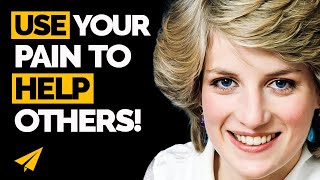
Princess Diana on handling criticism and turning pain into purpose. She worked in hospices and with the deaf, learned that gratitude and service matter more than what people think of you, and built a life around helping others despite the press attacking her relentlessly.
Chapters
What do you say, Mom, when you read in the papers that you are determined, domineering woman?
I don't always read that. People are very willing to tell me that, but I don't think I am. I'm a perfectionist with myself, but not necessarily with everybody else. Those stories arose a long time ago and have kept coming out again and again, but I don't think I am.
You feel hurt by them?
Well, obviously one does. You feel very wounded, and if it comes out, you think, oh gosh, I don't want to go out and do my engagement. Somebody wants to see me, help panic. But you've got to push yourself out and remember some people hopefully won't believe everything they read about you because there's far too —about me in the newspapers. Far too much. Horrifies me. When there's something more important, like what goes on in the hospice, or there's been a bomb or something, they'll put me on the front page.
Need motivation? Watch the Top 10 with Believe Nation! Hey, it's Evan Carmichael, and I make these videos because you are probably the most ambitious person in your circle, but you know you're capable of more, and you get that push by surrounding yourself with the best. So today, let's learn from one of the best, Princess Diana, and my take on her top 10 Rules for Success. Enjoy. Rule number 2: Use your pain to help.
According to press reports, it was suggested that it was around this time things became so difficult that you actually tried to injure yourself.
Is that true?
When no one listens to you, or you feel no one's listening to you, all sorts of things start to happen. For instance, you have so much pain inside yourself that you try and hurt yourself on the outside because you want help, but it's the wrong help you're asking for. People see it as crying wolf or attention-seeking, and they think because you're in the media all the time, you've got enough attention, inverted commas. But I was actually crying out because I wanted to get better in order to go forward and continue my duty and my role as wife, mother, Princess of Wales. So I, uh, yes, I did inflict up on myself. I didn't like myself. I was ashamed that I couldn't cope with the pressures.
What did you actually do?
Well, I just hurt my arms and my legs. And I work in environments now where I see women doing similar things, and I'm able to understand completely where they're coming from. And in a way, by being out in public, they supported me, although they weren't aware just how much healing they were giving me. And it carried me through.
Rule number 3: Serve.
You were struck first by the hospices, weren't you? Yes. What particularly, when you first went into one, what did you sense about it?
I'd always been led to believe that it was possibly an unhappy place because patients went in there and not always did they come out. So it was fascination on one side and concern on the other. And certainly after I'd been around the first ward, I remember it so vividly, I was struck by the calmness coming out of the patients in their bed, and most of them will have gone by now, obviously. And it was confronting their illness. They were so brave about it and made me feel so humble. I feel underdressed. Why don't you sit down? Just for me? Oh yes.
See you in the flesh. In the flesh.
Don't look too near, you might get a shock.
I've seen enough photos of you.
I know, there's too many of those.
Rule number 4, do what you love.
How did you actually come to be at the kindergarten in the first place?
Well, it was through friends.
I wanted to teach children and they said, why not come along? So I first started off doing afternoons and then I took over the mornings and did whole days. But I only worked 3 days a week at kindergarten and the other 2 I looked after an American baby boy, which nobody seems to realize. He was very special to me.
Also, to make sure you're actually taking action after watching this video, I've designed a special free worksheet just for this video. The worksheet will highlight all the lessons learned in this video, as well as pull out our 3 favorite learnings and quotes that will inspire you to actually do something. The worksheet will also give you space to write down what your key takeaways are and your specific plan of action to make sure you're getting results. If you want the worksheet designed specifically for this video, absolutely for free, there's a link in the description below. Go click on it and start building the momentum in your life and your business. I'll see you there. Rule number 5: Be grateful.
You see, I've got two very healthy, strong boys, and it's not always the case with the families I'm meeting through Dr. Bernardes. And I realize how incredibly lucky I am. And I don't know how I could cope if I had a child that was handicapped or mentally handicapped in some way. So for me, I'm going out there to meet these children and I'm learning all the time and trying to understand, trying desperately to understand how they cope.
Rule number 6: Empower others.
Isn't it normal not to be able to cope all the time? Isn't it normal for women as well as men to feel frustrated with life? Isn't it normal to feel angry and want to change a situation that is hurting? Perhaps we need to look more closely at the cause of the illness. Rather than attempt to suppress it. To accept that putting a lid on powerful feelings and emotions cannot be a healthy option. That to offer women the opportunity to explain their predicament sooner could be a far more effective use of limited resources rather than wait until their strength to survive has been sapped. As long as the real reasons for their problems go unnoticed and unattended, they will continue to pass on to the next generation their disability. If we, as a society, continue to disable women by encouraging them to believe they should only do things that are thought to benefit their family, even if these women are damaged in the process, if they feel they never have the right to do anything that is just for themselves, if they feel they must sacrifice everything for their loved ones, even at the cost of their health, their inner strength, and their own self-worth, they will live only in the shadow of others, and their mental health will surely follow. But if we can help to give them back their right to fulfill their own potential and to share that with their family, children, or friends, maybe fewer women would find themselves living a life that is bleak beyond belief.
Rule number 7: Commit fully.
You are developing your own interests and your own specialization.
Yes, but that's taking time because I don't want to dive into something without being able to follow it up. Nothing would upset me more more than just being a name on the top of a piece of paper and not showing any interest at all. Hopefully, the organizations I'm involved with see me 2 or 3 times a year if the times, you know, I can do it, I can fit it in. I just long to help in all sorts of areas.
Rule number 8: Always keep learning. You've also taken up the deaf.
Yes. And you're learning the deaf and dumb sign language. Well, I'm trying.
I'm pretty hopeless at that, but I— I think it's important to show them that you're interested and you're not just breezing in and out having seen them for a morning. I've got all my senses and they haven't. They're missing one or two. And I'm learning how they adapt, or if they've been deaf and dumb since birth, how they cope and how they deal with the outside world who don't always want to know about them, perhaps.
Do you practice the language? Does the Prince help you with your lessons?
I don't know if he'd understand.
I know one, and that's— That. H. H. And you know why? Because when I had my tonsils out when I was very small, I had a night nurse who was called Sister Hicks. She always used to come and say, "Sister Hicks." So I always remember that. It doesn't get me very far, I'm afraid, in my conversations with the dead. Still. But I shall look forward to her teaching me. Thank you.
Rule number 9: Be selfless.
Those women who have taken on the heavy burden of attending to others need also to be attended, not just for their own sake, but for the good of us all. Health and happiness taken at the cost of others' pain and suffering cannot be acceptable. Women have a right to their own peace of mind. Each person is born with individual qualities and potential. We as a society owe it to women to create a truly supportive environment into which they too can grow and move forward. But if we are to help the quiet, desperate lives lived behind closed doors by so many women, they need to know for certain that they are not alone, that real support and understanding is there for them.
And rule number 10, the last one before some very special bonus clips, is be supportive.
I feel my role is supporting my husband, um, whenever I can, and always being behind him, encouraging, and also most important thing, being a mother and a wife. And that's what I try to achieve, whether I do it or not, but I do try.
It is sometimes argued that addicts bring their problems on themselves, but I've noticed that those such as Turning Point who have firsthand knowledge of what these problems really are seem less inclined to pass judgment. Instead, I suggest that we consider what part we can play in the fight against addiction, whether as a a parent, a friend, a colleague, or an employer. I know that today's conference will concentrate on drug and alcohol problems, but I should also mention Turning Point's work in the field of mental health. As more mental patients leave hospital to join the community, there will be increasing demand on Turning Point services. The charity's 3 mental health projects help ex-patients make the transition from the institutionalized life of a mental hospital to a more normal existence in the outside world. For people who have been in hospital for as long as they can remember, learning to fend for themselves can be a frightening experience. Even the simplest tasks such as understanding money or using household appliances may have to be learned from scratch. This is an area of growing demand, and Turning Point has received many requests from local authorities to extend its services for the long-term mentally ill. Mental health, like the problems of drug and alcohol misuse, does not easily attract public sympathy. There are many charities which campaign for more appealing causes. In overcoming this disadvantage, Turning Point has developed an initiative approach to its work, typified by this joint venture with a major brewery. I believe that Whitbread and Turning Point are to be congratulated for their initiative, which is just one example of the charity's strategy of building a strong partnership with industry and business to help fight drug and alcohol problems at work. Now in its 25th year, Turning Point faces greater challenges than ever before. Its partnerships with government and industry offer much hope for the future. Conferences such as today's will, I'm sure, make valuable progress towards the elimination of drug and alcohol problems at work. But just as Turning Point believes these problems must be tackled on a painstaking and individual level, So we in turn must recognize the part that individuals can play in caring for all the casualties of our society.
Because you made it this far in the video, I want to celebrate you. Most people start and don't finish. Most people never actually follow through. Most people say they want something, but they don't ever do the work to actually get it. But you are different. You are special. Believe Nation, you made it here all the way to the end, and I love you. So as a special celebration, if you put a hashtag #Believe down in the comments below on this video, I will showcase you and celebrate you somewhere on the screen in a future video because you are awesome. To see the top 10 we did on Oprah Winfrey, check the video right there next to me. I think you'll love it. Continue to believe, and I'll see you there. Everybody that I had on the show at the end of the show would say something to me like, um, is that okay? You will find true success and happiness if you have only one goal.
More from Evan


How the Biggest Mistake in History Created A Trillion-Dollar Empire | Sergey Brin



9 Machiavelli Principles That Force People To Respect You | Machiavellian Philosophy



The First 10 Words That Instantly Ruin A Sales Conversation | Vanessa Van Edwards

The Top 1% Mindset Behind The First $5 Trillion Company | Jensen Huang (Nvidia)

