Stop Caring What People Think! - Wayne Dyer's Mindset Shift Will Set You Free!
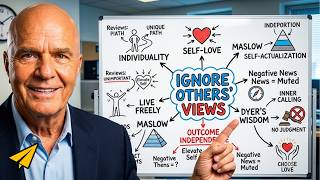
Wayne Dyer explains how self-actualizers, according to Maslow, stay independent from others' judgments. He ignores Amazon reviews, writes without chasing profit, and treats compliments and insults the same. Listeners call in with grief and burnout; Dyer suggests love-focused service and meditation as paths to freedom.
Chapters
Stop living your life worried about what everyone else thinks. Wayne Dyer reminds us that people who truly make an impact do it because they love what they're doing, not because they're trying to impress others. If you keep chasing approval, you'll never find joy. In this radio show, Dyer tells listeners to treat compliments and insults exactly the same. Let go of outcomes and always choose love instead of reacting to negativity. Real freedom comes from ignoring opinions and living. From your heart. Special thanks to Hay House for partnering with us to release this video exclusively here on our YouTube channel. And if you've been here before, drop a hashtag #believe in the comments below so I can feature you here in a future video. And if you're new, welcome to Believe Nation, the only channel that helps you believe in yourself daily, one video at a time.
Dr. Wayne Dyer is joining us from Maui. And Dr. Dyer, how are you doing today?
I'm doing okay. How you doing?
I'm good. Did you catch the Golden Globes last night?
I did. They were throwing— there were globes everywhere, golden orbs. They were.
I'm such a big movie buff, so I always love when the awards season rolls around. And I just had a comment, though. What do you think about this? So, you know, the big buzz over the internet was Jodie Foster, you know, when she had accepted the Lifetime Achievement Award. And then, of course, the internet is always buzzing about her sexuality. And, you know, it just kind of drives me crazy that why, why would that even be an issue when you're looking at someone's work? I mean, she's 50 years old. She's been working in the industry for so long, and you're celebrating that. But yet all over the internet they're just focusing on, you know, this one small part of her life.
Well, I just think that a person's sexual preferences and orientations and decisions are only between that person and the person that they're having those relationships with, and nobody else's business. It's just not—
that's what I think. Like, when I don't— when I meet someone, I don't say, you know, hi, I'm Diane Ray, and I like men, and I'm a heterosexual. Yeah, I just want to make that really clear to you. Yeah, it just seems silly, and I was Her talk was—
I had such mixed reactions to her talk. Parts of it I just thought were sort of over the top, like weird, and parts of it were just so brilliant that, you know, and especially at the end, especially what she said about privacy.
I agree.
And then she went on to talk about her partner. So, I mean, it was— and then when you look at her body of work, I just forgot about the brilliance of this woman. And I don't think there's ever been a film that she's either been in or that she's directed or had something to do with that I haven't always thought was really an excellent film. You know, like, I don't ever remember thinking, oh, that was a terrible film, I didn't like it.
Yeah, I agree. I mean, I'm just a big fan, and it just kind of struck me that, you know, people were kind of talking up that, that point rather than looking at, looking at the accomplishment. And, and she's so true about there not being any privacy anymore. It seems like, you know, everybody's so willing to just blurt out, you know, stuff.
Well, my, my greatest teachers, one of my greatest teachers was Dr. Abraham Maslow, and, um, who wrote about, uh, You know, the highly functioning people, so what he called self-actualizers, and it was the very number one quality of these people is that they are independent of the opinions of other people, particularly the good opinions of other people. It's just not any— and there was a time when, you know, I wrote a lot about this, you know, approval seeking and all. I wrote in my very first book, uh, Your Erroneous Zones, you know, written back in 1975. But I didn't always practice it because I used to read You know, I'd put something out there, I'd do an interview, I'd be on a talk show or something, and there'd be stories about me the next day. And I'd read my reviews when I'd write a book, and you know, and so on. And I think at this time now, and especially in the last maybe 4 or 5 years, I've actually really truly gotten into a place in my life where it just simply, it just doesn't make any difference. And the reviews are something that I just have very little to do with. And I gave a speech yesterday, or Saturday, in Las Vegas. And I was talking about this whole idea of living your life free of being concerned about what the outcome is, you know, whether people are going to like it or not going to like it, and what a freeing place that is to be in your life. This whole idea that you treat other people's opinions, whether they're good opinions or whether they're bad opinions, exactly the same. So if someone gets up there and tells you how wonderful you are and you're greatest and you're the best, you treat that exactly the same as if they tell you what a jerk you are and how, you know, and how you're And one of the places that I see where I get to practice this is on Amazon, because, uh, on where my books are listed on Amazon, they have reviews. And almost every day there's a new review or two in there of a book. There's, you know, but Wishes Fulfilled probably has 200 or 300 reviews in there now of people. And it'll be very interesting to read them and just go down and, you know, one will have 5 stars or whatever, 4, whatever their number, maximum number is, and just say how wonderful it is. And another one will do that, and then another one will come along with with a half a star and tell me, you know, that he's writing books because he's just out there to make money and try to, you know, capitalize on other people's troubles. And I think, when a person does that, I think, you could never even imagine that I go over there and I sit down and I write and write and write. And the pressure that is there and the anxiety and the, you know, to take an empty page of paper with nothing on it and to fill it with something just from your own consciousness and and to make it come out as a book and to sit there for 5, 6, 7 hours a day for a year, and that the thing that I'm— the reason that I'm sitting there doing it is because how much money I can make and who I'm going to rip off and what— it's like there's just never, never a possibility of that even being a thought in my head. I write because writing is something that I have to do. And being concerned about whether people like me or don't like me, whether people buy it or don't buy it, it's never been a concern for anything that I've ever done. And I would suggest that's true It's true for great artists and musicians and, you know, people who have made, you know, huge impacts and so on. They don't go to their studio and paint every day because somebody else is going to be out there making a lot of money by buying them. I mean, Van Gogh never made a penny in his entire lifetime from all of the great paintings that he made. He painted because painting is his soul, it's his excitement, it's what aligns him with your source of being. And it's the same with me with writing. But people who are not there, people who are short of money, who don't have as much or so, will immediately transpose their idea of, well, the only reason that I would sit down and do that is because I could make some money. And that's the reason that they're not making money, and that's the reason that they're not writing. Whereas a writer or an artist or a musician or a creative person of any kind goes in there, whatever it is that they're doing, and they do it because in their soul they're saying, this is what excites me, this is what aligns me with Who I truly am, who I showed up here to be, not what somebody else has. And that's true of our sexuality as well. I mean, it's just, uh, just the idea that— and then you get absolutely get to a place where you're no longer concerned about whether people like or don't like what you say. And you know that, like, I've just written a book that I'm just finishing up now, but I'm still an enormous amount of work left to do before it'll be published. Called I Can See Clearly Now. And I know as I go through these chapters every day and edit them and so on, I know in my soul that, uh, that there's going to be a lot of people who are going to give me a lot of criticism for the things that I am saying and that have influenced me throughout my entire life. And I just write them anyway and just know— and the nicest thing about being in this place in your life is that when you look at the review section, you don't even have to look at how many stars you get. You don't have to look at the— and you can just read them sort of dispassionately and treat the negative ones exactly the same as the positive ones. And that's why I would say, I would even say to you, Diane, I wouldn't go on the internet and read what everybody else is thinking about what Jodie Foster— it never occurred to me that anybody else's opinion about what she is saying or doing or what her life is like or what her sexual orientation was like, that, um, I used to have this metaphor that I always used to use. You probably heard me use it on the radio show in the last few years when someone would be all upset, especially when I was counseling with young people, and they'd be all upset about what their friends said and so on. And they say I said, what makes you so upset? Well, you know, they called me a jerk, or they said I was terrible, or they told a lie about me, and I'm just so upset. Why would they do that? And I would say to them, well, let's just stop. I said, today they think that you're a jerk. Tomorrow they might think that you're, you know, a surfboard, or they might think that you're a tree, or they might call you a car and tell you to get down on your knees. They've got a funnel. They're going to pour gasoline into your ear because you're a car today. Would you be a car because somebody else thought that you were a car and told you that you were a car, or a surfboard, or a tree? You said, well, of course not, I couldn't be that. I said, well, why would you then allow their opinions of you being a jerk or you being a fool or you being, you know, dishonest or whatever it is that they've said about you? It's no different than if they've called you something else. You have to be independent of the good opinion of other people. And if you're going to be a public person like Jodie Foster, then, um, you know, you just have to get up there and say, okay, there's a whole lot of people in this world feel that the way that they do. I feel this way about this whole gun issue that's going on, and there's going to be a big— the vice president is going to present his recommendations, you know, about gun control and so on. And I know that there's an awful lot of people out there, there's probably many listening right now, who have a very, very different opinion than I do about whether, you know, guns should be controlled, whether assault weapons should be out on the streets, whether— you know, I have a very strong opinion about it. I always ask the question Which country would you rather live in? One in which everybody has a gun, or one in which nobody has a gun? All other things being considered, which country would you rather live in? One where there are no guns, one where everyone has a gun? And my preference is to live in a country where nobody has a gun, where there's just simply no guns, no instruments of death. And people say, well, that's not realistic, and that's not possible, and there's 300 million guns in circulation, and so on. I said, I know, but that's my vision. That's the vision that I work towards, that I live towards, that I really am out there promoting the idea that violence toward each other and instrumentation that is being produced, or businesses that create things that are designed to kill other people, are something that I would like to see eliminated. Not necessarily by law, but I would like to just see our consciousness shift so that these kinds of things are no longer a part of our world, where the highest place within each and every one of us is a place of God-realization and love rather than violence or hatred or any of those things. So once you get to that place— and that was Maslow's number one criterion and characteristic of describing these people that he called self-actualizers— this was the pinnacle of the pyramid. At the base of the pyramid, the longer line at the bottom, are all of the physical needs— our need for water, our need for food, our need for sexual, you know. And as we move up, our needs for belonging, our needs to feel loved, or needs to be a part of a culture and so on, until we get to the very top, the apex. And the apex of the pyramid is a place called self-actualization, where people are independent of the good opinion of other people. They're detached from outcome. They're no longer doing what they do because of what's going to come to them, because of how much money they're going to make or whatever. They're doing what they are doing because it is an internal calling to align with their soul's purpose. In being here. And they are people who see the unfolding of God in everyone and everything that they encounter. So I have to try to see the unfolding of God in people like Rush Limbaugh and people like, uh, Casper Weinberger, as Ram Dass used to say, and people like the president of the NRA, this LaPierre or whatever. I have to see the unfolding of God even in him. But, uh, just hold on to my vision. Just hold on to the vision. And understand that inside of a self-actualized person is the soul of someone who must be what they can be. They know that they have— they came here to be something great and grand. They're going to live from an extraordinary level of consciousness, and they know inside of their hearts that this is something that I absolutely must be. And then the final characteristic of these self-actualizing people— not final one, but the top 5— is that the These are people who never place into their imagination, into their thoughts, anything that they do not want to materialize or manifest into their life. So they don't go around thinking about how terrible it is and how bad the world is and how everything— they place into their imagination the world that they would like to create. For me, it's a world that doesn't have weapons that are designed to kill people. It's what Lao Tzu asked us to do 2,500 years ago, and I've just taken up that banter, that calling. And when you have those 5 characteristics of being, you know, independent of the good opinion of other people, when you're detached from outcome, where you must be what you can be, where you see the unfolding of God in everyone and everything that you encounter, and you don't use your imagination to put anything in there other than what you would like to see manifested and attracted into your life— the person you would like to be, the world you would like to live in— and then you just start to ignore all of this other stuff, and you'd read through the internet and you look at all those things and you just say, well, some people are, you know, that's the way they are. And I just send them love anyway. That's the message of Jesus, Lao Tzu, God, Source, whatever you want to call it.
That's such a great lesson and such a great reminder. I love that. You know, when I try to work on that as well, if I get negative emails, because I read all the emails, all the listener emails come to my inbox, you know, about Hay House Radio. And I like to read the good and the not so good if there's something that people don't like. And I've learned to detach from that. And if they don't like me, that's okay. But you're right, when you can get to that place, you know, it's so freeing. It really is.
It really is. And by the way, that aligns with something I also told this group in Las Vegas on Saturday night, is that I spend much, much less time now on reading newspapers and allowing negative energy into my life. I mean, I have a subscription to Time magazine. It comes to my home in Florida, and then they forward them to me like 4 at a time or so. And I come over when I'm over here in Maui when I'm not in Florida. And they, um, you know, and I used to just read them cover to cover and go through everything. And, but almost every story in there, and almost every story in the newspaper every day, is about how many people were killed in this city, in that city, and with this explosion, with that. I mean, it's just about— it's about killing and it's about violence. And our news is almost like a daily, uh, diet that we are all being fed, force-fed. And the internet is like that as well. Of all of the things that are wrong and hurtful and hateful and inappropriate in the world. And I know, Diane, I know when I read those stories, like when I have an— I see a newspaper story about 60 people killed in Iraq from an explosion by the Shiites fighting with their enemies and so on, I feel the souls of 60 people just like, you know, dying from violence. And I feel different inside of me. Am I literally physically— I feel different when I am reading a story about pain and about suffering and about killing and about murder and about war and even natural explosions. So, and so I just, I find myself even like I will, there's something apparently going on right now in the country about a flu epidemic of some kind, I guess. And it's, there's lots of people. And yesterday when I record the news and then so I can run through the commercials and the stories that come out about, I mean, they had, they were interviewing all these people in the hospitals and how sick they were, and it's been 5 days and I'm not And I look, allow about 20 seconds of that, and I just start noticing how I feel when I'm listening to all of these people who are getting sick from this flu. And I think there's a real good chance that I will allow myself to get that kind of thing as well if I use my thoughts to process this thing, because our bodies are the physical reaction of the kind of thoughts that we have. Our brains are, they're like a pharmacy, you know, that this Deepak used to say, that you have a great pharmacy within you, inside your head. and it can produce any drug that your body needs by whatever thought that it places on it. So if I'm thinking flu thoughts and looking at all these people who are getting sick, and I just— so I just fast forward, just push that little button and go right through, because I don't want to watch all these people getting the flu, so that I start thinking flu thoughts, and all of a sudden I get a little cough, and instead of thinking, well, this is just nothing, you know, I started thinking, oh my God, maybe I'm going to be one of those people like I just saw on there. So I just fast forward through all of the news and all of the explosions and all of the killing and all of the horror stories.
And, um, you know, that's a great practice to get into, just kind of filter things. It's not like you're not going to find out if something happens, right?
And it's no longer news anyway. Thoreau said that way back in the 1840s, you know. He said when you've read about an accident and somebody really being hurt in an accident, and you read about it once and you have a sense of sympathy toward those people, then you begin to realize that it's no longer, it's no longer news when they just keep telling you the same thing that happened here and it happened in that city and it happened all over there. And basically what it's doing is just filling you with all of the terrible things that are going on. And I want to think non-flu thoughts. I want to think nonviolent thoughts. I want to think peaceful thoughts, loving thoughts, kind thoughts. And so I don't want to be constantly bombarding my inner world and my physical body with the kinds of negative energy that are going to allow me to get sick or to get hurt or be depressed. I mean, the thing with— I mean, I don't need to see that story about, you know, 30, uh, 25 or 27 children being lined up in a school and shot to death with an assault weapon by an insane man. I don't need to see that 50 times or talk about it 50 times to know that this is not something that I want to be a part of. I want to see what I can do and live my consciousness in such a way so that these kinds of things are no longer viable. They're no longer a way of being. And I don't think we're going to do it by changing the rules or changing the laws or even banning things and so on, even though I would like to see all of that happen. I think we're going to do it by shifting our consciousness. When enough people have in their hearts this idea that we don't want to live in a society where people are so filled with hatred and wrath and revenge and killing and so on, then all of this stuff will dissolve and disappear, and those 300 million guns and so on will be turned in, and we'll start being people of peace.
Right. Long answer, but— well, I love that. I think this will be something people will— can go back and listen to, you know, again, what you were saying, because it's just a good thing to keep into your consciousness, you know, food for thought.
Be aware, everybody listening, be aware of when you are getting a certain kind of feedback, or you're reading a certain story, or somebody is telling you something, start becoming conscious of how you feel as you're hearing these horror stories and looking at this bad news and reviewing all of the people that are dying in Syria and so on, whatever. Start noticing how you feel inside and then begin to ask yourself, what can I do to avoid feeling that way so that by not feeling that way and not being a part of that hatred and having more hateful thoughts towards the people who are doing these things and then multiplying the amount of hatred that's in the world, instead becoming more of a being of love so that, um, you live from that place and then you radiate that out and you can impact people around you. I used to do experiments when I would be in a grocery store and I would see a mother, a frustrated mother, yelling at a baby, you know, an infant, a 1-year-old or a 2-year-old who's doing something in the store, you know, like going after the candy, or— and you'll see sometimes a mother just losing it and slapping a child and so on. And of course, I don't go over to them and give them a lecture and tell them, but I move in closer. I get closer. And while that's going on, while they're in that rage kind of thing with their child, I try to radiate as much love as I possibly can into the space, fill the space with— instead of my being angry at that mother for doing what she is doing and saying, how dare she do that, that's just a child and she shouldn't be yelling at it, because I don't know what the situation is. That's going on there. Instead of that, I want to be like Jesus was, be the kind of person who, when they go into a village, just their presence elevates the consciousness of everyone. Like a Mother Teresa, when she would enter a room, you know, everyone in the room would feel better. I want to— that's the person I want to be. I noticed it in Las Vegas, because in Las Vegas there's so much to look at that I don't want to be a part of. But, you know, the lights and the smoking and the noise and the pollution and the, I don't know, just the prostitution and the, just all of it. There's so much of it that doesn't align with anything that I live or like. It's one of my least favorite places to be, but that doesn't mean there's anything wrong with it. While I am there and giving a talk, I want to be able to be a person who sends love everywhere to everyone. And ultimately that's how we'll shift consciousness.
And you were in a room full of chiropractors. Didn't anyone help you out?
Yeah, there were them and there was, but there was another, about another 1,000 people that had just come as well.
So yeah, it was a big, big event. Well, we have just 2 minutes of the segment. Did you want to try to grab someone real quick and sure get started?
We can get started and then we come back after. Now, sure.
Okay, so let's go to the whole half of the show. I know, but it was some great stuff, so I wanted you to just keep going. So let's go to Dawn, and she's in Canada in Alberta on line 1. And Dawn, welcome to the show.
Thank you very much.
Hi, Don.
Hi, how are you?
I'm just great.
Good.
I love everything that you say. Oh, everything that you say is just great, and I appreciate you so much.
Thank you, dear. I appreciate that. Tell that to my kids, all right? They don't listen to a word I say.
Mine either.
All right, good.
I'm just— you're talking about being aware. And I'm just wondering, my dad passed away in June, and I started— that was my last parent, and he passed away, and I got really, really sick after that. And I started a new job in July, and I love the people I work with. It— the job has more, a lot more responsibility and more admin stuff, which I'm not. I like being with people. I'm not really into paperwork. I knew that was going to happen when I took it, but since I've had the job, it just seems like every, like, 2, 3 times a month I'm sick, and I'm just— it's a, it's a great program, but there's new people, new people on the board, and a lot of— we're learning together, but I just feel Frustrated because I feel like—
so you said two things. You said, um, that I wonder how they're related. One was that your father passed away in June, and then you jumped to, you know, how you've been feeling, you know, at your job. And my condolences, because my mother, my last parent as well, my only parent ever, was, uh, passed away in July of this year. So I, and I, I know, I know she was 96 years old, and, uh, about But I know, I know what that feels like. I know what you went through.
Thank you. I think it's just I got really sick and strep throat and sores in my mouth, and it just seems like maybe it doesn't have anything to do with a job, but since then it just seems like July I started the job and it was pressure, but it seems like since then I'm getting strep throat like, or bronchitis every month for like 2 or 3 days a month, and I'm just I don't know if it's because I'm frustrated. It is a new program. It is good people I work with, but I feel like I'm kind of— and this is big ego talking maybe— that I'm holding the ship up, and I'm just to a point where I don't know if it's worth it, if I want to do that, if I want to stay in a job. I don't know how to explain it. I just don't know if I should be looking for something else or if I should You can—
goes back to what I was talking about in the first half of the show, and that is, um, just start to be aware of how you feel, um, when, um, you know, when you're watching the news, when you're talking about this subject. I don't know if you've ever done any kinesiology or muscle testing. There's lots of good people who do that, and you can really test yourself very quickly. You can have a thought of you being on that job But let me ask you this, just out of the blue here. If you, like, had your druthers, if you could do just, like, anything that you wanted right now in your life, you know, it would just magically— you could wave a wand and whatever it is that you were doing would create for you an inner sense of excitement where you would just feel like, oh my God, whatever this is, I know that this is what I'm here for. This is what makes me feel better than anything else when I'm doing this. When you can do this with certain kinds of you know, with foods that you're eating, or you can do this with places that you'd like to visit in the world or whatever. But when you just think about your activity or your vocation or, you know, how you spend your days, what is it that really provides you with that inner sense of, ah, so this is it? For me, this is like when I'm on stage and I'm holding that microphone and I'm talking to people, or when I do this radio show, which I look forward to every week. I really hate to miss it when I'm traveling or whatever, when I'm over at my office and I'm just sitting there writing and just allowing it to flow through me. These are moments of awareness within me that I'm on purpose, I'm aligned. What would that be for you? Do you have any idea?
Well, kind of what I'm doing in my work is helping people. I work with people right now who have been victims of crime and tragedy, so it is heavy work. You're not hearing good news every day, but I really feel good when I feel like I've helped somebody and helped them come to a different place and see that they're not stuck, that there is light at the end of the tunnel.
So unsticking people is the— what is your work? Are you a counselor someplace, or are you—
I work with victim services. I'm a coordinator.
And so it's not really—
well, it's not really counseling, but it's referring people and helping them through the court process and all that stuff.
Yeah. See, when I say that the thing that provides me my excitement is what I just described, those events that I just described. But you know what else it does for me? It's like when I, um, like when I go for a walk this morning, I had like about 30 errands that I wanted to— not 30, but 5 or 6 errands that I wanted to complete before I did this radio show. And, uh, you know, so I went to the— because I've been gone for a while— I went to the grocery store, then I went to the bank to get some money for my kids and people and so on. And I had to stop here and stop at the post office. I had stopped. And while I was at the bank and in a rush because I wanted to see how much of this I could get done, a young man stopped me and recognized me as I was walking out of the bank. And I really didn't want to be recognized because I still had a whole bunch of more stops that I wanted to get. And I knew I had to be back here. You don't start your radio show late. And but he stopped me and he said, could you just give me a few minutes? And my first thought was, and then I stopped and I just reminded myself to not, you know, just get— send that thought out. And I just listened to him for maybe 5 minutes, and he told me about having this chelation therapy that had gone into his— that had gone wrong and gone into his brain, and that he sort of lost his memory. And physically, you know, he just got these poisons that went into his system through a bad experience with chelation therapy. And I talked to him, and I just stopped, and I just talked to him, and I started talking to him about placing into his imagination the words, "I am well." Not that I'm going to be well, not that I'm going to get better, but that I am well right now. Can you do this? And I did maybe 5, 7 minutes, and I went to my car, and I gave him a movie, and told him about Wishes Fulfilled. I didn't have one with me, and I'm going to send him one. I got his address. And I walked out of that and I thought of all the chores and things that I had to do this morning, and it was involved with, you know, putting money in people's accounts so that they had things and doing, you know, all of these different things that I were— but the thing that made me feel really good about this morning was that young man named Ralph, that I took 5 minutes to just— it's like it wasn't an occupational thing, it wasn't like— and I think that you might want to really look into that, you know, that whole idea of just being a person who is out there serving, you know, and giving and not thinking so much about yourself. And I'm thinking about your father a lot right now as I'm talking, because you talked about not feeling well and like missing your father and not so much liking the place that you work. And if you can just go within, maybe bring your father into your heart, because this is the way I did it. We had a memorial service for my mother a couple of months ago, and they gave us the urn, you know, with all of her ashes. In it when she was cremated. And I held this urn up and I talked to everybody that was at the memorial service and I said, surely this isn't my mother. But my mother is, and I have her on my phone. When I put my phone on, I see a picture of my mother. I just did it now while I'm talking to you. And I look at her and I think, that's who she is, and who she is is infinite, you know. So I'm bringing her into my heart and I just— and when I do that, I really feel good versus when I think about my mother being gone and I'll never see her again and all that. I have a totally different reaction to it. And by the way, I want to tell you, I read a book. It's not a Hay House book, but it's one of the really terrific books called Proof of Heaven. And I read it the other night just before I gave the lecture. I got a big tub of water because I was having a problem with my neck and my back. And I sat there and I read that entire book before I got out of the tub. A little bit wrinkled when I got out, but it was— I sat there for about 3 hours just reading it. And one of the things that, you know, that I learned in there, it says, is that one of the great lessons of that, that this neurosurgeon learned when he had this near-death experience, is that it's impossible for you to do anything wrong. It's impossible, you know, that, that you are loved, you are loved, you are loved unconditionally, and there's not any possibility of you doing anything wrong. If you can just be that love, be that love, He said, "If I could boil the entire messages of the universe down to one sentence, it would be, 'You are loved unconditionally.'" He said, "If I had to boil it down to one word, it's love." That's good. And it's staying in that place of love, just staying in that place of love.
And everything does go well when I'm in that place. It's like, "Wow, things are great." And like you said, people come up to you and you might help somebody that you weren't expecting. I love that, and I know I've had it happen. I know it works. But yes, staying, just being in that place and staying.
But make that your job, Dawn. Make that your job. Like when you, instead of putting your focus on all the things that are wrong, all the things that you don't like, and the people that are in the institution and the rules and all of the things that just upset you, instead of that, you know, just look for opportunities to be in a place of love, which is what I had to remind myself to do with Ralph at the, when I was walking out of the bank and I walked away. And I looked back and he had a tear rolling down his face. He was so touched that I would take a few minutes and give him a copy of The Shift and so on. And I thought, you know, I mean, he doesn't know what he did for me. You know, this man who thinks that my taking 5 minutes from him was some great altruistic act on my part. It wasn't. It was what he did for me. He gave me a chance to love. And when you, especially when you give an opportunity to love people who are annoying, which he was at that moment. He was keeping me from getting my goggles. That was another stop I had to make. And I thought, oh my God, I'm not going to get my goggles and I need them because the other ones leak. And oh, I've got to get to the post office and I want to get the— you know, I got— and you know what? Somehow it stopped time. I not only got everything done, but I got back here a bit early as well to do the show.
So that's— thank you so much. I appreciate you. And I use your meditations when I'm— I don't get up all the time early, but on the way to work I do your ah and meditations, and I love it.
I love it.
Thank you.
Thank you so much. God bless. Bye.
Love you. Bye.
And let's see if we can get a few more calls and head over to Santa Monica, California, line 5. And let's go to Kelly. This is a good question. And Kelly, welcome to the show. You're on with Dr. Dyer.
Oh, awesome. Thank you so much, you guys. Um, hi, I, um, seem to be on theme today. My father is very ill, and he's had a good run. He's in his late 80s. He's outlived all of his relatives, his, his blood relatives and his immediate family. And, um, but he's definitely, you know, I'm in 12 steps, a number of, number of arenas, and I'm on, you know, landman section right now. But I don't really, you know, there's other members of my family who have been perpetrators and It's very, you know, like I've made this line in the sand about like not being around those people. So, you know, I want to like have this moment of like letting go and being loved and being of service and being there for my mother and father, but I feel like in a way it's sort of an ideal that I may not be ready for.
No, no, no, no, no. What's your first name? I didn't miss you.
Kelly.
Kelly.
Kelly. Okay, you've got a line in the sand, all right? And on one side of the line is you, and the other side of the line is your mother and father and other relatives who are, um, let's just say not as, uh, not aligned the same way that you are. Okay, let's just say that. So I want you to stay on your side of the line, okay?
Right.
But I want you to, um Understand that you can send anything over to anybody else on the other side of that line anytime without you having to go over there, or without having you have them come to you. And you are ready for that because you wouldn't have made this call today if you wouldn't. You wouldn't have listened to everything that we said on the show this morning and patiently waited and hoped that, you know, that we would get a chance to talk. So you are ready, you're definitely ready. And all you have to do, you don't have to cross the line in the sense of going over there and having them in your face. You never have to have that, you know. You don't have to choose to have somebody there who is abusive towards you, or who's aligned in a different way, or who isn't honest, or, you know, who's the— you know, whatever they are. Because there's lots and lots of people like that, you know. I've got deals like that going on in my own family, within— in my own family, with my own children, right? Um, that— who, you know, one of my children has chosen a route of, uh you know, that I don't want to be around, you know. But, you know, I don't say I don't ever want her, you know, in my life or anything like that. I don't want to be with someone who is making those kinds of choices. On the other hand, I want to send her as much absolute much love as I possibly can, and I do that on a regular— and you can do that. You can do that not with just sending spiritual love. You can do it physically as well. You can send flowers. And you can send books, and you can, without opening the floodgate and allowing that energy to come back, and you can do just as much good, not only for them but for yourself, by being this instrument of love. I've always used that quote of Jesus so often. I've heard it so many times said of him that when he would go into a village, just his presence in the village and nothing more would elevate the consciousness of everyone in the village. And I can never forget Mother Teresa and her you know, when she walked into a room and I saw the entire energy of the room change. And I saw myself do it yesterday or Saturday in Las Vegas, that when I walked into a room and was able to, by sending out just love to everyone in the room, was able to see and feel the entire energy of that room change as, uh, as I was walking in there. You can do that. Does that make sense?
It makes sense to me, um, intellectually, but I'm asking you now specifically. I've made plans to be there for 5 days, which is a very limited time. But I feel like, you know, I mean, he wanted me to be there to be their caretaker. He offered me a house. He wanted me to be there, and I did not take that on. You know, I decided to stay here and continue working on my recovery and continue pursuing my vision as a writer and as a performer. And it's been, you know, it's been really, you know, it's like this is my aperture of closing, like to be self-supporting, to be strong and to be well, right? You know, to take care of myself, to do like really extreme self-care. And, um, you know, and I don't want to be—
yeah, okay. So you've— that's, that's great. You've made that, and you have every right to make that decision. But you've also decided to go for 5 days, right?
Right, right.
So you're going to be in their presence for 5 days.
Yeah.
This is such a great opportunity for you, Kelly. Oh my God, you are so lucky to be able to go there and test yourself and see If I can be a complete divine instrument of love in every moment that I am with my— is it both of your parents?
Yes.
Yeah, that every moment that I am with them, no matter what it is that they say, no matter how annoying the things that they say are, no matter what it is that they do, I am going to be in this space of divine love. I'm only going to give away— I've used this metaphor so many times in my life as I ask an audience, you know, When you have an orange and you squeeze an orange, what comes out? And the answer, of course, is orange juice. And the reason that orange juice comes out when you squeeze an orange is because it's an orange. That's what's inside of an orange. So, and the same thing is true of you. You can't squeeze an orange and get grapefruit juice. There's just no possibility. You can't squeeze an orange and get plum juice. You just can't do it. And when someone squeezes you and put— which is what your parents do— and put pressure on you and make you feel whatever it is that you feel, And out of you comes anger and resentment and bitterness and fear and, you know, all of the stuff that comes out because you've been squeezed. It's not because of who did the squeezing. Orange juice doesn't come out of an orange because of who squeezes it or how they squeeze it. It comes out because that's what's inside. So you have the ability to change what's inside. And what's inside of you is stuff that you have been carrying around in there about your parents that is a part of your subconscious training. And you can shift your subconscious training at any moment in your life. I've been doing this with certain things in my life right now for the last year or so, changing some habits that I've had for a lifetime, that I have behaved in certain— I'm not even going to say what they are because some of them are just so silly. They're just personal little things, and I've never been able to change them. And I've just made a conscious decision. I remember when I decided to change biting my fingernails when I was back in college. And everyone said how hard that is. I remember what it was when I quit smoking and when I quit alcohol and so on. And you have the same kinds of habits, and you have allowed the parents squeezing you to allow something other than love to come out of you. And that's— this is going to be a great test for you. It's only 5 days. So, uh, and if you find yourself when you're in their presence and they say something, you find yourself getting really pissed off, and for, you know, they've just said this and it just really upsets you, You instantly just make that conversion within your mind and say, nope, I'm going to only send love. Thanks, Mom. Thanks, Dad. That's a great suggestion. I never thought of that before. Regardless, because I am not going to allow myself to be in this place with them, and I'm only going to allow to come out of me what's inside. And what's inside is what you choose to put there as a result of your deciding that my subconscious mind is no longer going to be operating out of those habits that don't work for me. Those habits got you into the need to have recovery in the first place, right? That's why you went to alcohol. That's why you went to drugs, whatever it was that you went to, you know, because you were looking for something external to yourself in order to allow yourself to feel good. But it never works, does it? It just doesn't work. So what you want to do is go to something within you that will keep you on the road, not only of your recovery, but your recovery isn't for you. Your recovery is so that you can become this instrument of love and help other people. And you watch, in 5 days you'll see your parents do an incredible about-face. They'll make a U-turn right in front of you without even knowing what is happening because they will be around a Mother Teresa.
Wow. All right, well, I appreciate your support and, um, all of your years of wisdom. And, um, yes, I just affirmed to you that in the 10 days between now and the time I leave I'm going to walk every day. I'm going to take my supplements, and I'm just going to breathe, do my prayer meditation. And I am taking my dog with me, which is going to be— right, she's always my little— she's— she absolutely— that's all she knows how to do is love.
Yes, of course. Yeah, that's, that's the greatest— your greatest teacher. But I would also ask you to do this, Kelly, because a lot of people in recovery are so focused on me, me, me. You know, right, that's, uh, you know, I'm going to do this, like, I'm going to take myself, I'm going to do that. Yeah, you're going to do all of that, but your number one thing is I'm going to send love wherever I go. I'm going to change other people's lives, not by sitting down and having a long conversation and all of that, but by being an instrument of kindness, by being an instrument of God, by being an instrument of love. I'm just going to start doing that. I'm going to just— maybe I'm going to give a dollar to somebody who's homeless, you know, that even though I can't afford it, or Maybe I'm going to go down and read to a blind person and, um, you know, just whatever. There's a zillion ways you can do it, you know, within a block of where you are. There's people who—
being in recovery, there's always opportunities to be of service, that's for sure.
Oh, absolutely.
Yeah.
And that's what I would put my number one focus, because that's God consciousness, that's divine love, that's all you have to give away.
Beautiful.
You are.
Thank you so much.
You're so welcome. God bless you.
Blessings, bye-bye.
Namaste.
Namaste.
I really like that orange analogy.
Isn't that good?
That's a good one, I love that. I'll have to remember that one. So we have about a minute and a half, what do you think?
A quick hello to someone? Yeah, let's see if we can just say hello to someone who's been waiting with us, even if it's just to say hello.
Let me get Rick on line 3, and he's been very patient in Princeton, New Jersey. And Rick, thanks for holding.
Oh my gosh, Joni, yeah. This is so exciting to be able to talk to you both.
Well, we just have a minute. We have a minute, Rick. I'll get you next week though if you call. Uh, we'll get you on first if you, uh, we'll call.
So it really is, but anyway, Dr.
Dyer, it's, uh, what's on your mind?
Well, I had my birthday recently. I turned 60, and I said, what would I like to have for my birthday? And I said, I'd love to be able to talk to you, to take a walk on the beach and just say thank you for the inspiration you've given me, the joy of listening to you every— you and Diane every Monday. you know, just helping me on this journey. You know, it's just— that's really what I would like to say. And that's my birthday present.
Well, happy birthday. Come to— we're going to send you a copy of My Greatest Teacher, which is a film I think you'll like. But also, you know, we can walk on the beach. I'm doing a seminar in Maui, 26th and 27th.
That's, that's on my wish. That's on my list of manifesting for 2013. You know, I have Wishes Fulfilled and Anita Moorjani's book, and they're both really important to me. And, uh, and, uh, you know, the Tao, the book on, uh, Change Your Thoughts, I listen to that almost every day. So it's, it's just a wonderful gift to have you in my life. And Diane too. I don't know, I, I never want to—
so sweet.
Every Monday I work at night and I'm alone, and every Monday I look forward to you guys.
Come to Maui, I want to see you. God bless you. Leave your address.
Thanks.
Great show today. Thanks for everyone. I love you all.
So amazing. Dr. Dyer, we'll talk next week.
Yep.
And congratulations, you're one video closer to who you're meant to be. For some more incredible Wayne Dyer videos, check it out right there next to me. I think you'll love them. Continue to believe, and I'll see you there.
Just enjoy the holidays because when, you know, I listen to my grandkids talking about Christmas and they just can't— they think it's gonna, you know, take about 20 years to get here. They just can't believe it's not here. Every morning it's like, is it here? Is it here? Is it here? And
More from Evan


How the Biggest Mistake in History Created A Trillion-Dollar Empire | Sergey Brin



9 Machiavelli Principles That Force People To Respect You | Machiavellian Philosophy



The First 10 Words That Instantly Ruin A Sales Conversation | Vanessa Van Edwards

The Top 1% Mindset Behind The First $5 Trillion Company | Jensen Huang (Nvidia)

