STOP Hesitating & Take Action NOW – MEL ROBBINS!
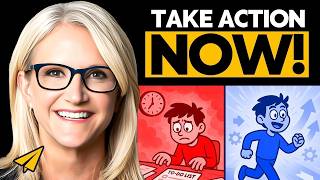
Mel Robbins breaks down five concepts for personal success, including her 5-Second Rule to override hesitation. She explains that fear and excitement feel identical in your body, happiness is 60% under your control, and waking early to tackle priorities puts your brain in a conscious, steerable state.
Chapters
Drive is the mode where you're in charge of your thoughts.
There's a super tight connection between happiness and the ability to live in the present moment.
Whenever you start feeling in your life like, "Oh my gosh, is this all there is?" Huge red flag number one. You know, I've heard a lot of experts say that fear isn't real.
That is such a bunch of baloney. Fear is so real.
How scared are you?
Less.
She'll be speaking at the next conference, you watch.
Hello, Believe Nation. I'm Evan Carmichael. My one word is believe, and I believe that entrepreneurs are going to solve all of the world's major problems. So to help you on your journey today, we're gonna learn from TV host, author, and speaker Mel Robbins, and my take on her Top 10 Rules for Success Volume 2. Rule number 1 is my personal favorite, and I'd love to know which one you guys like the best. And as always, as you're listening, if something really resonates with you, if there's a message that really holds true to you, Please leave it down in the comments below and put it in quotes so that other people can be inspired. And when you write it down, it's much more likely to stick with yourself as well. Enjoy.
Drive. That's this puppy right here. This is what you want. This is your prefrontal cortex. Drive is the mode where you're in charge of your thoughts. Okay, it's where you are fully awake, you are present, and you are driving your thoughts and actions. When you're doing that, your prefrontal cortex is active. The prefrontal cortex is the part of the brain that you need in order to learn new behavior, in order to do something difficult, in order to do something uncertain, in order to do strategic thinking. So I'm gonna give you an example. So I'm a righty. If I were to try to write with my left hand, like you, Louis is gonna torture me and tie my hand behind my back and make me like do this. I could do it. It would look like I was writing with my foot. And if Louis came up to me and said, "Hey, Mel, you want some Bulletproof Coffee?" I'd be like, "Louis, I'm trying to concentrate. I can't do this." My prefrontal cortex would be el fuego because it is firing on all cylinders to communicate to my hand new behavior. The thing that's cool about that is that you can use a simple trick. The moment you feel yourself hesitate, the moment you've got one of those moments where you know that you need to— this is that moment that Lewis talks to you about where you gotta step outside of your comfort zone and you've gotta lean into your passion and you've gotta really take some risks and you gotta feel the fear and you gotta do it anyway. That's the moment where you just woke up and now you got a decision to make. Are you gonna drift back into the habits or are you going to awaken your prefrontal cortex and drive forward and focus and do something new? Get up 30 minutes earlier than you normally do and push yourself to work on the most important priorities first. This isn't just me. Research shows that your most productive hours are the first 2 to 3 hours after you wake up and get ready. This means that for peak productivity, you've gotta do whatever you can do to make sure the most important work to you gets done first during that window of time.
If you're living in the past, you're gonna be depressed because you are rehashing things that happened to you that are not gonna happen again. If you're living in the future, you're gonna be anxious because you are anticipating what's coming, or you're wishing for things that aren't happening yet. Being in the present is where the gold is. Being in the present moment is where you will have the greatest control, where you will feel the most at ease, and where happiness flourishes. There's a super tight connection between happiness and the ability to live in the present moment. A lot of people believe that happiness is tied to the things that happen to you.
Not so at all.
In fact, there is a professor of positive psychology. He's one of the grandfathers of the movement. He teaches at the University of Pennsylvania. His name is Martin Seligman, and he studied happiness for decades. Now, one of the things that we've talked about a lot is that 40% of your happiness levels are preset by genetics. 60% you are in complete control of. And one of the things that this professor has, has discovered is that it doesn't matter what's happened to you. In fact, some of the people that have had the worst the worst things happen to them, like people that have survived the Holocaust are actually the happiest and most grateful people in the world. Happiness comes down to this right up here. Comes down to your thoughts, comes down to your mindset, it comes down to your attitude. And you are 100% control of what you're thinking. You may not be in control of how you feel in the moment, but you can always, always, always, always be in control of what you think. And that will change how you're feeling. One of the most powerful things that you can do in terms of think, and this gets back to Strick's question, is how do you be present? Being present is literally nothing more than the skill of having your thoughts be in this moment, not in the past, not in the future, but right here. The way that you teach yourself how to do that is that the moment that you catch yourself being distracted, the moment you catch yourself starting to worry, the moment you catch yourself drifting to the future or drifting to the past, that's a moment of tremendous power because you basically just woke up. You basically just now notice that you're not here in this particular moment. So use that wake-up call, 5, 4, 3, 2, 1, and ground yourself in this moment. The best way to ground yourself in the moment is to look for something in this particular moment that you can savor. Now I'm using the word savor on purpose because it's the word that psychologists use to describe what happens when you find something in this moment right now, right here, right now, to focus on and to appreciate. It could be literally the questions. These are, these printed out questions from people on social media. And if I were to stop and look at these and savor them, what I would feel in this moment is a tremendous amount of gratitude because people are taking the time to write, and that makes me feel incredibly grateful. And it also makes me very happy because it means that, that the folks that are writing are taking control of their lives and seeking out the information that they need. Another form of savoring that we can all relate to is eating. As you're eating, instead of drifting to the future and thinking about all the things that you need to do, or hanging out in the past and rehashing everything that's happened during the day, be in this moment, in this meal. Slow down. Think about the food that you're eating. Think about the people that you're sitting with and how you feel about them. And if you want to take it up a notch, actually acknowledge them. Hey, this food tastes amazing. Thank you for cooking. Or I'm so glad to see you and that we get the time to have this meal together. Those small, simple acts of savoring are how you expand your happiness inside the present moment. So how do you be more present?
Simple.
The moment that you catch yourself in the future, in the past, worrying, whatever, refocus yourself right here, right now, and then find something right here, right now that you can savor. And when you do that, you're not only gonna be present, you're gonna feel more grateful, and you're gonna feel a little boost of happiness.
Pick the two things that are the most important things that you could focus on, that are priorities for you, that will advance your long-term goals. So just pick 2 priorities a day. Whenever you have some spare time or you've got some wiggle room in your schedule, that's when you force yourself to sit down and work on those 2 priorities for the day. Because here's the truth about a to-do list: eventually that crap will get done. And typically what we do all day long is we're usually putting out fires, we're responding to emails, we're sitting in meetings that other people have called, and our days get filled doing things for other people. So what I want you to do is I want you to start thinking about every single day, what are 2 things that are priorities for you, and then find time whenever you can, even if it's just 10 minutes, to sit down and work on them.
I want you to start seeing something bigger. I know you're all successful. I'm talking about something really big for your life. And in order to do that, you have to answer this question: What do you really want? Now, I'm not talking about something small. I'm not talking about a little haiku. I'm not talking about renovating your kitchen. I'm not talking about signing on 10 new customers this month. I'm talking about what you really want. You know, 3 years ago, I was a lawyer and a business business coach, working with private clients and big corporations all over the country, and I came to a seminar just like this one, a big leadership seminar, and I went there with my husband. We're both business owners, and I went because I wanted to be more successful, and I went because I wanted to make even more money than I already did, and I was sitting exactly where you are. In fact, I was sitting about, I don't know, 15 rows back, right where that woman with her hand on her thing like, "Yeah." You? Yeah, she's like, "Hi!"— was sitting, and I was taking notes, and I'm like, "Okay, I'm here to make more money." And then all of a sudden, she walked on stage. That is Martha Beck. She writes a column for Oprah Winfrey. She travels around the country speaking. She's a best-selling author. And when she walked on stage, I literally stopped listening.
Please keep listening to me right now.
And it hit me. I said, "I want to be doing that. I'm ready for a bigger stage." Like, that's it. And what's so interesting about when you answer that question is that you don't answer it up here. You answer it here. That's how you see something bigger for yourself. You know, you guys are really cute because everybody's like, I don't see it. I don't see anything for myself right now. Now I'm just confused. I thought I knew what I wanted. You know, and now, Mel, I'm not really sure. And right now the economy is so bad. I mean, it's so bad that even if you're successful— I know sometimes I feel embarrassed talking about my success around some of my friends because I know that they're really struggling. And I get calls every day into the radio show people saying, "Oh, I've got this great idea, but I just don't know if it's the right time." And you know what I say to them? I say, "Yeah, you know, you're right. The recession, it's huge, you should wait. Those dreams, yeah, put them on hold. That's right. You should stay in that job you can't stand just a little bit longer. You've got college bills to pay. I mean, you know, what you're doing, it's fine. You're busy, right? That guy you're dating, he's good enough for you." But for the people in this room, baloney. You know— that's right. You know exactly what you want, and the only thing that you need to do is to admit it. Now this may sound weird because I know most of you came in here because you're like, "I know what I want. I'm here at Success to try to figure it out." I'm talking about something bigger, much bigger. I'll admit to you what it is that I'm up to, and the truth is, it's embarrassing. Because when you lock on to something way bigger than where you're at, it is downright embarrassing to tell people, because you're not there yet. But I mean, at this rate, I've already admitted to you that I stalked Martha Beck, and that I brought a haiku to the best, you know, lit agent in the country, so I got nothing I've got nothing to lose at this point. So this is what I want. Well, not him. I'm married. I want what he's got. I want 600 radio stations. I want 2 million listeners. And I could certainly deal with the $400 million salary. In fact, if I got it, I'd renovate everybody's kitchen. And, you know, the thing is, though, that's so interesting about this is that I didn't pick him. I mean, I'm not looking to become a cigar-smoking conservative political guy that, like, stirs the pot and makes everybody all mad. I'm the liberal lifestyle gal that's trying to help people out. But what I want to do is I want to use radio to entertain people and help them achieve their dreams. And when I really think about it, he's the one that's in the front. I want to not only reach what he's doing, I want to surpass him. I mean, do you think I like it when my friends come over to my office in Boston at my house and they're like, "What is that guy doing on your board?" No, it's embarrassing. When you admit the 'Cause it's a big thing that you're up to. It's embarrassing. I have 40 stations. He's got 600. There's a big gap. So admitting where you wanna get to is embarrassing, but you gotta do it.
Mel Robbins, your radio show Make It Happen helps people go for success. You actually say there are 3 red flags we should look for that will actually tell us it's time to change. Big ones.
Whenever you start feeling in your life like, oh my gosh, is this all there is? Huge red flag number 1. Number 2, when you spend your energy being jealous or having the grass is greener over there, another big wake-up call for you that you're ready for a change. And then the other final red flag is if you're spending your life waiting to be happy. I'll be happy when— I'll be happy when I get married, I'll be happy when I change my job, I'll be happy when I launch a business. It's time to change now, 'cause that moment's not coming unless you make it come.
But how do I know that I'm maybe just not living in a fantasy land that I'm never gonna— no matter where I am, the grass is always greener concept, that I'll always say this could be better and I might be making change for change's sake, but it might not be really what I need.
Baloney. If you're still saying that to yourself over and over and over again and you're complaining, it's— what you're really good at is ignoring your gut. And so it's time to start tuning into your gut and making some changes.
Okay, so if people see these signs, why don't they make changes then? I mean, what you just described is very depressing.
I can tell you, Evan, I can tell you why. The reason The reason why they don't make changes is because what happens is you say, okay, I wanna do X. And then immediately what you see next are all the obstacles. And so you're actually smart, you're not necessarily afraid, you're smart because you think, how the hell am I gonna go from being a lawyer to a carpenter when I have a mortgage to pay? I've got tuition bills to go, my wife is gonna kill me if I make this kind of change. And so you get stuck because you see obstacles and then you never do anything.
Those are very real obstacles. Those are. So how do I kind of get past those obstacles? Very easy. Let's say I recognize the warning signals. Yeah. Okay. Time for change. Danger Will Robinson. Yeah. This is not the right path. But it does seem Herculean, the hurdles I have to go over.
Of course. Don't quit your job. That's number one. Second thing is, I think most change in life is not about putting on a big cape and jumping off a cliff or out of an airplane. It's more like leaning into something. So if you find yourself daydreaming about something wishing that you could change your life, start investigating, start having conversations about it, start leaning into change, right?
You know, I've heard a lot of experts say that fear isn't real. That is such a bunch of baloney. Fear is so real. In fact, there are probably things that you're afraid of doing right now in your life, in your relationships, at work. And the fact that you're afraid, that's robbing you of all of the experiences that you want to have in your life. I mean, if you're afraid to fly, that's going to limit your ability to travel and see the world or go visit friends. If you're afraid of public speaking, that's going to really limit your ability to express yourself and share your ideas. If you're afraid of talking to your boss or asking for a raise, That directly impacts how much money you make. Or what if you are dreaming of starting a business, or you've already started a new business, but you're afraid to talk to people, and you're afraid to share your business with people? I mean, fear is something that stops us all. And that's why I'm here to talk to you, because it doesn't have to. Fear is real, but I am gonna share a secret weapon that I have used for years to beat every single fear that used to stop me. Now, first, before we get into the secret weapon, I just want to cover a few facts about fear— what it is, what it isn't, and some things that you may not know about fear. So, first thing, fear is a physical state in your body that is exactly the same as excitement. Let me say that again. Fear and excitement are the exact same physical state. Your heart races. You might sweat a little bit. You might feel tightening in your chest. You might feel a pit in your stomach. Uh, you have a surge of cortisol. It's basically the way that your body goes into a hyper-aware state because it's readying for action. Now, what's the difference between fear and excitement? Really simple. The only difference between fear and excitement is what your brain is doing as your body is all agitated. If you're excited, your brain's going, "Oh wow, this is going to be so cool to ride this roller coaster." If you're afraid, your brain's going, "Oh no way, there's no way I'm doing that. This is dangerous. Get out of there. Don't do that." it's saying something different. So what's critical about understanding this is that we're gonna use the fact that your mind is either working for you for excitement or against you with fear to your advantage. And I'll tell you about it in just a minute, how you're gonna do that. Second thing I want you to understand is that you may have heard the advice, feel the fear and do it anyway. You may have heard the advice, oh, just try to calm down. Think positive thoughts. It doesn't work, does it? And there's a reason why it doesn't work. So let's go back to fact number 1. When you're afraid, your body's in a state of arousal and agitation, and your heart is racing, and you're all like amped up, and you're hyper-aware of what's going on, and you're freaking out a little bit. What is it like when you're calm?
Ah.
You just kind of chill, right? You got like this low— arousal state. Very, very difficult to go from a state of agitation and being all jacked up and excited and weirded out, ugh, to a, ah, kind of state. It doesn't work. It's like trying to stop a train by throwing a boulder on the tracks. It's gonna make the train jump off the tracks. It's gonna cause a disaster. In fact, they've proven in research that when you try to ignore your fears, it actually makes them worse. And they've also proven in research that positive thinking alone also can make your fears work— worse. So what do you do? What do you do when you're about to go talk to your boss and you feel afraid? What do you do when you have to get on a plane and you're actually terrified of flying? What do you do if you got to give a presentation and you are afraid of public speaking? Here's what you're going to do. You're going to use a strategy, the same one that I use, that has helped me beat every single fear and turned me into somebody that is terrific when it comes to a high-stress situation. This is how you do it. You're going to use my 5 Second Rule in combination with what I call an anchor thought, and that is going to reframe what your mind is doing so that your mind goes from feeling agitation and making you afraid to reframing it from agitation to excitement. It works like magic. Now, I have used this technique for years, literally for years, and one of the ways that I want to introduce you to it is I want to take you backstage. I want to take you backstage to a speech that I delivered this year, and what you're going to see is you're going to see me behind, you know, the major set. I'm about to walk out. You can kind of hear the crowd roaring, my introductory video is playing, my body is in a state of arousal. I am literally— my heart is racing, my arms are sweating. Like, it's like, you're gonna see this, I'm gonna tell you about it, and you're gonna watch me use this same technique I'm gonna teach you to reframe my nerves into excitement. Check this out. All right, I'm about to go on stage. There are 7,000 people out there, and it's so exciting because because what they don't know is they're about to learn the 5 Second Rule, and their lives will never be the same again. Now, I gotta tell you, my heart is racing, my armpits are sweating. I have the exact same physiological feeling as when I'm afraid, but I'm not afraid. I'm excited. Excitement and fear is the exact same thing in your body. It's just what your brain calls it. Here's a trick that's proven. Proven by science that I use every time I speak. When I start to sweat, when I start to have butterflies, when I start to have my heart race, I say, "I'm excited. I'm excited to get out there. I'm excited to talk to these people. I'm excited to share The 5 Second Rule." And what that does is it sends a message to my brain that tells my brain why my body's all agitated and excited, and that way I don't feel afraid. Remember, excitement and fear, exact same thing in your body. The only difference is what your brain calls it.
That's why you want those orders.
Go get them.
Now I want to give you one more example just to make sure that you really get how you can use this. So a lot of you have written to me about your fear of flying, and I can really relate to that fear because I used to have the exact same fear. But I used this same strategy to conquer it. Here's how you're going to do it. So first things first, if you've got to do something that really makes you nervous or that you're afraid to do, before you're about to do it, come up with an anchor thought. What's an anchor thought? Well, an anchor thought is something that's going to anchor you so that you don't escalate any situation into a full-blown panic attack or into a situation where you screw things up. It's a way for you to anchor yourself so you maintain control over what you're thinking and how you behave. So here's an example with flying. It's important when you're creating an anchor thought to pick something that is in the proper context of what you're afraid to do. So for flying, pick an anchor thought that has to do with the trip that you're taking. So if I'm boarding a plane to fly back home to Michigan, an anchor thought might be a picture in my mind of my mom and I walking on the shores of Lake Michigan where I grew up. That's a thought that makes me happy. It makes me excited. And it's also related to the trip that I'm taking. If you have a conversation that you need to have with your boss, pick an anchor thought about how you feel after having that conversation. Maybe it's you picking up the phone and calling somebody that you, you love and saying, oh my gosh, it went so well. or, you know, you walking out of the meeting and feeling like, "Yeah, I survived that conversation. I feel pretty good about myself." So now that you have your anchor thought, you're ready to beat the fear. If you took money off the table, if you didn't give a shit what anybody else thought, what's the thing you would love to be doing with your life? Seriously.
Do you dream of being a professional photographer?
Do you want to open your own restaurant? You always thought about traveling the world? Traveling the world and entertaining kids with your juggling skills. I don't know, it's your life. You get to choose what you want to do. Be honest with yourself. What is it that you would want to do with your life if you didn't have to pay the bills doing it? Another thing you can ask yourself: who do you find yourself sort of envious of? You know, like you look at their life and you just think, gosh, how awesome that they get to do that. Once you have that answer for yourself, you've gotten really honest, you've pushed the bullshit aside, and you've really asked it for yourself and answered the question honestly, all you gotta do is explore it. That's it. Just find one thing that you can do to enrich and expand your knowledge about it. Find one course online, Google the topic, stalk people that are pursuing this line of work. That's how you start. Start to do it one step at a time. So start with answering the question, what do you really want, with a massive dose of honesty. Google the topic and find one thing that you can do, just one. Push yourself and start to explore it. If you were to wake up and do that every single day, spend 10 minutes a day, you would be startled, astonished by what your life looks like in a matter of a year or two.
What is the biggest obstacle that we face? Thiago, it's simple. It's self-doubt. It's not fear. It's not lack of money. It's not lack of supporters. It's the fact that deep down inside you will doubt yourself at critical moments. And here's the problem with self-doubt. Self-doubt doesn't have to stop you. The problem with self-doubt is is that the second that you feel a little doubtful, the second that you start to question yourself, you physically hesitate. That hesitation has become a habit that stops you because the moment you hesitate, it wakes up your brain, your brain starts thinking, and then you hold yourself back. You guys know I talk about the 5-second rule incessantly. It's the title of the new book that I'm writing that's coming out in 2017. The 5 Second Rule is a tool that battles self-doubt because in those moments, those, those tiny micro moments when you're faced with, should I do this or should I not? Should I speak in a meeting? Should I hold back my ideas? Should I have this tough conversation or should I wait till later? The second you doubt the option of moving forward, You hesitate, then you think, then you hold back. That's how it happens every single time. That's how you sabotage your success. That's how you rob yourself of joy. That habit of hesitating the moment that you feel doubt is killing your dreams. The single biggest obstacle in life, Tiago, is the doubt that you feel, and the single biggest mistake that you're making is that you hesitate when you feel it. If you start to use the 5-second rule in those moments to just physically move forward within 5 seconds of feeling that doubt, you'll win.
I need a volunteer coming up. Hi, how scared are you right now?
Um, about a 12 or 15 or 30.
On a scale of 10?
Yes, good, you're perfect. Okay, so I have an envelope. You can either open this up and read what it says, but you have to do it. Oh no.
How afraid are you for her?
Or you can give it to somebody else. Now, what are you managing right now?
My heart rate is just like out there.
Yeah, what do you want to do?
Life's about change, so I'll open it. Okay, come up on stage with Mel.
Give her a standing ovation, she deserves it.
So again, same rules: open it up, read it to the audience, and then do what it says. How scared are you?
I'm a little nervous because I'm not I'm not sure what you're gonna want me to do.
I'm shy. Really? That's baloney.
Tell everyone in the audience the most embarrassing thing that's ever happened to you.
Alright, you ready for another one?
Sure. How scared are you?
Less. She'll be speaking at the next conference, you watch.
Yes, I will! Congrats, life, that's just paying for your registration. Registration and 3-night hotel stay at the Elite Academy in Orlando. I'm not kidding. Oh my word! Ah! It's overwhelming joy. Um, just the peace, I think, that can come with really choosing to change.
Thank you guys so much for watching. I really hope you enjoyed this video. If there's someone you'd like me to profile in the next top 10, check out the link in the description and go and cast your vote. I'd also love to know what was your favorite message from this video? What did you learn from this video that you're going to immediately apply somehow in your life or in your business? Please leave it down in the comments below. I'm really curious to find out. I also want to give a quick shout out to Jelena Ostrovska. Thank you so much for picking up a copy of my book, Your One Word, and doing that awesome review and interview. You on your YouTube channel talking about it. I really appreciate the support and I'm so glad that you enjoyed the book. Evan Carmichael, also the author of the book Your One Word that has been published just a couple of months ago. So thank you guys again for watching. I believe in you. I hope you continue to believe in yourself and whatever your one word is. Much love. I'll see you soon.
More from Evan


How the Biggest Mistake in History Created A Trillion-Dollar Empire | Sergey Brin



9 Machiavelli Principles That Force People To Respect You | Machiavellian Philosophy



The First 10 Words That Instantly Ruin A Sales Conversation | Vanessa Van Edwards

The Top 1% Mindset Behind The First $5 Trillion Company | Jensen Huang (Nvidia)

