STOP Letting Fear Talk | UNLOCK Confidence That Lasts
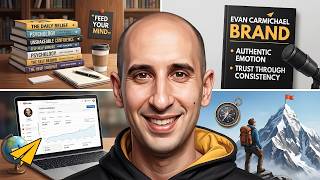
Evan Carmichael shares ten rules for building lasting confidence, from curating what you consume daily to the 1% improvement habit. He argues that fear loses when you deliberately feed your mind belief-building content, stay in the right communities, and take disciplined action.
Chapters
When you first started your YouTube journey, you had a lot of negative self-talk towards yourself. How did you overcome that? The biggest thing that helped me, Brian, was honestly the videos that I was profiling people on my own channel. I think your environment has been designed perfectly to keep you where you are, and if you're not happy where you are, then you need to change something in your environment. And for me, it was what I was feeding into my head. Not that I was feeding tons of negativity into my head every day, but I wasn't feeding the opposite. I wasn't feeding belief. That's still why I make my channel today, is I'm trying be a force for good for the world. And so the more that I had Steve Jobs in my ear and Elon Musk in my ear and all these people in my ear, the more I wanted to do bigger things and believed in myself that it was possible to go off and do. Hey, it's Evan Carmichael, and I watch these videos every day because I need them for motivation. Being around successful entrepreneurs every morning helps me believe that I can do great things too. It's like your morning coffee, but for your goals, kickstarting your day with a blast of positivity. So here is a challenge for you. Try watching one video every morning for the next 30 days and let's find out together if they help you do great things too. If you're in, leave a hashtag #believe in the comments below so I can celebrate with you. So today, let's learn from me and my team's take on my top 10 rules of success. Enjoy. If you love Brian, you listen to this and you love Brian and you love how he thinks. And you love his style and you love the questions he asks, you love the guests that he brings on, and you leave an interview that Brian's done feeling more hopeful, more positive, more ready to take on the world. Awesome. Subscribe to the channel and go watch the other 14 episodes that he's done before this, because every time that you're around Brian, a little bit of that is going to rub off into you. And so, you know, you didn't get to pick your parents, you didn't get to pick your community. You didn't get to pick a lot of the things that were kind of forced on you when you were younger. But now you have a choice. You have the internet. You may never meet Brian ever, but he can still rub off on you. I may never meet you, viewer. I love you. I may never meet you, but my work can rub off on you. And so now you get to pick who you allow into your head on a regular basis. And so if you get to pick, well, who are you picking? Are you picking news that makes you feel stressed out and worried and overwhelmed? Are you picking people who can educate you and help you get out of the hole that you're in. And so that's why I love coming on shows like yours. It's why I create content myself. It's like I want to be a force for good. And maybe they learn through my story. Maybe they learn through yours, Brian, or some of the guests that you bring on. We now get to choose. And if you're choosing belief, hope, positivity every single day through what you're consuming, you will become a more hopeful, more optimistic, more self-belief kind of person. Rule number 2 is define your brand. Brand is really an emotion. What do I feel when I'm around Terry Wade Thompson? And the more you can make it easy for people to explain the brand and put a, you know, a pulse on what that is, the easier it is for people to spread the message for you. The issue of changing it every year is that then You're not the same, I mean, you're the same Terry Lee Thompson, but you're making the message different every time for people to be able to spread the message for you. So, the Believe guy, people know me as the Believe guy. Every day I get DMs of people taking a picture of Believe somewhere, a Believe sign, a Believe postcard, Believe something in the thrift store. Grant Cardone taking a picture of his kids wearing Believe pajamas. That's what people know me for. If I said, hey, 2022, I'm not— I mean, I still love Believe, but we're about whatever else, you know, I'm about freedom, then I never build enough of a brand because I'm the freedom guy for 12 months and then I'm something else for another 12 months and nothing ever sticks. So it's okay to have different themes for the year, but like, what do you want to be known for? Is it unbreakable? Is it change? Is it something else? And that you can see yourself in 5 years and 7 years and 10 years still deeply caring about that thing so that you actually allow for the momentum to build. Rule number 3 is be a good listener. The more you listen— like, I had an answer to you halfway through you talking. I didn't interrupt you because if you feel like you get to finish your question, you'll listen to my answer more. It's just more respectful. The more that I— if you were to come on a Monday and watch me coach Alex or whatever, who you met at Mastermind, yes, I won't let him finish a question and talk forever because like he knows that if I'm interrupting him, it's because I love him and I want him to win. Where other people, if you're interrupting them, they see it as you're rude and you're not listening, right? So the more I get to know somebody, the more they know that the foundation is love, then it allows you to be a lot harsher and interrupt more and go faster and push harder and tell them that, dude, this sucks. Like, you should have known better. You shouldn't be doing this, and you should not be making these mistakes anymore. We've gone over this 100 times. You're better than this. That you can't have with somebody who doesn't know you very well, right? So Alex is like a brother, he's like a kid or whatever, like he's family. So he likes that now because it's helping him grow. But somebody brand new who you don't have a lot of context on, you can't just jump there. So if you let them finish, then they're much more likely to listen. And so what do I care about? Do I care about me saying what I'm saying, or do I care about you hearing what I'm saying? I care about you hearing what I'm saying. I don't need to talk, it doesn't do me any good. I want you to, or whoever I'm talking to, to take the thing I'm saying and go do something with. But if I interrupt you, then chances are you're not gonna then listen to what I'm saying because you're saying, this guy just interrupted me, I wasn't even done, he doesn't even understand what I'm talking about. Like you're thinking that, so then you're not listening to my answer, and then you're not getting the actual help. Rule number 4 is always be positive. How do we believe in ourselves when just absolutely nothing is working? When we're seeing no results for what we're doing, how do we still believe in ourselves in those moments? I never saw it as getting no results. Uh, if 50 people watched a video, I'd be like, 50 people watched this video. You know, I think we have— we might look to other people and say, well, look at what— insert, you know, look at what Joe Rogan is doing. And then you feel like a total failure, you know, with your podcast because Joe Rogan is out there crushing it. But if you flipped it and said, who am I serving? Who am I helping? That's just what I defaulted to. And if you think about it, you know, if you went to go give a speech at a library or an event or something and there were 50 people in the room, You'd be excited. It's like 50 people are here to hear me say something. This is pretty wild. But if 50 people see your video, it's like a total failure. You suck. I'm terrible at interviews or videos. I should quit. And so I always just focused on who I was serving instead of who I wasn't, because the who I wasn't serving game is never-ending. There's always somebody better than you. There's always somebody further ahead. And you can use that as aspirational. The fact that Joe Rogan exists and he can have a billion-dollar podcast, that's great. Like that can serve as inspiration. but you shouldn't use it as a kickdown to say, well, I suck and I'm never going to make it. Look at the people who I am serving. So that's what I always just, and even now, still default to is that whoever's watching this, like this, this interview right here, I don't know how many people are going to see it, but for somebody, I'm going in thinking that this interview for somebody is going to be a life-changing moment for them. That's my intention. Whether we create it or not, I don't know, but that's the intention going in. And if you showed up with that intention, you will start to have the impact that you're looking for. Also, to make sure you're actually taking action after watching this video, I've designed a special free worksheet just for this video. The worksheet will highlight our favorite lessons from the video that will inspire you to remember what you learned today and actually apply them. The worksheet will also give you space to write down what your key takeaways are and your specific plan of action to make sure you're getting results. If you want the worksheet designed specifically for this video, absolutely for free, There's a link in the description below. Go click on it and start building the momentum in your life and your business. I'll see you there. Rule number 5 is be in the right communities. How have you seen challenges done and what is, what is like the most interesting challenge that you've participated in? I think the biggest thing about challenges is it has to feel like it's a community thing. Which is why it's not just so— the Movemaker Challenge is 1 solo video, 3 collab videos, and 1 lead magnet. The most important part to keep momentum going is the, the 3 collaborations. The thing that will help the business grow the most is probably the lead magnet. Yeah, uh, it's to force people into action, but if it's just something that people are doing by themselves they're probably not going to do it. And so forcing community and forcing connection is the thing that makes the challenges go. You may not feel like making a video on impact today, but because IG Live with Angela agreed to go live with you, like, okay, well, Angela's going to be there, so I'm going to be there, and let's do it together. And then, and then it's great. And then all of a sudden you have, you have content that you didn't have before. And I think a lot of the people The challenges were born out of two things. One, I want people to have more momentum. I'm talking and giving strategies around content. We're giving you the template. Here's the thought leadership template. Connect to each other. We're saying it, but still some people aren't doing it. How can I force people to do it? It's like, if you just started, right? You just got going, you'll start to get more momentum. That was one, and two, I still really believe there's so many amazing connections inside movement makers and inside any community that it can't just run through the leader, right? The fact that you and Bonnie met through my livestream and then started this whole business together, I think that's amazing. I think there's a lot more of those opportunities for people. So if you're gonna create your own community, it's great for you to get to know everybody and to help them and to coach them and do one-on-ones and to look at, I mean, I connected you guys together. On the livestream because I knew you and I knew Bonnie. And I forget what I said, but like, hey, you guys should, you should talk about something. Rule number 6 is believe in your abilities. You just believe every single day. Is that something that you learned from someone else or is that something you kind of created yourself? It came as a result of one, my parents would always tell me, I'm Evan Carmichael, I could do anything that I believe that I can. But then as I started studying successful people, And, you know, people listening, I guess, if you don't know my YouTube channel, I profile all sorts of different successful people and what you can learn from their success. It was the number one thing that just, it just kept coming up over and over and over again. And I started only profiling entrepreneurs and then we eventually evolved to athletes and singers and inventors and scientists. And no matter what, the people who have had the most success in any field are the ones who believed in their abilities to make something happen when it didn't seem possible, where nobody had done this before, where everybody thought they were crazy, that they just shouldn't try, or they don't have the right resources or skills or family or education, or they're born in the wrong country or have the wrong skin color or whatever. And they just believe that they could do it. And more often than not, they end up doing it. Rule number 7 is develop curiosity. I am genuinely curious and I want, I want people to win. Like, why are you asking me this question? I want you to however that shows up in your life in terms of not listening to people, I want you to, I want you to be able to get the answers you're looking for. And I can hold on to it because I'm curious about your situation. I'm thinking, why is he asking me this question? How does it relate to his life beyond just like, I forgot we're making you feel pressing record, right? It's just about helping you. So I'm genuinely curious about people and trying to figure out how I can help them. And so the other part about holding on to a conversation or holding on to listen is sometimes they'll say something, or even the way they say something tells you about that person. It can help me even if I have the answer. Here's what often happens. I'll have the answer, but I don't know how to say it yet, and I want to deliver in a way that you will hear best. Yeah. And so the more you talk, the more you're giving me information about you. You, your, your tonality, your history, your stories, your vocabulary, all of it is helping me help you. So how somebody shows up to something is how they often show up to anything. And so the more someone's talking, the more it gives me the tools to be able to help them, because I can have the answer, but if I don't deliver it in the right package, it doesn't get received. So the answer could be curiosity, but the way that I package it will depend on who I'm talking to. If I treat everybody like they're me, then it won't happen, or very few people will be able to listen. But if I can, it's why do I, why did I put on music that you like when I have a playlist of like 700 videos? Why put on the old school rap and a couple Afro beats that you may not have heard of, but it's like still within, I could be putting on Croatian music or Japanese music, or not that you wouldn't appreciate it, but I would, I'd rather enter— I try to enter your world than try to force you to enter mine. Because if I can enter your world, I can have a bigger impact versus forcing you to listen to what I want to listen to or come into my world. Rule number 8 is build your personal brand. Personal brand is everything, but you already have a brand. Like anybody watching, you have a brand already. A brand is an emotion. When people are talking about you, what are they saying? The, the main way that most of these businesses grow is word of mouth referrals, right? I mean, maybe you got some start with advertising or whatever, but it's usually word of mouth. Somebody says, hey, you should hire Rob to do this, you should hire Dennis to do this, whatever. So what are they saying about you? That's your brand. Whether you're affordable, whether you are pleasant to work with, whether you take time to listen, whether you're understanding, whether, like, whatever it is, that you're already doing that is, that people love talking about you, that is now just brought into the content. So you don't have to create this new persona of somebody who isn't you. You already have a brand. People are already saying great things. So if dependability is the main thing, like, yes, I am Mr. Dependable, cool. Now, once you're making content, talk about dependability, talk about how important that is to you. Talk about examples of client stories where you were the dependable one, right? So it's more, you know, the easier we can tie it into who you already are as opposed to giving you all sorts of new things that you have to memorize and, and, you know, be fake about. It's just easier to get the ball rolling. So personal brand is super important, but it's not a content thing. You already have a personal brand. What the other contractors around you are saying about you really matters. What your clients say about you really matters. What your Google reviews say about you really matters. All those scores really matter. And whatever words are coming up in those conversations, that already is your personal brand. So now it's just amplifying that a little bit more through content so I can feel that when I see your videos and it makes me want to hire you. Rule number 9 is get 1% better every day. I just need to be 1% better today. Oh, I just need to make one more call or do one more rep or do one more push-up or read one more page. Like most people, that's not their default mindset. And most people in your life, that's not what you're being pushed to do or told to do. But if you keep hanging out with Zach and virtually, right, I mean, Zach, as far as I know, is not taking on interns or you can go live with him for a month or something, but you can learn from him virtually. And if nobody else is telling you about the 1% concept, but every time you listen to Zach and there it is again and there it is again, it will force you to start to become that person. So most of the people in our lives are not pushing us forward in a loving way. Hopefully we have people who love us, but they're giving us an agenda of what they want us to do with our lives. And, you know, you want to limit access to the people who make you feel worse, who you feel drained about, and then start filling that void with the people who make you feel better. So, you know, if you want more belief, come follow me. You want more 1% better every day, go follow Zach. And when you find those people, surround yourself with them. And rule number 10, the last one before some very special bonus clips, is lean in harder. So particularly this younger generation. So at this moment in time, people that are maybe in their late teens, early 20s, what is the biggest misconception that they have about life? I think, one, that they've got a lot right. You know, for all like the people crapping on, I think they've got— I think they've got a lot right. If anything, I would say like lean in harder. You know, like, I think a lot of the older generation is crapping on the younger. I mean, this is every older generation always craps on the younger generation saying they don't work as hard, they have no ethics and all of these things. But man, you could change the world. Like, it's never been more possible. I started my YouTube channel when I was 29. So I was just at the end of my 20s and getting it off the ground. You could change the world. So whatever I would say, like, stop listening— like, believe in the, in the whispers even more. When you're watching Brian's show or other content and then you don't see it in your family, you see your mom is doing something else and your dad is doing something else, like, your parents might as well been pilgrims. Like, they are from a different world, not even a different generation. It's like a different world. Your parents So like, if you're, if you're 19 years old and your parents are, you know, 45 years old or whatever you want to call it, man, the opportunities for your parents when they were 19 are vastly different compared to what you have right now. So I would say whatever is in your mind of what you want to do, lean in harder, like believe in yourself more. It's maybe the anti-message compared to what most people are pushing, but you could go and change the world. Hey, if you're present-minded, you're going to be a lot happier. You're going to be a lot more focused, right? If you're just thinking about what you should have done or what might happen to you, you're not actually able to be productive and get stuff out right now in the present. And so the, the job becomes, how do I stay present? And I think a lot of that is accomplished through meditation for most people. If you're, if you're in a state of stress thinking about the regret of the past or anxiety about the future, I think meditation can be incredibly helpful to help you get back to present. Even just focusing on your breath, breathe in, breathe out, even something as simple as that can help calm you down and get you back to the present moment, which then allows you to be able to be productive, solve the problem, be happy because you're being more present. So for me, that's Actually quite easy. I'm in the present a lot more than anywhere else, and I used to think it as a negative. A friend of mine used to make fun of me for having a bad memory. It's like, you have such a bad memory. It's like, and I later realized I don't have a bad memory. I, one, remember what's important to me, but two, I'm not living in the past. Like, I don't care about what happened. I'm looking at right now today. I don't know what day it is. I don't know what day it is. I don't know. I know it's 2022 when we're I'd have to think about what month it is. I don't know what I'm doing after recording this video. I don't know what I did yesterday. I don't know what I'm doing tomorrow, let alone once I press stop on this video. I am here with you. This is my entire attention, is making this video right now. That's it. This is the present moment for me. And what I've discovered is this is meditation. At least the, the portion of it where you're getting back to present moment. If that's one of the main benefits of meditation, then this is meditation for me. I'm only in the present moment right now, being here talking with you guys, and that's it. And I realize that most of my life is lived like that. Yes, I love planning for where I'm gonna go, but most of my time isn't spent in planning, it's in and executing and doing. And I have to look at my calendar to see what I'm doing tomorrow or what I'm doing. When somebody asks me on a Wednesday, what's your weekend going to look like? Weekend? I don't even know what I'm doing in the next hour, let alone what I'm doing this weekend. And when people ask me on a Monday, how was your weekend? Like, I don't know. That was, that was, that was yesterday. That was 2 days ago. I got stuff to do right now. I'm working on my life right now. And, and not just work, even just enjoying, even just life, even just me spending time with, with my wife or my son or on a trip. It's like, let's enjoy this moment we're at right now. And so if that's you, I would introduce the idea of, hey, that's a different perspective shift. Like, maybe you are meditating right now and you might be overjudging yourself, because if you're in the present That's one of the biggest benefits. I'm the kind of person who likes to write things down. I'm the kind of person who has— when I have an idea, whether it's 2 in the morning or, you know, 3 at night or whatever it is, when I have an idea, I want to write it down. I feel like unless I can get it out of my head— and now I tend to just send myself an email or write it in Evernote— until I get it out of my head, I'm unsettled. I feel like I'm going to forget the idea. And it's something that I've wrestled with, this message of You know, maybe I'm just not gonna write anything down and the best ideas that I have will just continue to come back and come back and come back, and those are the ones that I should run with. And if I look at how many times I actually look over that Evernote file, it's pretty slim. And I feel like I kind of do it anyway, where the best ideas come back to me over and over again and that's what I run with, but I haven't fully embraced it. Maybe it's out of fear of of losing a great idea. And every now and then when I look through the notes, something does come back and I end up running with it. And I fear that I may have forgot it if I didn't write it down and I could have missed a big chunk of a big project I'm working on. But maybe that's an irrational fear. I don't know. This is something that I want to play with more. I do know that when I was thinking about my one word of believe that's been the foundation for this channel and a lot of the work that I do, when I first thought about it, I felt like it was too big. I felt like it wasn't the right one for me. I felt like, I felt like it was hard to live up to. And the more I slept on it, the more time went on, the more, you know, I experimented with it, the more it felt right. And every passing day, that big idea just stuck with me more and more and more until I embraced it fully and it became the basis of this channel and my website and all the work that I do. So I think there's something there. I feel like I don't do I do a good enough job on it, and I wonder if it might be worth an experiment for a week to not write anything down and just trust that the big ideas will stay there. That's an interesting one. I'm gonna think on that. I'm not gonna write it down. I'm gonna think on that. Everything in your life will change when you realize that you do not want an easy life. Stop praying for easy. Stop praying for convenience. You don't want it because you don't want to photocopy your life every single day over and over and over and over again. You want variety, you want change, you want something different. But with that variety comes uncertainty, comes pain, comes challenges. And from that pain comes purpose. Ultimately, your purpose comes from your pain. And the more pain you go through, the more challenges you take on, the more you stretch yourself in your comfort zone, the more you're going to be able to reach down and help somebody come up to your level as well. You can only help people to the extent that you have been through something. So the next time you're going through some pain, tell yourself this is the best because it's your chance to show yourself and the world what you're made of and will define the impact that you will have. That negative voice inside your head that's telling you that you suck and you can't do it, that's not your voice. That's not actually your voice. That's not you telling yourself that you suck. That voice was planted there. That voice was put there by somebody else in your life, and probably early on growing up, telling you that you can't do something. You were not born— you didn't come out of the womb and say, "I suck. I can't do anything." No, you're playing, you're experimenting, you're finding joy, you're laughing, you're doing it. And then along the way, people tell you that you can't do it, that you should stop, that you should quit, that it's not going to work out, that you can't do it. And we've been so conditioned around that that we take it on and we think it's our voice. When you come up with an idea, right, just workshop this. You come up with an idea, it's like, oh, I'm gonna, I'm gonna go, I'm gonna write a book, I'm gonna start a YouTube channel, I'm gonna launch this business, I'm going to whatever. You come up with your bucket list, your dream life, your vision board. You come with a list of ideas, things that you think that you want to do, things that you feel confident that you'd love to create for yourself, right? Okay. What happens the next day? The next day, it's not even telling our friends. You know, I think we blame our friends and say, well, we tell our friends and they're going to be negative and they crap on our idea and so we don't do it. Well, before that happens, we crap on our own ideas, right? You look at that list the next day and say, I can't do that. Who, who, who was I yesterday? This crazy person that I used to be yesterday who thought I could do that. It's ourselves telling ourselves that we suck. But the problem is we've taken on that voice and we think that it's us. That's not your voice. That is not your voice telling you that you suck. That is somebody else's voice. That was planted in your head that has been conditioned to be there, that we're so used to being there that we have taken on as our voice. It has become your identity, but it was not your voice. It was put there. It was a seed that was planted that has been grown over time, and you need to rip that weed out. That is not your voice. You do not think that you suck. It's other people with low expectations who hate their own lives, who at some point went and tried something that did not work out for their life, and now nobody around them can have success because it makes them look and feel bad. And so they spend their time ripping other people down and apart. That's who planted that weed in your head. That might hit pretty hard. I hope it does, because when that happened, when— if you can actually digest that, what ends up happening is you think, oh, who— whose voice is that? Whose— whose voice is in my head? And that's great awareness, to know that it's not your voice, and then to identify whose voice it is. Who told you these things? Who made you feel this way growing up? And if you think about who that person is, if you can actually picture somebody— oh, that was Uncle Joe, or oh, that was my Oh, that was my, you know, the bully at school, whoever that person was. Now think about, okay, it's that person's voice, not you. That's already incredibly liberating. But then too, do you want to live that person's life? Like, think about that person. Probably they're not living a great life. They're not hitting their potential. They're not even happy with what they're doing. If somebody's spending their day tearing other people down, What kind of painful life does that person have to have when they go home? You don't want their life. If you don't want their life, then you definitely don't want their voice in your head anymore. Hopefully that creates an aha moment for you that starts to actually shift things because we've been so conditioned to listen to that voice that we don't recognize that we actually have a choice to rip it out and start to listen to our own voice. I use the Fitbit watch and it tracks my sleep and it gives me a score every day for how well I slept. And I've hit, I think, 89 out of 100 as my best sleep score. And what I would love to do is to improve my sleep score. One of the best things of having a wearable is you have something that you can track. So I want to find a way to consistently be in the 90s and have an excellent, amazing, world-class sleep. So on the, on the first day that I was tracking that I did not use earplugs, I got an 88 sleep score, which is pretty good already up there. Uh, when I moved to the— I don't have it anymore, I threw them away— but I had the kind of black just ones I think I showed earlier in this video. Uh, very standard, just kind of run-of-the-mill black earphone. They didn't do anything. I got an 80 sleep score, but they were barely in. It wasn't really pulling anything, um, any of the the audio out. Then I went to the hardcore ones, and these ones are amazing. These are the ones that I wore at the Tony Robbins event that I was right up against the speaker and it really pulled it out. So if you want a good earplug, whether for sleeping or not, the brand is called Heroz. Heroz, but with an A, so like Heroz. There's only one left in this pack. Extreme protection earplugs, 14 pairs, NRR33. I think that means something. These are amazing at knocking out the sound. So on the first day I got an 84. So nothing, no earplugs was 88. Black earplugs, kind of standard earplugs, got an 80. These earplugs went up to 84. So we're going in the right direction on the first night. On the second night though, it actually fell down to 73. What happened was I had this in and when I was sleeping, it caught on the side and it jammed further into my ear and it hurt and it woke me up. So I didn't have as good a sleep. And so I decided, you know, I'm not going to wear it. I'm not going to wear it the next day. And I haven't, I haven't gone back to it. So overall, I don't think earplugs are the solution for me. So I'm not gonna ongoing be using these. I think the main reason is I don't mind ambient noises. You know, if something, uh, something broke or something fell or there's a loud noise, a crash, a bang, I'm gonna wake up. But overall, I kind of like the ambient noises. It's kind of like, you know, a sleeping machine with the white noise. Or I used to fall asleep listening to sports radio at night. I like having a little bit of noise going on. So the earplugs are not helping me improve my sleep quality. I don't think they're hurting, except when it jams into my ear and it causes a lot of pain. So I don't think it's hurting, but I don't think helping me. What's the fastest way to learn a language? What's the fastest way to learn Japanese? Well, it's to go to Japan. Sure, you can read some books and you can hire a tutor, and the more intense it becomes, the more you're actually living it, the faster you're going to pick it up. So if you want to develop the mindset of the high achiever, if you want to become that person, the people that you look up to, the whoever of the world, like I want to be the next whoever, perfect, that person. The more you hang around with them, the more it's going to rub off on you how they think, because how they think, how they act, how they behave, how they see the world is very different than how you see it right now and how the people around you definitely see the world right now. So how do you do it? How do you start to become it? Well, I look at what I'm doing, and this was one of my biggest challenges when I was getting started and honestly still in. Like, I think the biggest problem in the world is a lack of belief. I'm trying to solve the world's biggest problem. People don't believe in themselves enough. I don't, you don't, Oprah doesn't. People don't believe in themselves enough for the next level. So how do you start to believe in yourself more? The thing that helped me the most was to have these successful people around me constantly. And so I want to share a few tactics that I think can really help you that has really helped me. As being the shy introverted kid who never wanted to be in front of a camera and was making $300 a month and quit on my business partner and thought life was over, right? To now here. And it's taken me 20 years to get here. So hopefully we can shorten that path for you if you actually follow some of the advice in this video. So step number 1, how do we create that environment of excellence? What you feed into your brain really, really, really matters. So figure out how you love to learn. For me, it's videos. I like to see things. I need to be visual. If that's you, then you need to have a way to have those videos coming into your life every day. It could be part of your morning routine. That's why I make this channel part of your morning routine. Subscribe to the channel every morning, every weekday. We got a new video out there for you to give you the shot of espresso to help you. But if it's not my channel, it's some other channel, one of my other channels, Subscribe to the channels that make you feel bold, powerful, unstoppable, give you hope, give you belief in yourself, and then watch that video every day or listen to that podcast every day or read that book every day. The trick is it can't be the same book or the one video because that one video on repeat is going to lose its effectiveness, right? You know it. You watch a video, gets you all fired up, and then you watch it again the next day and it's not as like, oh, what happened? I don't feel as good. And you watch it the next day and the feeling's gone. So you can't just read the same book over and over, watch the same video over and over and over again. The key is to find a consistent source. So if you love this channel or you love this video, I'm making other videos just like this that you can subscribe to. If you like an author, go find their other books or go find the people that inspire them so that you can read something every day. Every day. If you'd like a podcast, go find other podcasts like them so you have something every day. So you, you are manipulating what comes in your head with intention now, with intention. So you're not just scrolling through things like, I am going to watch one of these videos every day to slowly shift myself forward, because it'll happen. If you love Elon Musk and you watch Elon Musk every day, what will happen is Slowly, day by day, you will start to think like Elon Musk. It will happen. He will pull you forward. You will start to see the big difference in how he thinks versus how the people around you think versus how you think right now. And he will give you more courage and more boldness and more a sense of hope and purpose that you can do it too. You'll start to think more like him. Most people don't get what they want because you don't follow through enough. You just don't follow through. It's based out of insecurity. You start and stop, start and stop. You're afraid of hurting people's feelings. You're afraid of what they're gonna say about you. You're afraid they're gonna judge you. And we're afraid of having that L on our personal resume, so we stop. We stop and try to do something else where we're seeing more immediate results. But if it's your goal, if it's your dream, you have to follow through. One of my favorite stories is with Brendon Burchard. I went to speak at his event in Phoenix, and I knew of him, but I didn't know him at the time. It was his business partner that had me come out to his event and hired me to speak there. And that's where I met Brendon for the first time. And he asked me, hey, what are you working on? What can I help? What's next for you? And I said, I'm working on my book. And he said, I'd love to help. I'd love to give you some feedback on your book. Like, I am definitely down for that. Let's connect. And he asked me what my phone number was, and at the time I didn't have a phone. I didn't use a phone number. And I said, how about email? And he said, oh, I'm not really good on email, but if that's the only way, then let's do email. So we exchanged emails, and I didn't hear from him, so I followed up and I said, hey Brendan, thank you, you know, great event, love to talk about the book like you suggested and didn't hear back and followed up a couple weeks later and didn't hear back and followed up a couple weeks later and then he said, "Oh man, thank you, I'm super swamped right now, but let's either do come out to my place and we'll do a jam session or I've got this event coming up, maybe you can come be there." I said, "Yeah, I'm down for either, which one you want to do?" And didn't hear back and then wrote a couple more messages and didn't hear back and And here's what's really important. In my head, every time I sent another email, I was questioning myself. I was judging myself like, "Ooh, I don't want to bother him. Maybe I'm being too overwhelming. Maybe he doesn't actually want me to come out. Maybe I'm offending him. Maybe I'm not respecting him. Maybe I'm asking for too much." That's the thought in my head before every email. Where in reality, he's just a busy guy. He had a lot of stuff going on. He had a launch that was happening that I wasn't even aware of that he was planning behind the scenes. And so he is, he was, you know, not crazy stressed out, but he just has a lot on his plate that he's dealing with. And it's hard to tell ourselves that. It's easier to default to the insecurity of maybe you're bothering, maybe you're asking too much, maybe you're not worth worthy, maybe you should move on. The event that he talked about me coming to was coming up, and I still hadn't heard back whether he wanted me there or not. Or, you know, my book launch was coming up too, and I thought, I'm gonna send one more email, just one more email, that's it. I'm gonna send one more email and hopefully something happens. If not, then I'm done. And hopefully, you know, he doesn't think I'm a loser or whatever. And he wrote back an email and like, hey, sorry, man, again, I'm not super great on email. I've just been swamped planning all these things. Yeah, come on out. Come out to the event. Speak at the event too. And that was his big event that was, you know, $30,000 to $50,000 a year mastermind to be a part of that. Then I spoke on stage at the event. After I spoke, I met with him and Dean Graziosi backstage for an hour over lunch and planned my entire book strategy that then led to me getting invited to go to Brendon's house a couple days later and hang with him and Dean and Tom Bilyeu and Lewis Howes and Jay Shetty and Russell Brunson and all sorts of amazing humans who built giant businesses. All of that happened because I sent that one more email, because I followed up and I followed up and I followed up and I followed up. And it wasn't that he hated me or that he thought I sucked or that I was being overwhelming or whatever, that, that I kept following up. Just had the persistence. There's a lot of opportunities that are in front of you right now that just are not happening because there's not enough follow-up, there's not enough persistence. This morning I did my walk outside, I did my yoga, I did my, my stairs. Uh, with the cold, I'm gonna I'm gonna try a couple things. One, I'm gonna try wearing fewer layers when I go outside. It's becoming winter here in Canada and it gets really cold in winter in Canada. So I'm gonna try to embrace that a little bit more and wear fewer layers. Two, I do a cold splash every morning. So one of the first things I do when I wake up is, is I just put a whole bunch of cold water all over my face. So I'm gonna keep doing that. And then three, after every workout, a cold shower. So I did it this morning after my yoga workout this morning, turned on the cold, went in, making sure to get it on the backs of the shoulder. This is from Tim Ferriss. That's where the brown fat really lives and comes alive. And so making sure you get the cold water on the backs of your shoulder. The book also quickly mentions cryotherapy where you stand in a machine and it takes you down to some crazy low temperature. I'm pretty sure he said that it didn't have a ton of research, or he wasn't sure how well it worked, but he did it once. So you know what, I'm gonna look into it too. The goal of this 50-day challenge is that how much can I do in 50 days to expose myself, to learn, to get ideas, to get mentors. So I'm going to also look up cryotherapy in my town and see if I can find something for me. It is 3:24 PM. I am officially fasting until 6 PM. This is a lifesaver. I am so hungry, but you know what? A little bit of Himalayan sea salt and I'm good. I'm good these next 2.5 hours. No problem. We got this. Okay, it is 6:30. I get to eat. We're doing a buffet for my father-in-law's birthday. So pro side is gonna be lots of— hopefully some healthy food for me to eat. Downside is seeing all of the amazing other stuff that I can't eat, but it's okay. Let's go. This is Nina's meal. Oh, that looks yummy. It's only a failure if you quit. It only counts as a failure if you stop. If you've got a big goal, a big dream, a big ambition, and you want to chase it down, and it doesn't work out on the first try or the second try or the third try, if you keep going, eventually you'll figure it out. This is the path of all successful entrepreneurs. Like, if you keep going, you keep putting one foot in front of the other, eventually it will work out. Is why a lot of entrepreneurs will preach patience, because most people quit too soon. Most people, they overestimate what they can what they can get done in a short amount of time and underestimate what they can get done over a long amount of time. And they just quit too soon. You don't allow enough time for momentum to actually take hold. And so it's only really a failure if you stop. People ask me about, about my videos and my YouTube channel, and there's a couple angles on this. The first is how long it took me to get going. If you look at my, my growth and my channel, my homepage, you can see how long it took me to get going. 5 years and I still had 7,000 subscribers or something like that. And the only thing that I had going for me was that I just did not stop. I, I was introverted and shy. I still am. I didn't know how to make videos. I was very uncomfortable in front of the camera. I was completely embarrassed by my own stuff. The first 350 videos I couldn't watch back, couldn't watch myself back. I was too critical of myself, too embarrassed that I was putting this out, too hard on myself that I, that it wasn't good enough and that I wasn't delivering value, and just nitpicking myself so many times on the videos that I, I just couldn't watch them back. 350 videos, public videos on my channel before I was not just completely embarrassed by myself, and then 700 before I inspired myself. Like, oh, you know what, I'm like That was pretty good. I have one that I'm happy with after 700 public videos. So most people just quit too soon. The only thing I had going for me— I didn't have the skills, I didn't have the personality, I was not funny, I didn't have the editing capabilities, I didn't have the camera, the technical capabilities— the only thing I had going for me was that I kept going. I had the heart, I wanted to serve, and I just kept going. I just kept creating. I just kept making. And now we're here, you know, started from the bottom, now we're here. That's— now we're here. But it took a long time to get going. And most people who probably have more natural abilities, more camera presence, more humor, more fun, uh, they could have been way ahead of me. Not that it's a competition, but they could have had success but they didn't because they stopped. They quit. I think comparison to other people is fantastic. I think most people just do it wrong. I think most people just do it wrong. You look at somebody else, you see their life, you see what they're doing, you see their business, you see their success, you see how old they are. Is one of the common questions people ask. Well, how old are you? Well, typically it's because they want to, they want to judge their own progress against yours. The comparison can be great. But you have to use it as a kick forward instead of a kick down. Most people will kick themselves down. They realize that you haven't— you realize you haven't done much. You realize that you're not where you want to be. You realize all these other people have done it with maybe less resources than you, at an earlier age than you, and you feel like it's over and you can't do it. That's a kick down. It's a comparison. It's a kick down. And that's what most people do. And that's why there's so much advice out there from people saying Don't compare yourself to others because when we do it, we typically kick ourselves down. That's the wrong way to do it. The comparison to other people comes from knowing what's possible and being inspired to want to go off and do it. You know, I just came back from a trip with my Beach Gang, and it's some big-name people. It's Brendon Burchard and Mel Robbins and Louis Howes and Jay Shetty and, you know, all these, all these big people who've done big things. And we sit around the table and we share and we help, and it's our own mastermind. It's not a paid thing. It's where they go and, and we all share. And as they're talking, as they're sharing what they're up to and what they're working towards, I'm thinking, that's what's possible. That's what I could do if I wanted I want to. That's what— that's how they're doing their marketing. Okay, if I could do this, and maybe they're 3 years ahead of me, but by learning their strategies, I can get there in 6 months. The comparison pushes you forward. Runners run faster when there's somebody next to them. Businesses innovate faster when there's competition. Comparing yourself to who you were yesterday not enough of a push forward. That's the problem. Comparing yourself to who you were yesterday is, is a great— it's great for self-love, but it's not enough of a push. So I'd encourage you to start thinking about an audit for yourself right now. If you're really low, if there's no self-love, if you don't feel like anything is possible, that's where you look back and you look at the progress. That's when you look back and say, where was I 5 years ago? Where was I 10 years ago? Look at how much you've grown and learned and improved and how much in a better situation you are compared to where you used to be. Even if it's not financially, just mindset, just mentally, just the kind of person you are, how you treat people. You've probably grown. If you're watching this channel, it means you're into personal growth, self-development. So whether it's from my videos or somebody else's content, You've been learning and growing over the past 5 years. You've grown a lot. You're not the same person you used to be. You're a lot more proud of yourself than who you used to be. And whenever you're feeling low on yourself, that's when you look back and track the progress. That's when you look back and see who you used to be and how much you've grown and improved and gotten better. And that can start to fill you up again. But when you're ready for growth, when you're ready for ambition, When you're ready for the next level, I think the comparison is fantastic. I think to know that something is possible— it's the whole Roger Bannister 4-minute mile. Nobody thought it was possible, then Roger Bannister did it, and now everybody's doing it. Not everybody, but a lot of people did it. Why? Because they were comparing themselves to him, because they know now that it's possible. And so when you see somebody else do it, when you see somebody else making amazing doing things, you don't have to default to say, "I suck because they're doing it and I'm not." That's a kickdown. You can choose to use it as inspiration to say, "That's what's possible. And if she can do it, if he can do it, then so can I." And use that as the push to get you to the next level. At our Beach Gang last year, I got challenged a couple times. I got challenged by Brendon. I got challenged by Russell Brunson. I got challenged by a whole bunch of people. And I got challenged without people even talking to me sometimes, just by them sharing their story. I look at that and say, I want to do that. Not in the way that I suck and I can't do it. No, in a year I want to be there. In 2 years I want to be there. In 5 years I want to be there. I want to be I want to be there. I look at young Les Brown, I think he's the greatest speaker of all time. I don't look at him and say, he's so much better than me, he's got this natural gift, I suck, I'm never going to do it. I look at him and I say, I want to be that good. That's what's possible. It's an inspiration to move forward. So, how do you make it tactical? There's a couple things that I think would be helpful for you. One, look at some people who you respect. Inside your industry or outside your industry. There's just something that you respect about them. Maybe it's me, maybe it's Jordan Peterson, maybe it's Oprah. Who are the people that you look up to and respect? What are the things— so two, what are the things about them then that you want to get better at? If you respect somebody, it's because they're, they're ahead of you at something that you want to be good at. Maybe it's in their business, maybe it's in their speaking, maybe in their relationships, they've done something or they're living a way that is ahead of you. So what is that thing too? What is that thing? What is the thing that they have that you are aspiring to get better at? There's no one person who is the ideal mentor. You don't want to be me, you don't want to be Jordan Peterson, you don't want to be Oprah. They have parts of their— I have parts of my life that you don't want. The whole point is to take different pieces from different people to make the best you. You want to— for me, I want to be a visionary like Steve Jobs. That's why he's on my wall. And I want to be a father like my father was. That's why he's on my wall. I don't want to be a father like Steve Jobs was, and I don't want to be a visionary like my dad, because they're not. So you're taking different people and different things from them to help you become the best like you. So one is you're making a list of all the people that you look up to, that you respect, that there's something about them that you gravitate towards. Two, you find that specific thing. I want to have courage like this person. I want to have love like this person. I want to be a husband or a wife like this person, right? I want to be a mother or father like this person, that they're the ideal to shoot towards and improve you, to make you want to strive to get better. And then 3, you dive into their story. You dive into their content. You dive into their videos, their books, their podcasts, their biographies. You dive into them on a consistent basis. Watching one video is not enough. It's a consistent basis to help you start to think like that. Somebody asked me yesterday, why do you read so many books at a time? I read 7 to 10 books at a time. I never really thought about why I do it. It just seemed to work for me. But as I dissect it, I love microdosing on books. I love microdosing on content. Just think about what happens when you read a book. So one of the books I'm reading right now is Jay Shetty's Think Like a Monk. So when you're reading Jay Shetty's book, it forces you to start thinking like a monk. It forces you to have more presence and more gratitude, more mindfulness. And if you're going to read some hardcore— the other book, another book I'm reading is 75 Hard from Andy Frisella, which is in-your-face hardcore, punching you in the stomach, you know, yelling at you, let's go. Two totally different vibes. I like both. I don't want to be Jay Shetty. I don't want to be Andy Frisella, but I like the mindfulness and present of, of Jay Shetty, and I like the aggressiveness and push of Andy Frisella. And in, in that combination is Evan Carmichael. So why I read 7 to 10 books at a time is because the micro-dosing of the books— when you're reading a book, if I only read Jay Shetty's book, I become very mindful, very grateful, very present. And then I put the book down and I pick up a different book, and then what you start to do is lose the train of thought. You lose the thing that you learned from Jay, unless you're picking up another Jay Shetty book, but he's only got one out right now. So instead, instead of going hardcore and just reading one book, I like having Jay Shetty once a week. I like having Andy Frisella once a week. I like in the videos that I make to have different people. We have Jordan Peterson once a month and Elon Musk once a month and Oprah once a month because diving deep on one person can be great, but what happens on the ongoing? I'm much more concerned about the ongoing than I am about the what's happening intense at the moment because the ongoing is how you win. If you want to have success in anything, going, going to the gym and working out for 4 hours is not going to do much for you. But if you go to the gym every day for half an hour, you start to see results. So all of that, a bunch of stories in there, but the main concept is I think comparison is fantastic. You just have to use it smartly. When you look at somebody else, understand that you don't want their entire life. You don't want their entire life. But there's something about them that they're better than you at, and use that as inspiration for you to get better instead of you telling yourself that you suck and you can't do it. Comparison will push you forward. Comparison will help you get the life that you want as long as you're kicking yourself forward, not down. The environment makes such a huge difference for who you are and your daily habits and what you believe about yourself. And the environment is not just the people who are around you. Though that definitely helps. You know, if you've got negative friends or family around you, you want to eliminate them completely or spend a lot less time with them because it's really, really, really hard to have a beautiful plant grow when it's just, you know, toxic waste being poured on top of them. Doable, but really, really, really difficult. And so changing that can really help. And one of the best ways I found to do it is content. It's content. It's why I make so much content for these channels, that hopefully you wake up today and there's a piece of content there waiting for you, whether it's me or showcasing somebody else. Across all my channels, we're making multiple pieces of content every single day to try to hit it in the right way. Maybe today's message with the right voice is the one that makes a difference for you. And if you can shift the amount of entertainment you're doing or just shutting off the world. Some of the content that you consume just helps you shut off the world and escape versus educational content that helps you learn, improve, get better, and solve the problem, right? Entertainment is let's forget about the problem and just laugh at something else. Education is let's learn to actually fix the problem that is happening in our life, right? I want to lean in on that a lot more. It doesn't mean that entertainment doesn't exist in your life. It's not only education, but if you you can shift the needle towards education, to be around the people who inspire you, even if you've never met them. It can really move the needle for your, your inner dialogue and your self-confidence. Is to get really clear on what the habit is that you want to develop. Don't pick 20 different habits that you would want to do all at once. This is where we, we struggle because we take on way too much. Like, okay, that's it, I'm done, I'm rolling up my sleeves, it's time to change my life. I've had it, I've had enough, I'm going to change everything. I'm gonna work out and I'm gonna, I'm gonna eat well and I'm gonna make content. I'm gonna grow my business. I'm gonna find a girlfriend. I'm gonna like, whatever the thing is, you come with 20 different habits that you're gonna do. And guess what? You do it tomorrow, maybe, and then, and then it becomes too overwhelming, too much, too much change all at once. Your life just takes over and you end up back down in the hole where you started. Does that happen? Have you tried to take on too much at once? What is the single most important habit that you need to start to build that if you look back in a year, you could say, I'm so happy that I built this one habit because it's helping you accomplish your goals. What is the most important habit? It could be waking up at a certain time. It could be taking care of your, your mind. It could be taking care of your body. It could be putting in a certain amount of work on your business. It could be writing your book. It could be making 100 videos. Like, what is the one habit that you want to start to build, that if that one thing happened, your entire life starts to change. It's the cornerstone habit that you start doing that, because I guarantee you, listen, if you start waking up at a certain time or you start working out, you pick any of them, you start doing one of those things that you're proud of yourself for doing it, other things start to change in your life around you. Because when you feel really proud of yourself, when you feel good about yourself, you yourself, other things start to improve too. I want to hit more people. I want to serve more people. Like, people— I want to spread the message of belief and where the wonder is. Like, it's so possible and people need this so much. And like, how do I make that happen? What is it that people need that you are bringing to them? What is the problem that you are solving and for who? Yeah, I think the biggest problem humanity faces is a lack of belief. I think in themselves. Themselves. Yeah. Okay. Like, I think whatever— cancer should have been solved a decade ago, but the woman who would have solved cancer is a manager at KPMG doing a job because she never believed in herself enough, right? That's my— like, we solve— solve self-belief, you solve every other problem in the world. I have a bias towards entrepreneurs because that's who I love helping the most. So that would be like helping entrepreneurs believe in themselves more. Not that You know, teachers and government and whoever else can't do it. I know your background is like corporate stuff as well. It's like, great, corporations have a huge role to play. I just default to entrepreneurs. But the problem I'm trying to solve is helping people believe in themselves more. I think the way to do that is content at scale. People get to learn from you today and learn to have more self-belief, even though like one-on-one time with you would be insanely expensive. But through my journey, hopefully they can learn a little bit as well through this session. So that's what I'm trying to solve and for who. For imposter syndrome, honestly, there's two things that I'll do. One is remember who you're focused on serving, right? We're so worried about trying to be someone that we're not and who might judge us and who might comment on your video or whatever. It was something nasty. But focus on who you're serving, who you are serving. Like, somebody needs your message today. You've got a message. You've been through something. You have advice to share. Somebody needs that. And focus on who that person is. And it may not be a million people, it may just be 8 people who watch your video. But for one person, that might be a life— like, your message might be the life-changing message that they need today. And so focus on that when you're out there creating. And two, the other thing I find helpful is imagine you're talking to younger you. So when we get stuck in imposter syndrome, we think of, oh, if you look at Angela, who's hosting her own show, like, well, but I'm not. I'm not Larry King, or I'm not Oprah, or I'm not whoever. And we let that be the reason why we don't start. Whereas think about who you used to be. So for me, the most painful point in my life was 19 when I quit on my business partner. And so I go back to think, can I help 19-year-old Evan? If I was going to sit on a park bench and talk to 19-year-old Evan, would I have something that I could say? And yeah, of course, of course I could help. I may not believe I can help a million people, but I believe I can help younger me. And same thing for you. You may not feel like you can help tons of people, you have imposter syndrome about that. But if you think back to who you used to be, think about who you were 5 years ago, you from 5 years ago would listen to you today. And they may not listen to Evan Carmichael or Oprah or whoever, but they'll listen to you. And so if you can have a message for younger you, well, there's millions of people who currently are younger you. And they're struggling and they need you. And just, I don't know, just the way that that is framed for me gets me out of my way and forces me to get into action mode. They're both an angle of service and I'm always going to lean on service. One is you're thinking about the people who you can help and two is you think back to younger you and recognize that you could help younger you and there are millions of people right now who are younger you. And they need your help. So it's time to go through. Discipline is your missing ingredient. You've got the heart, you've got the care, you've got the desire to serve. You know you could be doing more. You want to do it for the right reasons. You're not just here to make money. You're here to have an impact and to grow and do amazing things. You know you can do amazing things. What's missing? Discipline. There's just a lack of follow-through. It's the constant start and stop and start and stop and start and stop and For me, there's nothing more— not just frustrating, but sad— than seeing somebody who's got so much talent and so much potential and so much of a heart, and just seeing them not win because they're not following through. Because you're just not doing the consistent enough work, that you're motivated and inspired, and then, and then you're not anymore, and nothing happens. And one of the only things that saved me, the only reason— one of the only reasons why I'm here making these videos and you're watching, and I've had any, you know, success in social media, is because I just was disciplined, that I just kept making videos. One of the things I love sharing is my journey of YouTube, because I was not an overnight success story. Every month almost, I'll post to my socials of how I grew month over month, year over year on YouTube, and in the first 5 years I had 7,000 subscribers or so. So 5 years in, 5 years in of making content, 7,000 subscribers. A lot of you are already ahead of that. A lot of you could get there a lot faster than me. You know, how do you keep going when you're not getting traction? When in year 1 you 100 subscribers. I just had the discipline to keep making content, to keep following through, and 12,000 videos later, here we are. And people can get there faster. You don't have to be as slow as me. You know, I took, I took a long time and I had a lot of issues. I was shy and insecure and introverted and felt like you had to be, you know, type A personality to win, and all of these, all of these limiting beliefs, all sorts of issues. And you can get there a lot faster than me, but it still requires the discipline to follow through and do it. And I really think it's one of the only things that saved me. If you want a guaranteed way to move into action, apply the 5-95 rule. Spend 5% of your time planning and 95% of your time doing. 5% planning, 95% doing. Most people are afraid to apply the 5/95 rule because you're afraid that you'll take the wrong action, that you'll make a mistake, that it won't be perfect. But here's what's going to happen. While you are sitting there planning your perfect next move, someone with less talent, with less skills than you, will win with a half-baked idea because they applied the 5/95 rule and just got started. Started. And then don't think about it, just go off and do it. Stop planning. That's the plan. The plan is done. Stop planning. Now do. The reason why you're not following through is because you're doing it alone. When you wake up and you feel like you are by yourself, you are all alone, you have no community, you're not collaborating, you're not doing this with anybody else, it's just massively difficult to follow through. Still possible, Absolutely. But this is the life of an entrepreneur. This is why so many great entrepreneurs don't follow through. And it breaks my heart because you've got talent, you've got a desire to serve and to help, and you know you have a story that matters, and you're just not as consistent as you know you could be. And it's not that you suck, it's just that you're doing it alone. This is something I've struggled with In terms of being a great resource for people, because I actually have a very low community need, I think the journey that I went through is almost impossible to model because I just woke up every day and I still made videos and I still make content and I did it by myself. And it's not prescriptive. It's really difficult to do it exactly the way that I did. Most people need more community than me. I still need it, but I have a really low— maybe it's just introverted or, or, uh, whatever, but I just don't need it as much as most people. You probably need more community. You probably are not following through because you feel isolated and alone. And the great promise of entrepreneurship is freedom, right? Like, you don't have to have a boss. You don't get to You don't have to have employees that you hate or people on your team who you hate. You get to pick everything you want. But then to go from having a job where you have community, even if it— even if you didn't enjoy the work you were doing, what you got from the job, if you've had one, is community. That you had coworkers and you had some people who you did like and you had people to go to lunch with and you, you know, you had just human connection every day. Where as an entrepreneur, you don't have that nearly as much or at all. And so it's very lonely, and it's really hard to do great work when, when you're lonely. So what's the solution? Like, okay, great, yeah, you just tore my heart open, Evan. Now what do I do? How do I fix it? Well, first is just recognizing that that is a problem, you know. First is recognizing that there's nothing wrong with you. There's nothing wrong with you. You're amazing. The only problem is you just don't have anybody that you're collaborating with, that you're doing this by yourself. So the answer is we need to now go and find other people to collaborate with. Imagine that 80% of the thoughts that you've got, 80%, are negative. We are beating ourselves up. We were telling ourselves that we can't do things. It's not even our friends and family, the people around us telling us that we suck. It's us. It's ourselves. We tell ourselves We're not good enough. We can't do this. We're not strong enough, smart enough. We're from the wrong country. We look the wrong way. You know, we're too young, we're too old, whatever it is. 80% of our thoughts are negative, and then 95% of those negative thoughts are the exact same negative thoughts that we had yesterday. It's no wonder why we stay small. It's no wonder why we stay stuck, because we've created this reinforcing loop of negativity. This is why I think The world's biggest problem is lack of belief. You know, I'm on a mission every day. Wake up, try to make content, try to spread the message to help people believe in themselves more. I think lack of belief is the single biggest problem in the world. And I also believe that everybody has Michael Jordan level genius at something. Like, you are the greatest. You're the greatest in the world at something. And it's not what you went to school for. It's not what your parents did for a living. Probably it's something something completely different, and you have to have the courage to go off and chase it and find it and, and do it. Because the woman who solves cancer should have already solved it by now, but she never believed in herself enough to go to medical school, and now she's a manager in an accounting firm, which isn't like her life, right? I mean, this is, this is where most of us are stuck. Most people wake up and they drive to a job that, that we don't like. Most people are stuck and barely hanging on, and do not like their life and feel like they're not contributing, they're not, they're not making any kind of difference, they're not doing anything meaningful or impactful at all in the world. That's most people. Imagine waking up and that's your daily reality. That may be you, or that may have been who you were, and you're still discovering and trying to improve and get better. But if 80% of those thoughts that come through your head, conscious or unconscious, are negative— I think a lot of conscious thoughts are negative too, not just the subconscious, the conscious thoughts are negative. You telling yourself that you can't do something and you're not good enough. And then 95% are the same as yesterday, that we've just created this, this loop, this negative thinking loop. For 10 more rules from me, check the video right there next to me. I think you'll love it. Continue to believe, and I'll see you there. I have a strategy called Damn the Doritos. I think when you're on a diet, that the typical advice people give you is get rid of all the junk food from your house. And I think that may be a good start, But I think it's a crutch because what ends up happening is you go on vacation, you go hit a cruise ship, office party, whatever.
More from Evan


How the Biggest Mistake in History Created A Trillion-Dollar Empire | Sergey Brin



9 Machiavelli Principles That Force People To Respect You | Machiavellian Philosophy



The First 10 Words That Instantly Ruin A Sales Conversation | Vanessa Van Edwards

The Top 1% Mindset Behind The First $5 Trillion Company | Jensen Huang (Nvidia)

