STOP WHINING, START THRIVING: MARSHALL GOLDSMITH’s Strategies for LASTING Success
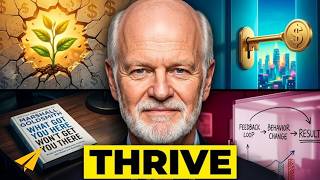
Marshall Goldsmith explains why chasing money and status won't make you happy, then offers the Daily Question Process: a two-minute daily spreadsheet where you rate yourself on six things like progress, relationships, and happiness. He also catalogs five common complaints that waste energy and shows how ego kills performance.
Chapters
When people tell us something we don't want to hear, our first reaction is, "They're wrong and they're confused." Sometimes it's hard to look in that mirror and say, "You know what? Maybe I'm wrong." You know, you ever go online, you're going to look up something, it's going to take 3 minutes, 3 hours later you're still online, you don't know why you went online in the first place. The great Western disease is, "I will be happy when..." When I get the money, the status, the BMW, the condominium, when I get this, I will be happy.
He's an American leadership coach and author of several management-related books. He's been recognized as one of the top leadership thinkers in the world. He's the author of 35 books which have sold over 2 million copies worldwide. He's Marshall Goldsmith, and here's my take on his top 10 rules for success. Rule number 3 is my personal favorite, and make sure to stick around all the way to the end for some special bonus clips. And as always, if Marshall says something that really resonates with you, leave it in the comments below as he's saying it and put quotes around it so other people can be inspired as well.
It's very easy to see what we don't like about ourselves in other people. It's a little harder to see what we don't like about ourselves in the mirror. And sometimes other people can see things in us that we don't want to see in ourselves. And when that happens, our first reaction is, "You're wrong, you're confused." When people tell us something we don't want to hear, our first reaction is, "They're wrong and they're confused." Sometimes it's hard to look in that mirror and say, "You know what, maybe I'm wrong and maybe I'm confused." What did I learn? Sometimes other people can see something in us we can't see in ourselves. And our first reaction is they're confused. A great challenge: learn to listen to other people. Hear what they have to say and recognize sometimes they can see something in us that we don't want to see in ourselves. We have something called the monkey mind. Our monkey mind is our mind is in many ways like a monkey swinging through the vines in the jungle. You know, ding, ding, ding, ding, ding, ding, ding, ding, ding, going from this thing to thing. And the internet provides amphetamines for the monkey mind. You know, you ever go online, you're gonna look up something, it's gonna take 3 minutes, 3 hours later you're still online, you don't know why you went online in the first place. Monkey mind. No, no, no, no, no, no, no, no. And it's very hard to kind of calm down the monkey mind.
Do you have concrete techniques for calming the monkey mind?
Yeah, the more you measure things, the less likely you are to have this happen. And also the more we admit we need help and structure. When you get over that macho, I can do everything on my own nonsense, life is better. So if you know, look, I'm going to go online, let's look at my history here. I'm going to set the alarm clock off, so in 5 minutes this alarm clock is going to go off and I'm not going to be online anymore. You know, you might say that sounds childish. Well, if you don't do it, guess what? The great Western disease is, I will be happy when. When I get the money, the status, the BMW, the condominium, when I get this, I will be happy. Well, this is the great Western message, and it's supported by what I call the great Western art form. Now, what is the great Western art form? This is something you've seen in your life probably hundreds of thousands, perhaps millions of times. It's always the same story. The story sounds like this: There is a person. The person is sad. They spend money. They buy a product and they become happy. This is called a commercial. Have you ever seen one of those before? The message is always the same. It's not in here, it's out there. I will be happy when. The reality is lottery winners have been studied to death and When someone wins the lottery, within 3 years, statistically, they're not much happier than they were to start with. What's been learned is happiness doesn't come from the outside, most of happiness comes from the inside. Well, the great employee engagement myth is, the employees will be engaged when... When we give them this program, when we do this process, they will be engaged when... Well, that's partially true. I mean, better leaders lead to more engagement, and better recognition leads to more engagement. The reality is also, though, a lot of employee engagement doesn't come from the outside. A lot of employee engagement comes from the inside. And one of the things that I'm going to talk about is how do you create an environment where people take responsibility for their own engagement, and instead of focusing on, "I will be engaged when the company does something for me," take responsibility for their own engagement and say, "I can engage." myself. Whine less, do more. We spend an inordinate amount of time in life whining. Typically whining about decision makers, whining about decisions. I'm going to talk about 5 of my favorite whines, and then we'll talk about how many times you've heard these, and then look in the mirror and say, how many times have I done it myself? That first whine is called It's not fair. It's not fair. The decision maker makes the decision, and we conclude it's not fair. Decisions have nothing to do with fairness. Every decision is made by the person who has the power to make the decision. Not a fair person, right person, or logical person. It's made by that person. The decision maker is the customer, and our job is to influence the decision maker, not to just judge other people. As Peter Drucker said, our job in life is to make a positive difference, not prove we're right. Well, it's not fair. The kid comes home from school. Daddy, Mommy, I got a C on my report card. I should have gotten an A. It's not fair. A great learning experience for the child. Decisions aren't made based on fairness. You did not sell the teacher. The teacher was the decision maker. The teacher thought you should have gotten a C. You thought you should have made an A. Well, you didn't grade your own paper, the teacher graded the paper. You got a C. There's always a teacher. There's always a boss. There's always a customer. There's always somebody. And it's never really fair. Another common whine is, it's not smart. Yeah, they're doing that, and they think it's fair, but it's not smart. I have a much better idea, and the world would be better if they did it my way. Well, sometimes the world doesn't ask us how we want to do things, and we've got to do things that others do, and maybe their definition of SMART is a little bit different than our definition of SMART. And a favorite among engineers that's related to these two is, it's not logical. People with technical backgrounds, scientists, engineers, constantly look for logic where none exists. And then we're shocked because we can't find it. Now, I have a degree in mathematical economics. I went to an engineering school, so I include myself in this category. Too much of my life has been wasted looking for logic where none exists and being shocked when I can't find it. Well, decisions are not always made based on logic. Oftentimes, crazy people make decisions, and it's not logical. Sometimes we say, well, they think it's logical, and they try to be fair. It's just the wrong decision. They mean well. It's just not right. It's not right. Well, again, we don't get to necessarily, as we wander through life, decide what is or isn't right. And our definition of right, well, it might not be somebody else's. Another big favorite is, it's not their job, it's my job. It's not their job, it's my job. Believe it or not, I see this with a lot of CEOs I coach. Shockingly, I worked with a CEO of a private equity firm. Private equity, they own the company. I was hired by the owners. You know what he said? They can't tell me what to do. It's not their job. I'm the CEO. Shockingly, you'd be surprised how many people become brain dead when they become CEOs. I'm the CEO, they can't tell me what to do. I had to sit down and say, They own the company. It's their money. They can indeed tell you what to do. You see, you work for them, they do not work for you. I had another CEO with the same problem in a publicly traded company with his board. I had to sit down and say, "Excuse me, the board of directors, rightly or wrongly, represents the ownership of the company." The board does not report to you. You actually report to the board. Now, fortunately, in most cases as a coach I've been successful. I've had a failure. I had a failure where a person never really quite got it. Now, as we look at decision-making, realize one thing: our job is to make a positive difference, not to go through life critiquing everybody else with our infinite wisdom and whining. And again, some of the favorite whines we We've talked about, it's not right, it's not fair, it's not smart, it's not logical, it's not their job. We can go through life doing this all we want to. What are we accomplishing? Nothing. Simple guideline for life: Do more, whine less. Take all the effort you might have spent on whining and complaining about other people and focus on making a positive difference. Try to influence those other people Don't waste so much time judging, critiquing, and whining. So now I'm working with my daughter, Kelly. She's a professor at the Kellogg School of Northwestern, marketing professor. She taught me this thing called active questions, which I'm going to recommend to all your viewers. Active questions. They all start with, "Did I do my best to..." Because that's the one thing we have total control over. Did I do my best? I can't blame you if I didn't do my best. Back to accountability. It's something you can't hide from. So the 6 I recommend every day, and I do this daily question process every day. These are now my first 6. Number 1, did I do my best to set clear goals? Rather than saying, did somebody else set goals for me, did I do my best to set my own goals? 2, did I do my best to make progress toward achieving my goals? Number 3, did I do my best to find meaning? Rather than saying, did somebody else give me meaning or create meaning, did I do my best to create meaning myself? Number 4, did I do my best to be happy? Rather than did somebody else make me happy, did I do my best to make myself happy? Then number 5, did I do my best to build positive relationships? And then finally, did I do my best to be fully engaged? Every day, challenge yourself with those 6 questions. Great process, a great process. And we have research on this from thousands of people. If any of the viewers want to participate in the research, send me an email, Marshall with 2 L's at MarshallWillsmith.com. I sign them up for it. Research is amazing. 46% of the people say I got better at everything 10 days later. 75% said I got better at 4 out of 6. 94% said I got better at at least 1. 6% stayed the same, and 0-point-something percent got worse. Just amazing. Why every day this gets me to focus not on what I cannot change, it gets me to focus on what I can change. My favorite advice? Imagine you're 95. Everyone look up here. Take a deep breath and do your hand like this. Go, ah, hand, hand, ah. Imagine you're 95 and you're just getting ready to die. And you're on that deathbed. Here comes your last breath. Right before you take that breath, you're given a beautiful gift, the ability to go back in time and talk to the person in this room. The ability to help this person be a better leader, More important, the ability to help this person have a better life. What advice would the wise 95-year-old you who knows what mattered in life and what didn't have for the you that's sitting here right now? You don't have to say anything or do anything, just answer that question in your mind. Whatever you're thinking now, do that. Germans say performance appraisal, that's the only one that's going to matter. Some friends of mine interviewed old folks who are dying and asked them the this question, what advice would you have? On the personal side, 3 themes. Theme number 1, 3 words: be happy now. Not next week, not next year, not next month. Be happy now. Great Western disease, I'll be happy when. When I get the money, the status, the BMW. We all have the same when. That old person is when. Learning point from old people, I got so wrapped up chasing what I did not have, I could not see what I did I have and I had everything. People in this room, many of you are among the luckiest humans who ever lived. Many of you have friends and family and health and you're doing fun work and you're helping people. You got it all. Don't get so wrapped up chasing what you don't have you can't see it. Learning point number 2, and this is a point President Clinton made, friends and family. When you're 95 years old and you look around that deathbed, None of your coworkers are waving goodbye. You realize these people are kind of important. And learning point 3: If you have a dream, go for it. Because if you don't go for it when you're 35, you may not when you're 45, and you probably won't when you're 85. And it doesn't have to be a big one. Maybe a little one. Go to New Zealand, speak Spanish, play a guitar. Other people think your dream is goofy. Who cares? It's not their dream, it's yours. It's not their life, it's your life. One of the greatest thinkers in the history of leadership development is a hero of mine, a man named Dr. Warren Bennis. Now, Warren Bennis is a wonderful guy, a guy who's helped me have a better life, and someone I've always looked up to. Warren told a story once I'll always remember. For a while, he was president of the University of Cincinnati, and he's not sure he wanted to be president for all the right reasons. He was president, and he was giving a talk in front of a group of people, and one gentleman raised his hand. And he said, "Dr. Bennis, do you love what you do? Do you love being president?" And Warren said he stopped, and there was almost a minute of silence. Eventually, he looked at this person and said, "I don't know." Well, that moment kind of changed his career. He realized maybe he wasn't being the president for the right reasons—things like status, ego, feeling important. Maybe those kicked in over things like doing what I love doing and doing what's in my heart. Well, I thought a lot about Warren Bennis' example. Do you love what you do? In the old days, if you didn't love what you do, it wasn't so bad. For example, in 1979, IBM was my biggest customer. IBM was the most admired company in the world. They were the God company. In 1979, I could go to Armaq, New York, shoot a cannonball down the hall at 5 o'clock and hit almost nobody. These people worked 35, 40 hours a week, and they took 5 weeks of real vacation. I recently talked to the Chief Learning Officer at IBM. I said, I bet those same people in that same building now work 60 hours a week. He said, wrong, 70 hours a week. And by the way, there's almost no real vacation. When you take the cell phone with you, when you take the computer with you, when you go on that vacation, you're constantly wired in. There's almost no real vacation. Very important point for young people today. Very important point. If you can work 35 or 40 hours a week and take 5 weeks of real vacation, and you don't love what you do, it's not so bad. It's not so bad. Kind of like a half-time job anyway. If you're working 70 hours a week, and you get no weeks of real vacation, and you do not love what you do, you're living in a bad place called New Age professional hell. And too many people are living there today. Very important challenge for people at all ages, especially young people. Realize you're probably going to have to commit to your your job, realize you're probably going to be working many hours, realize your occupation is going to be a large part of your life, go back to that great question: Do you love what you do? And to the degree you can answer that question yes, you're probably going to be a winner in the game of life. To the degree you answer that question no, you're going to have some problems. A classic problem of smart, successful people: adding too much value. What does this mean? I am young, smart, enthusiastic. I report to you. I come to you with an idea. You think it's a great idea. Rather than saying, "Great idea," our tendency is to say, "That's a nice idea. Why don't you add this to it?" The quality of the idea may now go up 5%, my commitment to its execution may now go down 50%. It's no longer my idea. Incredibly hard for smart, successful people not to constantly go through life adding value. Have any of you been trained as scientists or engineers before? Oh, this is a particularly bad disease for this group, okay. We get so wrapped up on improving the quality 5%, we may damage the commitment by 50%. And by the way, most of the time we're adding too much value, what are we really doing? Telling the world how smart we are. It's incredibly It's very hard for smart, successful people not to constantly go through life telling the world how smart we are. Does anyone in the room have a PhD? Yes, a particular disease for people with a PhD, right? Yeah, yeah, telling the world how smart we are. I have done programs myself called Creating a Great Rest of Your Life in this very room with many CEOs. My friend Alan Mulally, CEO of Ford, has been in this room. Mike Duke, CEO of Walmart, has been in this room. Many, many top leaders have been in this room. And we've talked about what are you going to do now? These are typically people my age, older people in their 60s, maybe early 70s, and talking about what are you going to do with the rest of your life? And really what I've learned is the concept of playing crappy golf with old men at the country club while eating chicken salad sandwiches and discussing gallbladder surgery may not be quite as wonderful as it sounds, especially if you've had a meaningful life. And we talk about what is— what matters in life, really what matters. And what we've come up with, a couple of things. One is you have to be happy at what you're doing. You want to love the process of what you're doing. You want to be a victim or a martyr. And you also need to find meaning. You can't just go on cruises and play bad golf. You have to do something that matters in life. And so So I think it is very important at every stage of life we go back and look at what's important, what matters, and what do I want to be. We spend so little time thinking about this. One of my good coaching clients was going to retire in 6 months. He was the CEO of a huge company. And I said, if you knew the company were going to change in 6 months, totally different customers, everything, would you plan for it? He said, of course I would. I'm a responsible person. I'm the CEO. I said, your life is going to change in 6 months, totally change. Everything's going to be different. How much time have you spent planning for that? You know what he said? None. Big mistake. Right. Big, big mistake. So I think it's very important as we go through various stages of life to reflect and think back what matters in life, what's important. And I don't feel any of us are too young or old to kind of begin this process. Creating a new identity. How can we become someone different? How can we create a new identity? Now, the final element of our identity, if you look at our model, is called our created identity. That's that new person that we can create. That's the future that we create for ourselves. And in looking at this element of identity, I'm going to give you an example from a famous rock star. One night I had the opportunity of having dinner with the famous rock and roll star, Bono. And I didn't know any of his music too much because it was recorded after 1975. We had a wonderful dinner though, and he talked about, not his music, he talked a lot about his identity. And the first part of his identity was kind of regular guy, not pompous or pretentious, very much a regular person. And you know, he impressed me as being very much a regular guy. Didn't put on airs, just seemed to be a real, real person. He used the F-word about every third word when we were talking, and he's a nice man, he apologized. He said, you know, sir, probably shouldn't use such bad language around you. I said, excuse me, I'm from Valley Station, Kentucky. I thought the F-word was the adjective that preceded all nouns. So I said, this really doesn't bother me that much. Well, after regular guy, The next part of his identity was rock and roll fan. He's still a fan of music and he talked about the groups he loved and how they influenced his life. Then he became a musician. He's still a musician. He talked about how he loved making music and not just for money. How he had times with his family and they'd all sing and make music together and how much he enjoyed that. Then he became a rock star and he talked about what it's like to be a rock star. And he wasn't bragging or showing off. That's who he is. He's a rock star. Rock star. He talked about the pluses and minuses of that life. And now he's humanitarian. He is devoting a whole lot of his life to trying to help others. And he made an interesting point. Not so easy. Everybody didn't support him in trying to be a humanitarian. Some people were more into like, who is this guy? He's shallow, he's plastic, some rock star. What's he trying to be, some kind of humanitarian? And to his credit, you know what he said to himself? Forget that. If I want to help people, I shouldn't have to apologize or be ashamed of it. And he is devoting a huge amount of his life right now to helping others. Well, to me, God bless him. He has created a new identity for himself without being a hypocrite and without being a phony. Final point for you: Challenge yourself. Think about, what is my identity now? Second, where did that identity come from? My memories? Feedback from others? Programming? What is the new person I want to create? How can I create a new identity? A different person, a better person, a person who's not the same as the person who's there now, without being a hypocrite, without being a phony, creating a better me.
Thank you guys so much for watching. I made this video because Jeff Davis asked me to. So if there's a famous entrepreneur that you want me to profile next, leave in the comments below and I'll see what I can do. I'd also love to know what of the rules had the biggest impact on you. What did Marshall say that really resonated with you? What's the single biggest lesson that you took from this video? Leave it in the comments below and I'm gonna join in the discussion. So thank you guys so much for watching. I believe in you. I hope you continue to believe in yourself And whatever your one word is, much love. I'll see you soon.
The first disease of successful people I can see running rampant in this room. What is this problem called? Winning too much. Now, what does that mean? If it is important, we want to win. Meaningful, we want to win. Critical, we want to Win. Trivial, we want to? Win. Not worth it, we want to? Win anyway. We like winning. I'm going to give you a case study that 75% of my successful clients fail. Yes, I will predict most of you will fail this case study. And when I say fail, they fail themselves. They say what I would do is the opposite of what I know I should do. Are you ready? You want to go to dinner at restaurant X. Your husband, wife, partner, friend, or significant other wants to go to dinner at restaurant Y. You have heated argument. You go to restaurant Y. This was not your choice. The food tastes awful. The service is terrible. Option A, critique the food. Point out our partner was wrong. This mistake could have been avoided if only they would have listened to Me, me, me, me, me. Option B, shut up, eat the stupid food, try to enjoy it, and have a nice evening. What would I do? What should I do? 75% of my clients, what would I do? Critique the food. What should I do? Shut up. How many people in the room have ever critiqued the food before? Raise your hands, food critiquers. Yes, a room filled with food critiquers. Was this a smart thing or a stupid thing? Stupid! And as stupid as it was, yes, it was stupid. I'm going to give you an example now that is so hideously stupid, it will make that one pale by comparison. And yes, I will predict that most of you have done this. Are you ready? You have a hard day at work, a hard day. You come home, your husband, wife, friend, or partner is there, and the other person says, "I had such a hard day today." 'I had such a tough day.' And we reply, 'You had a hard day. You had a hard day. Do you have any idea what I had to put up with today? Do you think you had a hard day?' We are so competitive, we have to prove we are more miserable than the person who lives with us. I give this example in one class, the guy in the back raised his hand. He said, 'I did that last week.' I asked him, I said, 'What happened?' He said, 'My wife looked at me. She said, Honey, you just think you have had a hard day. It's not over. I'd like to give you two examples of the value of help, structure, and direction. A very positive example and a negative example. First, the negative. Dr. Atul Gawande from Harvard Medical School wrote a great book called The Checklist Manifesto. In his book, Dr. Gawande shares some pretty sobering research. If you go in for a surgery and the nurse asks the doctor a series of very simple questions from a checklist before the surgery, the odds on unneeded infection plummet, and the death rate because of unnecessary infection is dramatically reduced. The huge majority of hospitals around the world do not allow the nurse to ask the the doctor the questions. Why doesn't the doctor want the nurse asking him those questions from the checklist? Ego. The doctor is too proud to admit they need that help, too proud to get that day-to-day-to-day structure, and they let their ego and pride become more important than their patients. According to Dr. Gawande, more people have died because of to the egos of surgeons than died in the Vietnam War, the Afghan War, and the Iraqi War combined. What is the first question the nurse asks the doctor? Did you wash your hands? Did you wash your hands? Too much ego. That's the negative case study. Now the positive case study. Every year I train the admirals for 9 years in the United States Navy. And I love working with the Navy. I don't bill them any money because their billing bureaucracy is such a phenomenal pain in the butt. I said, we'll both make more money if you pay me nothing. Don't pay me. They give me treats. A few years ago, my treat, day in a nuclear submarine. Me and 8 other old men got to go out on a nuclear sub, diving down under the waters for 8 hours and pretending to torpedo things. Ah, we had a great old time. Couple years later, I got an even better treat. Where did I get to go? Highway to the danger zone. Have you seen that movie Top Gun? I got to spend 95 minutes on a United States Navy Top Gun fighter jet. 6 Gs, oxygen, flying upside down, doing tricks. Got to fly the plane myself for 10 minutes, and I am very proud to say I did not throw up. Now before Before I got on the plane, I noticed something. This kid is asking my host, Admiral Mark Guadagnini, a series of simple questions from a checklist. These weren't tricky questions. First question for the doctor, did you wash your hands? First question for the Admiral is, how much fuel do you have? I said, sir, this is puzzling. The doctor don't like the nurse asking him the question because their ego's too big. Now I said, No offense, sir, nobody in the world has a much bigger ego than a United States Navy Top Gun fighter jet pilot who becomes an admiral. You've probably got one of the biggest egos in the world, yet you do not object to this kid asking you the questions. I said, sir, what's the difference? He said, Marshall, there's a huge difference. If that operation crashes, you die. If that plane crashes, I die. He said, you put a gun to that surgeon's head and say, this patient dies of an unneeded infection, we're going to blow your brains out. They'd probably be asking those questions twice. Well, how important is ego and how important is pride? Every day we make it more important than our health, than our safety, than the people we love. Once we get over that ego and pride, once we get over that macho nonsense of, ah, I can do it on my own, I don't need that checklist, I'm above all that stuff. Once we get over that ridiculous ego, that surgery is likely to go a lot better, that plane flight is likely to be more successful, and we are more likely to become the person in our lives that we want to become. I'm now going to teach you a process that takes about 2 minutes a day, costs absolutely nothing, is going to help you get better at almost anything. Might be a little skeptical right now. 2 minutes a day, costs nothing, help me get better at almost anything? Well, that sounds too good to be true. I'm going to make a second prediction. Half of the people I teach this to, you're going to quit doing this within 2 weeks. And you will not quit doing it because it does not work. You will quit doing it because it does work. You see, what I'm going to teach you next is incredibly easy to understand. It's just incredibly difficult to do. This is called the Daily Question Process. Now, how does this work? Here's what I want you to do. I want you to get out an Excel spreadsheet. On one column, I want you to write a list of questions, questions that represent what is most important in your life. Could be friends, family, colleagues. Every question must be answered with a yes, a no, or a number. A yes is recorded as a 1, a no is recorded as a 0, or a number, whatever that number is. And then 7 boxes across, one for every day of the week: Monday, Tuesday, Wednesday, Thursday, Friday, Saturday, Sunday. Fill it out every day, and at the end of the week, that Excel spreadsheet will give you a little report card. I've been doing this for years, and let me warn you, that report card at the end of the week might not be quite as pretty as that corporate values plaque you got stuck up there on the wall. When you do this every day, you know what you learn very quickly? Life is real easy to talk. Life is real difficult to live. Now I'm going to share some of my daily questions. Mine are not intended to be yours. The idea of this exercise is you write your own questions every day. For example, what is one of my questions every day? How many times yesterday did you try to prove that you were right when it was not worth it? I've almost never scored a zero in my whole life. Kind of hard for that old professor not to be right all the time. How many angry or destructive comments did you make about people yesterday? Well, if I want to be a good person, why am I stabbing people in the back? How many minutes did you walk? How many push-ups did you do? How many sit-ups did you do? Did you say or do something nice for your wife? Did you say or do something nice for your son, for your daughter, for your son-in-law, for your grandkids? How many minutes did you write? Well, a friend of mine, Jim Moore, has been doing this for years, and when he began doing it, one of his daily questions was, "Are you currently updated on your physical examination?" The first 90 days he did this, he said no every day for 90 days. No, no, no. After 90 days, he said, this is embarrassing. It's embarrassing. I got to get the dumb exam or quit asking the question. It's embarrassing. He got the dumb exam. What did the doctor say? You have cancer. Now, he's going to be fine. That was many years ago. The doctor also said, had you waited 7 more months, you would be dead. He knew he should have got a physical exam. He's not a stupid man. Chief Learning Officer of 3 multibillion-dollar companies. He knew he should have done it, but he didn't do it. In my classes, I ask people, how many of you have ever put off getting a physical exam before and told yourself, I'm getting that exam after I go on my healthy foods diet. I'm getting that exam after I begin my exercise program. Pretty much half the class raises their raises their hand, and then I say, did you really trick the doctor with that strategy? Well, I was teaching at the University of Michigan, this guy raised his hand. I said, sir, did you trick the doctor with that strategy? He looked at me and goes, I am the doctor. Well, why don't we ask these questions? We're afraid of the answers. If you have the courage to write down the behavior that's most important in your life, and the discipline to do this every day, you're going to get a lot better. Now, I pay a woman named Kate to call me on the phone every day. She called me today. She's going to call me tomorrow. She called me yesterday. She calls me every day. Every day she listens to me read these questions that I wrote and provide the answers that I wrote every day. Every day. Now someone asked me, why do you pay a woman to call you on the phone every day? Don't you know the theory about how to change behavior? I wrote the theory about how to change behavior. That's why I pay a woman to call me every day. I know how hard this is. I have over 12 million frequent flyer miles just on American Airlines. That's an excuse to be a bad father, Bad husband, out of shape. How many excuses do I get with the 12 million miles? Many excuses. Excuses don't help. It's hard for me, it's hard for you, it's hard for all of us. Why do I pay a woman named Kate to call me on the phone every day, just listen to me read questions I wrote and provide answers I wrote? My name is Marshall Goldsmith. I'm the world's top-ranked executive coach. I am too cowardly to do this on my own and too undisciplined to do this on my own. Why do I pay someone to call me on the phone every day? My name is Marshall Goldsmith. I need help and it's okay. Now let me help you. Next steps, get out that Excel spreadsheet, write down those questions. Every day, test yourself. If you have the courage and discipline to do this on your own every day, Knock yourself out, do it. If you notice that you're quitting, you make excuses like, ah, I got too busy, didn't have time. It takes 2 minutes a day, you weren't too busy. I got bored. You didn't get bored. Why did you quit? It's hard to face the reality of our own lives every day. If you have the courage and discipline to do this by yourself, Do it. If you do not have the courage and discipline to do this by yourself, which most of us don't, like me, get somebody else to help you. And get over that shame and pride thing and say, hey, I need help. It's okay. It's okay. If you try this, you're going to find out it will help you get better at just about anything. And it doesn't take a lot of time. It just takes a lot of courage.
More from Evan


How the Biggest Mistake in History Created A Trillion-Dollar Empire | Sergey Brin



9 Machiavelli Principles That Force People To Respect You | Machiavellian Philosophy



The First 10 Words That Instantly Ruin A Sales Conversation | Vanessa Van Edwards

The Top 1% Mindset Behind The First $5 Trillion Company | Jensen Huang (Nvidia)

